
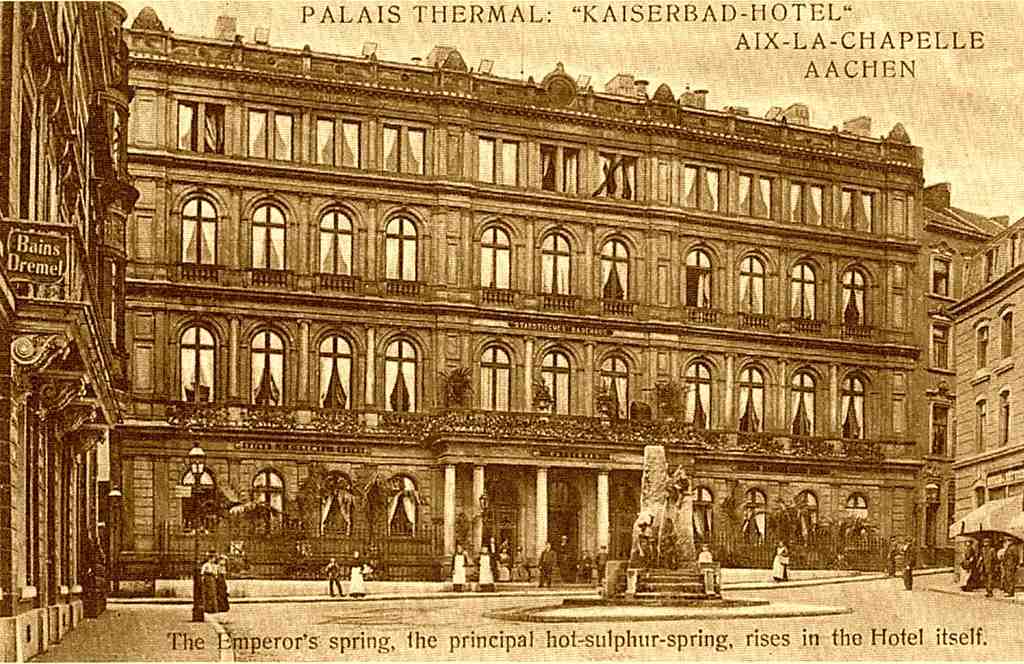
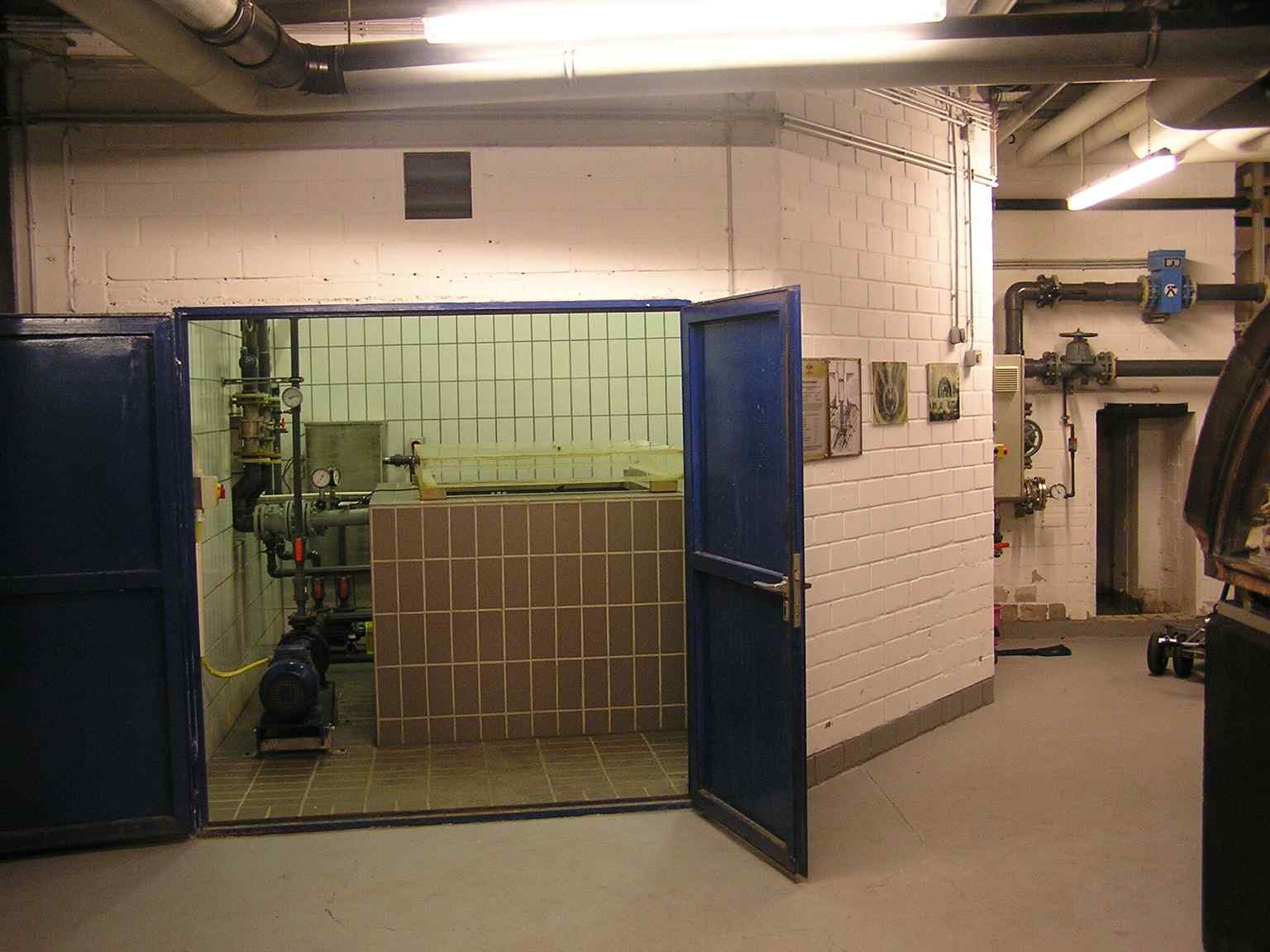
To help you spot our next stop in the provided image, look for the grand four-story stone facade featuring repeating rows of arched windows and a prominent central balcony supported by sturdy classical columns. Standing here, you are right above the very heart of the city's ancient water network. Long before any grand hotels existed... this site was ruled by the Roman military. The soldiers discovered the Kaiserquelle, an incredibly hot natural spring bubbling up at fifty-two degrees Celsius, and they built the first monumental bathhouses around it, known as the Büchelthermen. The sheer might of an empire was poured into these deep foundations, laying down a powerful bathing culture that would define the city for centuries to come. If you glance at your screen, you can see a glimpse of those deep origins... the ancient Roman spring enclosure, which today is preserved and visible under a modern glass floor.
But as the Roman empire faded and the centuries rolled into the Middle Ages, the local citizens claimed these baths for themselves, and the dark, steaming ruins birthed an entirely different kind of story. Have you ever heard of the Bahkauv? Locals translated it as the brook calf. According to legend, this terrifying creature... a massive calf with sharp teeth and a scaly tail... lurked during the day in the warm, shadowy wastewater canals of the thermal baths. But at night, the monster would creep out into the alleys. It waited for drunken men stumbling home from the taverns, leaping onto their shoulders and forcing them to carry it. The beast would grow unbearably heavy if the poor victim started to pray, but it would instantly become lighter if the man began to swear.
Historians suspect this myth was just a clever, face-saving excuse invented by local husbands who had gambled away all their money and needed a fantastical reason for arriving home utterly exhausted with empty pockets. It brilliantly shows how the working people of the town wove their own vibrant, mischievous identity right over the strict imperial Roman foundations. You can actually see how the city later honored this local legend by checking the before and after image on your device, showing the whimsical bronze Bahkauv fountain that was added in front of the grand hotel between 1880 and 1920.
From those murky medieval myths, the Kaiserbad eventually transformed into a beacon of refined bourgeois living in the eighteenth century, drawing elegant aristocrats and even the famous adventurer Giacomo Casanova to its luxurious private tubs. Today, the modern complex on this site offers moderate prices and stays open until eleven at night, and even until one in the morning on weekends, if you want to soak in the waters yourself. But for now, let us leave the grand bathing halls behind and take a brief one-minute walk to the Couven Museum, to see exactly how that elegant eighteenth-century society lived behind closed doors.





