
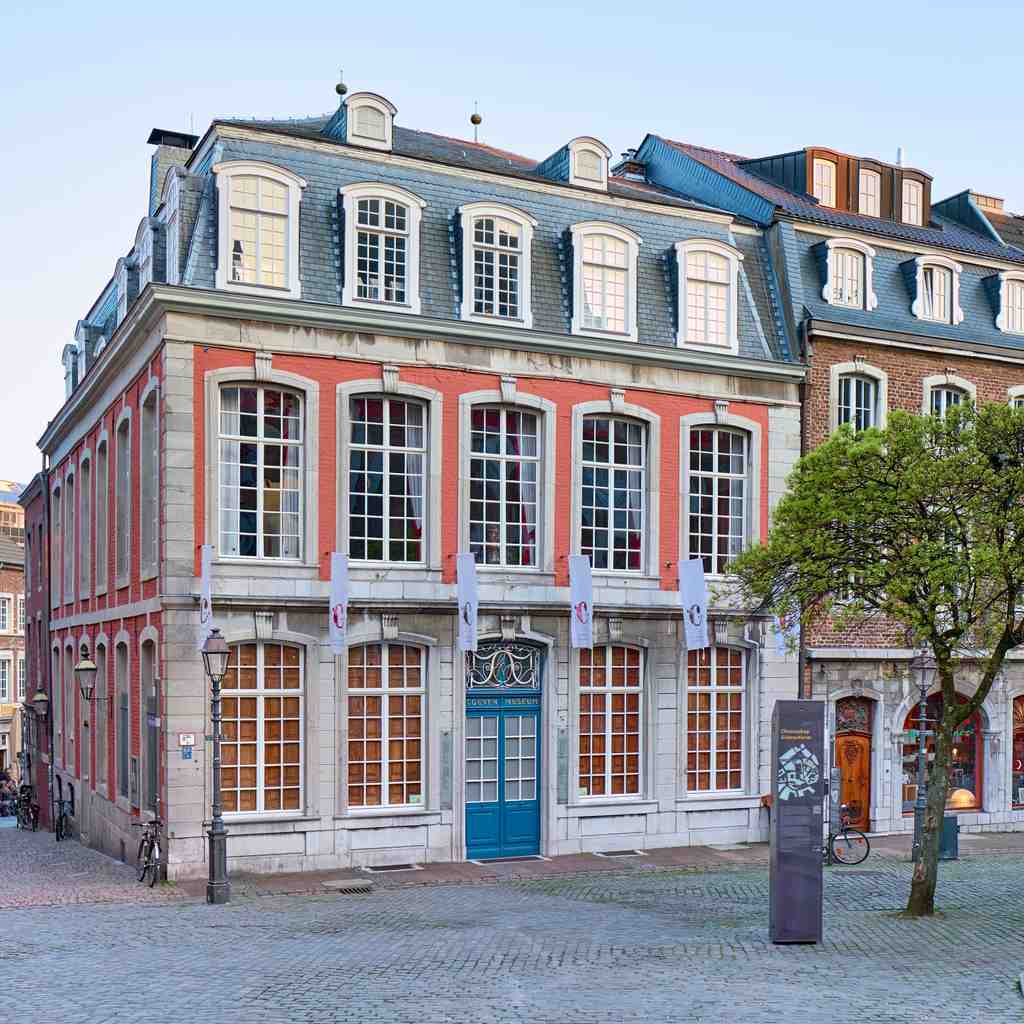
Look to your right for a handsome, block-shaped building featuring painted red walls framed by grey stone accents, and a striking set of tall, bright blue double doors. Take a look at the first image on your screen to see the full elegance of this building, known as Haus Monheim, where the Couven Museum reopened in 1958 after its original home was destroyed in the Second World War.
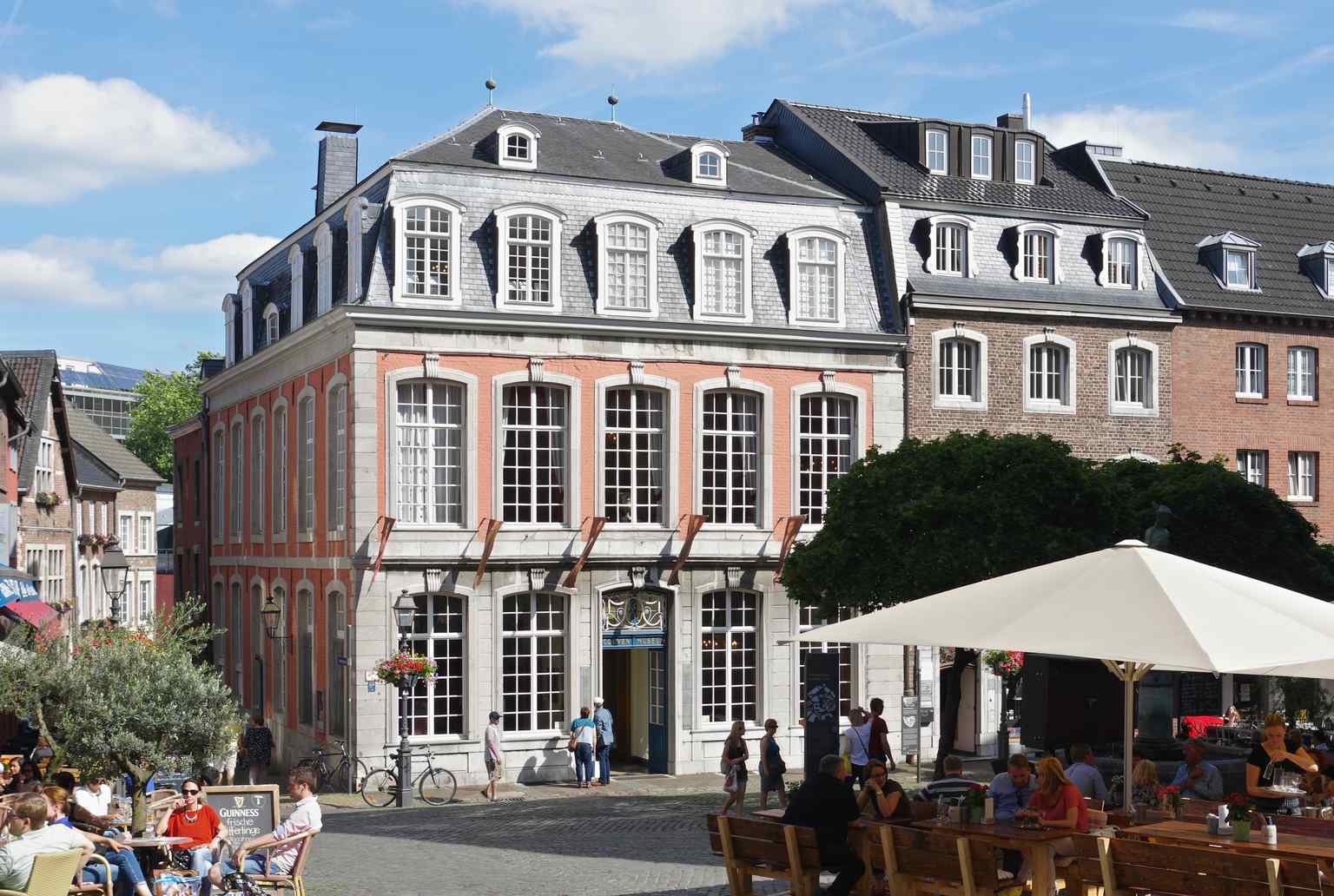
This museum is a beautiful window into the refined domestic world of Aachen's wealthy middle class. As Aachen grew into a prosperous spa town, its prosperous residents built exquisite homes, asserting their own power and influence alongside the city's ancient royal heritage.
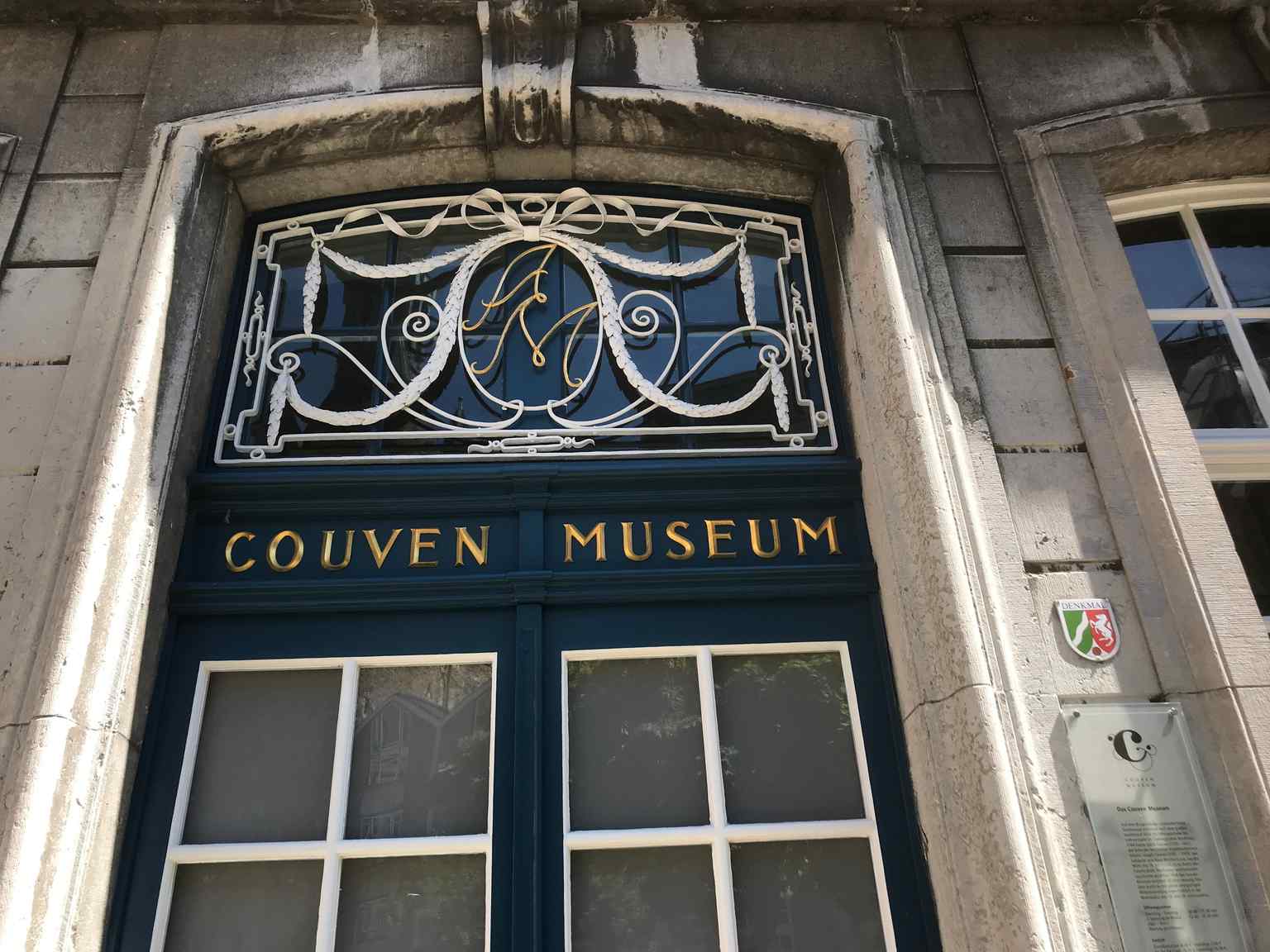
You can see a fascinating detail in the second photo on your app. Notice the initials on the door frame. They belong to Andreas Monheim, whose family ran a historical pharmacy, an apothecary, right here on the ground floor. This pharmacy holds an unexpected, delicious secret. In the nineteenth century, apothecaries used cocoa butter strictly to make medicinal ointments and bitter health pastilles. But the ambitious Leonard Monheim realized this medicine could be so much more. In 1857, he hired an Italian expert and used his pharmacy equipment to produce the very first machine-made bar chocolate in Germany. This bold move birthed the famous chocolate brand Trumpf, building a massive fortune that forever changed the city's economic landscape.
However, the drive of Aachen's citizens often collided with its rigid, old traditions. Inside the museum hangs a portrait of the Clermont family. They were brilliant, innovative cloth manufacturers. But because they were Lutheran Protestants, the powerful, strictly Catholic guilds, which were the ancient associations that controlled all local trade, systematically boycotted them. The guilds completely blocked the Clermonts from participating in the local government or freely running their business. Frustrated by this stubborn intolerance, the family packed up and moved just across the border to the Netherlands. There, free from Aachen's archaic rules, they built a towering textile empire, leaving the old imperial city to deeply regret the loss of their wealth and vision.
The fact that we can still witness these stories today is a miracle of quiet defiance. During the Second World War, the museum's director, Felix Kuetgens, was forbidden by authorities from evacuating the city's priceless historical interiors. They feared that packing away art would signal that the leaders doubted a quick victory. Kuetgens secretly smuggled out what little he could. When the original museum building burned to the ground during a bombing raid, he literally dug through the still-smoking rubble, scraping together charred doors and salvaged fireplaces to eventually build the beautiful rooms you see before you today.
We have just explored how the people of Aachen gathered their private wealth and challenged old boundaries, but their public assertion of faith is just as compelling. Let us walk about one minute from here to St. Foillan to explore exactly that. If you wish to step inside the Couven Museum to see the elegant rooms for yourself, it is open Tuesday through Sunday from ten in the morning until five in the evening.






