
Here we are at the magnificent Elisenbrunnen. Take a moment to take in the sheer scale of this building, with its grand pavilions and sweeping colonnades.
Aachen is defined by its thermal waters. Deep beneath the ground we are walking on, hot, sulfurous springs bubble through the earth. For thousands of years, long before the Romans built their vast bathing complexes here, these deeply healing waters have drawn people seeking cures and comfort from all over the world. The water piped into this very building from the nearby Kaiserquelle, or Emperor's Spring, arrives at a steaming 52 degrees Celsius, which is about 125 degrees Fahrenheit.
Back in the 1820s, the city leaders wanted a grand drinking hall to showcase these famous waters. They chose this exact spot to make a bold statement. Believe it or not, before this elegant structure existed, this area was an open, foul smelling sewer ditch. The city council transformed a dreaded eyesore into the most sophisticated promenade in town, proving that the local citizens could build something just as magnificent as any emperor's palace. To do this, they turned again to the renowned architects Johann Peter Cremer and Karl Friedrich Schinkel. If you glance at your screen, you can see a lovely detail of the crisp Doric columns, those classic, unadorned pillars that define this neoclassical masterpiece.
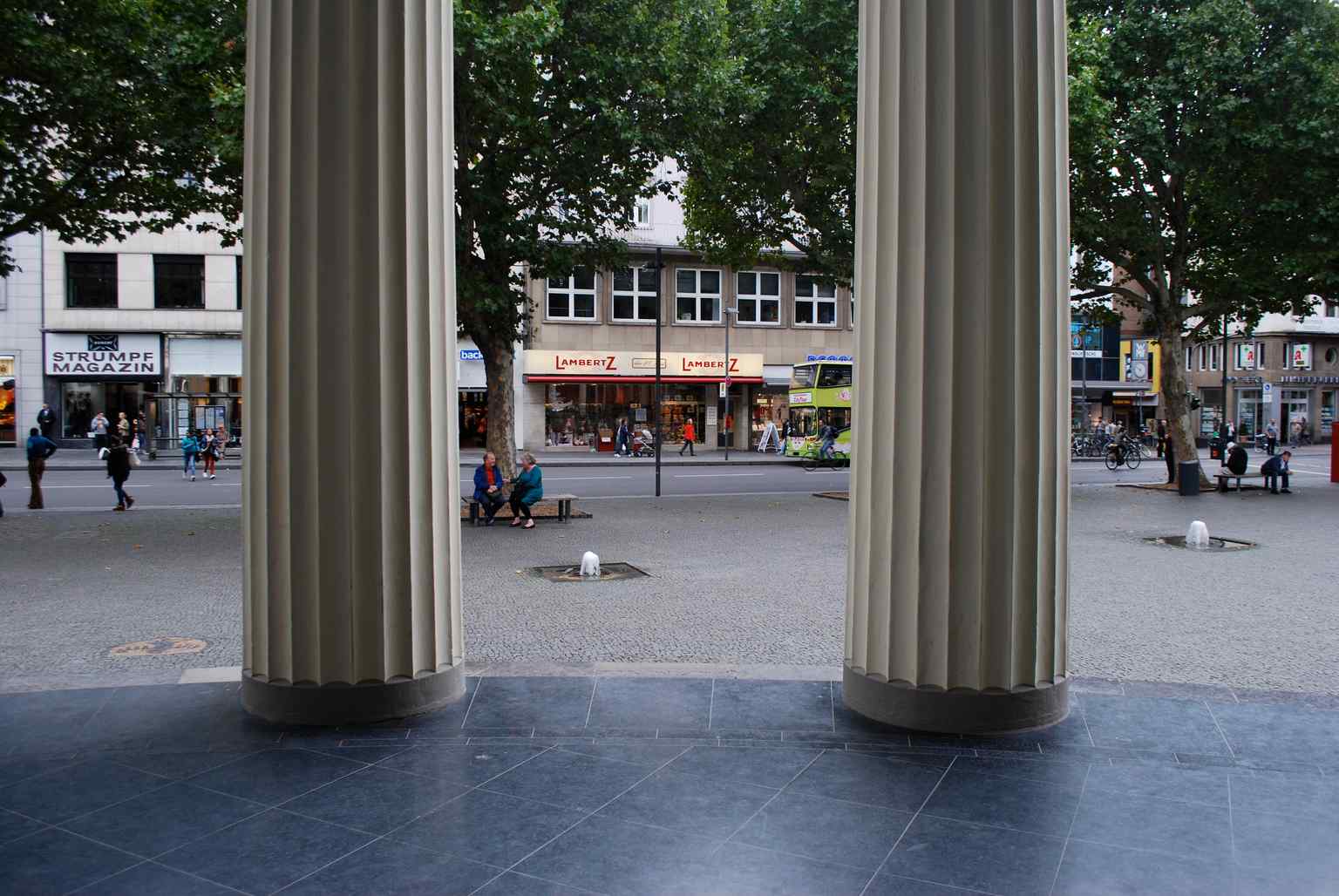
The building was named after the Prussian Crown Princess Elisabeth, affectionately called Elise. In 1832, a pristine Carrara marble bust of the Princess was proudly placed right inside the central rotunda.
Step close and look into that open rotunda. Can you imagine the heavy, pungent scent of sulfur that fills the air here?
It is the unmistakable smell of rotten eggs. And as it turns out, those potent, sulfurous vapors are highly aggressive. The city had built this glorious civic monument to honor royalty, but nature had the last laugh. The harsh thermal fumes literally began eating away at the Princess. Her beautiful marble face was dissolving. Eventually, the original royal bust had to be evacuated to a local museum to save it, and the one you see today is just a much tougher copy.
During the Second World War, the Elisenbrunnen was nearly completely destroyed by bombs. When it came time to rebuild, local architects proposed sleek, modern replacements. But Ludwig Mies van der Rohe, the world famous pioneer of glass and steel modernism who was born right here in Aachen, stepped in. He passionately argued that the beloved classicist design of Schinkel and Cremer had to be brought back exactly as it was. You can tap your screen to see a neat comparison showing the elegant facade in 1915, and how faithfully it was reborn after the war. It was a beautiful moment of the city honoring its own roots.
By the way, you can wander through these colonnades any time you like, as the space is open twenty four hours a day, every day of the week. Let us leave these grand pavilions behind now and explore the older, more intimate historic streets nearby. It is just a short two minute stroll over to our next stop, Klüppel.





