
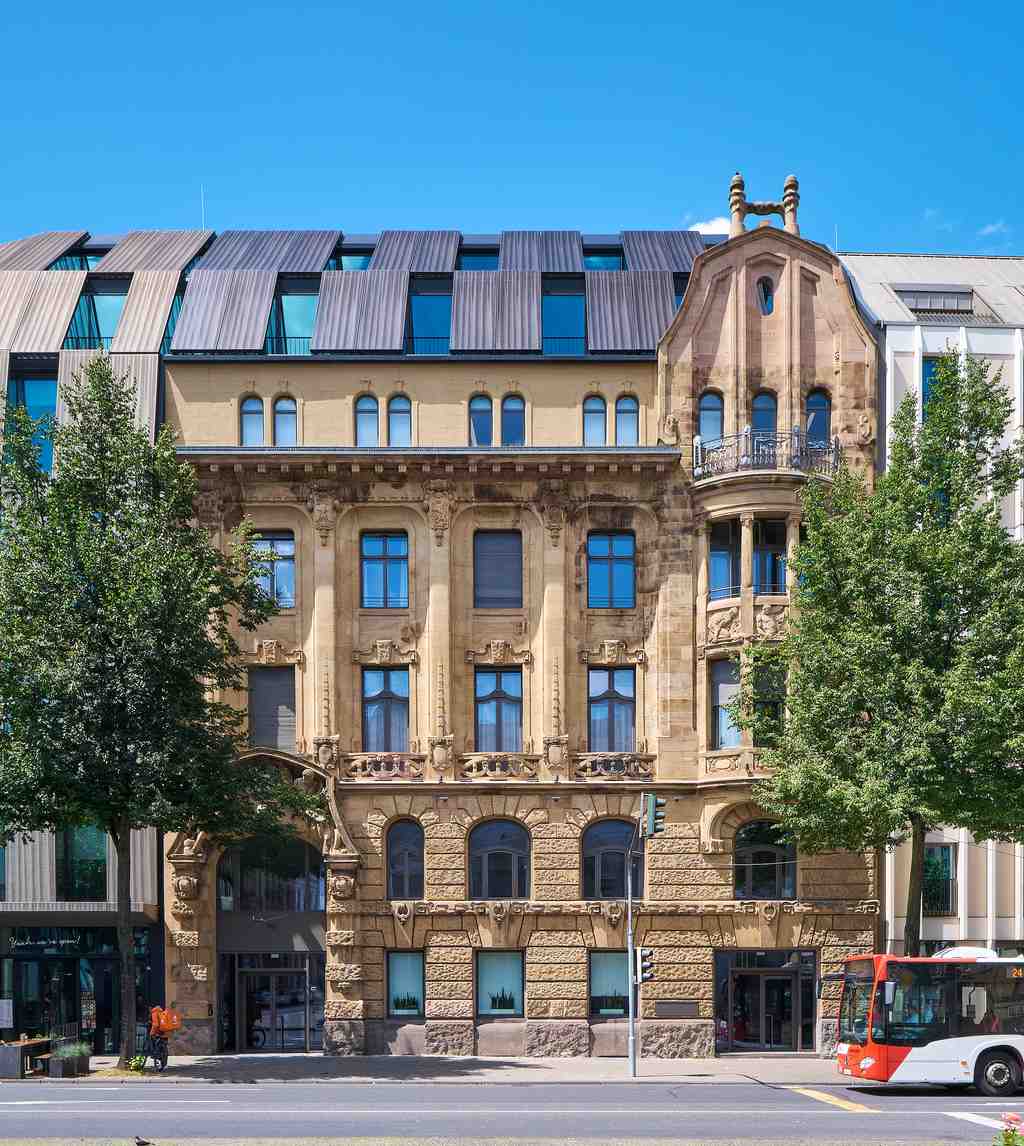
Before you stands a grand, sand colored stone building characterized by its deeply textured lower blocks, a striking curved gable rising on the upper right, and a monumental arched doorway anchoring the left side.
This is the Bankhaus Kapuzinergraben, completed in nineteen ten. It stands as a profound physical monument to the ambitious merchants who built the modern might of this city. For centuries, emperors and kings left their grand mark on Aachen, but by the nineteenth century, a new kind of power was rising. It was the power of civic enterprise, forged by local merchants.
The story of this immense wealth begins with a man named Leopold Scheibler. He was not born into royalty. He was a master of transport, running a booming business that moved vast quantities of wool and cloth across the region. In eighteen sixty eight, Scheibler cleverly expanded his freight company into a private banking venture. His heavy transport wagons and careful ledgers laid the exact financial foundation for the bank that eventually built this very edifice.
Look closely at that massive doorway on the left side of the facade. Above the arch, you will see two Atlantes, which are massive sculpted male figures used in place of standard stone columns to support the structure above them. They are not holding up the heavens like the mythological Atlas. Instead, they hold the tools of local industry.
The figure on the left grasps a heavy ledger and a money bag, while the one on the right stands near a millstone and holds a sickle. These are direct, heartfelt tributes to the bank's founding families, honoring the honest, heavy labor of milling and transport that paved their path to prosperity. The architect blended Neo Baroque, a revival of highly ornate, theatrical seventeenth century design, with flowing, modern elements to project absolute financial stability.
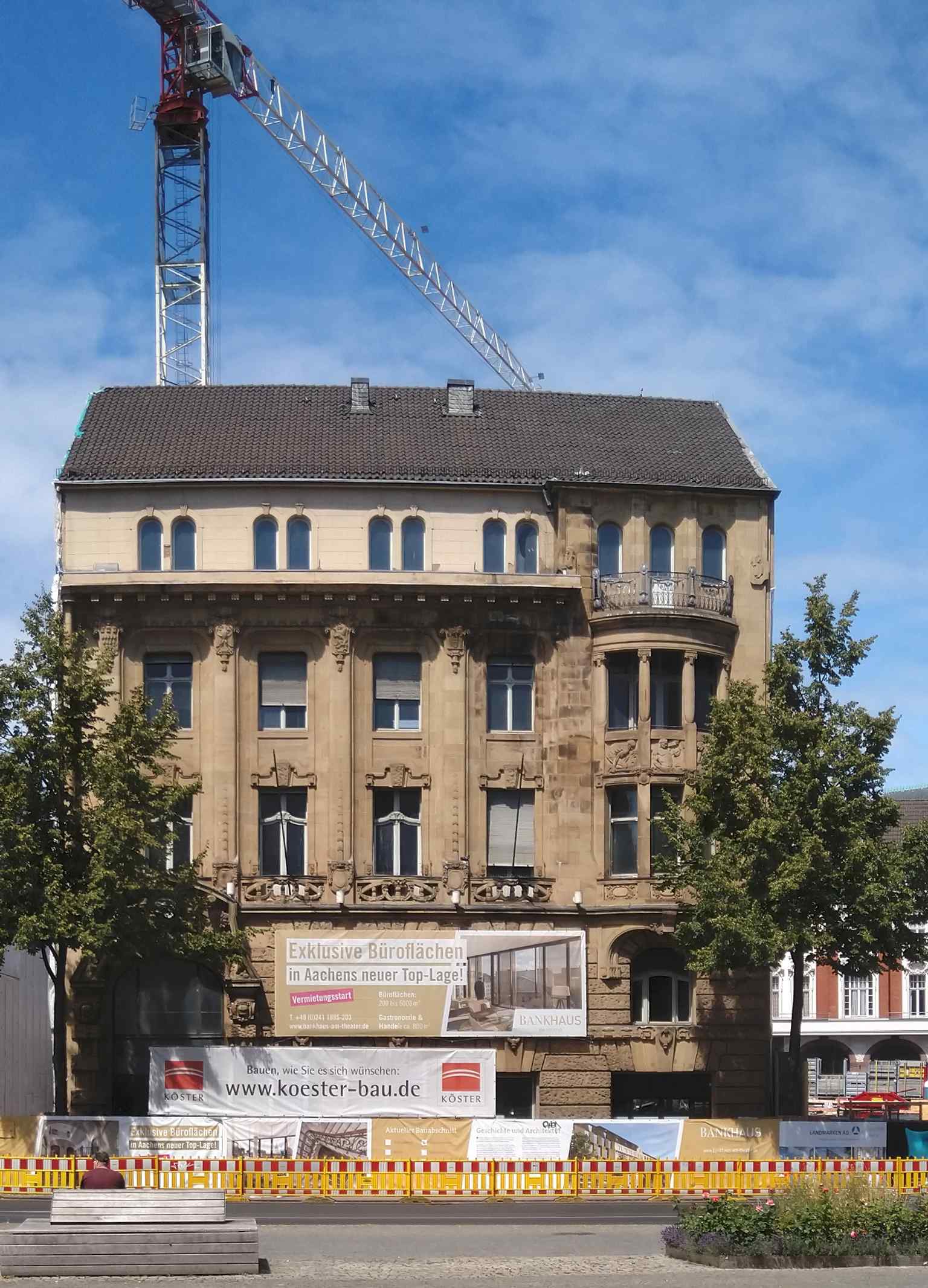
But the building has seen its share of deep scars. Following the Second World War, its roof was simplified, and in the nineteen sixties, the bank's magnificent, cavernous main hall was entirely demolished to make way for ordinary offices, erasing a grand piece of local history.
If you glance at your screen, you can see a photo from twenty nineteen during a massive redevelopment phase. The historic bank was preserved and woven into a modern complex of offices and hotel spaces. This project forever changed the street, leading to the demolition of the neighboring Elysée cinema, a cherished local theater where generations of Aacheners spent their youth and fell in love with the magic of film.
Today, this complex stays open late, welcoming guests from seven in the morning until one or two in the morning, depending on the day.
These wealthy merchants shaped the bustling streets you stand on right now. But long before the ledger books and the transport wagons arrived, there was a deeper, natural draw that made this land legendary in the first place. Let us walk about two minutes away to Elisenbrunnen, to uncover the steaming, mineral rich waters that forged the city's very first fortunes.





