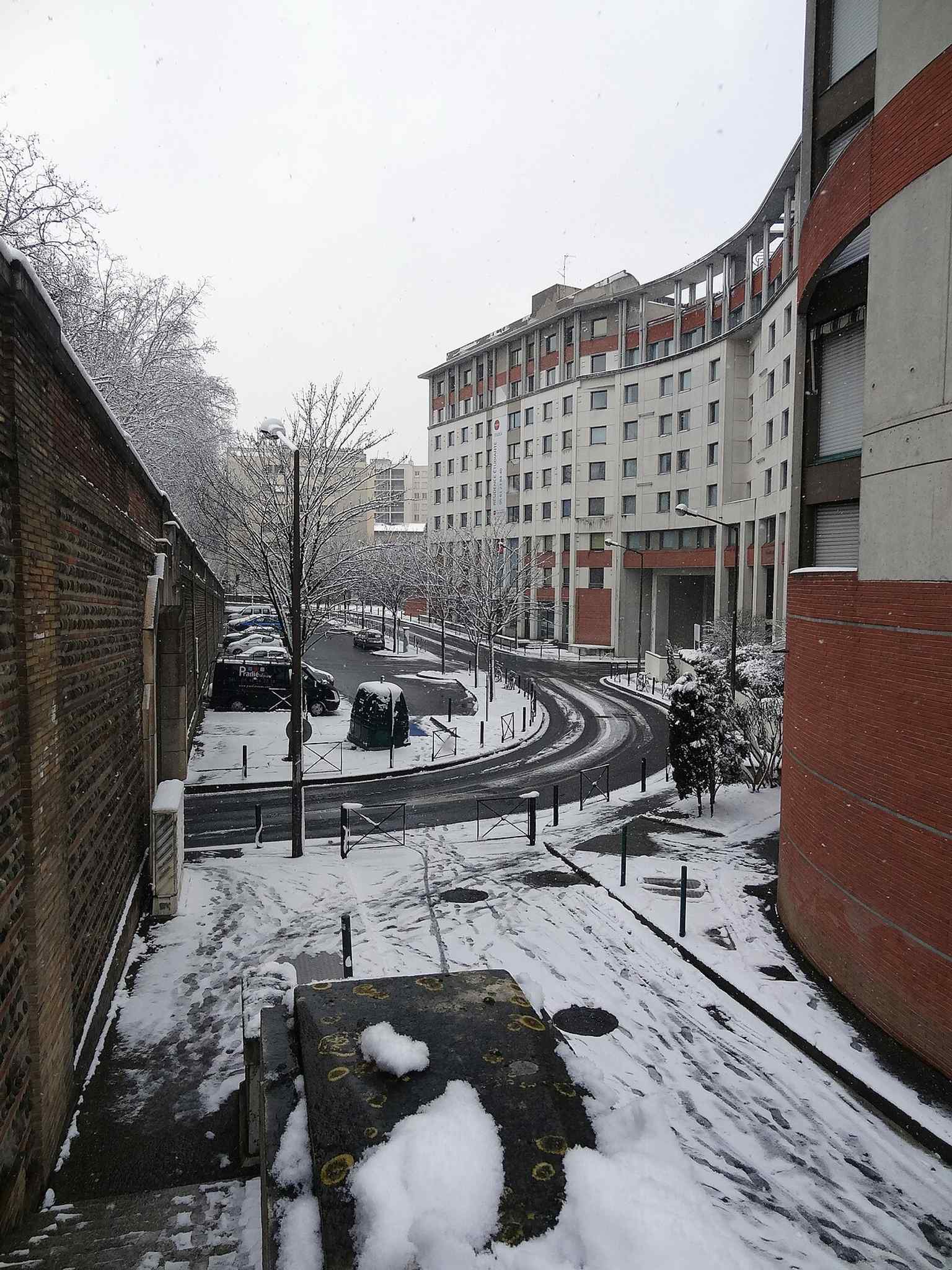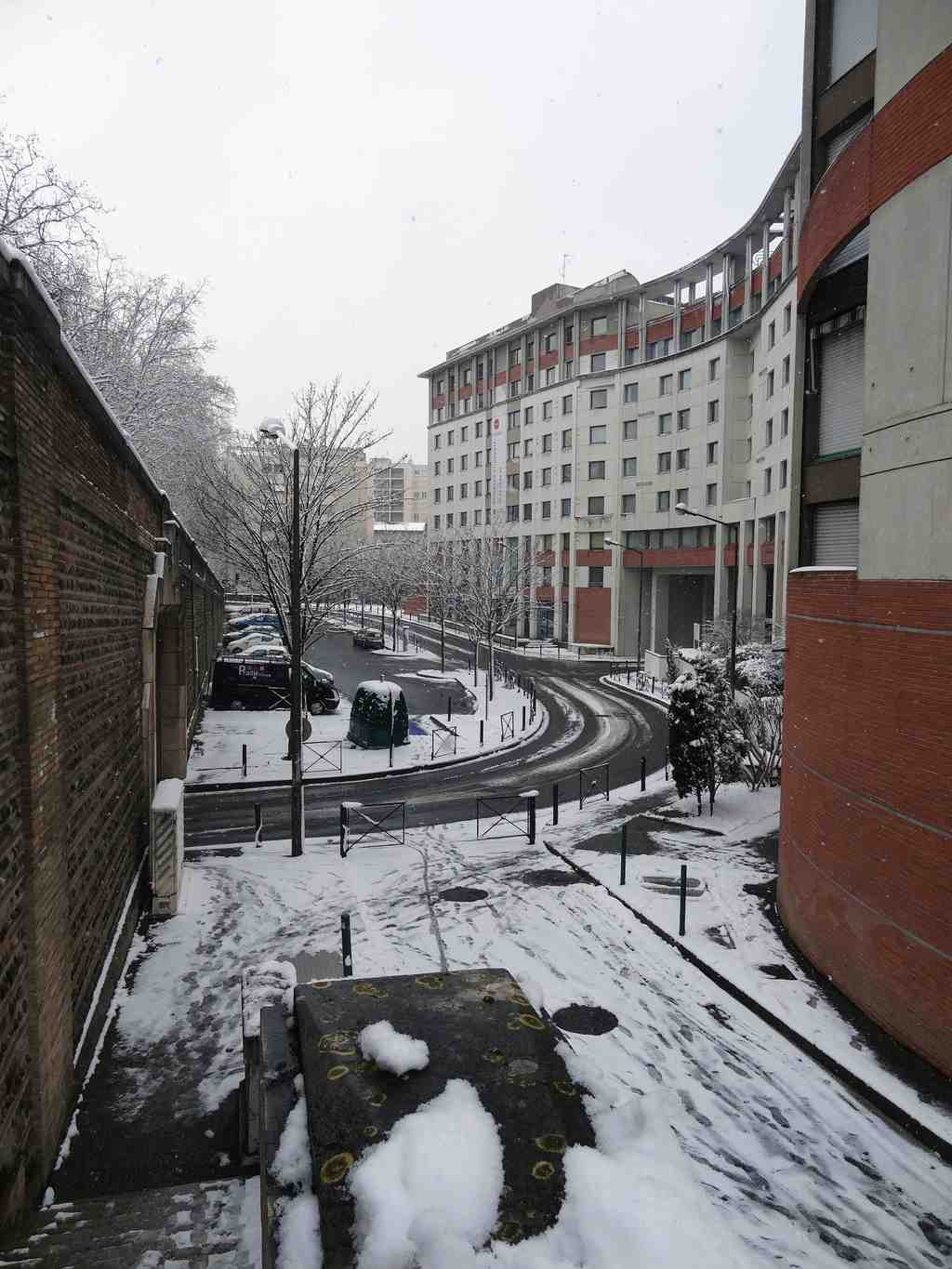
On your left, look for the oval sweep of dark asphalt curving around modern apartment blocks, with one distinctive section slipping under the concrete span of the Pont des Catalans.
This is Avenue of the Old Velodrome, and its shape is the clue. Most streets in Toulouse behave sensibly: they connect one place to another, branch, continue, disappear into a grid. This one loops. It meets only Avenue Paul-Séjourné, serves two short dead ends, and even ducks partly into a tunnel beneath the bridge. That unusual oval is not an urban whim. It is a footprint.
In nineteen thirteen, the city laid out this access road for a destination that no longer stands: the Bazacle velodrome. The track had arrived earlier, in eighteen ninety, and from eighteen ninety-five the company Le Cycle-Sud Toulousain turned it into one of the city’s sporting stages. For decades, people came here not for parking spaces or student residences, but for speed, rivalry, and the strange theatre of men riding in circles at astonishing pace.
One moment gave the place a permanent claim on cycling history. On the eighth of July, nineteen oh three, during the very first Tour de France, the Bazacle velodrome served as the arrival control in Toulouse. Hippolyte Aucouturier recorded the best time here. Think of it this way: before this became a quiet residential address, it briefly touched the birth of the most famous cycle race in the world.
Local riders gave the place its own texture too. In nineteen oh eight, Marcaillou and Sérès won the Twelve Hours of Toulouse here, along with an American race, a relay style that traded exhaustion for teamwork. And in the track’s final years, the romance wore thin. Accounts remember Sylvain Marcaillou, Senseby, and Bouche repairing holes in the surface themselves before they could ride. That detail tells you almost everything. The glory had not vanished, exactly, but it had become hand-to-mouth, patched together lap by lap.
If you glance at the image in the app, you can see the present result: ordinary residential buildings occupying ground once given to spectacle. Another view makes the loop easier to grasp, this short road folding back on itself instead of joining the city in a straight line.
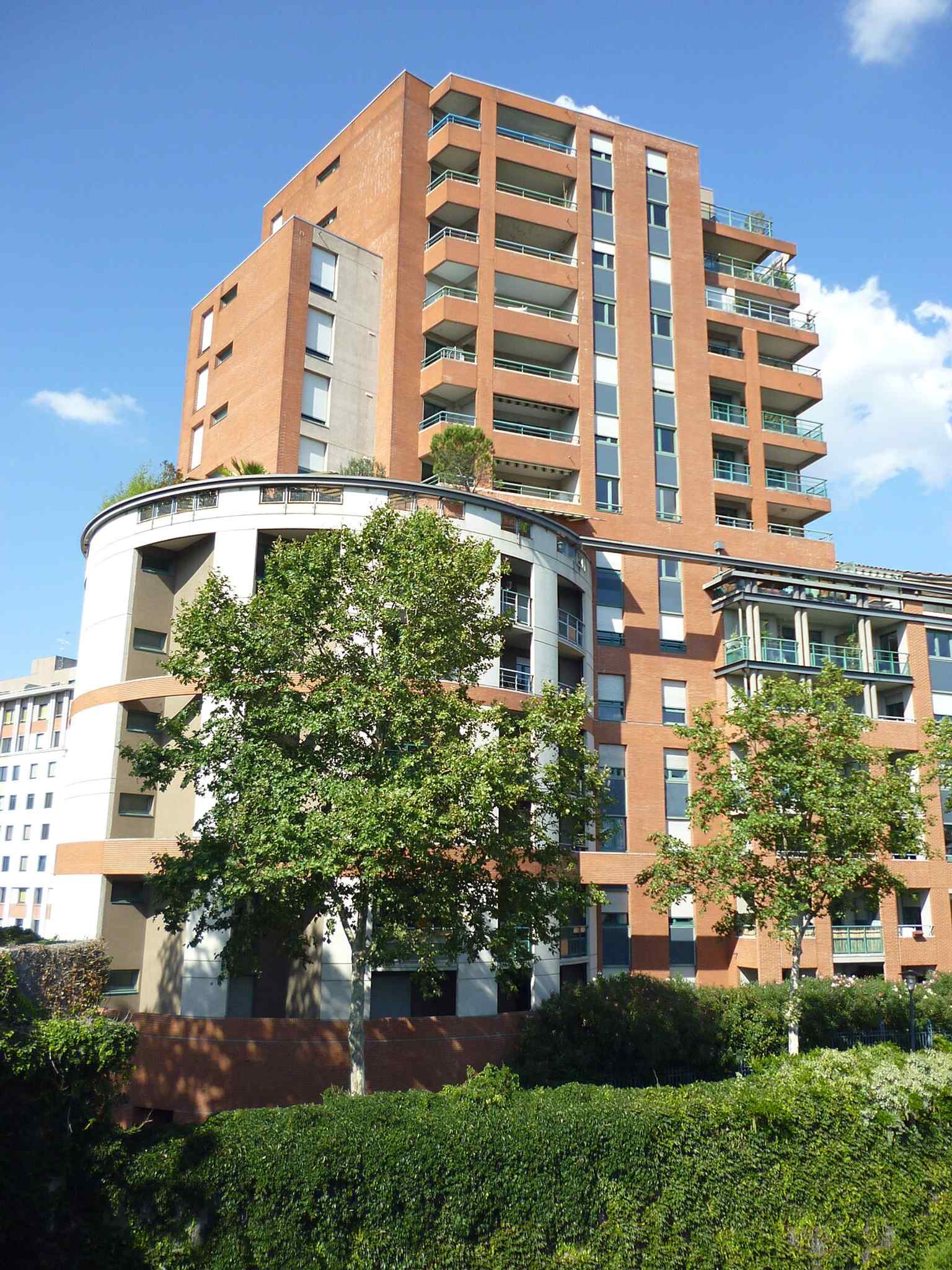
The velodrome disappeared gradually, probably between the late nineteen forties and the nineteen fifties, and in nineteen sixty the avenue took its current name. So here is the quiet question this place leaves behind: when an old purpose dies, but its curve still directs your steps, has it really gone?
Toulouse often keeps memory not only in statues and plaques, but in stubborn lines on the map. Follow that thought toward the Catalan Bridge, where the city’s traces become impossible to miss.