
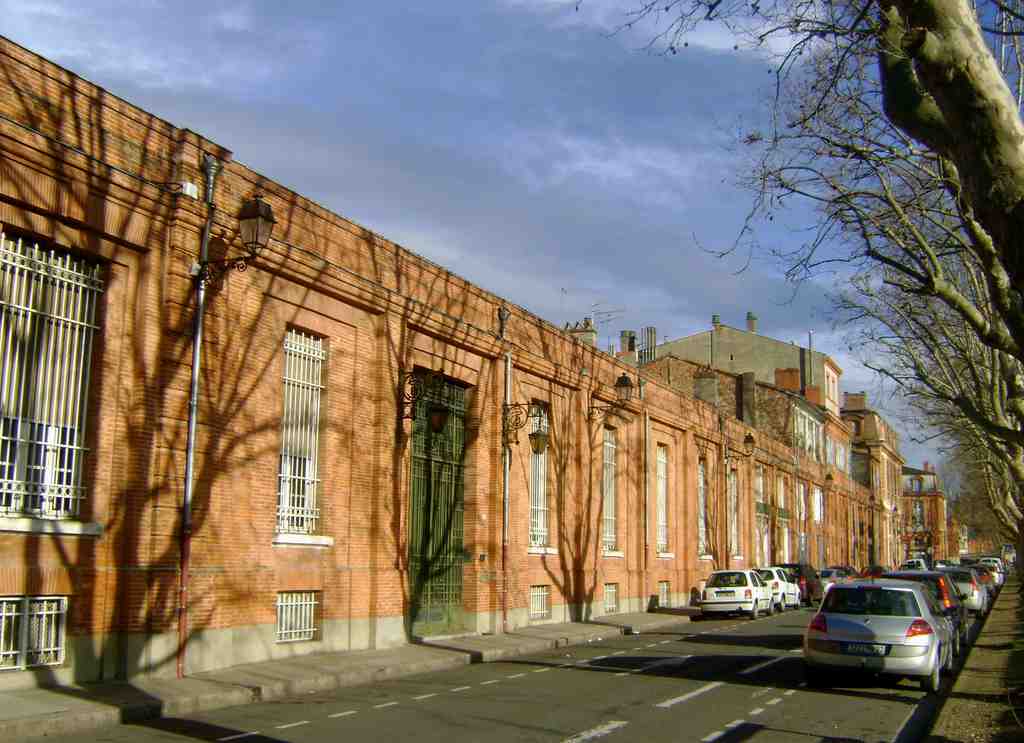
Look for a long brick-and-stone embankment running in a clear line beside the Garonne, framed by orderly neoclassical houses and marked by tall rounded arches at ground level.
Quai Saint-Pierre is Toulouse at a threshold. Here, the city stops being only streets and begins to behave like a river city: a route for movement, a worked edge of water, and a public place where several versions of Toulouse meet at once.
Long before the elegant quay existed, this stretch near the Bazacle mattered because people could cross the Garonne here. That crossing point was already in use before the Roman city. It made this bank useful, vulnerable, and valuable all at once. In the Middle Ages, the Bazacle nearby was both passage and workplace, watched over by the old Bazacle castle and driven by mills that ground grain, sawed wood, beat cloth, and crushed oak bark for tanning leather. Even more remarkable, the mill company already behaved like a shared business: its ownership shares circulated on the Toulouse market, rising and falling with the profits of the mills. A modern financial instinct, you might say, in thoroughly medieval boots.
The quay you see took shape much later, in the eighteenth century, when Toulouse decided to discipline the river without turning its back on it. The engineer Joseph-Marie de Saget drew the plans in the seventeen seventies, and his crew built the retaining wall. They filled and levelled the bank with rubble, then laid out a proper roadway for carts and a pavement for pedestrians. That practical order still underpins the calmness of the place.
If you glance at the image on your screen, you can see the quay stretching along the river as a deliberate urban edge rather than a natural bank. De Saget never saw the whole work completed. He died in seventeen eighty-two during an epidemic, and his brother Charles-François took over until the quay was finished in seventeen eighty-six. That handover gives the place a more human texture. Grand plans often survive because someone quieter carries them through.
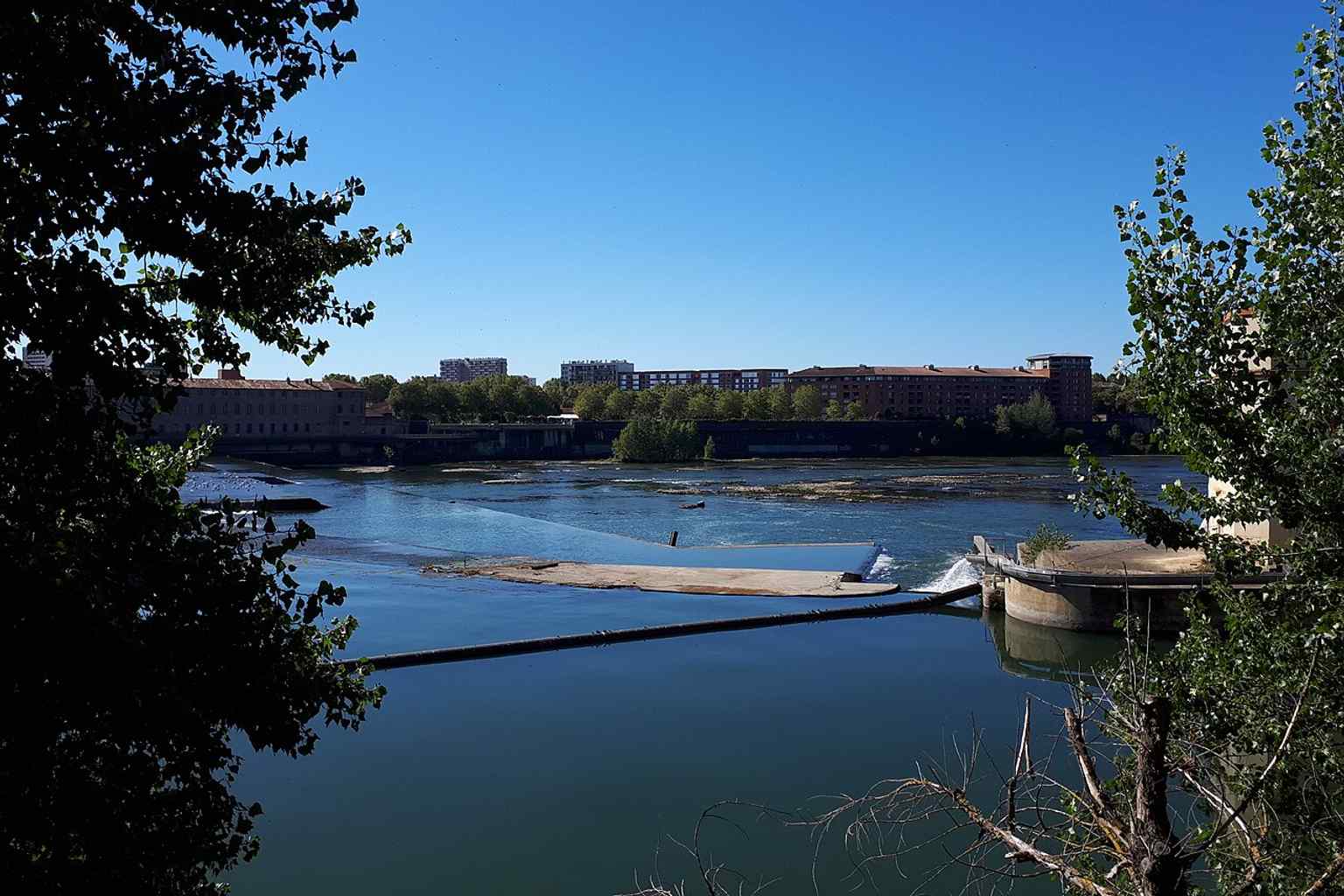
Names changed with politics. First it honoured Archbishop Arthur Richard Dillon, who inaugurated the nearby Brienne canal. During the Revolution, it briefly became Quai Brutus, after the Roman founder of the republic. By eighteen oh six, it settled into Saint-Pierre, linking itself to the place and the old church of Saint-Pierre-des-Cuisines.
And this quay kept changing. Nearby industrial buildings passed from the old Bazacle company into Électricité de France, or E-D-F. In two thousand and thirteen, one former E-D-F building sheltered around one hundred and fifty people through homeless aid collectives. Soon after, the Toulouse Institute of Political Studies hoped to move here for more space and a river view, but residents and heritage authorities resisted. Later, developers proposed a senior residence instead. So even in recent memory, this stretch has kept negotiating what the city needs most.
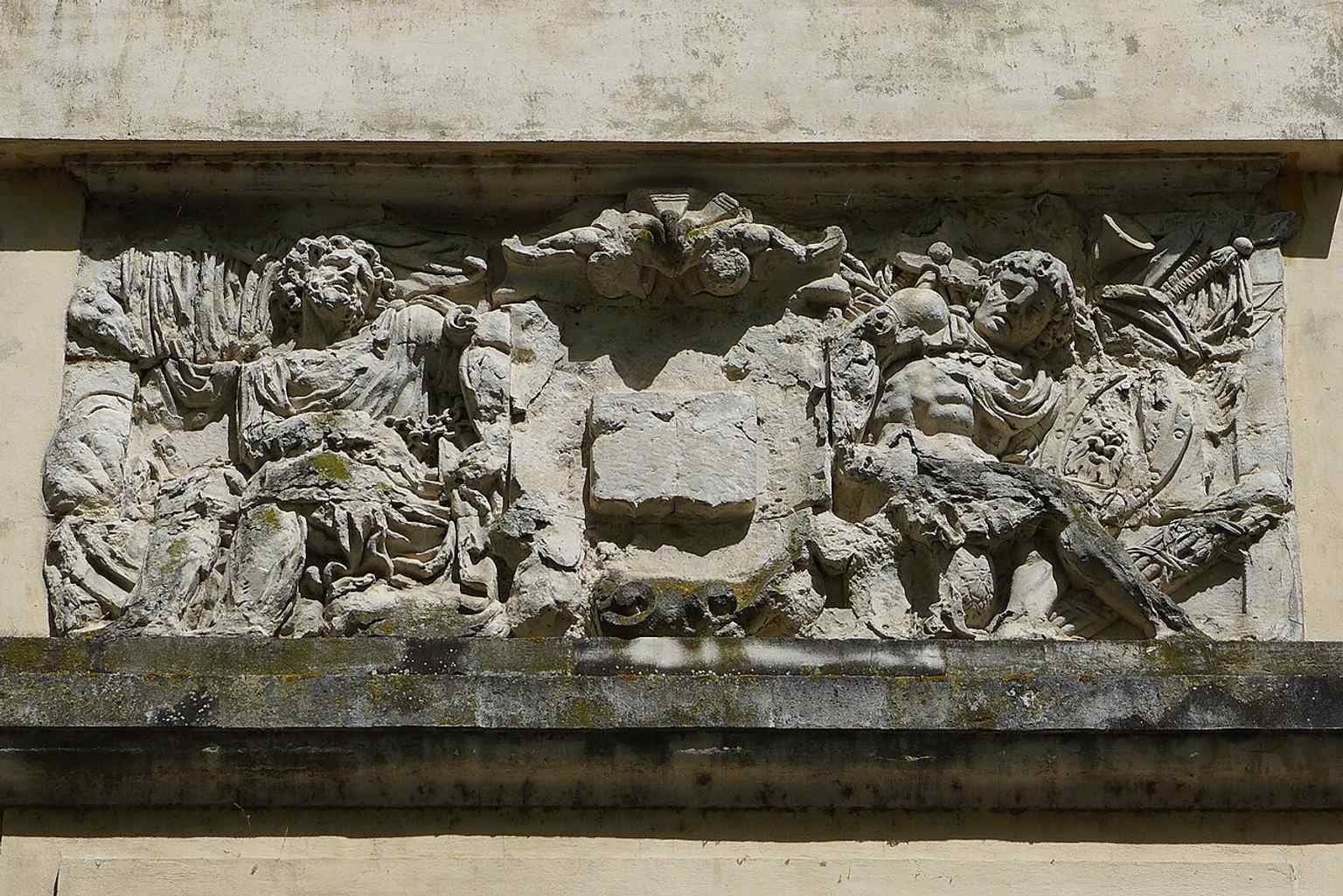
One small detail says a great deal. On your phone, have a look at the carved chained captives near Rue de la Boule. It is a bas-relief, meaning a shallow sculpture cut to project slightly from the stone. That fragment once belonged elsewhere and was reset here in seventeen eighty, turning an entrance into a statement. Even decoration on this quay has been reused, carried over, given a second life.
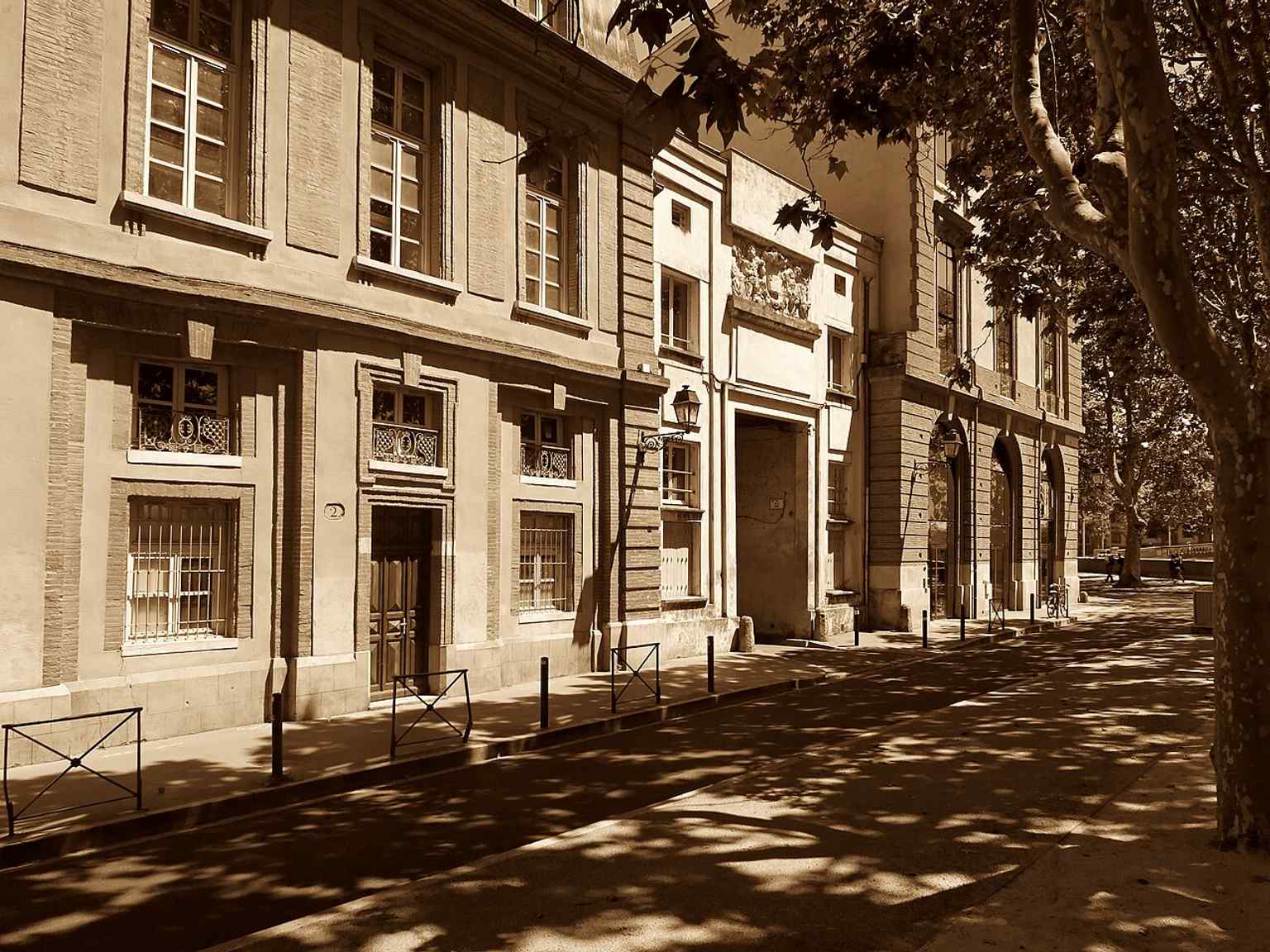
In a moment, continue toward Avenue of the Old Velodrome. The next views begin to gather all these currents together: water, engineering, memory, and the symbols a city chooses to place above them.





.jpg)
.jpg)
.jpg)