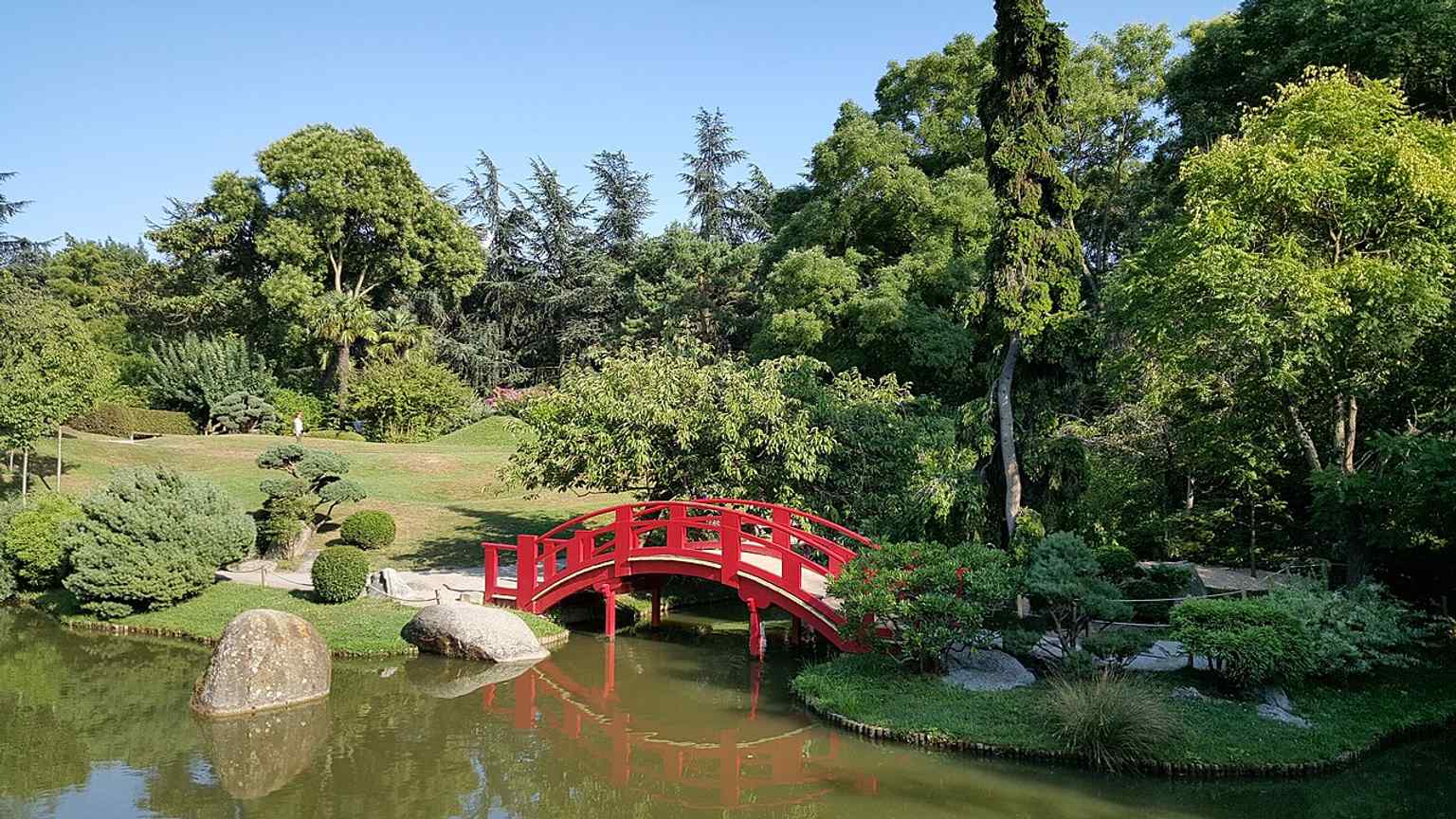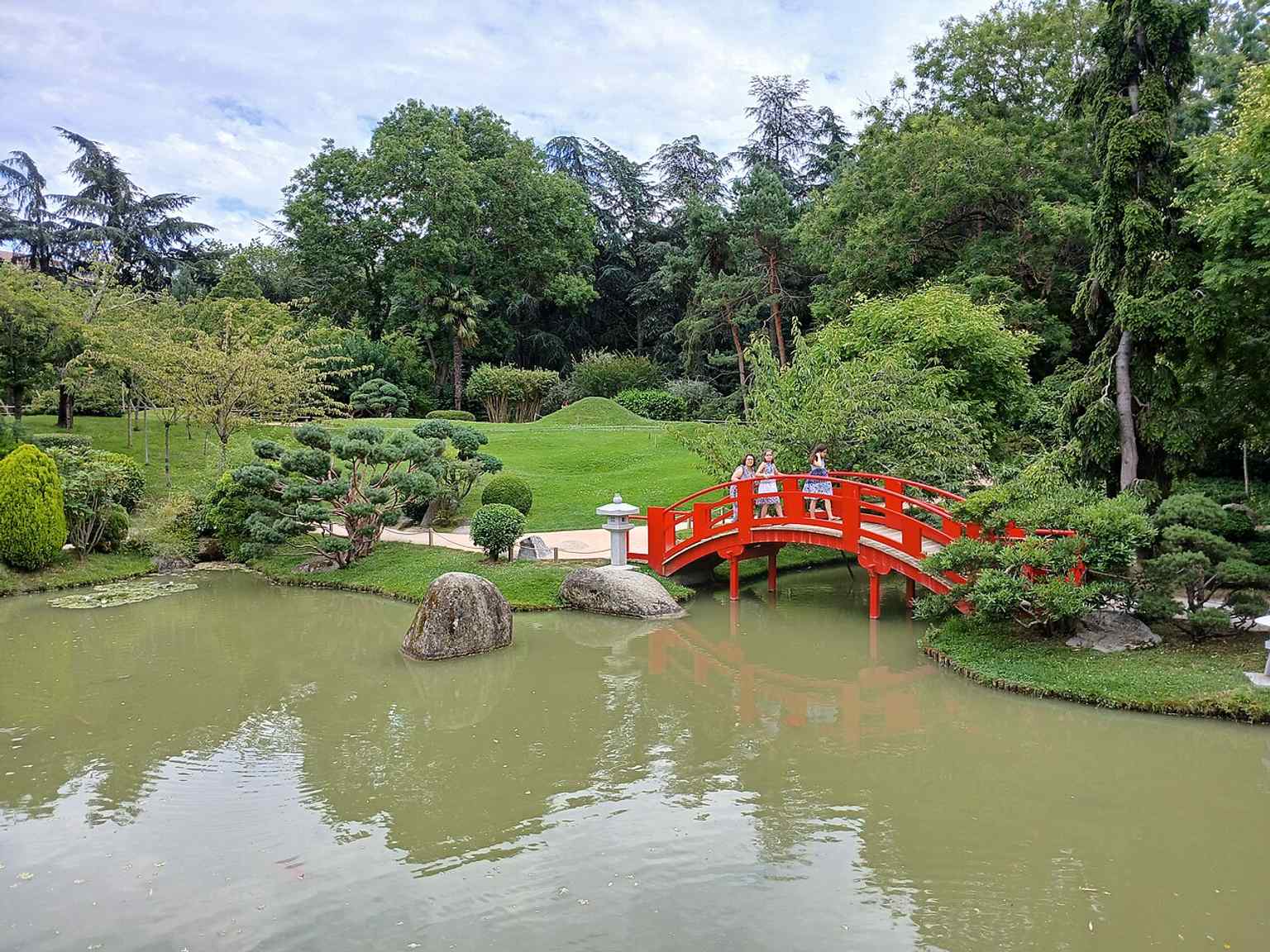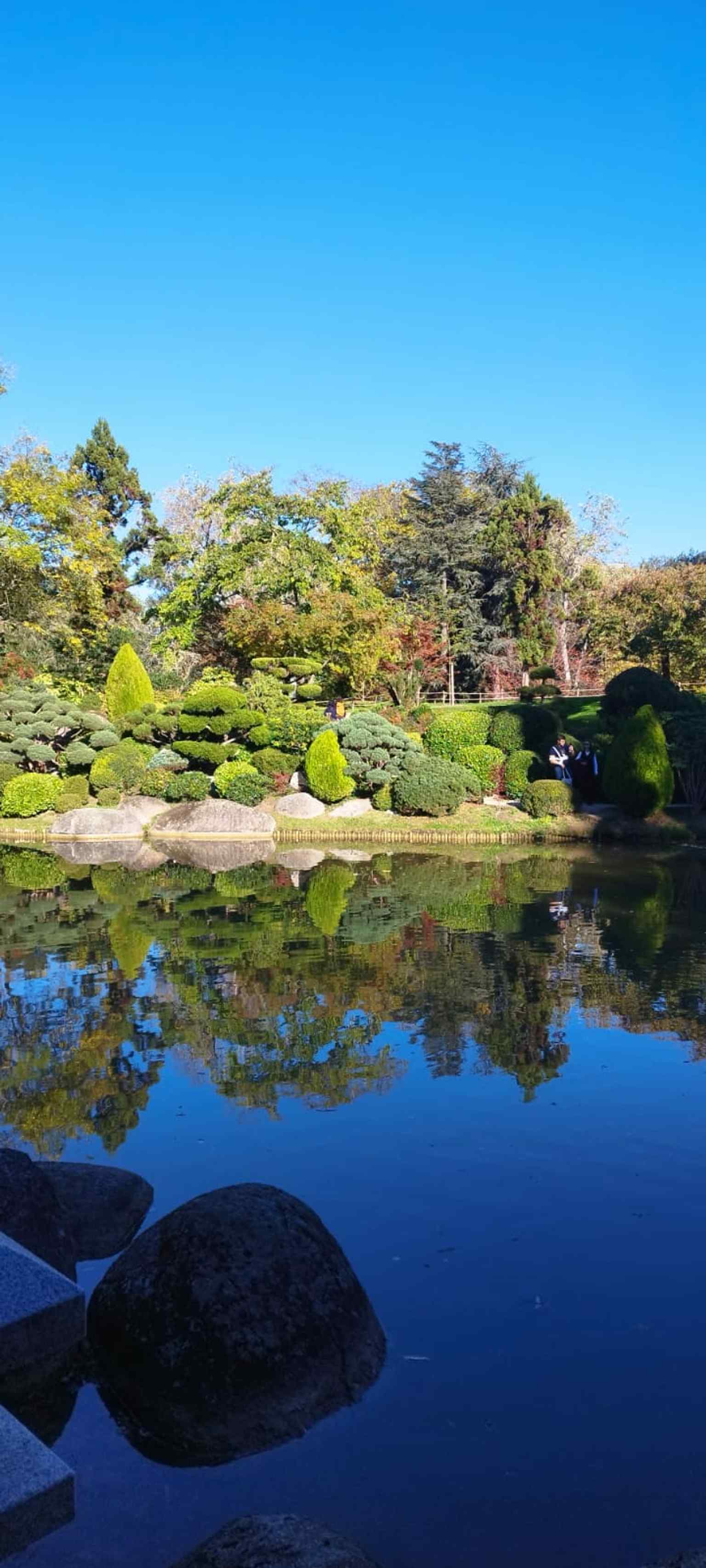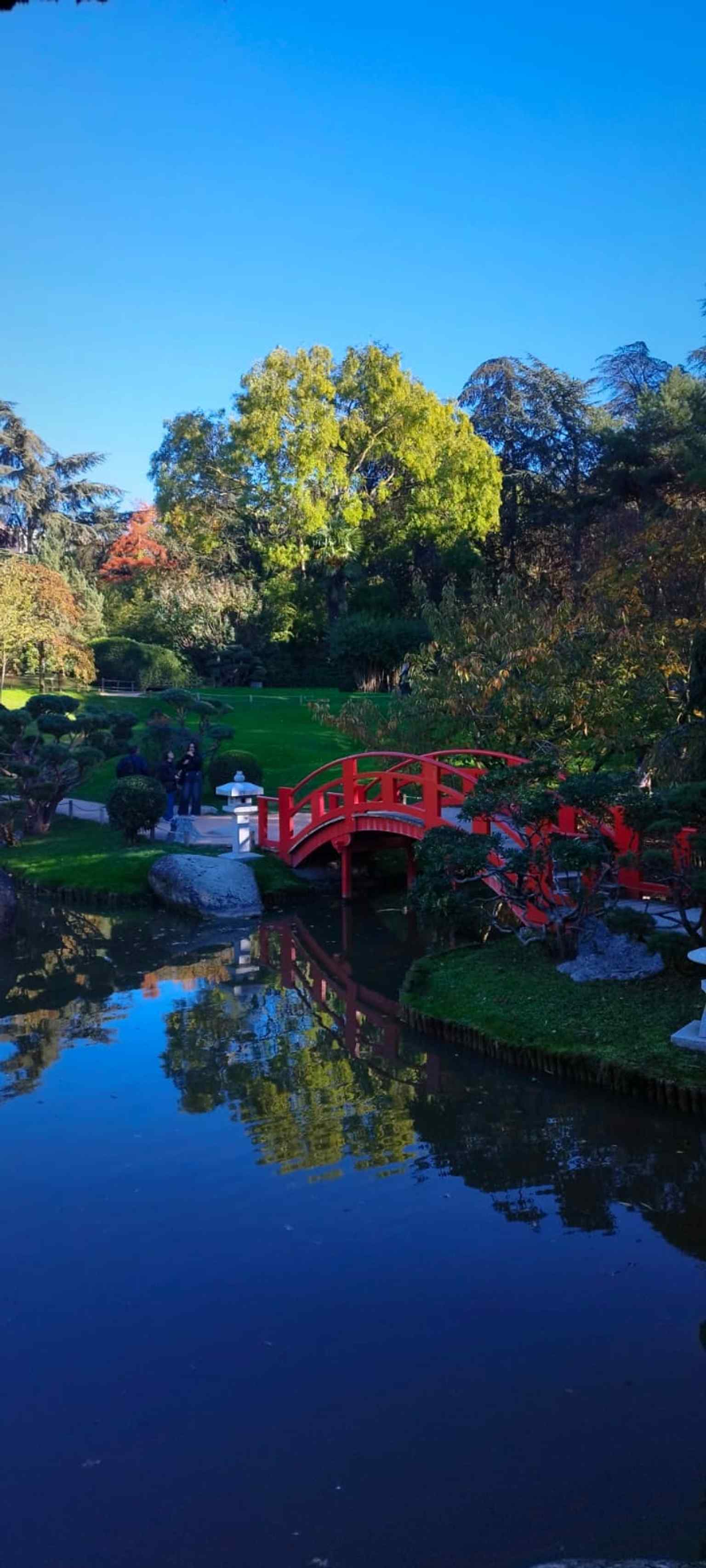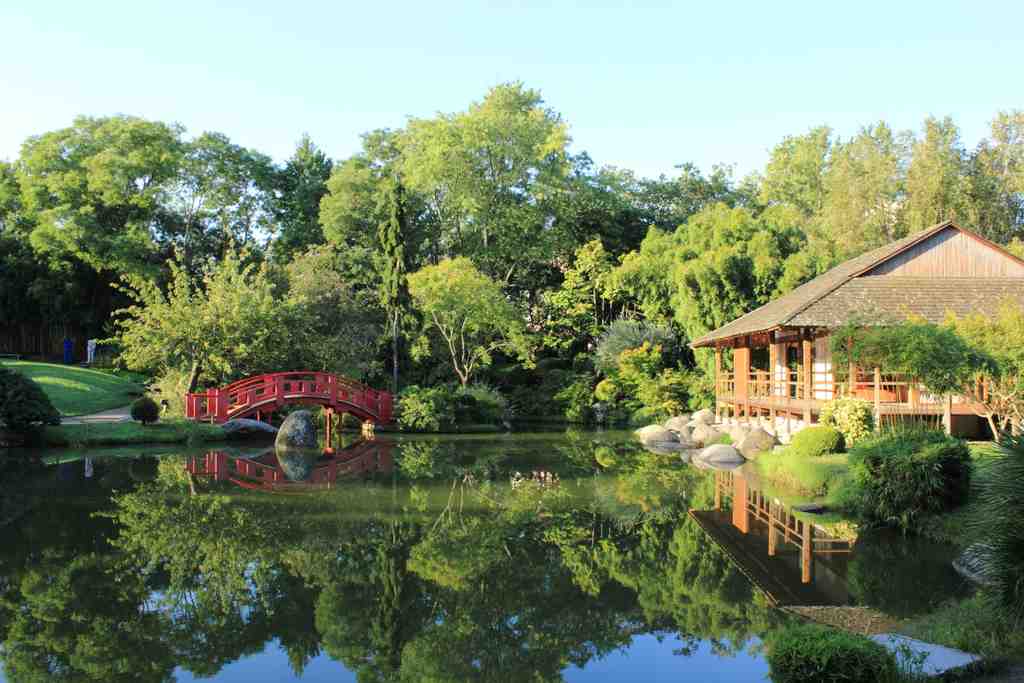
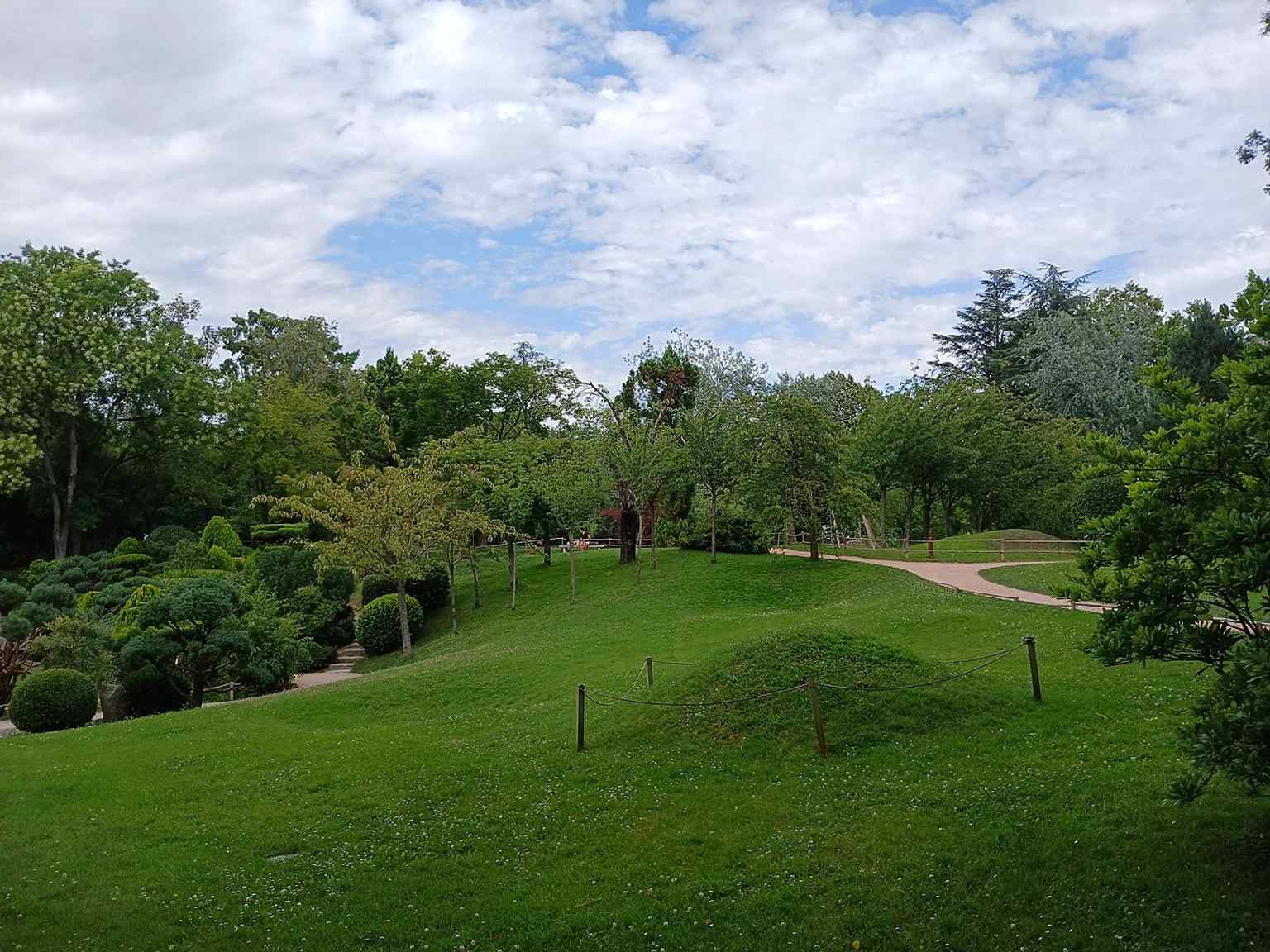
Look for the red wooden bridge arcing over still water, a low island-like composition of stone and planting, and a screen of dense greenery that encloses the garden like a quiet wall.
This is the Japanese Garden of Toulouse, though that simple name hides a rather clever act of civic imagination. In nineteen seventy-two, Mayor Pierre Baudis began pushing a vast redevelopment here at Compans-Caffarelli, on land occupied by former barracks. When the army finally withdrew, it freed nearly twenty hectares of military ground. Toulouse could have filled it with nothing but roads, offices, and hard geometry. Instead, in nineteen eighty-one, Baudis chose to place a landscape of reflection right in the middle of that upheaval.
That contrast matters. Behind this composed calm lies an older logic of enclosure, discipline, and controlled space. The city did not erase that history so much as answer it with another kind of order: water, stone, planting, and carefully measured emptiness.
Baudis was personally invested in the idea. He had admired Japanese gardens on his travels, especially in Tokyo, Kyoto, and even Dublin. He came back with photographs of the Katsura Imperial Villa, and with a book by Günter Nitschke, and asked Toulouse to make something inspired by those models. Not a stage-set version of Japan, and not a strict copy either, but a local interpretation.
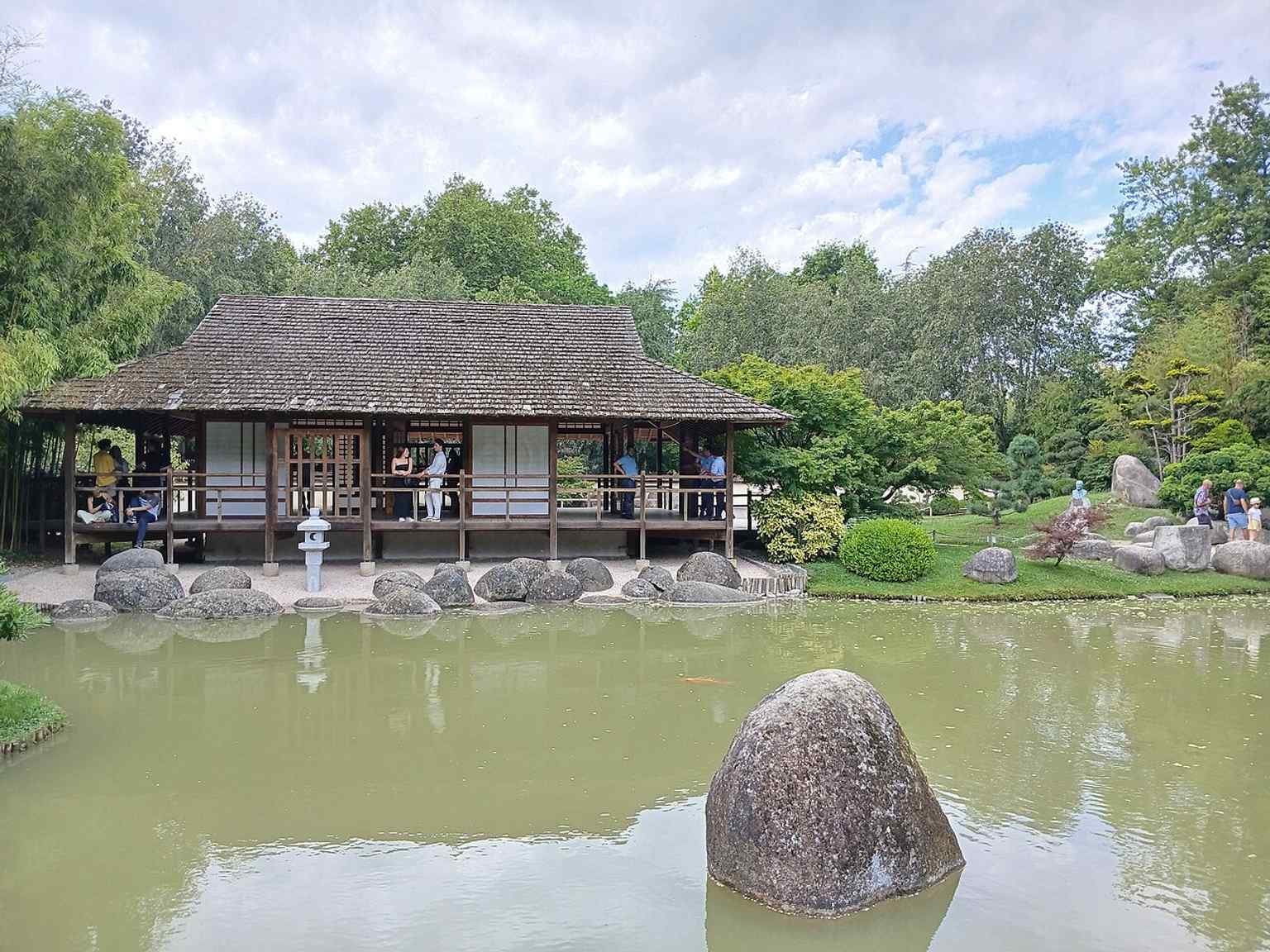
Pause for a moment and scan the composition: the water, the rock groupings, the enclosed greenery, the bridge. Ask yourself which parts seem natural, and which parts reveal the firm hand of design.
Most visitors miss the detail locals rather like to point out: the garden’s authority comes partly from the fact that Toulouse made it itself. The city’s own parks and green-spaces study office designed it, and a local company, Espaces Verts du Languedoc, built it while demolition of the old barracks continued between nineteen eighty-one and nineteen eighty-three. So this serene little world is not an imported artefact. It is Toulouse proving it can translate another tradition with care.
If you glance at the app, the wider image shows how this secluded garden sits within the larger former military site. And the close view of the bridge reveals its symbolic role: it leads to an island that represents paradise. Beyond that, the garden layers in a dry landscape with Crane and Turtle islands, nine rocks, a tea pavilion, lanterns, stepping stones, a dry waterfall, even a small Mount Fuji. Later, in twenty sixteen, the city added a tsukubai, a ritual ablution stone for washing, and renamed the place for Pierre Baudis, turning it into a memorial as well as a garden.
Beauty here is not accidental; it is a public story, carefully arranged. When you’re ready, continue to Lascrosses Boulevard, about four minutes away; if you wish to return later, the garden generally opens daily from eight in the morning until eight in the evening.