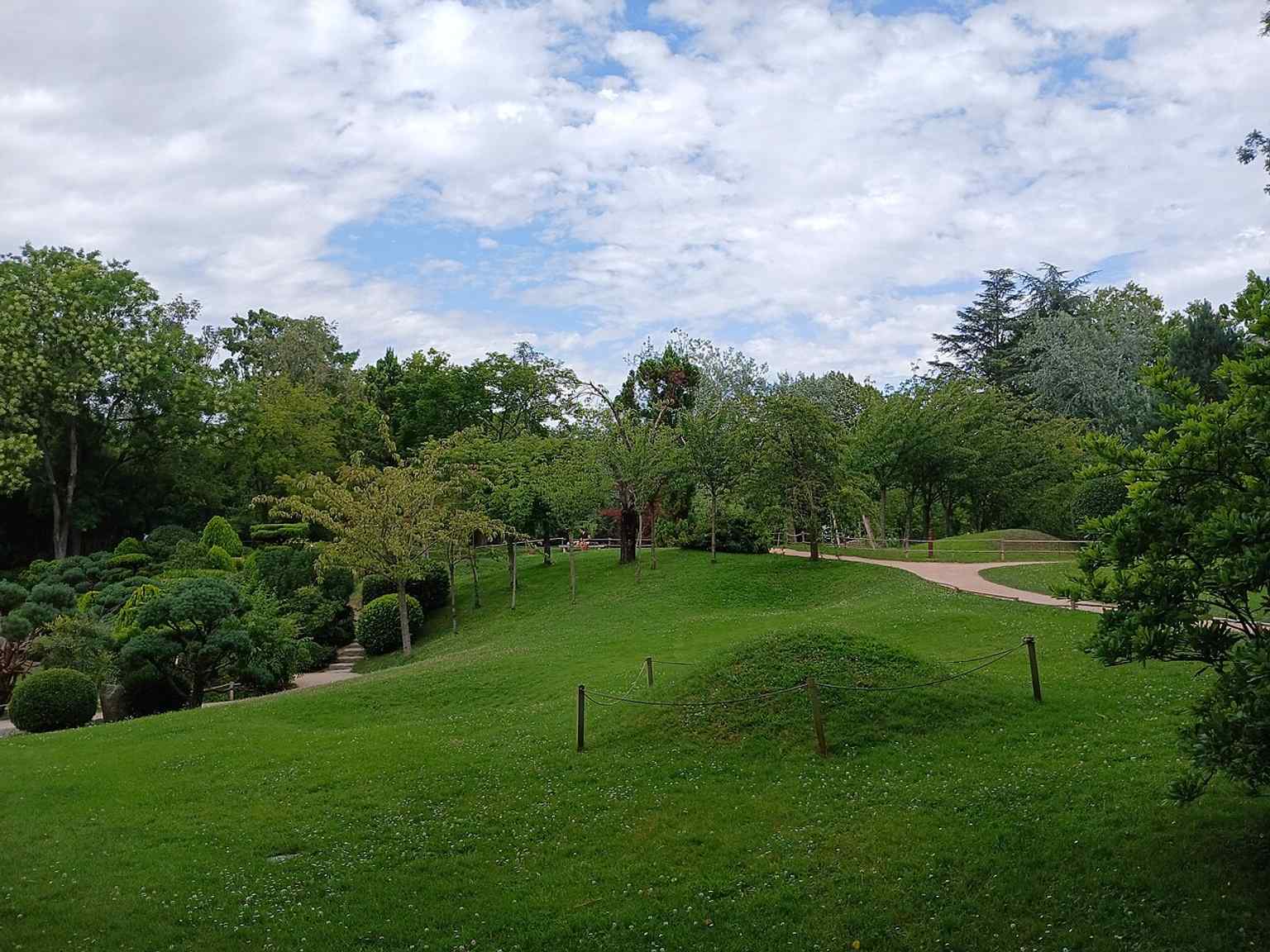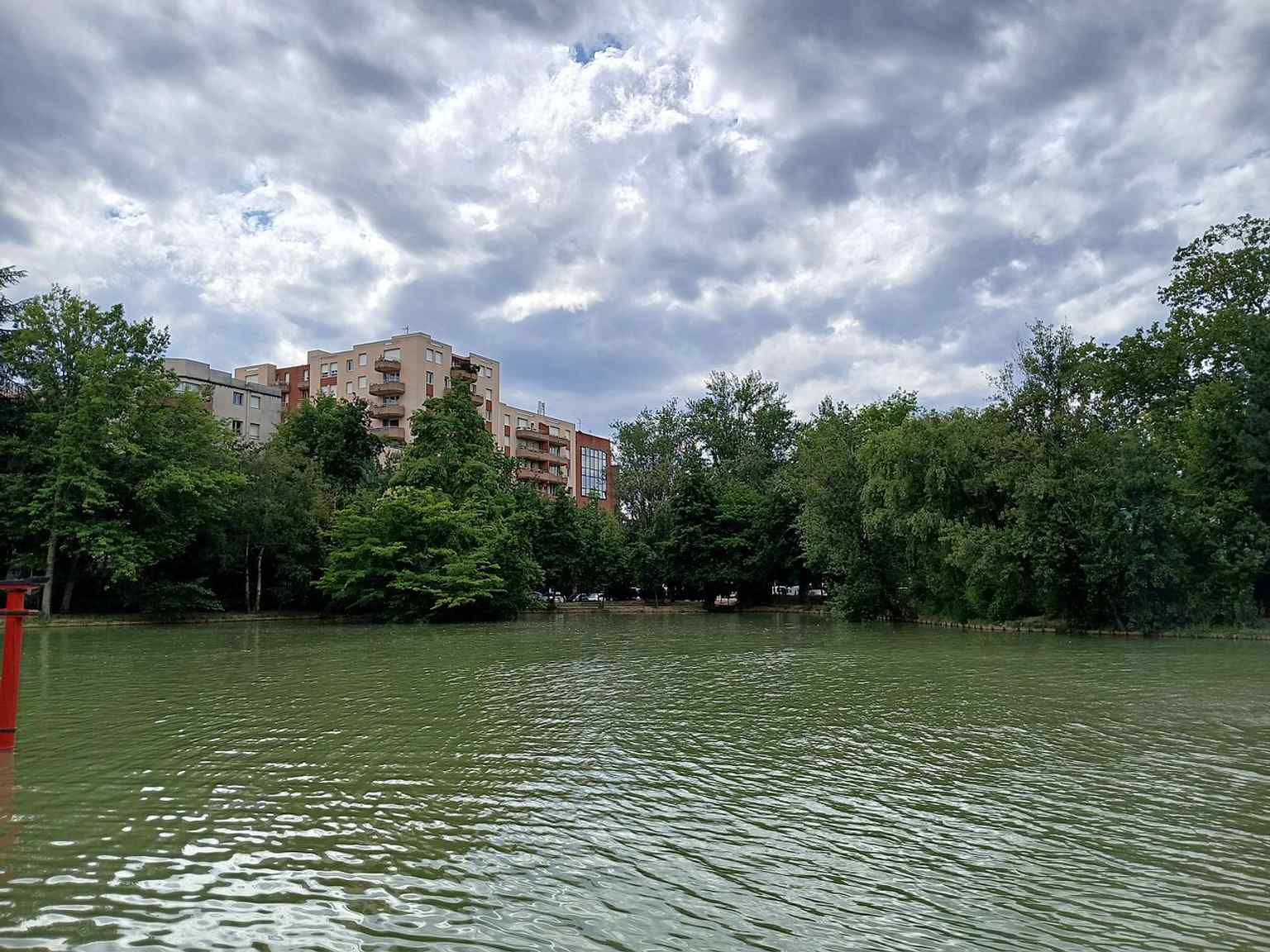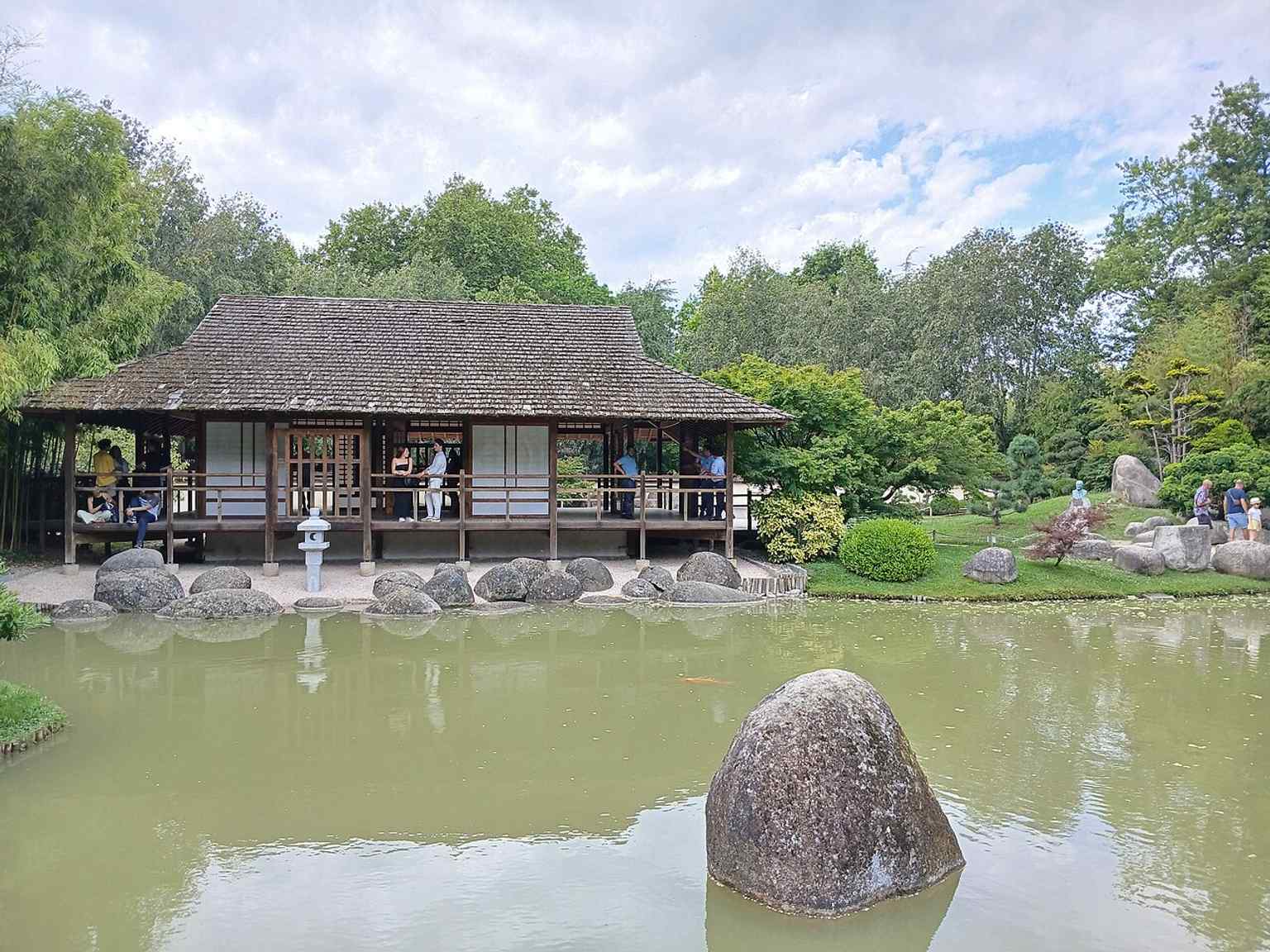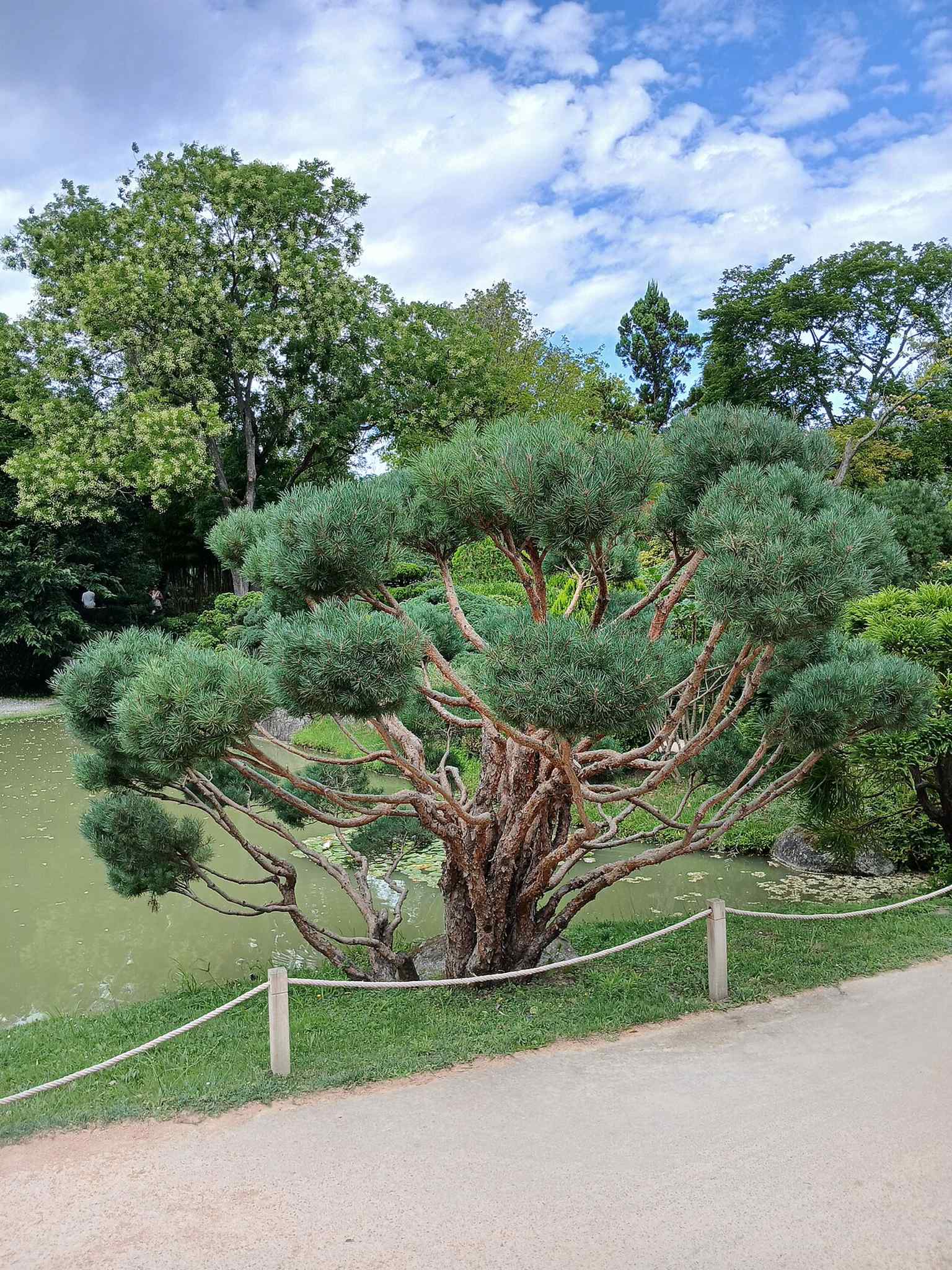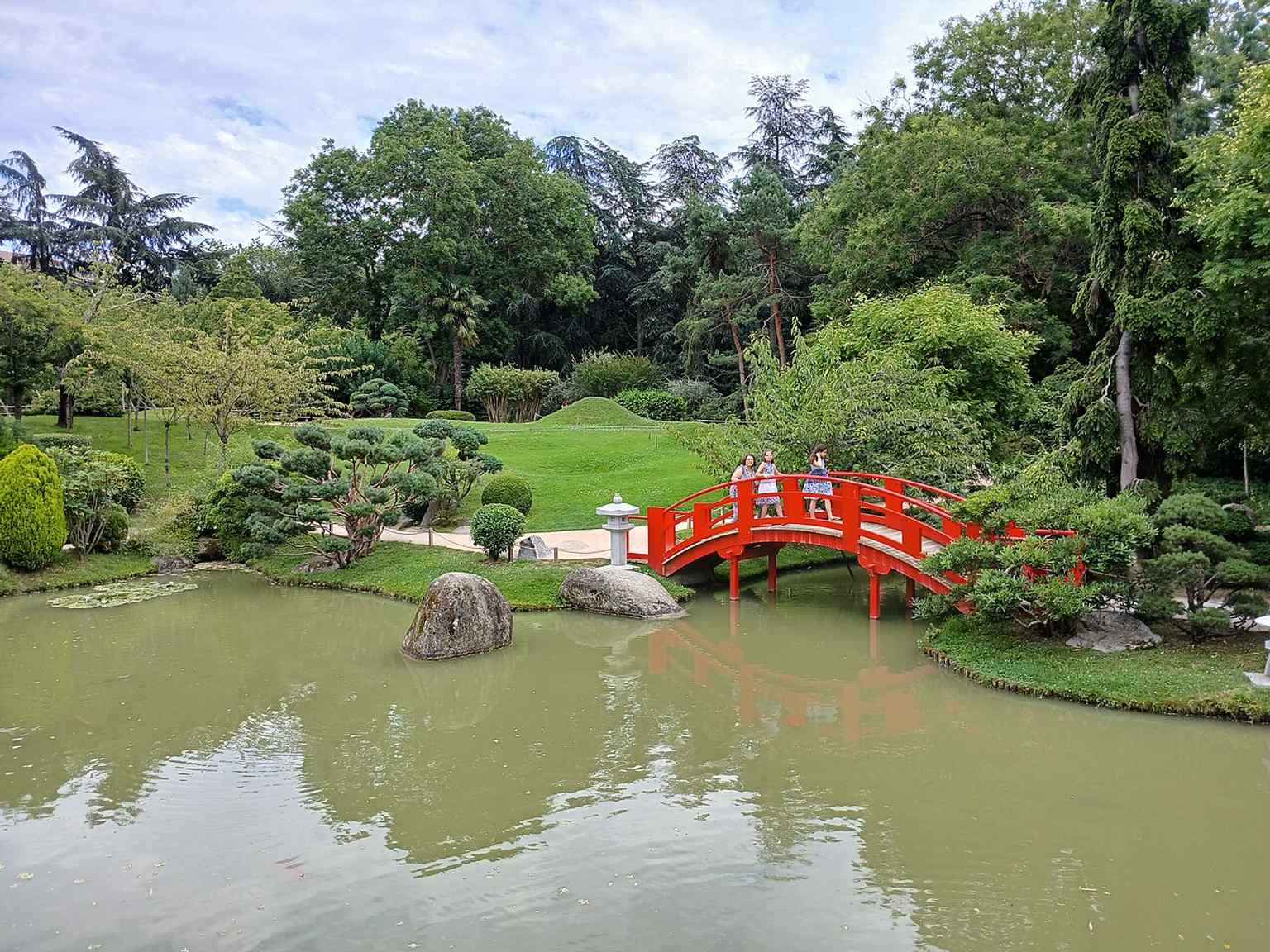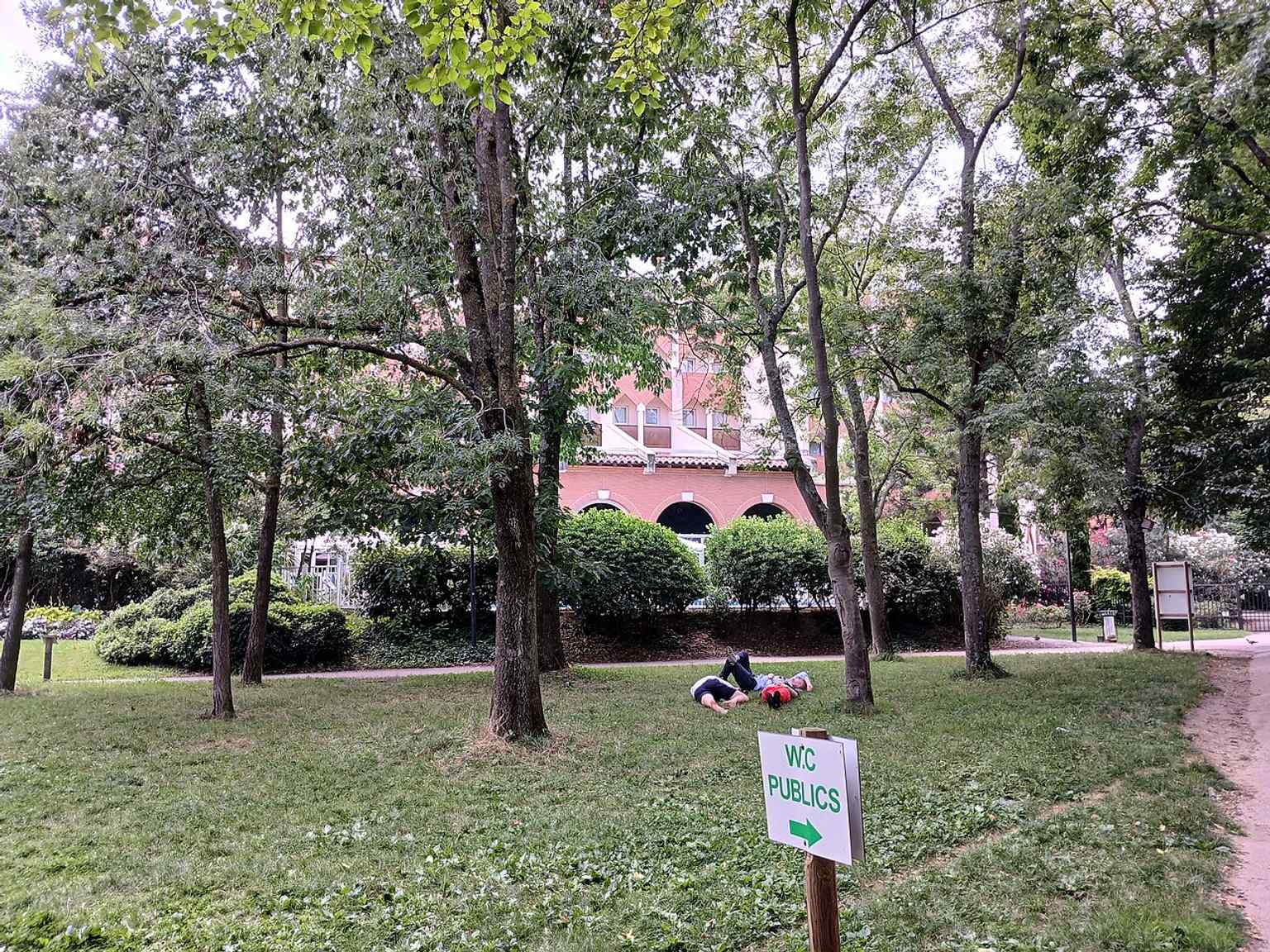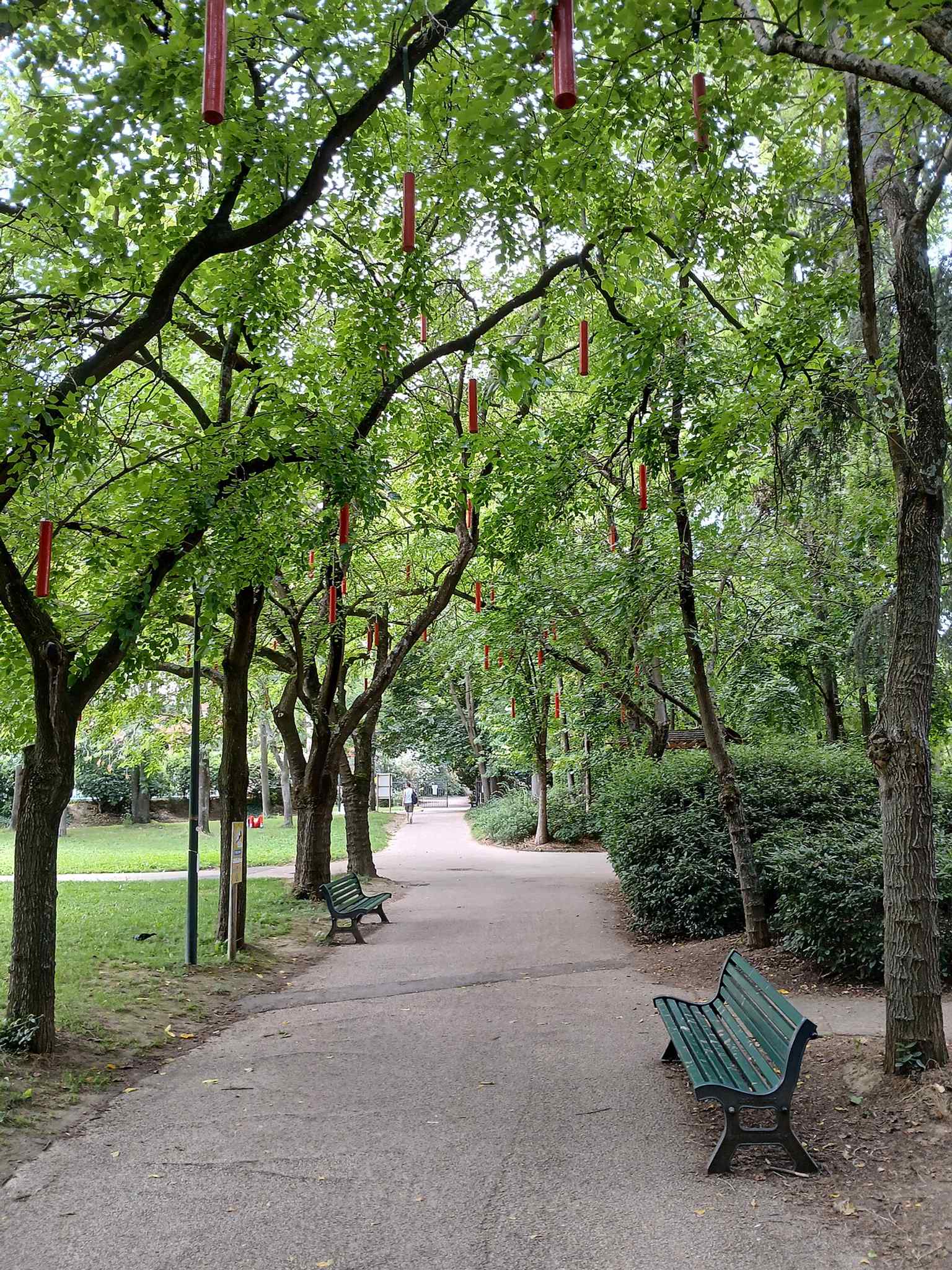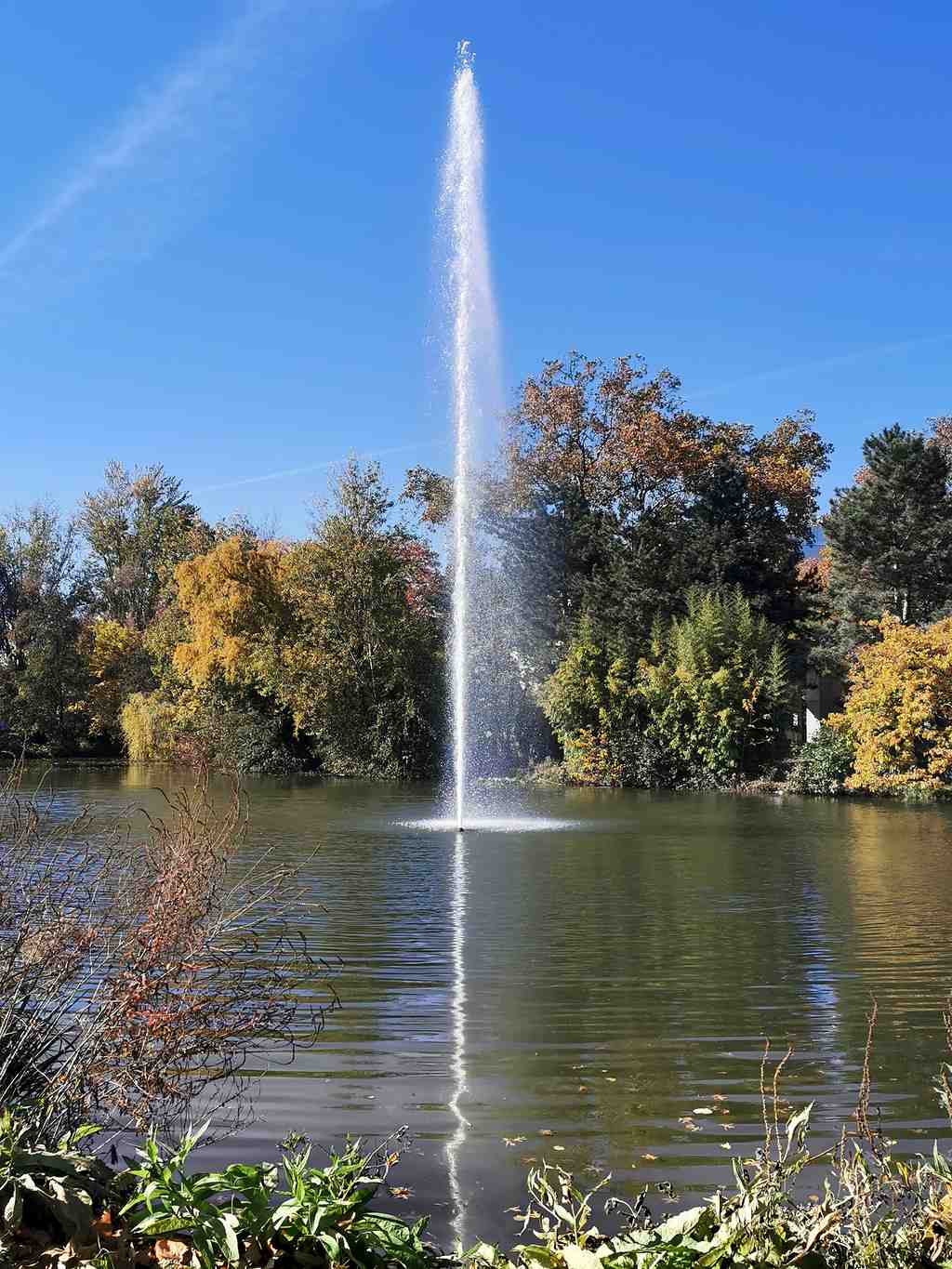
On your left, look for a broad landscaped park shaped by straight paths, a large water basin, and a distinctly Japanese-inspired composition set within the greenery.
Compans-Caffarelli Garden is not simply a patch of calm in the district; it is a deliberate act of reconversion, a planning word that means giving old land a completely new civic purpose. Here, that change was dramatic. The army had abandoned the Compans and Caffarelli artillery barracks, and from the early nineteen seventies the city folded this ground into a coordinated redevelopment district, turning a closed military enclosure into the public heart of a new business quarter.
If you glance at the image on your screen, the elevated view makes that strategy easier to grasp: this is a large urban composition, not an accidental park. And another image helps you imagine the site’s layered past, where barracks once stood where people now stroll. Names matter here. Cities often store memory in labels long after walls disappear, and “Compans-Caffarelli” kept the old military names attached to the land even as its function changed completely. Later, the Japanese garden inside took on the name Pierre Baudis, the mayor who pushed this project forward. He admired Japanese gardens on his travels, especially in Dublin, and that private taste quietly shaped a new public identity for Toulouse.
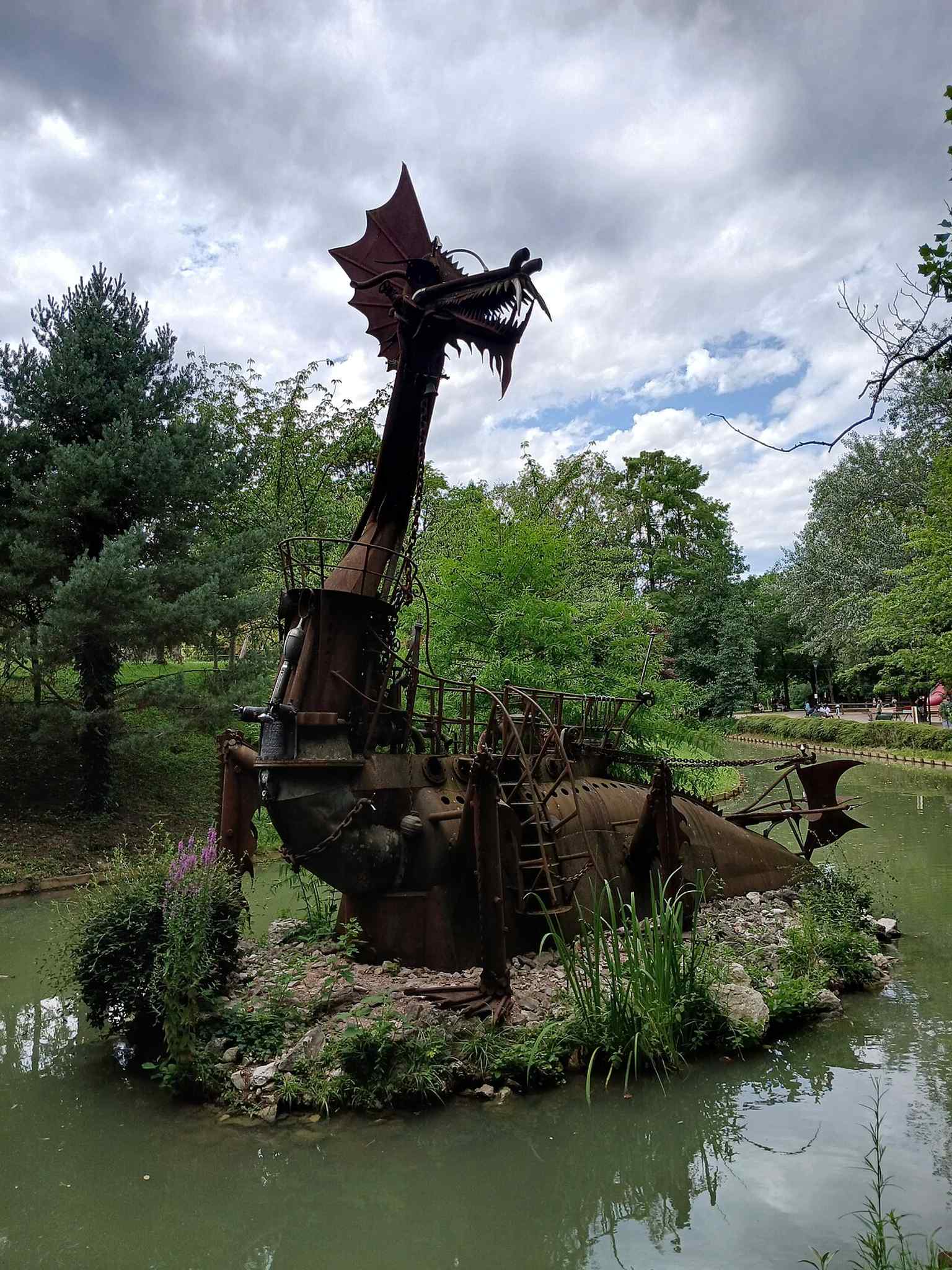
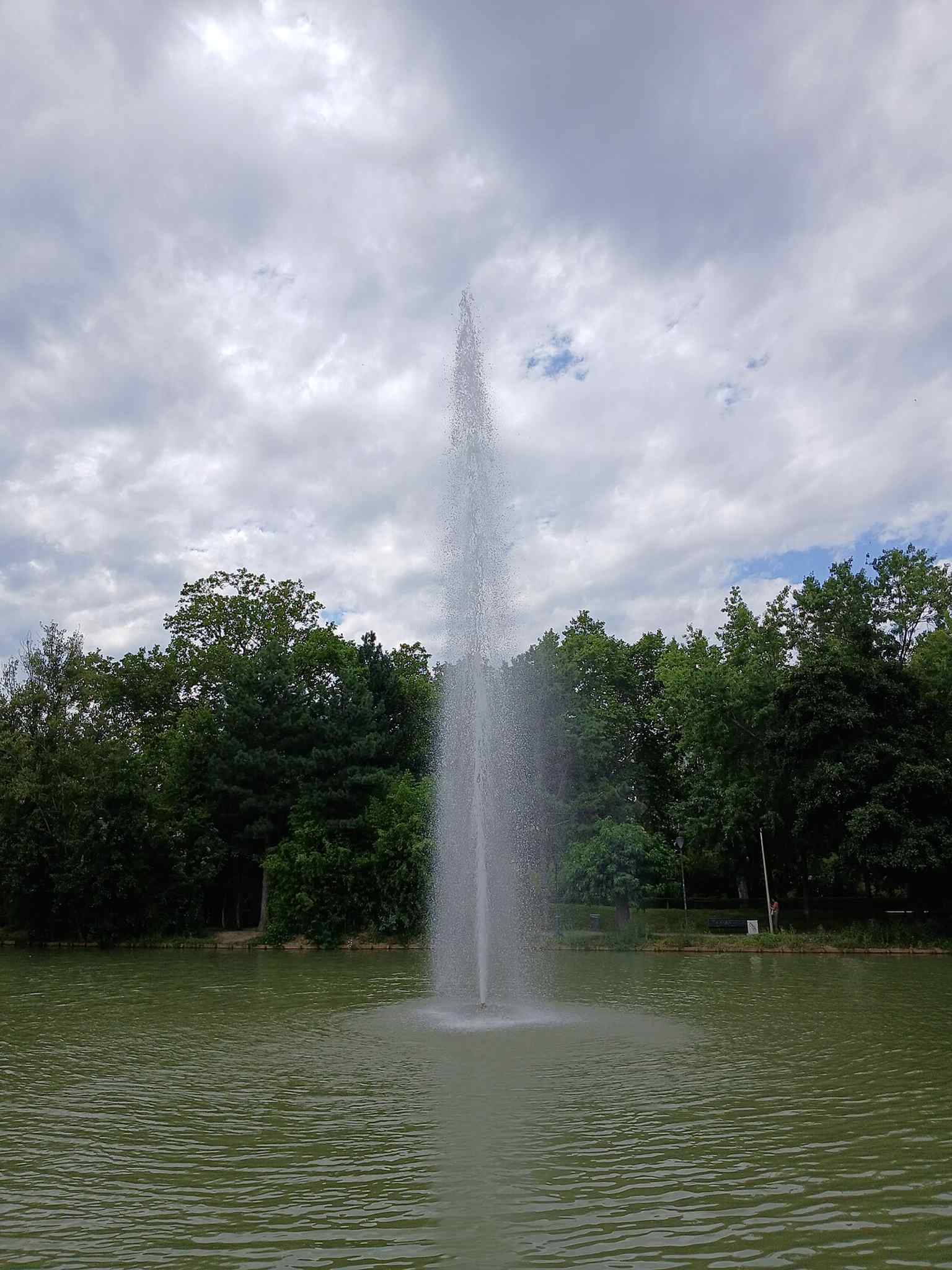
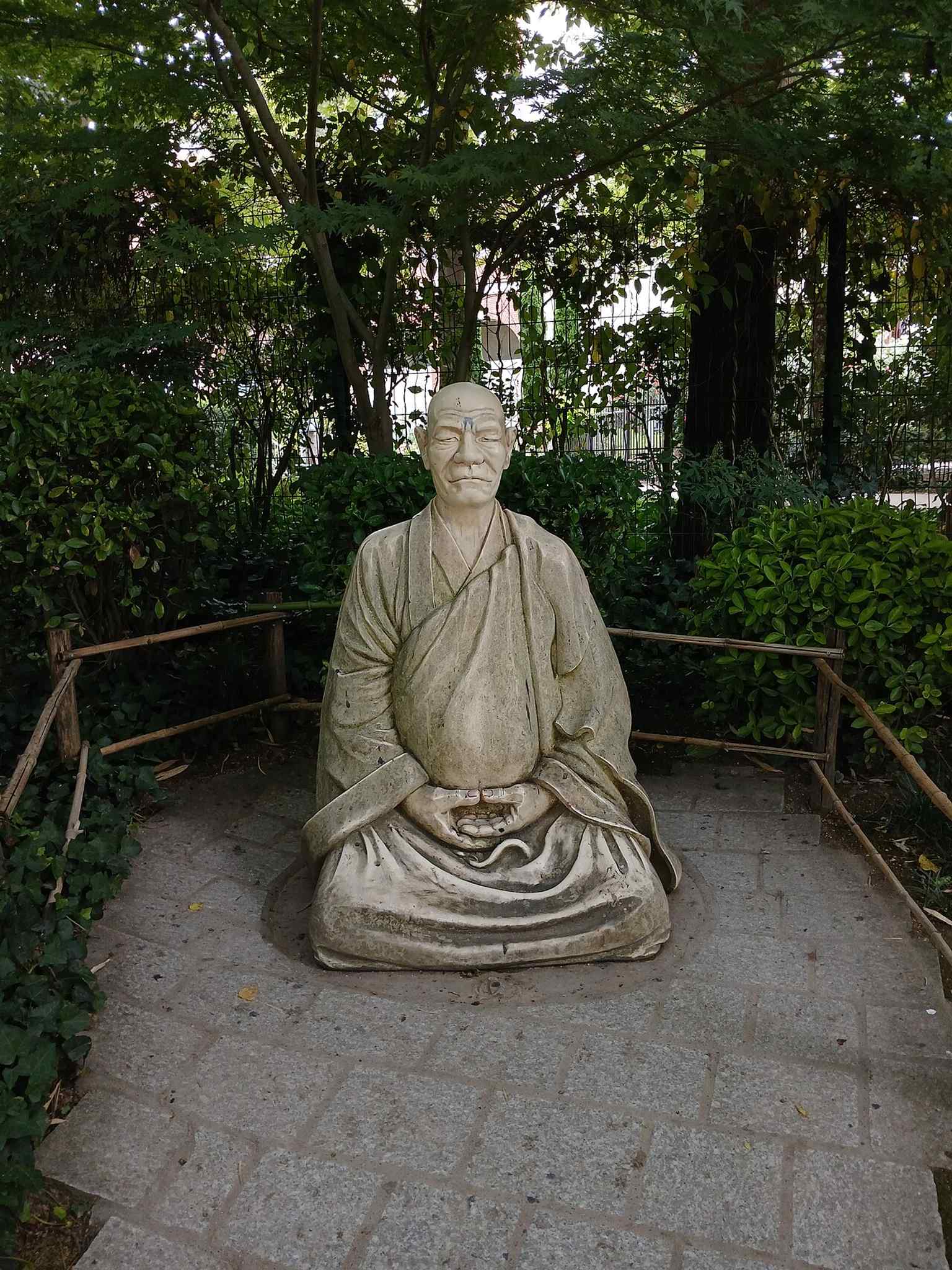
The city’s own gardens department designed this place in nineteen eighty-one, and a Toulouse company built it, so this was a local creation, not an imported stage set. Opened in nineteen eighty-three and spread across ten hectares, it includes the Japanese garden, a large pond with a fountain near the Canal du Midi, and spaces honouring Toulouse’s twin cities, from Elche to Kyiv to Atlanta. One path also remembers Francisco Ponzán Vidal, the anti-Franco resistance organiser who ran escape networks from Toulouse before the Nazis executed him in nineteen forty-four.
So this peaceful district signature grew from intensely strategic ground: a garden planted where artillery once ruled. In a moment, we’ll head to its most serene expression, the Japanese Garden of Toulouse, about a three-minute walk away. The garden is generally open every day from eight in the morning until eight in the evening.