
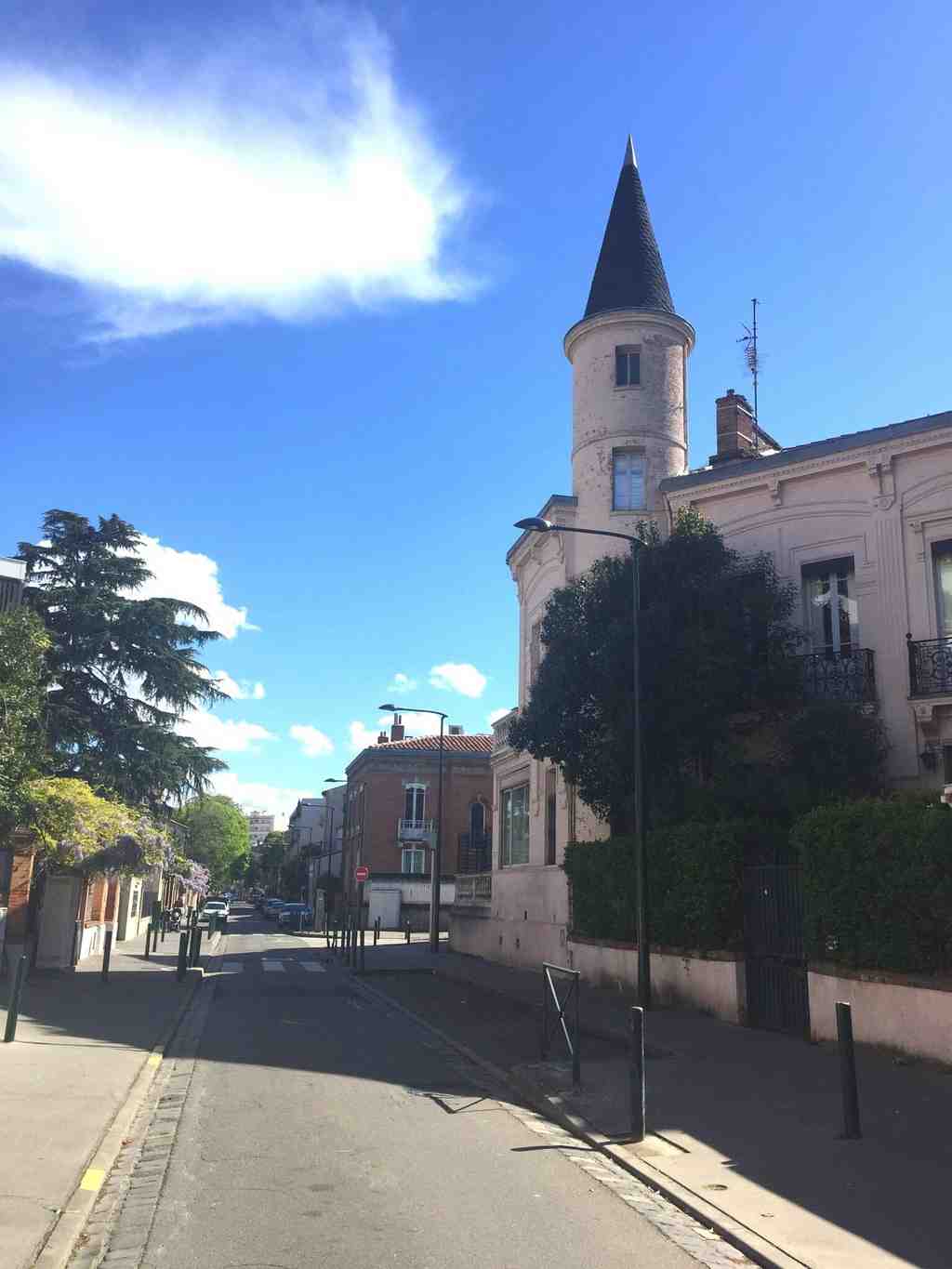
To spot Chalet Street, just look ahead for the charming old houses lining a quiet road-with a whimsical turreted villa on your right, topped by a pointed slate roof like something out of a fairy tale.
Welcome to Chalet Street, or as the locals say in Occitan, carrièra dels Chalets! Take a deep breath and let your imagination fly as you stand at the heart of one of Toulouse’s most intriguing neighborhoods. Close your eyes for a moment-well, maybe just one eye, so you don’t bump into a lamppost-and picture yourself back in the 1800s, when this was not city, but countryside, dotted with gardens and fields. Before city life swept through, this was just a stony footpath, the old chemin de Pouzonville, leading out of town past ancient ramparts and mysterious city gates with names lost to time.
Now, check out the houses! These elegant homes weren’t always so posh. The real estate boom happened in the mid-1800s, after the railway puffed its way into town. Suddenly, wealthy families wanted a piece of this fresh suburban air. Picture wide hats, mustachioed gentlemen in carriages, and children with marbles clattering along the cobbles. There are still echoes of this golden era in the brick mansions and traditional Toulousain homes-some with hidden gardens, others with ornate balconies. If you see the villa at number 23, don’t miss its slender windows and the playful stone statue in the garden; she’s the Baigneuse, a popular model for shy garden statues everywhere.
But the street really gets its charm from its history of secrets and a little bit of scandal. The name “Chalet” is said to come from the humble wooden cabins and playful retreats that once stood here, perfect hideaways for the city’s clandestine romances-particularly those of soldiers from the nearby Compans barracks. It was the place to be if you were in love and perhaps didn’t want everyone to know just yet! If walls could talk, Chalet Street would probably giggle.
You’ll notice how narrow and peaceful the road is today, just one-way for cars, and cyclists riding calmly in both directions. No bustling buses rumbling through-though you’re only a stroll away from several metro stops. Instead, you might hear footsteps or a gentle ring of a cyclist’s bell. It’s very much a residential retreat, except for the occasional friendly bar and clusters of doctor’s offices where folks have been known to swap more than just symptoms-they sometimes exchange neighborhood stories too.
There’s one very special school here, the Collège des Chalets. Its story? Once upon a time, these solid stone buildings weren’t filled with students but with soldiers, built in the late 1800s as military barracks. It was thanks to the glassmaker Louis-Victor Gesta, who also had his own little castle nearby, and the city architect Joseph Raynaud. After years of echoing with marching boots and army orders, the site transformed into a place for young minds! It opened as a girls’ school, became a collège for all, and has evolved over time, always buzzing with the sounds of learning.
Step a few doors down and you’ll spot a gorgeous Art Nouveau house-a swirl of curves and glass. In the early 1900s, this beauty was expanded for the stylish Couret couple. Later, it became the Casa de España, and today, it’s the welcoming Instituto Cervantes. So, if you suddenly feel the urge to say “hola” and practice your Spanish, you’re in the right spot!
And of course, legends live here too. Jean Aillet, a brave member of the Resistance, called Chalet Street home during World War II, hiding behind peaceful facades as he fought the occupation. Joseph Anglade, a scholar devoted to the sounds and poetry of Occitan, once penned his studies of troubadours here. Artists, mayors, colonels-this street has seen them all.
So as you stroll onwards, notice every detail-the sun on painted brick, the iron gates, and perhaps, if you’re lucky, a playful gust that carries a secret from days gone by. Chalet Street is a living storybook, and right now, you’re in the middle of its pages.
Want to explore the location and access, odonymy or the heritage and places of interest in more depth? Join me in the chat section for a detailed discussion.




