
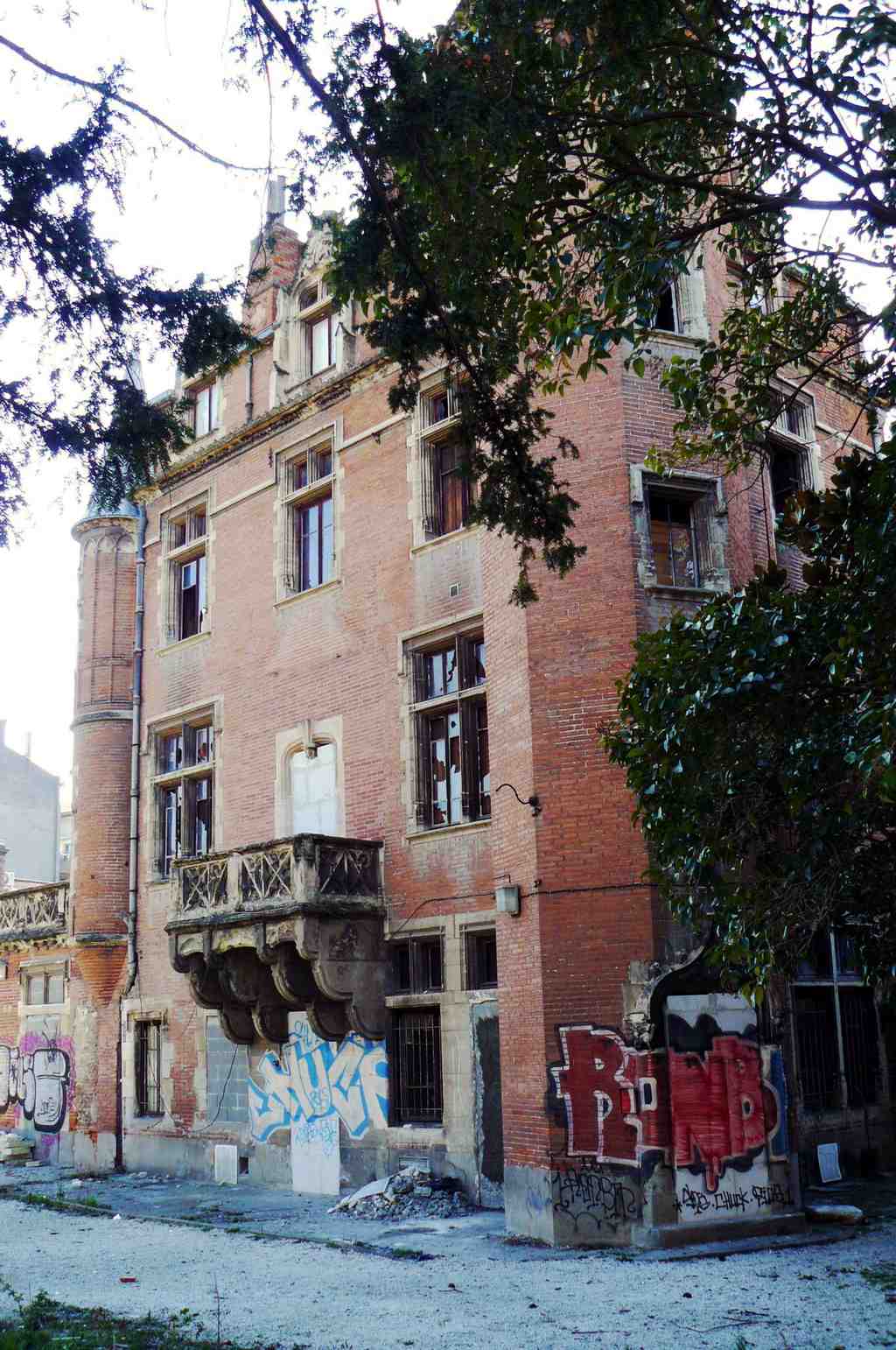
To spot Castel Gesta, look for a striking, castle-like red brick building with tall windows, a stone balcony that juts out above you, and touches of medieval style, such as turrets on the corners, set behind some leafy trees.
Welcome to the enchanting, and somewhat mysterious, Castel Gesta! Now, if you ever doubted you’d see a real castle in Toulouse, let your eyes feast on this neo-Gothic wonder in the middle of modern city life. With its looming brick walls, pointy turrets, and the occasional gargoyle peeking down, you almost expect a medieval knight-or perhaps a rather startled window cleaner-to show up.
But let’s go back to the beginning, when the air was thick with the warm scent of glass being fired and painted. In 1862, Louis-Victor Gesta, a talented stained-glass artist with stars in his eyes, built not just any old house, but a castellated villa right here in what was then the outskirts of Toulouse. Back then, instead of city noise, imagine the gentle hammering and tinkling of glass-makers at work, sunlight streaming through piles of colored glass, and the distant barking of dogs from the grand park surrounding the property.
This wasn’t just Gesta’s home. Oh no! Imagine it bustling as one of the most important stain-glass workshops in France. The building you’re looking at was both his showpiece and residence. The locals and many visiting priests-mostly after they’d already admired their own reflections in the vibrant, shining windows inside-would marvel at his work. Gesta’s stained glass soon went from Toulouse to churches all over France and even abroad. Picture crates filled with these rainbow-colored treasures rumbling along the streets, ready to bring light and joy to faraway cathedrals.
The original estate boasted an enormous park shielded by proper medieval walls, complete with authentic stone sculptures dotted here and there-just in case you forgot you were in castle territory. A few years later, Gesta added new buildings, including the majestic “Salle des Illustres”-honoring the greats of Toulouse-painted by his friend Bernard Bénézet. There was even a chapel, its walls thick with paintings, its air scented with incense and candle wax.
But Gesta’s fairy tale wasn’t destined to last forever. In 1894, Gesta died, his empire shrouded in bankruptcy. He left a puzzle of ownership that his heirs couldn’t solve. The house changed hands-some owners tried to keep it glorious, others simply managed not to lose the key. The building even hosted the Sœurs de la Charité de Saint Vincent-de-Paul during World War II. These nuns offered refuge to families fleeing war, helped local girls learn sewing, and sheltered neighbors in trenches dug right here for safety. Some of the windows grew dark and paint-blotched as time and caution covered once-glimmering murals.
By the 1950s, the state took over and Castel Gesta became a school, echoing with the sounds of lessons and footsteps up and down new iron staircases. Then, in 1987, the city bought it, setting up a music conservatory’s organ class and arts association-so yes, at one point, you might have heard Bach echoing through these halls, scaring off the pigeons.
But the real drama was yet to come. The castle fell into the hands of ambitious real estate folks, some well-meaning, others less so. In 2001, Castel Gesta found itself center-stage in a wild historical fraud involving missing funds, abandoned restoration, and broken dreams. For a while, the building was barricaded and rumors flew-would it become luxury homes? Would anyone ever clean up that graffiti? The only thing certain was that investors and the state were left scratching their heads… and their wallets.
Despite everything, this tough old building refused to give up. Though battered by time, fire, and bureaucratic nonsense, its spirit endured. Since 2014, painstaking restoration work has begun, breathing new life into the red brick walls, turrets, and centuries-old sculptures.
So, while you stand in front of Castel Gesta, picture not just its battlescars, but also all its past lives-a buzzing glass workshop, a war refuge, a school, a police quarters, and a music conservatory. Inside these walls, sunlight once traveled through painted glass in a thousand colors. And if you listen closely, maybe you’ll hear a faint melody-or at the very least, the secret whispers of Toulouse’s castle that simply refuses to fade away.




