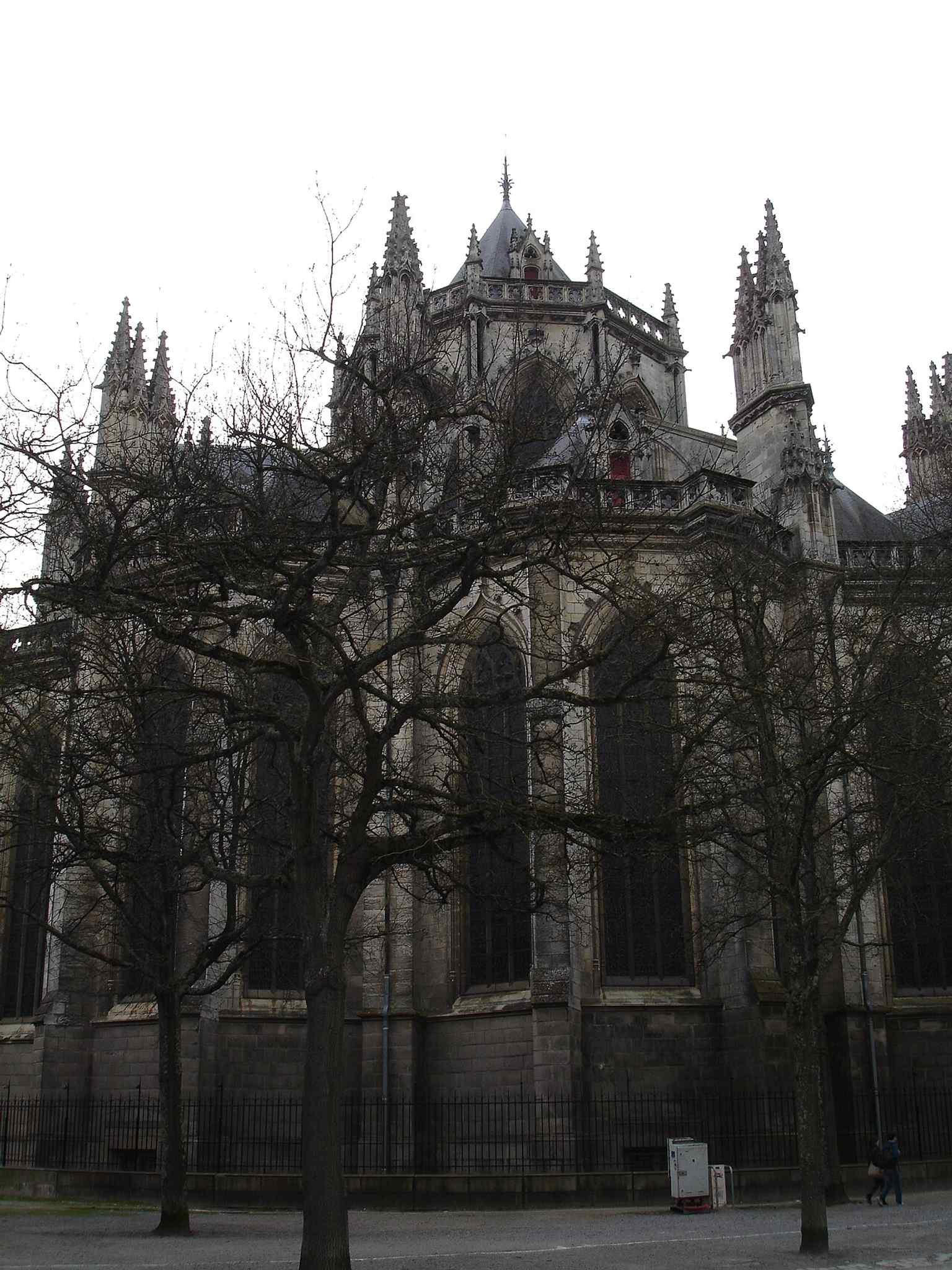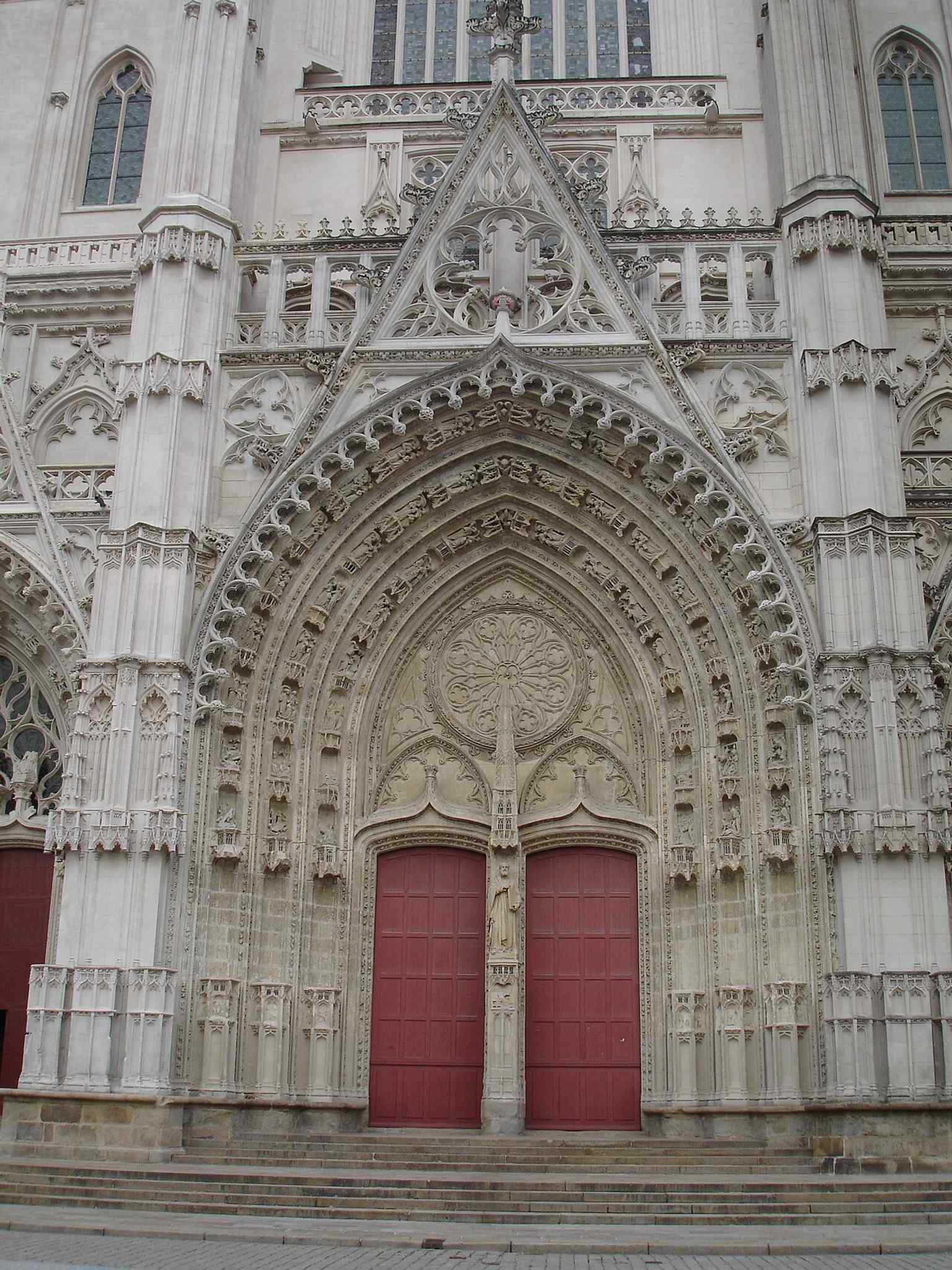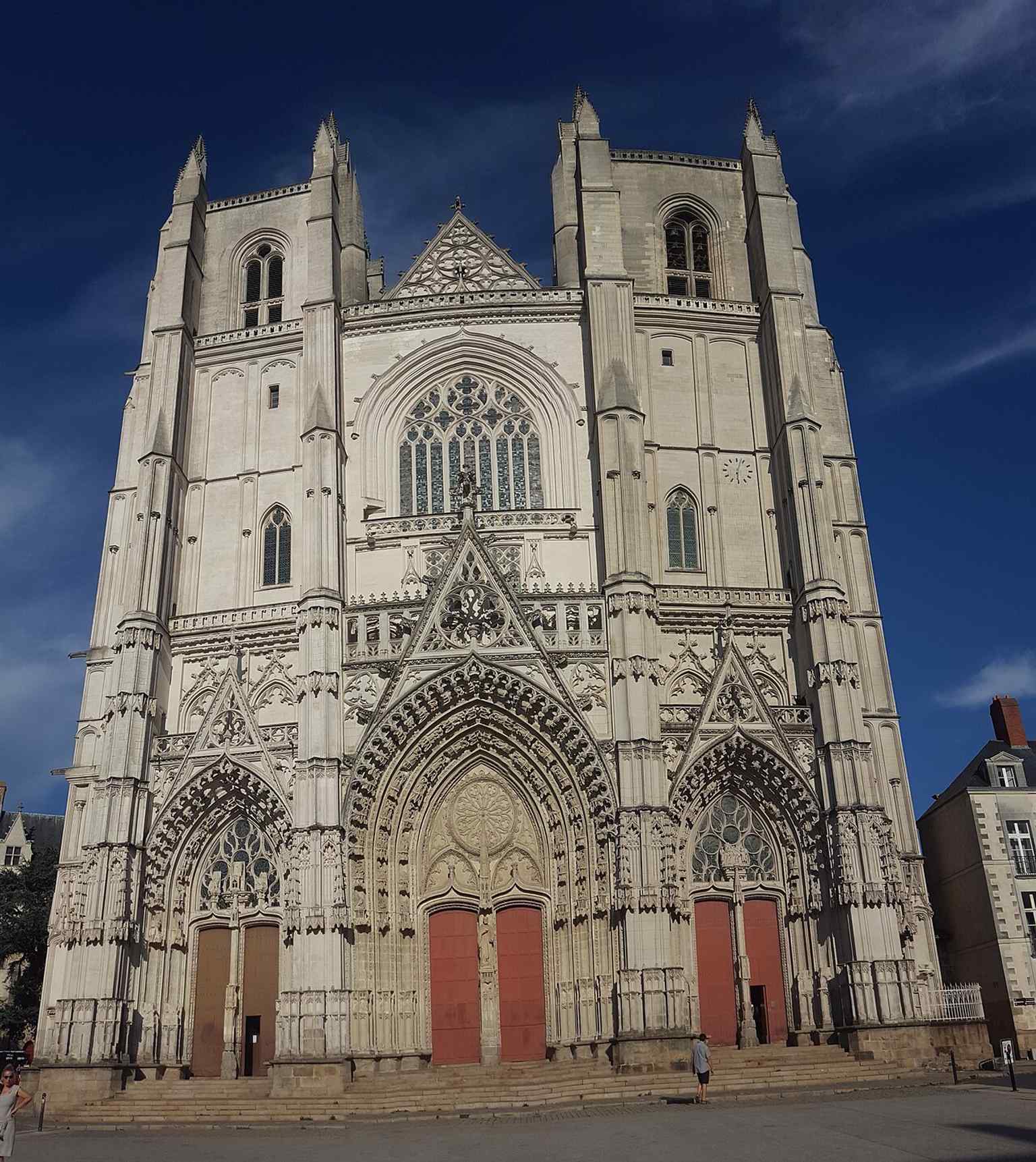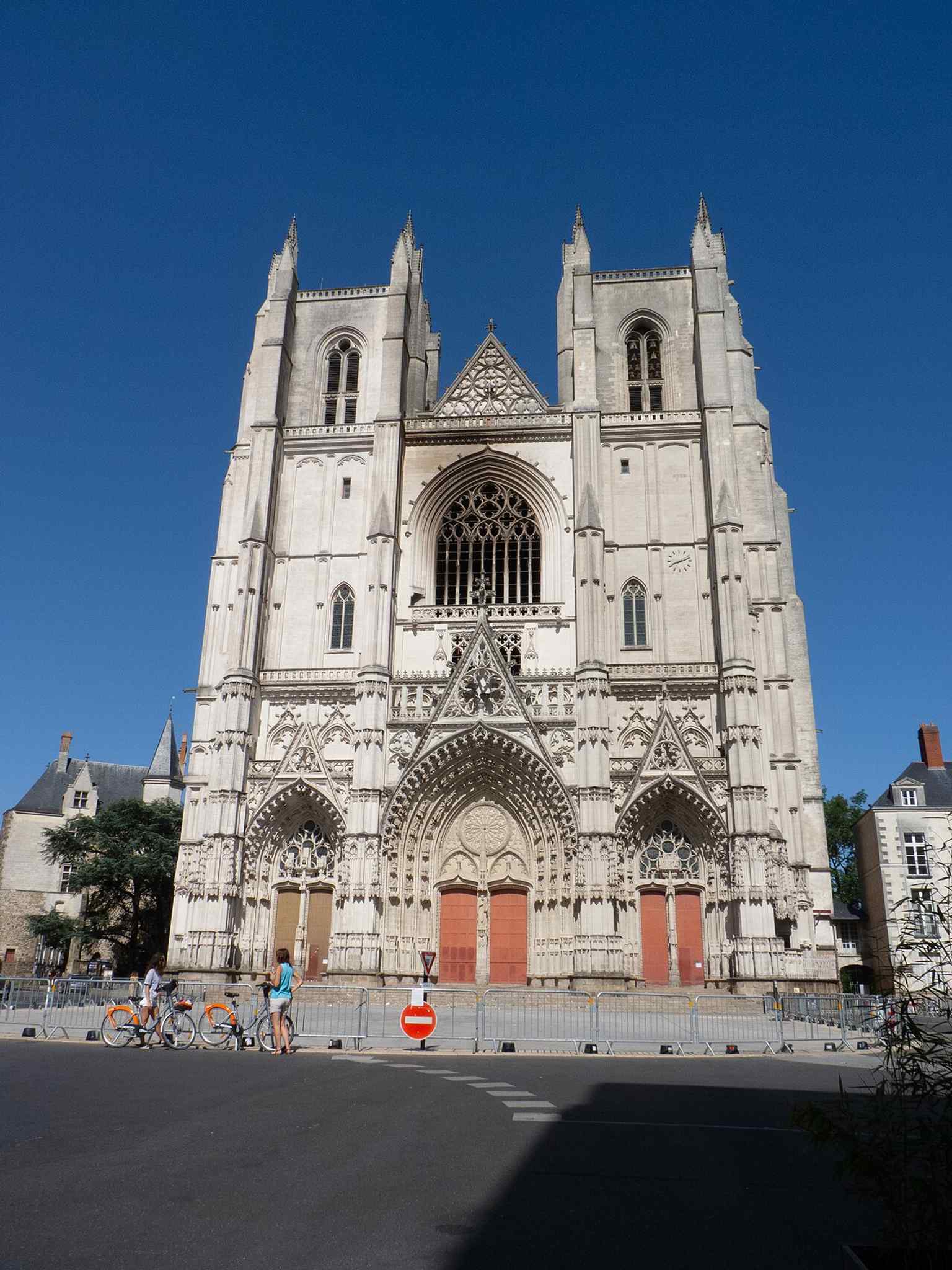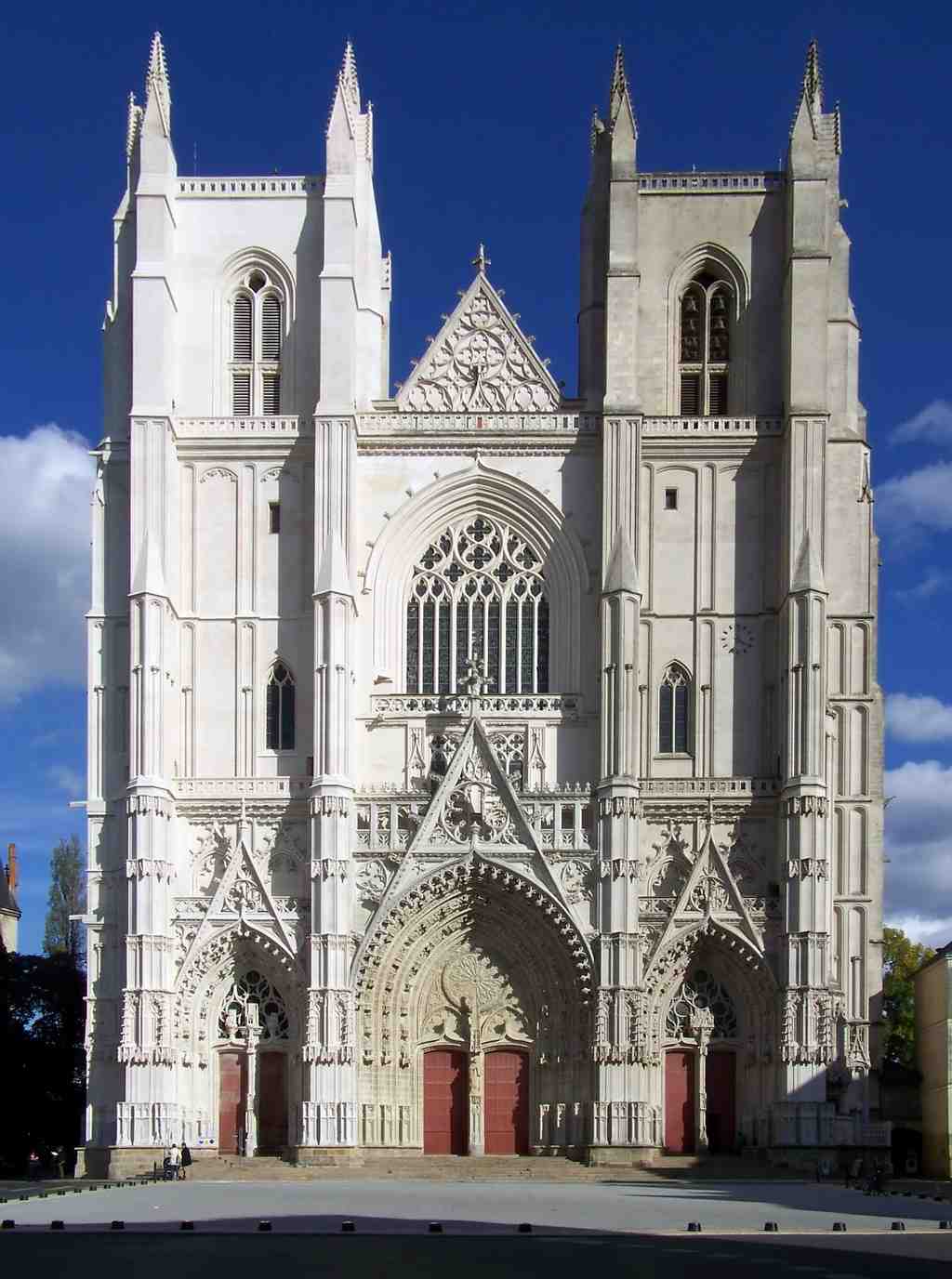
On your left rises a pale stone façade with twin square towers, a pointed central portal, and a small exterior pulpit projecting from the front like a balcony for preaching.
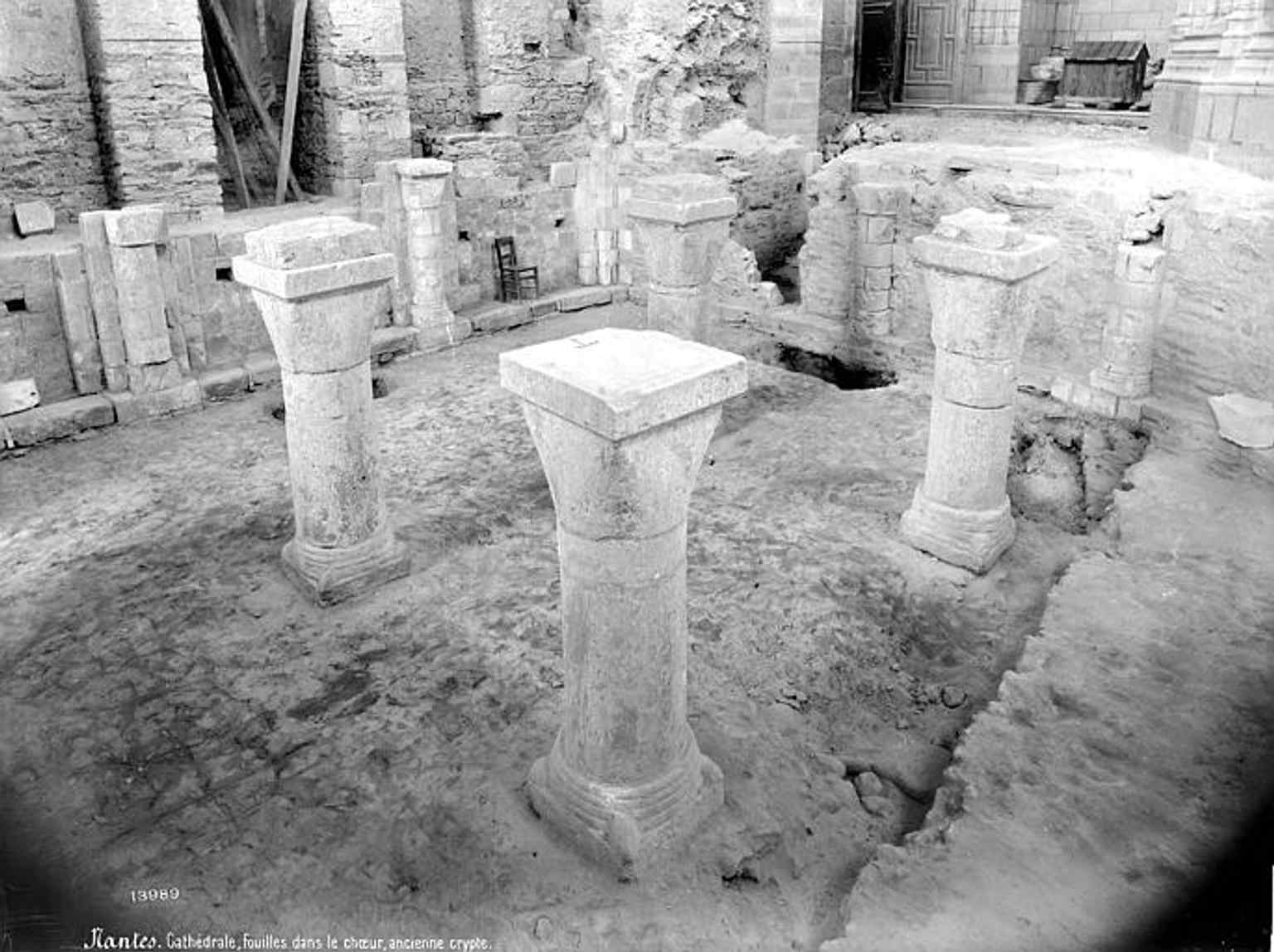
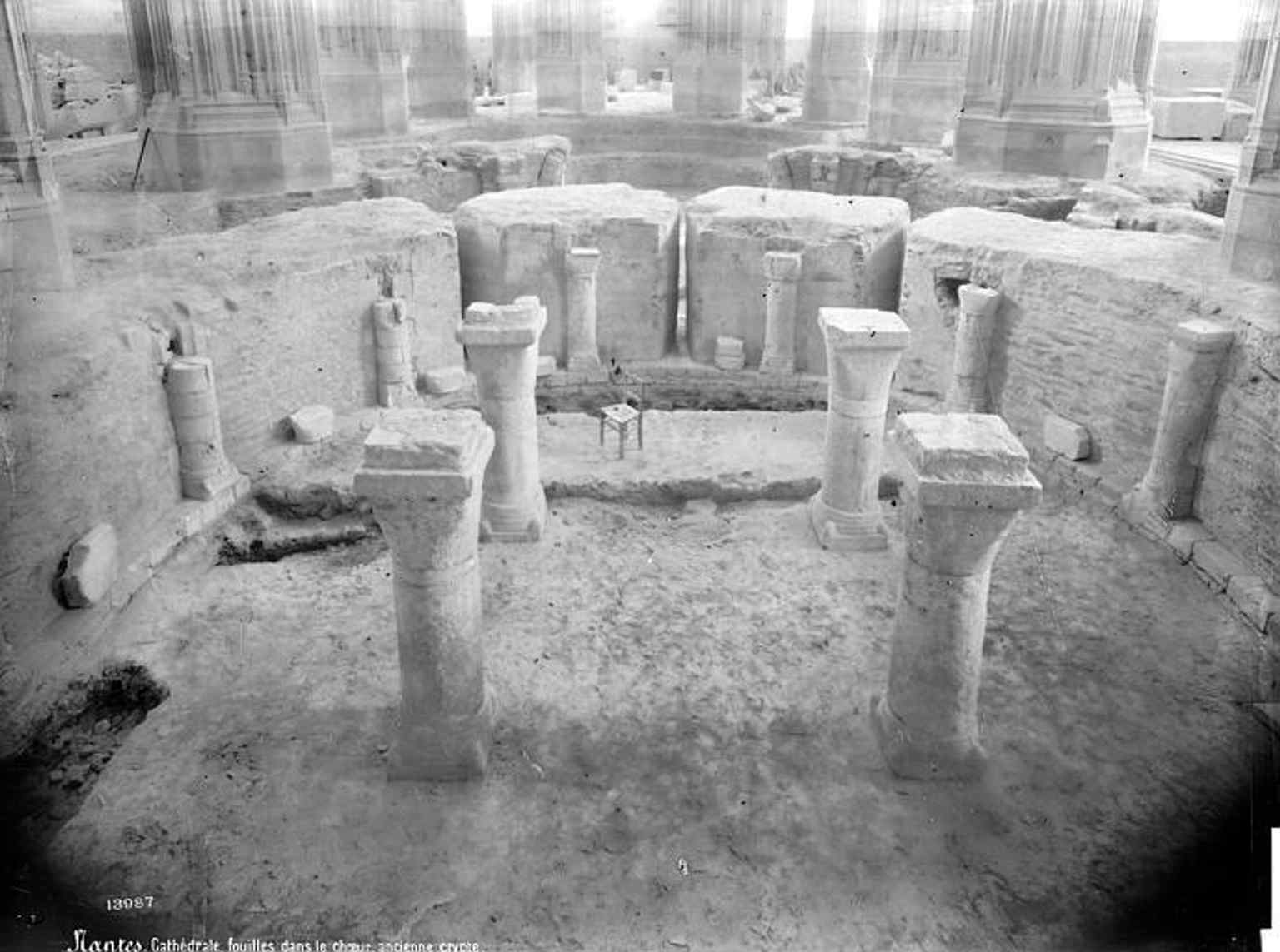
It is easy to read a cathedral like this as pure calm... but Nantes earned this calm the hard way. Before these Gothic walls climbed into the sky, another church stood here. In the year eight hundred forty-three, during Mass on the Feast of Saint John the Baptist, Viking raiders burst inside. They slaughtered the congregation, beheaded Bishop Gohard at the altar, and set the church on fire. Beneath this cathedral, in the crypt, his memory still lingers like a wound the city never quite agreed to forget. If you want a glimpse of that deeper layer, the crypt image in the app is worth a look.
The building you see now began when John the Fifth, Duke of Brittany, and Bishop Jean de Malestroit laid the foundation stone in fourteen thirty-four. That sounds tidy... but this cathedral took four hundred fifty-seven years to finish. Generations began it, financed it, revised it, and died long before they could see the end. Guillaume de Dammartin started the work, Mathurin Rodier continued it, and others carried it onward until eighteen ninety-one. Even the eastern end had to wait until old defensive walls nearby came down. So this place was never simply dropped into the city as a finished act of faith; it had to negotiate with war, walls, money, and time.
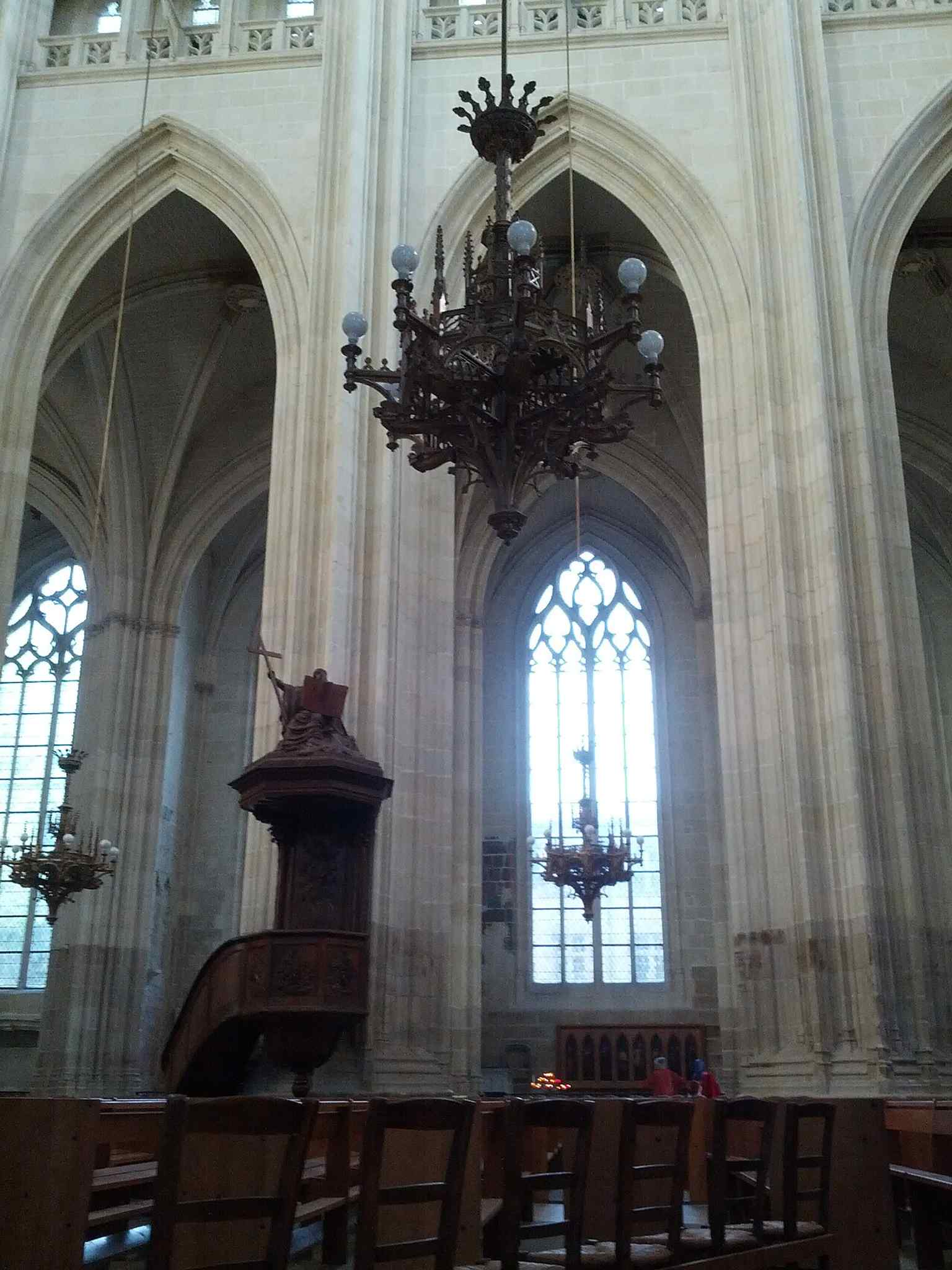
Look up for a moment at the sheer Gothic mass of it... the towers, the disciplined symmetry, the carved doors. Ask yourself whether this feels like a place built only for prayer, or also for survival.
That little stone pulpit on the outside tells part of the story. Priests used it to preach directly into the square when crowds overflowed the church, or when gathering indoors turned dangerous during outbreaks of disease. Even worship had to adapt here.
And power gathered here too. In sixteen sixty-one, right outside in the square, D’Artagnan - yes, the captain of the king’s musketeers - arrested Nicolas Fouquet, the king’s powerful finance minister. Fouquet thought he still stood in royal favor. Instead, beneath these towers, Louis the Fourteenth began stripping away one of the last great obstacles to his personal rule. This cathedral has watched prayer and ambition step out onto the same stones.
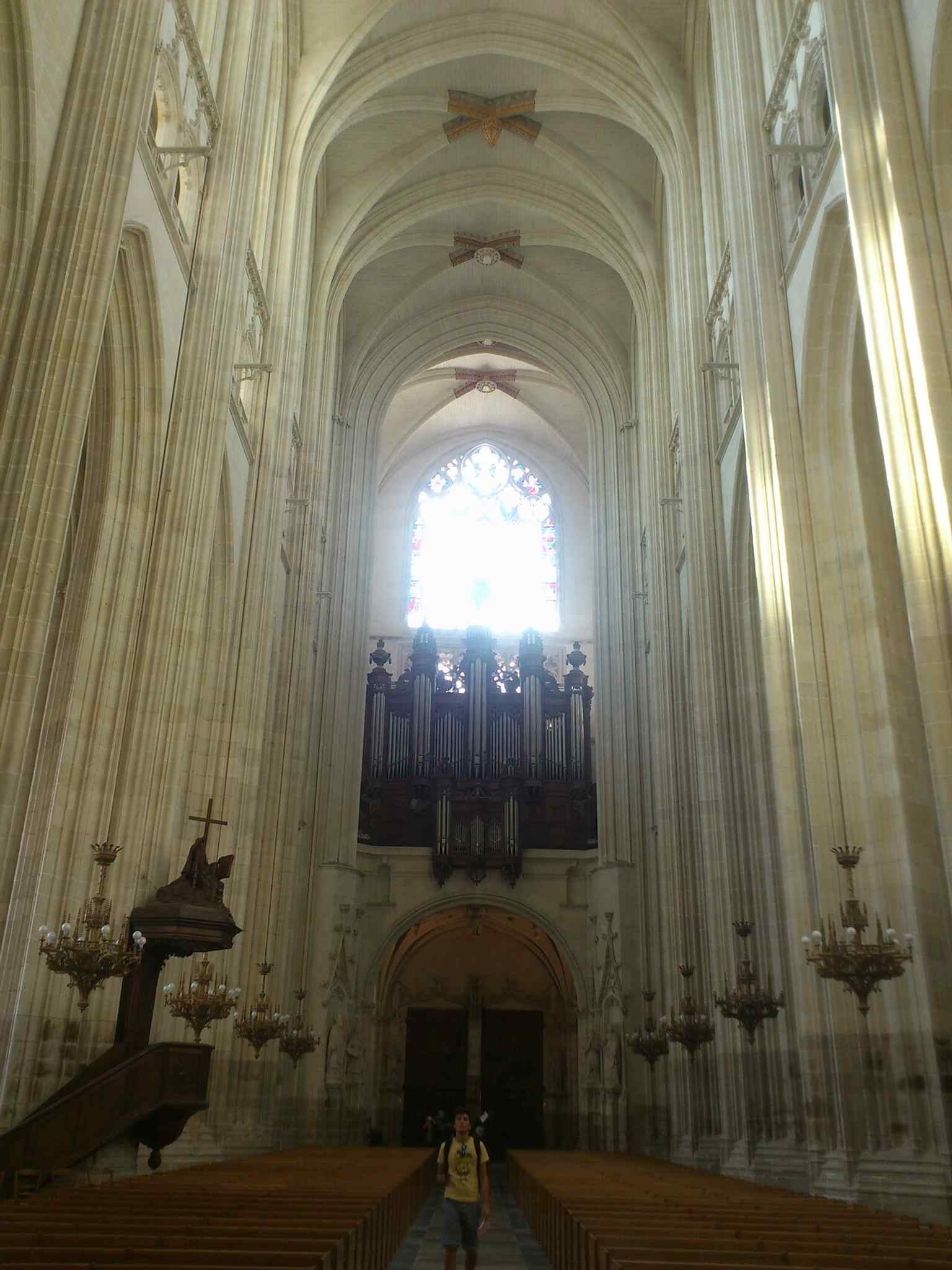
It has also kept surviving. Allied bombs damaged it in nineteen forty-four. A worker’s blowtorch sparked a huge roof fire in nineteen seventy-two. Restorers replaced the old timber frame with concrete, and that choice helped save the roof from total collapse during the arson fire of twenty twenty, though the great organ - a survivor since sixteen twenty-one - was finally lost. You can compare the façade before and after that fire in the app’s historic slider.
So when you stand here, you’re not looking at untouched holiness. You’re looking at endurance... stone laid over ash, memory laid over violence.
And yet not all sacred memory in Nantes survived in stone at all. At our next stop, the vanished Collégiale Notre-Dame, we’ll meet one of the city’s important churches that disappeared almost entirely. If you want to go inside here later, the cathedral generally opens from nine to seven, and until eight on Sunday.