
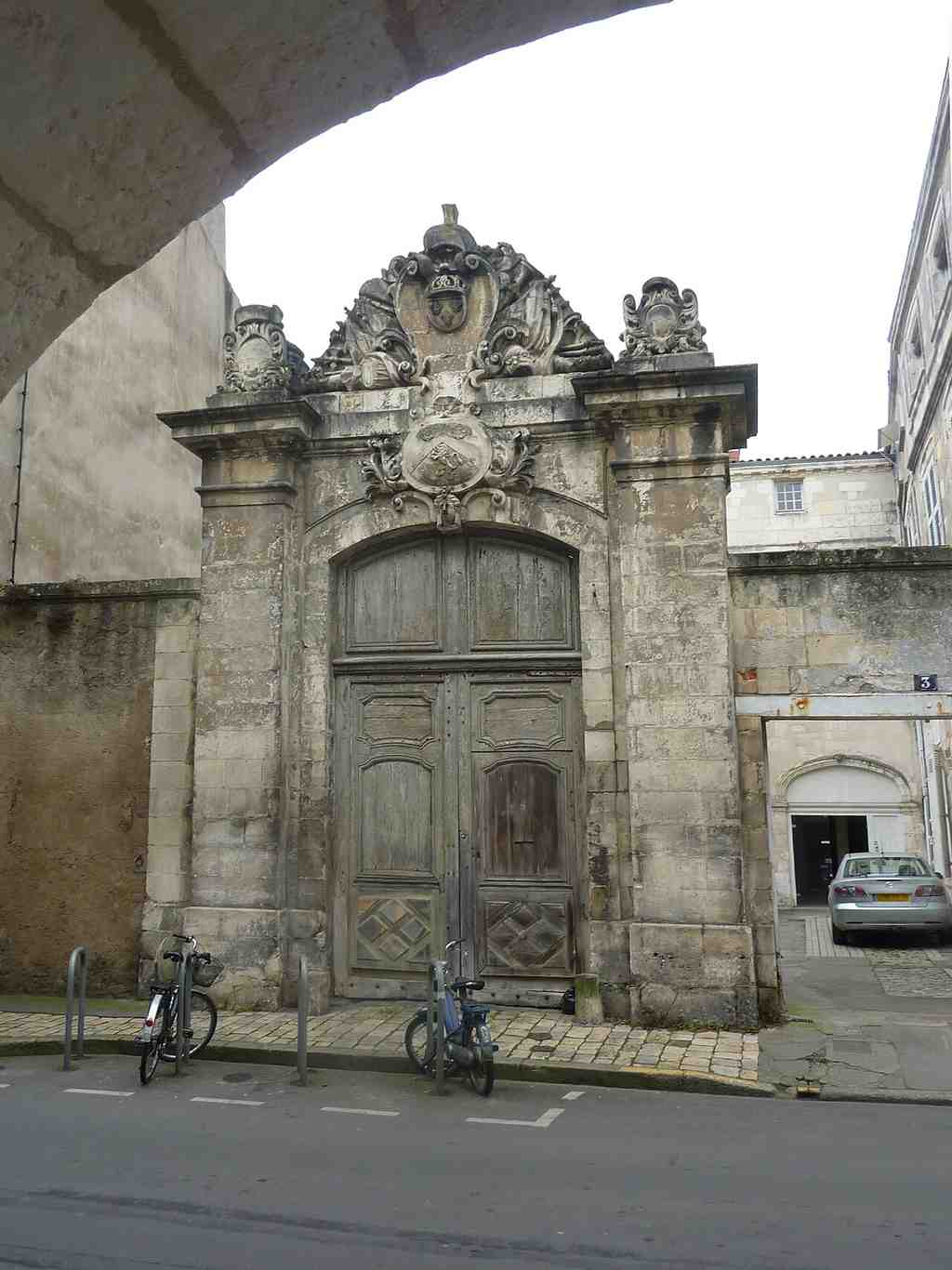
On your right, look for a pale stone façade with a broad arched portal, carved pilasters, and a heraldic panel set above the entrance.
This is where power stopped arriving by ship and started arriving in files. After seventeen seventeen, the crown split two big offices: the naval intendant stayed in Rochefort, while the intendant of the généralité - the king’s top civil administrator for the region - settled in La Rochelle. That shift planted centralized state power right inside the city’s streets.
Jérôme Bignon de Blanzy gives this place its human face. He served here from seventeen twenty-six to seventeen thirty-seven, and he was no provincial nobody; he was also the king’s librarian and a rising state official with a much larger court career. In seventeen twenty-nine, under Bignon, the city bought a large house here from Monsieur de Bonneuil because the rented residence on rue Fleuriau had become too cramped.
And here’s the part most people miss: this did not begin as a purpose-built palace of authority. It began as a practical fix. The grand portal, commissioned in seventeen thirty from the contractor Bonnichon and the sculptor Antoine the Third Ragon, gave that borrowed solution an official face. If you check the image in the app, you can see exactly how that entrance does the work of persuasion... stone first, legitimacy second.
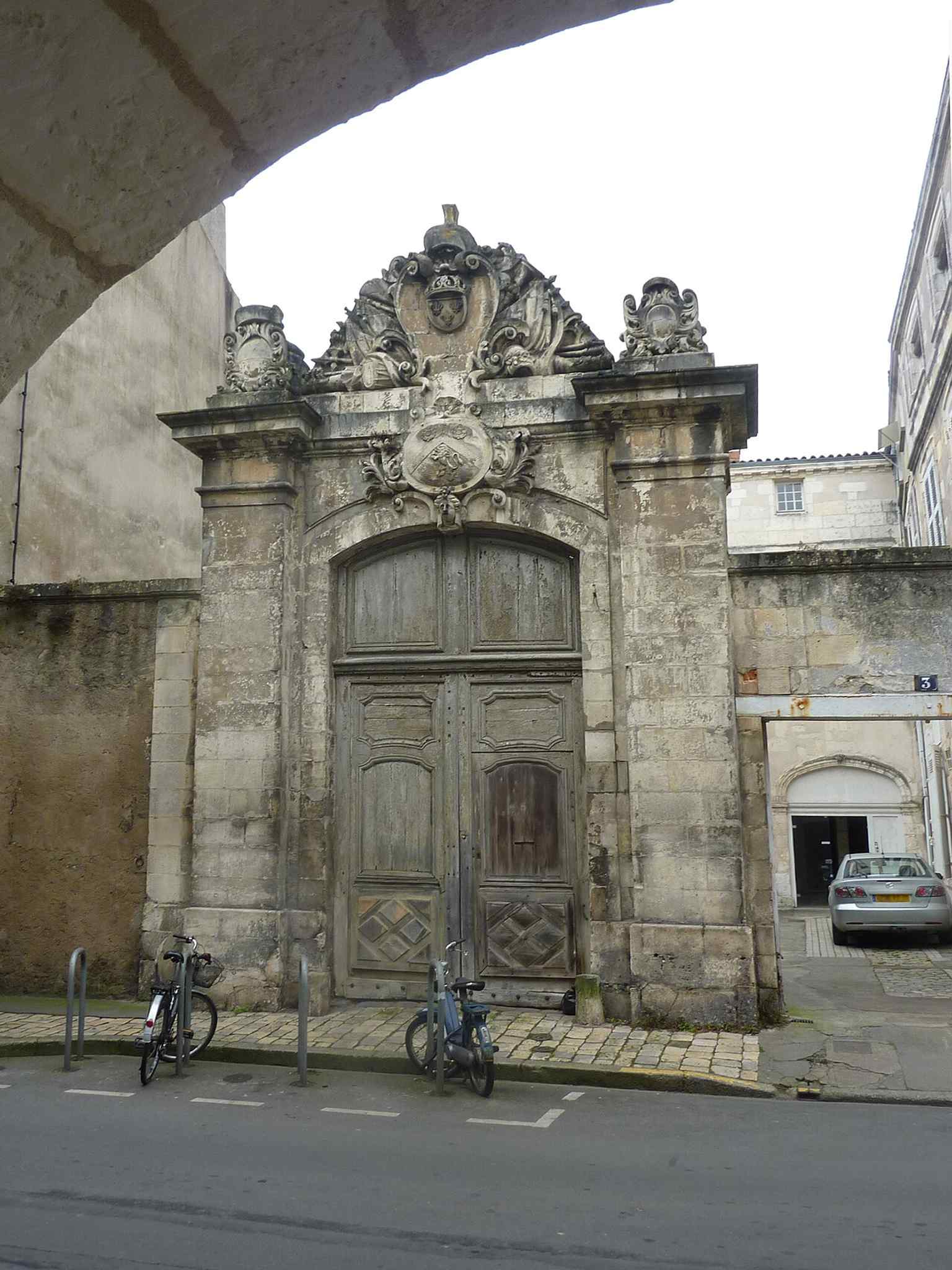
Between seventeen thirty and seventeen fifty-nine, engineers and architects including Dubois, Gilles Nassivet, Dié Gendrier, and Matthieu Hue expanded and regularized the whole block - wings, stables, court, garden, the lot. Rule became orderly on paper, then orderly in masonry. Bureaucracy does love a neat layout.
After the Revolution, the building served as the prefecture, then a gendarmerie, before an entrepreneur broke it up. Even the portal carries a small lie: the arms above it were wrongly recut in the nineteenth century. Facades, it turns out, often remember rank more faithfully than truth.
France protected the building as a historic monument in nineteen twenty-five. From here, the city loosens its collar a little. In about nine minutes, Charruyer Park opens up another kind of public legacy.





