
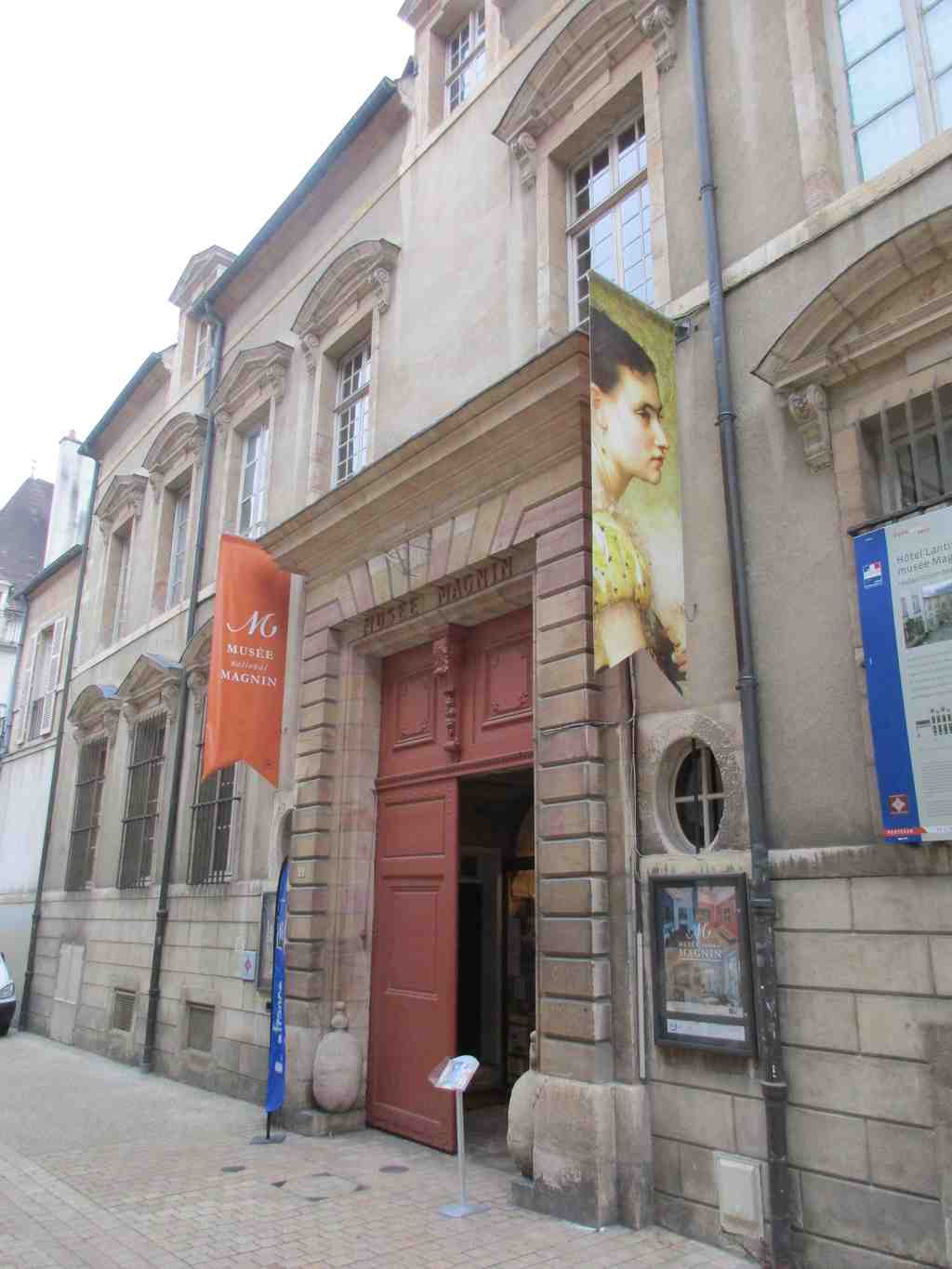
You should be standing in front of a light stone facade featuring tall, classically framed windows and a grand, arched wooden double door guarded by two rounded stone bollards at its base.
You have arrived at the Musee Magnin.
We just left the grand, sprawling Museum of Fine Arts, but this place offers something entirely different. It is a deeply personal obsession frozen in time.
Between eighteen eighty-one and nineteen thirty-five, a brother and sister duo, Maurice and Jeanne Magnin, built a massive art collection. Maurice was a high-ranking magistrate, and his sister Jeanne was a painter and art critic. They did not chase the obvious masterpieces that everyone else wanted. Instead, they scoured public auctions for overlooked, unusual works from across Europe.
Together, they bought over two thousand pieces. But they did not just store them in a dusty warehouse. They lived with them right here in the Hotel Lantin. This elegant building is a seventeenth-century aristocratic townhouse, originally built for a parliamentarian named Etienne Lantin in sixteen sixty-three. The Magnin family bought the house in eighteen twenty-nine and made it their own.
Take a glance at your screen to see how they displayed their treasures inside. They wanted the space to feel like a private cabinet of curiosities and a truly inhabited home. The paintings are hung close together, covering the walls from floor to ceiling, densely packed and arranged by region.
Maurice was fiercely protective of this arrangement. When he finally donated the entire collection and the building to the French state in nineteen thirty-nine, he locked it down with strict rules in his will. Not a single artwork can ever be loaned out to another museum, and the state is legally forbidden from adding any new pieces to the collection. What you see is exactly what Maurice and Jeanne wanted, perfectly preserved.
To make the space work as a public museum, Maurice hired the architect Auguste Perret between nineteen thirty and nineteen thirty-two. Perret was a pioneer of reinforced concrete. He somehow managed to blend this modern, industrial material seamlessly into the classical seventeenth-century architecture to create a beautiful skylit gallery.
The collection itself is heavily French. There are six hundred and fifty French paintings alone. The siblings were especially fond of a style from the sixteen thirties and forties known as Parisian Atticisme. You can see a great example on your app by the painter Eustache Le Sueur. Parisian Atticisme was an artistic movement focused on balanced compositions, clear colors, and calm expressions, much like the refined literature of ancient Athens. Beyond paintings, they also collected rare furniture, including an elegant double-sloped writing desk from seventeen sixty-one, designed specifically for young women.
It is a beautifully stubborn time capsule of one family's taste.
If you want to step inside, the museum is open Tuesday through Sunday from ten AM to twelve thirty PM, and from one thirty PM to six PM, though it is closed on Mondays.
Feel free to linger a bit. When you are ready, we can head to the next stop.




