
Dijon Highlights Audio Tour: Architectural and Cultural Treasures
Beneath the golden limestone of Dijon lies a trail of blood, ambition, and echoes that refuse to fade. This is not the postcard version of Burgundy. Unlock these streets with a self-guided audio tour designed to peel back the facade of the city. Navigate from the grand Palace of the Dukes to the haunting gargoyles of Notre-Dame and the rhythm of the Opéra de Dijon, uncovering secrets hidden in plain sight. Why did a single stone-carved owl become the city’s most desperate obsession? What political betrayal turned the silent halls of the Ducal Palace into a theater of execution? How did a forgotten opera performance accidentally spark a city-wide rebellion? Move through the labyrinthine alleys as history breathes down your neck. Transform a simple walk into a visceral investigation of power and scandal. See the shadows sharpen. Press play and wake the ghosts of Dijon.
Tour preview
About this tour
- scheduleDuration 130–150 minsGo at your own pace
- straighten6.2 km walking routeFollow the guided path
- location_on
- wifi_offWorks offlineDownload once, use anywhere
- all_inclusiveLifetime accessReplay anytime, forever
- location_onStarts at Saint-Bénigne Cathedral of Dijon
Stops on this tour
lock_open 3 free previews · 12 unlock with purchase
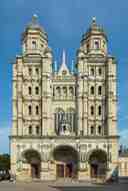
On your right, you will see a massive pale stone facade framed by twin square towers with intricately patterned tile roofs, centered around a tall, slender spire piercing the…Read moreShow less
Open dedicated page →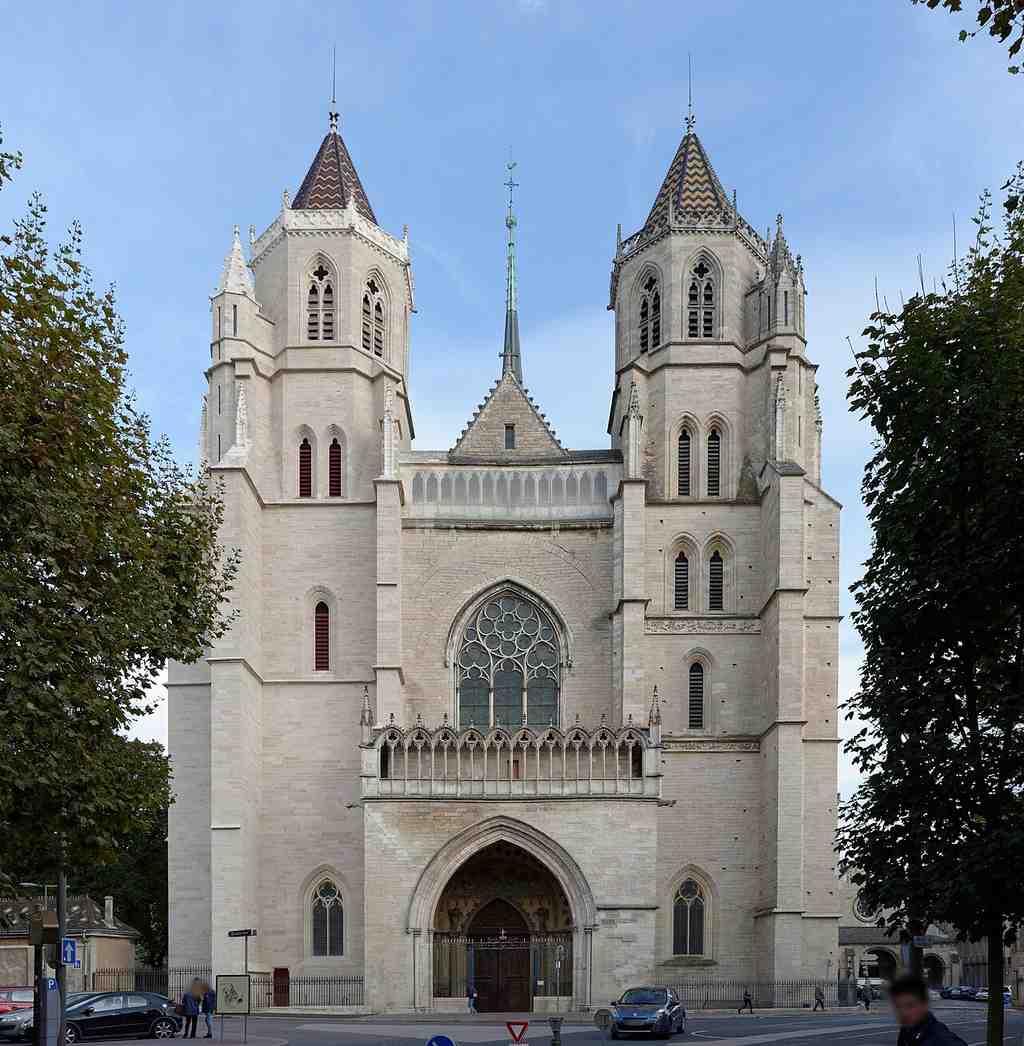
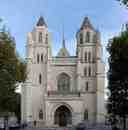
Cathédrale Saint-Bénigne de DijonPhoto: François de Dijon, Wikimedia Commons, CC BY-SA 4.0. Cropped & resized. On your right, you will see a massive pale stone facade framed by twin square towers with intricately patterned tile roofs, centered around a tall, slender spire piercing the sky.
You have arrived at the Cathedral of Saint-Bénigne. This site has been a spiritual anchor for a very long time. Back in the year five eleven, a bishop constructed a crypt here to hold the sarcophagus of Saint Bénigne, a local Christian martyr.
Fast forward to the year nine ninety. The monastery buildings were falling into ruin, so a monk named Guillaume de Volpiano was brought in to revitalize the site. Guillaume did not do things by halves. He brought in Italian builders and constructed a magnificent three-level circular building, known as a rotonda, directly over the tomb. The upper level of this rotonda had a dome with a hole in the center to let light pour all the way down to the lower floors, deliberately echoing the Pantheon in Rome.
Today, only the lowest subterranean level remains, a circular vault roughly sixteen point five meters across. You can pull up your screen to see a stark nineteen nineteen photograph of this atmospheric crypt. The rest of the original structure collapsed over time, leading the monks to rebuild the main church in the soaring Gothic style between twelve eighty and thirteen ninety-three.
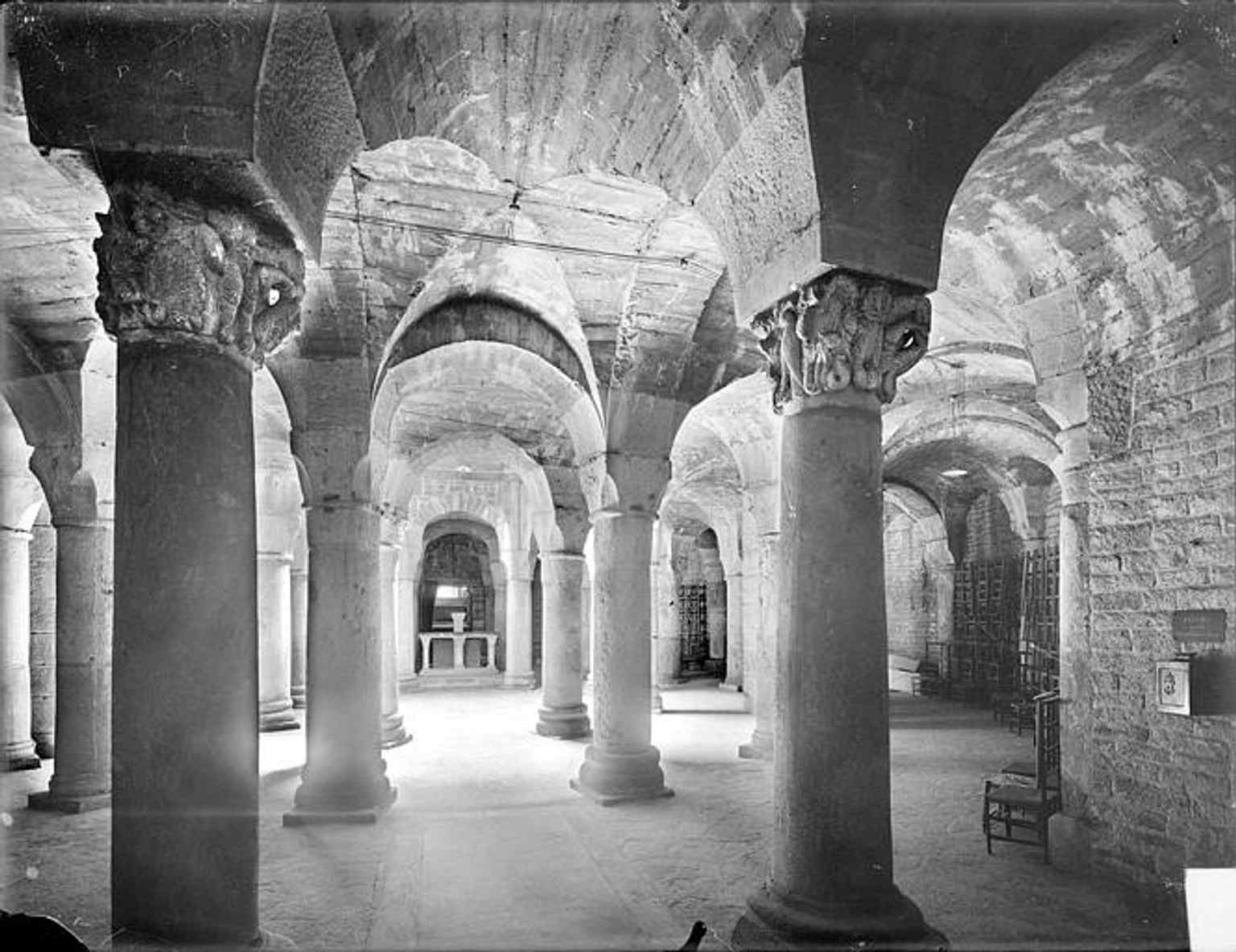
An overall view of the crypt from 1919, a rare circular structure of 16.5m diameter that is the only surviving part of Guillaume de Volpiano's 11th-century rotonda, built to house Saint Bénigne's sarcophagus.Photo: Henri Heuzé, Wikimedia Commons, CC BY-SA 4.0. Cropped & resized. Take a look at the before and after image on your device to see how the majestic gothic arches and soaring vaults of the main central hall, the nave, have been beautifully preserved through the generations.
Despite its long monastic history, this building only officially became a cathedral in seventeen ninety-two. Over the centuries, it has seen lightning strikes, structural collapses, and massive architectural overhauls.
But perhaps the most dramatic event to happen on the very square where you are standing took place much more recently, in nineteen fifty-one. The cathedral's vicar had grown entirely fed up with what he saw as the pagan, hyper-commercialization of a religious holiday. So, to make his point, he hung an effigy of Santa Claus on the cathedral gates and set it on fire. The burning of Santa Claus made national headlines. But the mayor of Dijon was not about to let the church ruin the fun. He immediately retaliated by hoisting a local fireman wearing a fake beard onto the roof of the city hall to cheerfully wave at the delighted crowds below.
If you want to explore the grand interior or perhaps hear the magnificent eighteenth-century organ, the cathedral is open daily from nine A-M to twelve P-M, and again in the afternoon from two to six thirty P-M, closing slightly earlier at six P-M on weekends.
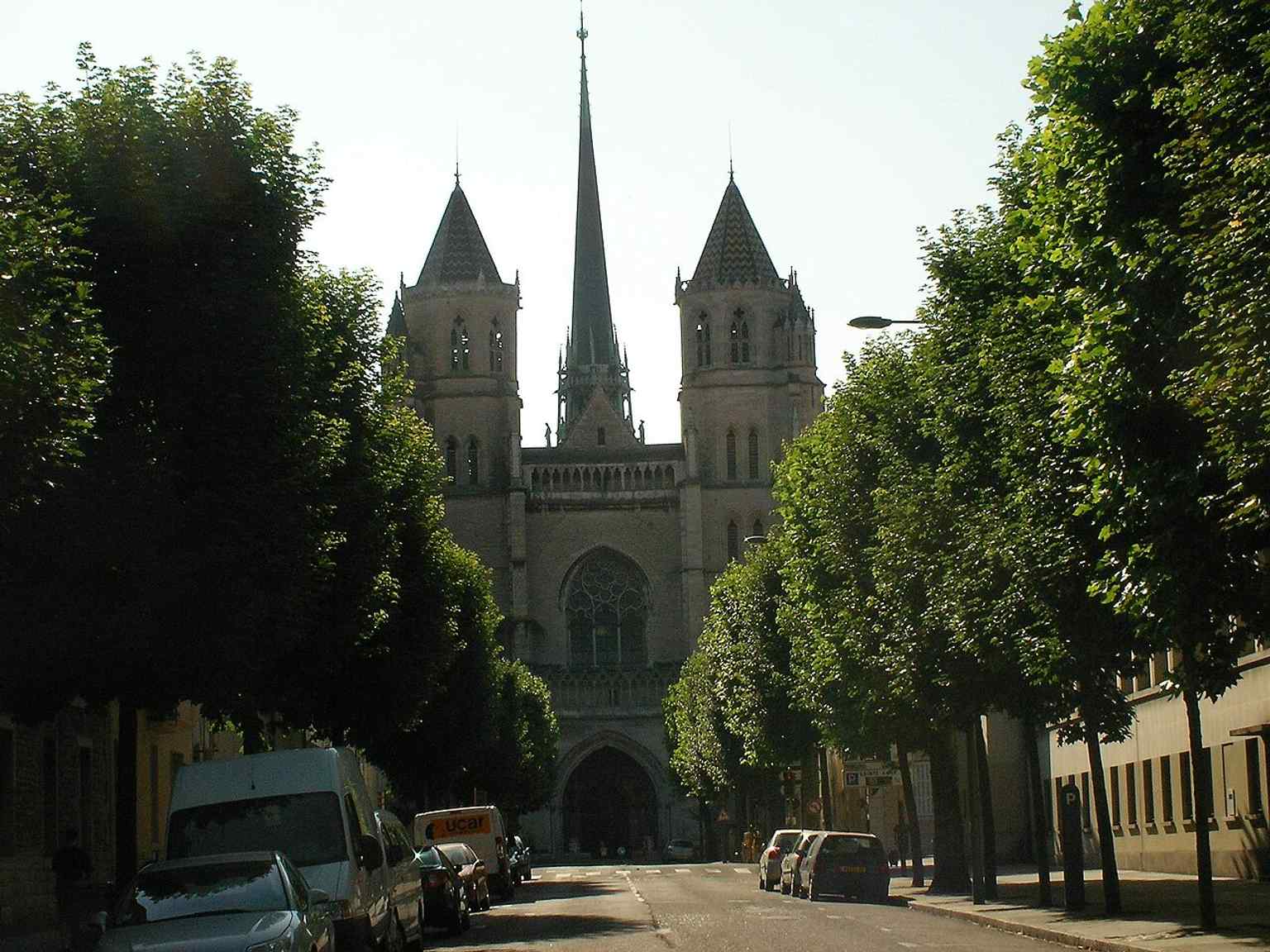
A modern exterior view of Cathédrale Saint-Bénigne, showcasing its Gothic style, which was rebuilt between 1280 and 1393.Photo: Gzen92, Wikimedia Commons, CC BY-SA 4.0. Cropped & resized. 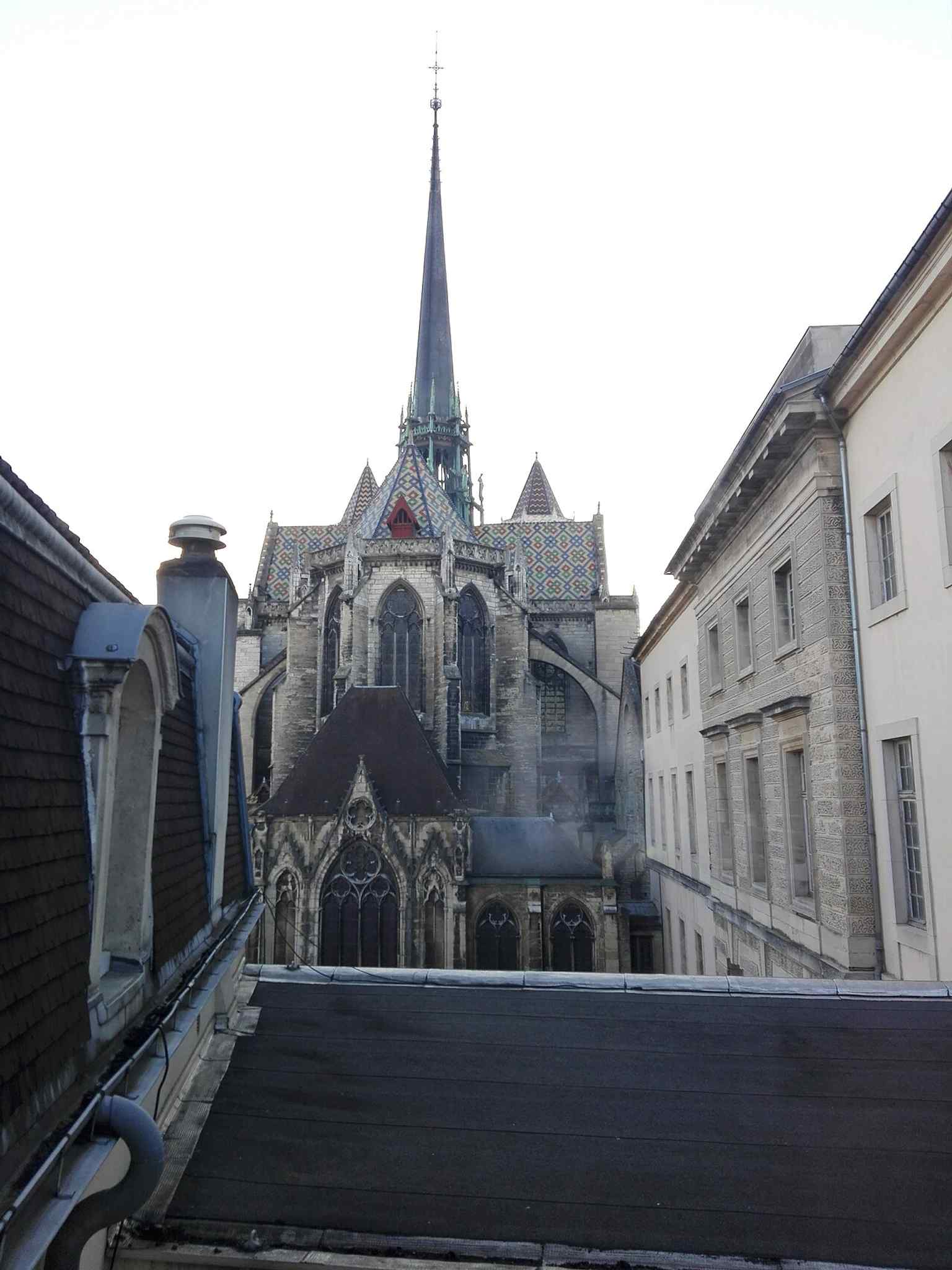
Another contemporary exterior perspective of the cathedral, highlighting its significant presence in Dijon.Photo: Andreabosnia, Wikimedia Commons, CC BY-SA 4.0. Cropped & resized. 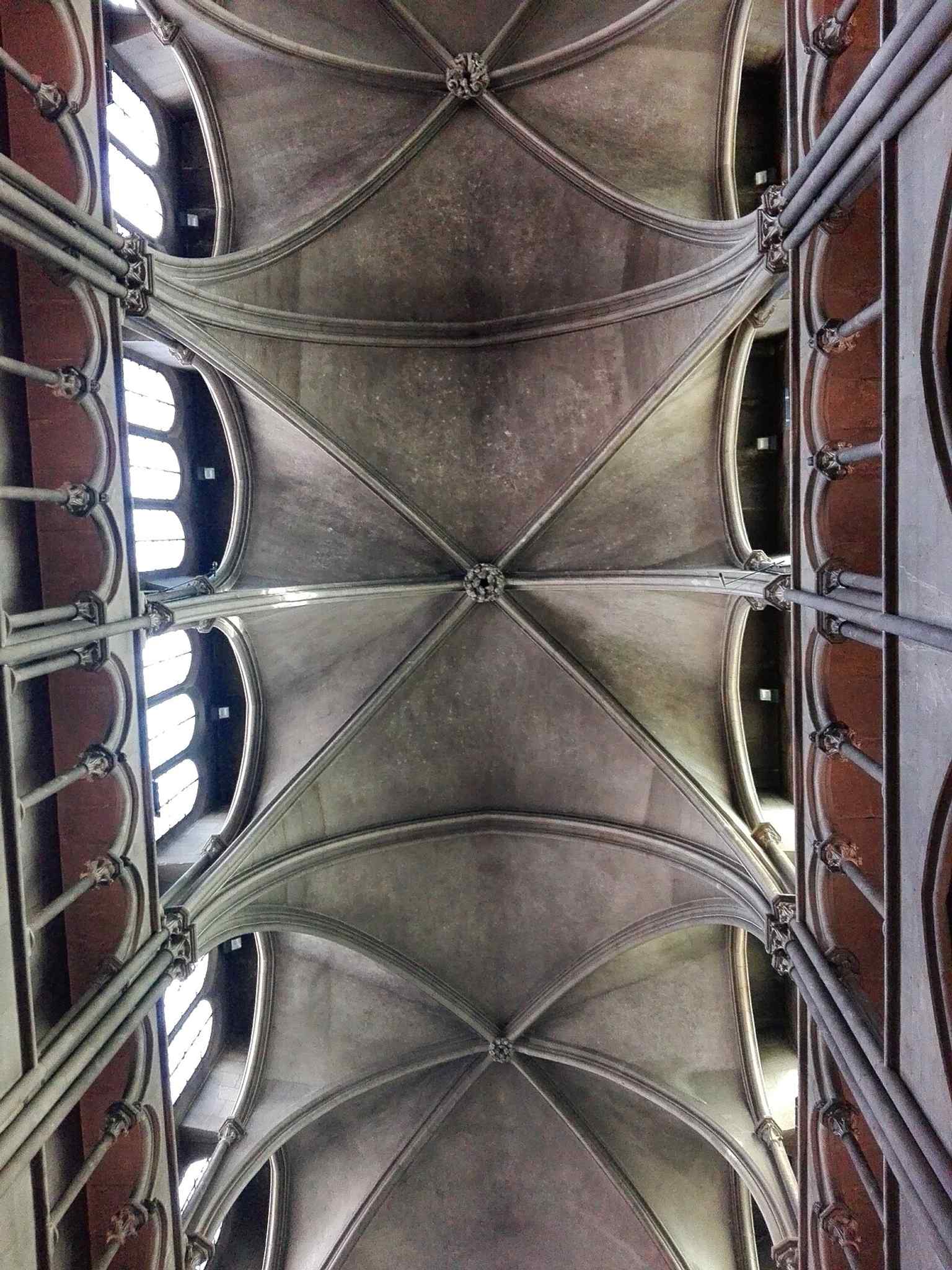
A detailed view of the soaring Gothic vaulting within the cathedral, a characteristic feature of its 13th to 14th-century reconstruction.Photo: Andreabosnia, Wikimedia Commons, CC BY-SA 4.0. Cropped & resized. 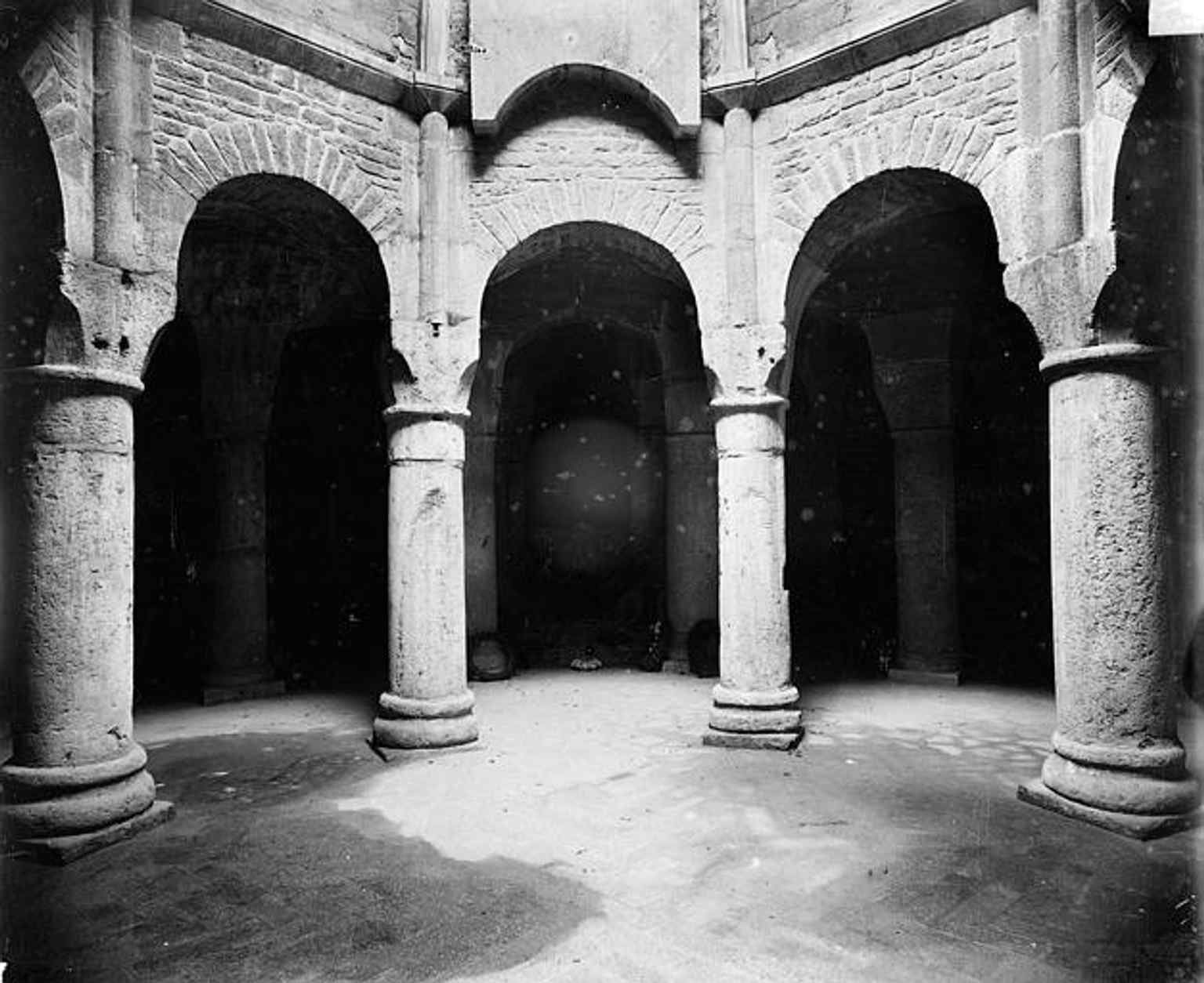
The arcades of the crypt, demonstrating the architectural style of the lower level of the original rotonda, which was rediscovered and restored in the 19th century by Jean-Philippe Suisse.Photo: Delaunay, Wikimedia Commons, CC BY-SA 4.0. Cropped & resized. 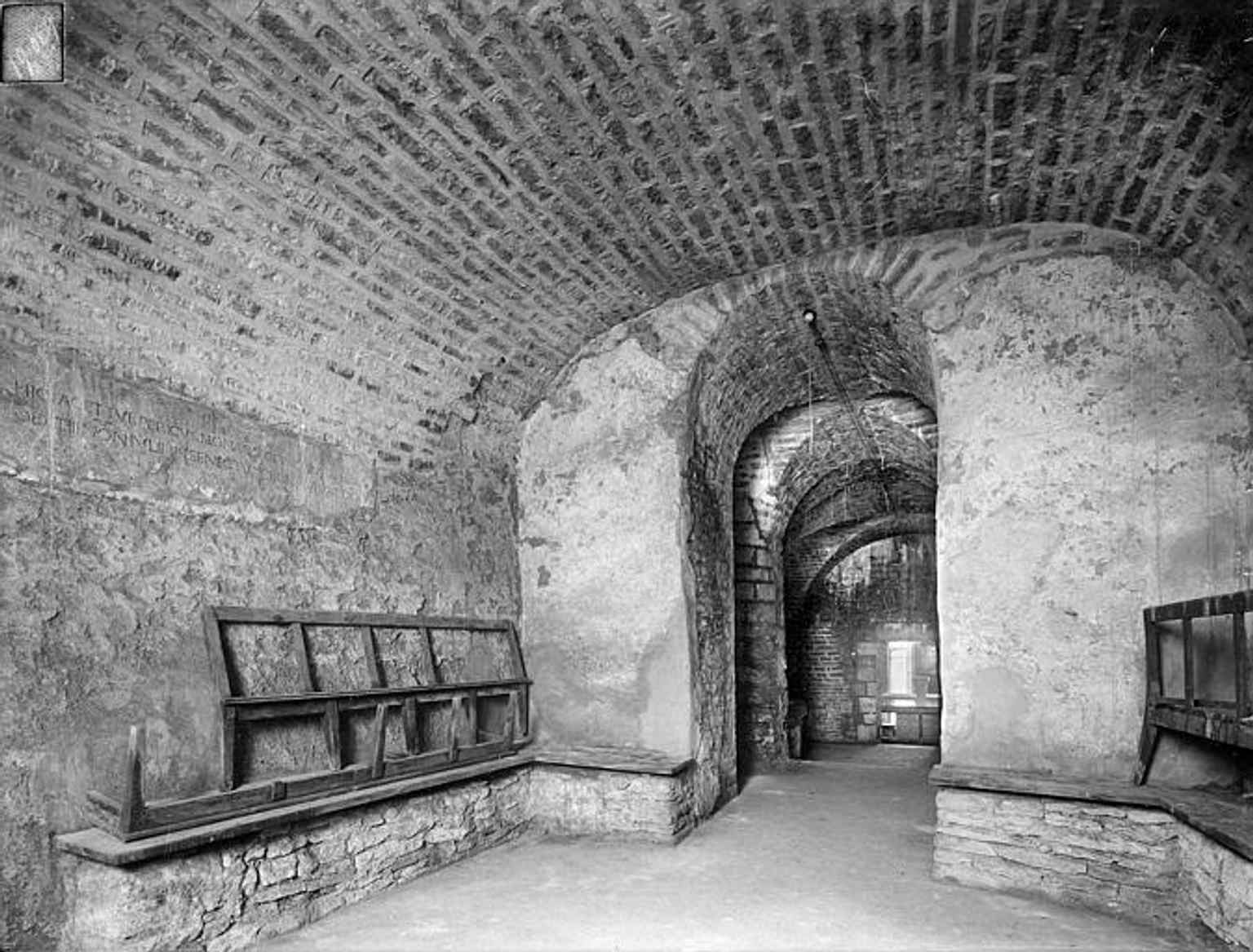
The eastern chapel within the crypt, a specific area that was part of the original three-level rotonda complex, with the lowest level dedicated to John the Baptist.Photo: Henri Heuzé, Wikimedia Commons, CC BY-SA 4.0. Cropped & resized. 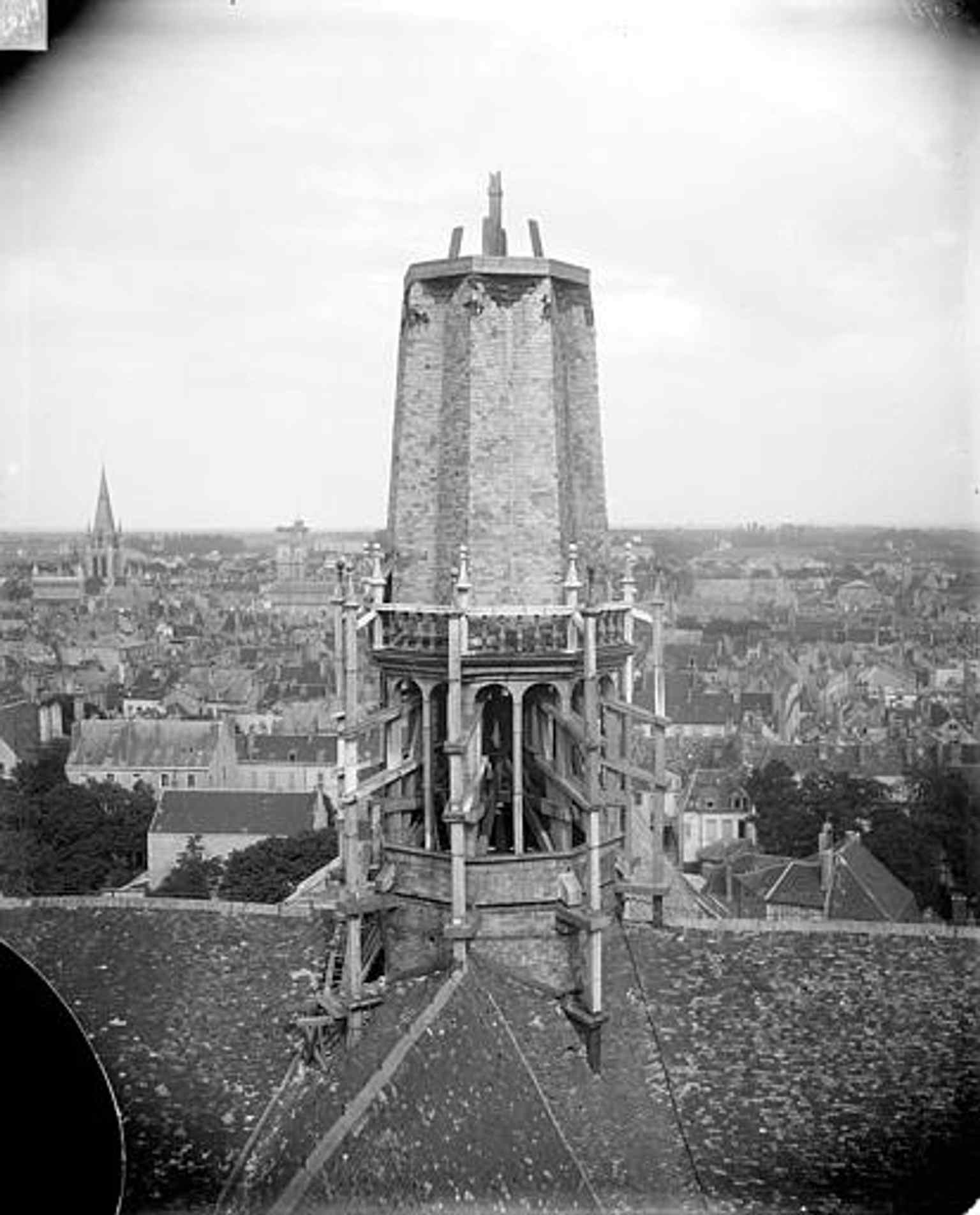
A historical image from 1919 showing the lower part of the spire under construction, which was replaced by Charles Suisse between 1884 and 1896, rising to 93 meters from the ground.Photo: Delaunay, Wikimedia Commons, CC BY-SA 4.0. Cropped & resized. 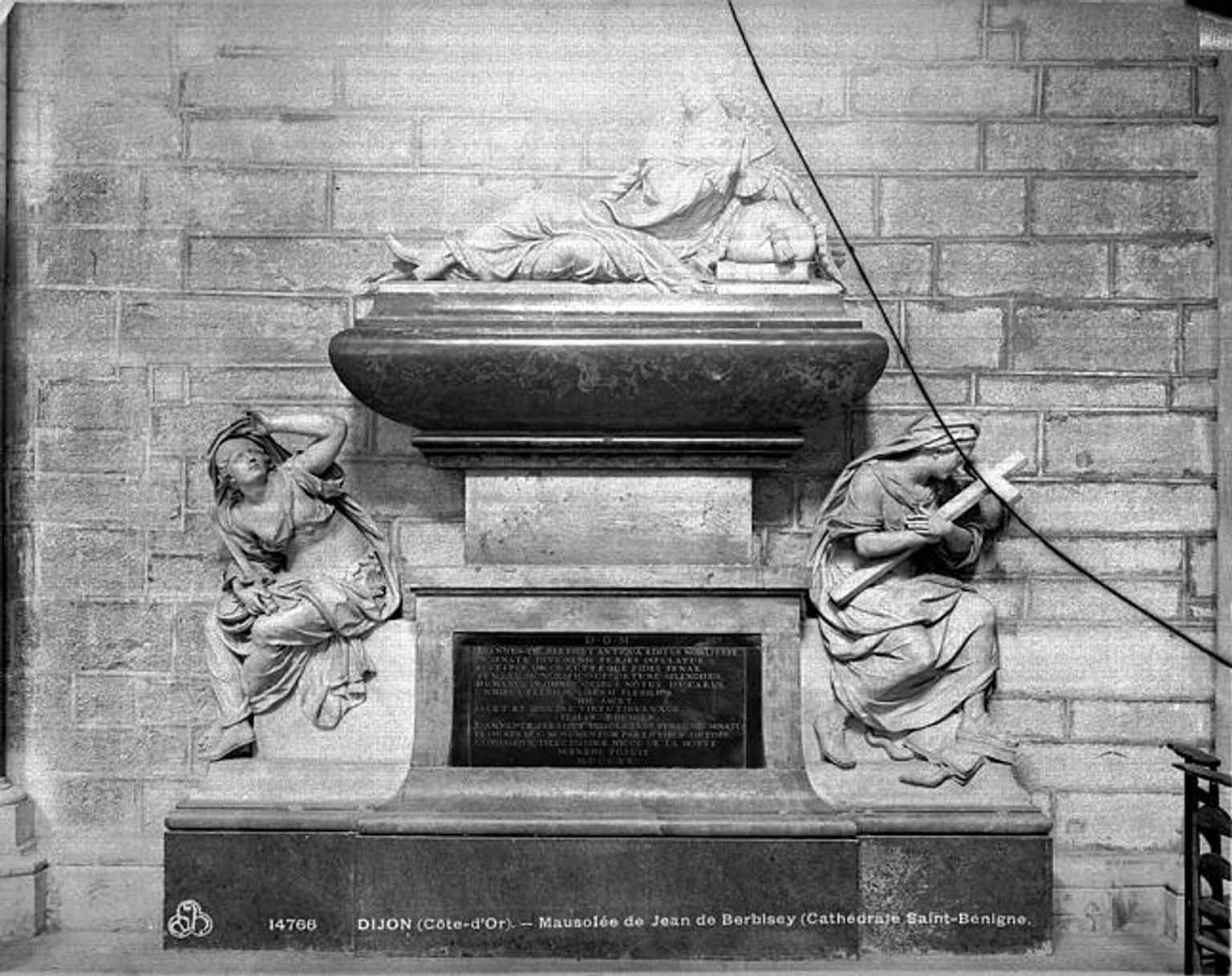
The mausoleum of Jean de Berbisey, a notable tomb located within the nave of the cathedral, part of the several burials found there.Photo: Étienne Neurdein / Louis-Antonin Neurdein, Wikimedia Commons, CC BY-SA 4.0. Cropped & resized. 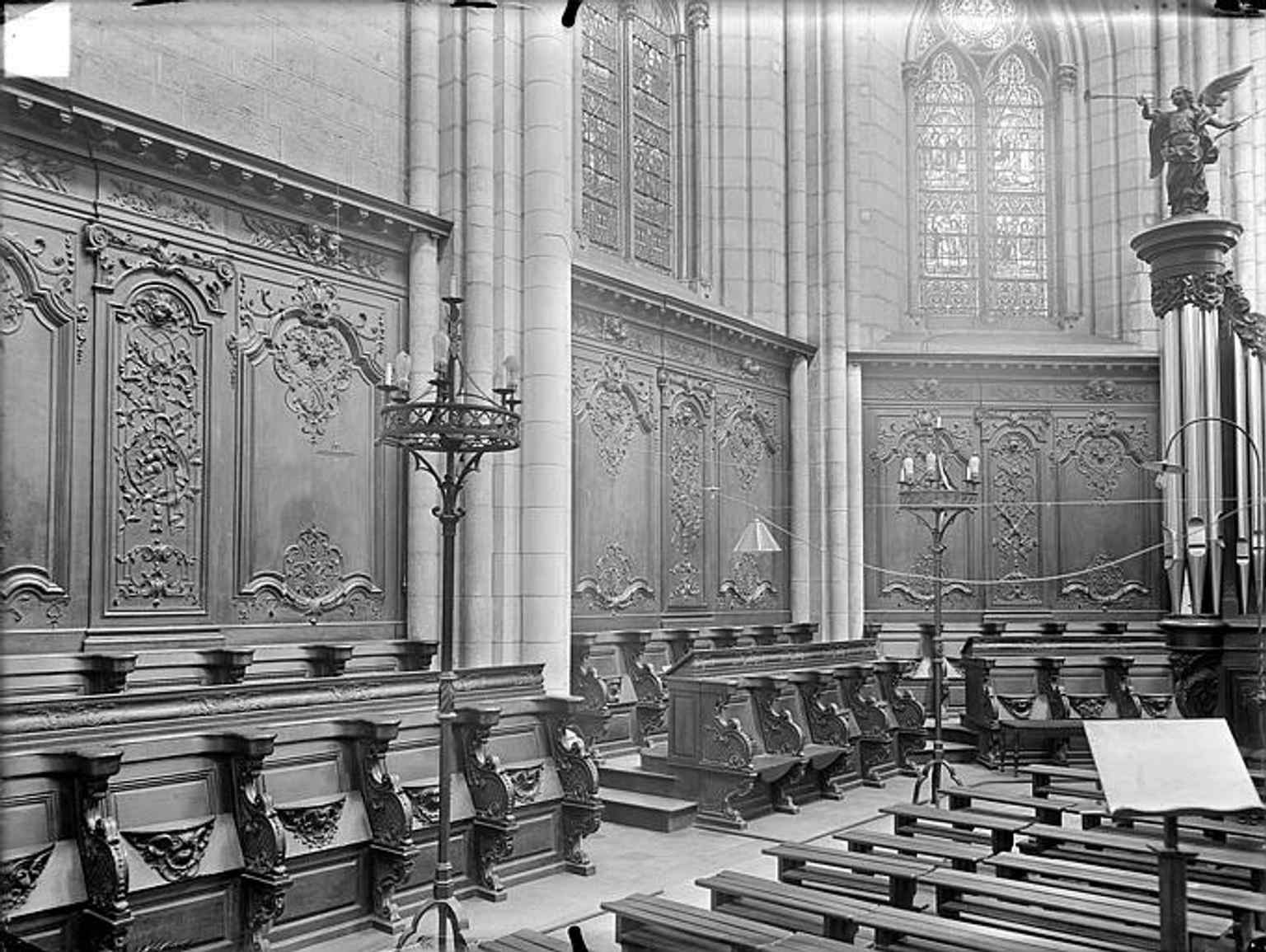
Stalls in the north side of the choir, an area distinguished by its deliberately warmer, ocher stone color during recent restoration (1988-1995) to reflect its medieval appearance.Photo: Gossin, Wikimedia Commons, CC BY-SA 4.0. Cropped & resized. 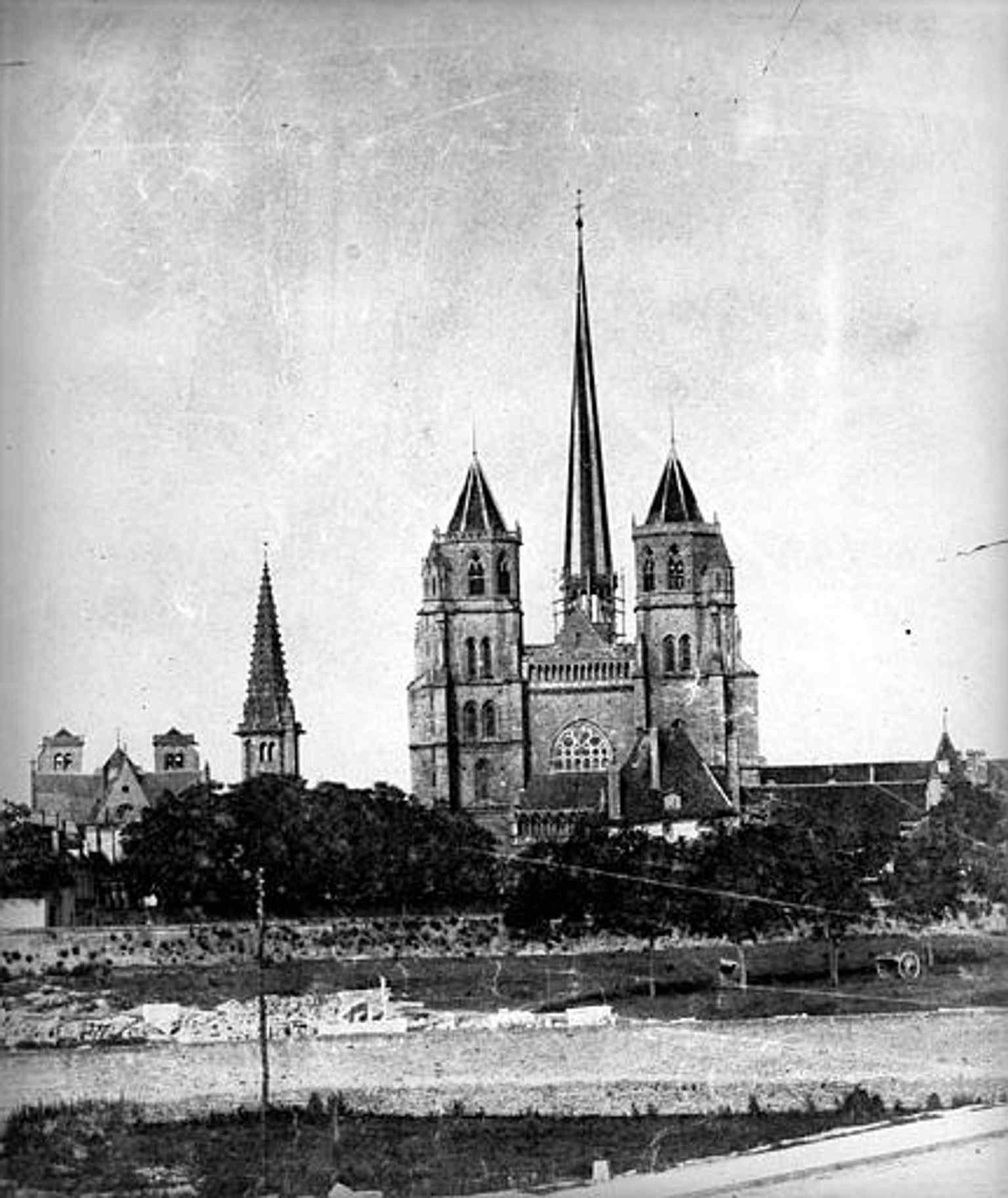
An older, general view of the cathedral's west side from 1919, providing a historical perspective on its exterior before more recent changes.Photo: Delaunay, Wikimedia Commons, CC BY-SA 4.0. Cropped & resized. 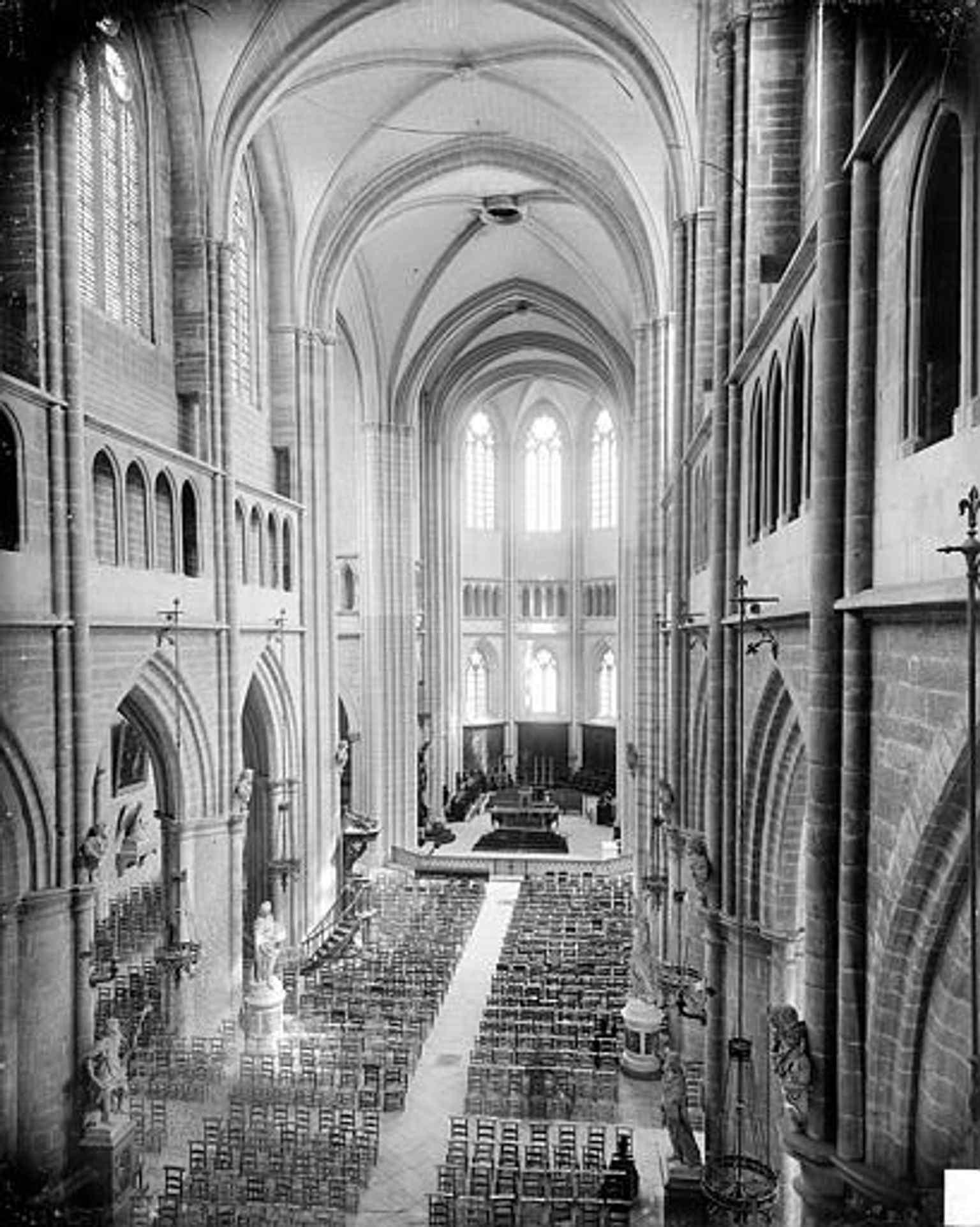
An interior view of the nave looking towards the choir, from 1919, illustrating the overall Gothic design and the elevation levels mentioned in the text.Photo: Delaunay, Wikimedia Commons, CC BY-SA 4.0. Cropped & resized. French Abbey
Monastery located in Côte-d'Or, France
Show 12 more stopsShow fewer stopsexpand_moreexpand_less
Church located in Côte-d'Or, France
Synagogue located in Côte-d'Or, France
Library in Dijon
Church located in Dijon in Côte-d'Or, France
Back in the seventeenth century, traveling opera troupes did not have a dedicated theater here. Instead, they performed in what were known as tripots. These were essentially…Read moreShow less
Open dedicated page →Welcome to the Grand Théâtre de Dijon, the historic heart of the Opéra de Dijon. Standing in front of this elegant Neo-classical building, you might assume the city has always enjoyed such refined cultural spaces. The truth is a little scrappier.
Back in the seventeenth century, traveling opera troupes did not have a dedicated theater here. Instead, they performed in what were known as tripots. These were essentially ramshackle gambling dens and indoor tennis courts, quickly repurposed for a night of music. It was loud, crowded, and completely lacking in glamour.
The city finally decided to elevate things in seventeen seventeen by purchasing one of these gambling dens to create a municipal venue. They called it the Salle de Comédie. But there was a catch. For exactly one hundred years, the audience had to watch the performances standing up. They finally installed seats in eighteen seventeen. You have to admire the stamina of an eighteenth-century opera fan.
By that point, a local architect named Jacques Cellerier had already proposed building a proper, purpose-built theater. Finding space in the city center was tricky, so in eighteen zero two, the city simply demolished the Sainte-Chapelle church and its cloister to clear the land right where you are standing. They laid the first stone in eighteen ten, but construction ground to a halt between eighteen fourteen and eighteen twenty-three due to political and financial turmoil. The theater finally opened its doors in eighteen twenty-eight.
Since you are looking at the outside, check your phone to see a glimpse of the grand interior, featuring a monumental Murano crystal chandelier from nineteen hundred suspended in the vestibule. The interior was carefully modeled after the grand Italian opera houses of the era. The area outside has evolved beautifully, too. If you look at the app, you can see how this space transformed between two thousand and six and two thousand and fourteen from a basic street into the inviting pedestrian plaza you see today.
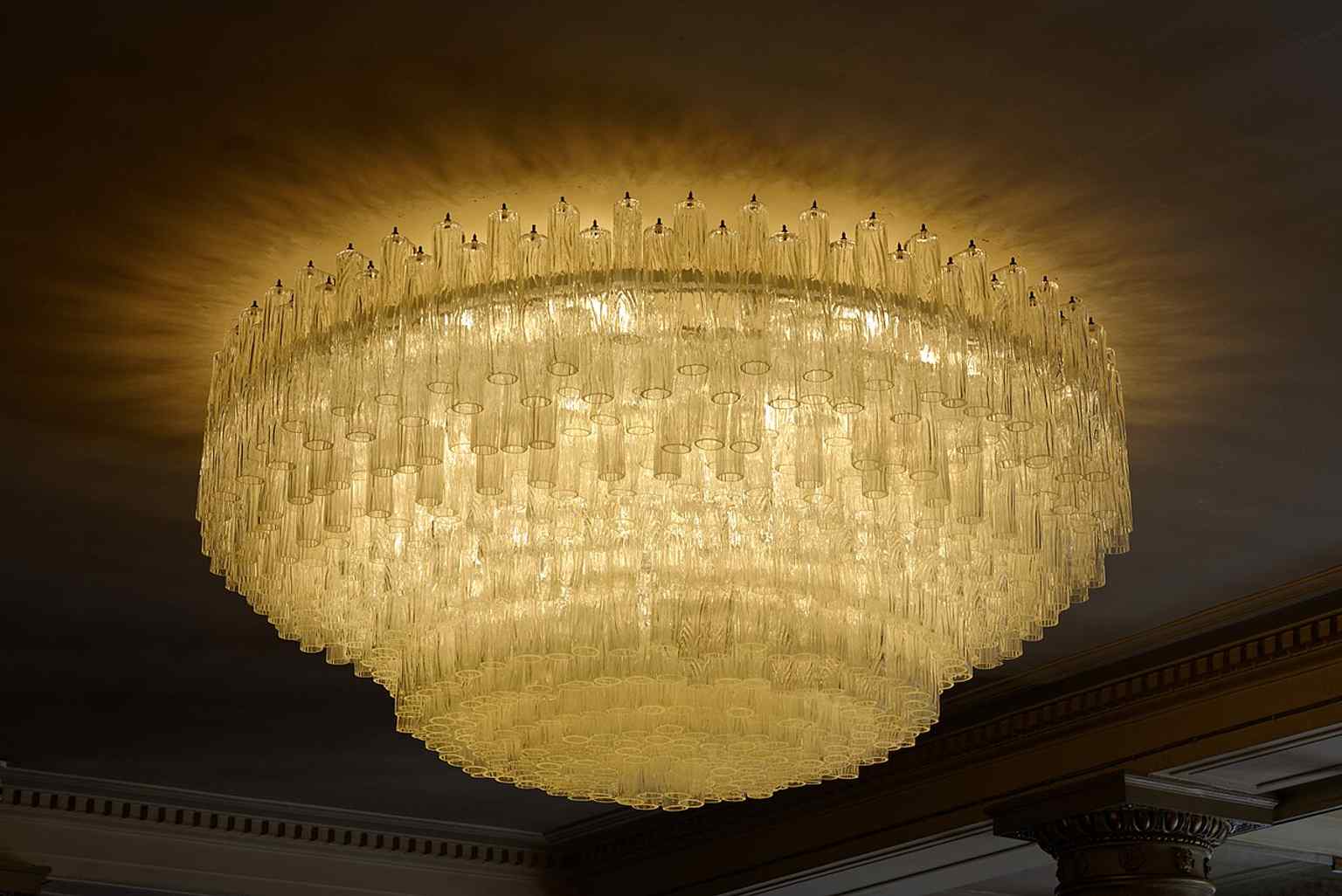
This monumental Murano crystal chandelier from 1900 graces the vestibule of the Grand Théâtre de Dijon, whose interior was modelled after Italian opera houses.Photo: François de Dijon, Wikimedia Commons, CC BY-SA 4.0. Cropped & resized. For over a century, this theater was Dijon's only opera house. Today, the Opéra de Dijon actually manages two venues. If you were to walk over to Place Jean Bouhey, you would find the Auditorium de Dijon, which opened in nineteen ninety-eight. It is a massive, modern building shaped like a grand piano and covered in local beige Chassagne limestone, offering seating for over sixteen hundred people.
Between the two venues, the company stages a rich repertory, heavily supported by the city. In two thousand and thirteen, the City of Dijon provided an annual subsidy of seven million euros toward their ten point five million euro budget. This funding allows them to put on massive productions, and even celebrate hometown heroes like Jean-Philippe Rameau, the famous Baroque composer born right here in Dijon.
With a seating capacity of six hundred and ninety-two, the Grand Théâtre remains the city's premier spot for intimate classical performances. Take your time admiring the architecture. When you are ready, we can head to the next stop.
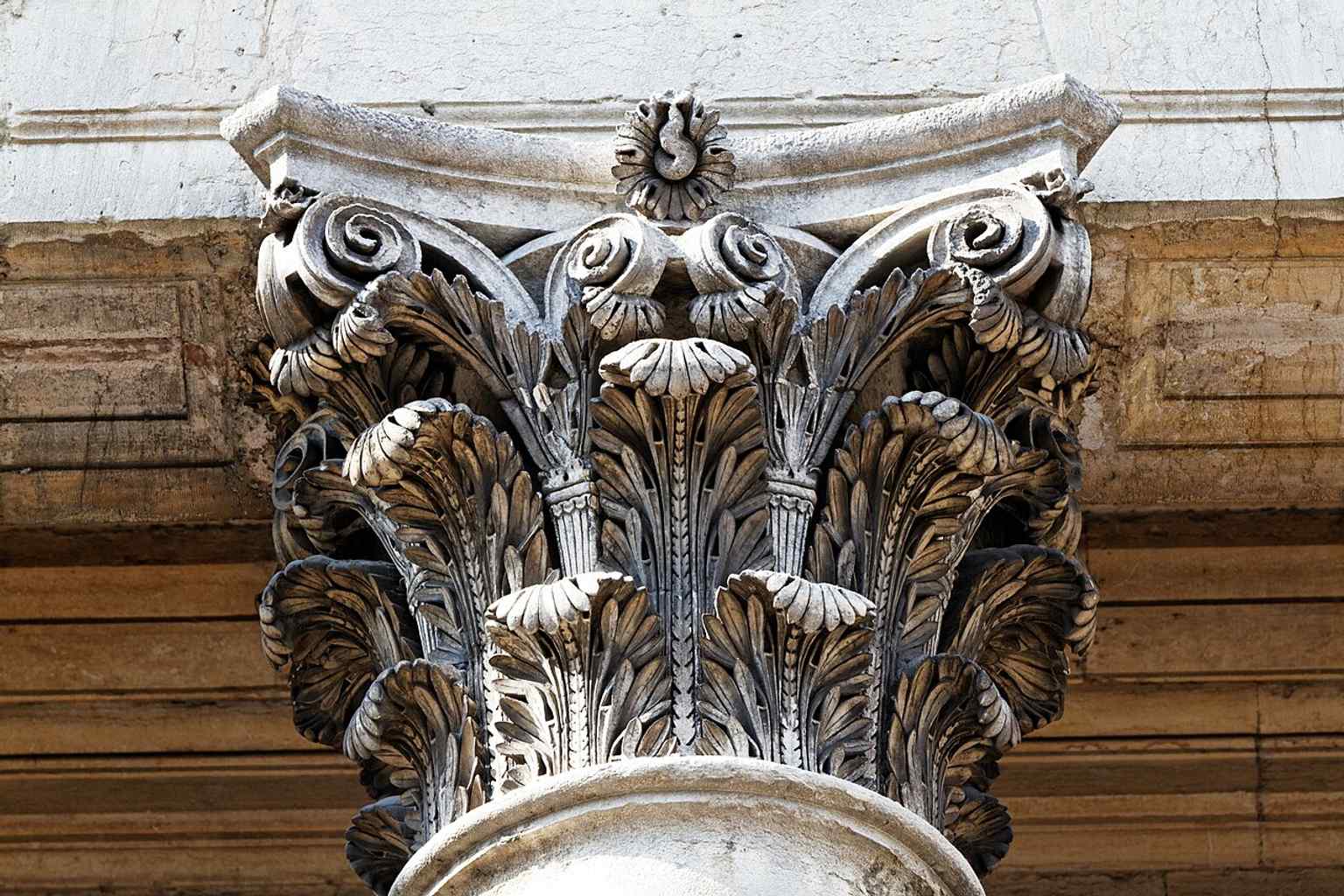
A detailed view of a column capital at the Grand Théâtre de Dijon, an example of its Neo-classical architectural style.Photo: Thesupermat, Wikimedia Commons, CC BY-SA 3.0. Cropped & resized. 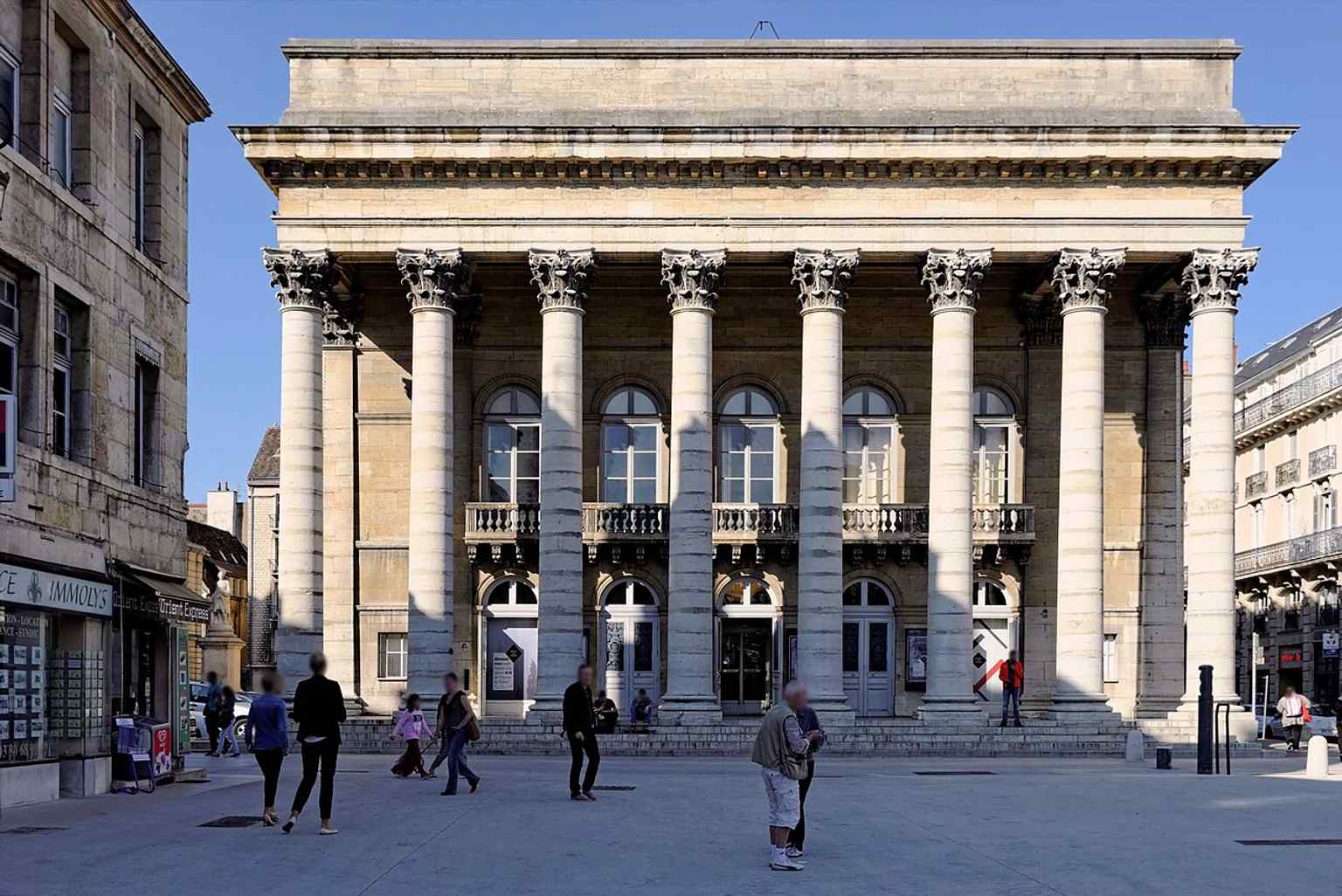
The Grand Théâtre de Dijon is located at the Place du Théâtre, a key venue for the Opéra de Dijon.Photo: François de Dijon, Wikimedia Commons, CC BY-SA 3.0. Cropped & resized. 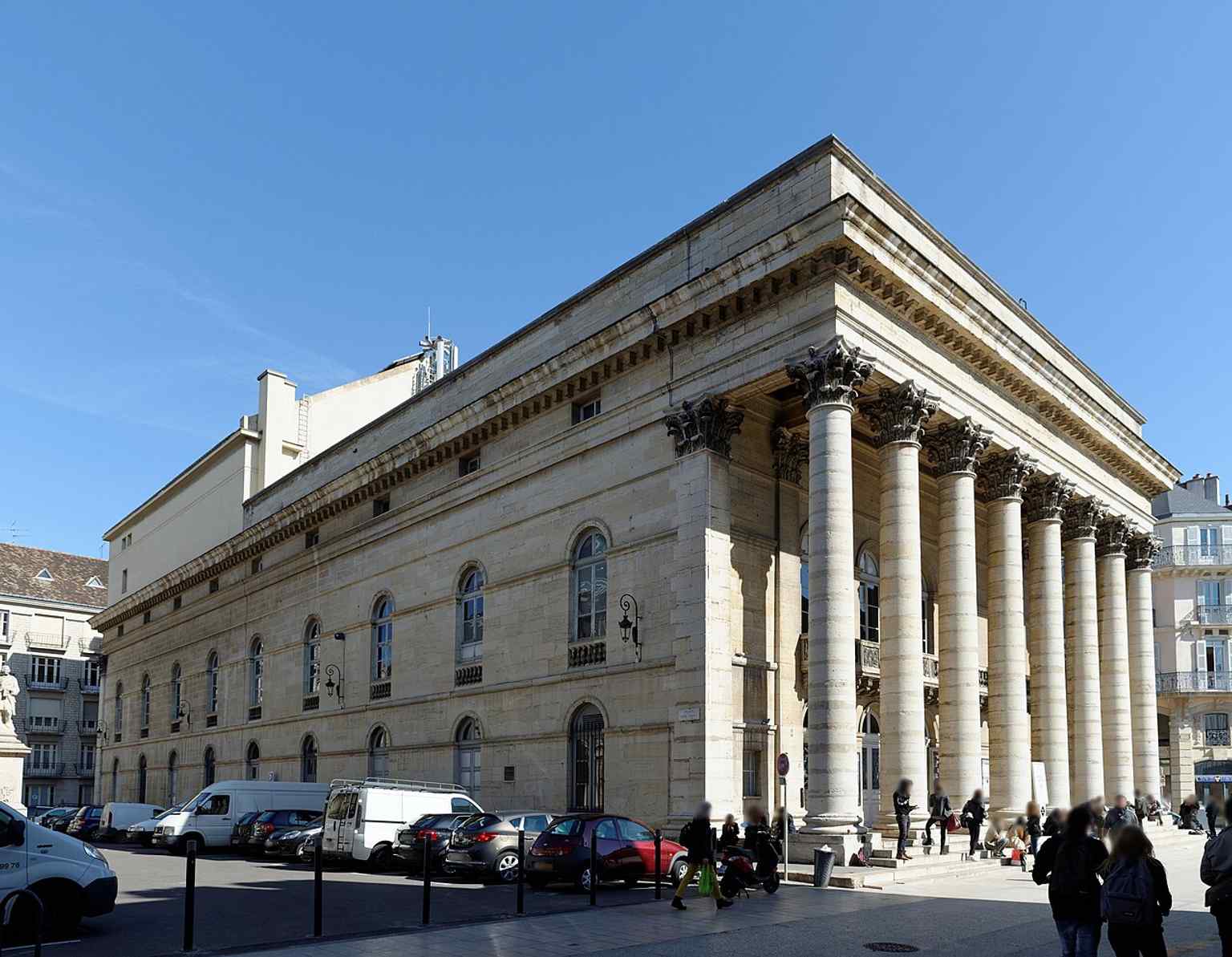
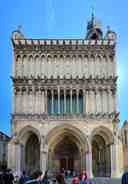
The Grand Théâtre de Dijon, completed in 1828, has a seating capacity of 692 after its last major restoration in 2005.Photo: François de Dijon, Wikimedia Commons, CC BY-SA 4.0. Cropped & resized. Look to your left for a towering flat stone facade, defined by three massive arched doorways at the base and rows of slender columns topped with projecting stone creatures. This…Read moreShow less
Open dedicated page →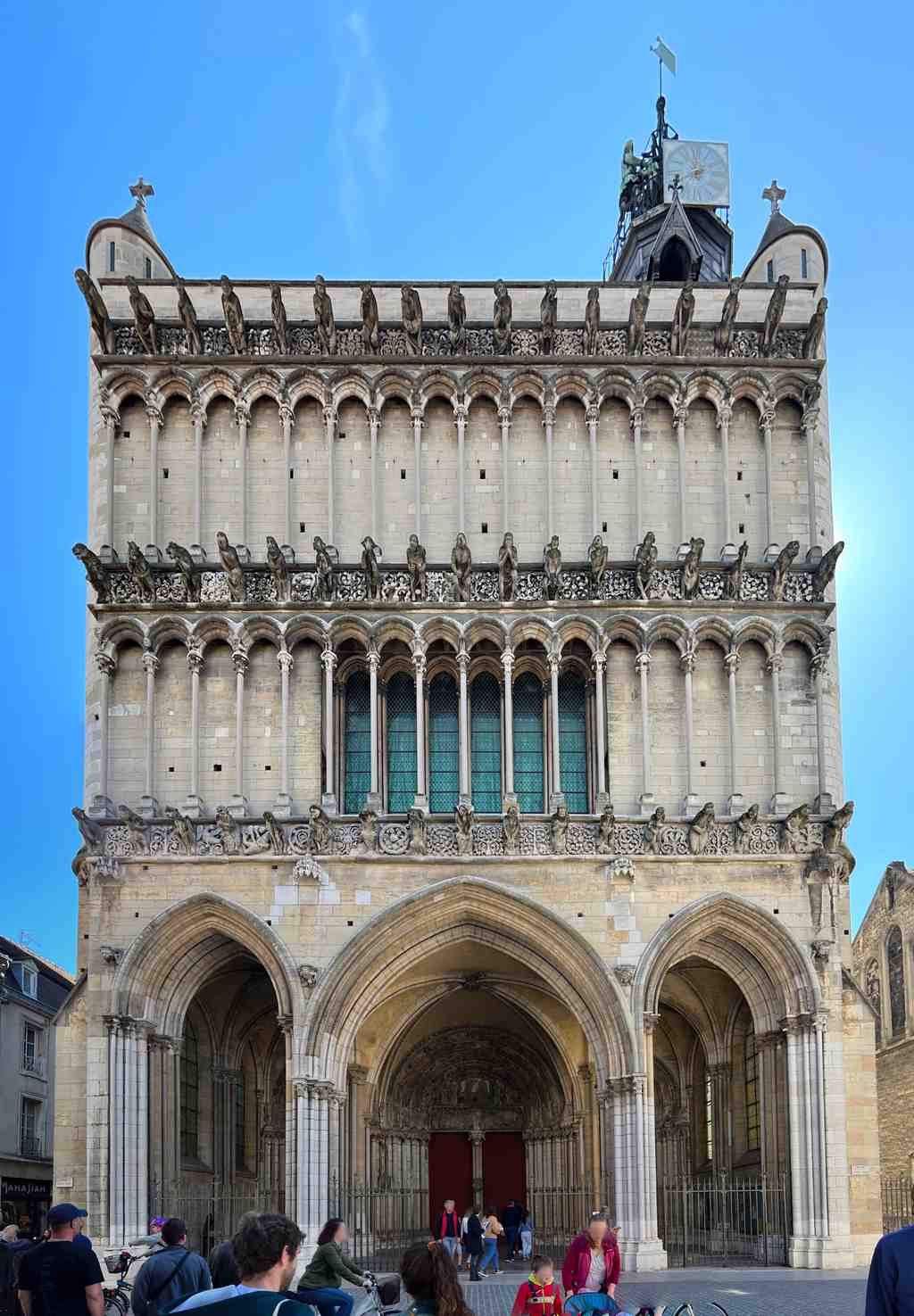
Notre-Dame Church of DijonPhoto: Chabe01, Wikimedia Commons, CC BY-SA 4.0. Cropped & resized. Look to your left for a towering flat stone facade, defined by three massive arched doorways at the base and rows of slender columns topped with projecting stone creatures. This is the Notre Dame Church of Dijon.
Now, Gothic architecture usually loves to show off its flying buttresses and sweeping curves, but the unknown architect who designed this in the twelve twenties did something completely different. Because space was tight in this crowded neighborhood, they built a flat screen facade that completely hides the shape of the church behind it.
Take a close look at those fifty-one stone creatures jutting out from the upper galleries. Check out your screen to see a closer view of these fascinating carvings... You might call them gargoyles, but technically they are chimeras, purely decorative statues that do not actually drain rainwater. And the ones you see today are not the originals.
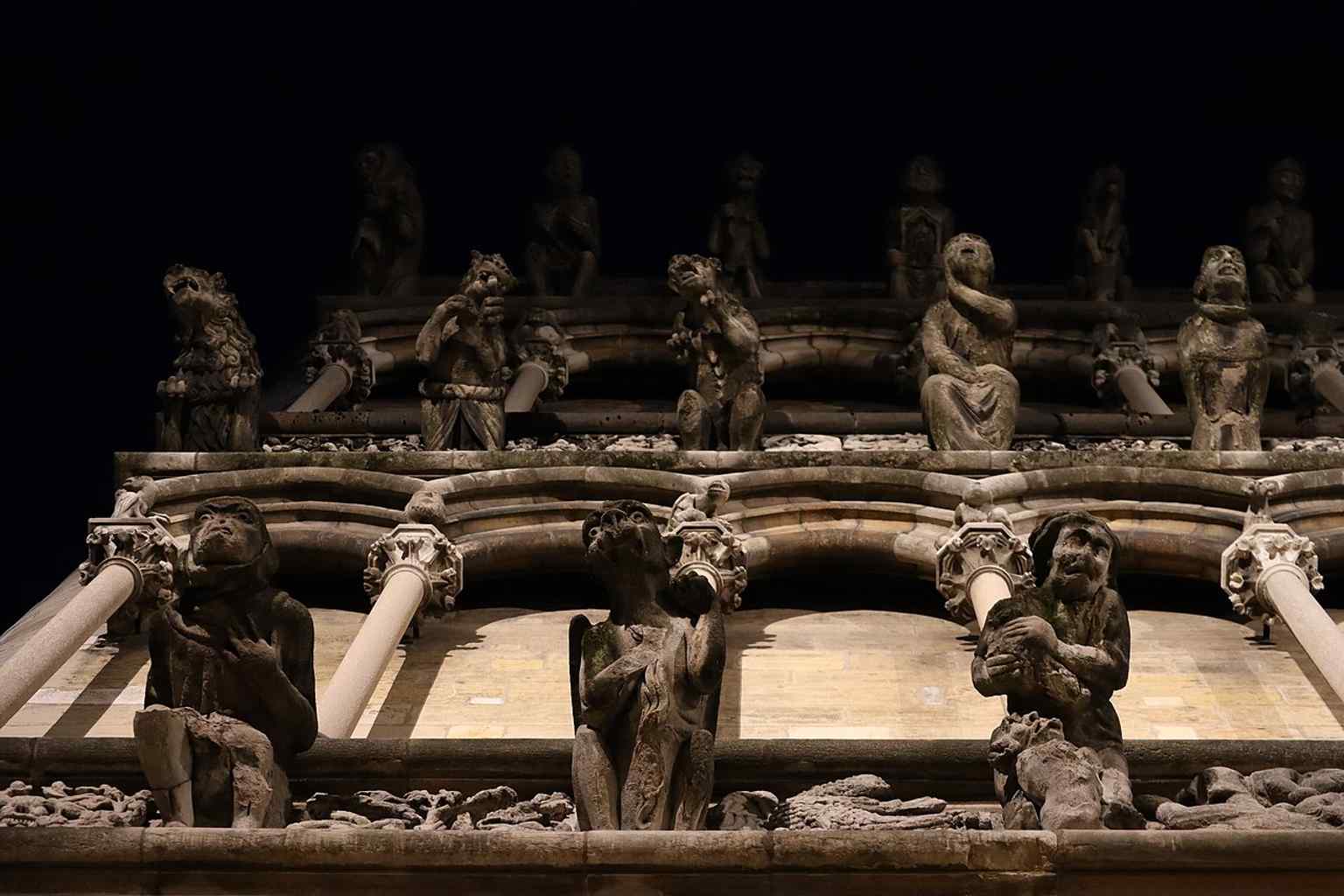
These decorative "gargoyles" or chimères adorning the facade were sculpted between 1880 and 1882 during major restorations, replacing older ones. They are purely decorative, not functional.Photo: GO69, Wikimedia Commons, CC BY-SA 4.0. Cropped & resized. The story of the first statues is a bit of a dark comedy. In the year twelve forty, a wealthy usurer, a moneylender who charged high interest, was walking across this very square to get married. Right as he passed below the church, a stone figure depicting a usurer suddenly broke loose and fell, killing him on the spot. His furious colleagues demanded the church remove all the decorative figures from the front. For over six hundred years, the facade was bare, until Parisian sculptors added the current monsters during restorations in the eighteen eighties.
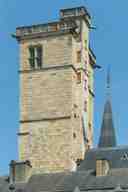
Now, look up at the stump of the right tower. You will see a mechanical clock with iron figures. That is the Jacquemart. If you look at your app, you can see the whole mechanical family up close... In thirteen eighty-two, the Duke of Burgundy, Philip the Bold, helped crush a rebellion in the Belgian city of Courtrai. To rub salt in the wound, he dismantled their prized mechanical clock, which featured an automaton, a mechanical figure that strikes a bell, and hauled it all the way back to Dijon as a trophy. Over the centuries, the city thoughtfully gave Jacquemart a mechanical wife, Jacqueline, and two mechanical children, so he would not have to strike the bells all alone.
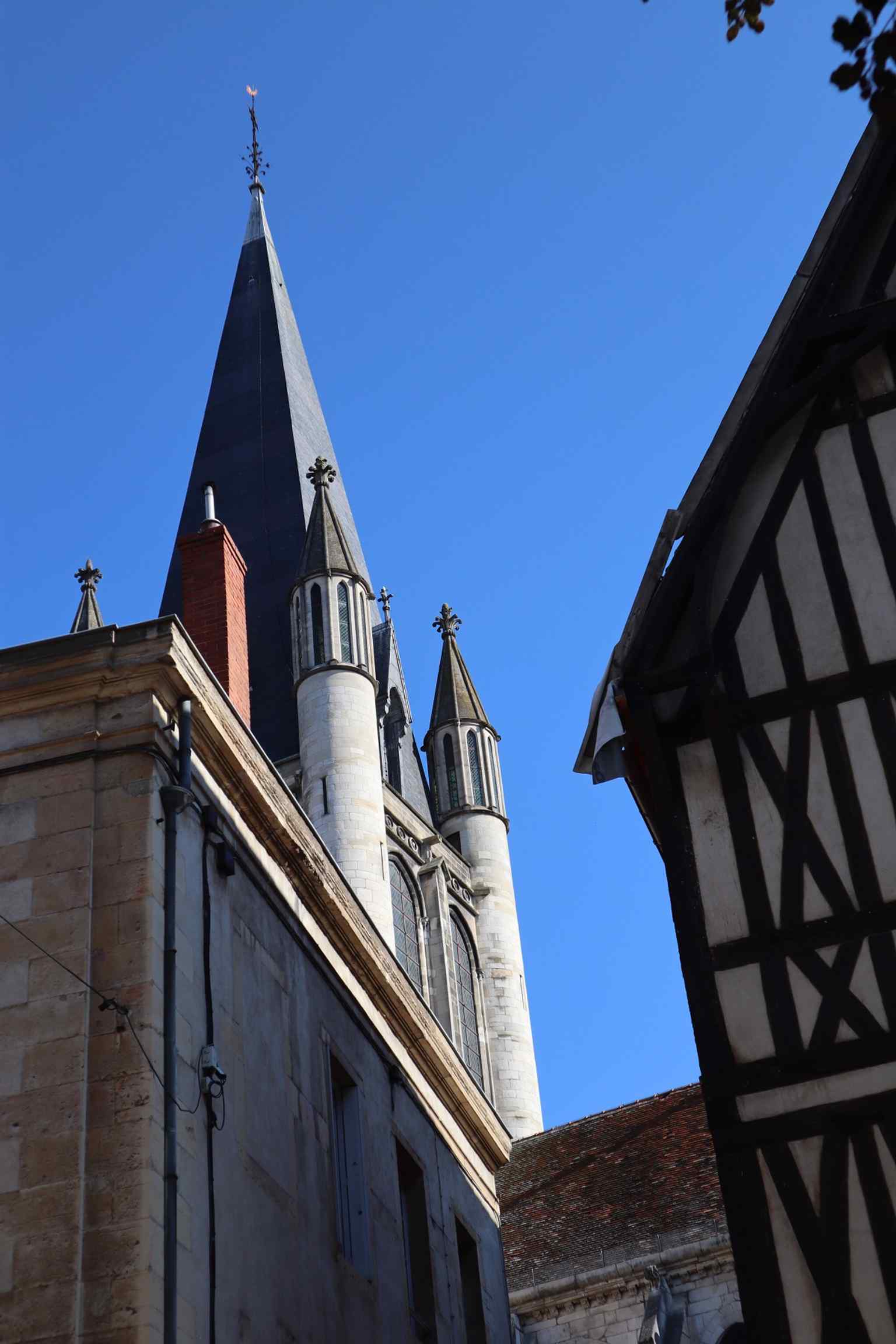
The famous Jacquemart clock and its family of automata, Jacquemart, Jacqueline, Jacquelinet, and Jacquelinette, captured from Courtrai in 1382 by Philippe the Bold and gifted to Dijon.Photo: GO69, Wikimedia Commons, CC BY-SA 4.0. Cropped & resized. If you walk around the north side of the building later, you will find a small stone owl carved into a chapel wall. For centuries, visitors have rubbed it with their left hand, the hand closest to the heart, to make a wish. Just make sure you do not look at the carved salamander nearby, or your wish will be canceled.
The church is open to visitors from eight in the morning to six in the evening Monday through Saturday, and from nine to six on Sundays.
Take all the time you need to admire this incredible facade. When you are ready to keep walking, we can move on to the next stop.
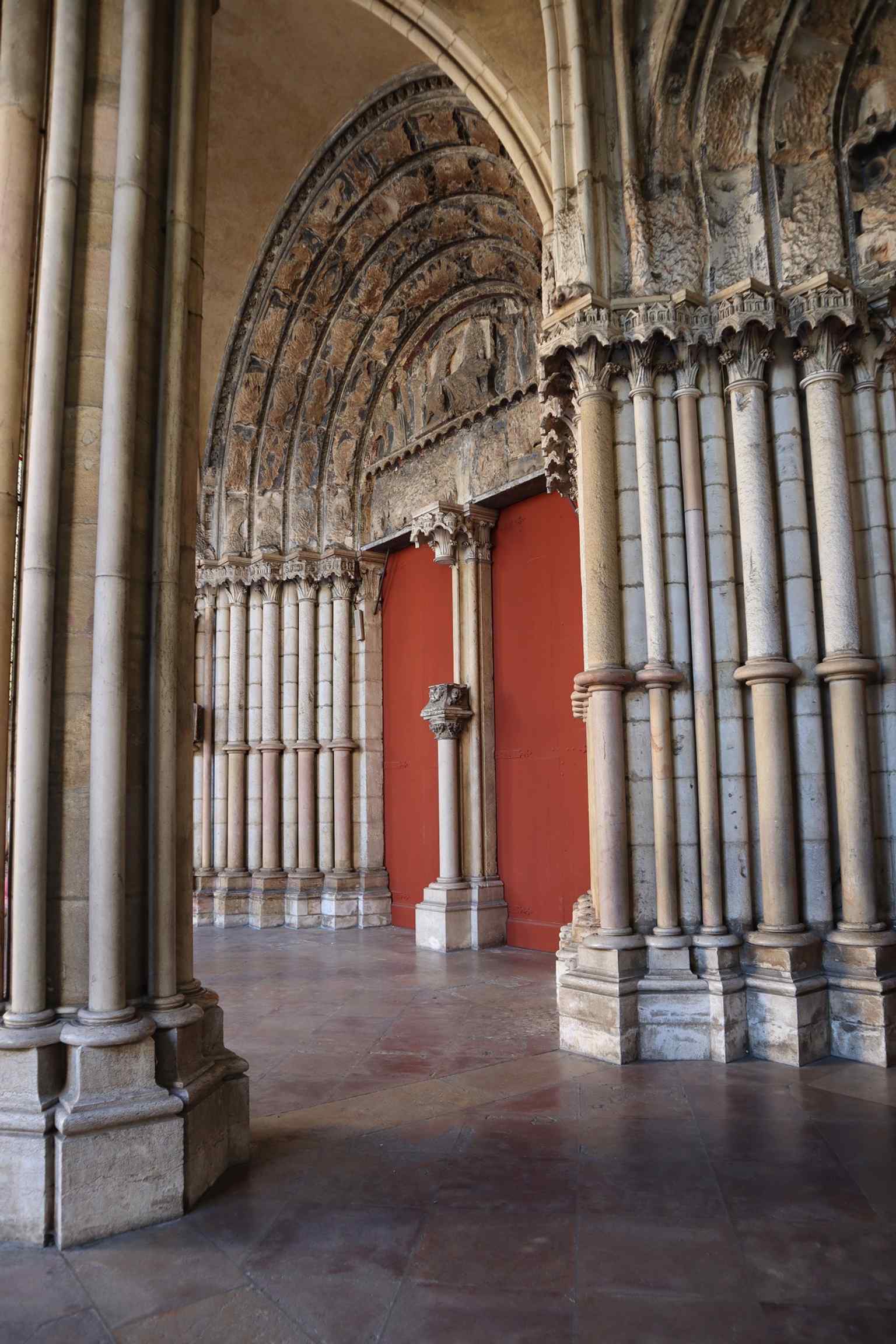
The three grand arcades forming the entrance to the western porch, which once housed communal archives and witnessed mayoral oath-takings.Photo: GO69, Wikimedia Commons, CC BY-SA 4.0. Cropped & resized. 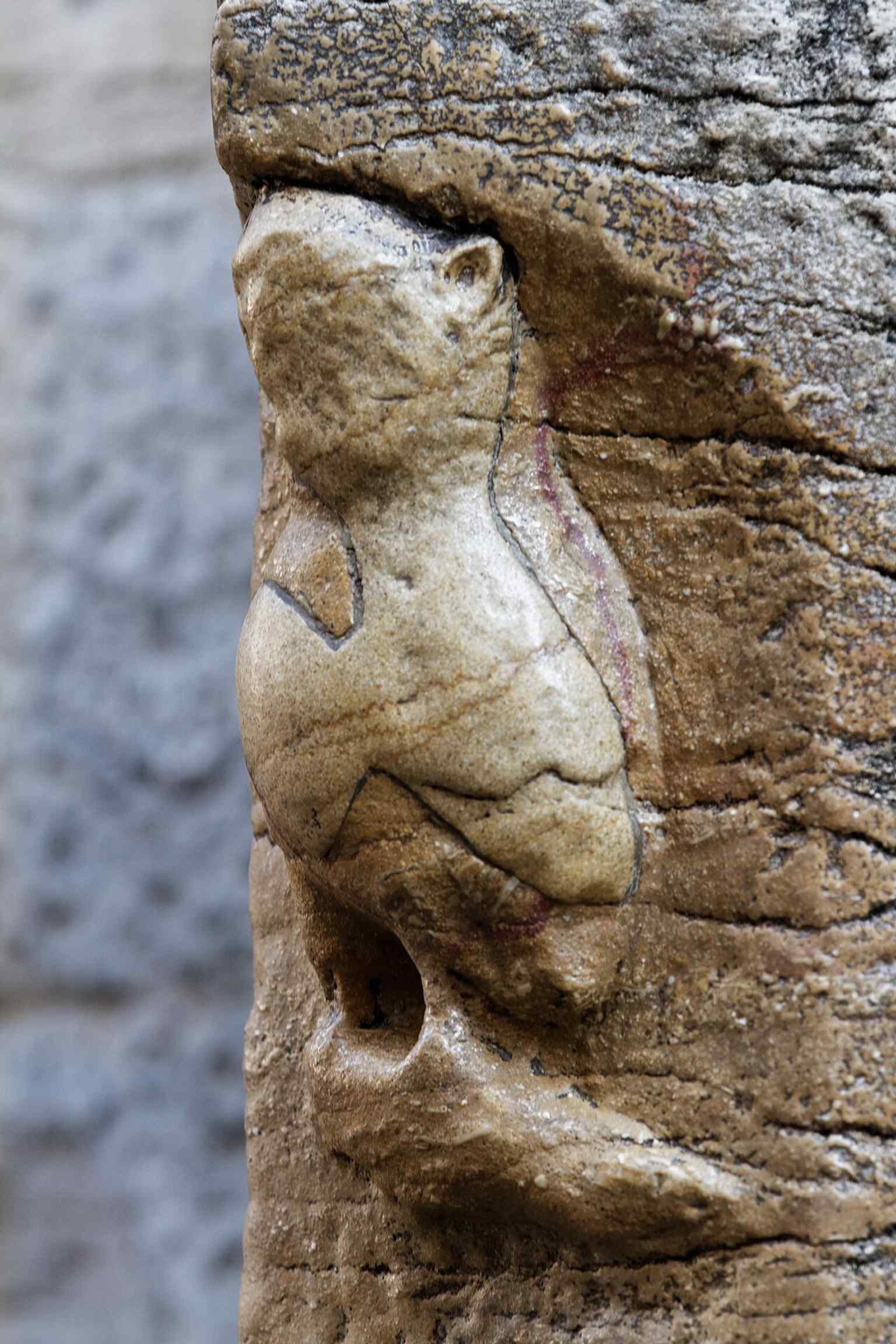
The beloved owl sculpture on the north side of the church, worn smooth by centuries of visitors touching it for good luck and wishes.Photo: Thesupermat, Wikimedia Commons, CC BY-SA 3.0. Cropped & resized. 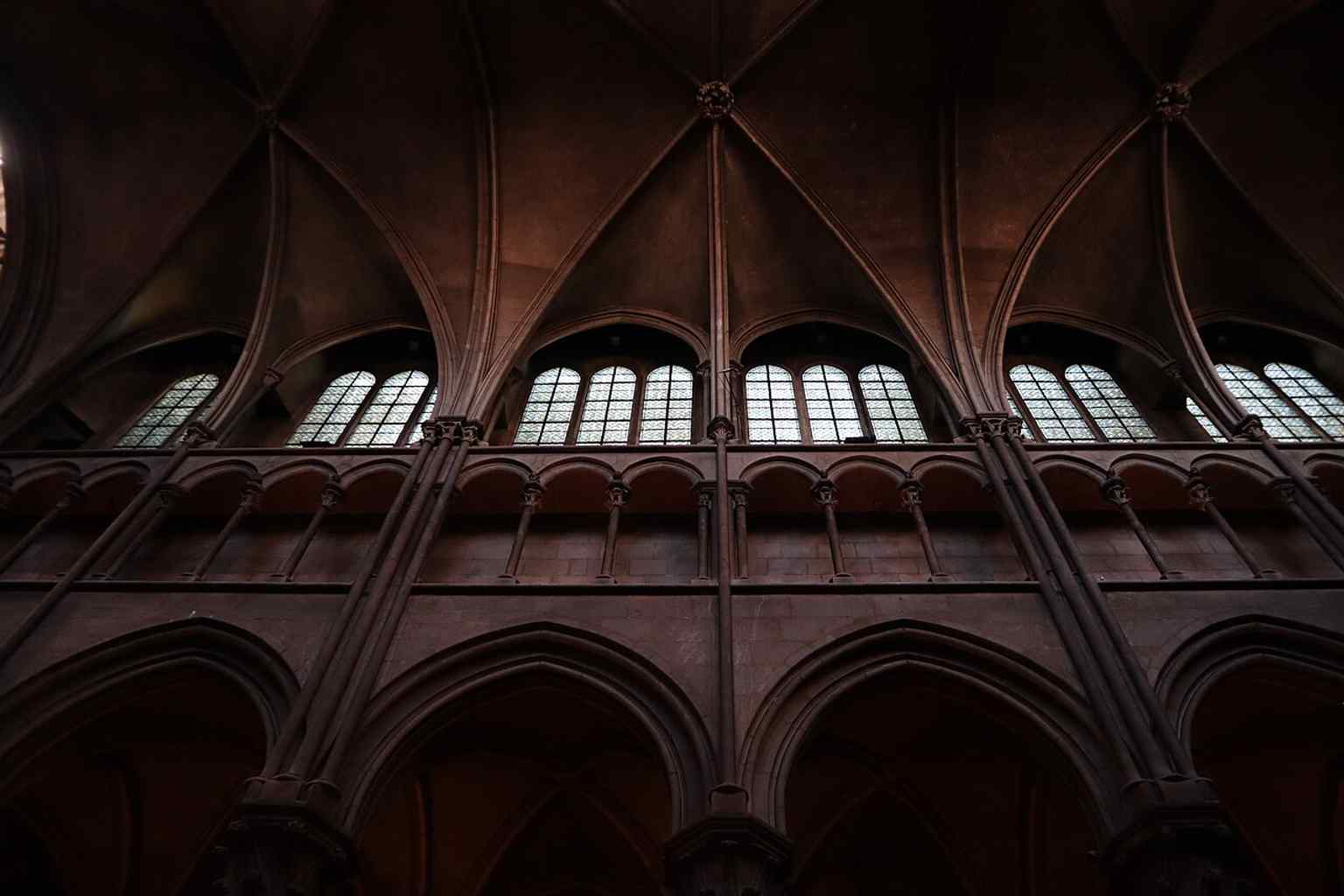
The impressive nave, featuring three stories of elevation and sexpartite vaults, designed to create a monumental impression within the church's relatively modest space.Photo: GO69, Wikimedia Commons, CC BY-SA 4.0. Cropped & resized. 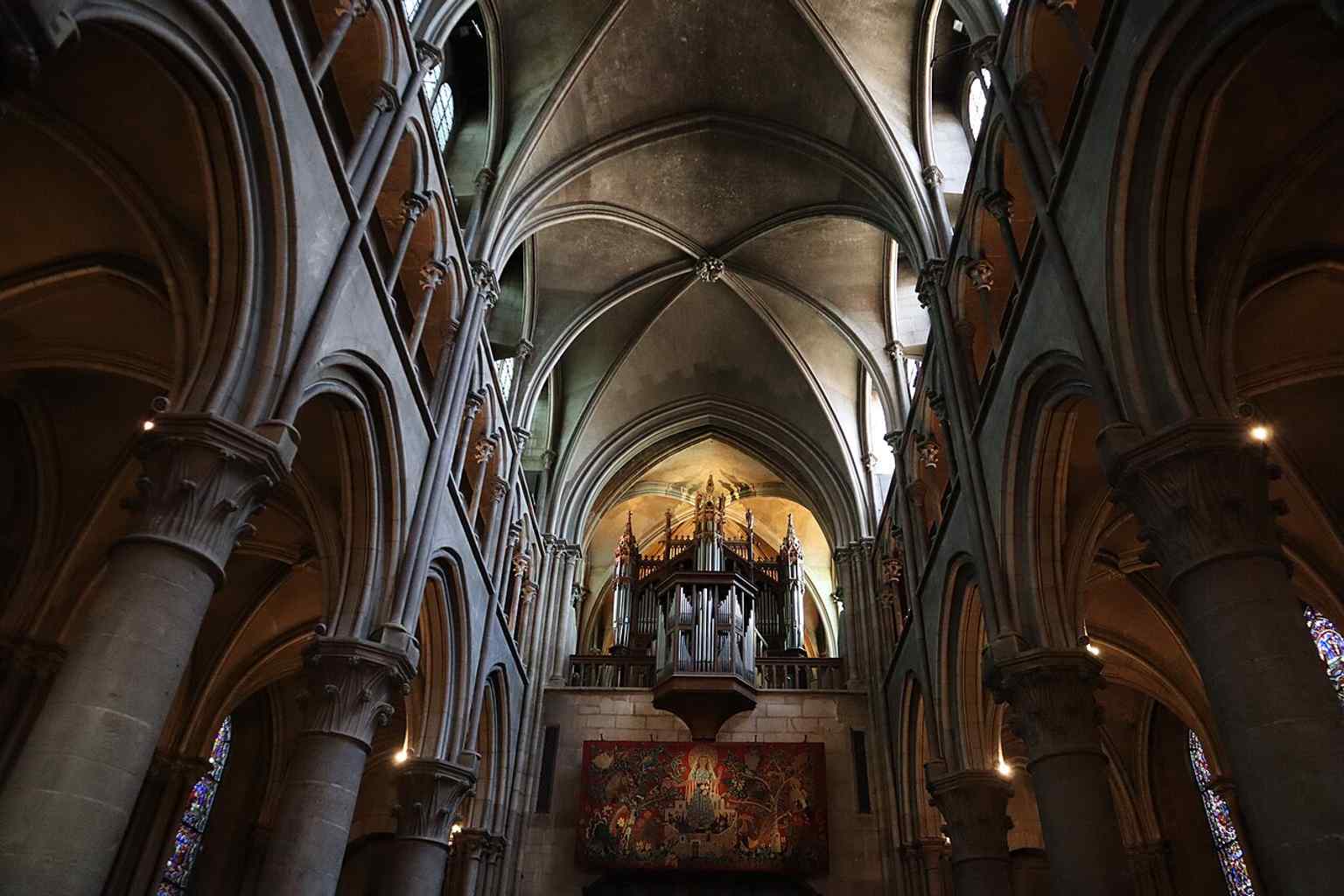
The grand Neo-Gothic organ, with its mechanical and sound elements crafted by Jean-Baptiste Ghys in 1893, resting on the tribune where Jean-Philippe Rameau once played.Photo: GO69, Wikimedia Commons, CC BY-SA 4.0. Cropped & resized. 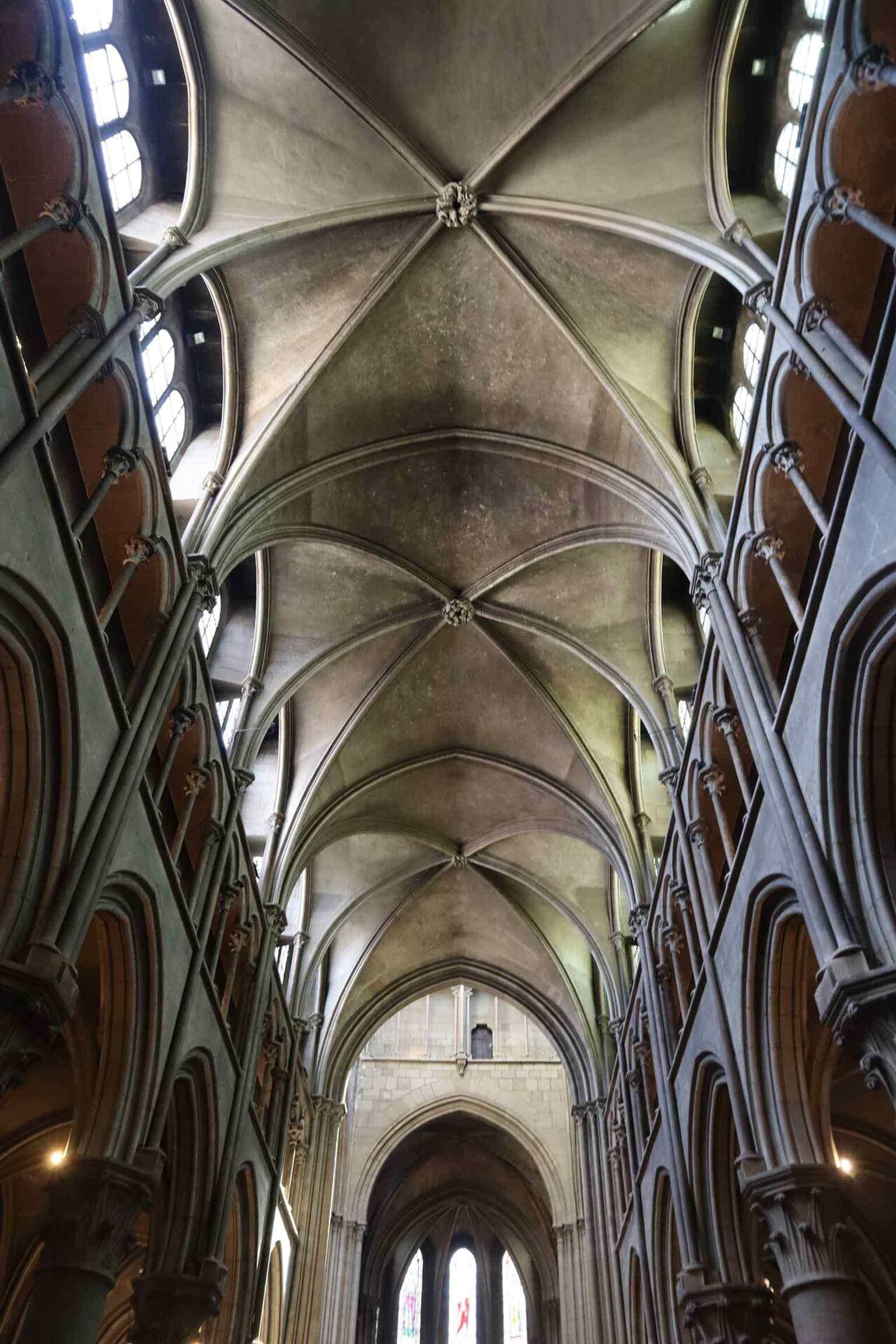
One of the many vibrant stained-glass windows, some of which were created by Édouard Didron from 1874 onwards, inspired by the church's original 13th-century designs.Photo: GO69, Wikimedia Commons, CC BY-SA 4.0. Cropped & resized. 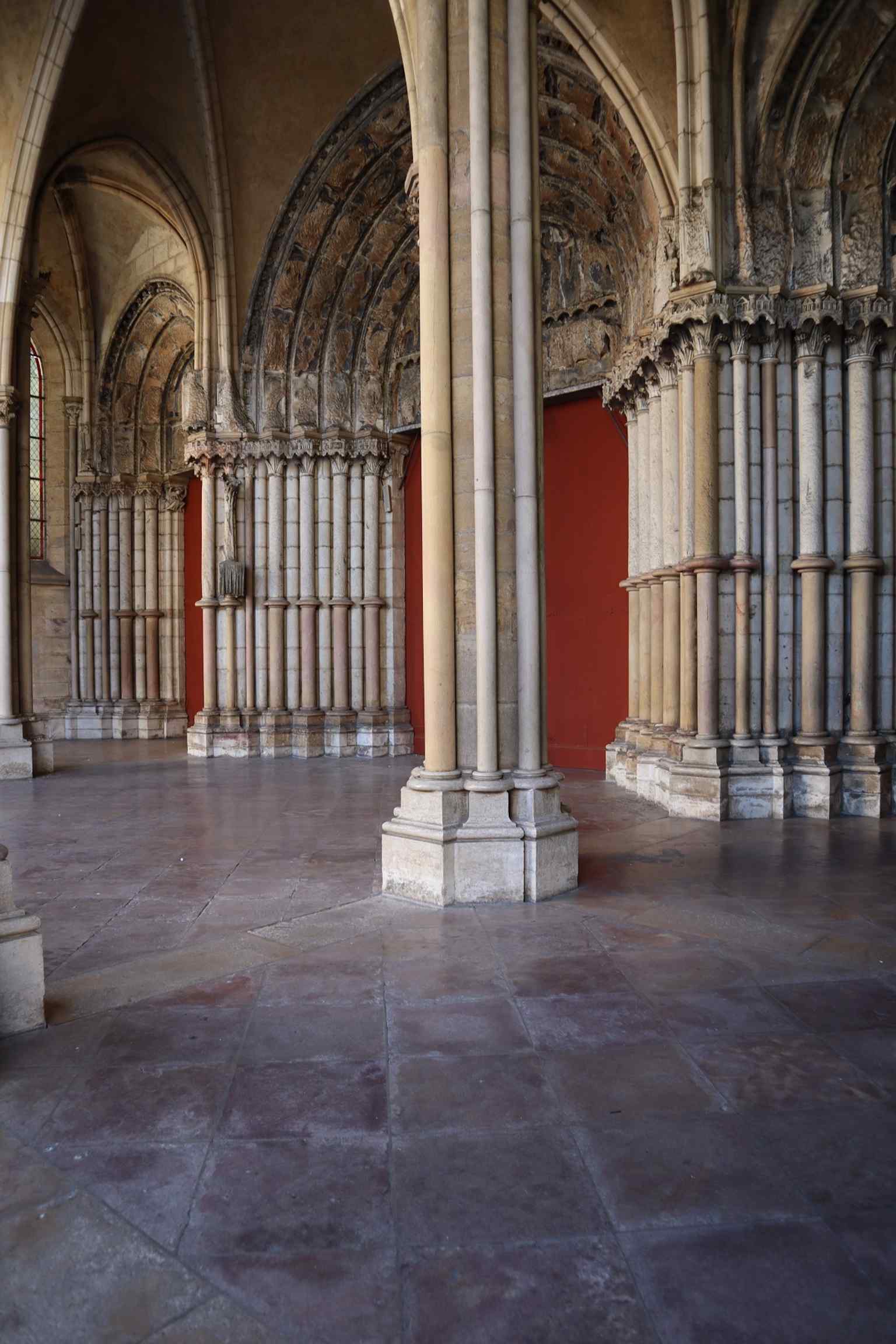
The intricately vaulted interior of the western porch, an area historically important for housing communal archives and for civic ceremonies.Photo: GO69, Wikimedia Commons, CC BY-SA 4.0. Cropped & resized. 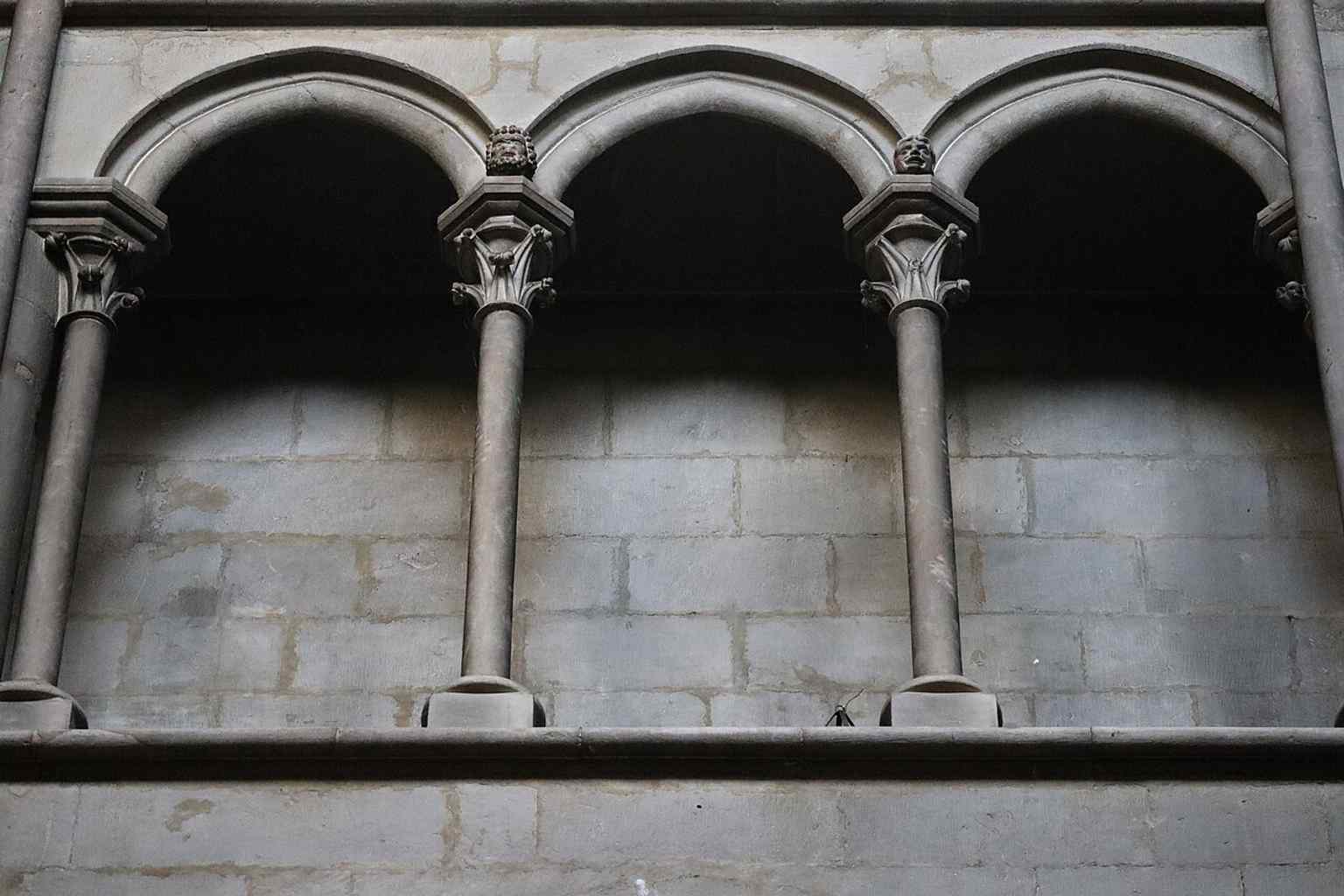
A view into the choir or transept, revealing the subtle play of "vides et pleins" (openings and solid parts) that gives the interior its monumental feel.Photo: GO69, Wikimedia Commons, CC BY 4.0. Cropped & resized. Tour in Dijon
Located in Dijon, France
French railway station
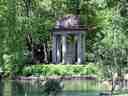
Garden in France
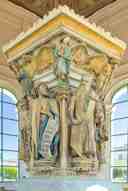
Sculpture by Claus Sluter, Claus de Werve and Jean Malouel

Frequently asked questions
How do I start the tour?
After purchase, download the AudaTours app and enter your redemption code. The tour will be ready to start immediately - just tap play and follow the GPS-guided route.
Do I need internet during the tour?
No! Download the tour before you start and enjoy it fully offline. Only the chat feature requires internet. We recommend downloading on WiFi to save mobile data.
Is this a guided group tour?
No - this is a self-guided audio tour. You explore independently at your own pace, with audio narration playing through your phone. No tour guide, no group, no schedule.
How long does the tour take?
Most tours take 60–90 minutes to complete, but you control the pace entirely. Pause, skip stops, or take breaks whenever you want.
What if I can't finish the tour today?
No problem! Tours have lifetime access. Pause and resume whenever you like - tomorrow, next week, or next year. Your progress is saved.
What languages are available?
All tours are available in 50+ languages. Select your preferred language when redeeming your code. Note: language cannot be changed after tour generation.
Where do I access the tour after purchase?
Download the free AudaTours app from the App Store or Google Play. Enter your redemption code (sent via email) and the tour will appear in your library, ready to download and start.
If you don't enjoy the tour, we'll refund your purchase. Contact us at [email protected]
Checkout securely with 






.jpg)


%20%C3%89glise%20Notre-Dame%20-%20Fa%C3%A7ade%20occidentale%20-%20Sculptures%20-%2002.jpg)
%20%C3%89glise%20Notre-Dame%20-%20Ext%C3%A9rieur%20-%20Tour-clocher%20-%2001.jpg)
%20%C3%89glise%20Notre-Dame%20-%20Ext%C3%A9rieur%20-%20Porche%20-%2001.jpg)

%20%C3%89glise%20Notre-Dame%20-%20Int%C3%A9rieur%2004.jpg)
%20%C3%89glise%20Notre-Dame%20-%20Int%C3%A9rieur%2005.jpg)
%20%C3%89glise%20Notre-Dame%20-%20Int%C3%A9rieur%2015.jpg)
%20%C3%89glise%20Notre-Dame%20-%20Ext%C3%A9rieur%20-%20Porche%20-%2002.jpg)
%20%C3%89glise%20Notre-Dame%20-%20Int%C3%A9rieur%2027.jpg)