AudaTours logoAudaTours

Stop 16 of 17

Cathédrale Saint-Bénigne de Dijon

headphones 03:02 Buy tour to unlock all 17 tracks
Cathédrale Saint-Bénigne de Dijon
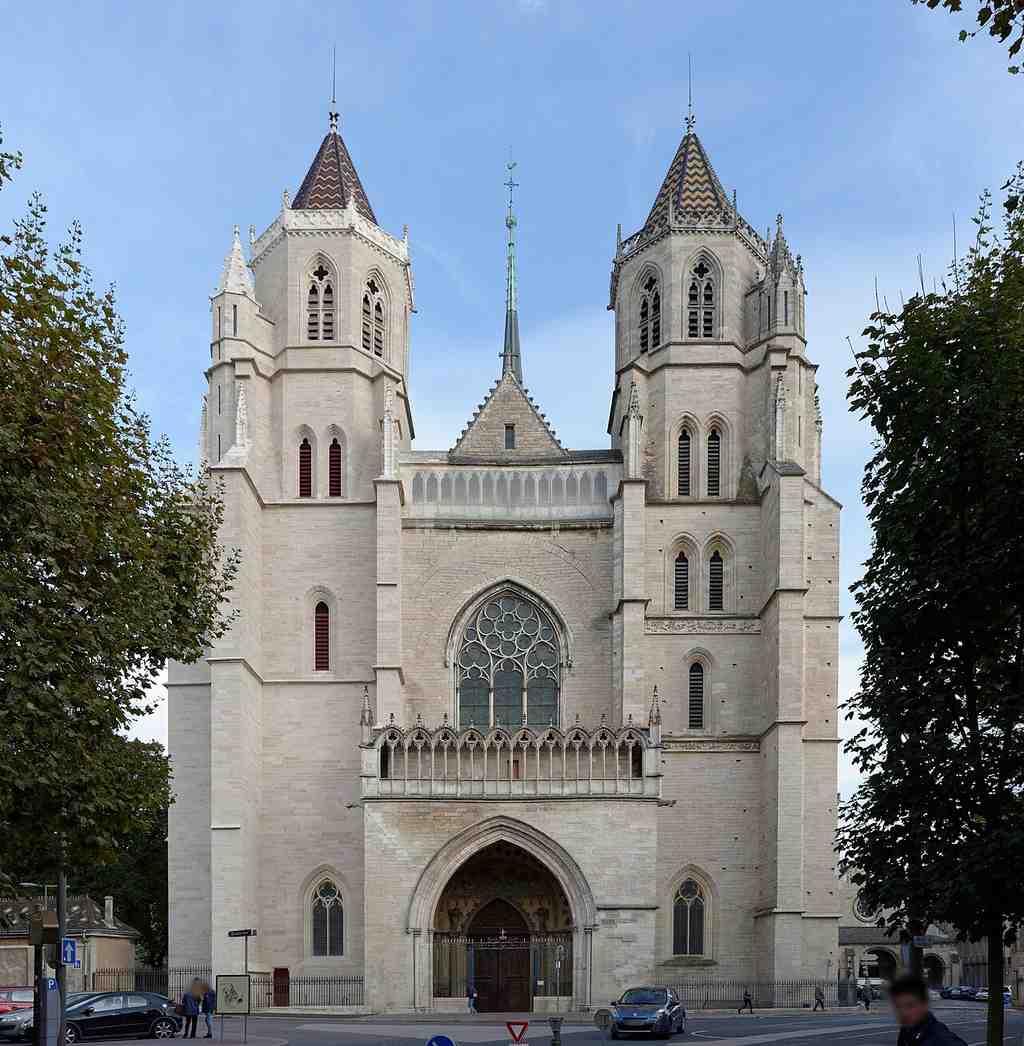
Cathédrale Saint-Bénigne de DijonPhoto: François de Dijon, Wikimedia Commons, CC BY-SA 4.0. Cropped & resized.

On your right, you will see a massive pale stone facade framed by twin square towers with intricately patterned tile roofs, centered around a tall, slender spire piercing the sky.

You have arrived at the Cathedral of Saint-Bénigne. This site has been a spiritual anchor for a very long time. Back in the year five eleven, a bishop constructed a crypt here to hold the sarcophagus of Saint Bénigne, a local Christian martyr.

Fast forward to the year nine ninety. The monastery buildings were falling into ruin, so a monk named Guillaume de Volpiano was brought in to revitalize the site. Guillaume did not do things by halves. He brought in Italian builders and constructed a magnificent three-level circular building, known as a rotonda, directly over the tomb. The upper level of this rotonda had a dome with a hole in the center to let light pour all the way down to the lower floors, deliberately echoing the Pantheon in Rome.

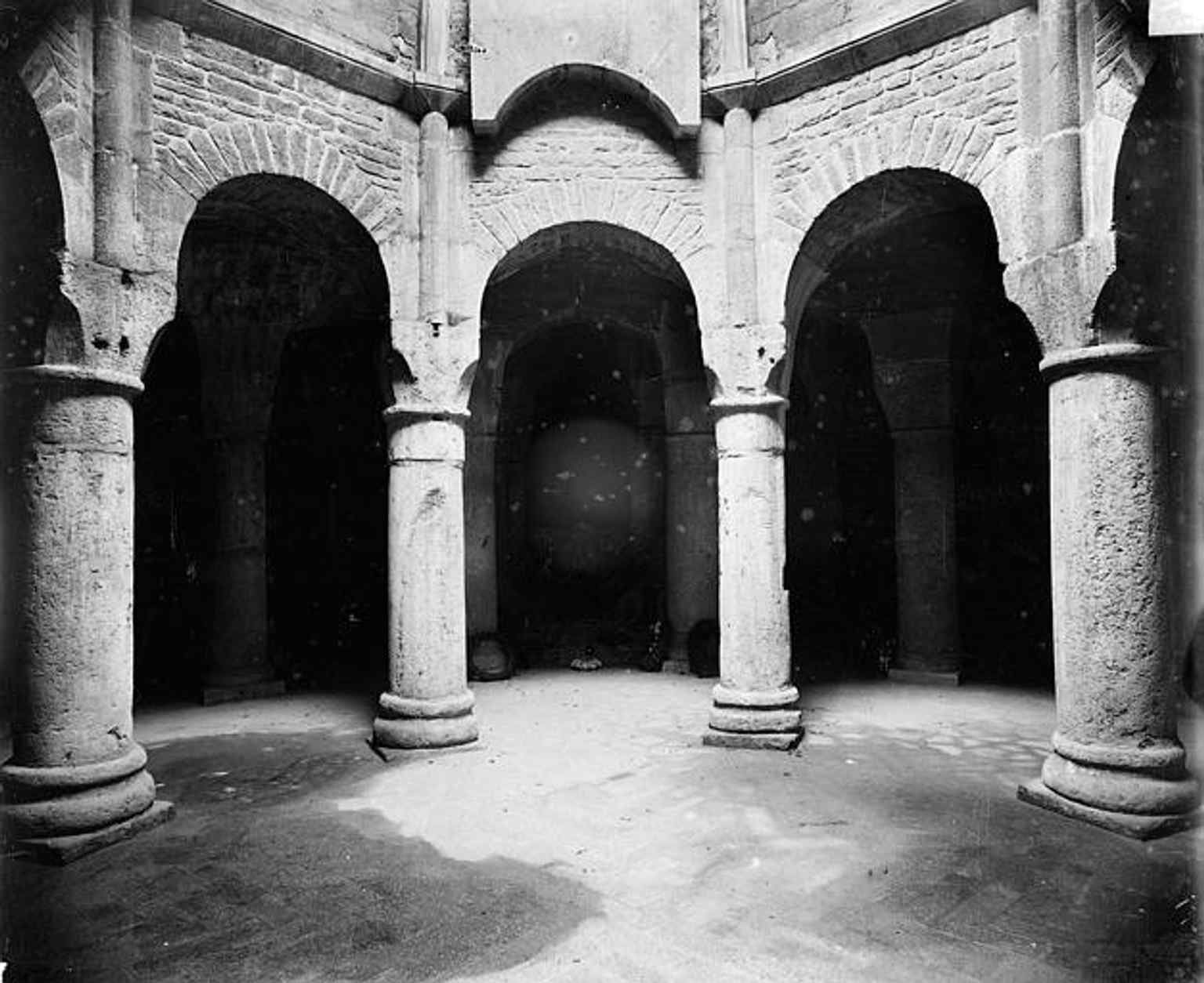
Today, only the lowest subterranean level remains, a circular vault roughly sixteen point five meters across. You can pull up your screen to see a stark nineteen nineteen photograph of this atmospheric crypt. The rest of the original structure collapsed over time, leading the monks to rebuild the main church in the soaring Gothic style between twelve eighty and thirteen ninety-three.
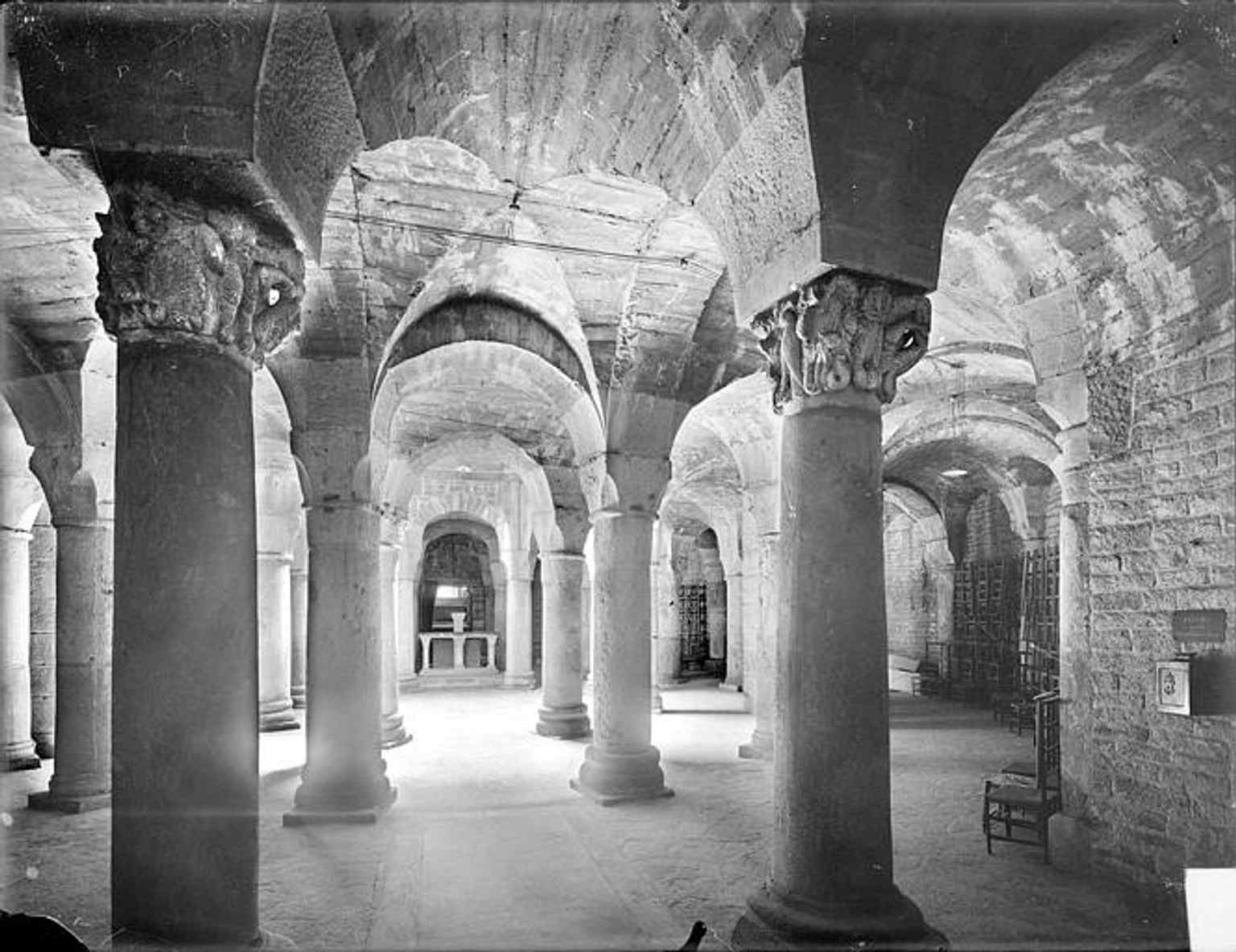
An overall view of the crypt from 1919, a rare circular structure of 16.5m diameter that is the only surviving part of Guillaume de Volpiano's 11th-century rotonda, built to house Saint Bénigne's sarcophagus.
An overall view of the crypt from 1919, a rare circular structure of 16.5m diameter that is the only surviving part of Guillaume de Volpiano's 11th-century rotonda, built to house Saint Bénigne's sarcophagus.Photo: Henri Heuzé, Wikimedia Commons, CC BY-SA 4.0. Cropped & resized.

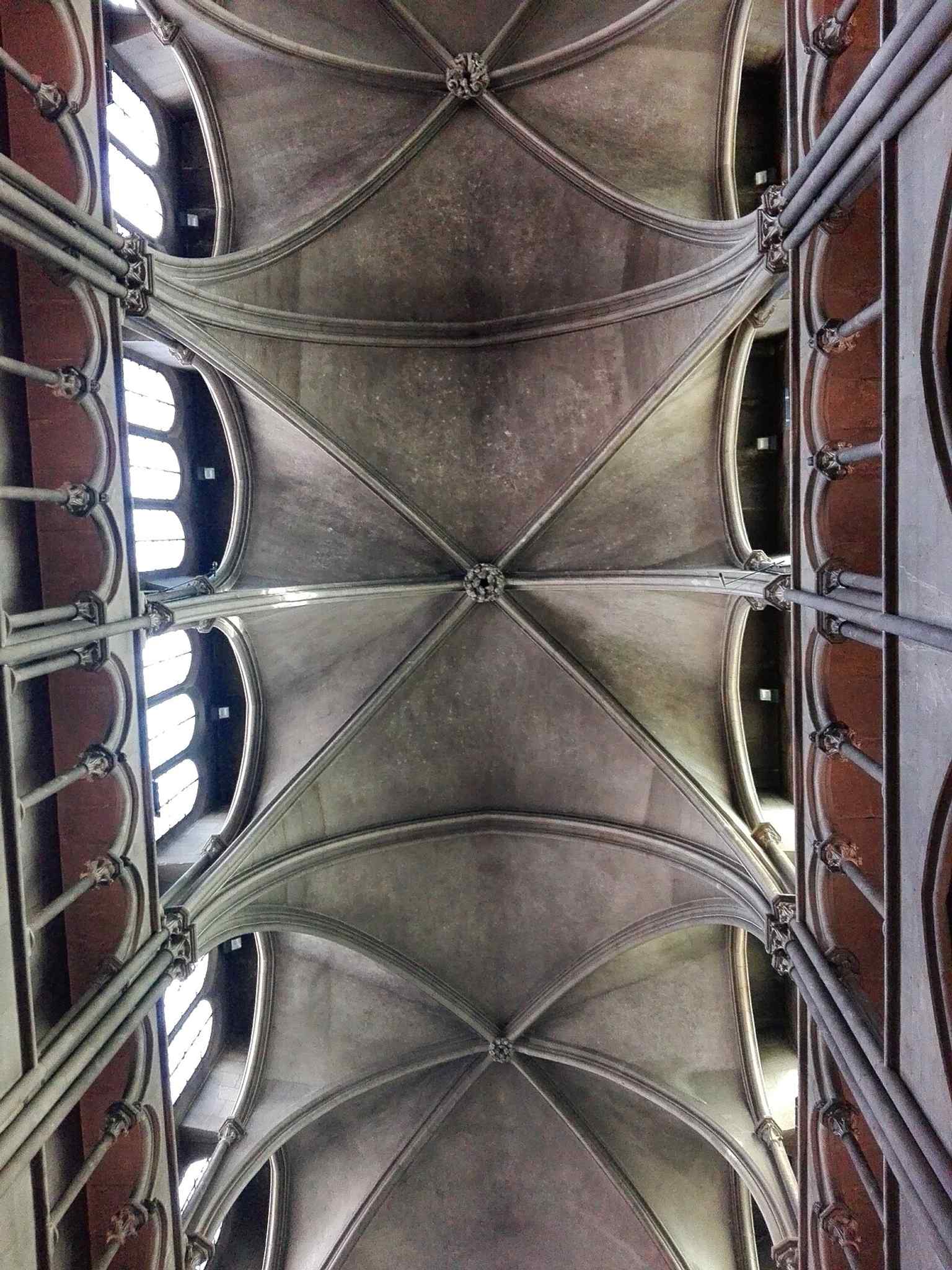
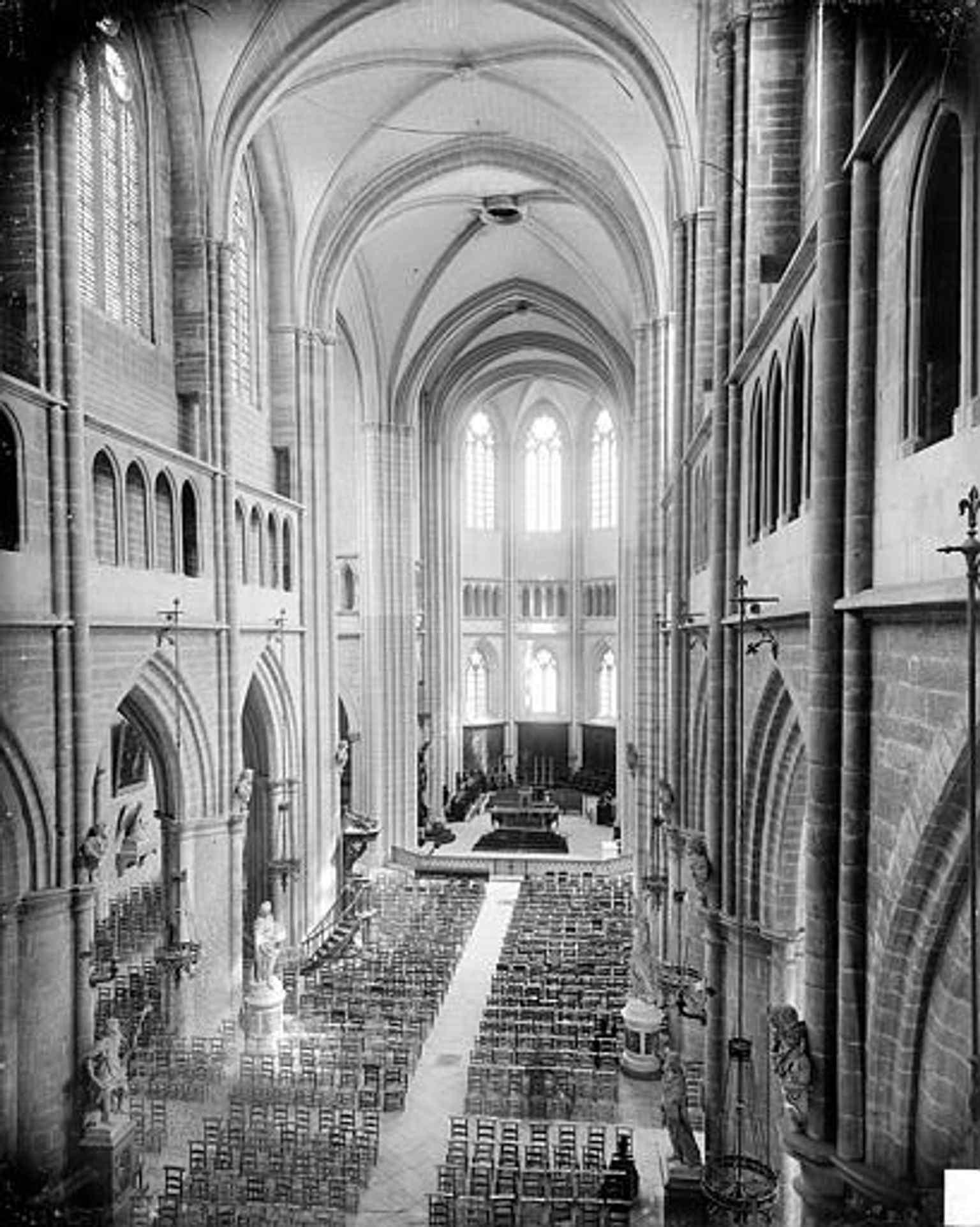
Take a look at the before and after image on your device to see how the majestic gothic arches and soaring vaults of the main central hall, the nave, have been beautifully preserved through the generations.

Despite its long monastic history, this building only officially became a cathedral in seventeen ninety-two. Over the centuries, it has seen lightning strikes, structural collapses, and massive architectural overhauls.

But perhaps the most dramatic event to happen on the very square where you are standing took place much more recently, in nineteen fifty-one. The cathedral's vicar had grown entirely fed up with what he saw as the pagan, hyper-commercialization of a religious holiday. So, to make his point, he hung an effigy of Santa Claus on the cathedral gates and set it on fire. The burning of Santa Claus made national headlines. But the mayor of Dijon was not about to let the church ruin the fun. He immediately retaliated by hoisting a local fireman wearing a fake beard onto the roof of the city hall to cheerfully wave at the delighted crowds below.

If you want to explore the grand interior or perhaps hear the magnificent eighteenth-century organ, the cathedral is open daily from nine A-M to twelve P-M, and again in the afternoon from two to six thirty P-M, closing slightly earlier at six P-M on weekends.
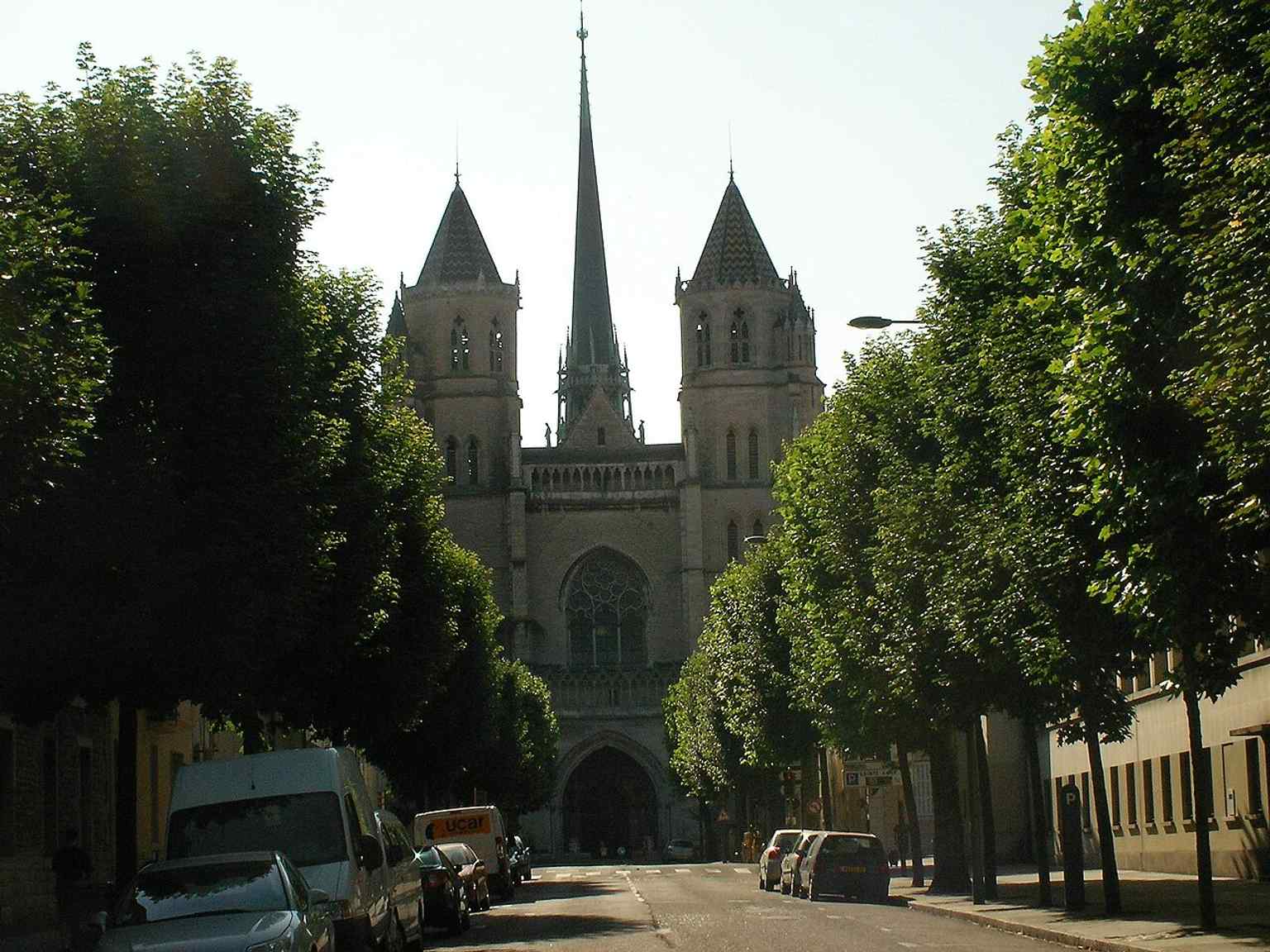
A modern exterior view of Cathédrale Saint-Bénigne, showcasing its Gothic style, which was rebuilt between 1280 and 1393.
A modern exterior view of Cathédrale Saint-Bénigne, showcasing its Gothic style, which was rebuilt between 1280 and 1393.Photo: Gzen92, Wikimedia Commons, CC BY-SA 4.0. Cropped & resized.
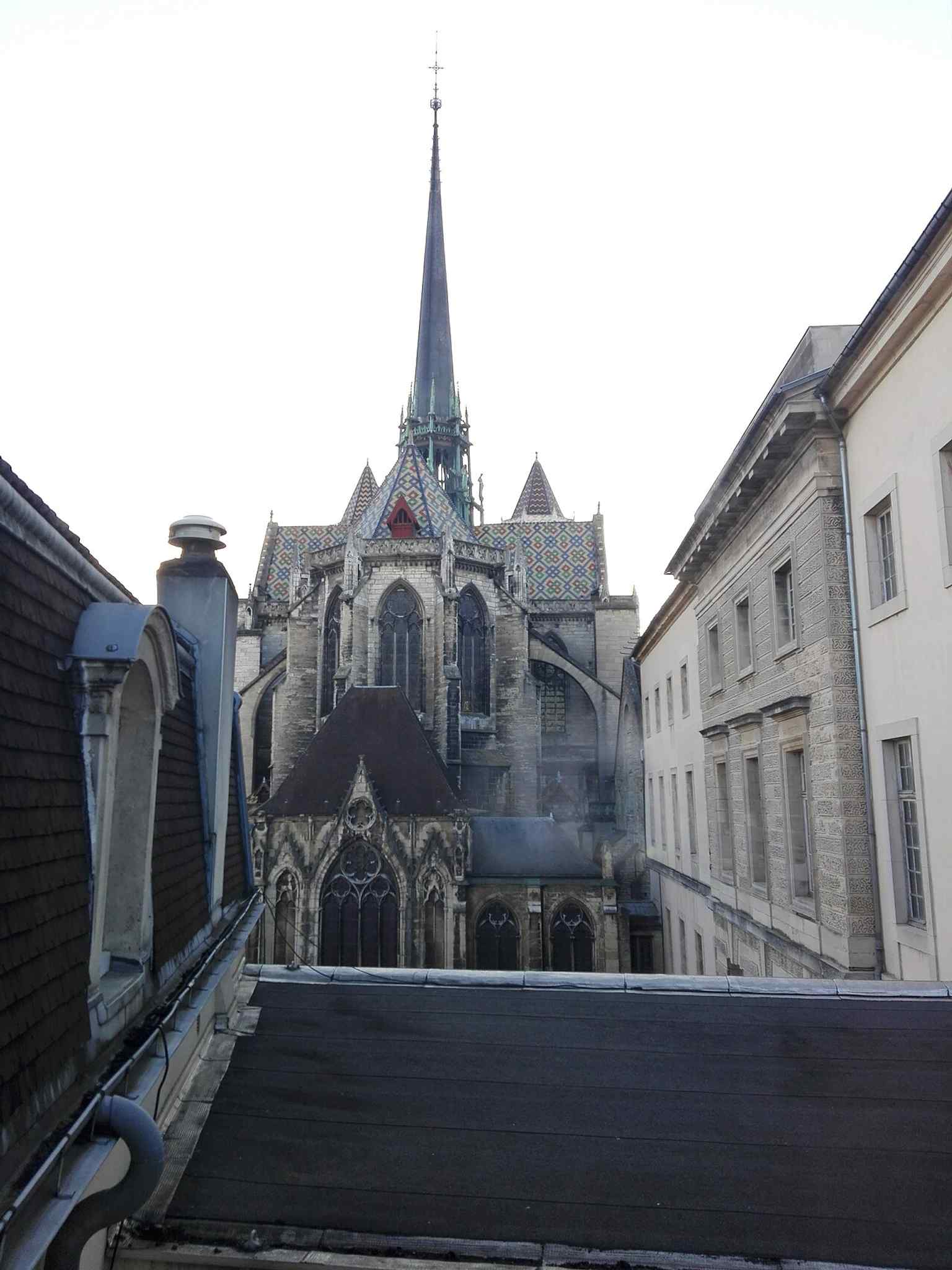
Another contemporary exterior perspective of the cathedral, highlighting its significant presence in Dijon.
Another contemporary exterior perspective of the cathedral, highlighting its significant presence in Dijon.Photo: Andreabosnia, Wikimedia Commons, CC BY-SA 4.0. Cropped & resized.
A detailed view of the soaring Gothic vaulting within the cathedral, a characteristic feature of its 13th to 14th-century reconstruction.
A detailed view of the soaring Gothic vaulting within the cathedral, a characteristic feature of its 13th to 14th-century reconstruction.Photo: Andreabosnia, Wikimedia Commons, CC BY-SA 4.0. Cropped & resized.
The arcades of the crypt, demonstrating the architectural style of the lower level of the original rotonda, which was rediscovered and restored in the 19th century by Jean-Philippe Suisse.
The arcades of the crypt, demonstrating the architectural style of the lower level of the original rotonda, which was rediscovered and restored in the 19th century by Jean-Philippe Suisse.Photo: Delaunay, Wikimedia Commons, CC BY-SA 4.0. Cropped & resized.
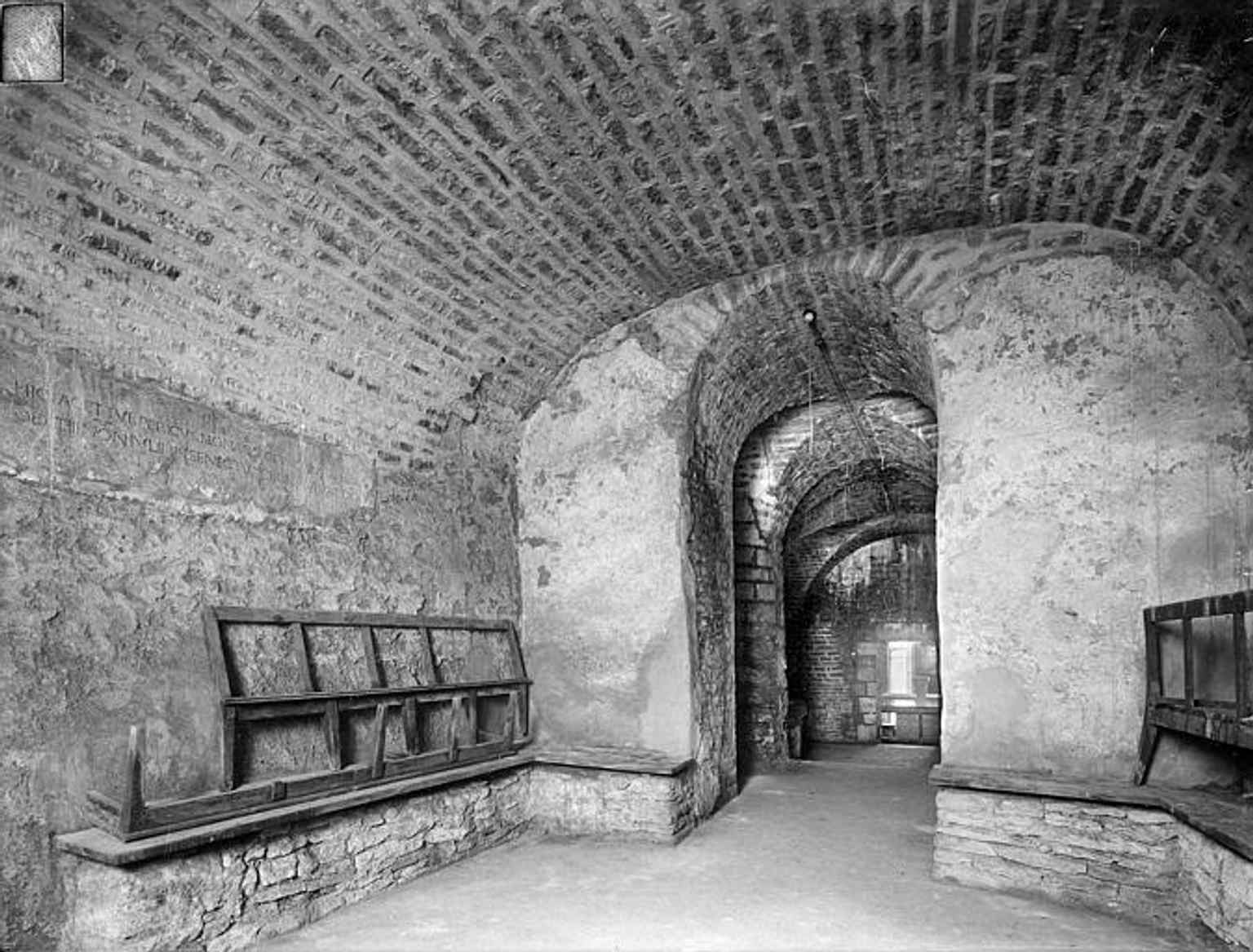
The eastern chapel within the crypt, a specific area that was part of the original three-level rotonda complex, with the lowest level dedicated to John the Baptist.
The eastern chapel within the crypt, a specific area that was part of the original three-level rotonda complex, with the lowest level dedicated to John the Baptist.Photo: Henri Heuzé, Wikimedia Commons, CC BY-SA 4.0. Cropped & resized.
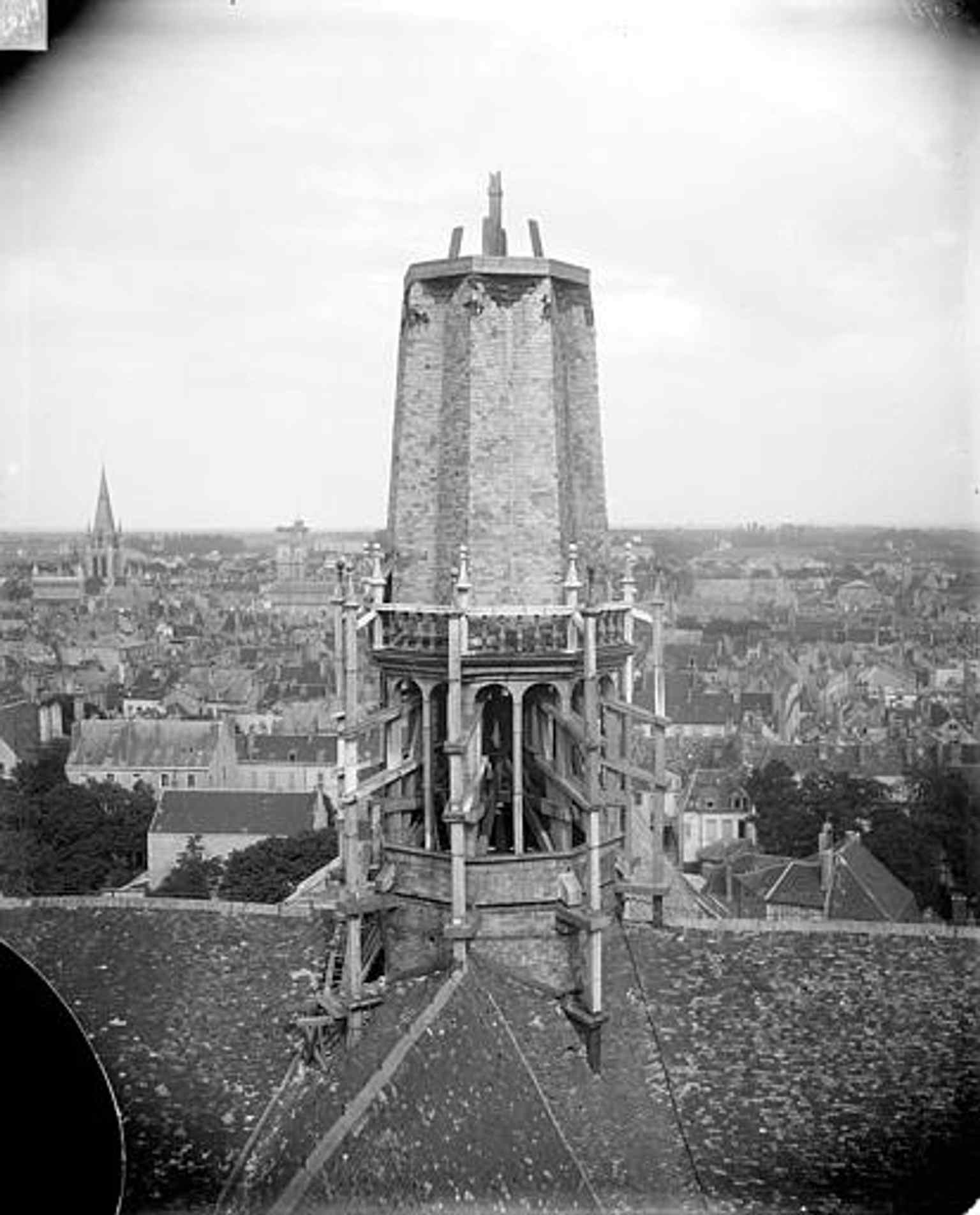
A historical image from 1919 showing the lower part of the spire under construction, which was replaced by Charles Suisse between 1884 and 1896, rising to 93 meters from the ground.
A historical image from 1919 showing the lower part of the spire under construction, which was replaced by Charles Suisse between 1884 and 1896, rising to 93 meters from the ground.Photo: Delaunay, Wikimedia Commons, CC BY-SA 4.0. Cropped & resized.
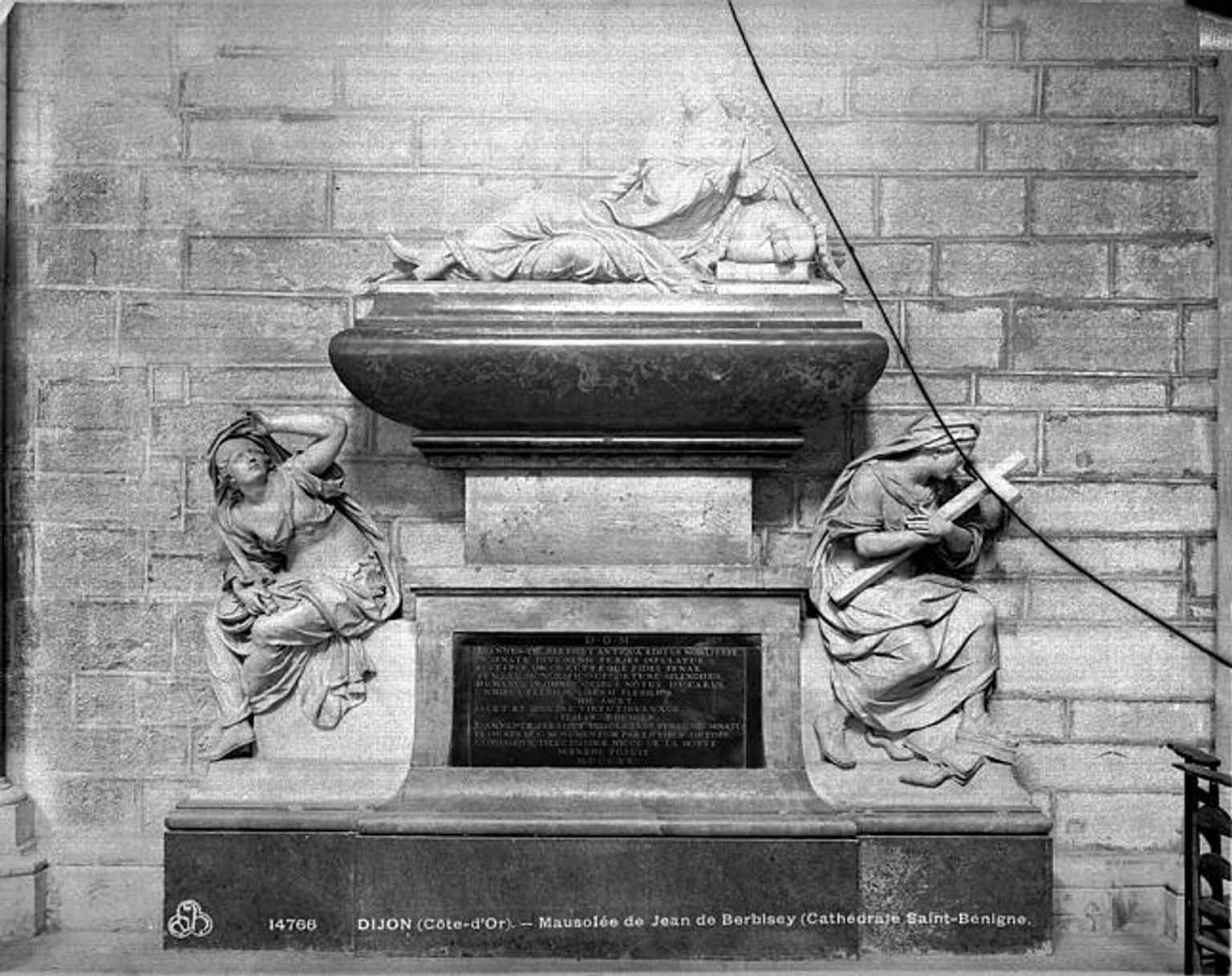
The mausoleum of Jean de Berbisey, a notable tomb located within the nave of the cathedral, part of the several burials found there.
The mausoleum of Jean de Berbisey, a notable tomb located within the nave of the cathedral, part of the several burials found there.Photo: Étienne Neurdein / Louis-Antonin Neurdein, Wikimedia Commons, CC BY-SA 4.0. Cropped & resized.
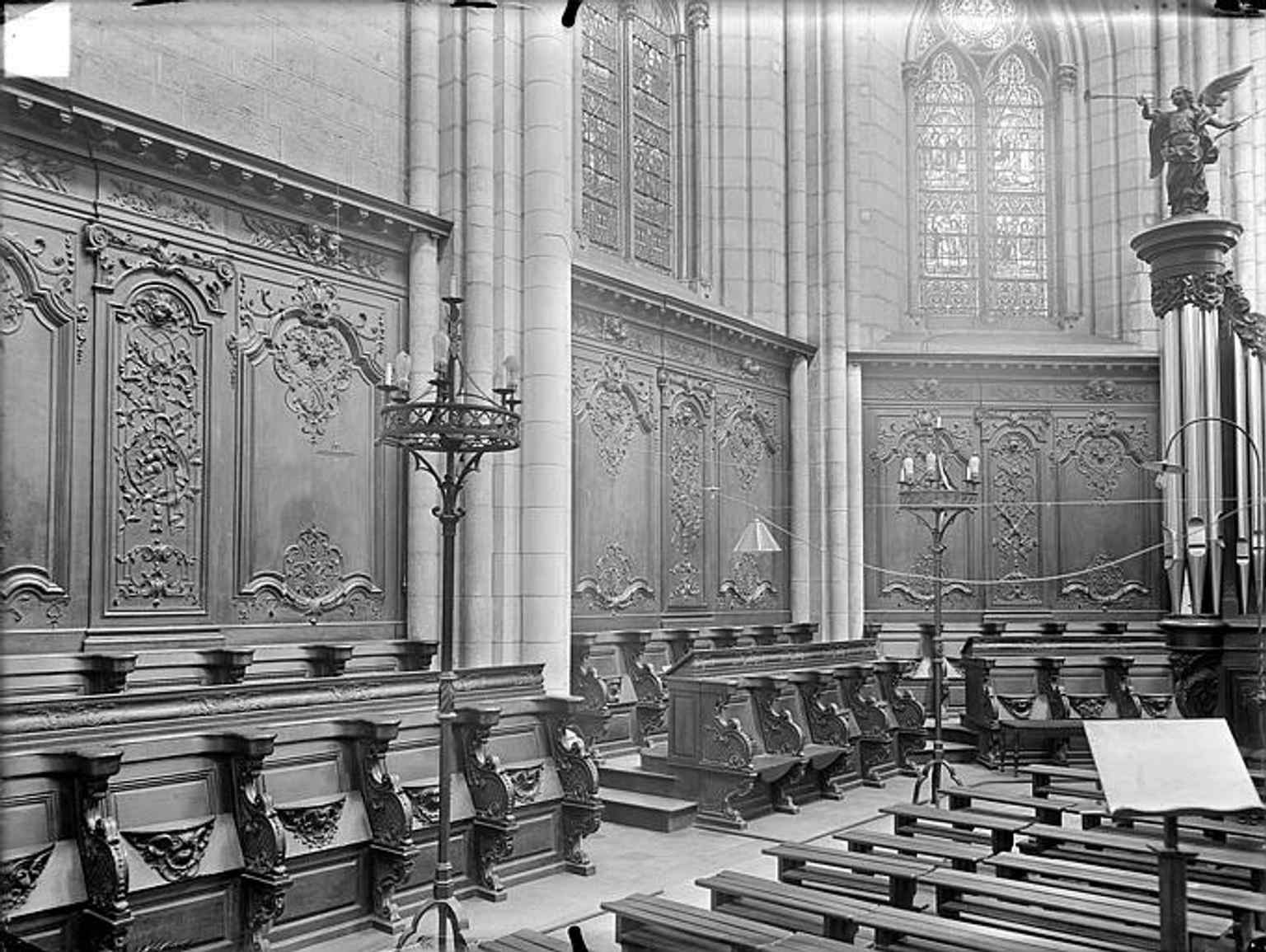
Stalls in the north side of the choir, an area distinguished by its deliberately warmer, ocher stone color during recent restoration (1988-1995) to reflect its medieval appearance.
Stalls in the north side of the choir, an area distinguished by its deliberately warmer, ocher stone color during recent restoration (1988-1995) to reflect its medieval appearance.Photo: Gossin, Wikimedia Commons, CC BY-SA 4.0. Cropped & resized.
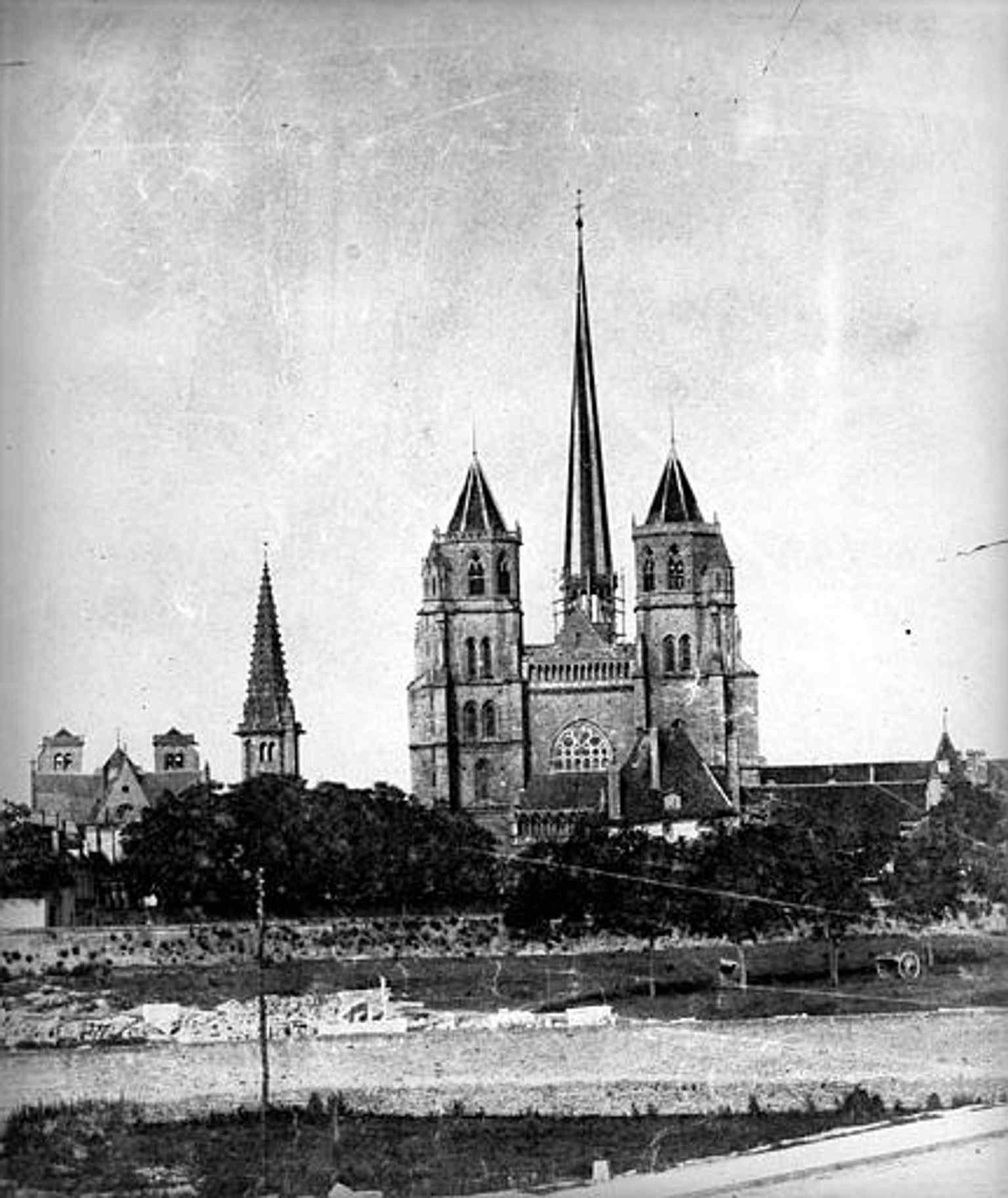
An older, general view of the cathedral's west side from 1919, providing a historical perspective on its exterior before more recent changes.
An older, general view of the cathedral's west side from 1919, providing a historical perspective on its exterior before more recent changes.Photo: Delaunay, Wikimedia Commons, CC BY-SA 4.0. Cropped & resized.
An interior view of the nave looking towards the choir, from 1919, illustrating the overall Gothic design and the elevation levels mentioned in the text.
An interior view of the nave looking towards the choir, from 1919, illustrating the overall Gothic design and the elevation levels mentioned in the text.Photo: Delaunay, Wikimedia Commons, CC BY-SA 4.0. Cropped & resized.
arrow_back Back to Dijon Highlights Audio Tour: Architectural and Cultural Treasures
Loved by travellers

Thousands of tours started.
Plenty of opinions.

4.8 across the App Store and Google Play. Here's a few we keep coming back to.

starstarstarstarstar
This was a solid way to get to know Brighton without feeling like a tourist. The narration had depth and context, but didn't overdo it.
Christoph
Christoph
Brighton Tour
starstarstarstarstar
Started this tour with a croissant in one hand and zero expectations. The app just vibes with you, no pressure, just you, your headphones, and some cool stories.
download Get the app

Pop your headphones in.
Step outside.

Free to download. Tours in every city. Start in 60 seconds — no account, no card.

Download on the App StoreGet it on Google Play
starstarstarstarstar_half
4.8
AudaTours app icon
headphones
~ 4 min until your first tour starts
public
1,000+ cities worldwide
all_inclusive
AudaTours
Unlimited

Every tour. Every city. One subscription.

3101 tours2271 cities138 countries50+ languages