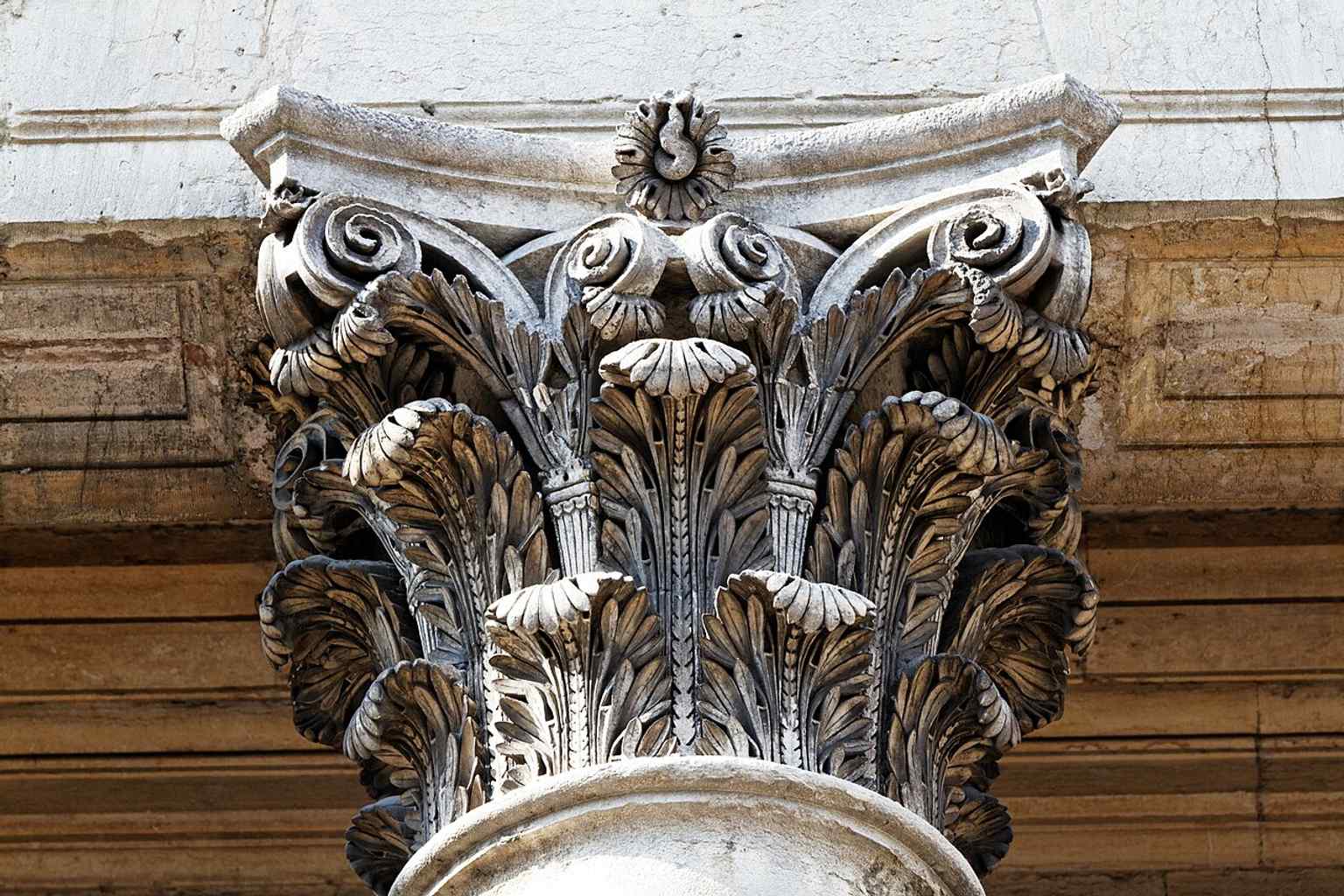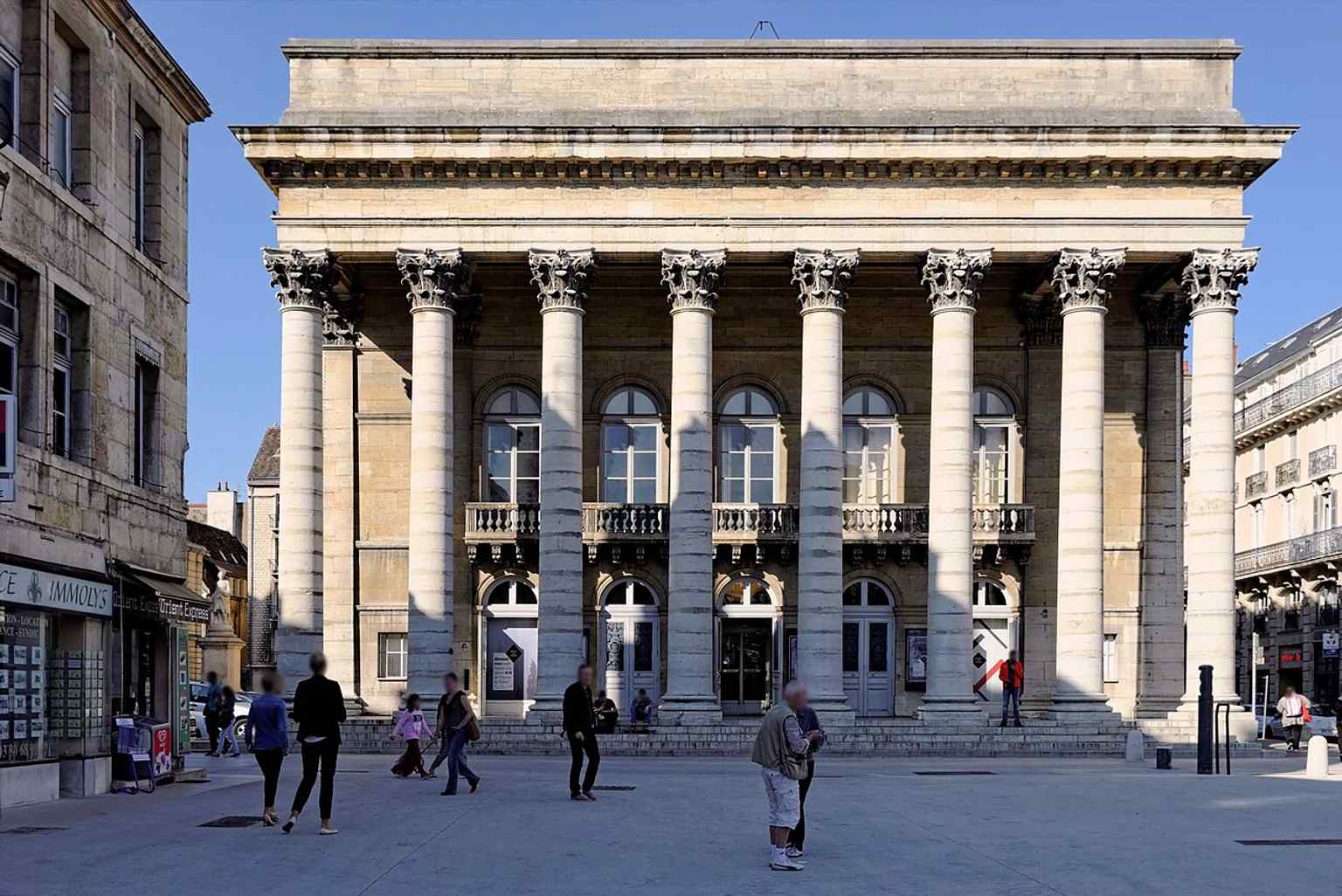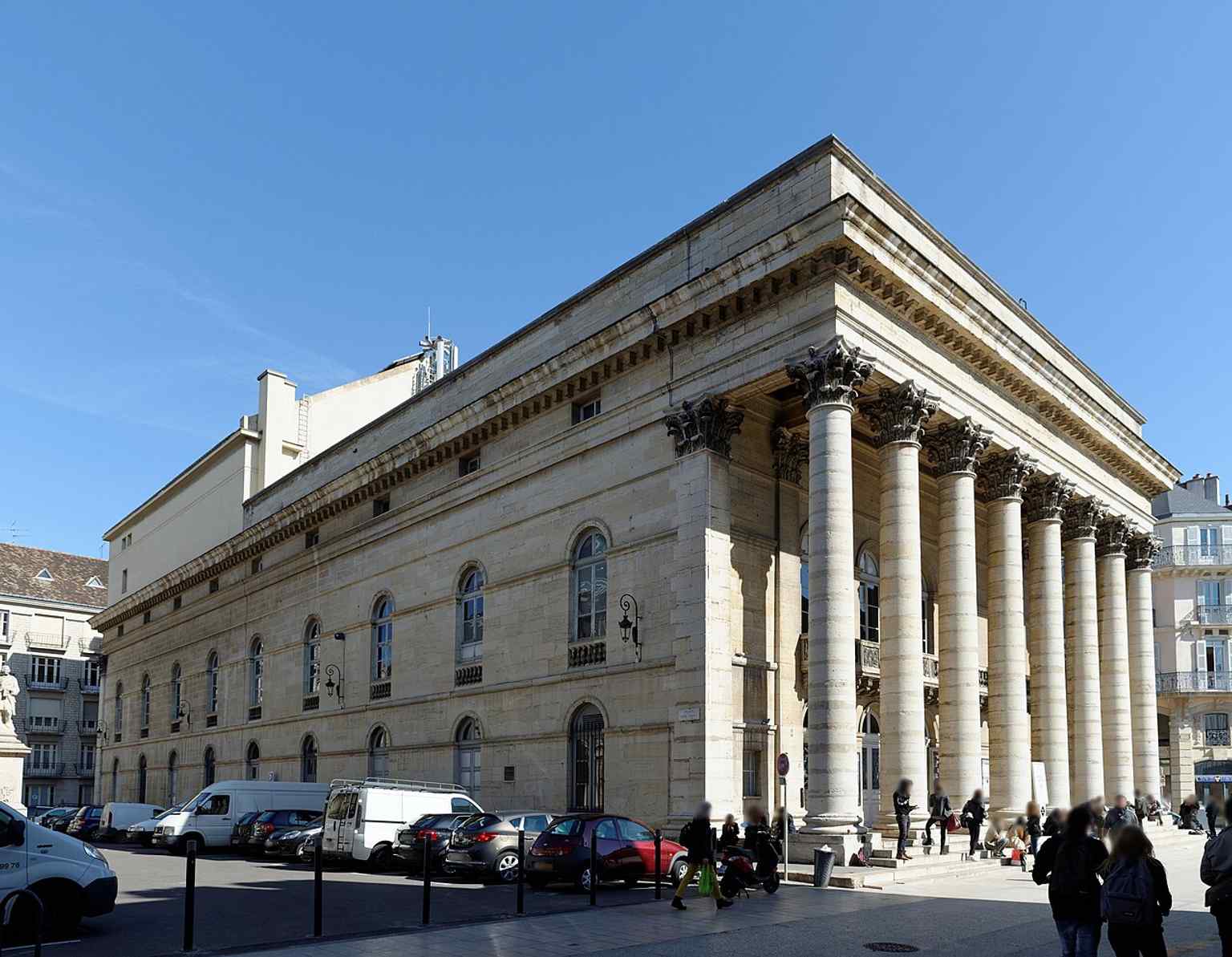
Welcome to the Grand Théâtre de Dijon, the historic heart of the Opéra de Dijon. Standing in front of this elegant Neo-classical building, you might assume the city has always enjoyed such refined cultural spaces. The truth is a little scrappier.
Back in the seventeenth century, traveling opera troupes did not have a dedicated theater here. Instead, they performed in what were known as tripots. These were essentially ramshackle gambling dens and indoor tennis courts, quickly repurposed for a night of music. It was loud, crowded, and completely lacking in glamour.
The city finally decided to elevate things in seventeen seventeen by purchasing one of these gambling dens to create a municipal venue. They called it the Salle de Comédie. But there was a catch. For exactly one hundred years, the audience had to watch the performances standing up. They finally installed seats in eighteen seventeen. You have to admire the stamina of an eighteenth-century opera fan.
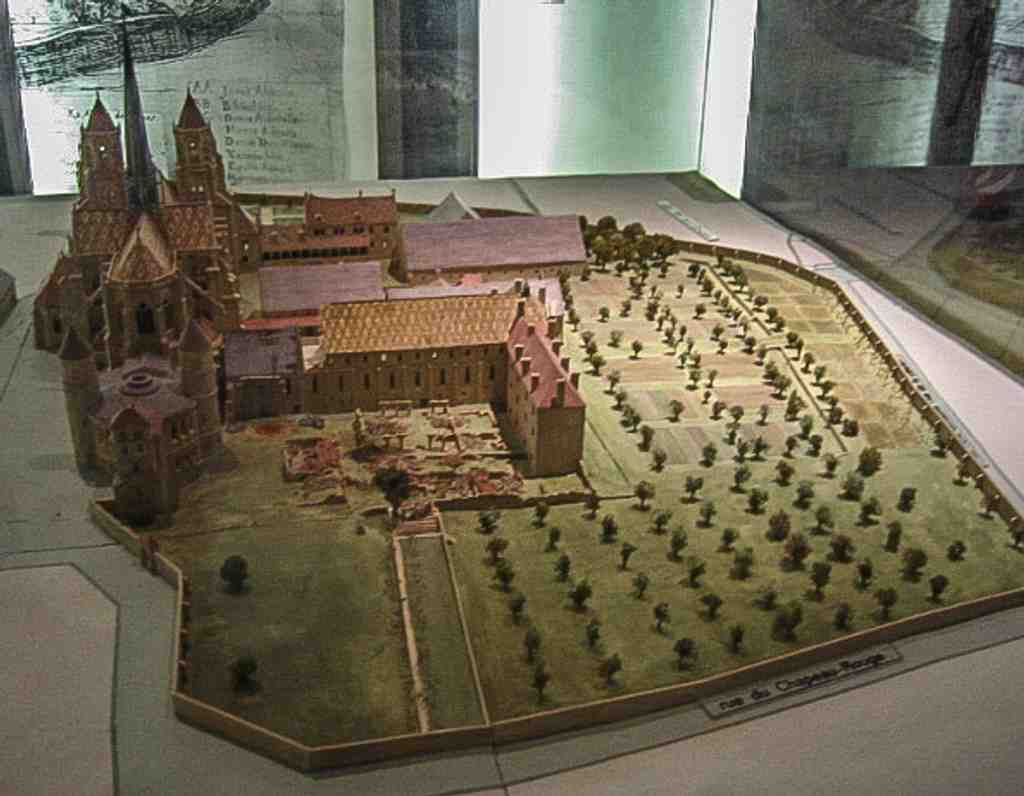
By that point, a local architect named Jacques Cellerier had already proposed building a proper, purpose-built theater. Finding space in the city center was tricky, so in eighteen zero two, the city simply demolished the Sainte-Chapelle church and its cloister to clear the land right where you are standing. They laid the first stone in eighteen ten, but construction ground to a halt between eighteen fourteen and eighteen twenty-three due to political and financial turmoil. The theater finally opened its doors in eighteen twenty-eight.
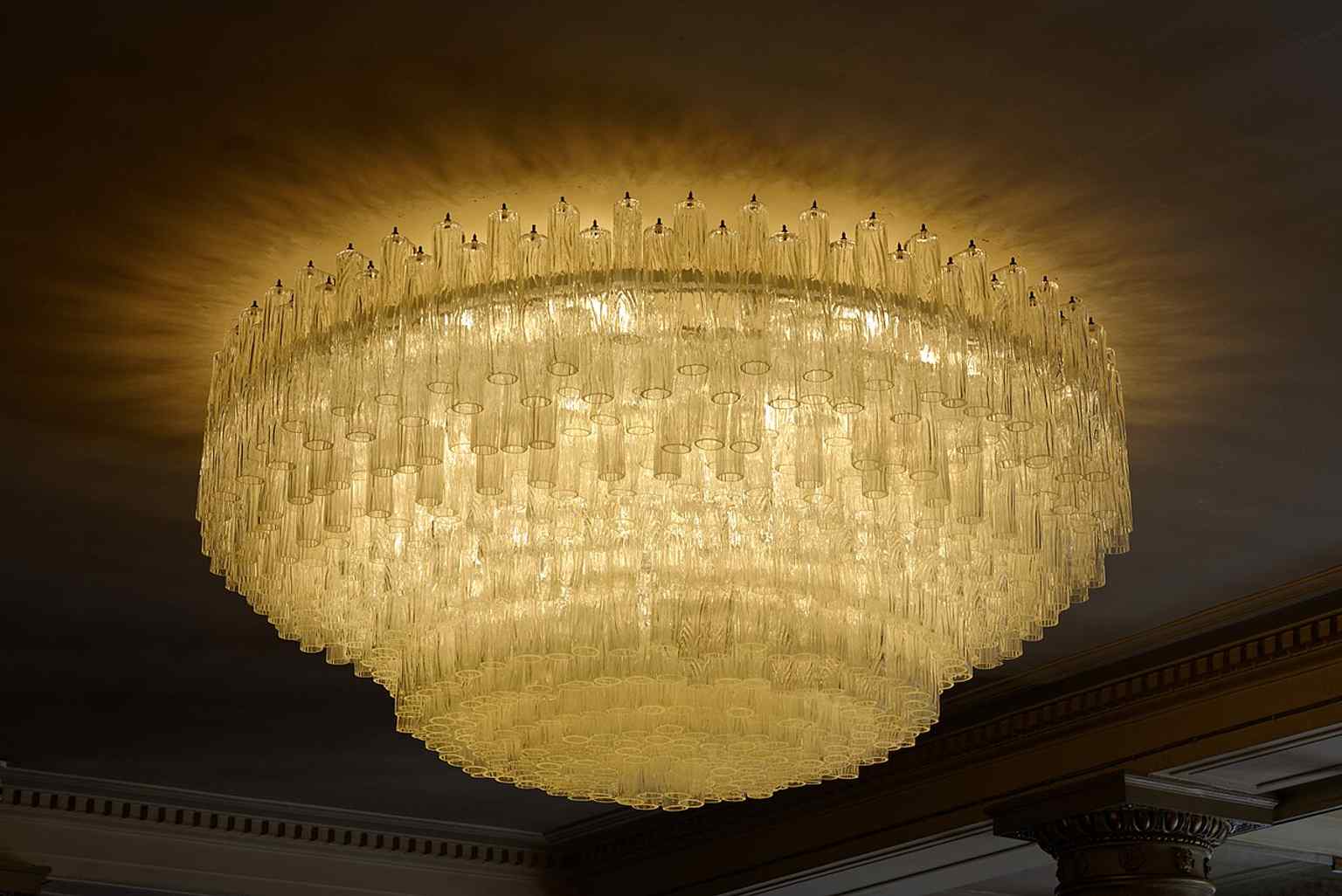
Since you are looking at the outside, check your phone to see a glimpse of the grand interior, featuring a monumental Murano crystal chandelier from nineteen hundred suspended in the vestibule. The interior was carefully modeled after the grand Italian opera houses of the era. The area outside has evolved beautifully, too. If you look at the app, you can see how this space transformed between two thousand and six and two thousand and fourteen from a basic street into the inviting pedestrian plaza you see today.
For over a century, this theater was Dijon's only opera house. Today, the Opéra de Dijon actually manages two venues. If you were to walk over to Place Jean Bouhey, you would find the Auditorium de Dijon, which opened in nineteen ninety-eight. It is a massive, modern building shaped like a grand piano and covered in local beige Chassagne limestone, offering seating for over sixteen hundred people.
Between the two venues, the company stages a rich repertory, heavily supported by the city. In two thousand and thirteen, the City of Dijon provided an annual subsidy of seven million euros toward their ten point five million euro budget. This funding allows them to put on massive productions, and even celebrate hometown heroes like Jean-Philippe Rameau, the famous Baroque composer born right here in Dijon.
With a seating capacity of six hundred and ninety-two, the Grand Théâtre remains the city's premier spot for intimate classical performances. Take your time admiring the architecture. When you are ready, we can head to the next stop.