
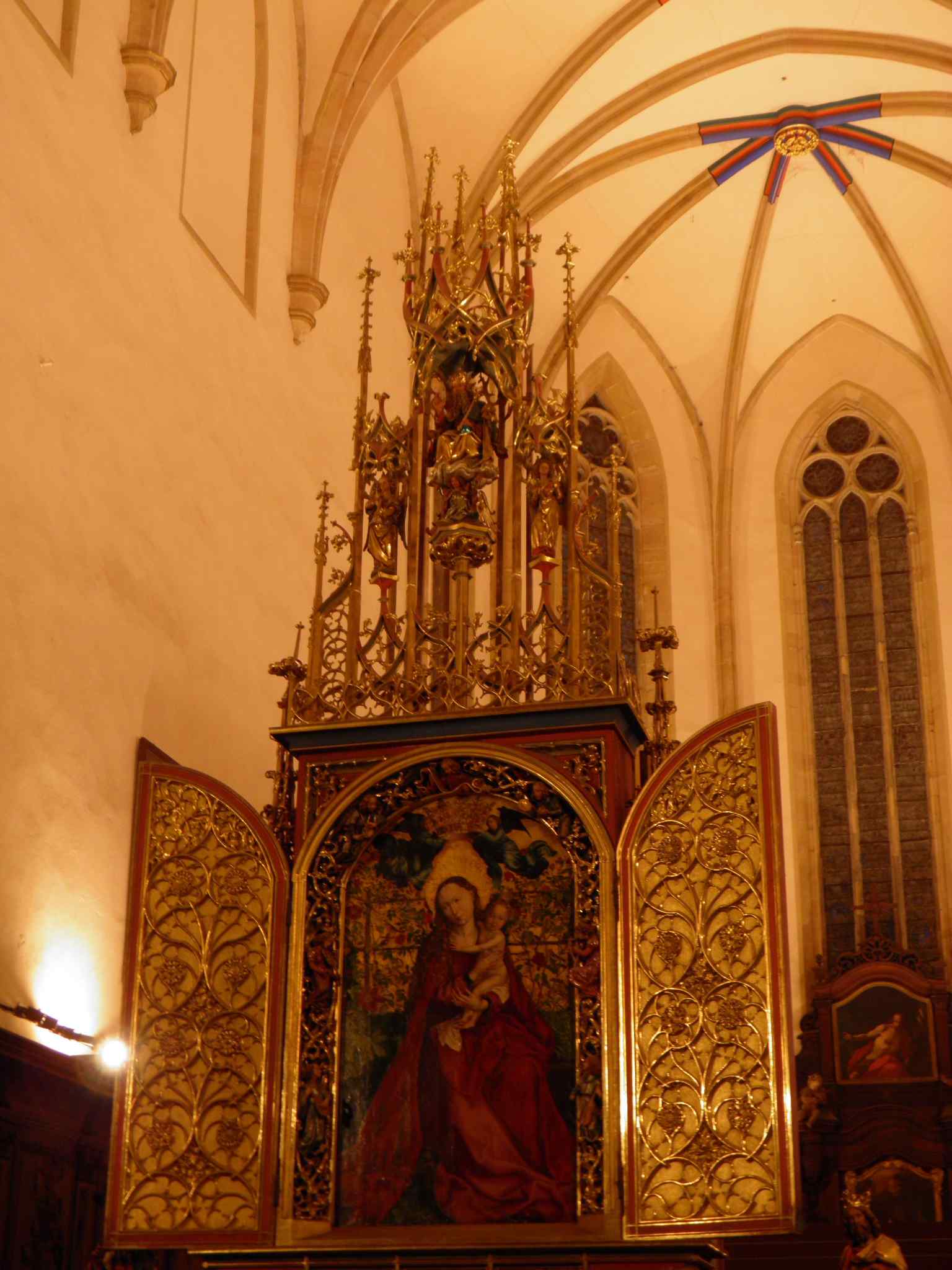
Look for the stunning painting set within an intricately carved arched golden frame, featuring a woman in a voluminous red robe seated before a wooden trellis of vibrant roses. You are looking at The Virgin in the Rose Bower, a masterpiece completed in 1473 by Martin Schongauer, whose monument we passed just a few minutes ago.
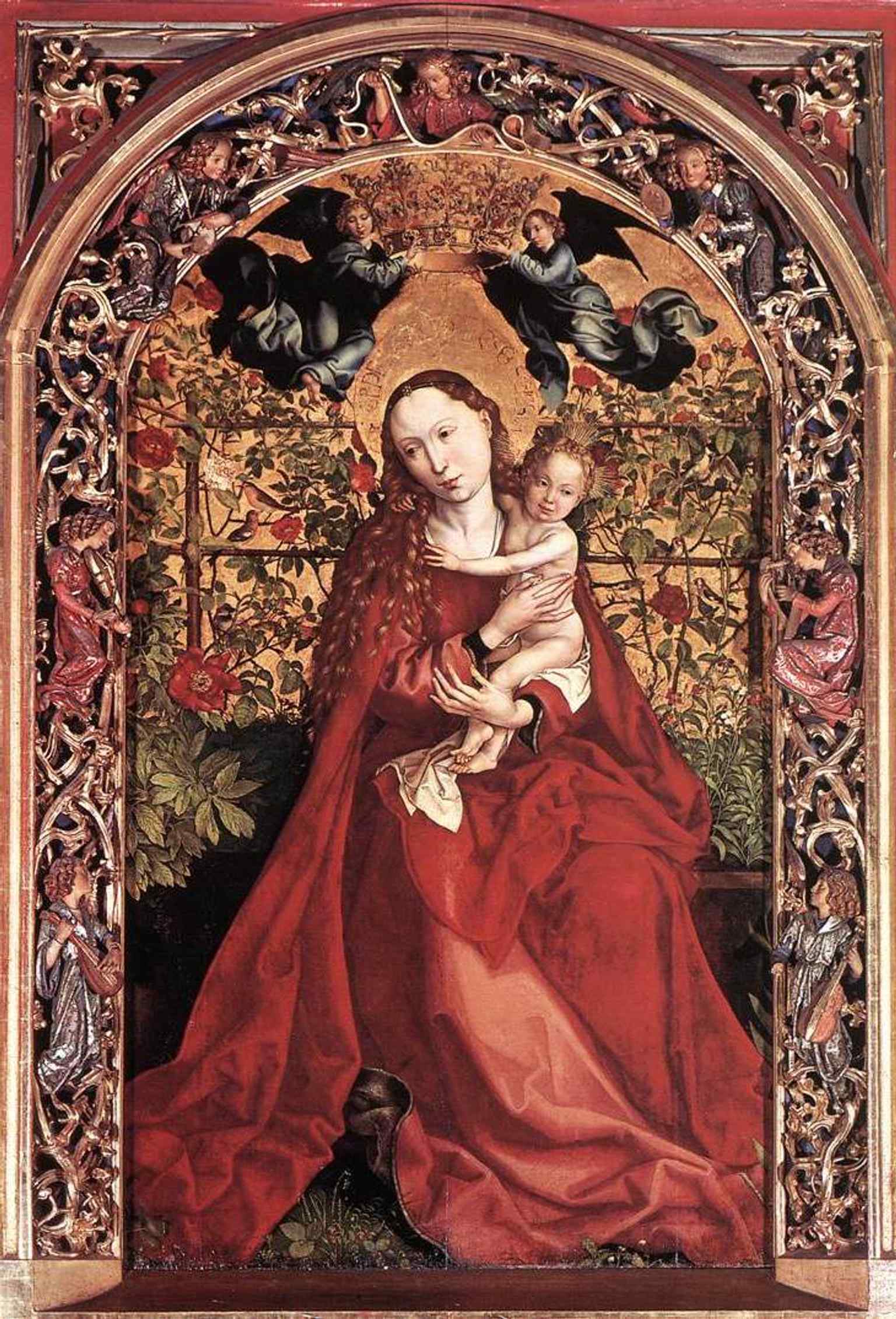
This piece is a retable, which is simply a large devotional painting or sculpture designed to sit behind a church altar. While it currently rests securely here in the Dominican Church, it spent much of its life at the Collegiate Saint-Martin. As pristine as it looks now, this artwork has survived quite a bit of drama. First, you are not actually seeing the full picture. At some point in its history, the heavy wooden panel likely took a nasty fall. To hide the severe damage, the painting was cropped on all four sides. Originally, it featured God the Father at the top and a sprawling garden of white lilies at the bottom, all lost to the saw.
Then came the modern era's contribution to its stressful existence. In the dead of night in January 1972, thieves broke in and stole the masterpiece. For over a year, the painting vanished, sparking a massive hunt. It was eventually discovered wrapped up and stashed inside a random private garage in a suburb of Lyon. Following its dramatic rescue, it was brought to this church for tighter security.
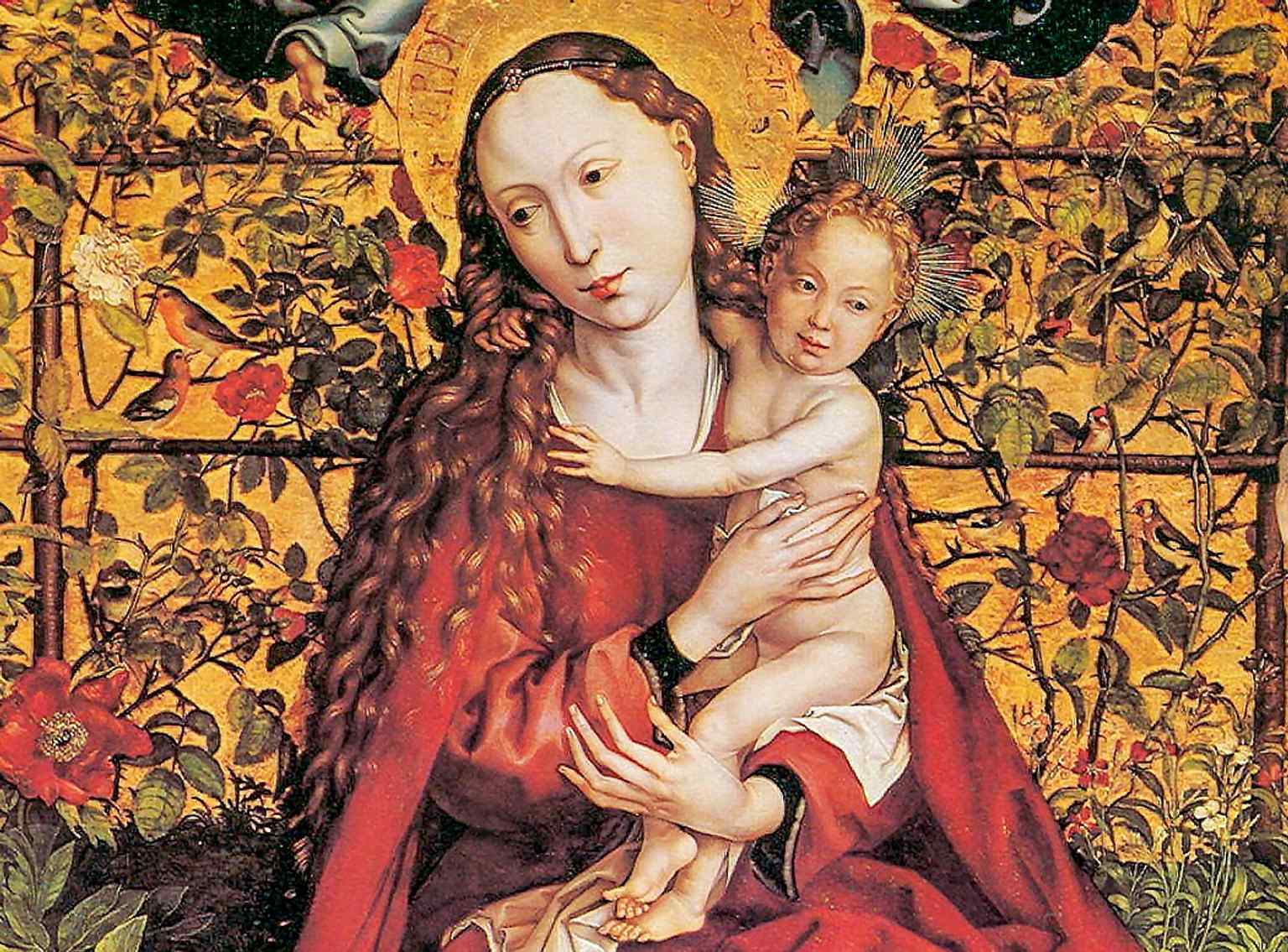
When you look closely at the details, Schongauer's genius really comes alive through his deep use of symbolism. Notice Mary's dress. Traditionally, the Virgin Mary is painted wearing blue, but here she wears a striking, cascading red. In Christian art, red is the color of the Passion, subtly foreshadowing the suffering her son would eventually endure. The birds perched on the trellis echo this same theme. Among them is a goldfinch, a small bird whose distinctive red face was historically said to symbolize the blood of Christ.
The plants are equally deliberate. Mary sits in an enclosed garden, symbolizing her purity. She is often referred to in religious texts as a rose without thorns. If you look closely at the blooming red rosebushes climbing the trellis, you will spot exactly one white rose tucked into the upper left, reinforcing her unique purity among mortals. Down at the very bottom, near the folds of her dress, you can spot tiny wild strawberries. Their delicate leaves are trilobed, meaning they grow in groups of three, a quiet natural nod to the Holy Trinity of the Father, the Son, and the Holy Spirit.
Schongauer managed to weave immense theological weight into a scene that otherwise looks like a peaceful moment in a lush garden. Take a moment to soak this in, and when you are ready, we can head to the next stop.






.jpg)