
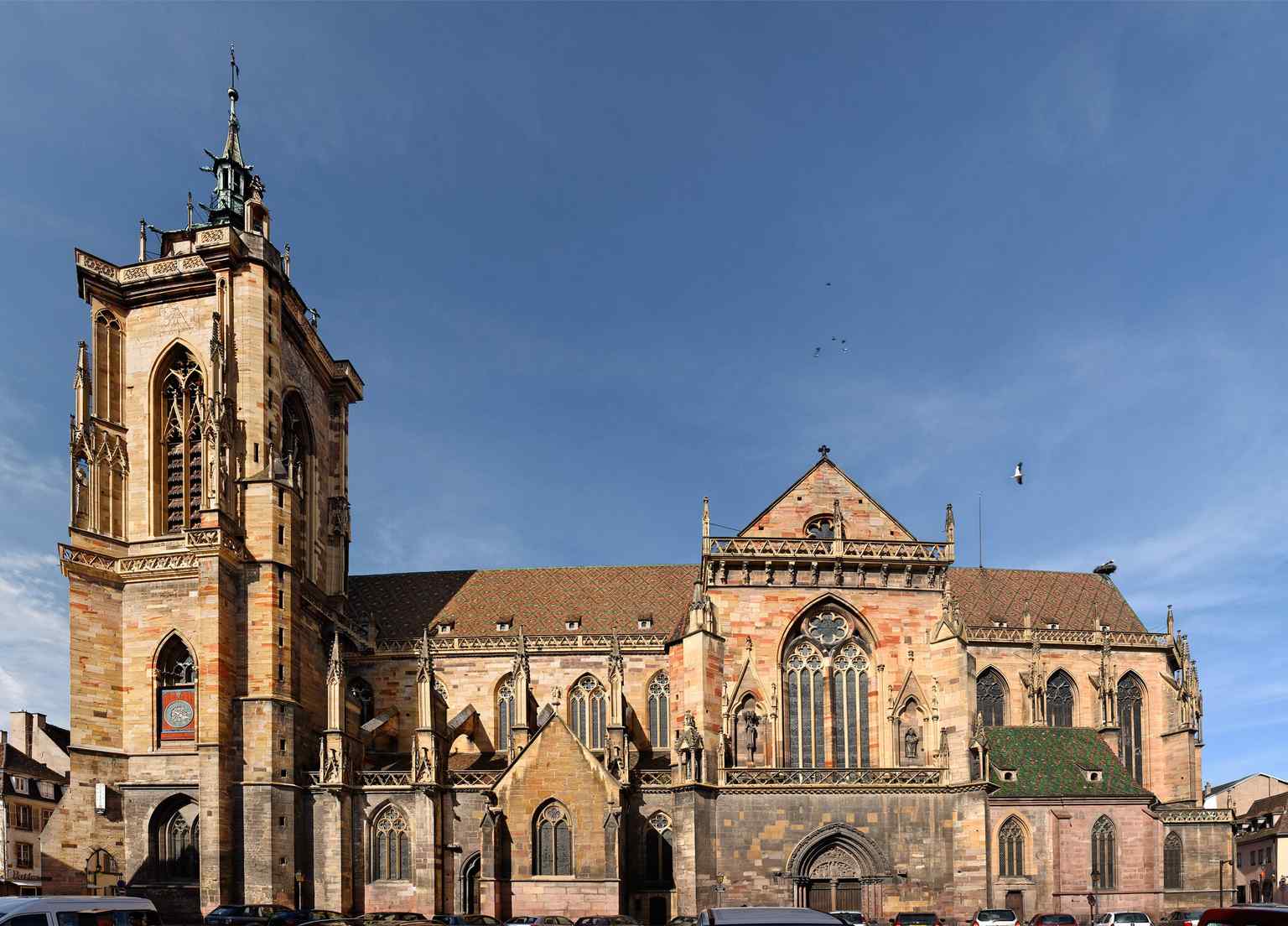
Coming up on your left is a massive, multi-toned sandstone church characterized by its large Gothic windows and a single, prominent square tower capped with a unique, bulb-shaped copper lantern.
Locals frequently call this Saint-Martin Cathedral, though technically, it is a collegiate church. That simply means it was historically run by a chapter of canons, a community of priests, rather than a single bishop. It is the most important religious building in Colmar and the second largest Catholic structure in all of Alsace, surpassed only by the grand cathedral in Strasbourg. Just a couple of minutes ago we were talking about Martin Schongauer's famous painting, the Virgin at the bush of roses, and for many centuries, this very church is where that masterpiece originally hung.
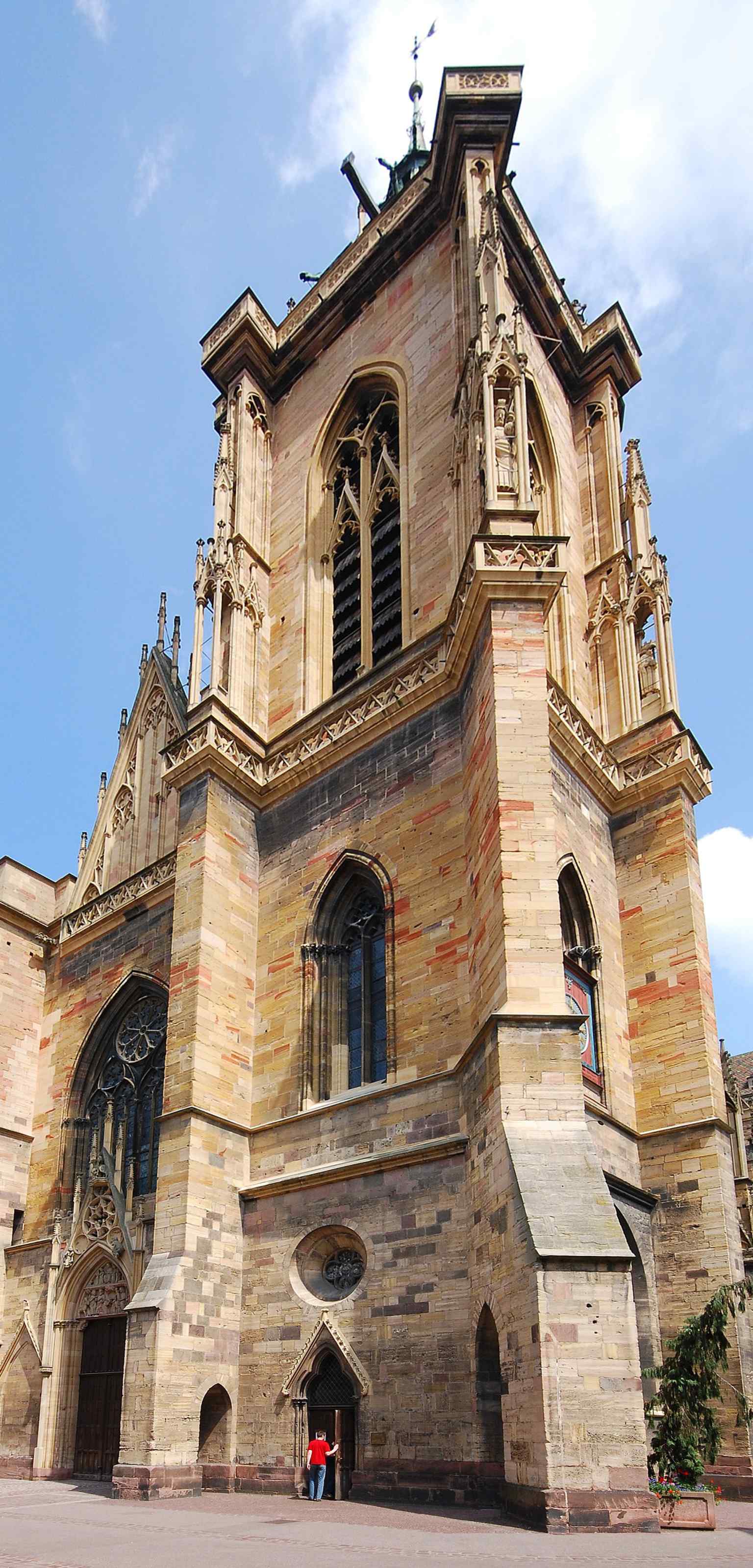
Construction on this Gothic giant kicked off in 1234 and dragged on for over a century, wrapping up around 1365. I say wrapping up, but it was never actually finished. If you look up, you will notice the building is decidedly asymmetrical. The original blueprints called for a towering north spire to match the south one, but the builders just never quite got around to it.
The building is constructed from sandstone hauled in from the nearby Vosges mountains. The beautiful patchwork of yellow, pink, and reddish-brown stone you see on the exterior exists because the builders had to source materials from several different quarries over those many decades of construction. Up top, the colorful roof is layered with traditional flat tiles known locally as beaver tails due to their gently rounded edges.
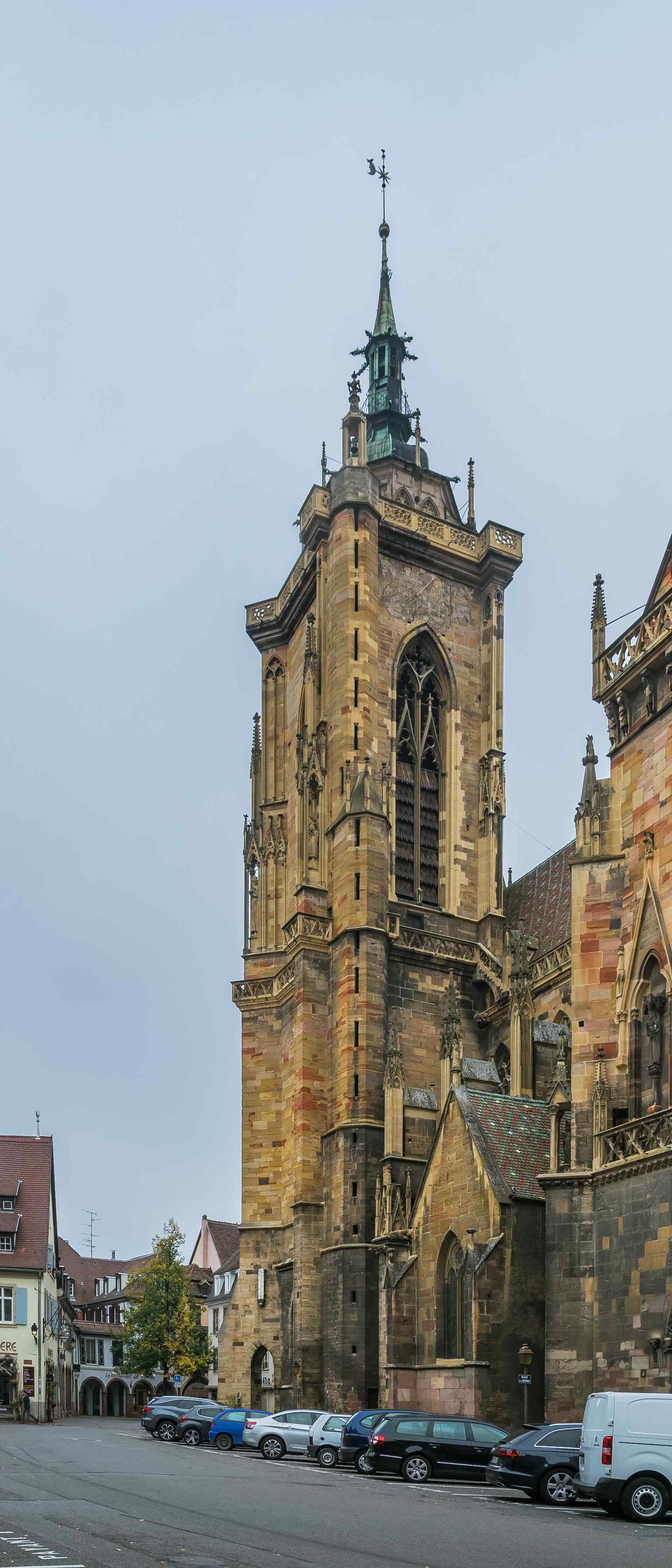
That single tower on the south side has a dramatic past. In 1572, a violent fire ripped through the upper levels, completely destroying the wooden roof and the top of the tower. Rather than rebuilding it to match the original Gothic design, the city opted for a trendy replacement three years later. They added the unusual, onion-shaped lantern you see today, forever changing the skyline of Colmar.
The church survived the centuries, but the French Revolution certainly left its mark. The revolutionary government abolished the community of priests and actually stripped the tower of its impressive bells. In 1793, the heavy bronze bells were lowered down, loaded onto boats, and shipped off to Strasbourg to be melted into cannons for the war effort. Today, a newer set of bells rings out from the tower, widely considered by acoustic experts to be some of the most harmonious in France.
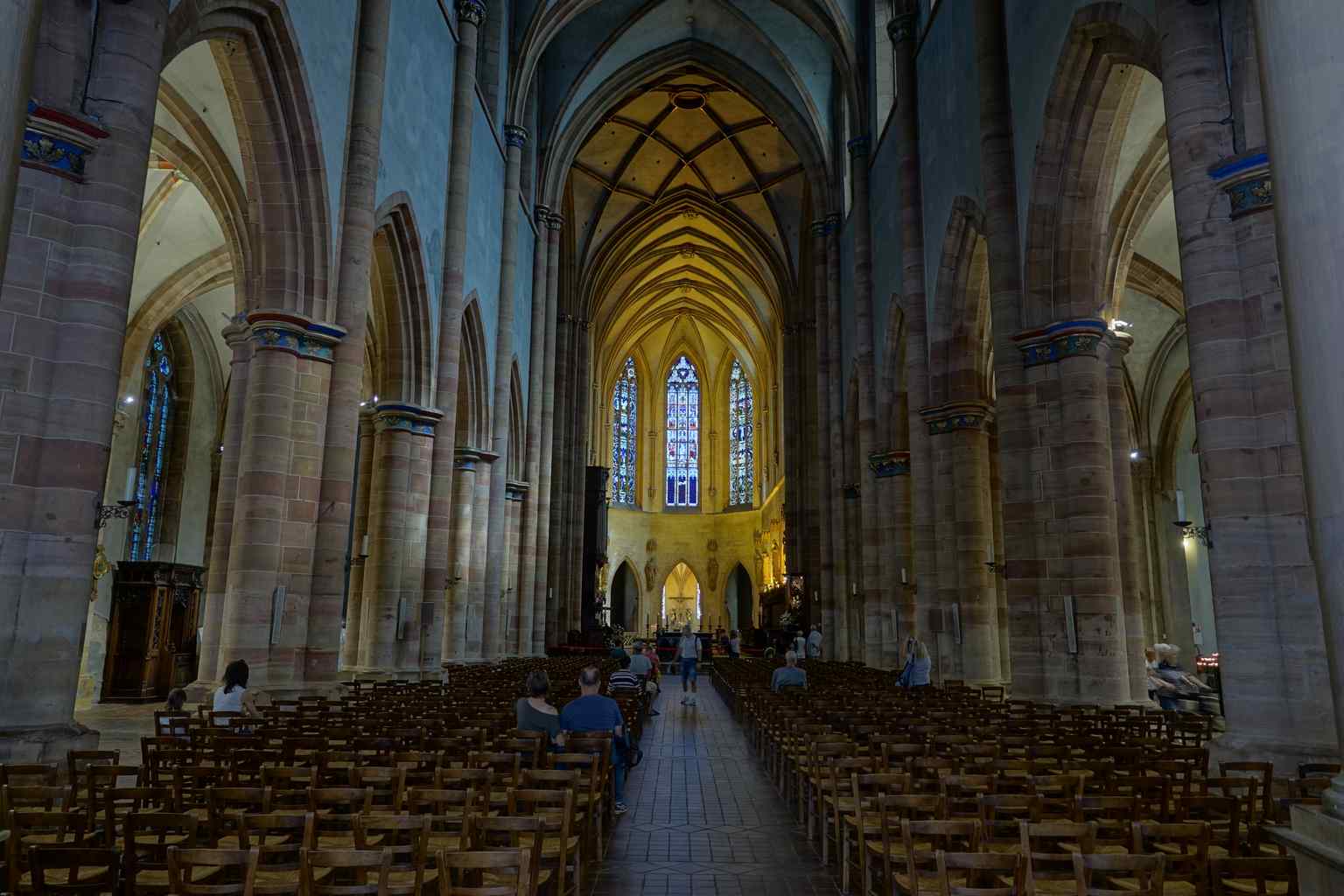
If you want to step inside to see the nave, the soaring central hall where the congregation gathers, the doors are open most days from eight in the morning until nearly seven in the evening, opening a bit later at ten on Sundays.
It is quite a profound space to just stand and take in the sheer scale of medieval ambition. Whenever you are ready to continue, we can make our way down the street to the next stop.






.jpg)
.jpg)