
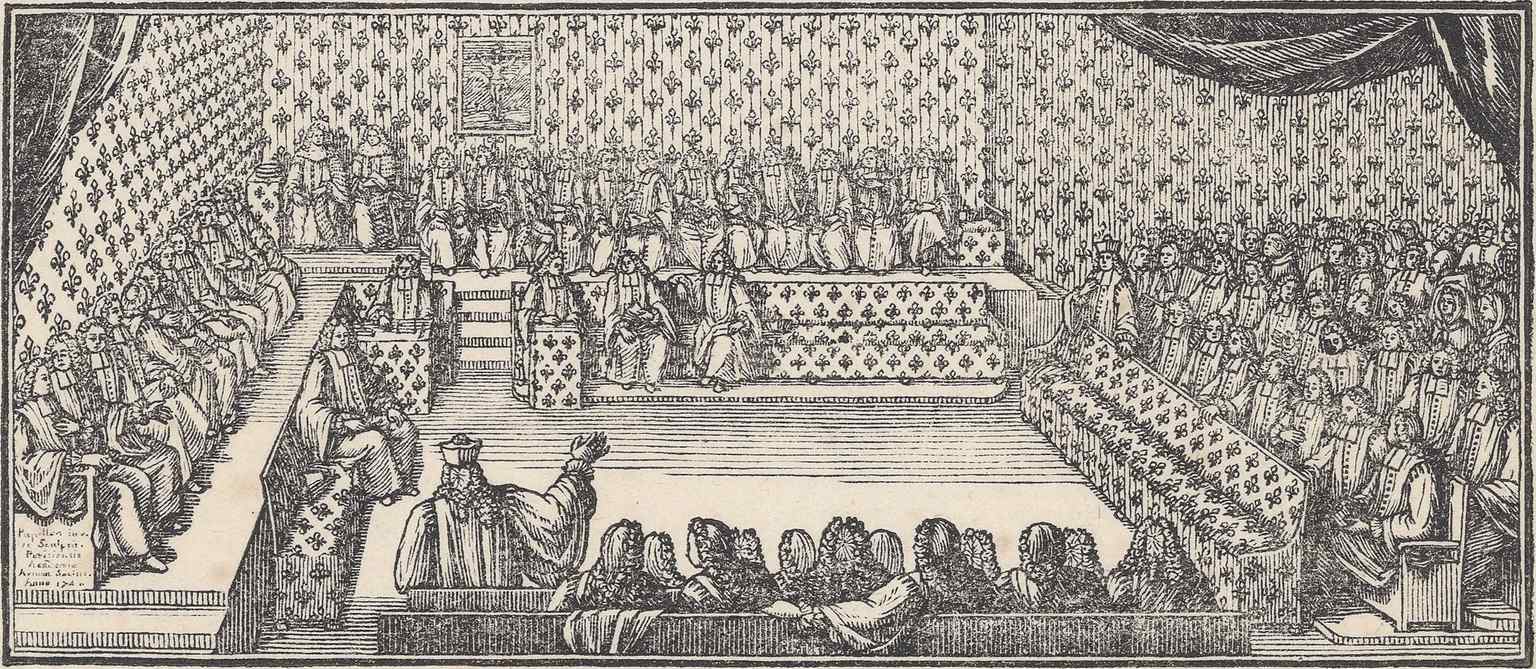
Just a short walk from the bustle of Main Street, you are now standing in front of the Sovereign Council of Alsace. If walls could talk, these would likely speak in dense seventeenth century legal jargon, but the stories they hold are far from dry. Created by King Louis XIV, this council was the ultimate judicial authority in the region. Before settling permanently in Colmar and becoming a full parliament in 1711, the court bounced around a few other towns. It was essentially the king's tool for legal conquest. In 1680, the council combed through old medieval charters just to declare that entire territories legally belonged to France, which smoothly justified the military annexation of Strasbourg the very next year. It is a classic case of sending in the lawyers to justify sending in the troops. But this court was deeply out of touch with the people it judged. The council was made up of twenty four judges, plus a whole flock of prosecutors, clerks, and interpreters. They were all strict Catholics, mostly imported from central France, and they ran the court exclusively in French. Meanwhile, the vast majority of locals spoke only a Germanic dialect. Imagine being on trial for your life and not understanding a single word the judge is saying. This disconnect occasionally led to tragedy. The darkest stain on this institution is the 1754 case of Hirtzel Levy, a Jewish merchant accused of robbing a widow. Levy had a rock solid alibi backed by a local lord, but the council chose to completely ignore it. He was sentenced to be broken on the wheel, a brutal execution method where the victim's limbs were shattered in the public square. He maintained his innocence to his dying breath. The local Jewish community was so outraged they took the incredibly rare step of appealing directly to the King's Privy Council in Versailles. The high royal council actually overturned the verdict and cleared Levy's name posthumously, delivering a stinging, humiliating rebuke to the Colmar judges. The council did fare a bit better when ordered to end local witch hunts. When a 1682 royal edict officially downgraded witchcraft to mere pretended magic, the court had the difficult job of forcing paranoid locals to stop bringing women like Ursule Semler to trial for sorcery. Before we move on, take a look at the building itself, completed in 1771. Up on the main triangular pediment, you will see a stern statue of Justice. But if you glance at the side wall on Augustins Street, there is a surprising little detail. You will find a replica of the Manneken Pis, the famous Belgian statue of a little boy urinating. It was a gift from Brussels in 1922 to commemorate the suffering both cities shared under German occupation. It is quite the contrast to see such cheeky humor attached to a monument of strict royal law. Take a moment to soak this in. When you are ready, we can head to our next stop, the Museum of Natural History and Ethnography.





.jpg)