
Coming off our last stop at the monument to Martin Schongauer, we arrive at something truly extraordinary on your right. This is the Issenheim Altarpiece, and it is widely considered one of the most hauntingly powerful works of art in Western history.
Created between 1512 and 1516 by the German painter Matthias Grunewald and sculptor Nicolas de Haguenau, this massive work is a polyptych. That is a multi-paneled altarpiece with hinged wings that can be opened and closed like an enormous, intricately carved book, revealing different scenes depending on the religious calendar.
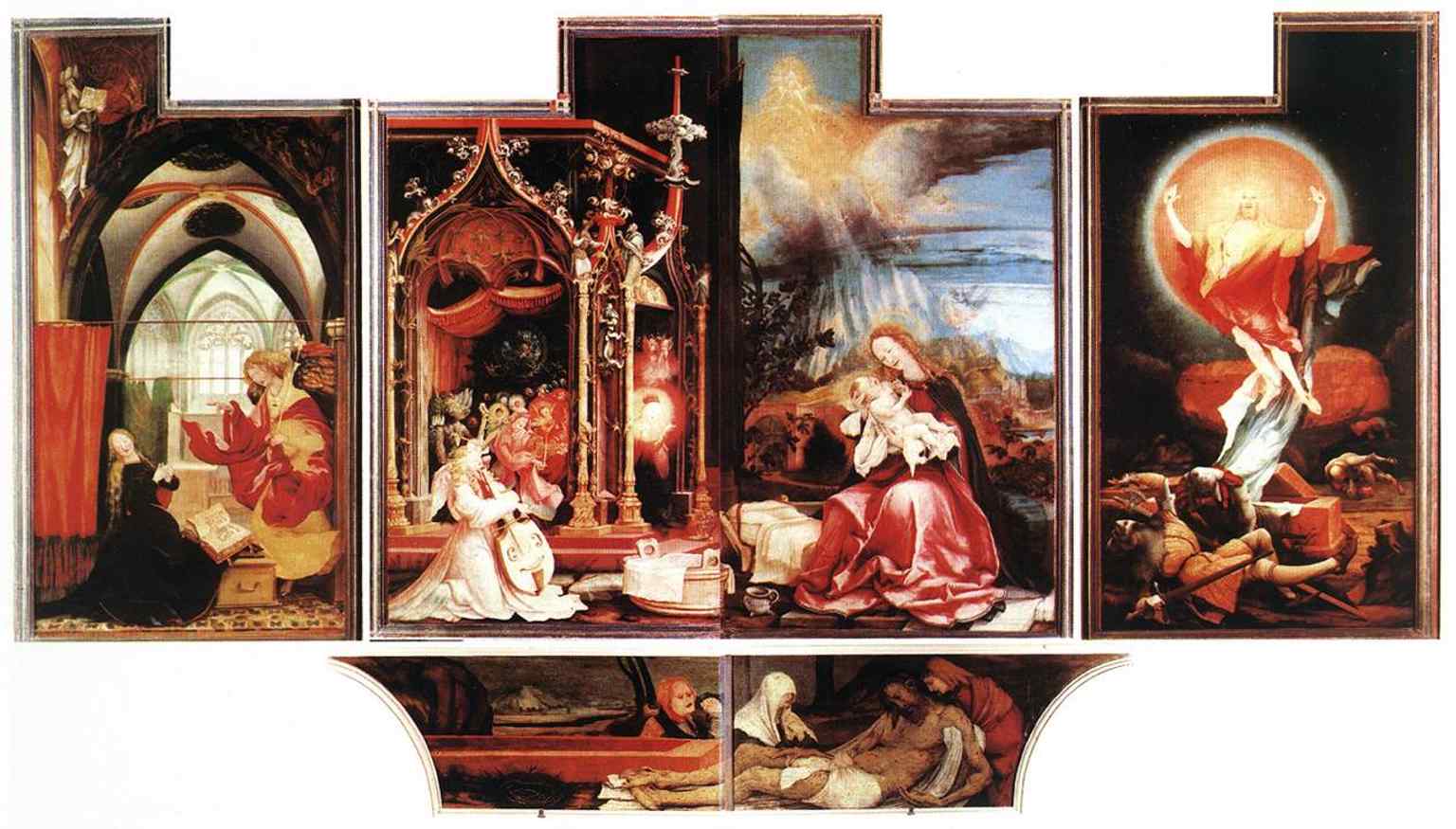
To really understand the intensity of this piece, you have to know who it was made for. It was originally commissioned for the hospital of the Antonin monks in the nearby village of Issenheim. Throughout the Middle Ages, these monks specialized in treating a terrifying affliction known as Saint Anthony's fire. Today, we know this disease as ergotism, a severe poisoning caused by eating bread made from rye infected with a toxic fungus. But back then, it seemed like a demonic curse. Patients suffered from terrible hallucinations, muscle spasms, and a gangrenous, agonizing burning sensation in their limbs.
When patients first arrived at the hospital, they were brought before this very altarpiece. With the panels closed, they would see Grunewald's Crucifixion. It is a relentlessly dark, visceral painting. Christ is depicted not as a serene, glowing figure, but with twisted hands, blue lips, and a body completely covered in horrific, festering wounds. To modern eyes, it is almost shocking, but to the dying patients of the sixteenth century, it offered a strange kind of comfort. They looked at the altarpiece and saw a savior who actually understood their physical agony.
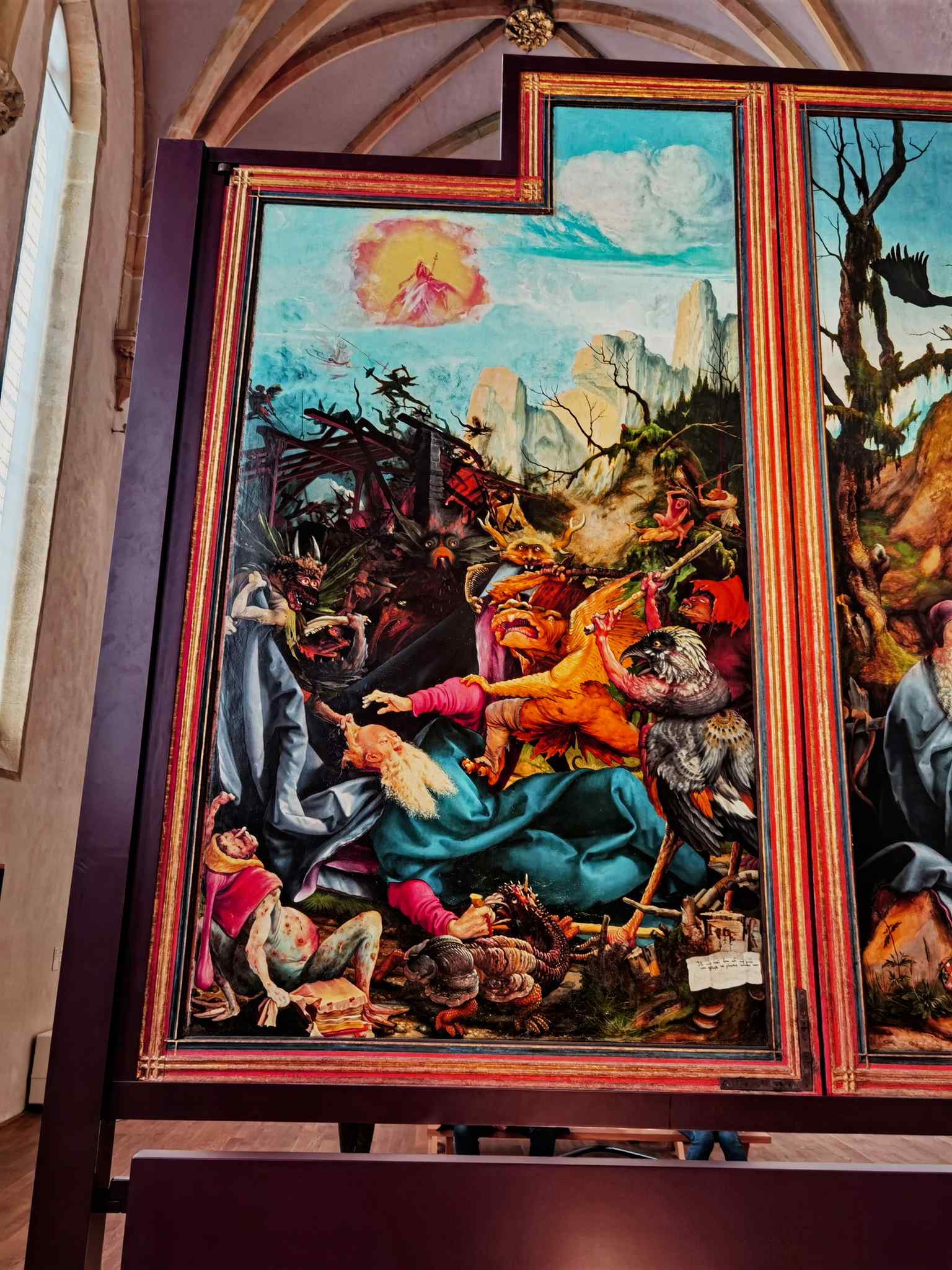
When the panels were opened on special feast days, the artwork revealed vibrant paintings and wood sculptures, including a terrifying scene of Saint Anthony being attacked by bizarre, monstrous demons. In the corner of that panel, one of the grotesque creatures has webbed feet, a swollen belly, and diseased limbs, directly mirroring the exact symptoms of the patients lying in the hospital beds.
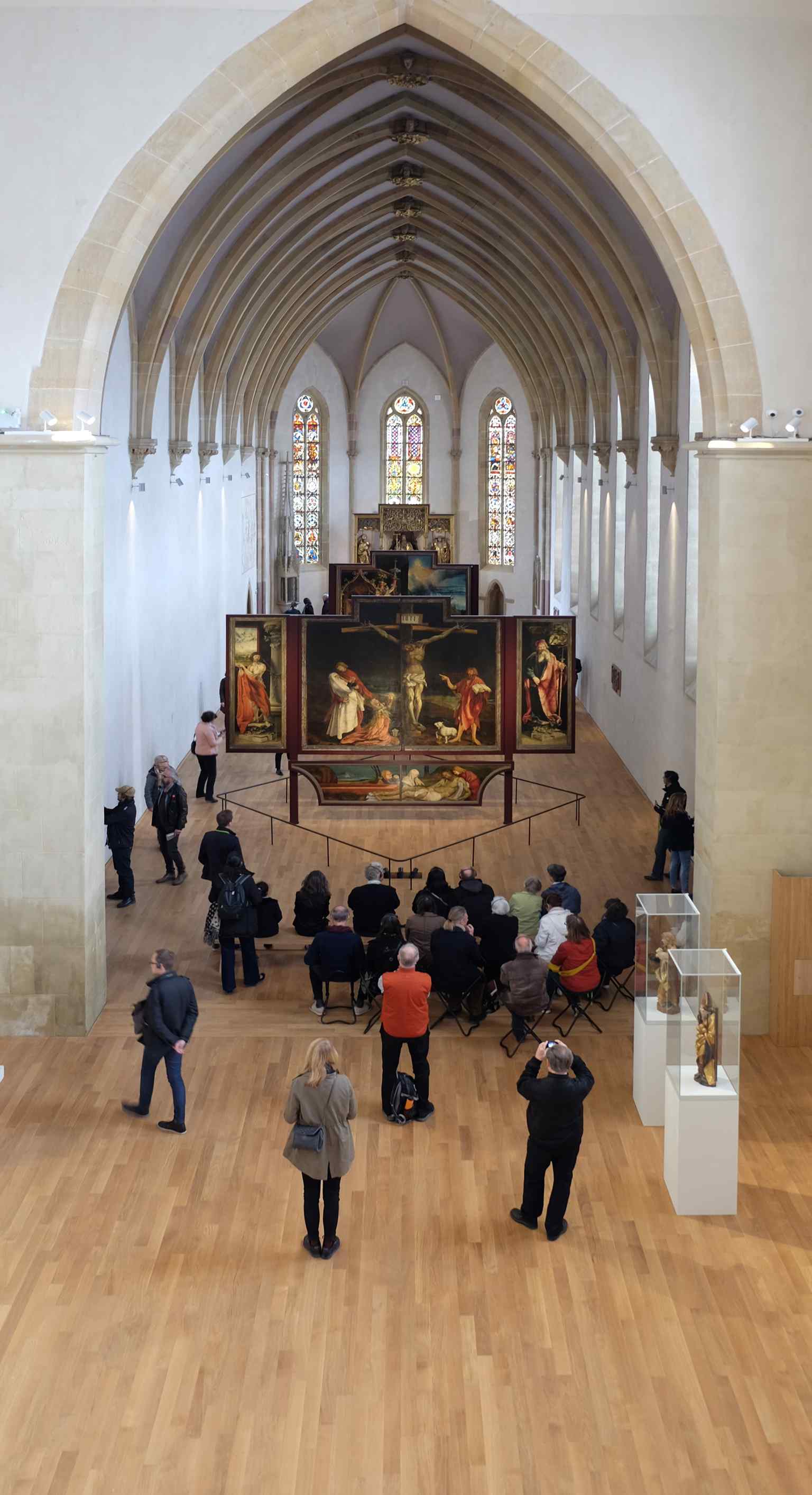
The altarpiece has survived an incredible journey over the centuries. During the French Revolution, it was dismantled and moved to Colmar to save it from destruction. In World War Two, it was secretly hidden away in various rural castles to protect it from looting, eventually being recovered by the American army in 1944.
Now it rests safely right here inside the Unterlinden Museum. The app has a neat side-by-side showing what this place looked like back in 2014 before massive renovations, compared to its sleek modern gallery today.
It is a masterpiece born entirely from human suffering, yet it offered an entire community a sense of profound peace. Take a moment to soak this in, and when you are ready, we can head over to our next stop just steps away.






_-_Temptation_of_Saint_Anthony_the_Great_01.jpg)
