

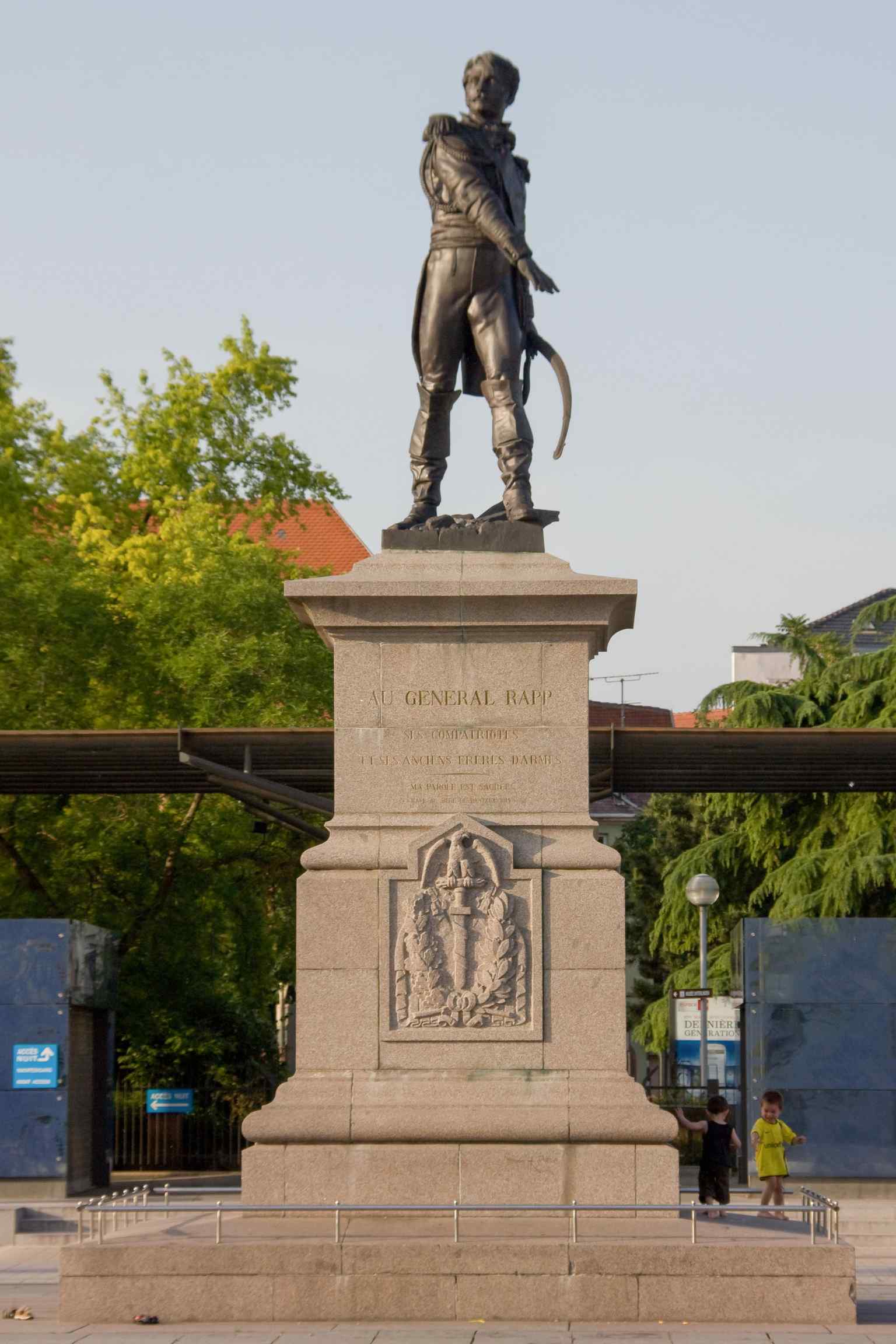
Look up at the towering bronze figure striking a dynamic, mid-stride pose atop a stepped, light-colored granite pedestal adorned with a carved sword and wreath. You are looking at the Monument to General Rapp, and it is actually the very first major public work by Auguste Bartholdi, the man who would later design the Statue of Liberty. Back in 1854, Bartholdi was just twenty years old when he landed this commission to sculpt Jean Rapp, a famous local general. The town council quickly got cold feet about the cost and tried to shrink the proposed statue by half. Fortunately for art history, Bartholdi had a very supportive and wealthy mother. She stepped in, using her influence and her own money to ensure her son's colossal vision survived. Because of her, we get this unusually energetic pose, a complete departure from the stiff, static statues of the era.
General Rapp himself was quite a character, known for surviving twenty-four combat wounds and for his legendary bluntness. On the front of the granite base, you will see an inscription in French that translates to, My word is sacred. This goes back to the Siege of Dantzig in 1813. Rapp and his men had held out against Russian forces for nearly a year, battling starvation and disease. When he finally agreed to surrender if no reinforcements arrived, the Russian general demanded a written guarantee. Insulted that anyone would doubt his honor, Rapp fired back with that single phrase. He kept his promise, earning the deep respect of his enemies. Rapp was also fiercely loyal, famously saving Napoleon Bonaparte from a young assassin wielding a kitchen knife in 1809.
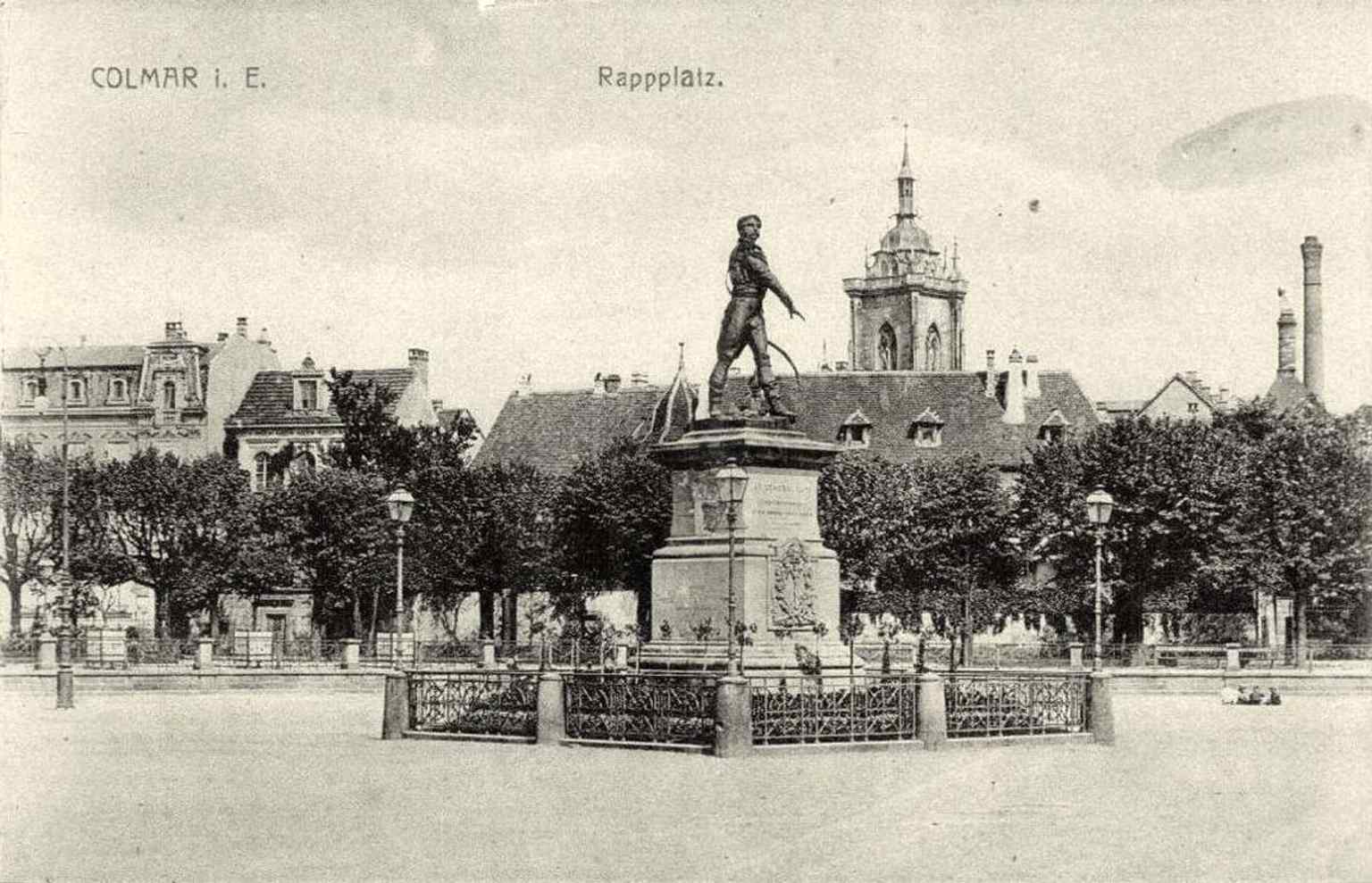
By the way, the app has a neat side-by-side image showing what this public square looked like back in 1900 compared to today. The monument itself has seen its share of conflict. During the Second World War, occupying Nazi forces tore the statue down, hoping to erase this symbol of French patriotism. Luckily, the bronze pieces were secretly preserved rather than melted down for munitions. After the war, the battered bronze was sent to Paris for repairs and triumphantly returned to this pedestal in 1948.
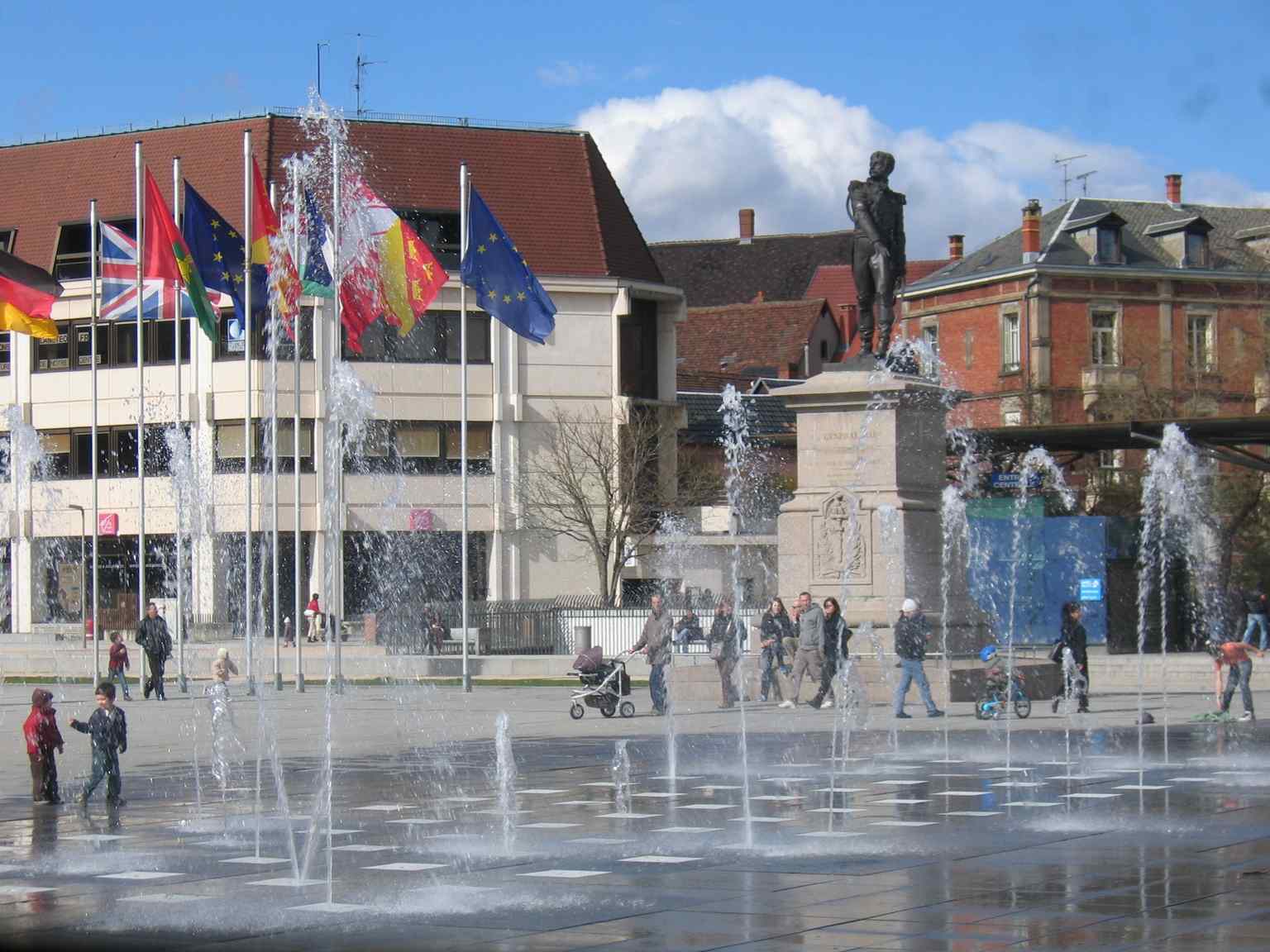
Since it stands right in the middle of a public square, you can visit this monument twenty-four hours a day, any day of the week. Take a moment to admire the details of Bartholdi's early triumph. When you are ready, we can take a short walk over to the Battle of Argentovaria.






