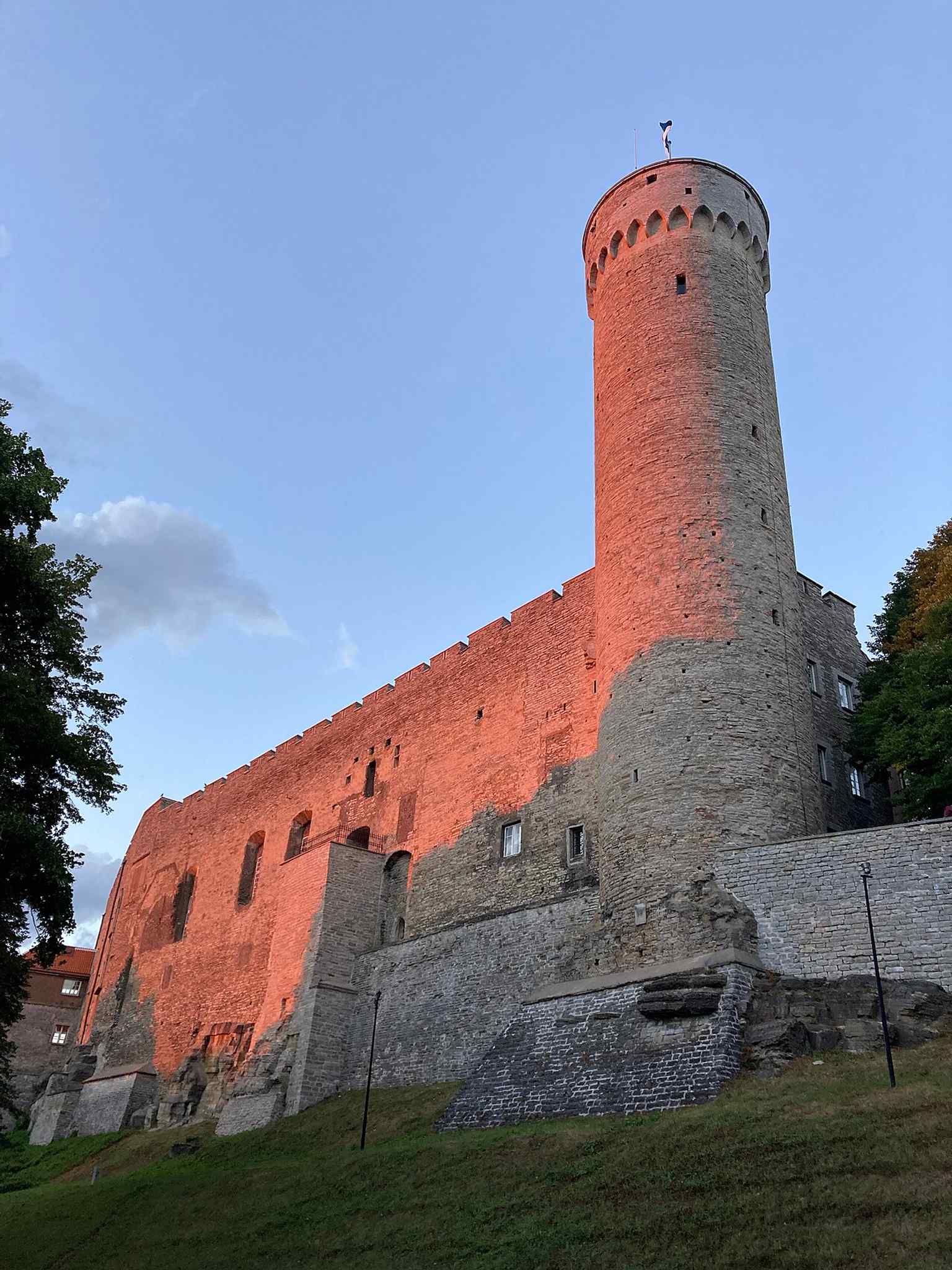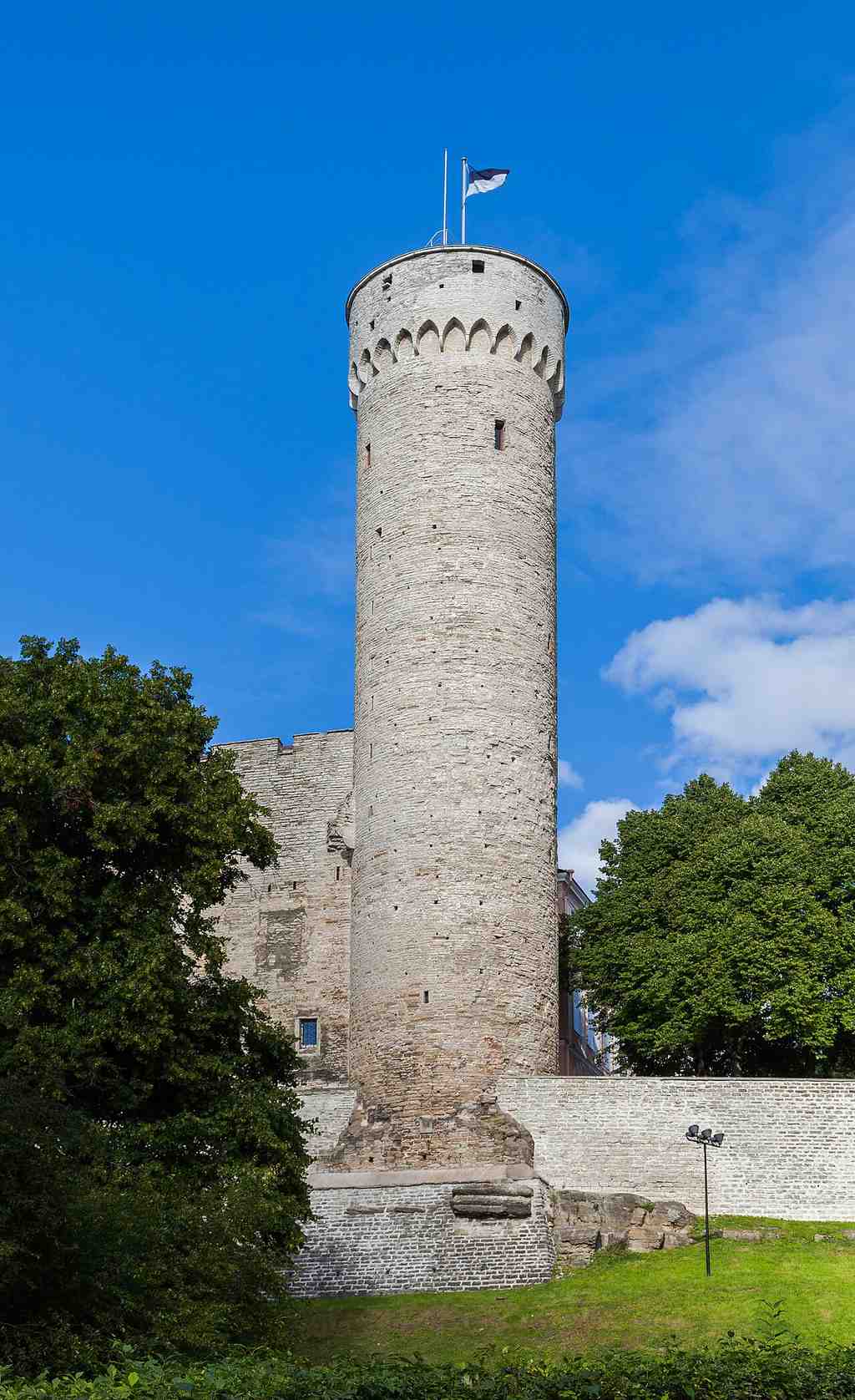
On your right rises a tall round limestone tower with thick pale walls, a red conical roof, and the national flag flying from its crown.
Pikk Hermann started life in the thirteen seventies as a defensive tower for Toompea Castle, and builders reshaped it in the late fifteenth century into the form you see now. For a time, it was the highest stone tower anywhere around the Baltic Sea... a very clear message from this hilltop: we plan to see danger before danger sees us. From up there, guards watched the roads and approaches to the fortress.
But there is a detail locals enjoy because it makes this stern symbol oddly human. The lower chamber used a hypocaust, an old heating system that pushed warm air through channels in the structure. Even medieval power, it turns out, ran better when the night watch was not turning into icicles.
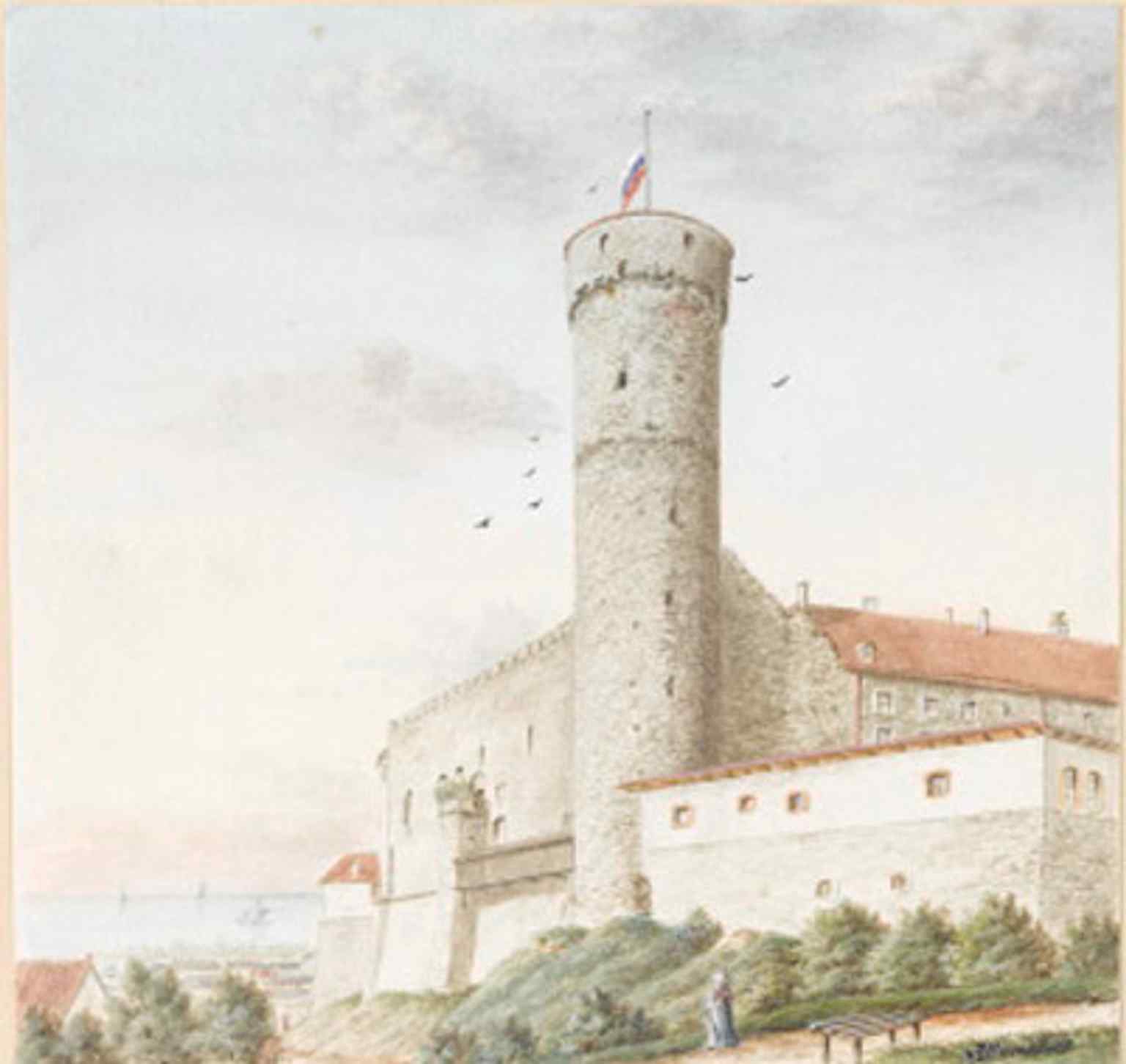
Pikk Hermann and the national flag became bound together on the twelfth of December, nineteen eighteen, when Estonia raised the blue-black-white here for the first time as the state flag. From that moment, the tower stopped being only military stone and became a public statement that the republic existed. In the summer of nineteen forty, Soviet occupation ended that daily flying and replaced not just a banner, but the right to represent the country. In September nineteen forty-four, Otto Tief and his short-lived Estonian government briefly restored the tricolour - a three-color national flag - before Soviet forces replaced it with the red flag on the twenty-second of September.
If you want the emotional turning point of this place, have a look at the before-and-after image in the app. On the twenty-fourth of February, nineteen eighty-nine, thousands gathered here and many wept as the Estonian flag rose again after decades of Soviet rule. Since then, a climb of two hundred and fifteen steps leads to the top, where the flag flies ninety-five metres above sea level, raised and lowered as part of a daily state ritual.
Next comes the Dome Cathedral, where authority moved from fortress walls into sacred stone. You can stand here at any hour; this site is open all day, every day.