
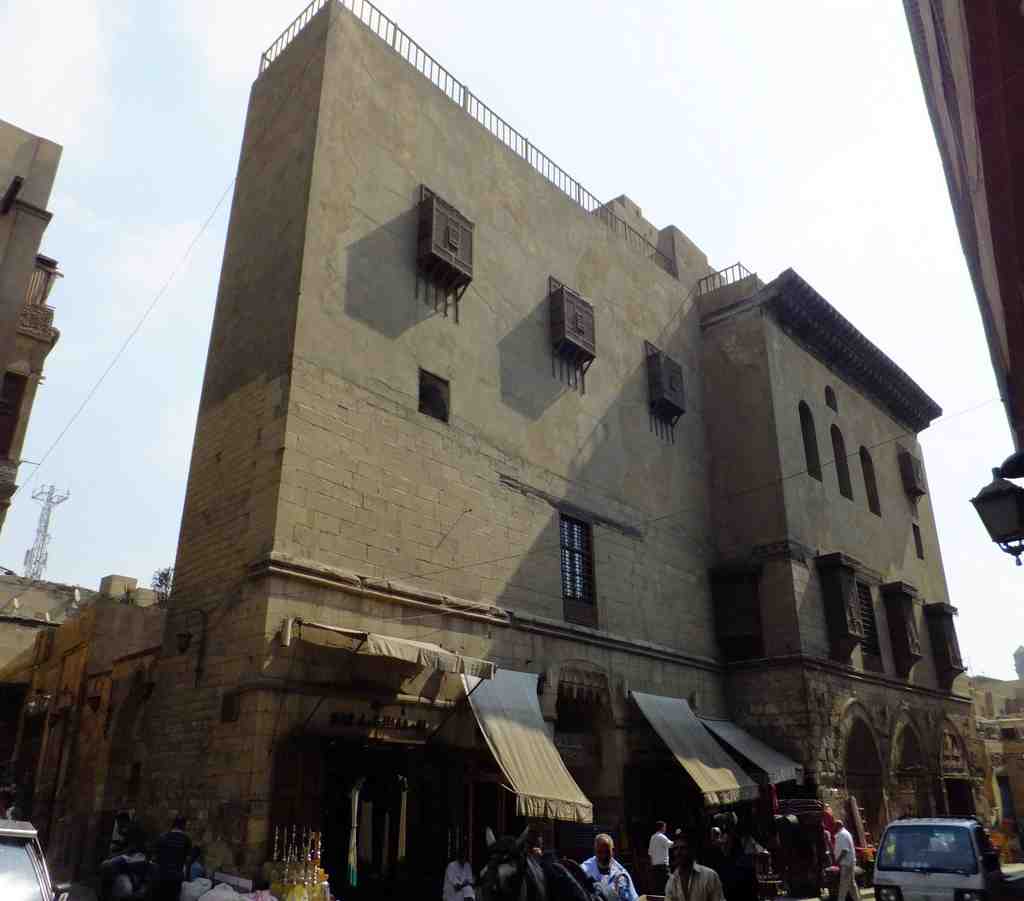
To spot Beshtak Palace, look to your left for a tall, sand-colored stone building with distinctive wooden mashrabiyya windows poking out above bustling street shops.
Imagine the year is 1335. The air is alive with the chatter of merchants, the clatter of horse hooves, and the smell of fresh bread wafting through Muizz Street. Right where you're standing, Sayf al-Din Bashtak, a powerful amir who happened to be married to the sultan’s daughter (talk about in-laws!), decided to build himself the palace of all palaces-five stories high, with cool running water on every floor. You see those little shop openings just below? Bashtak was a smart fellow; he let shopkeepers rent those spaces, and their payments helped keep his pockets lined… and probably funded some very fancy feasts.
Inside, there’s a hall so majestic you wouldn’t blame guests for gawking. Picture a grand space: sunlight filtering through colored glass windows, a ceiling so finely carved it looks like a wooden checkerboard, and-my favorite part-a marble fountain right in the middle, bubbling away as conversations and music filled the air. But if you peeked up, you’d spot those beautiful wooden screens high above-behind them, the women of the palace could quietly spy on the gatherings below, catching every secret and joke without anyone noticing. Think of it as the original social media feed-just with less scrolling.
Centuries whirled by and the palace fell into ruin, its stones almost swallowed by Cairo’s busy heartbeat. Then, in 1983, a team from the German Archaeological Institute dusted off the past and brought what you see now back to life-a rare, dazzling reminder of how lively, clever, and grand this city’s history truly is. So take a look, listen closely, and let the whispers of old Cairo guide your imagination.




