
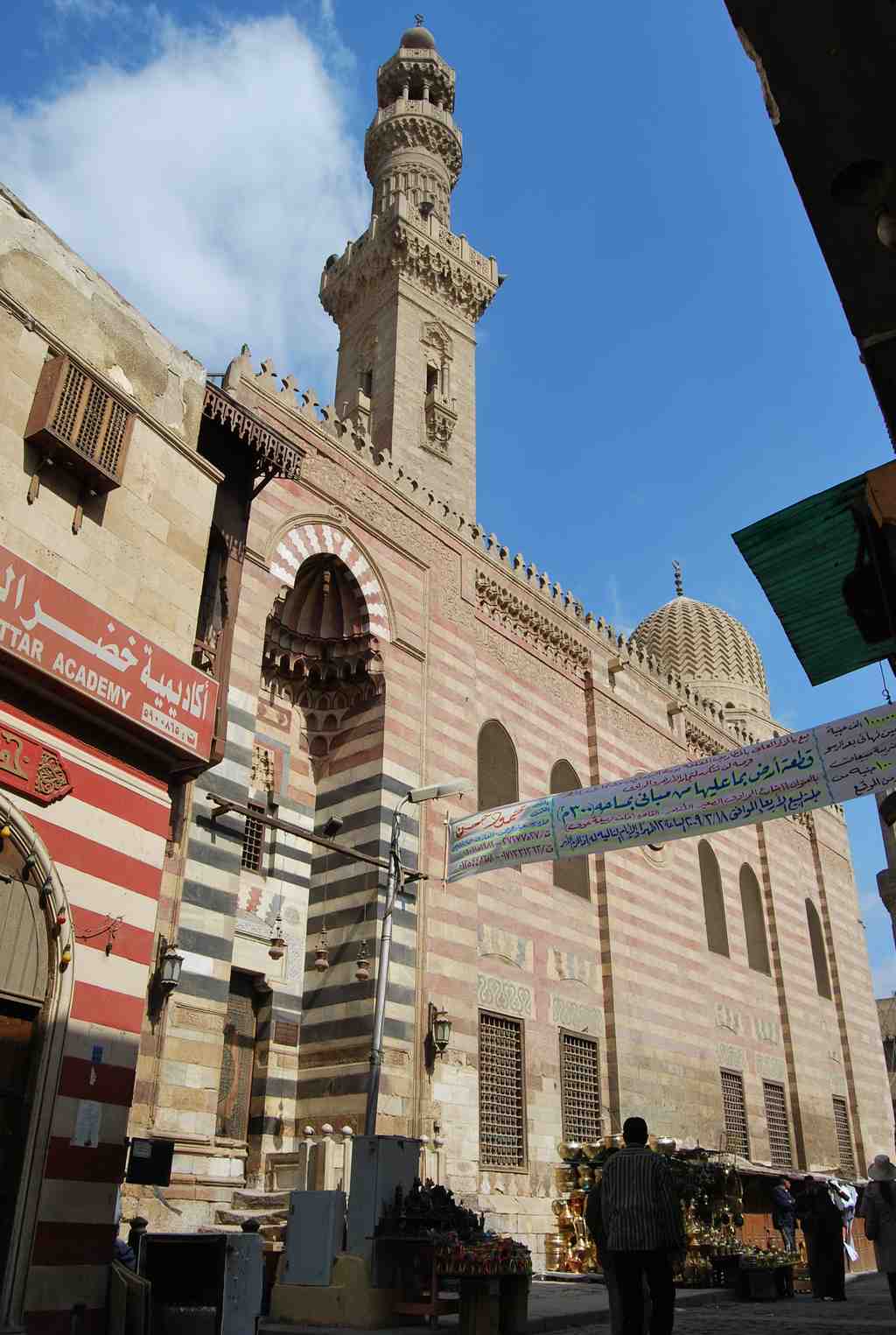
To spot the Al-Ashraf Mosque, look straight ahead for the building with bold red-and-white stone stripes, a tall, detailed minaret soaring up into the sky, and a round, finely carved dome peeking above the roofline.
Standing here, you’re stepping right into a scene from 15th-century Cairo, when Sultan al-Ashraf Barsbay decided he was going to make his mark on history - not with flashy gold, but with marble floors, stained glass, and the hum of whispered prayers. Imagine the market smells all around you, the shouts of spice sellers, and the mosaic glow of the mosque pulling your eyes from the dust and noise. Barsbay, he wasn’t exactly the king of popularity contests thanks to his tight grip on trade and those strict pepper prices, but what he lacked in economic flair, he made up for in bricks, domes, and good old-fashioned piety.
You’d have seen caravans rolling through the city while Barsbay himself looked for ways to show off his devotion-and make sure everyone else remembered him, too. That’s right, it wasn’t just enough to build a mosque. Barsbay made this complex his own legacy: a madrasa for teaching, a mosque for praying, Sufi lodgings for the spiritually adventurous, and even a tomb for himself - because if you want to be remembered, why not be surrounded by the prayers of the living?
Picture this: in its heyday, Sufis drifted through the elaborate domed lodgings, their chants echoing between marble and colored glass. The courtyard dome, carved with intricate patterns, would catch the late afternoon sun, throwing wild geometric shadows onto the stone. Inside, the mihrab-a bit humble compared to the glitzy minbar beside it-actually reflects the quiet modesty of Sufi life, a little “less is more” in a world of plenty. If you listen hard, maybe you’ll catch a whisper of Barsbay’s decree still circling the vaulted iwans-because he had his orders carved right into the stone in case anyone forgot who paid the bills or how the mosque’s money should be spent.
Even after the Sufi lodgings disappeared, the mosque carried on - a gathering place, a monument, a lesson in how Mamluk sultans mixed faith, politics, and just a dash of vanity. Barsbay might have tried to conquer Cyprus, but right here, with every prayer, every echo of the call to prayer bouncing off red-and-white walls, he’s still the Sultan who tied his name forever to the beating heart of Cairo. And honestly, who needs luxury goods when you’ve built yourself into the history books?




