
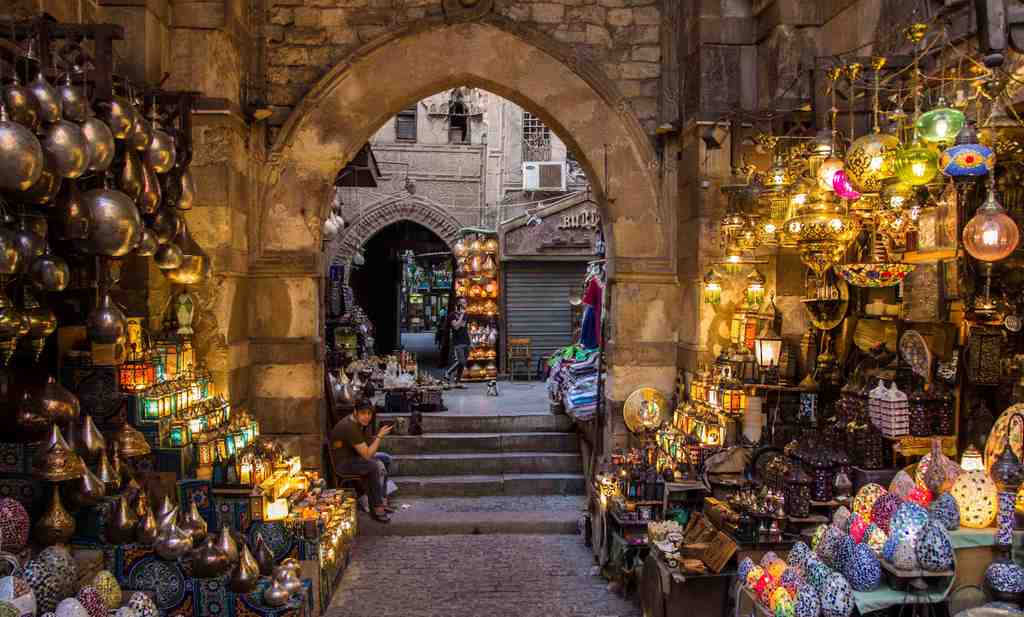
To spot Khan el-Khalili, look ahead for a grand stone archway opening onto a bustling alleyway lined on both sides with sparkling lanterns, metalware, and brightly colored ceramics displayed outside traditional shops.
Welcome to Khan el-Khalili, where the spirit of Cairo comes alive in a kaleidoscope of colors, smells, and sounds! Take a step closer, and let the centuries peel away as you wander beneath this old stone arch, the very gateway that has seen sultans strut through, merchants barter with sharp eyes, and tourists like us marvel at the scene. If you listen closely, you might even catch the cheerful clang of a shopkeeper arranging his wares.
This isn’t just a market-this is a time machine! Ages ago, when Cairo was the playground of Fatimid caliphs, this spot was actually part of their vast palace, and somewhere beneath your feet, saffron-colored tombs hid the secrets of royalty. But palaces come and go, and by the late 1300s, a Mamluk master of the stables named al-Khalili decided he needed a place to park his camels, sleep, and-most importantly-do some business. So, he built a giant caravanserai, a sort of hotel and depot for traders, right here. The only catch? He had to knock down the Fatimid mausoleum to make room. You could say the bones of history still whisper under your feet.
As the centuries rolled on, this simple khan grew-a bit like that one room in your house that swallows up more and more stuff! More khans and wikalas (think fancy inns for traveling merchants) sprang up around it. Soon, you could buy spices straight from India, velvet from Venice, or, if you were brave, get lost among a hundred shopkeepers eager to sell you a genuine “antique”-fresh from yesterday’s workshop.
But the bazaar’s glory wasn’t built in a day. In the 1500s, Sultan al-Ghuri took one look at this market and thought, “Hmm, this could use a little improvement.” Out came the old walls and in went new, imposing stone gates and a maze of roofed corridors, so precious goods could stay safe and Cairo’s rainy days wouldn’t ruin your shopping trip. Fun fact: Al-Ghuri’s renovations even tried to give this place a neat grid-good luck finding straight lines today, though! Alongside all that commerce, the market sprouted coffeehouses, including the legendary El-Fishawy Café, still serving strong Arabic coffee since 1773. Sip on shai or try some shisha if you’re game; it’s tradition!
Khan el-Khalili isn’t just about shopping; it once pulsed with the arrival of caravans and foreign traders-Turkish, Syrian, African, and more. During Ottoman times, it was the center of the Turkish community in Cairo, and mysterious languages mixed in the alleys, with the smell of roasting nuts and perfume drifting through the air. Here, shops weren’t just for selling; they funded mosques, hospitals, and schools, with every coin spent swirling back into the city’s grand waqf charity system.
If these streets could talk, they’d tell tales of novels set in shadowy alleys, like Naguib Mahfouz’s “Midaq Alley,” or fortune-tellers spinning stories for visitors-maybe even a superhero or two, if you count comic book fame! Of course, not every story is cheerful. Through the ages, the market has faced crises, from Mamluk feuds and fires to more recent events where it stood resilient in the face of tragedy. But like a true Cairo survivor, Khan el-Khalili always bounces back-maybe with a new layer of dust, but bustling all the same.
Today, you can buy almost anything here-from golden jewelry and hand-beaten lamps to kitschy trinkets and aromatic spices. Feel free to haggle; it’s expected, and it’s part of the fun. In fact, rumor has it that your smile gets you a better price than your wallet ever could. So as you wander these historic alleys under the glowing lanterns and gaze at the treasures all around, remember: you’re not just shopping-you’re walking through the living heart of Cairo’s history. Just don’t get lost in the maze… but if you do, well, that’s half the adventure!
Ready to dive in? Just follow your ears and nose-you’ll never know which wonder (or wandering merchant) you’ll meet next.




