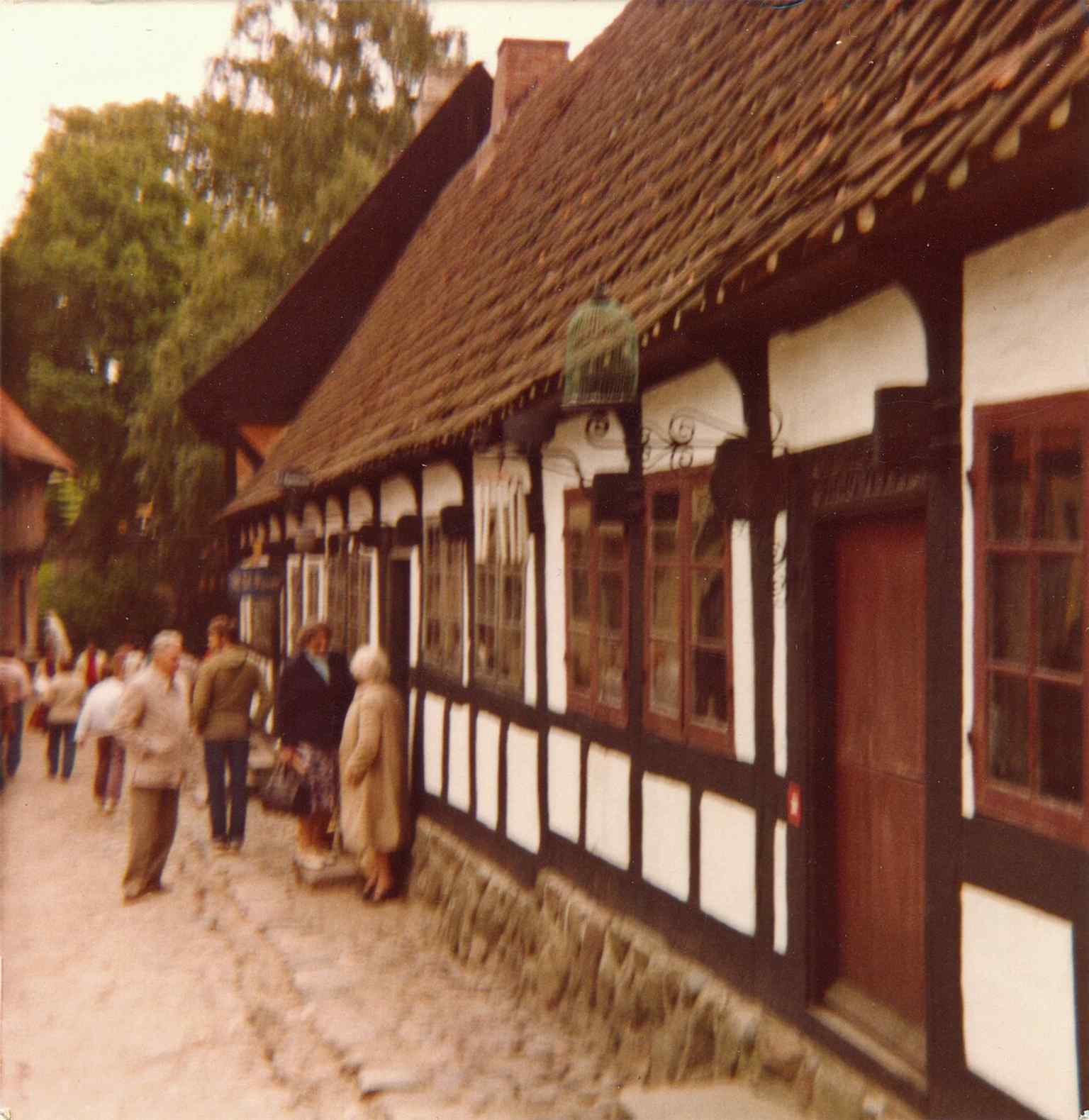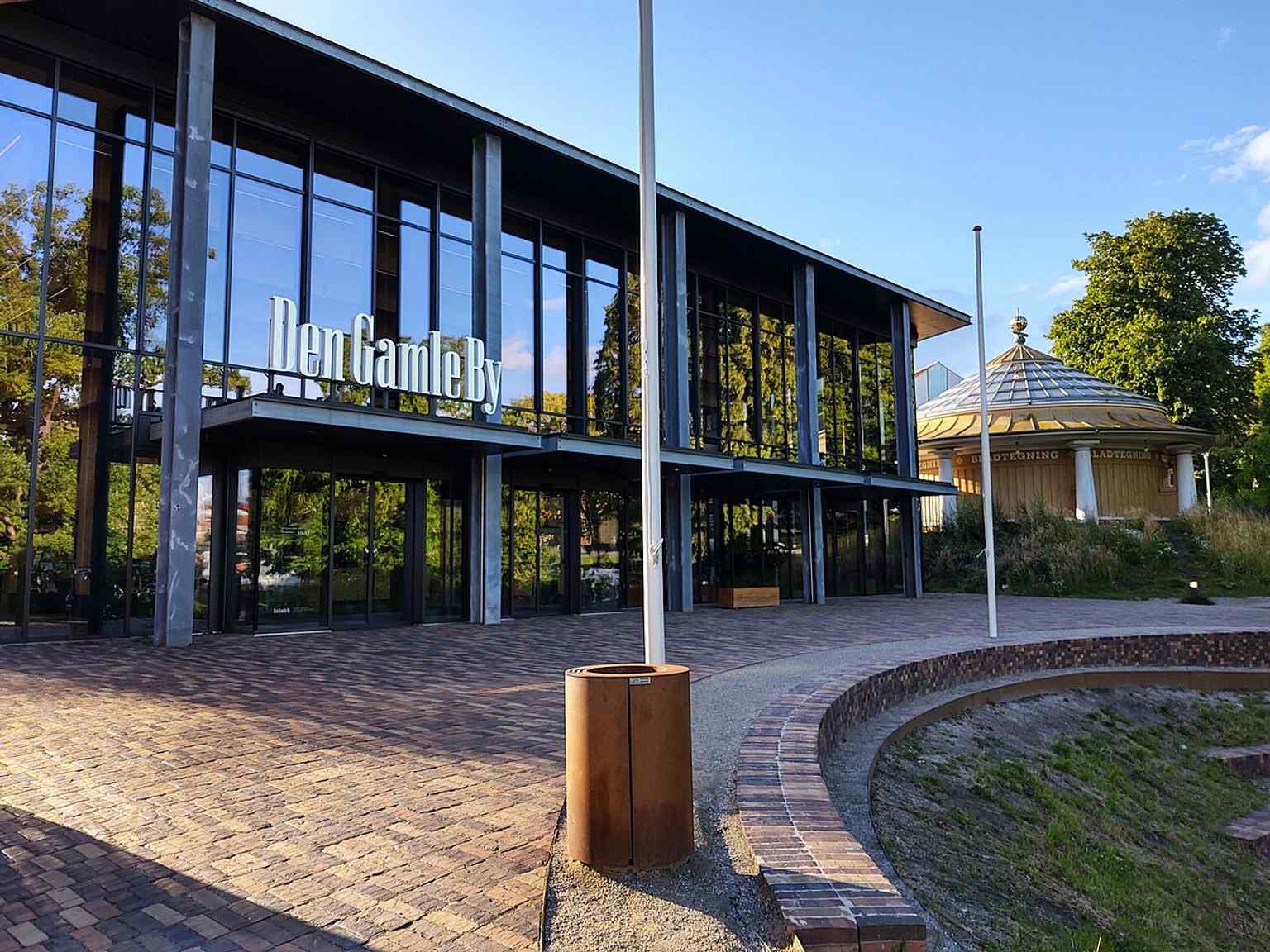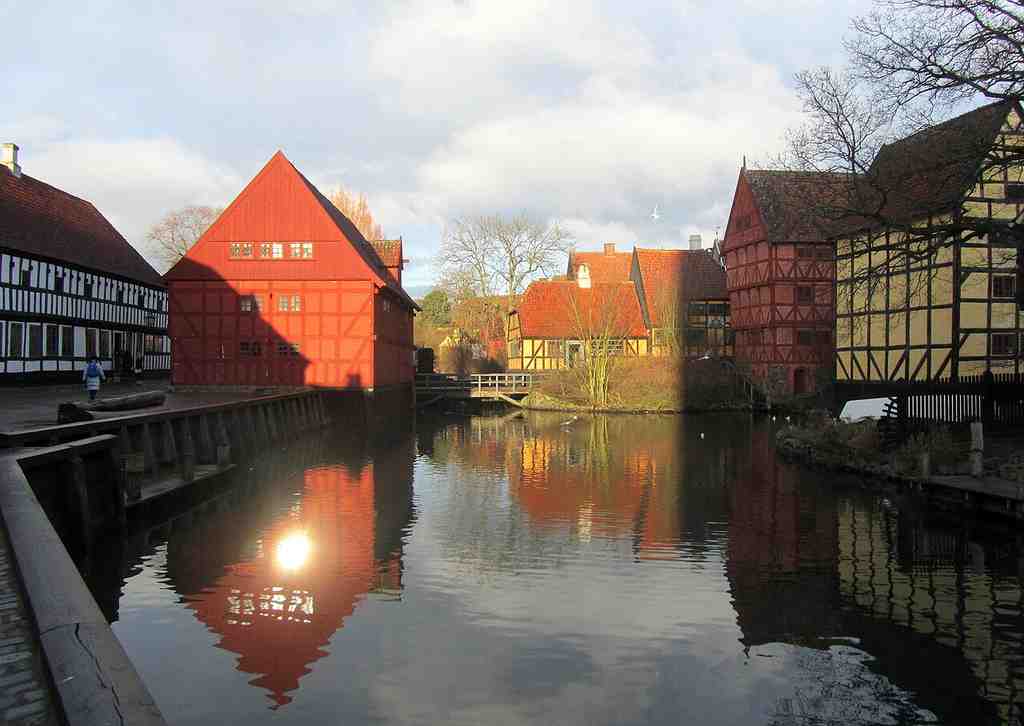
On your right, Den Gamle By looks like a compact little town of half-timbered houses with white plaster walls, steep red-tile roofs, and a gateway leading into a street that seems to have misplaced a few centuries.
This is not just an old building... it is an old city, assembled piece by piece. Den Gamle By opened in nineteen fourteen and is often described as the world’s first open-air museum devoted to urban culture, meaning the life of a Danish market town, a town officially allowed to trade and hold markets. That idea sounds obvious now. At the time, it was downright radical.
The whole thing started because a schoolteacher and local historian named Peter Holm noticed that a merchant’s house called the old Mayor’s House, standing in central Aarhus, faced demolition. Holm did not shrug and mutter about progress. He fought to save it, had it rebuilt for the national exhibition here in nineteen oh nine, and then kept pushing until Aarhus gave land in what had been the horticultural society’s garden, now the Botanical Garden. On the twenty-third of July, nineteen fourteen, the museum opened with just three buildings. Modest beginning... slightly absurd ambition. Perfect combination, really.
Holm ran the museum for thirty-one years and rescued around fifty historic buildings from destruction. Today the place holds seventy-five historic houses, workshops, and shops, gathered from towns across Denmark, with buildings dating from the sixteen hundreds through the nineteen hundreds. If you glance at the image on your screen, you can see how it spreads out like a real town rather than a neat museum campus.
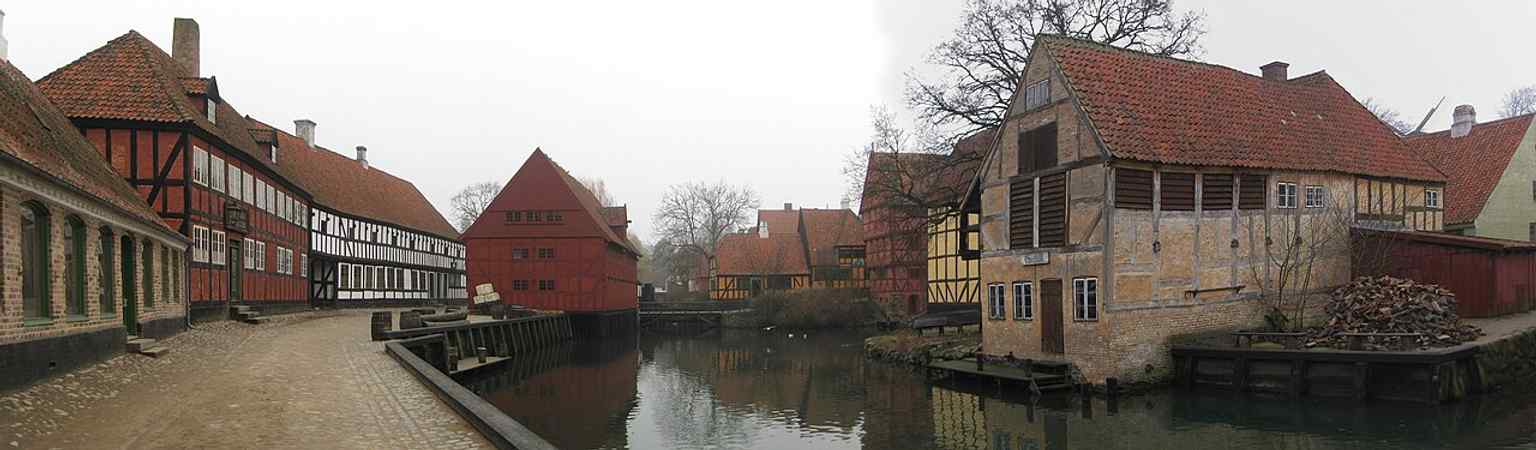
And that is the trick here: this place does not display history in a line. It lets history behave like a neighborhood. Inside are around twenty-seven furnished rooms and kitchens, thirty-four workshops, ten shops, five historic gardens, plus a post office, customs house, school, and even Helsingør Theater, rebuilt here in nineteen sixty-one. Staff often work in character as grocers, blacksmiths, and townspeople, which helps the illusion along nicely. Museums usually ask you not to touch the past. This one practically offers it a job.
One of the cleverest additions is Møntmestergården, a grand seventeenth-century Copenhagen house from Borgergade. For years the museum reserved a spot in the square for an old town hall, but no market town wanted to give one up. Fair enough. So the museum rebuilt Møntmestergården instead, after it had sat dismantled in storage since nineteen forty-four, and finished its interior reconstruction in two thousand nine. Problem solved with style.
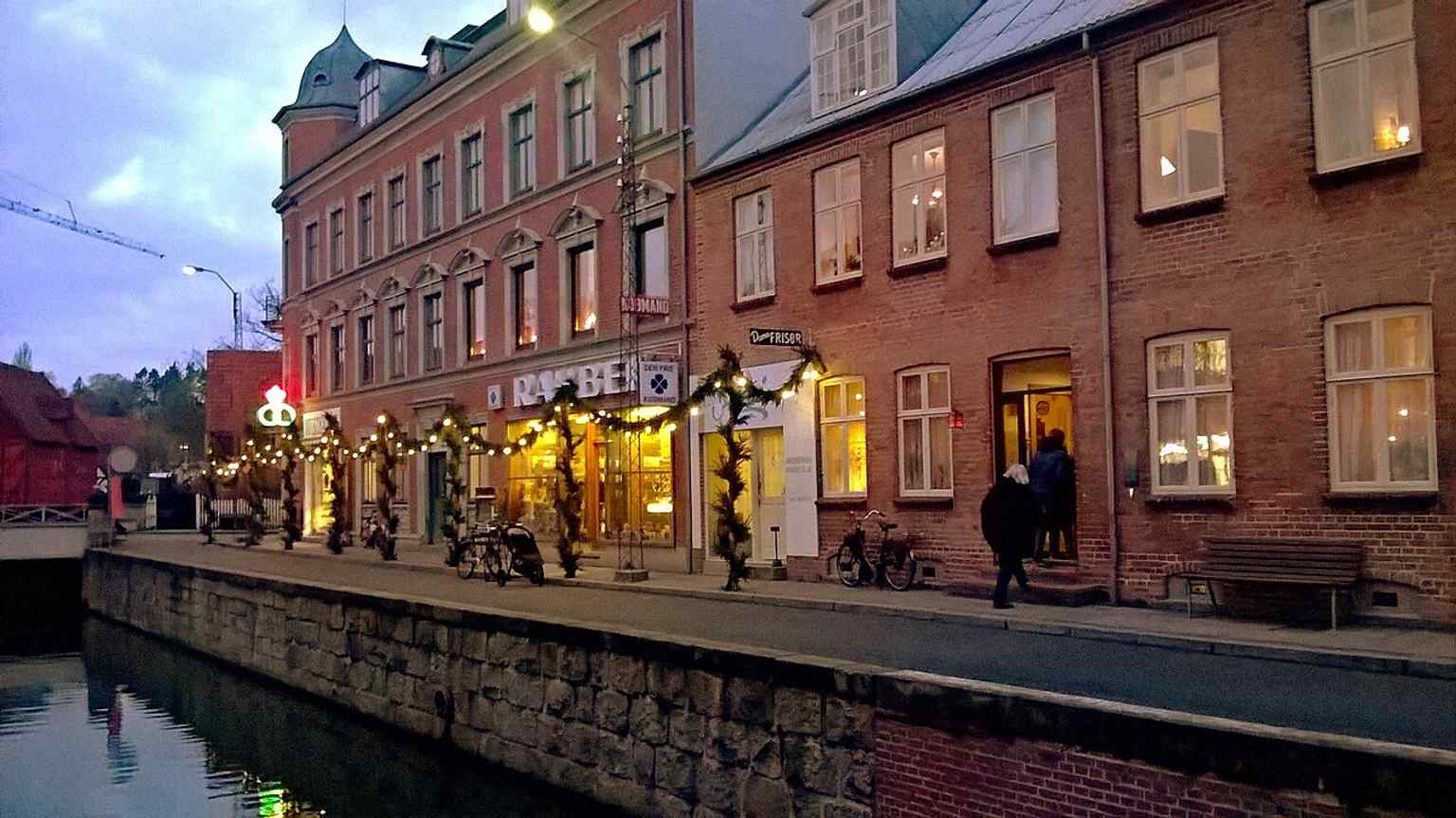
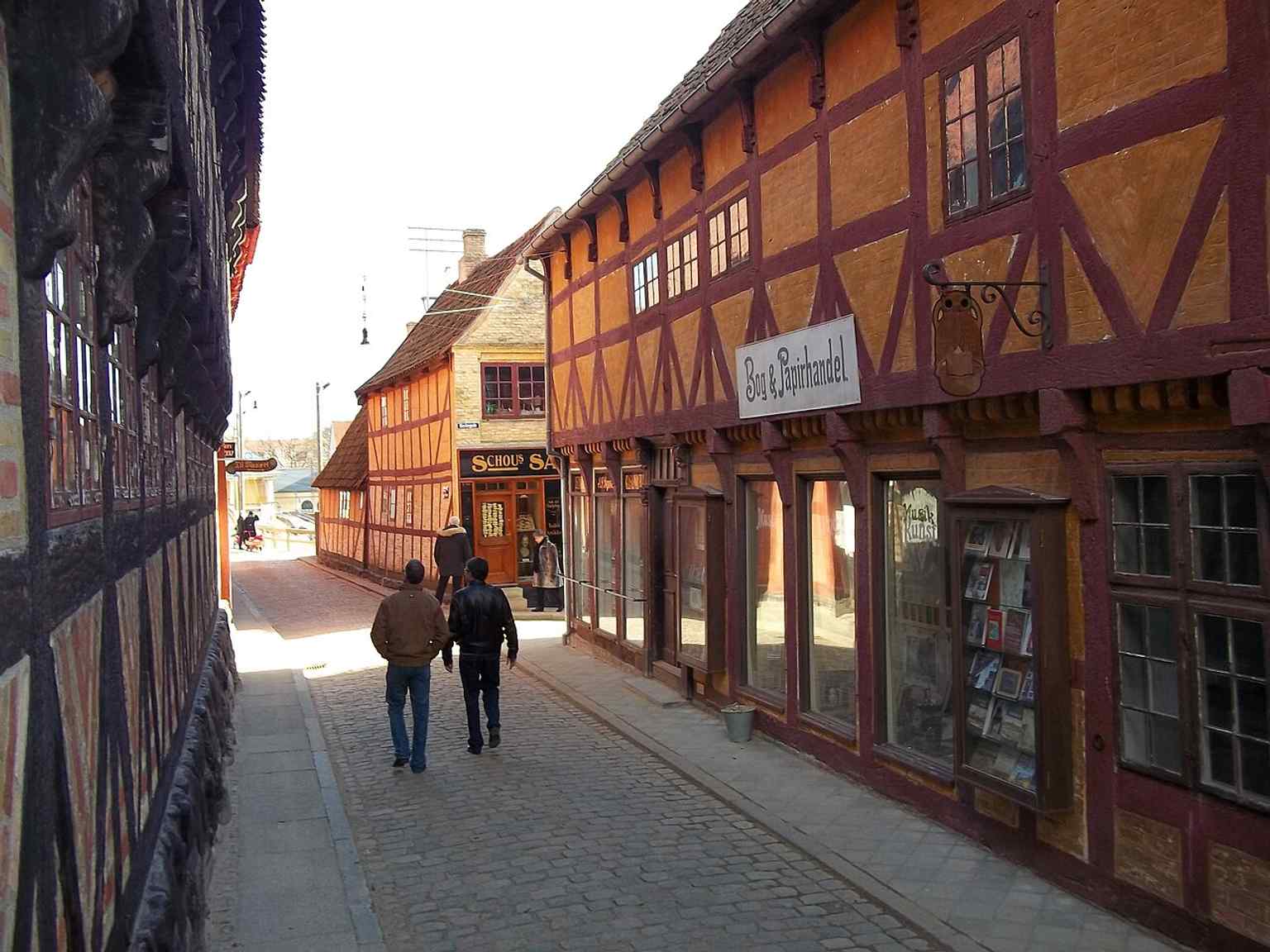
If you look at the street scene on your phone, you’ll catch the museum’s real magic: not one monument, but an entire everyday world of shopfronts, doors, windows, and corners where ordinary life once unfolded. That living approach inspired similar museums later in Bergen and Åbo, now Turku, so Aarhus quietly started a whole movement.
If you want to go inside later, Den Gamle By is open every day from ten in the morning to five in the afternoon.
This place proves that preserving history can be an act of imagination, not just storage.
When you’re ready, continue on toward A-Ro-S, where another kind of time machine is waiting.