
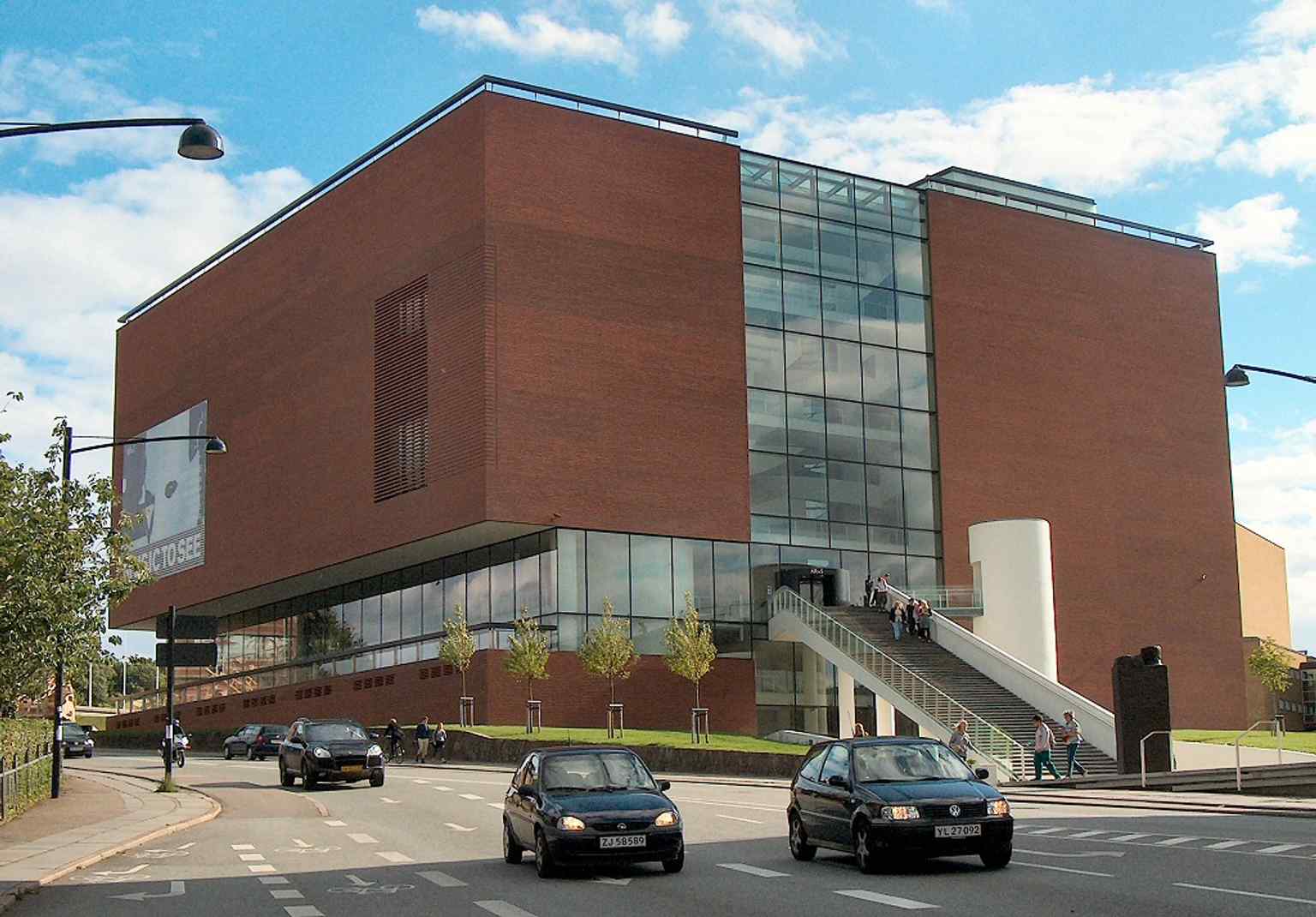
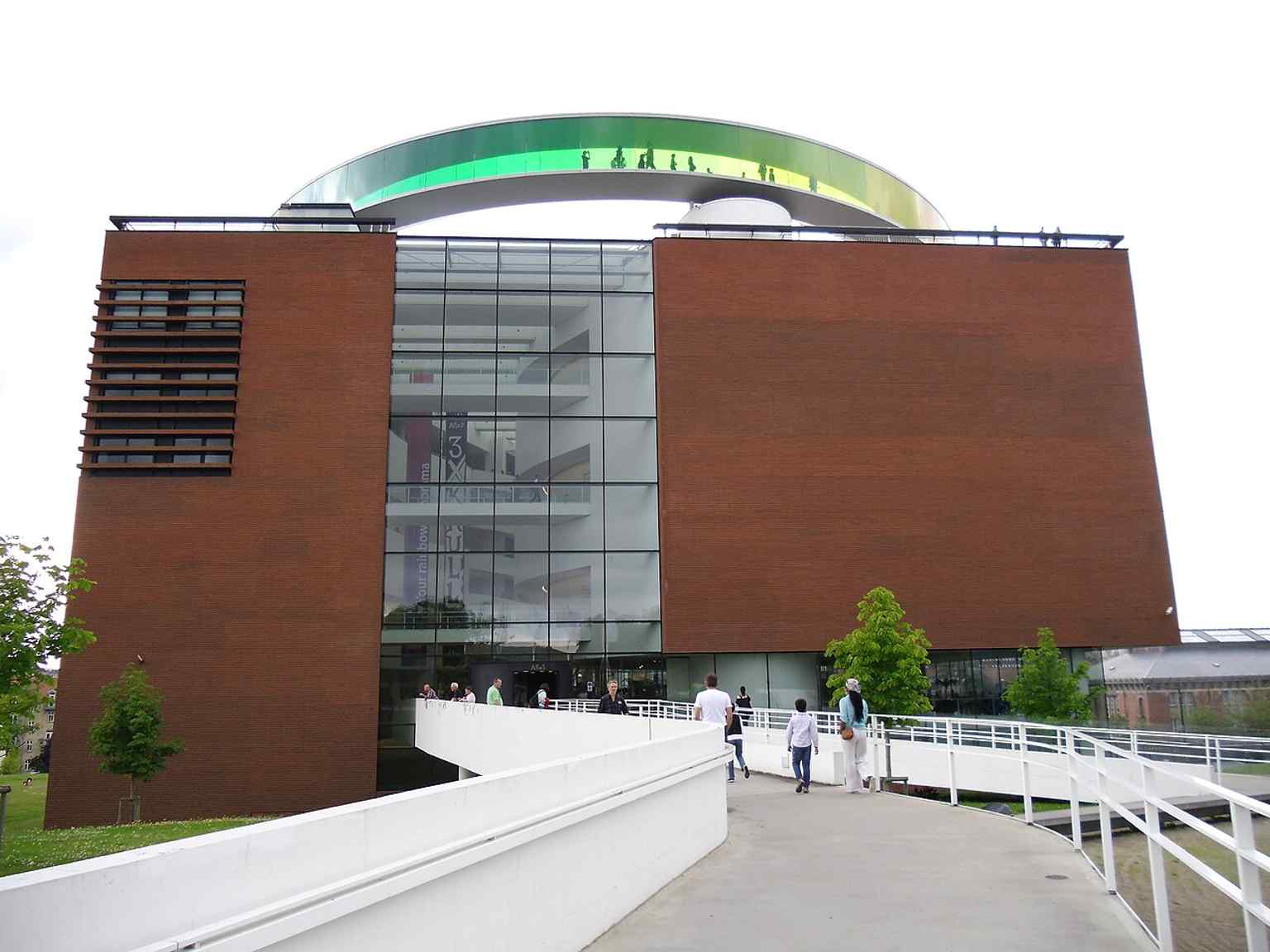
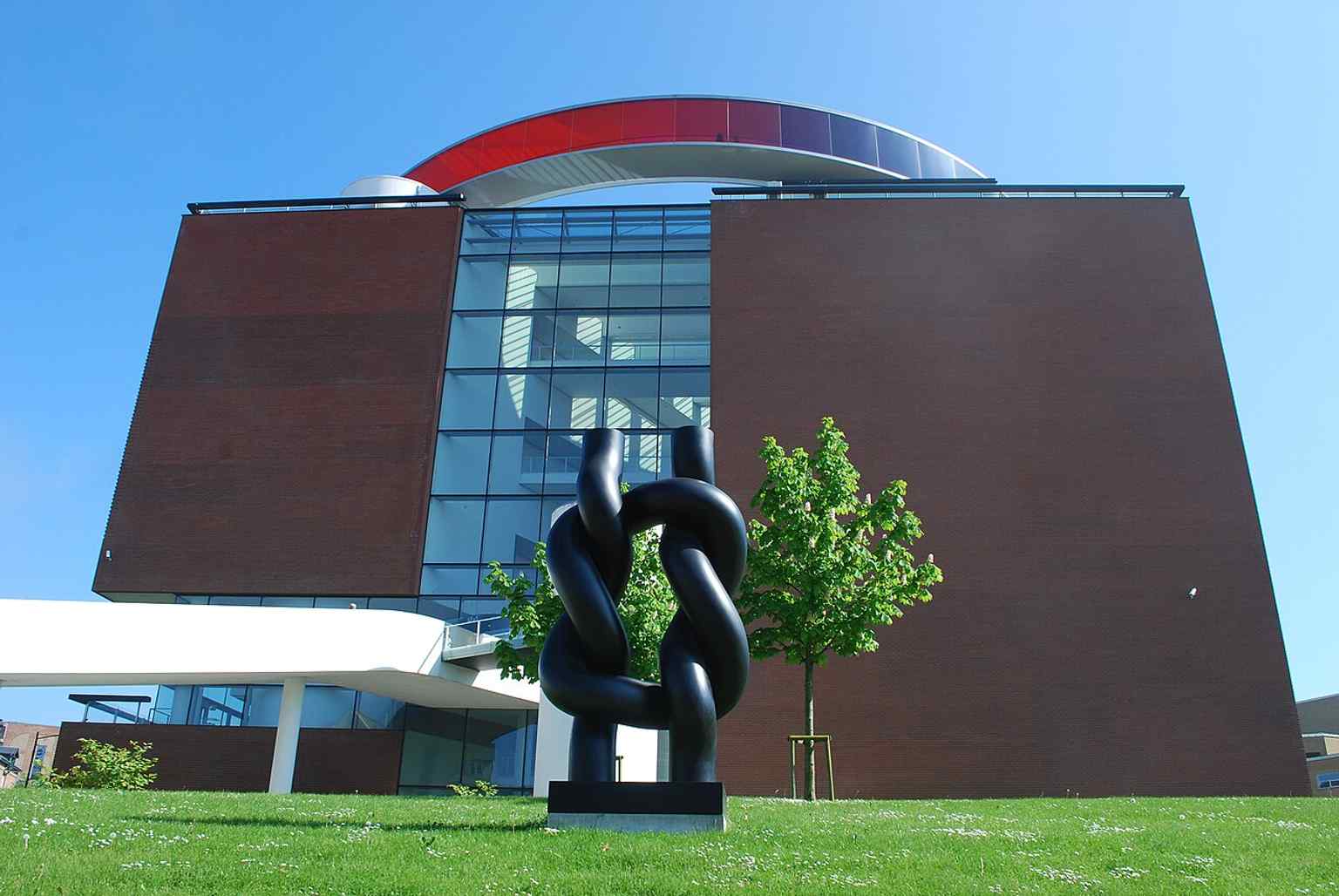
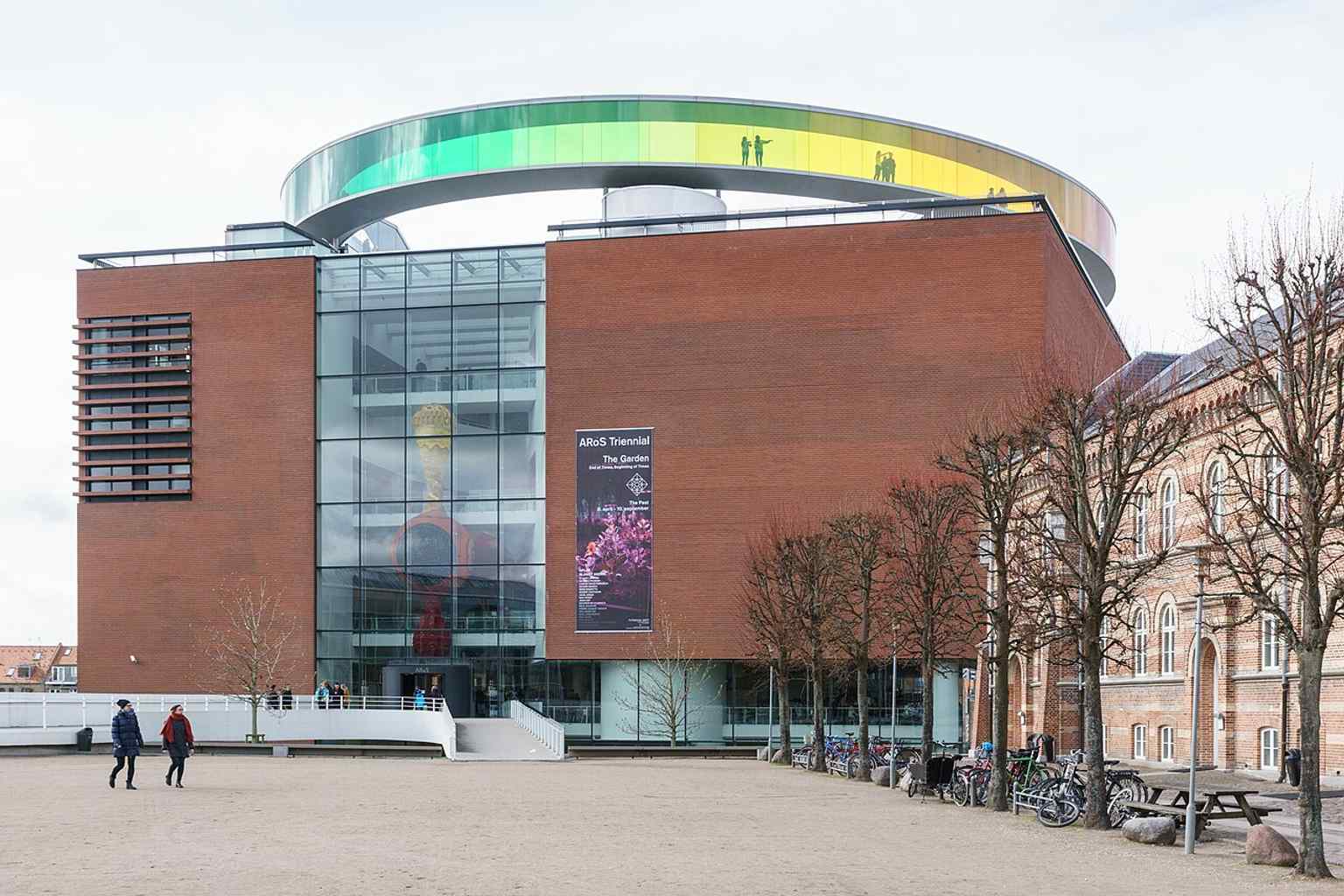
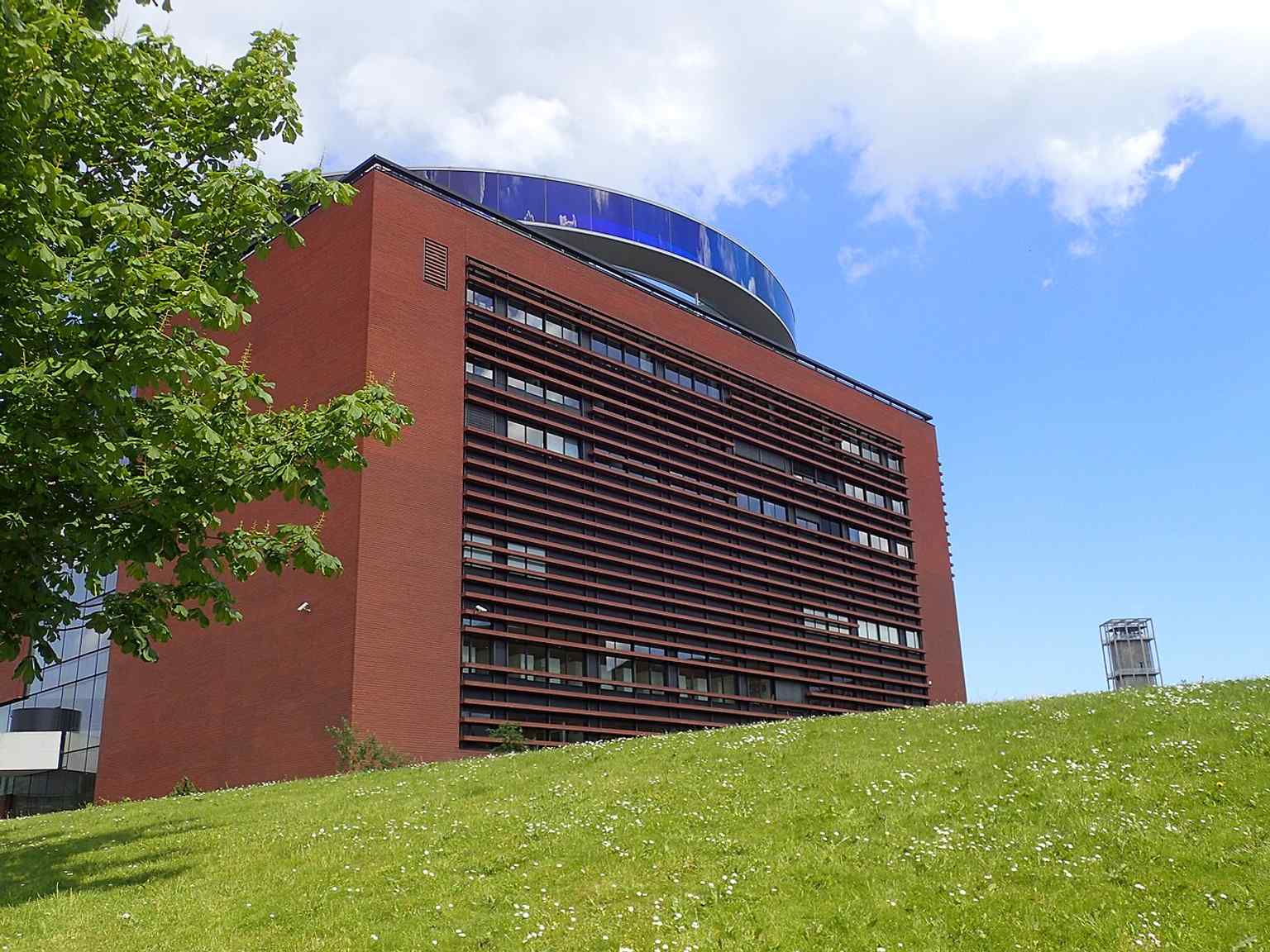
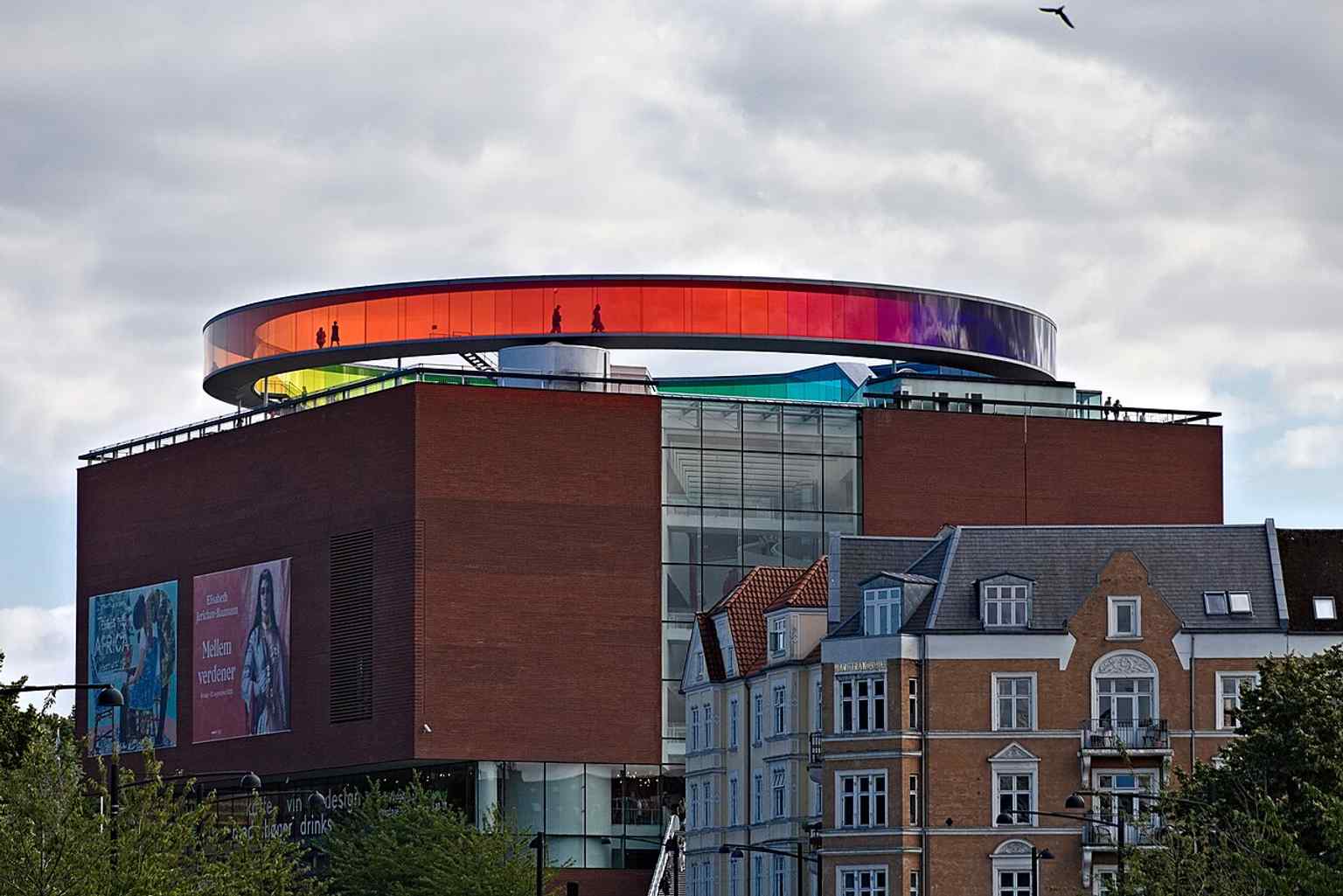
On your right stands a massive reddish-brick cube, sharply squared and almost fortress-like, topped by a circular ring of colored glass that hovers above the roof.
This is ARoS Aarhus Art Museum - pronounced A-ros - and modesty has never really been its thing. With ten floors and about twenty thousand seven hundred square meters inside, it ranks among the biggest art museums in northern Europe. But the story starts much smaller: in eighteen fifty-nine, Aarhus opened the first public art collection outside Copenhagen, after a local art society led by Emmerik Høegh-Guldberg worked to, as they put it, spread a more common feeling for art and its creations. That is a very nineteenth-century sentence, but the ambition still holds up.
The museum spent time in a town hall attic near the cathedral, then outgrew that and moved again and again, because art collections behave a bit like book lovers... they never stop expanding. After a home near Mølleparken and another in Vennelystparken, the city finally gave the museum this central site on Vester Allé, on what used to be called Poorhouse Hill. Schmidt Hammer Lassen designed the current building, and it opened on the seventh of April, two thousand and four.
The design has a little literary swagger. The cube measures fifty-two by fifty-two meters and rises to about fifty meters high. Its layout nods to Dante’s Divine Comedy, the medieval poem about a journey through the afterlife: the basement stands for hell, and the roof stands for heaven. So yes, even the floor plan aims high.
Inside, the collection stretches from the Danish Golden Age to international contemporary art. There are more than eight thousand works, and some date back to seventeen seventy. You’ll find Danish artists like Eckersberg, Købke, Per Kirkeby, and Bjørn Nørgaard, along with international names such as Bill Viola, Pipilotti Rist, Mona Hatoum, James Turrell, and Ron Mueck. One of the museum’s best-known works is Mueck’s Boy, a four-and-a-half-meter-tall sculpture of a crouching child in underpants... unsettling, tender, and impossible to ignore.
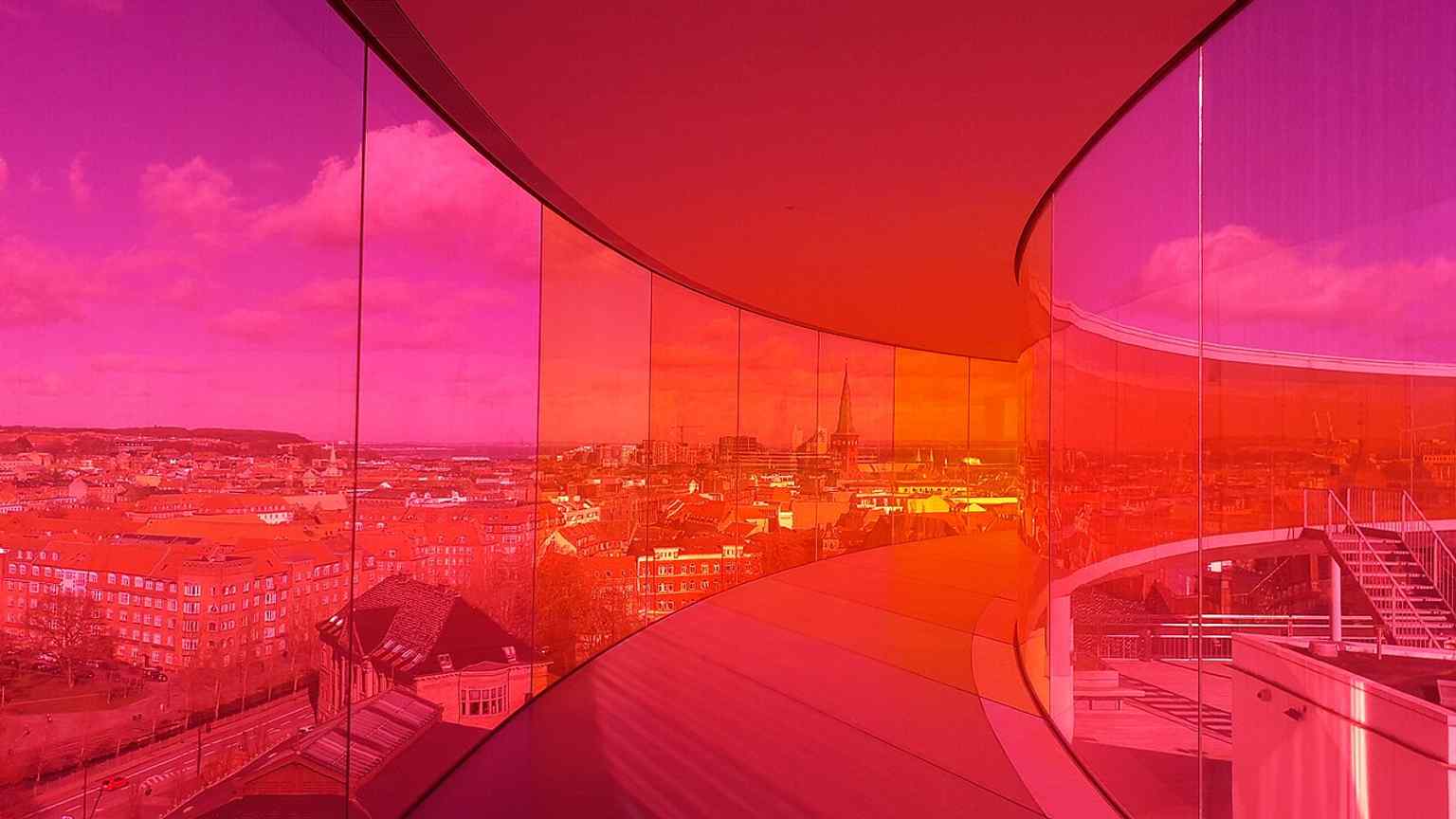
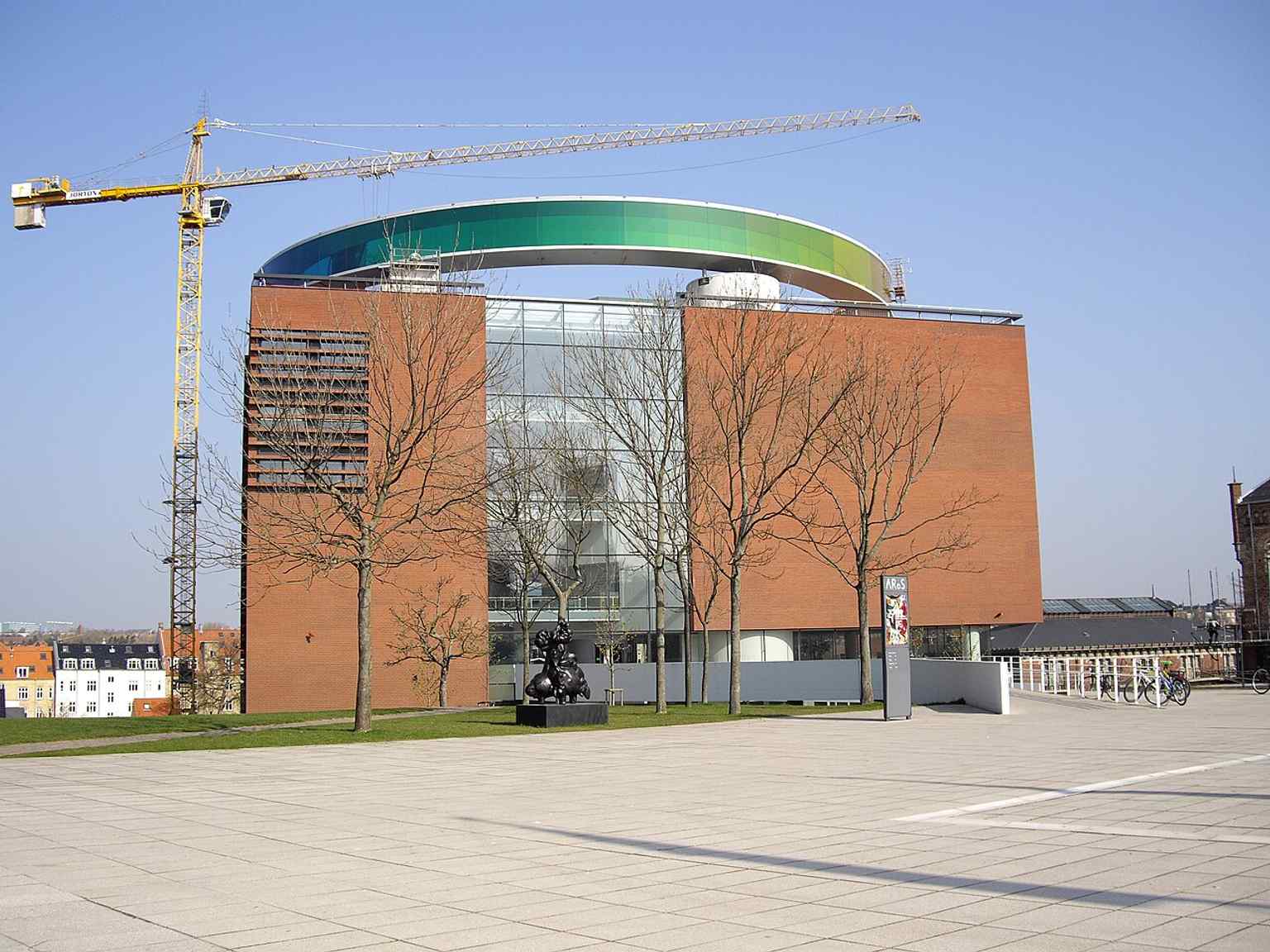
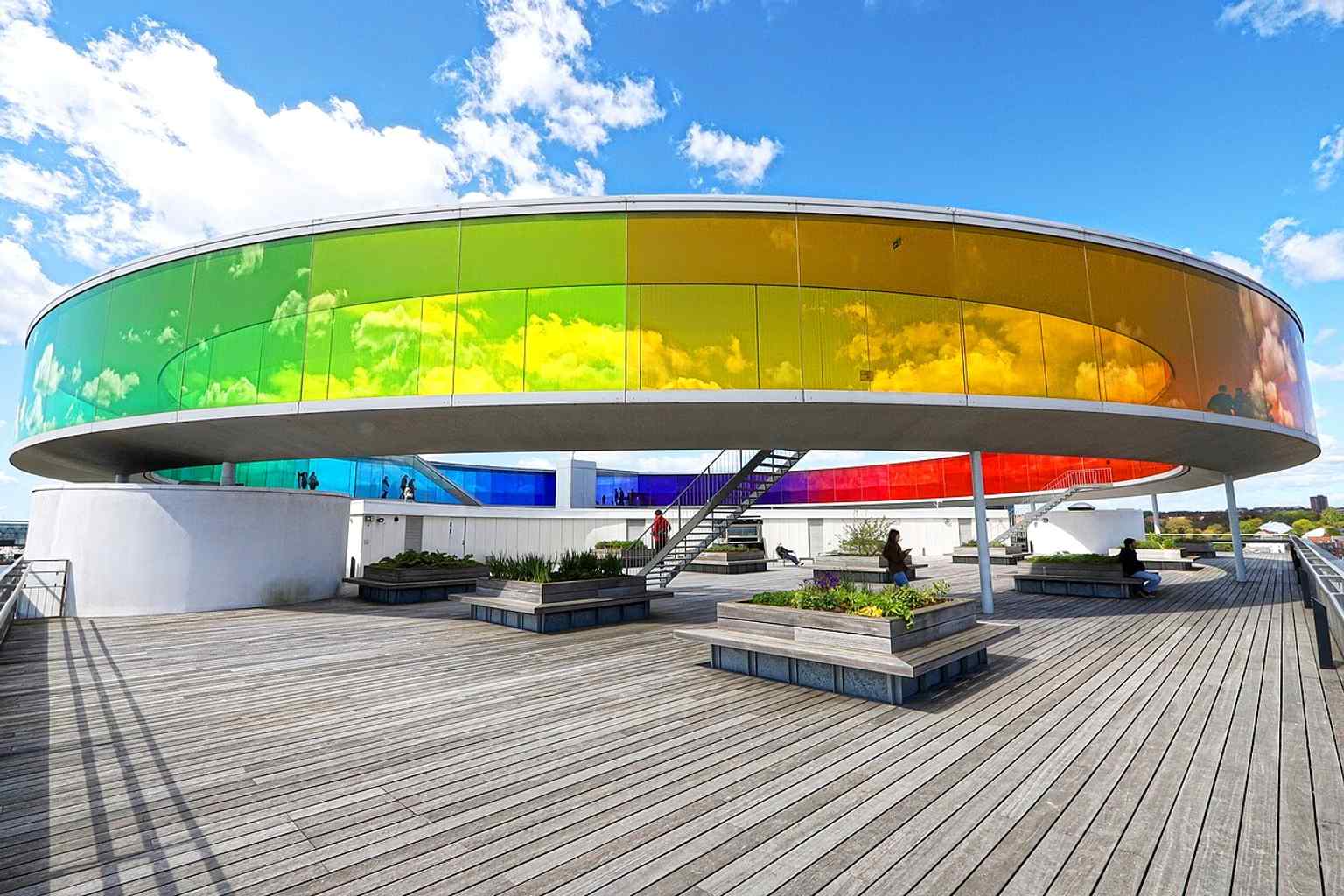
Then came the crown. In twenty eleven, Olafur Eliasson’s Your rainbow panorama opened on the roof: a fifty-two-meter-wide circular walkway, lifted on slim columns, wrapped entirely in colored glass. It turned the museum from admired building into city icon. If you want a quick visual of that transformation, the before-and-after image in the app shows ARoS just before the rainbow ring arrived. If you look at the interior photo on your screen, you can see how that glass turns the city into a slow-moving band of color.
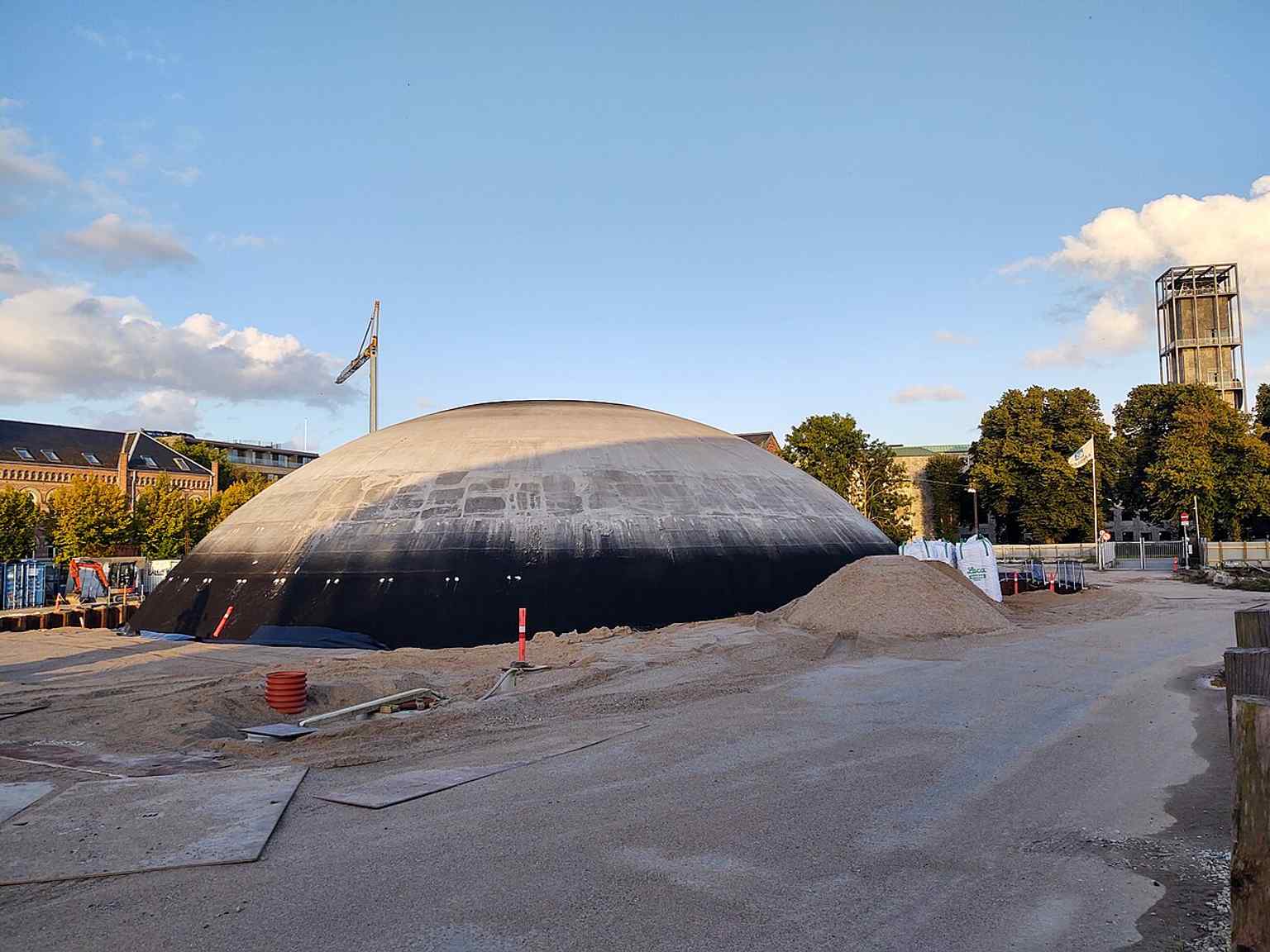
ARoS keeps changing, too. An underground expansion called The Next Level is on the way, centered on James Turrell’s The Dome, a Skyspace - that means a room designed so light and the framed sky become the artwork itself - planned for completion in June twenty twenty-six. In twenty twenty-three, about six hundred twenty-four thousand people came here, including visitors to the galleries, shop, café, and orangery. Art may inspire the soul, but a museum café never hurts.
ARoS feels like Aarhus deciding that public art should be generous, ambitious, and just a little theatrical.
If you want to go inside, it’s open daily from nine A-M to eight P-M on weekdays, and from nine A-M to five P-M on Saturdays and Sundays.
When you’re ready, continue toward the Business Archives for a very different kind of collection.






.jpg)


