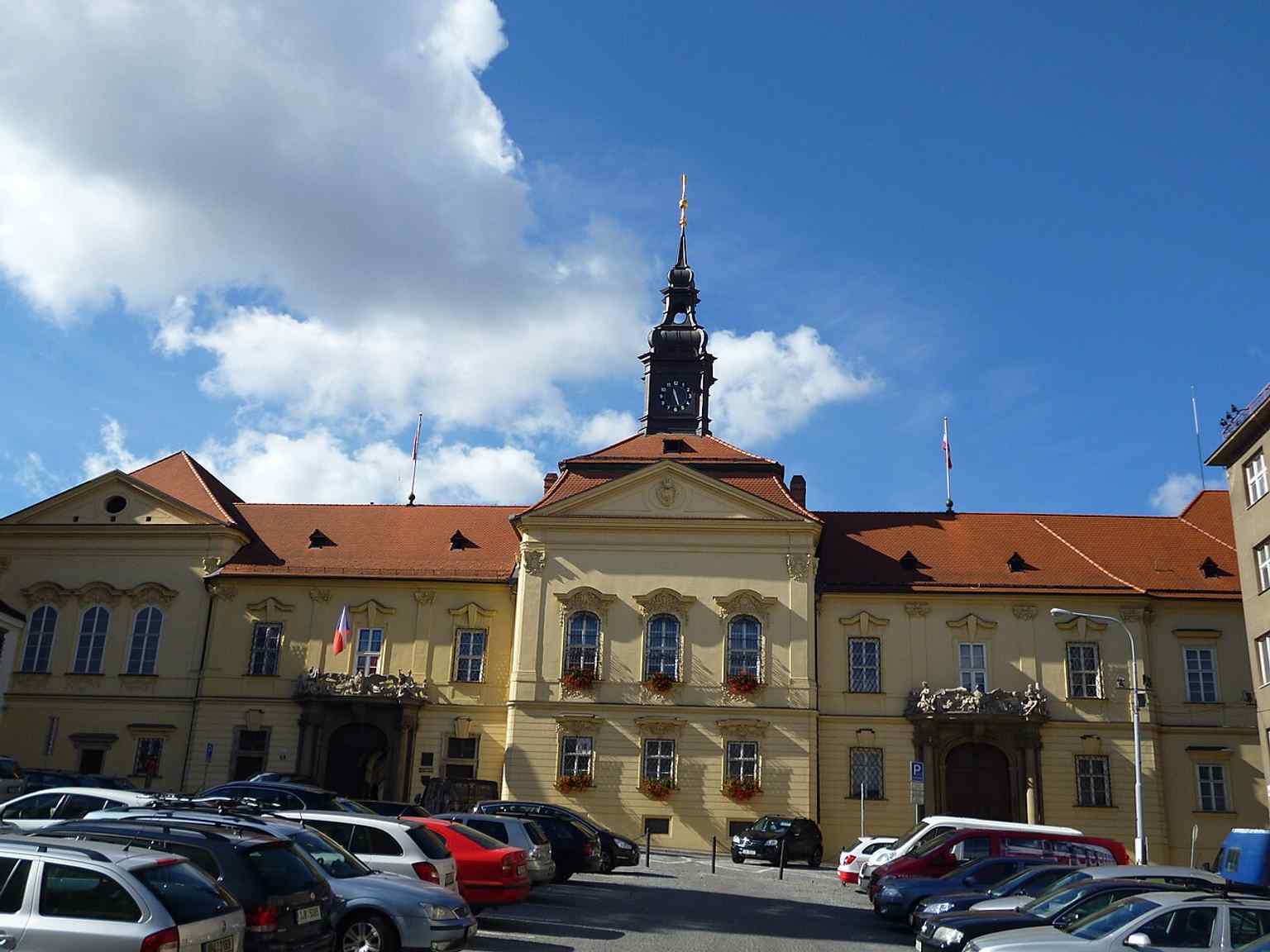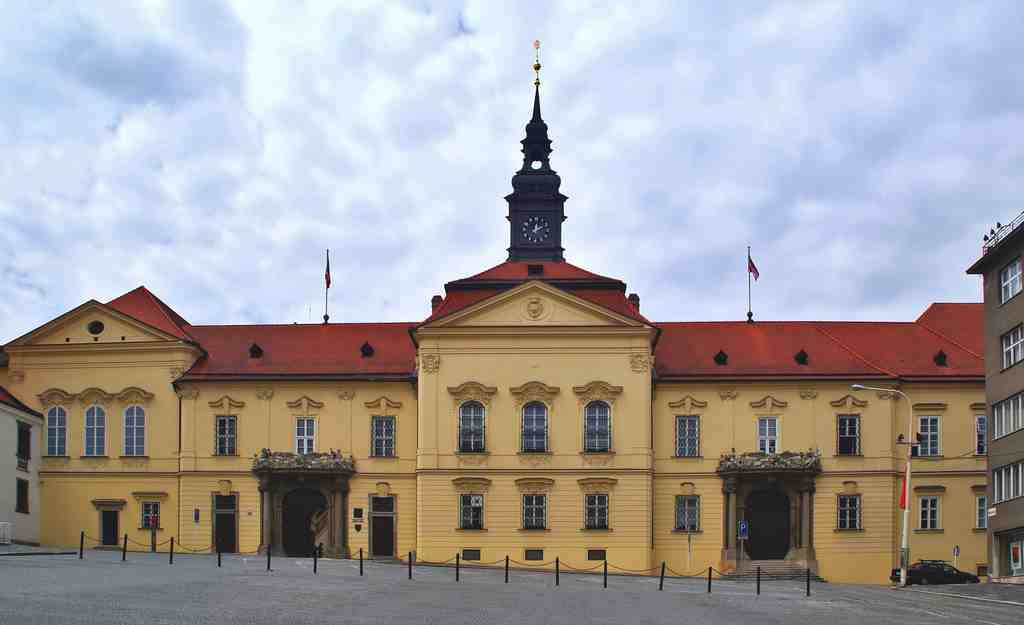
On your left, the New Town Hall is a long pale Baroque facade of stucco and stone, arranged in orderly rows of windows and centered on a balcony above the main portal.
This is one of Brno’s clearest examples of old sacred ground learning new paperwork. These were once Dominican grounds; over centuries, monastery space turned into the working engine of Moravian government, and then, in nineteen thirty-five, into Brno’s city hall.
The political story here started early. By the second half of the thirteenth century, meetings and court sessions already gathered in the Dominican chapter hall - the room where monks handled internal business. Then Charles the Fourth pulled Moravia’s provincial courts into one court in Brno in thirteen forty-eight, and this site gained real administrative weight. Prayer next door... law next door to that. Cities do love an efficient floor plan.
In the late sixteenth century, the old monastic rooms no longer suited the estates, so the Italian builder Pietro Gabri created a Renaissance assembly suite upstairs. If you ever get into the courtyard, look for the outdoor staircase with its twisted, almost theatrical columns. Locals notice it because almost everything else around it went fully Baroque later. Tradition says the architect Mořic Grimm liked those columns so much he spared that staircase alone when he rebuilt the complex. One survivor, stubbornly elegant.
The man I’d pin to this place is Karel the Elder of Žerotín. In sixteen nineteen, during one of Moravia’s biggest political crises, he argued here for neutrality while the Bohemian estates fought the Habsburgs. He warned that the Czechs were trying to make themselves famous by destroying their own country. He lost the vote. Moravia joined the uprising, and after White Mountain the punishment was harsh. In the courtyard, his bust now stands as a monument to the man who was right a little too early.
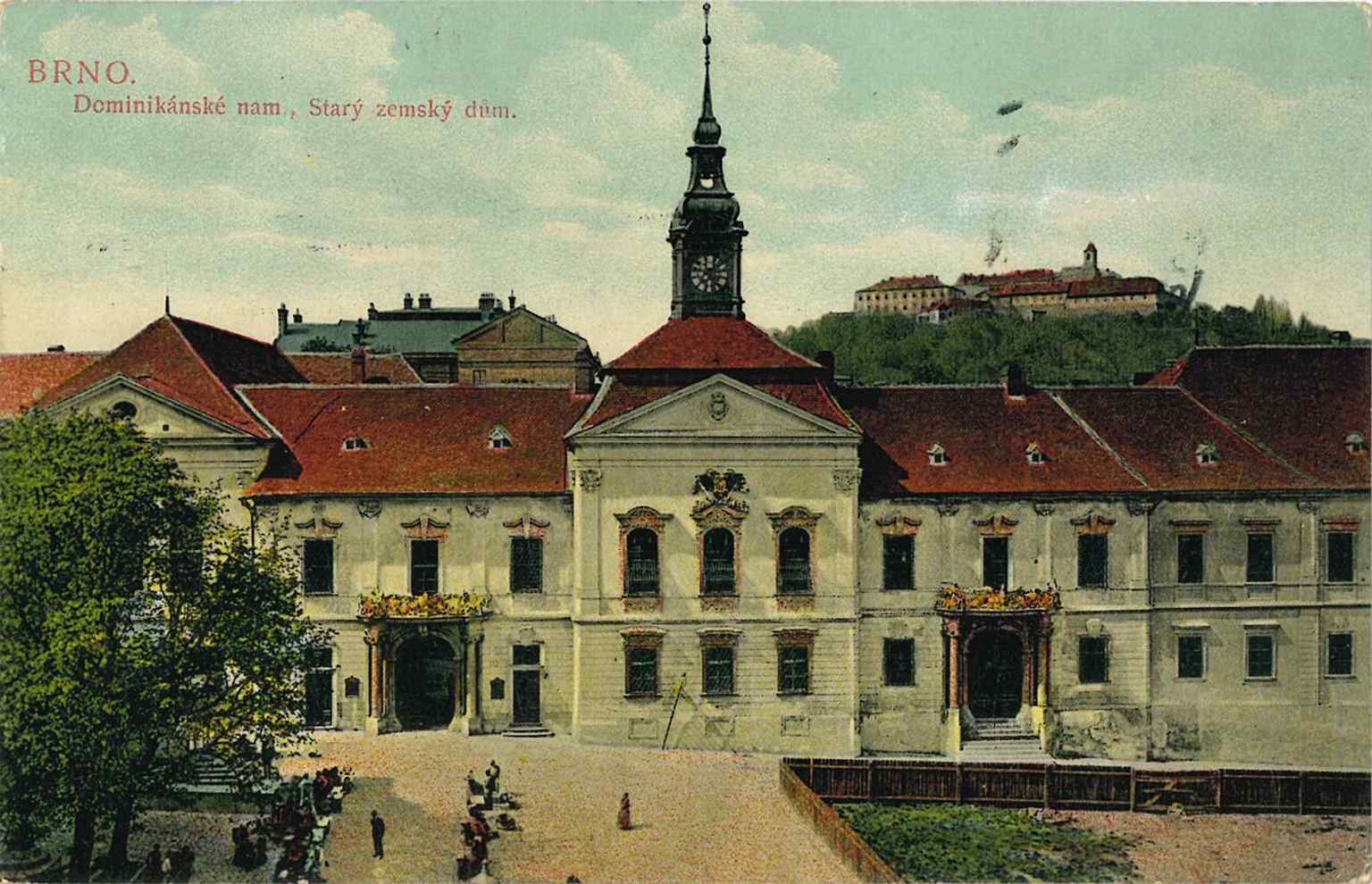
The facade you see now mostly comes from the eighteenth century, when Grimm gave the complex its grand Baroque front on Dominikánské Square. If you want a neat little time jump, check the archival image in the app; the square changes, but this building still runs the scene.
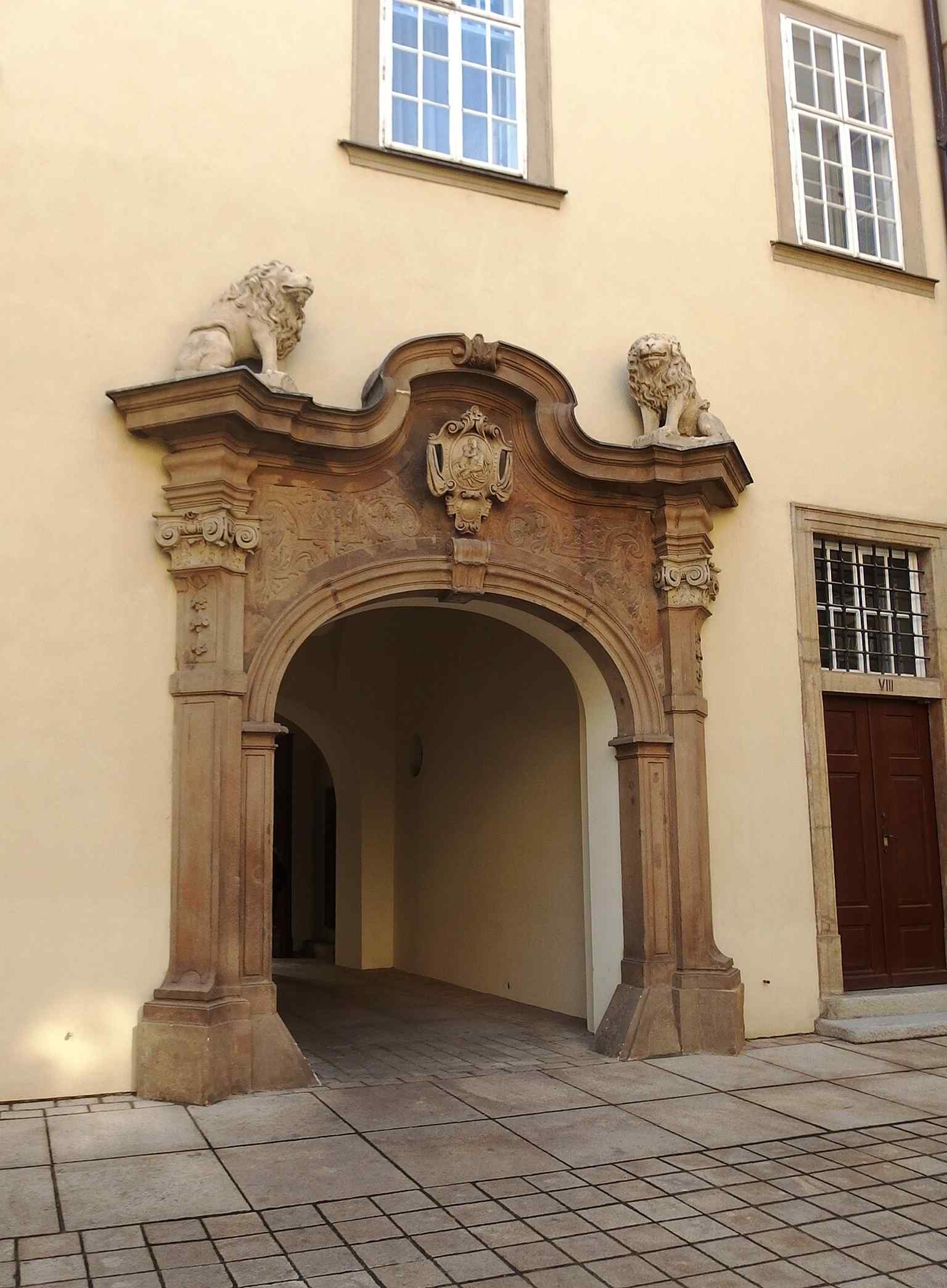
Inside, the old assembly hall later carried a painted slogan that basically said civic virtue makes Moravia flourish - a political message wrapped in Baroque grandeur. Then the army took over in the late eighteenth century, damaged the interiors, and even used parts of the building for storage and soup kitchens. Restoration came much later, with a bit of archival detective work rescuing lost wall paintings. If you look at the portal detail on your screen, you’ll see another clue that this place kept absorbing older Brno into itself.
Even this balcony holds layered memory: Hitler addressed crowds from one side in nineteen thirty-nine; Queen Elizabeth the Second greeted Brno from the other in nineteen ninety-six. Same stone, very different message.
Next, we leave public power for private ambition at the House of the Lords of Kunštát. If you want to come back inside, the building usually opens Monday and Wednesday from eight to five, and Friday from eight to noon.