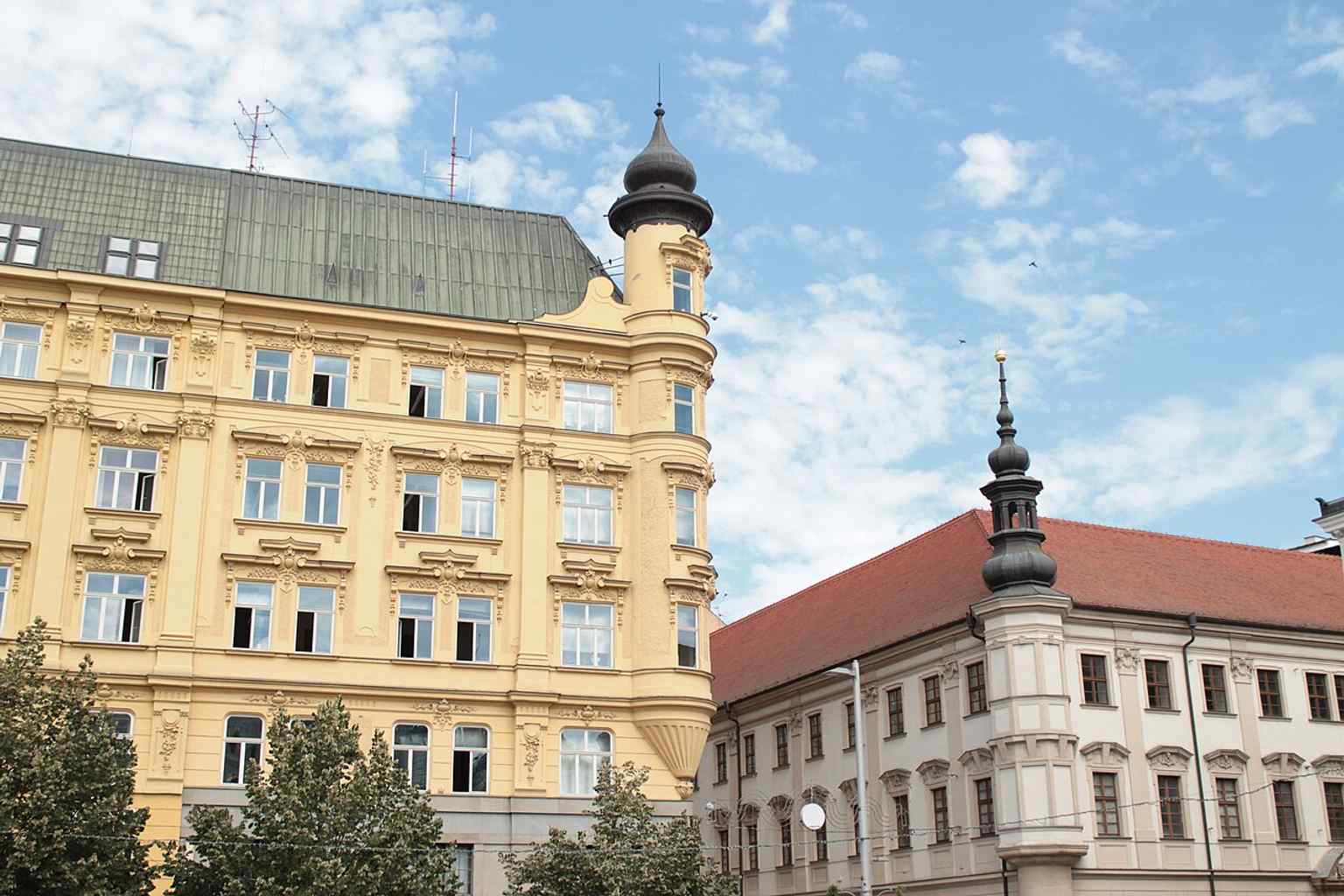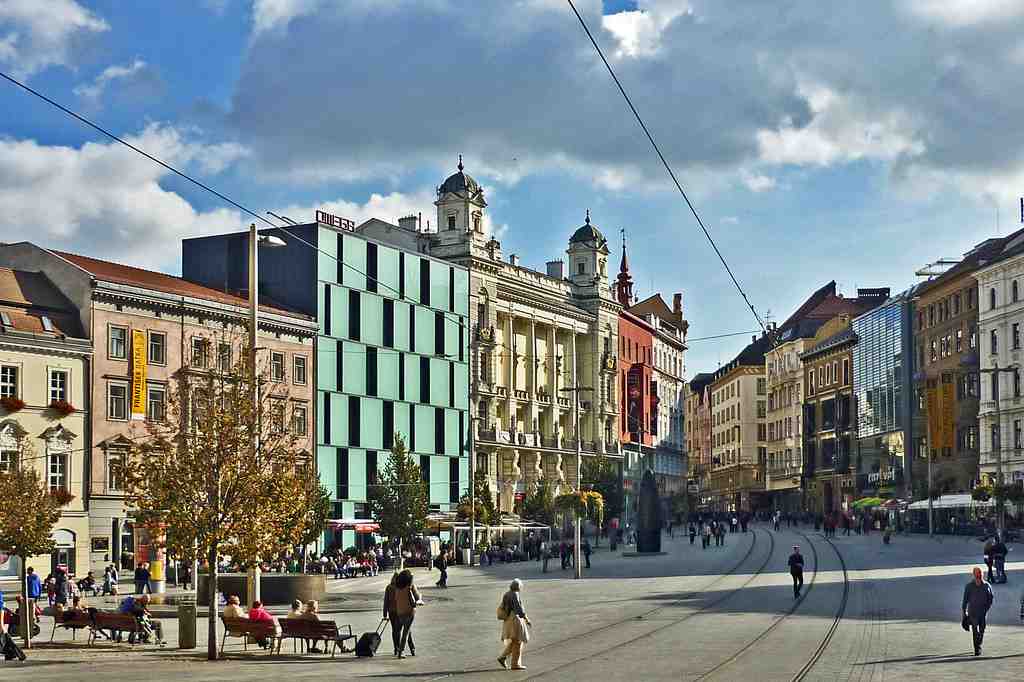
On your right, Freedom Square opens as a broad stone-paved triangle, punctuated by a dark polished granite clock shaped like a bullet and a low circular bronze fountain.
This is Brno’s center of gravity... and also its best example of a city rewriting itself in plain sight. The square took shape in the thirteenth century where three trade routes crossed, which explains its odd triangular form. Now seven streets feed into it, and for centuries merchants, nobles, tramlines, protesters, and planners have all tried to claim the same patch of ground.
What makes this place so Brno is that every era removed something and added something else. Rich townsmen built houses here in the Middle Ages. A plague column rose in sixteen seventy-nine and became the square’s landmark. Saint Nicholas Church stood here too, until the city demolished it in the late eighteenth century. If you look down carefully, locals know to watch for the modest brass line in the paving that marks the church’s footprint. Most people step over it without realizing they’ve just crossed a vanished building.
And under even that older layer, archaeologists found something less dignified and more honest: a twelfth- to thirteenth-century ironworks and smithy. So beneath Brno’s ceremonial heart lay a dirty industrial settlement of slag, furnaces, and hammering metal. A nice reminder that civic grandeur usually has soot under its fingernails.
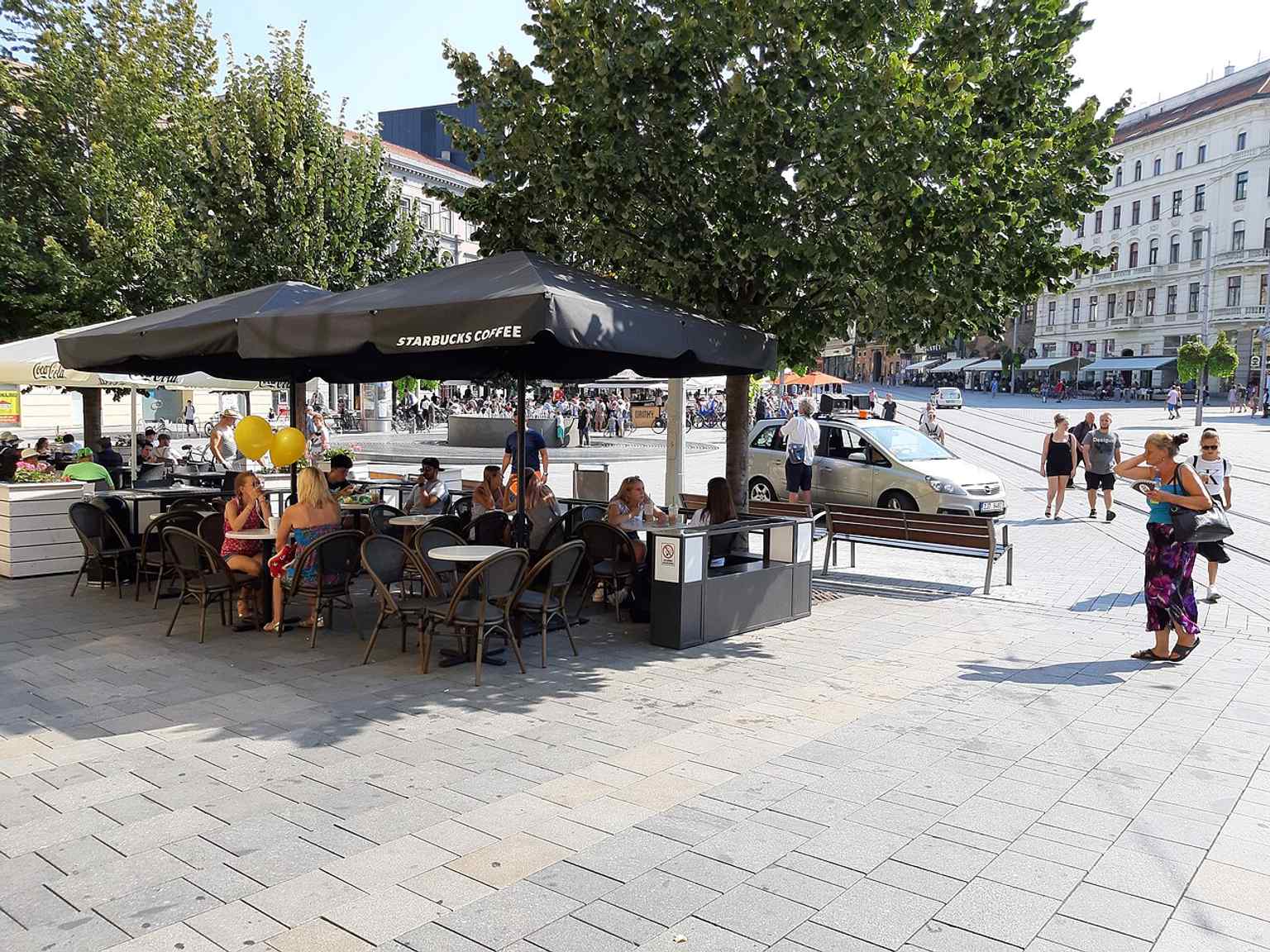
If you glance at the image on your screen, you can see how the modern paving turns the whole square into one open urban stage, with old power and new design sharing the same frame.
Here’s the question that hangs over the place: if a square can lose a church, lose a fountain, and even lose its name several times, what exactly makes it the same square? This one began as Lower Market, later became Great Square, then Emperor Franz Joseph Square, then Hitler Square, then Viktoria Square, and finally returned to Freedom Square. The stones stayed put; the meaning kept changing.
The buildings around you tell the same story. Klein Palace, raised by the railway-building Klein family in the eighteen forties, advertised their iron empire with bay windows made of cast iron rather than stone. Nearby, the House of the Lords of Lipá passed to General Louis Raduit de Souches after he helped defend Brno. Across the square, the house called U čtyř mamlasů carries four giant figures straining under the facade; locals insist they look pained not by the balcony, but by the taxes.
Then there is the dark granite “clock” from two thousand ten. Officially it commemorates the Swedish siege and releases a glass marble every day at eleven o’clock. Unofficially... Brno has given it less ceremonial nicknames, because reading the time on it is nearly impossible and subtlety was not its strongest suit.
This square also remembers people caught in history’s rougher edits. During the air raid of April twelfth, nineteen forty-five, Theodor Růžička died here with other civilians, and bomb damage left one gap in the square for decades. In August nineteen sixty-eight, occupying forces wounded Marie Pauzerová here. In November nineteen eighty-nine, forty thousand people filled the square demanding change.
So this is not just a plaza. It is market, memorial, argument, and mirror. From here, the symbolic heart of Brno gives way to the offices and chambers that turned public energy into policy. We’ll head next to New Town Hall, where that governing machinery took a more official shape.