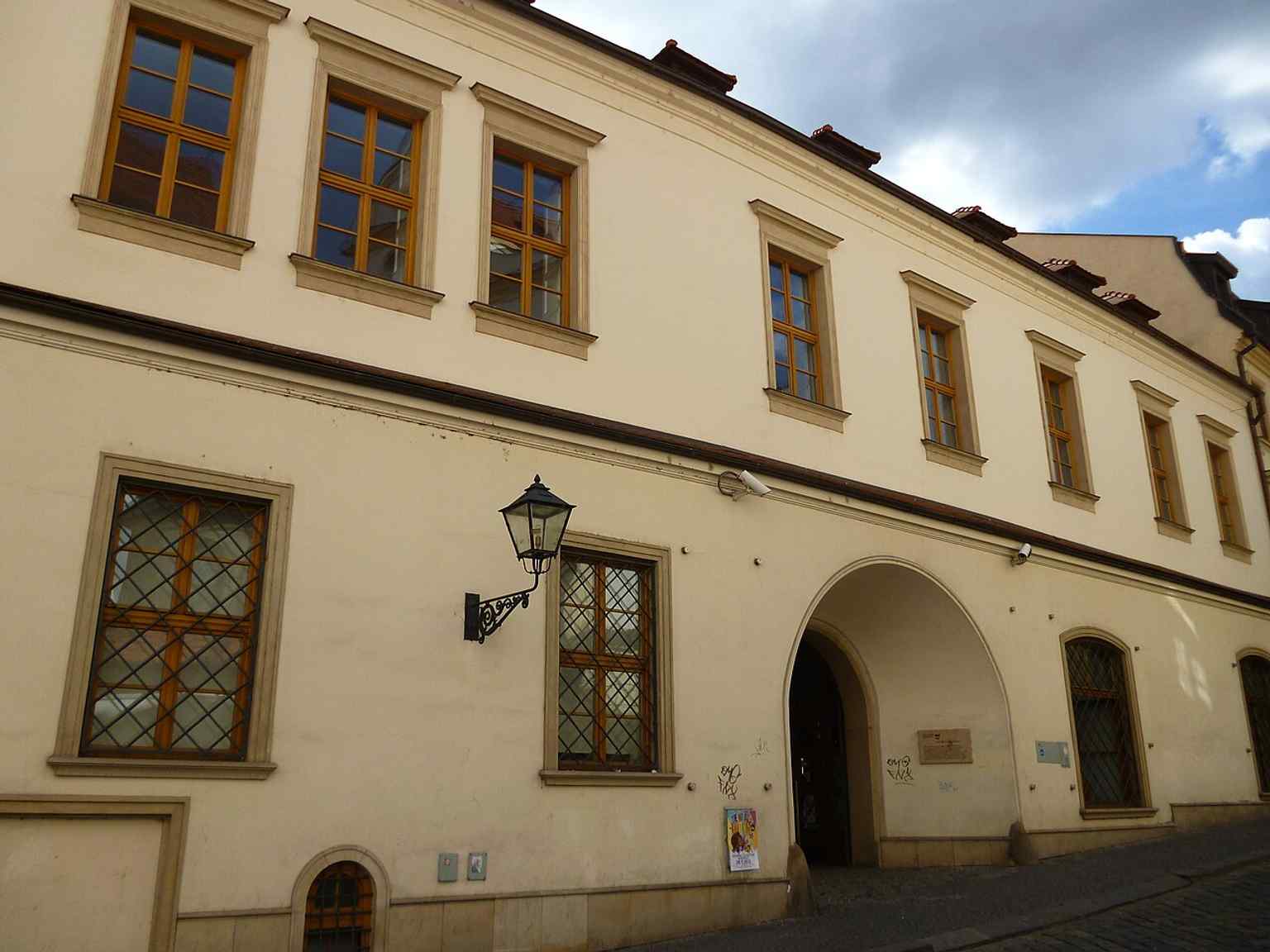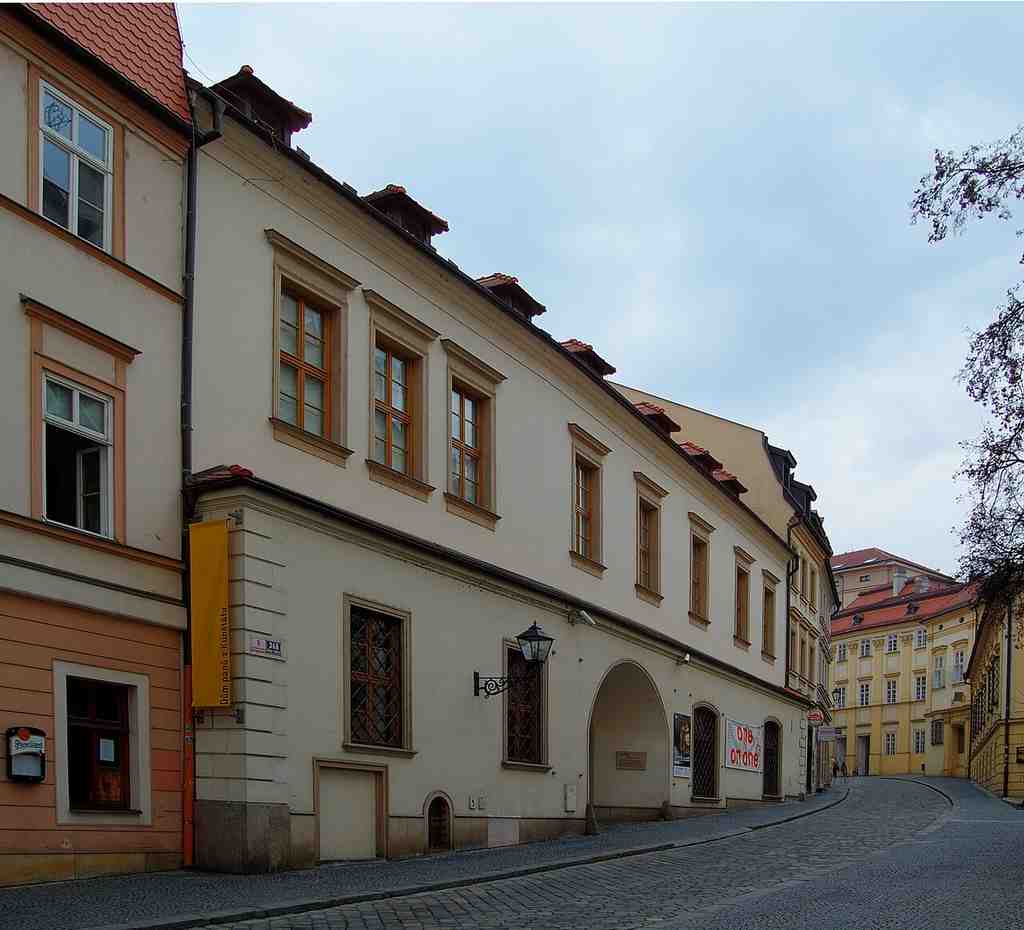
Look for a pale stone-and-plaster Renaissance façade, long and fairly rectangular, with an arched entry tucked into a house whose oddly irregular footprint tells on its much older past.
Brno rarely throws anything away if it can help it... and this house proves the point beautifully. Under this palace, archaeologists working in nineteen ninety-seven found traces of a much earlier town: settlement layers from the first half of the thirteenth century, plus a sunken structure from around the thirteenth to fourteenth century. So this address had a life centuries before the elegant Renaissance shell you see now.
A deed from fourteen thirty-two already names the site as area civitatis, literally “city ground,” which hints that this was no forgettable corner. By the fourteenth century, two separate town plots at the front had already been joined, and that awkward merger still shapes the building today. If Freedom Square taught us anything, it is that central Brno grows by accumulation, not by neat replacement.
One early owner here was Heralt of Kunštát. Later, Petr of Kunštát bought the neighboring house too. Then Jan of Pernštejn gave the place its big makeover between fifteen eighty-five and fifteen ninety-nine, turning those stitched-together medieval houses into a proper Renaissance residence. Some historians cautiously point to the Italian architect Giovanni Pontelli as the likely designer... cautiously, because old buildings enjoy keeping a few secrets.
In sixteen fifteen, Jeroným Václav of Thurn linked the complex through toward Starobrněnská Street, making it feel even more like a grand city seat. Then Julius of Salm and Neuburg took over in sixteen thirty-six, and the house became a social address for Moravian nobles. Naturally, Brno later made it practical again: in seventeen oh eight, the city bought it, and Moritz Grimm converted it into a market with about fifty little shops, the so-called Schmetterhaus.
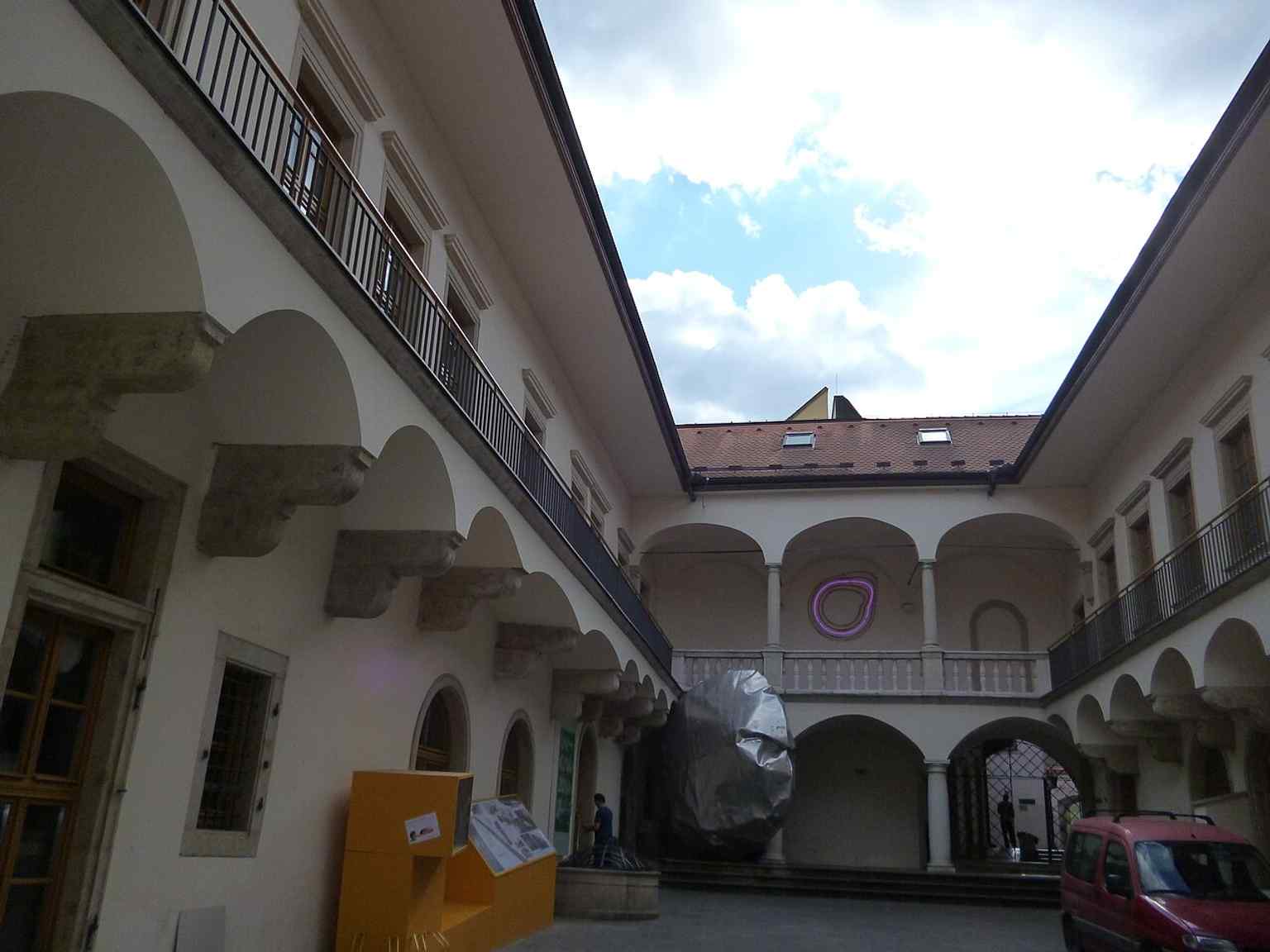
If you glance at the courtyard image in the app, you can see how those merged histories still show in the inner layout. Bombing damaged the house in nineteen forty-four, but reconstruction brought it back, and today the Brno House of Arts uses it for exhibitions.
Now lift your eyes from these domestic walls to the twin spires waiting above the city... the Cathedral of Saints Peter and Paul is our next stop, about a six-minute walk away. If you want to return, the exhibition spaces are usually open Tuesday through Sunday, from ten to six, and closed on Monday.