Moravian Square is a broad stone-paved and park-lined urban space, cut by transit lanes and marked by a towering dark-bronze rider on a horse with famously absurdly long legs.
What makes this square interesting is not just what you can see... but what vanished. The medieval walls and fortifications once ran through here, and they were not decorative scenery. They controlled movement, taxes, safety, and status: inside the walls meant protection and privilege, outside meant exposure. In that older Brno, the southern edge of this square, with Saint Thomas and the Augustinian monastery, sat inside the defenses. The broad northern parkland only appeared later, after the city tore the fortifications down.
So this openness is the story. Brno did not begin with a grand civic square here. It began with a military edge.
That edge started to dissolve in stages. Emperor Napoleon Bonaparte pushed the process along in eighteen oh nine, when he ordered the outer bastion belt dismantled after his campaign. A bastion, by the way, is one of those projecting defensive corners designed to give soldiers a better firing angle. Then Emperor Franz Joseph the First declared in eighteen fifty-two that Brno would no longer function as a fortress city, and in the eighteen sixties workers removed the inner belt as well. Suddenly, space that had been reserved for defense could become the city’s largest square.
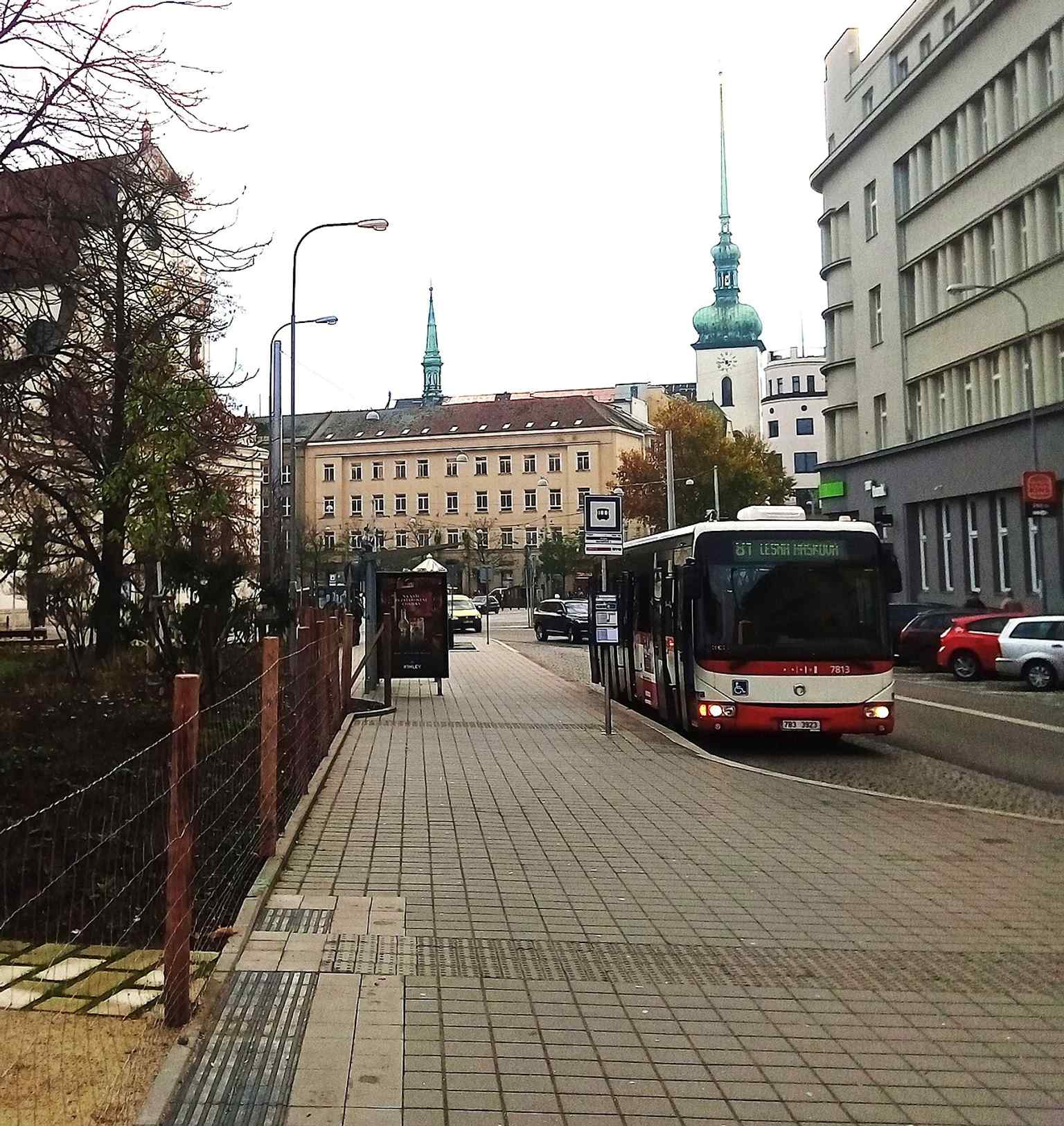
And cities rarely leave empty space alone. That would be far too restrained. In the nineteenth century, trams arrived, first as a horse-drawn line in eighteen sixty-nine, then as electric trams from nineteen oh one and nineteen oh three. If you glance at your screen, you can see how the square still works as one of Brno’s main transport knots today. A place built for keeping people out became a place designed to move them through.
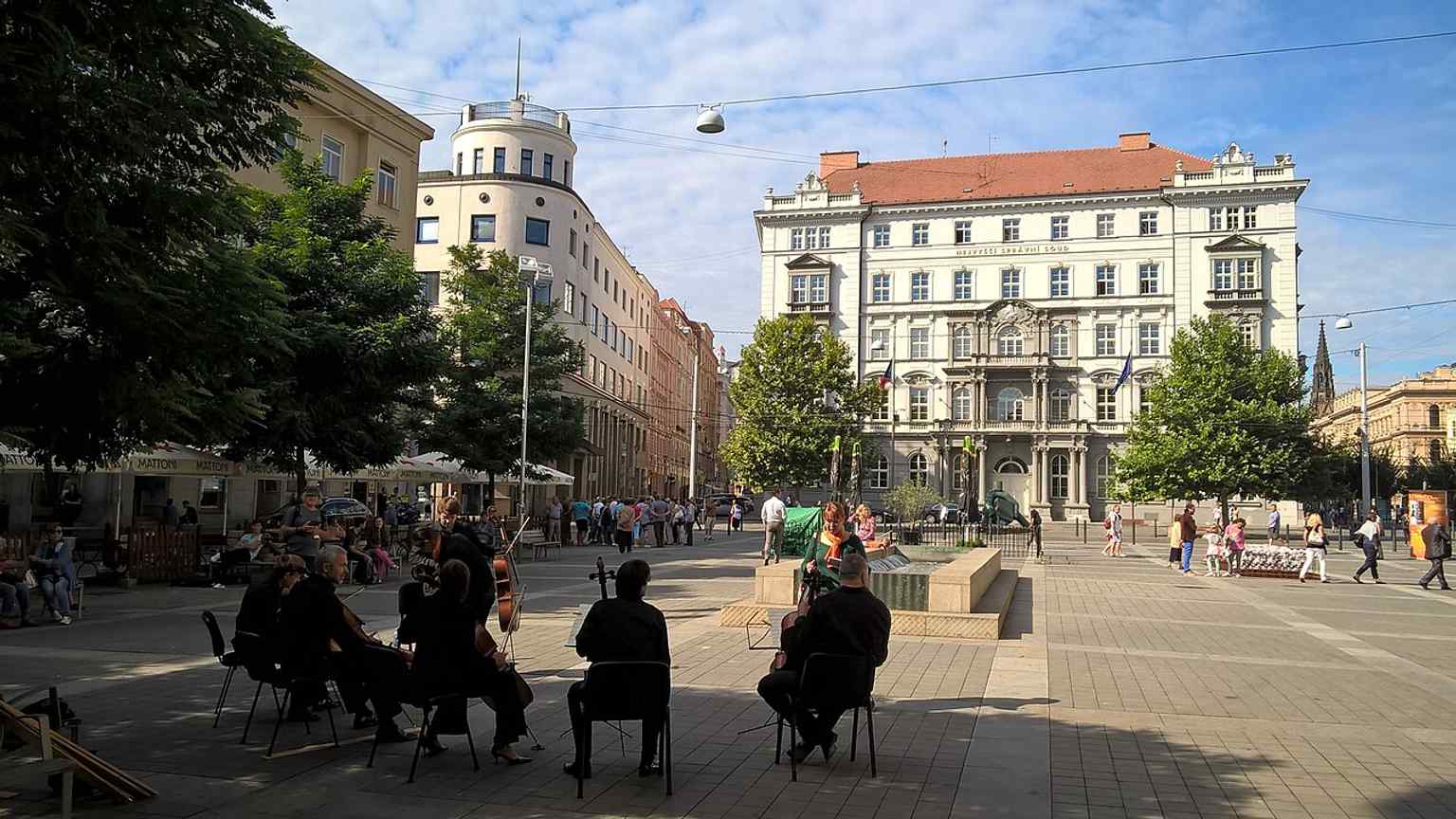
On one side stands the building that now houses the Supreme Administrative Court. It looks every bit the stern institution, but if you check the app image, you’ll see the façade of what began in eighteen sixty-nine as a luxury apartment palace commissioned by Moritz Kellner von Brünnheim. Later, the state took it over for school and financial offices. That’s Moravian Square in a nutshell: monastery, military edge, elite housing, bureaucracy, transit hub... all taking turns on the same patch of city.
The square also carries sharper memories. In nineteen sixty-nine, eighteen-year-old Danuše Muzikářová ran here from police violence during protests marking a year since the Soviet-led invasion. She was not even taking part in the demonstration itself. A shot struck her in the back of the head, and the case was never fully resolved. Her plaque on the court building is small, almost painfully so.
For all these changes in power, transport, and public life, one witness has held its ground at the southern edge: the Church of Saint Thomas. Even the giant rider nearby points us there in a roundabout way, because Jošt of Luxembourg, the man behind that sculpture, lies buried in that church. Let’s head over and meet the building that stood inside the old defenses while the rest of this square kept reinventing itself.
And since Moravian Square never closes, you can pass through it at any hour and still find the city mid-conversation.