
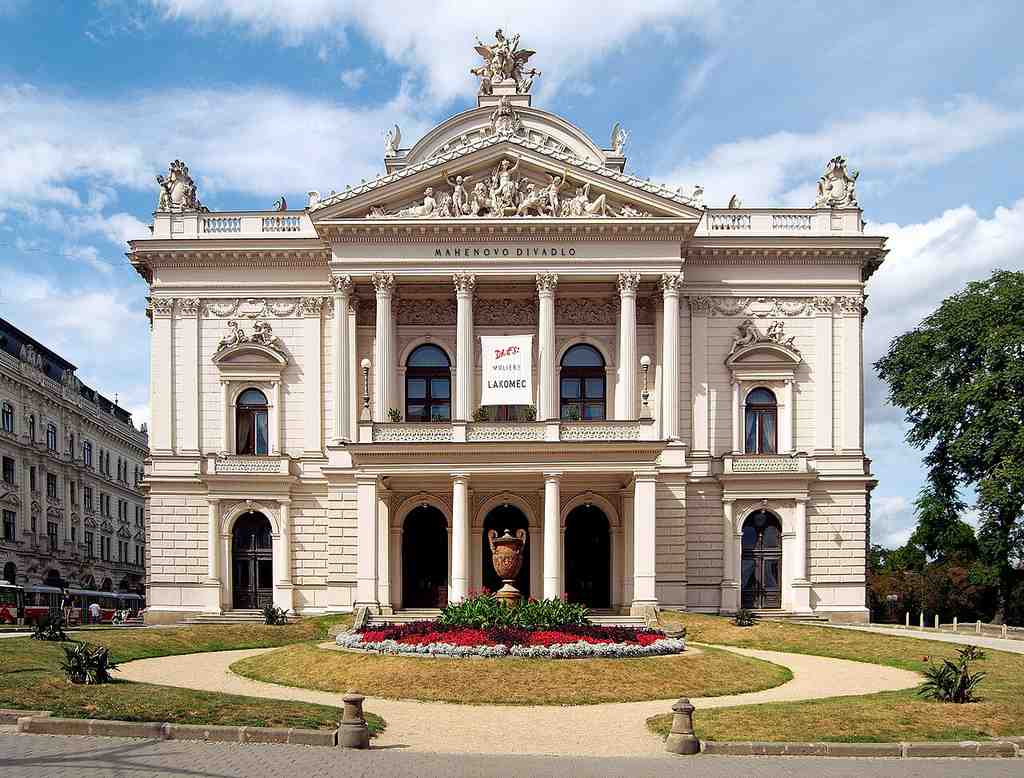
Look for the pale stone theater with a curved central façade, tall arched windows, and sculpted figures lined along the roof.
Mahen Theatre is one of those buildings that tells you Brno never relied on old prestige alone. It also liked a good experiment. Preferably a bold one with wires, generators, and a small chance of scandal.
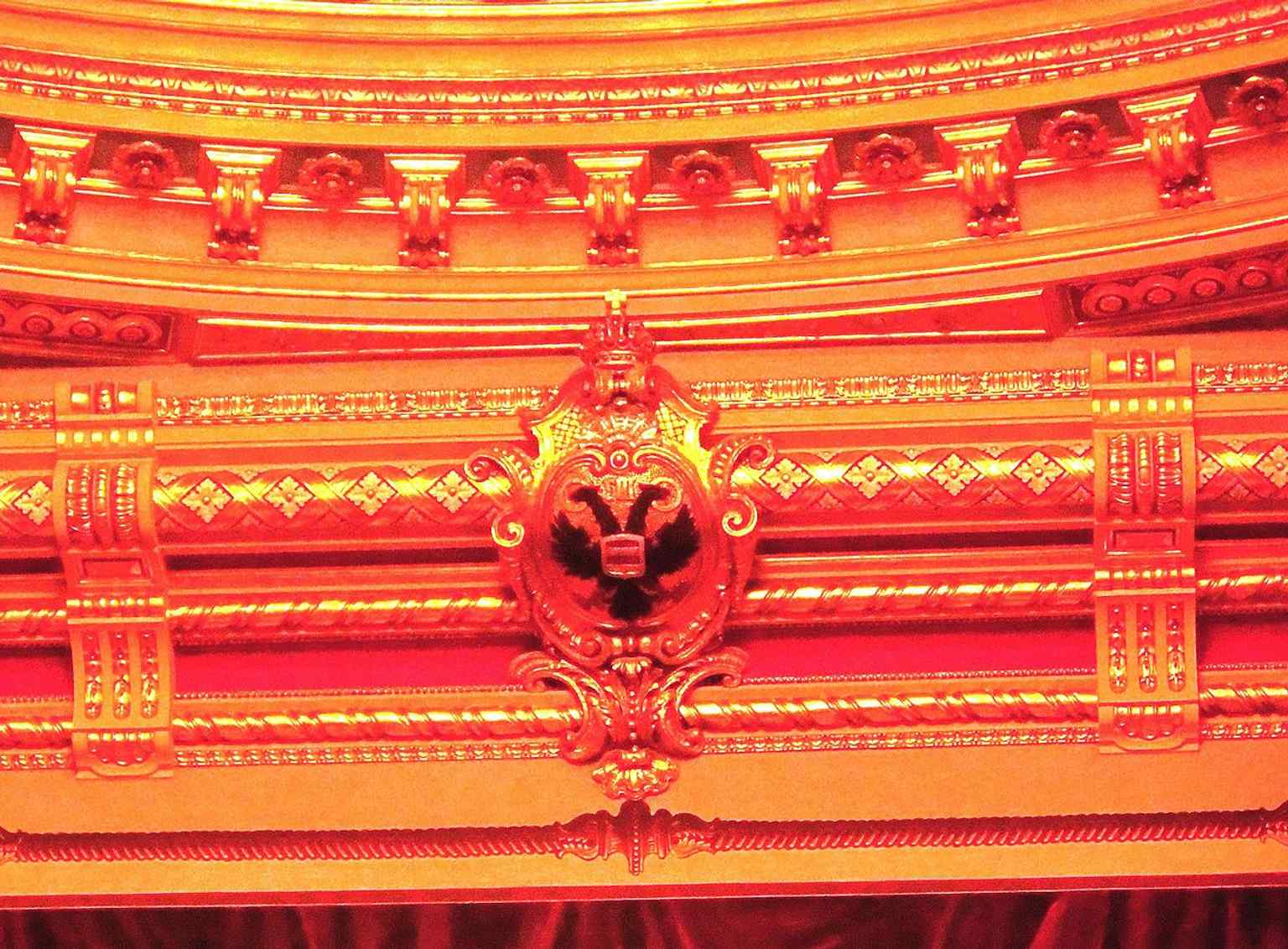
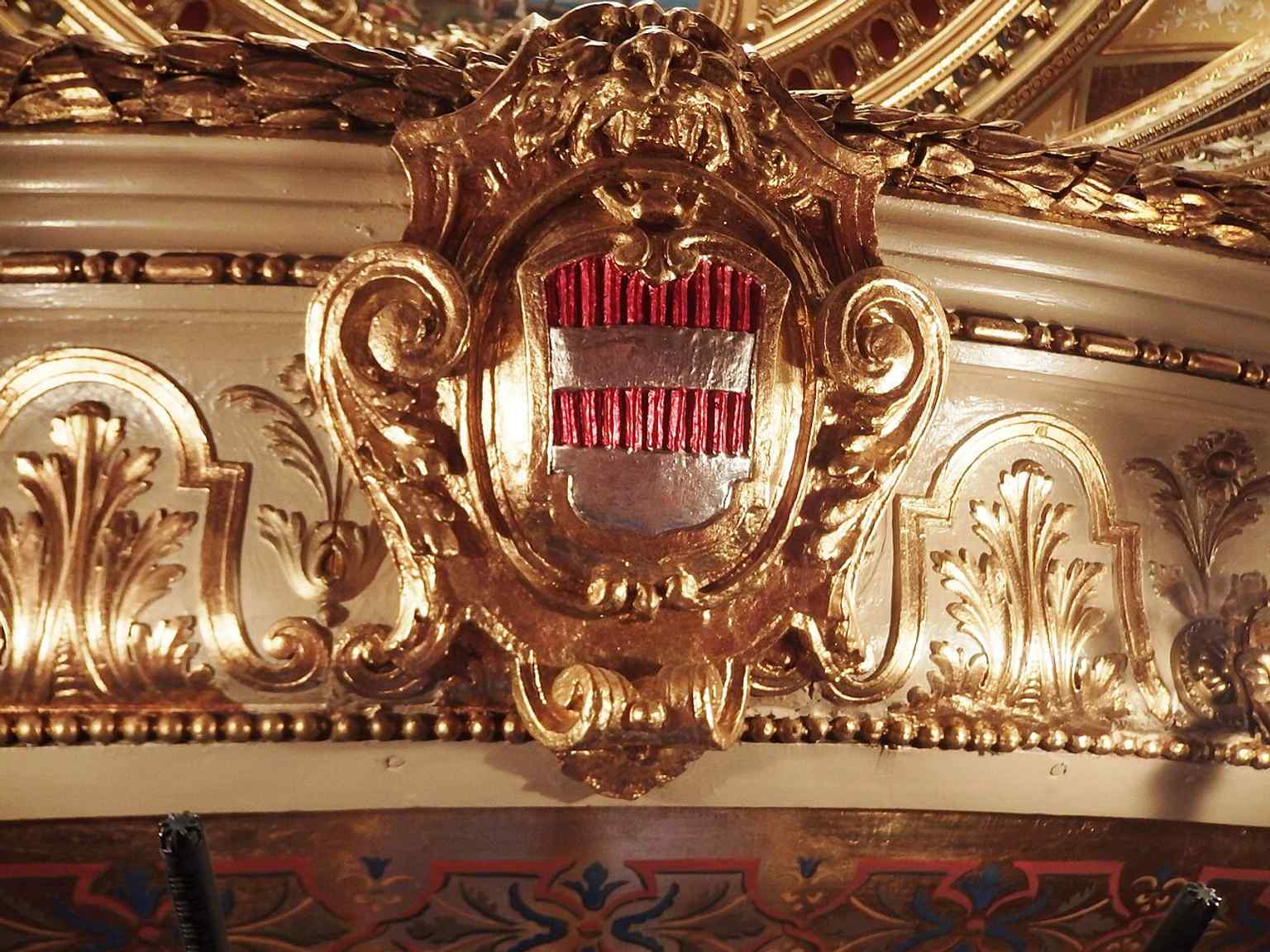
After the Reduta theater burned in eighteen seventy, the city needed a safer, grander stage. So in eighteen eighty-two, Brno finished this new German Municipal Theatre, then called the Theatre on the Ramparts, in less than seventeen months... which is quick even by modern standards, and downright suspiciously efficient for the nineteenth century. The plans came from the famous Viennese theater firm of Fellner and Helmer, and local builder Josef Arnold carried them out here in a richly mixed style: a little neo-Renaissance, a little neo-Baroque, a little neo-Classical. If you glance at the detail image in the app, you can see that decorative mix up close in the carved ornament and panel details.
But the real story is not just the façade. It is the electricity.
In eighteen eighty-one, three European theater fires shook public confidence: one in Nice, one at Prague’s National Theatre, and the worst in Vienna’s Ringtheater. Brno took the hint. Builders added extra exits and two side staircases for safety. Then the city made a startling decision: scrap the planned gas lighting and switch to Thomas Alva Edison’s new electric bulbs, an invention barely three years old. Edison and his New Jersey laboratory designed the system. Paris and Vienna firms installed it.
That made this one of the first theaters on the European continent lit by electric incandescent bulbs. Not part of a city grid, because Brno did not even have one yet. No, the theater got its own steam power plant, just to keep the lights on. Inside, about one thousand nine hundred and twenty carbon-filament bulbs glowed alongside five arc lamps, the fierce lamps that make light by jumping electricity through air, plus an electric fan above the stage. Public spectacle had joined churches and town halls as another force powerful enough to reshape the city’s architecture.
For a quick sense of how the city grew up around this place, take a look at the image in the app.
The opening night came on the fourteenth of November, eighteen eighty-two, with Beethoven’s Egmont. Later, this house changed hands after Czechoslovakia formed in nineteen eighteen, and its first Czech literary director was Jiří Mahen, the writer who eventually gave the theater its name. Ironically, Mahen admitted the place gave him nightmares. A nice touch for a building devoted to entertainment.
Leoš Janáček also lived part of his career here. He waited anxiously in the wings for audiences to accept his operas, bowed here after triumphs, and in the end, his funeral procession departed from this building. Six of his operas appeared here for the first time. Then came another coup: the world premiere of Prokofiev’s Romeo and Juliet in nineteen thirty-eight. Brno was not tiptoeing into modern culture. It was charging in through the front doors.
You will notice, as we keep walking through the center, that the old ramparts keep turning into something else: administration, performance, public space. Next, head on toward Moravian Square, about ten minutes away, where the city opens out even further. Modern Brno did not arrive quietly... it arrived lit up.
And one practical note: the exterior here is accessible at any hour.






.JPG)