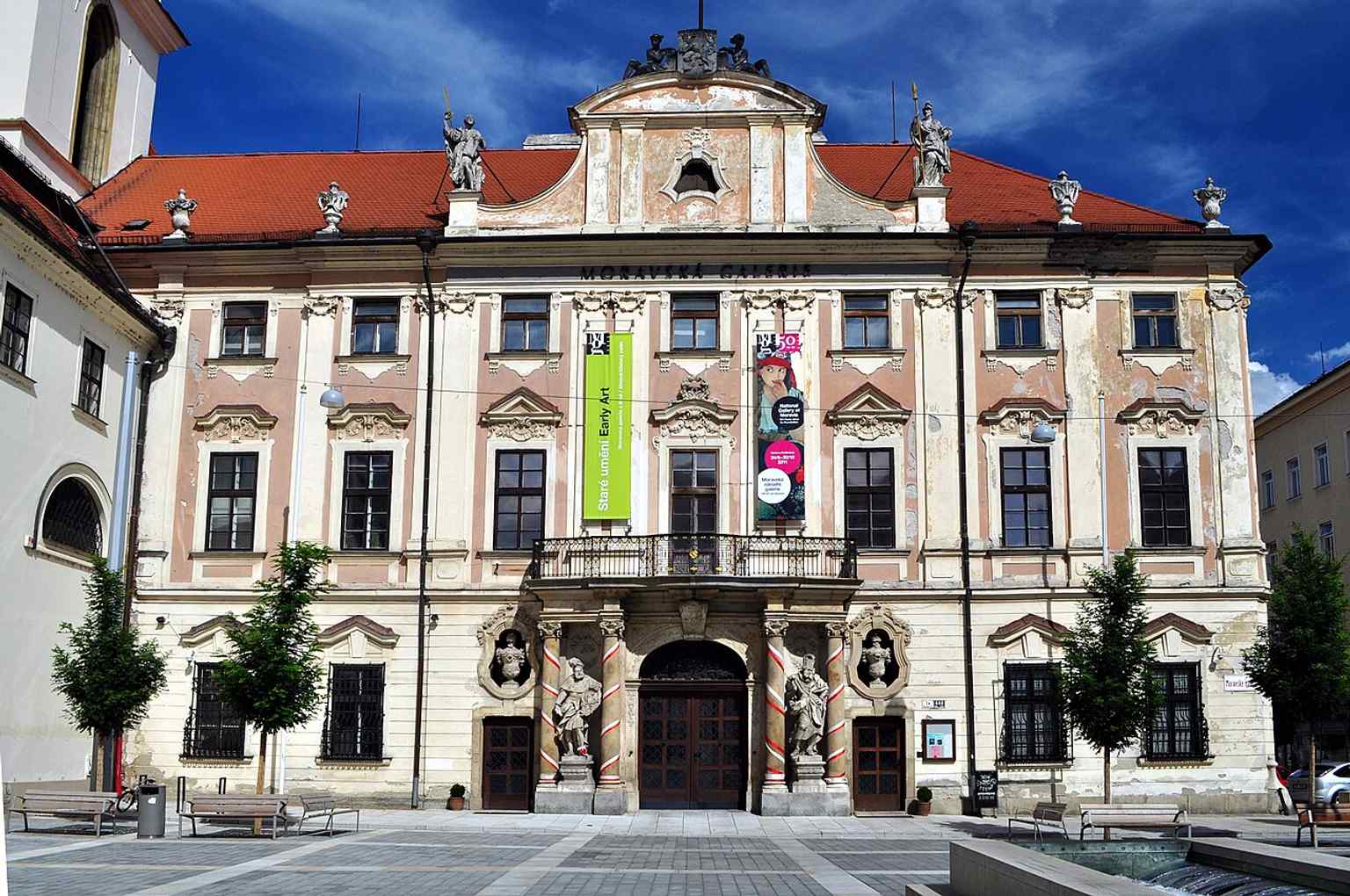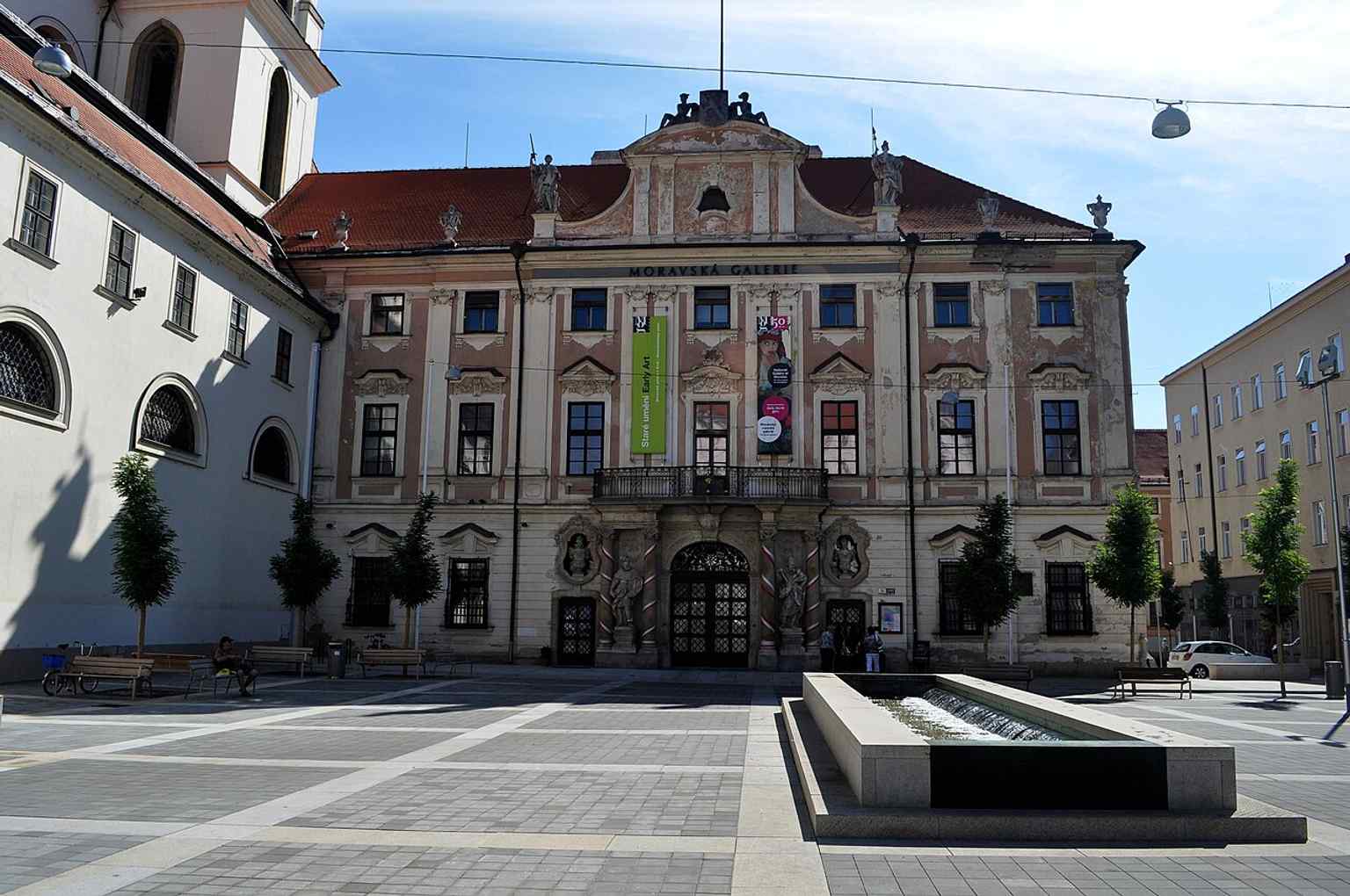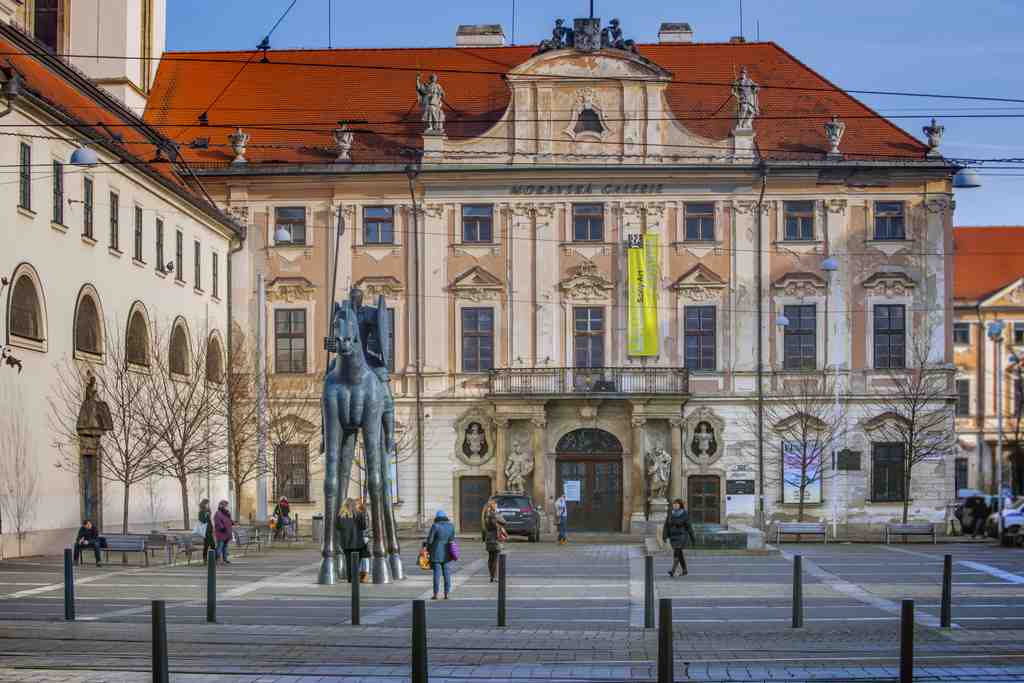
On your left is a long pale stucco Baroque block, shaped as a broad rectangle with rows of tall windows and a grand arched central portal that gives the whole facade its formal, official stare.
This building is one of Brno’s clearest lessons in how a place can change jobs without changing address. It began in the mid-fourteenth century as an Augustinian monastery, founded near the city walls by the Moravian margrave Jan Jindřich... a prince planting faith and dynasty into the edge of town. Its story stayed tightly bound to Saint Thomas beside it, but the structure you see now took shape much later: first in the sixteen sixties under the architect Jan Křtitel Erna, then more decisively in the great Baroque rebuilding from the seventeen thirties to seventeen fifty, led by the Brno builder Mořic Grimm. When that campaign ended, the monastery rose in status to an abbey.
Then came the Augustinian transformation... and it was less spiritual than administrative. Emperor Joseph the Second pushed through reforms in the early seventeen eighties, and in seventeen eighty-three the Augustinians had to leave for the monastery in Old Brno. Their former rooms did not sit empty for long. Officials moved in, the complex took the rather chilly name of a dikasterial palace - meaning a seat of government offices and courts - and Vienna’s court architect Franz Anton Hillebrandt reshaped the interiors for secular power. Monks out, paperwork in.
That change mattered. Courts stayed here until eighteen thirty-seven, before moving to Dietrichstein Palace at Cabbage Market. After that, the Moravian-Silesian governor’s office remained, and the building settled into the name Governor’s Palace. So this facade carried prayer, then law, then bureaucracy... all in one long stretch of masonry.
Its public role kept shifting with politics. After nineteen eighteen it served the offices of the new Czechoslovak state; during the Protectorate, German authorities took over. From nineteen fifty-five until the changes after November nineteen eighty-nine, the building housed the Museum of the Workers’ Movement of the Brno region. Then, in nineteen ninety, the Moravian Gallery took over and gave the palace yet another life - this time as a home for art rather than ideology.
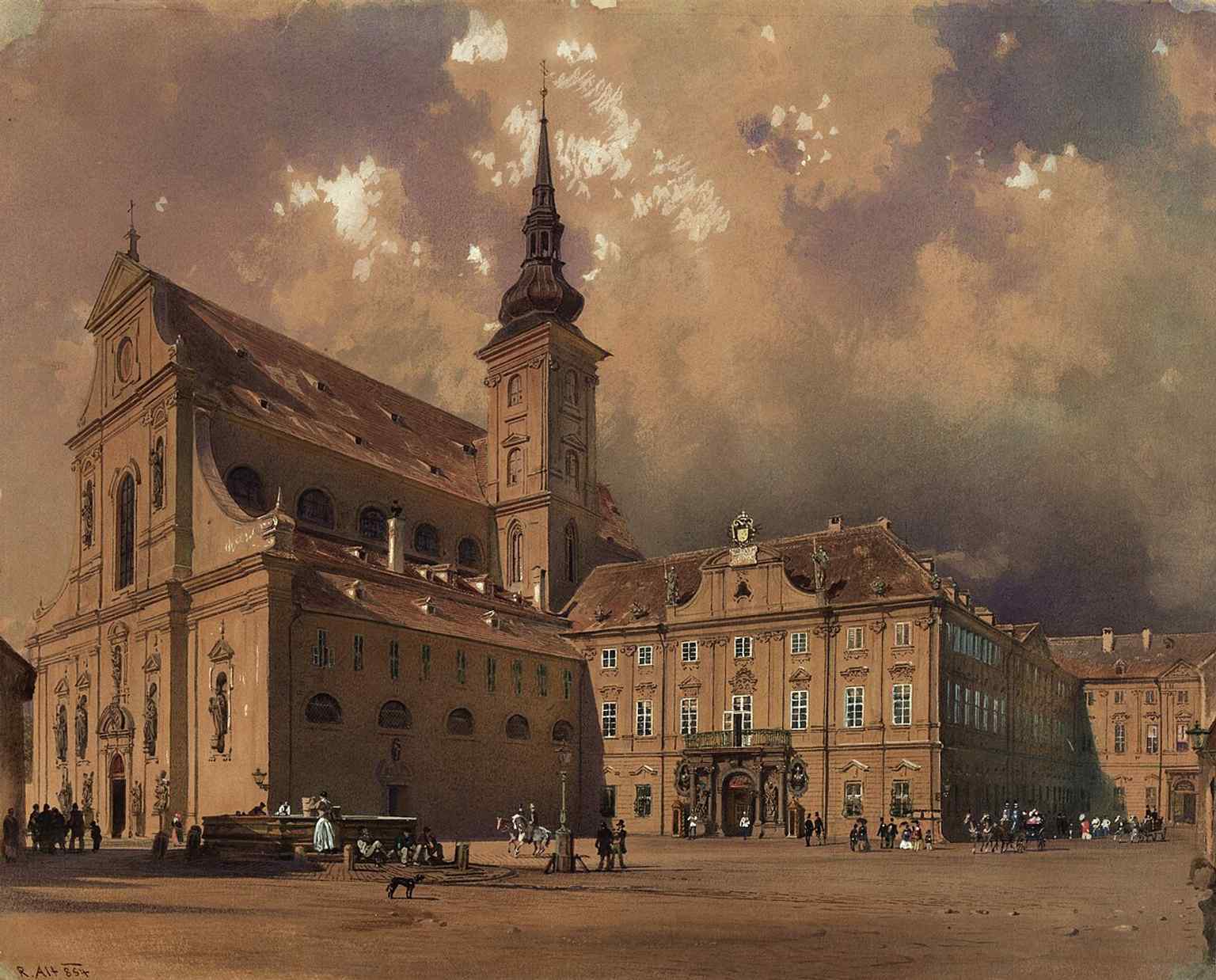
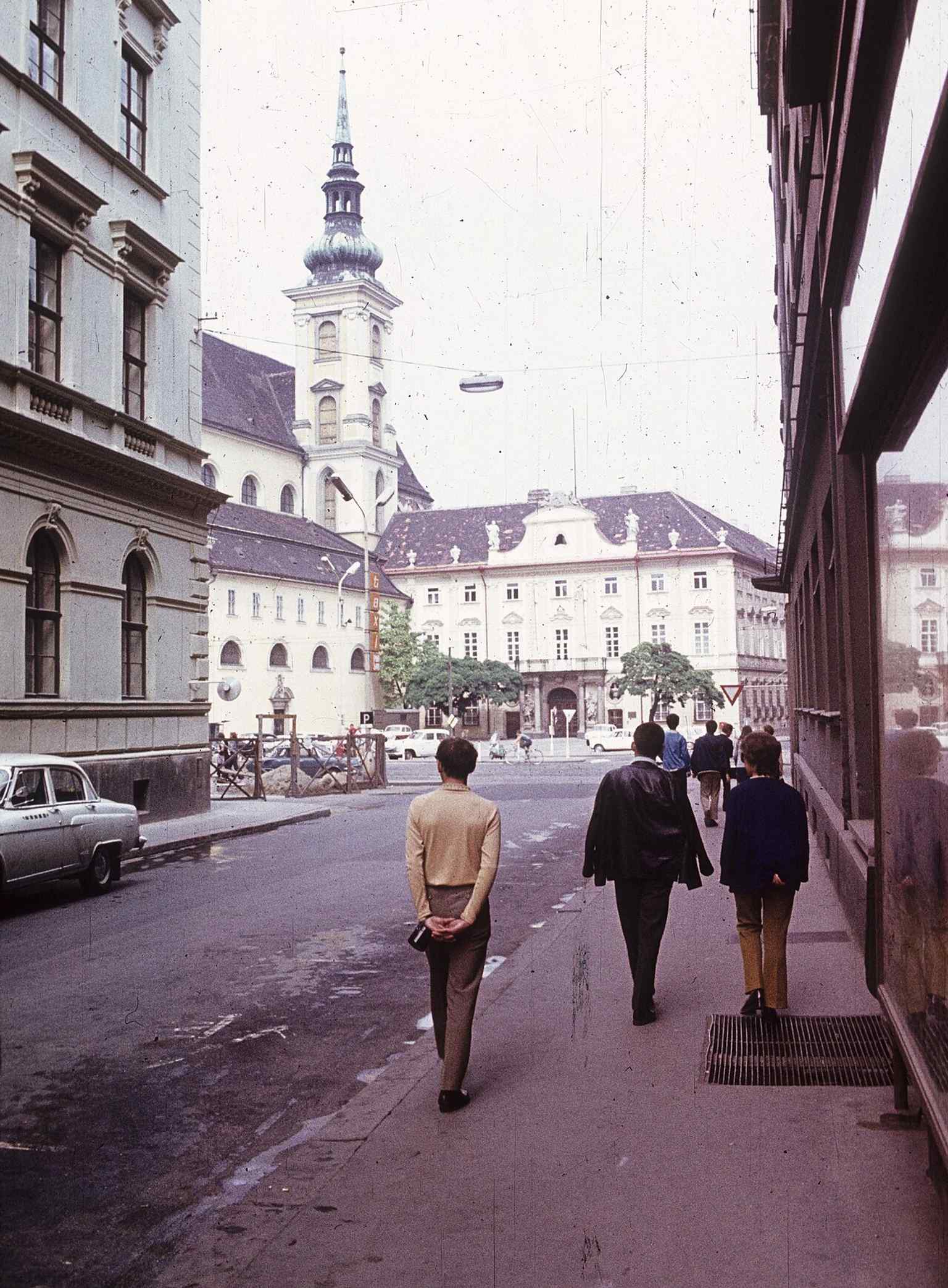
If you compare the historic image in the app with the square today, you can see how the palace hardly flinched while the space in front turned into a more pedestrian square.
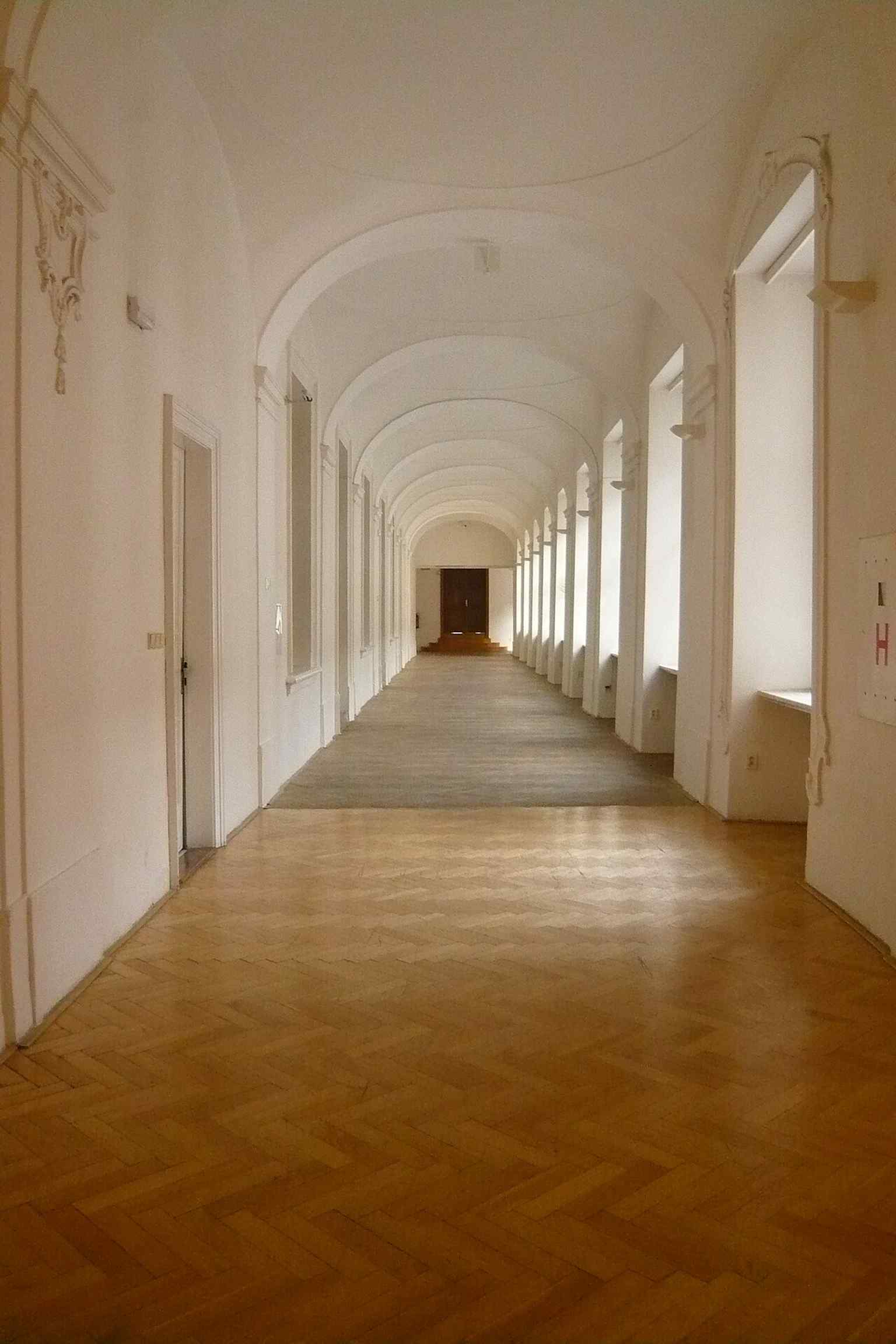
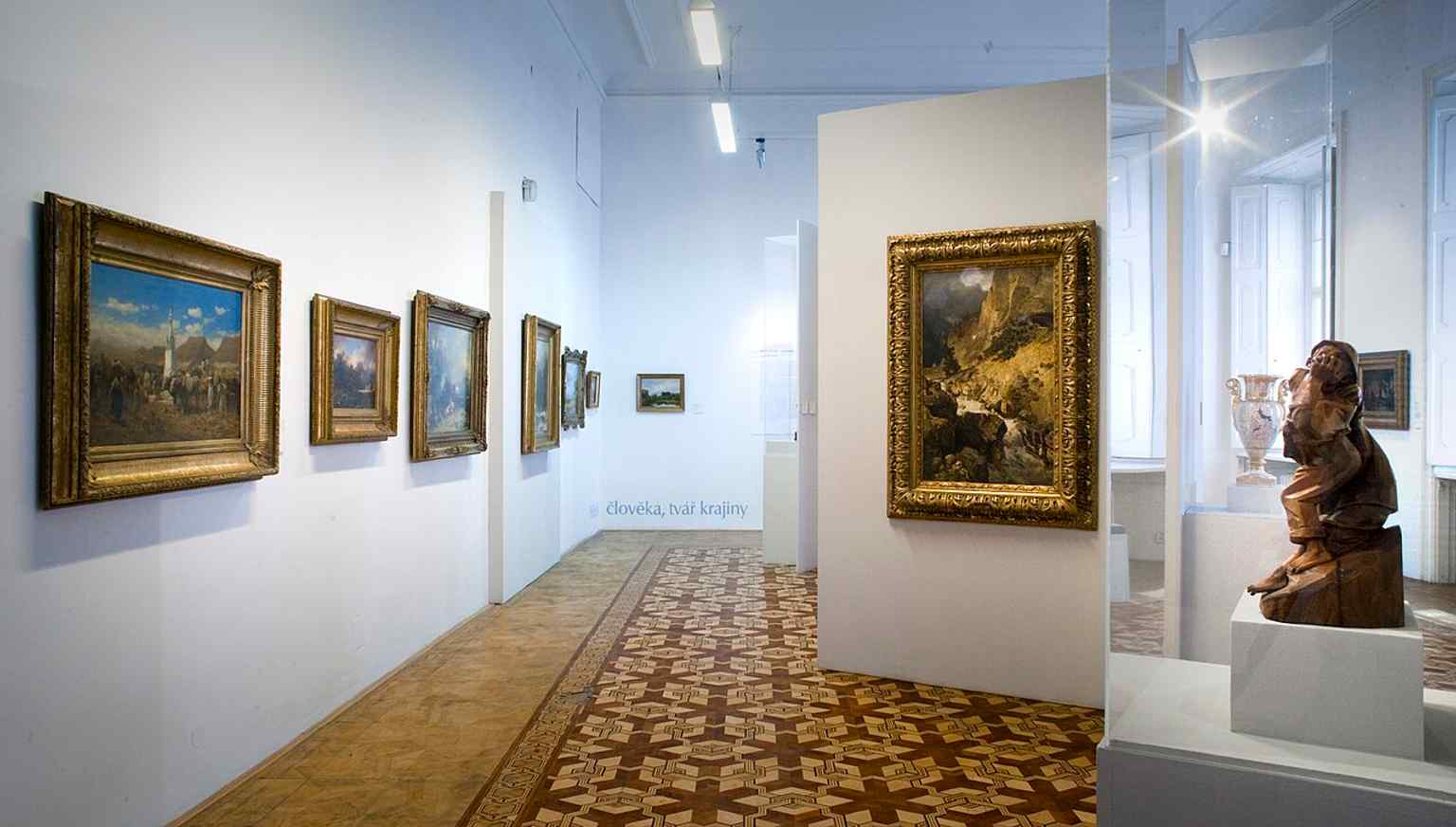
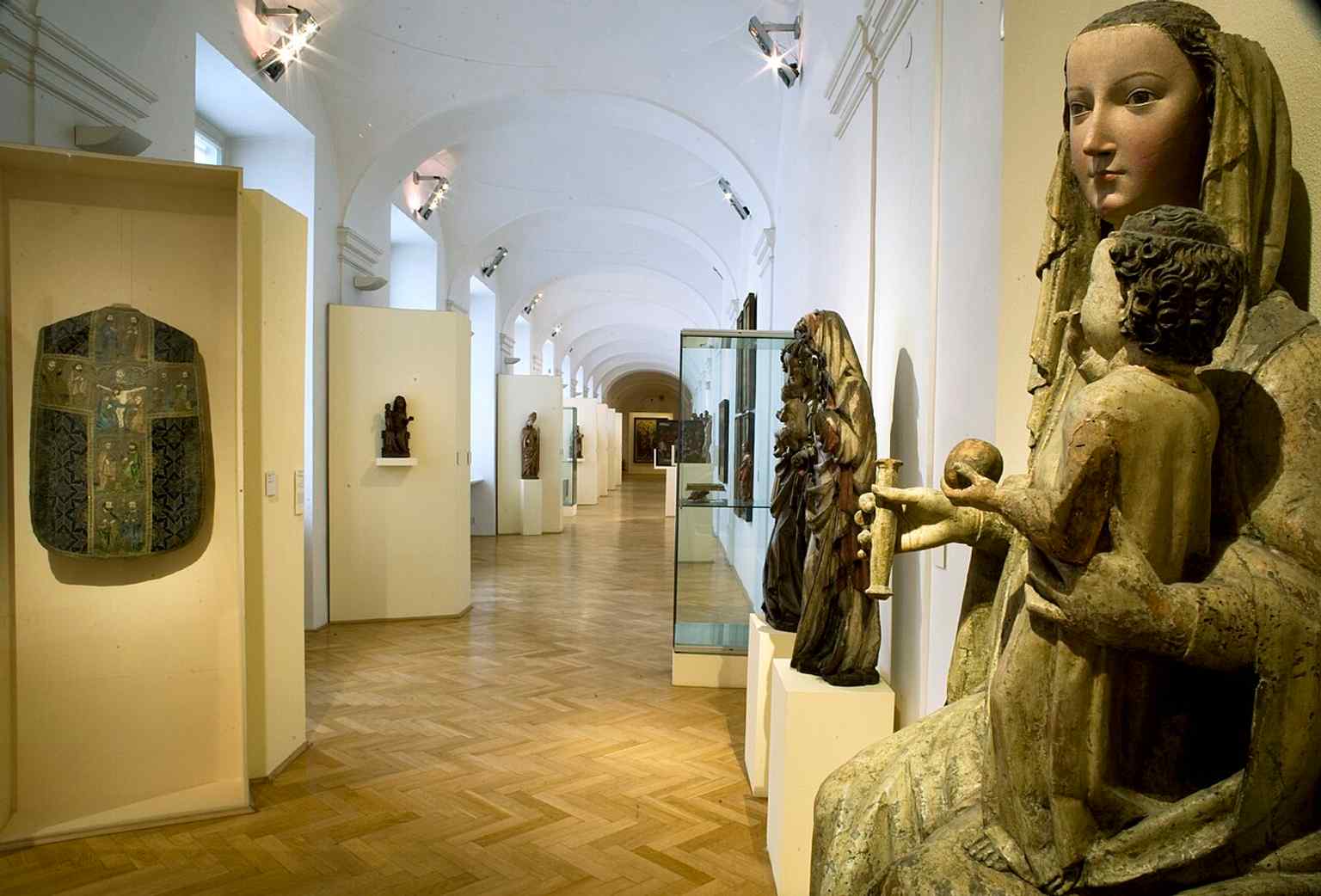
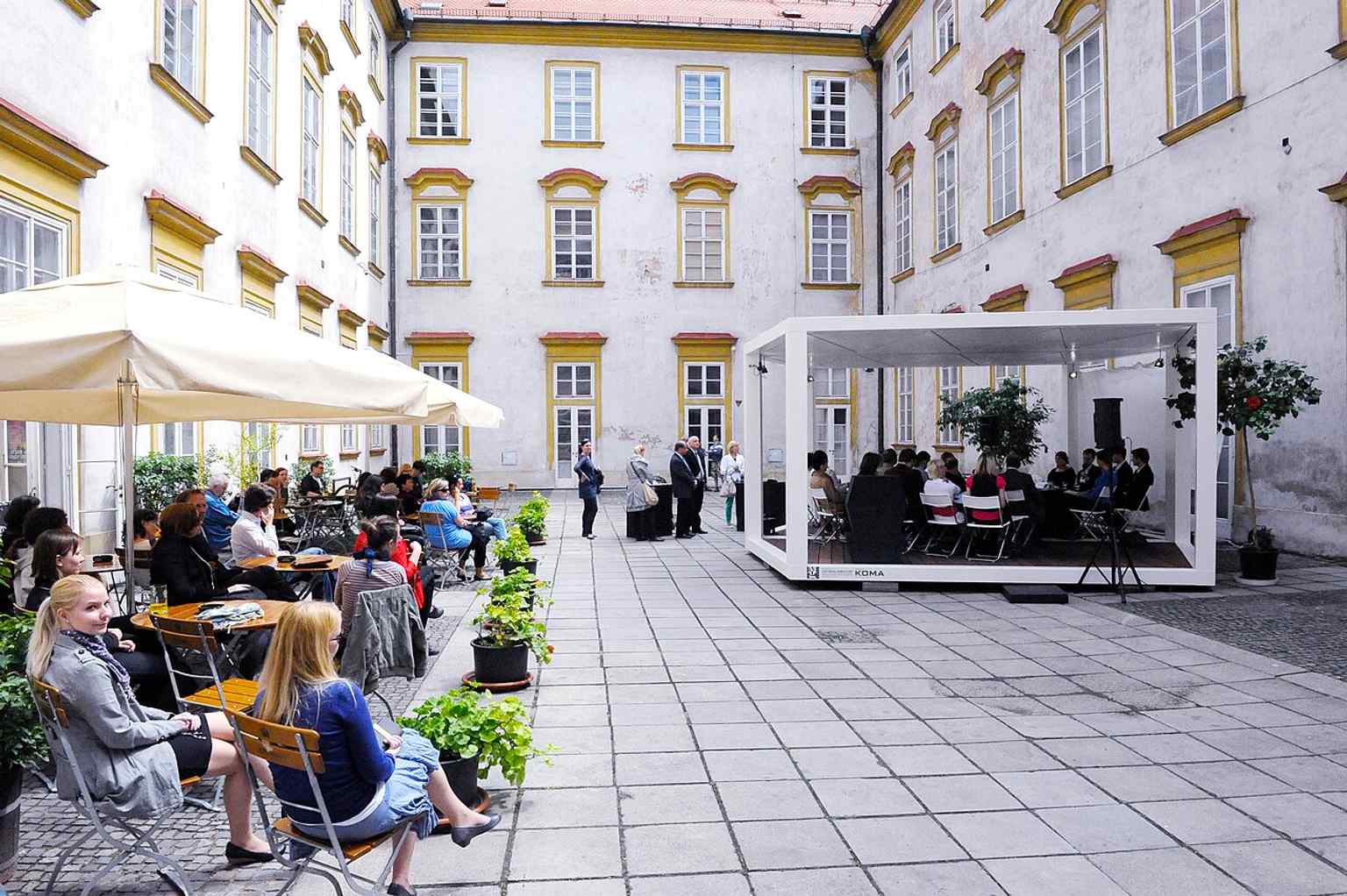
Inside, the Moravian Gallery stretches from Gothic art to the nineteenth century, mixing painting and sculpture with furniture, porcelain, glass, textiles, and design. One of the strongest works here is Artemisia Gentileschi’s Susanna and the Elders, painted in sixteen forty-nine - a fierce picture by one of the great painters of the seventeenth century, and a reminder that old buildings can still hold sharp human stories. Another local favorite, Joža Uprka’s Ride of the Kings, returned to Brno after thirty-five years away. If you want a visual clue to the building’s first life, check the courtyard photo on your screen; that enclosed plan still thinks like a monastery.
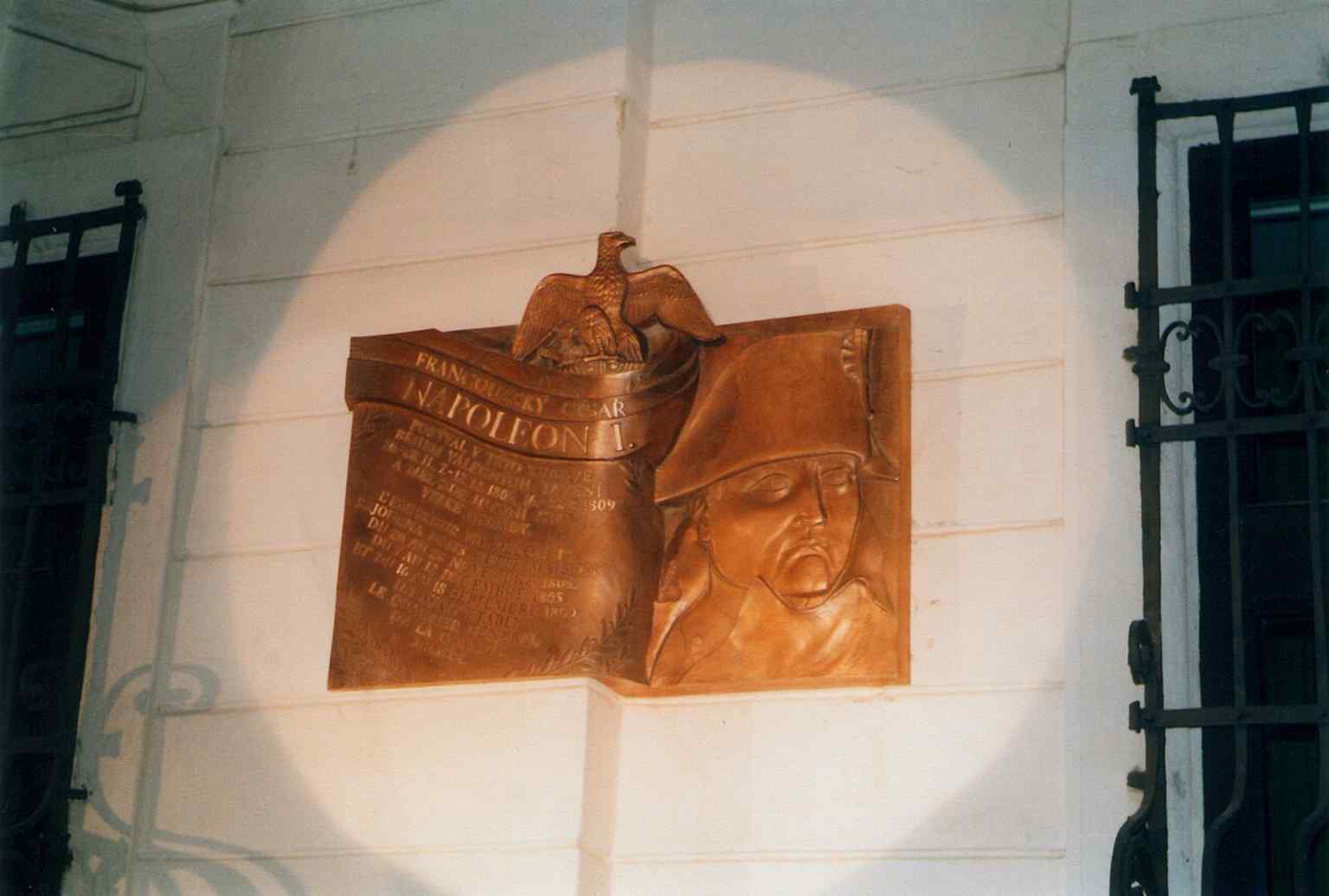
The palace also remembers war. A bronze plaque marks Napoleon’s visits, and a model of Brno from the Swedish siege of sixteen forty-five keeps military danger in the building’s memory, even after the filing cabinets gave way to galleries.
That is the trick of Brno: architecture rarely dies. It gets reassigned. When you’re ready, continue to the Church of Saint James the Elder, about a two-minute walk from here.