AudaTours logoAudaTours

Stop 9 of 16

Kostel sv. Jakuba

Kostel sv. Jakuba
Church of St. James the Elder (Brno)
Church of St. James the Elder (Brno)Photo: Jiří Sedláček (Frettie), Wikimedia Commons, CC BY 3.0. Cropped & resized.

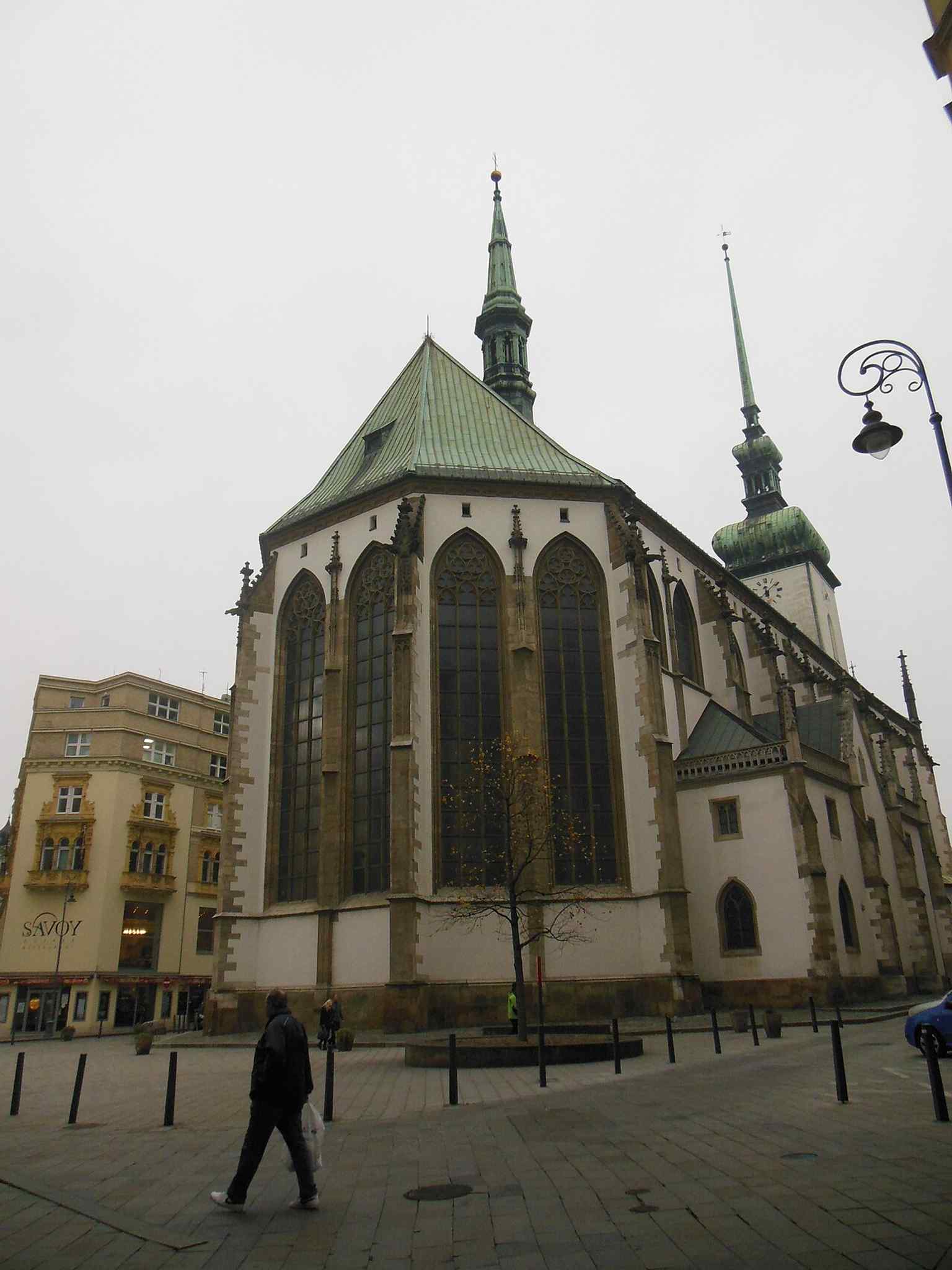
Look to your left for a pale stone Gothic church with a long steep-roofed body and a tall square tower topped by a distinctive Renaissance crown.

St. James is one of the clearest proofs of Brno’s deep time: the city kept rebuilding here, again and again, on almost the same sacred footprint. What you see is not one clean medieval survival, but a stack of intentions, repairs, disasters, and stubborn returns.

The first church here began in the early thirteenth century, likely under Margrave Vladislav Henry. That earliest building was Romanesque, probably a basilica with two western towers. It served German, Flemish, and Walloon colonists, while Czech-speaking parishioners were directed elsewhere, to St. Peter. So even at the beginning, this sacred ground already reflected how the city sorted itself by language, community, and power. Charming, in the way medieval urban planning could be charming... to someone else.

By the late thirteenth or early fourteenth century, builders replaced that church with a Gothic one. Then they replaced much of that in turn with the late Gothic hall church standing here now, a broad three-aisled church where the side aisles rise nearly to the height of the center. In other words, Brno did not abandon this place. It kept rewriting it.

One builder gives that long process a human face: Anton Pilgram, a Brno-born master stonemason, worked here between fifteen hundred and fifteen fifteen. His surviving northern vestibule still carries his mason’s mark and the inscription saying, in effect, “this side began in fifteen oh two.” He later left for Vienna and made his name at St. Stephen’s Cathedral. But Brno kept only part of his work. In the regothic rebuilding of the eighteen seventies, later restorers demolished his elegant spiral stair by the sacristy. That is the twist of this church: every generation preserved it by changing it, and sometimes saved the whole by sacrificing a part.

If you glance at the tower image in the app, you can see how that story rises vertically too: Gothic mass below, Renaissance finish above. After a fire on the twenty-seventh of April, fifteen fifteen, the roof collapsed and smashed the altars and bells. Builders carried on. Johann Starpedel and the Italian stonemason Pietro Gabri vaulted the nave in the fifteen seventies, and Antonio Gabri raised the tower in fifteen ninety-two to its present height of ninety-two meters.
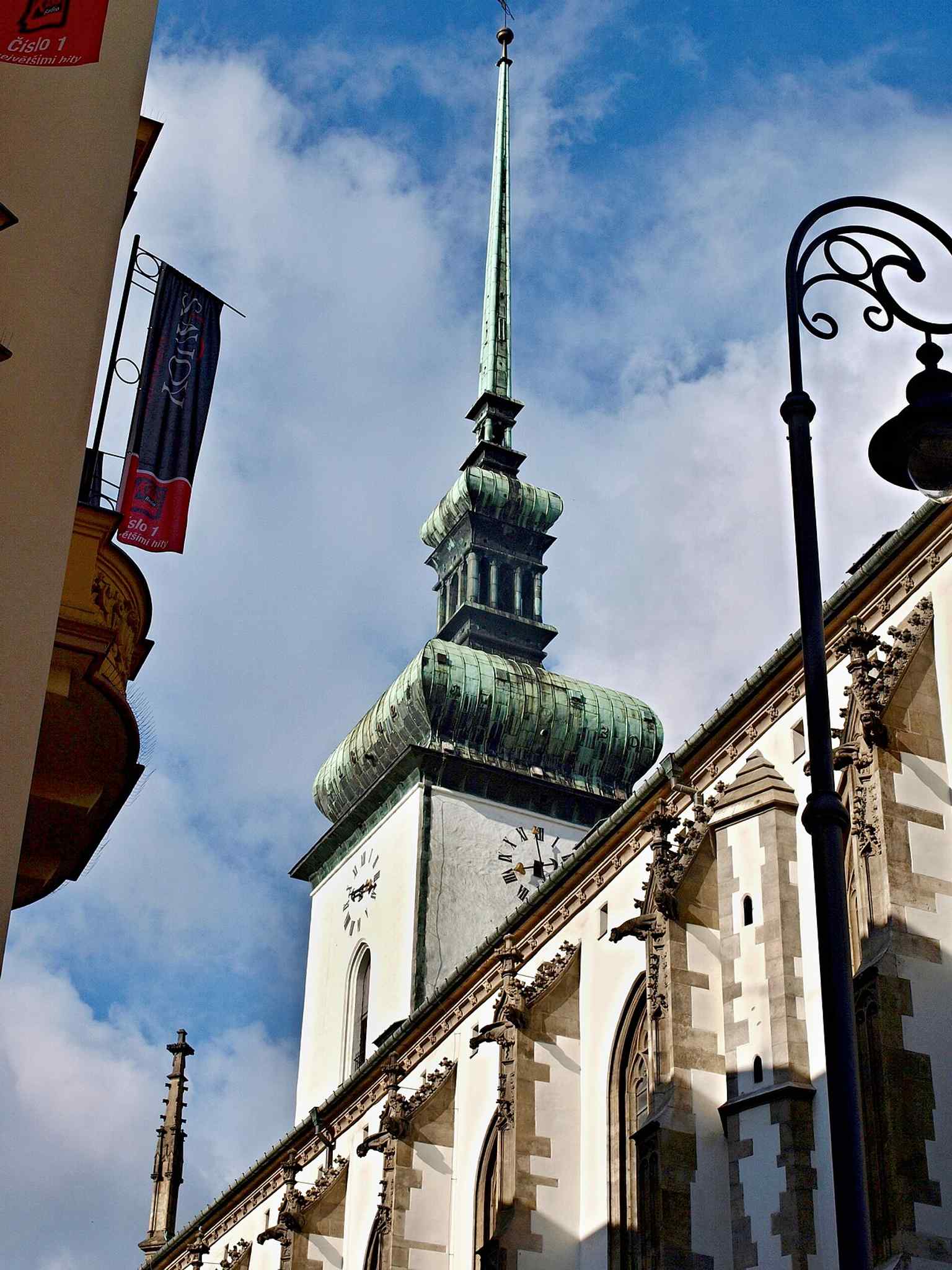
The tower, whose 92-meter height and Renaissance crown made St. James one of Brno’s most recognizable landmarks.
The tower, whose 92-meter height and Renaissance crown made St. James one of Brno’s most recognizable landmarks.Photo: VitVit, Wikimedia Commons, CC BY-SA 4.0. Cropped & resized.

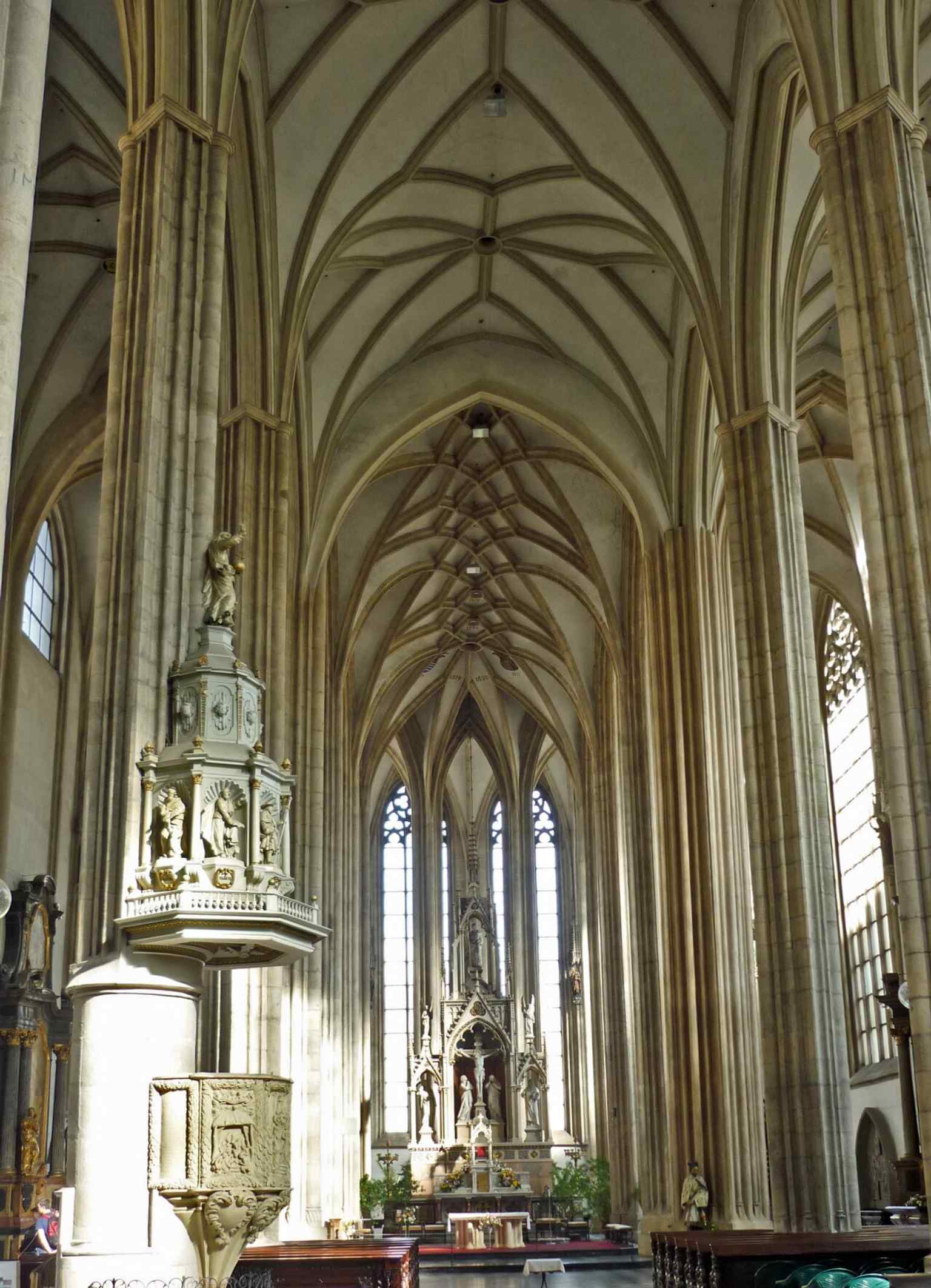
And beneath all that... bones. A cemetery once crowded around the church, and the vast ossuary below, rediscovered in two thousand and one, holds the remains of around fifty thousand people. It is one of the largest discovered ossuaries in Europe. So yes, beneath the elegant Gothic shell lies literal evidence that Brno built its newer self over older lives. If you check the interior view on your screen, you’ll see that mixture clearly: Gothic structure, later altars, later memory, all held in one frame.
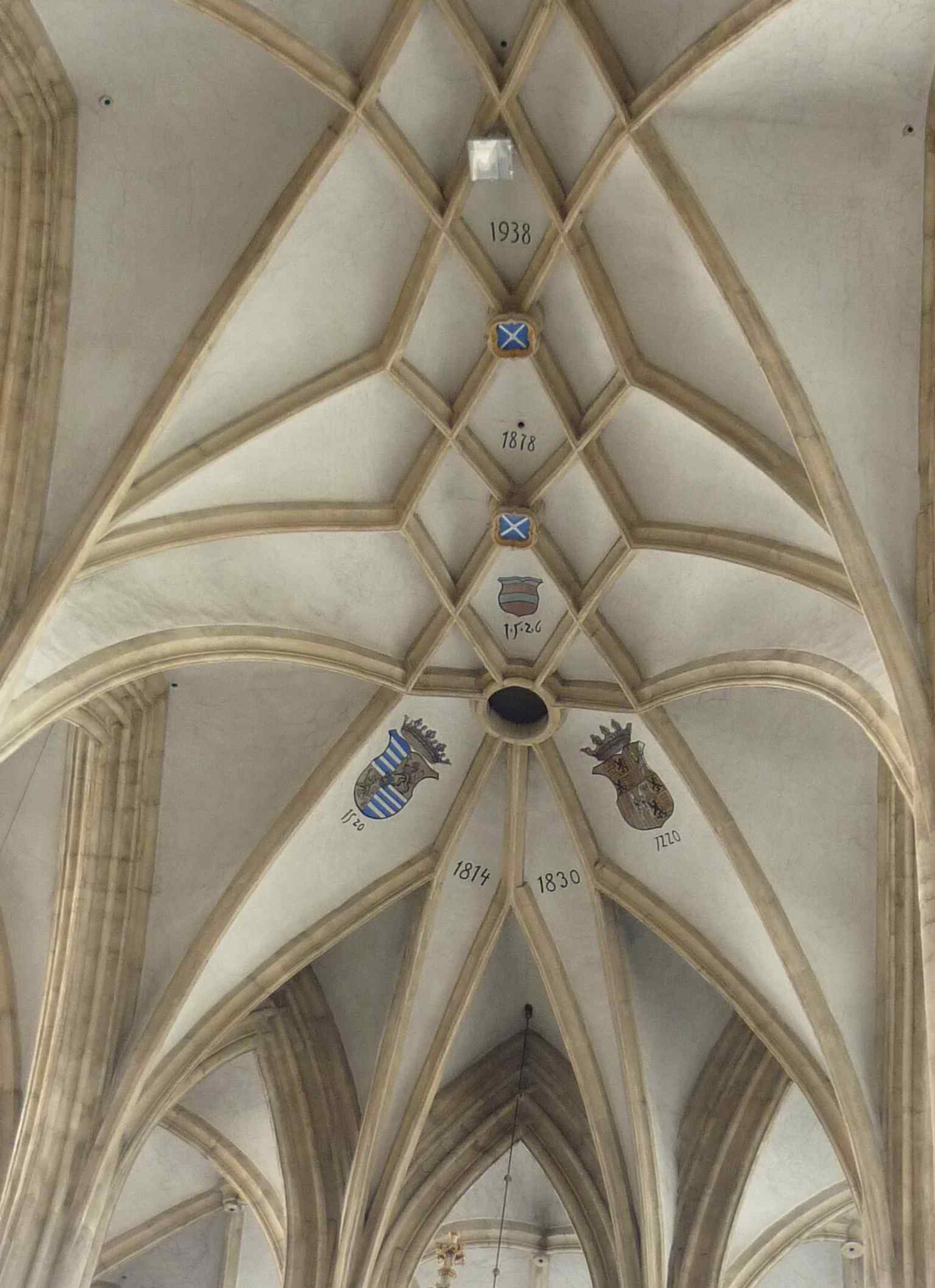
A deeper interior view that can help tell the story of the church as a layered space of Gothic structure and later furnishings.
A deeper interior view that can help tell the story of the church as a layered space of Gothic structure and later furnishings.Photo: SchiDD, Wikimedia Commons, CC BY-SA 4.0. Cropped & resized.

One more name lingers here: Marshal Louis Raduit de Souches, defender of Brno against the Swedish siege in sixteen forty-five, chose this church for his burial. A soldier with a winding career ended here, under a roof shaped by centuries of masons, donors, fires, and restorers. That feels right somehow.

From here, we head toward Freedom Square, where Brno’s public face opens up... and where several erased versions of the city still sit just under the surface. If you want to go inside, the church is generally open daily from nine in the morning to eight in the evening.
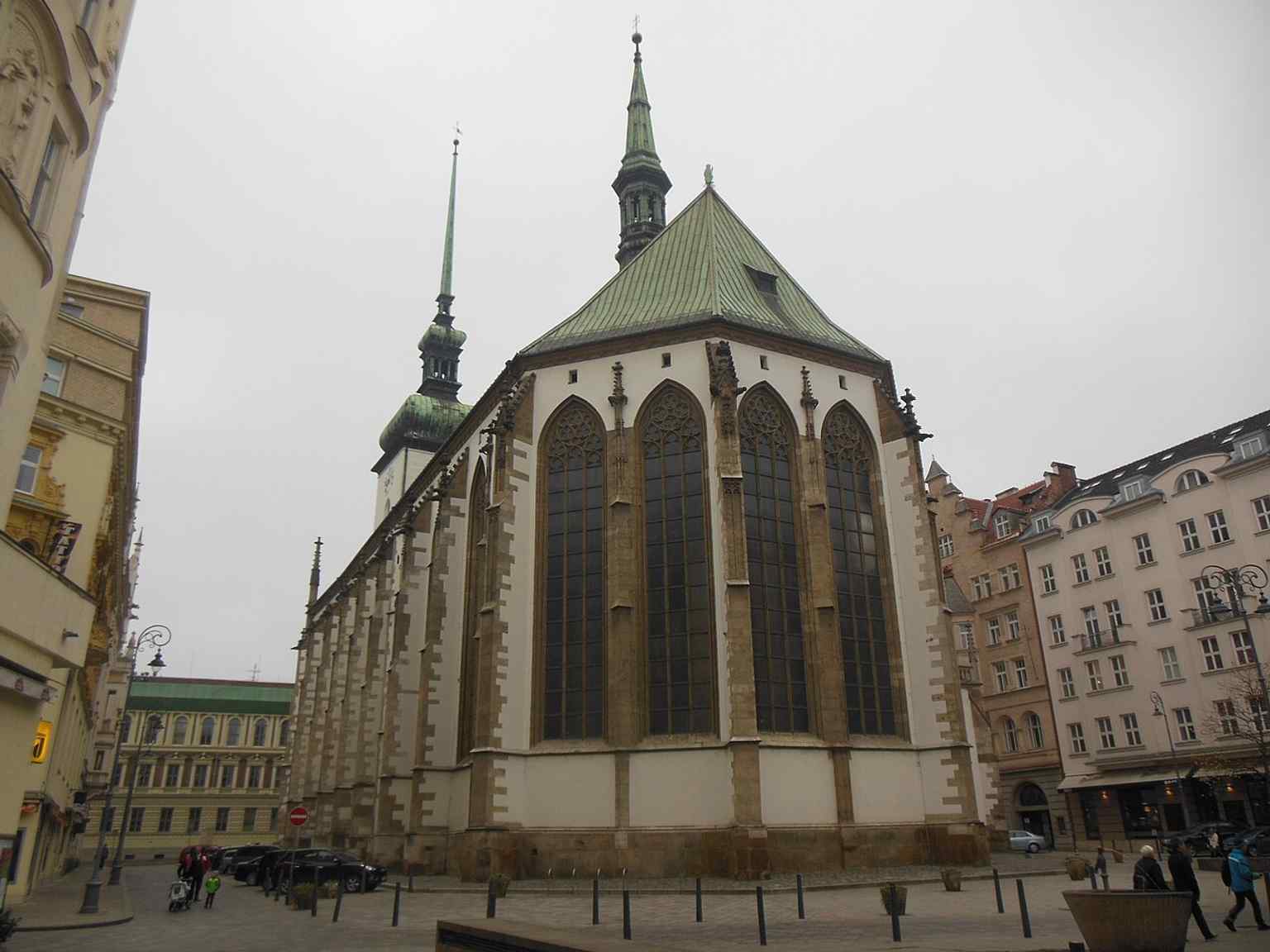
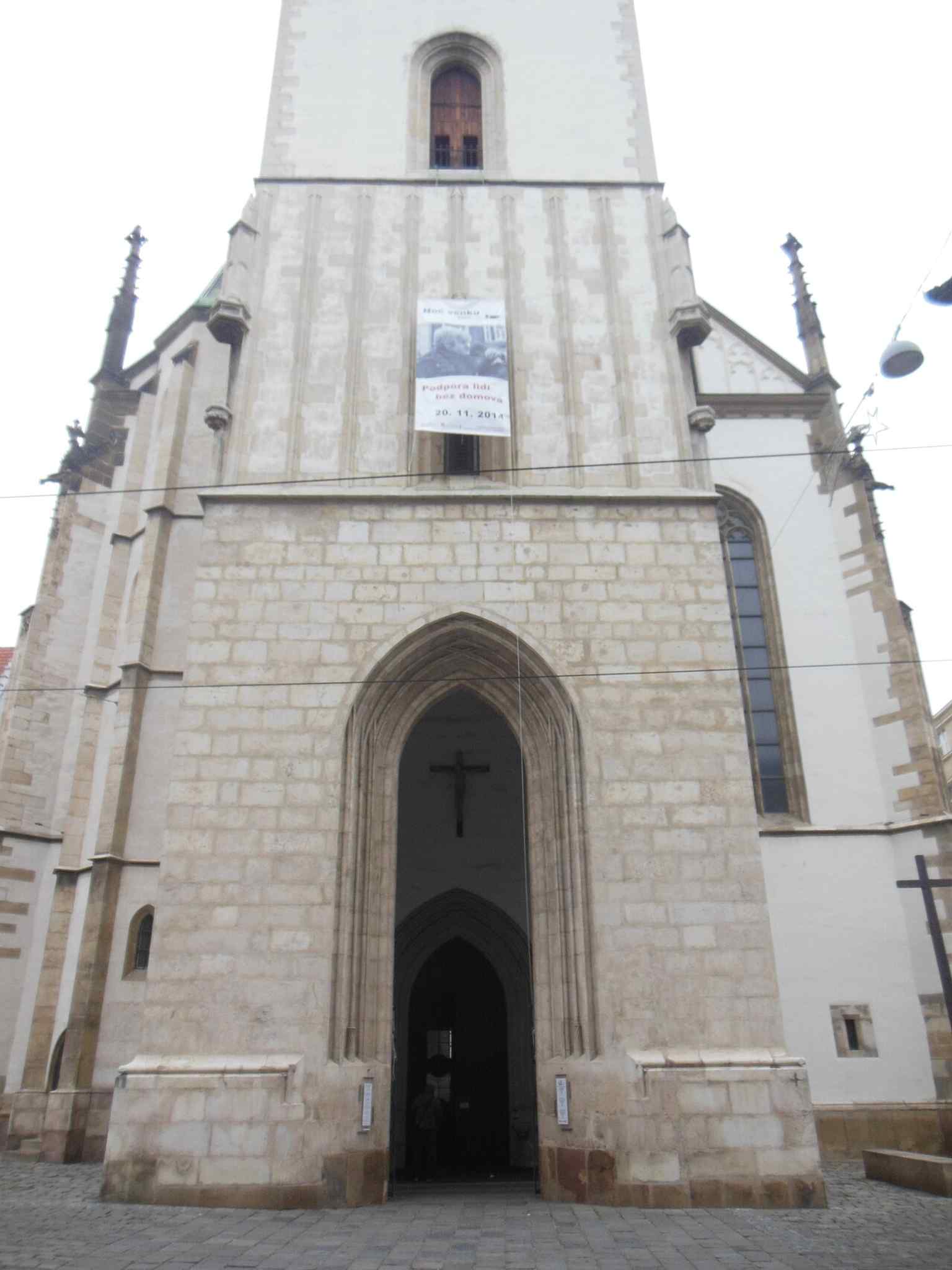
A clear full view of St. James Church on Jakubské náměstí, showing the soaring tower that dominates Brno’s old town skyline.
A clear full view of St. James Church on Jakubské náměstí, showing the soaring tower that dominates Brno’s old town skyline.Photo: PatrikPaprika, Wikimedia Commons, CC BY-SA 4.0. Cropped & resized.
The main entrance on Jakubské náměstí, a good starting point for the story of the church’s late-Gothic exterior.
The main entrance on Jakubské náměstí, a good starting point for the story of the church’s late-Gothic exterior.Photo: PatrikPaprika, Wikimedia Commons, CC BY-SA 4.0. Cropped & resized.
A side view from Běhounská street that helps show the church’s long Gothic body and attached side volumes.
A side view from Běhounská street that helps show the church’s long Gothic body and attached side volumes.Photo: PatrikPaprika, Wikimedia Commons, CC BY-SA 4.0. Cropped & resized.
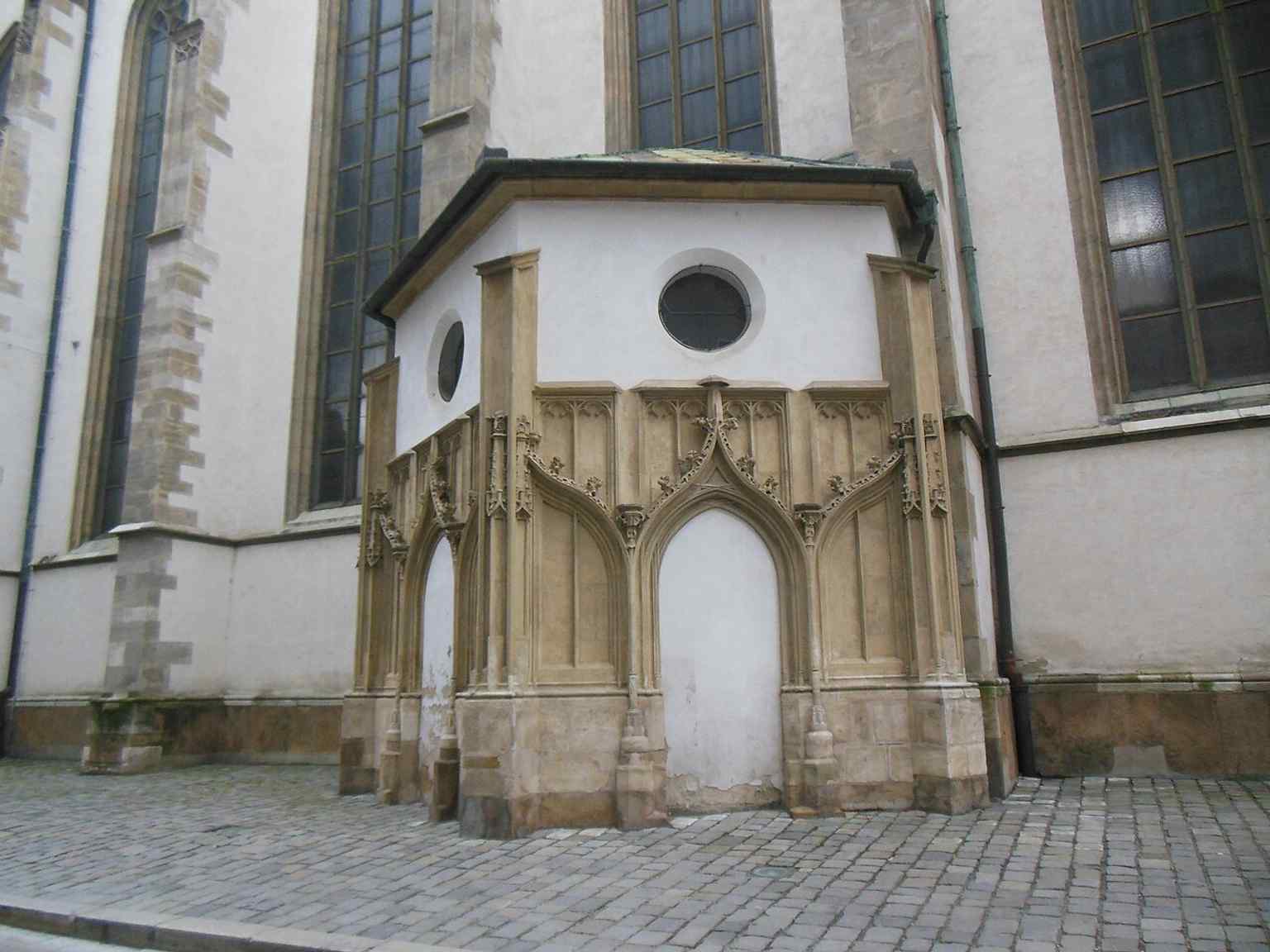
The north-side chapel addition, recalling the many now-lost chapels that once formed a whole urban complex around the church.
The north-side chapel addition, recalling the many now-lost chapels that once formed a whole urban complex around the church.Photo: PatrikPaprika, Wikimedia Commons, CC BY-SA 4.0. Cropped & resized.
Memorial plaques in a side chapel, reflecting the church’s modern commemorative role alongside its medieval and Baroque heritage.
Memorial plaques in a side chapel, reflecting the church’s modern commemorative role alongside its medieval and Baroque heritage.Photo: SchiDD, Wikimedia Commons, CC BY-SA 4.0. Cropped & resized.
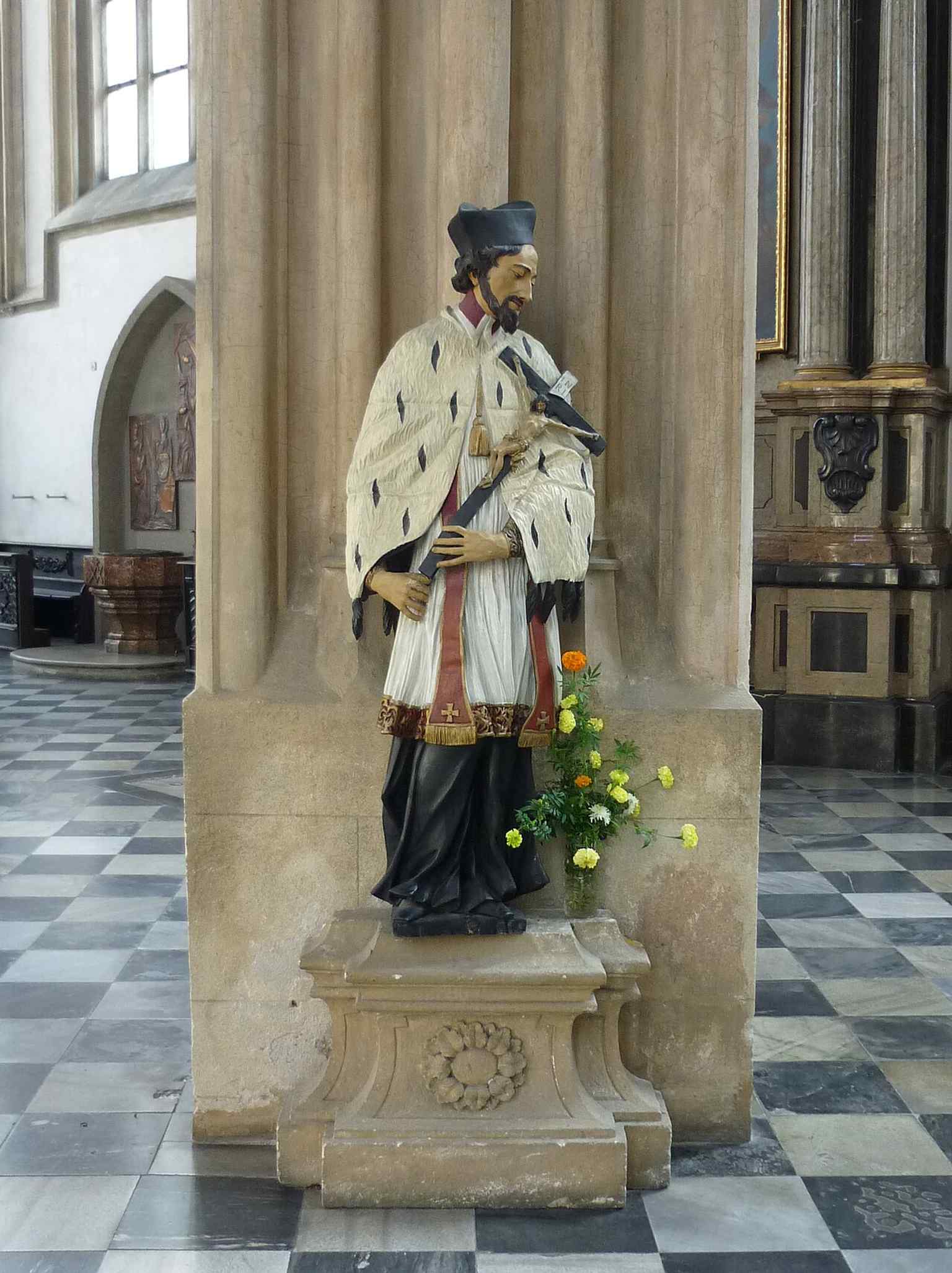
A statue of St. John of Nepomuk, one of the Baroque devotional figures that filled the church after its 18th-century makeover.
A statue of St. John of Nepomuk, one of the Baroque devotional figures that filled the church after its 18th-century makeover.Photo: SchiDD, Wikimedia Commons, CC BY-SA 4.0. Cropped & resized.
A close interior view from the nave, useful for showing the church’s scale and its richly furnished but restrained Gothic-baroque mix.
A close interior view from the nave, useful for showing the church’s scale and its richly furnished but restrained Gothic-baroque mix.Photo: SchiDD, Wikimedia Commons, CC BY-SA 4.0. Cropped & resized.
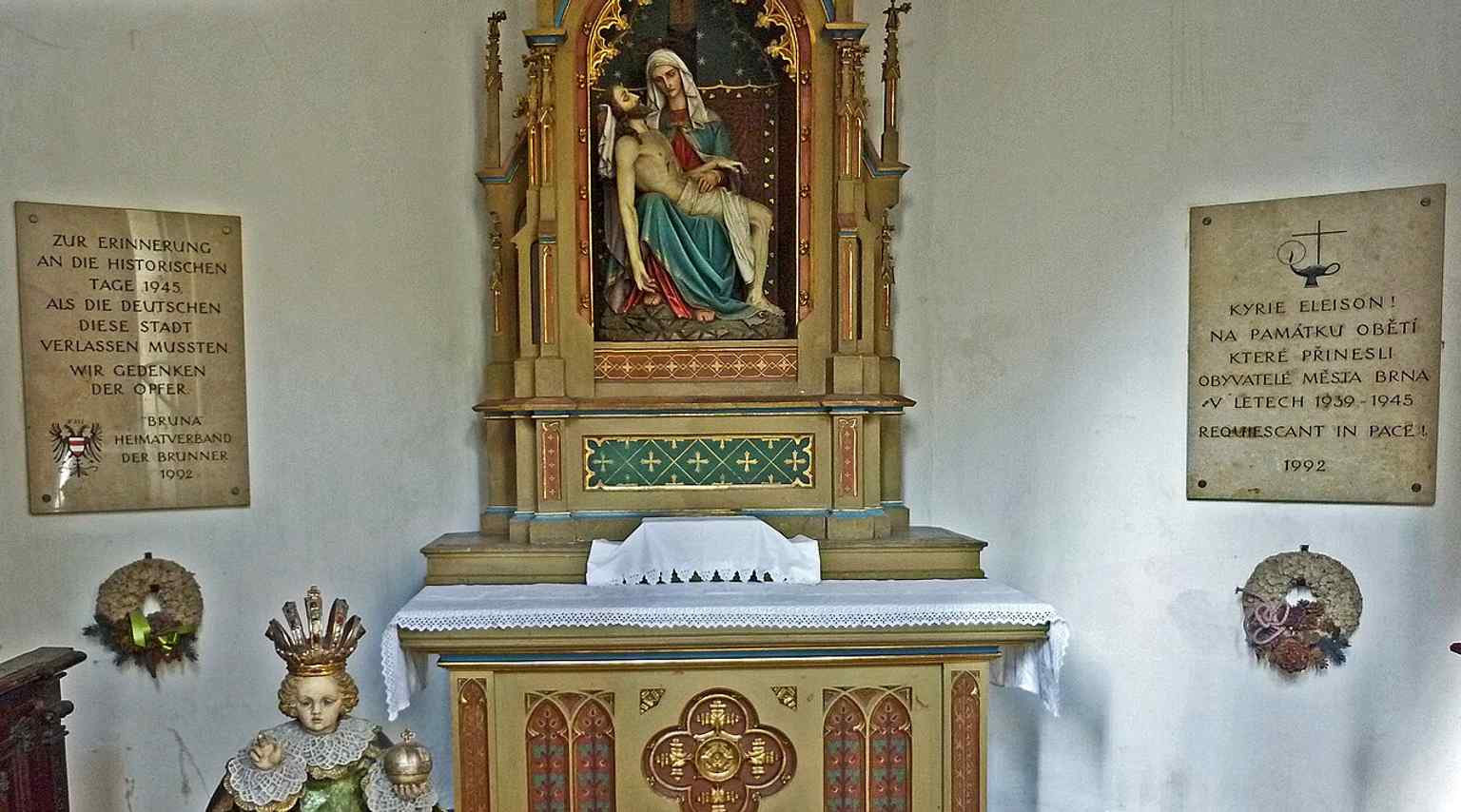
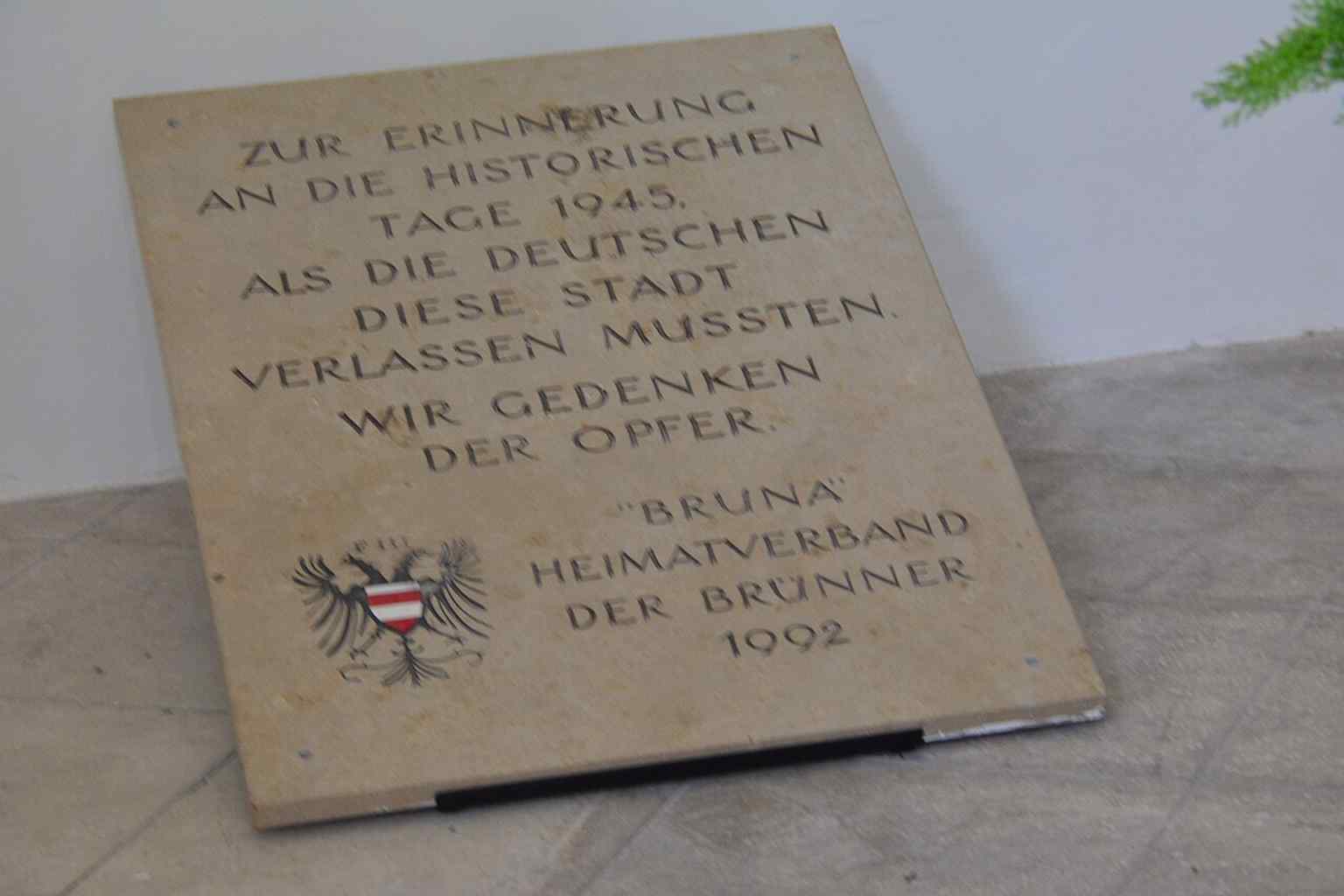
A chapel memorial for displaced German residents, showing how the church still holds 20th-century memory as well as older sacred art.
A chapel memorial for displaced German residents, showing how the church still holds 20th-century memory as well as older sacred art.Photo: GuentherZ, Wikimedia Commons, CC BY 3.0. Cropped & resized.
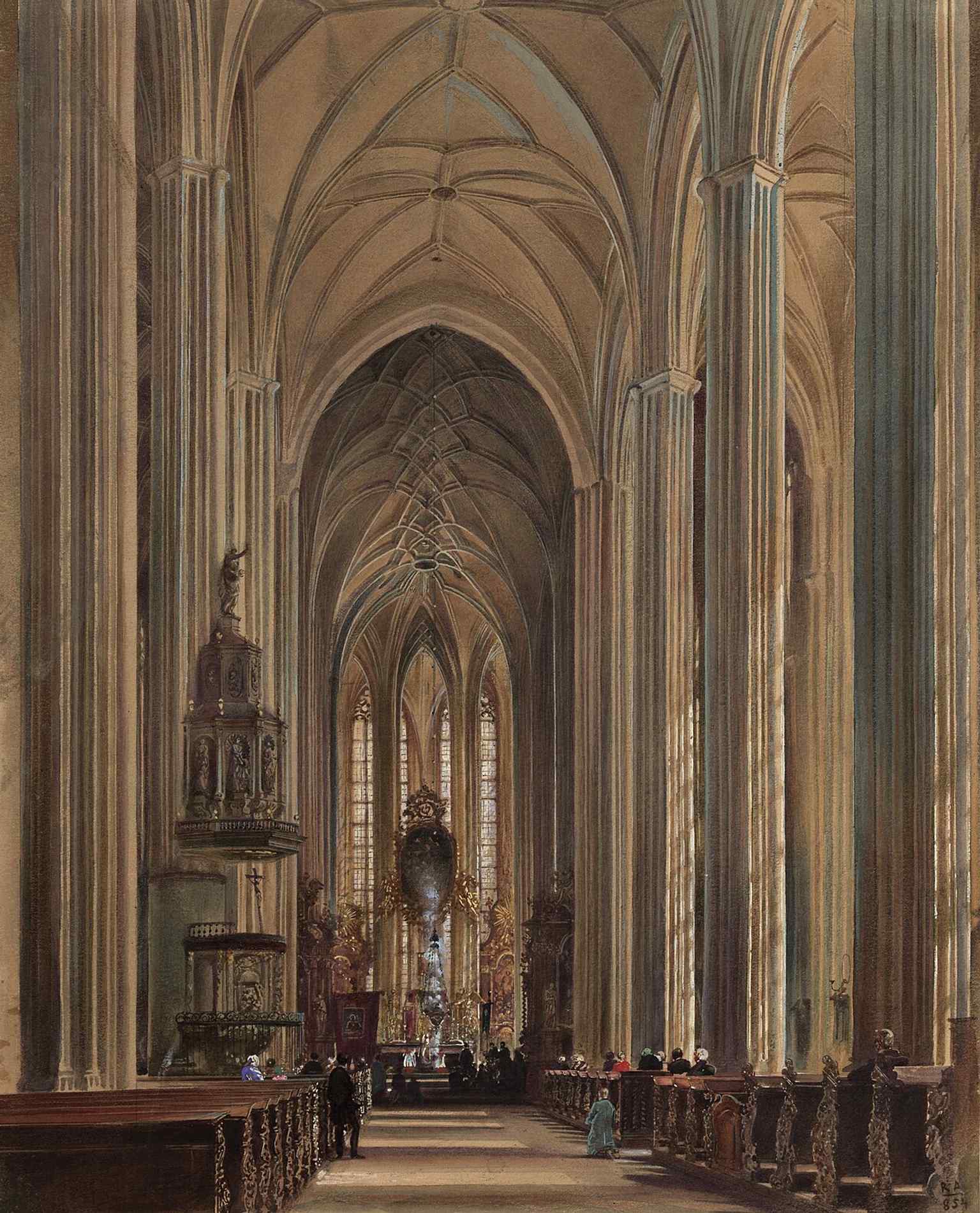
A 19th-century museum view of the church interior, valuable as a historical comparison with the present restored space.
A 19th-century museum view of the church interior, valuable as a historical comparison with the present restored space.Photo: Rudolf von Alt, Wikimedia Commons, Public domain. Cropped & resized.
arrow_back Back to Brno Highlights Audio Tour: Cultural Treasures and Historical Gems
Loved by travellers

Thousands of tours started.
Plenty of opinions.

4.8 across the App Store and Google Play. Here's a few we keep coming back to.

starstarstarstarstar
This was a solid way to get to know Brighton without feeling like a tourist. The narration had depth and context, but didn't overdo it.
Christoph
Christoph
Brighton Tour
starstarstarstarstar
Started this tour with a croissant in one hand and zero expectations. The app just vibes with you, no pressure, just you, your headphones, and some cool stories.
download Get the app

Pop your headphones in.
Step outside.

Free to download. Tours in every city. Start in 60 seconds — no account, no card.

Download on the App StoreGet it on Google Play
starstarstarstarstar_half
4.8
AudaTours app icon
headphones
~ 4 min until your first tour starts
public
1,000+ cities worldwide
all_inclusive
AudaTours
Unlimited

Every tour. Every city. One subscription.

3101 tours2271 cities138 countries50+ languages