
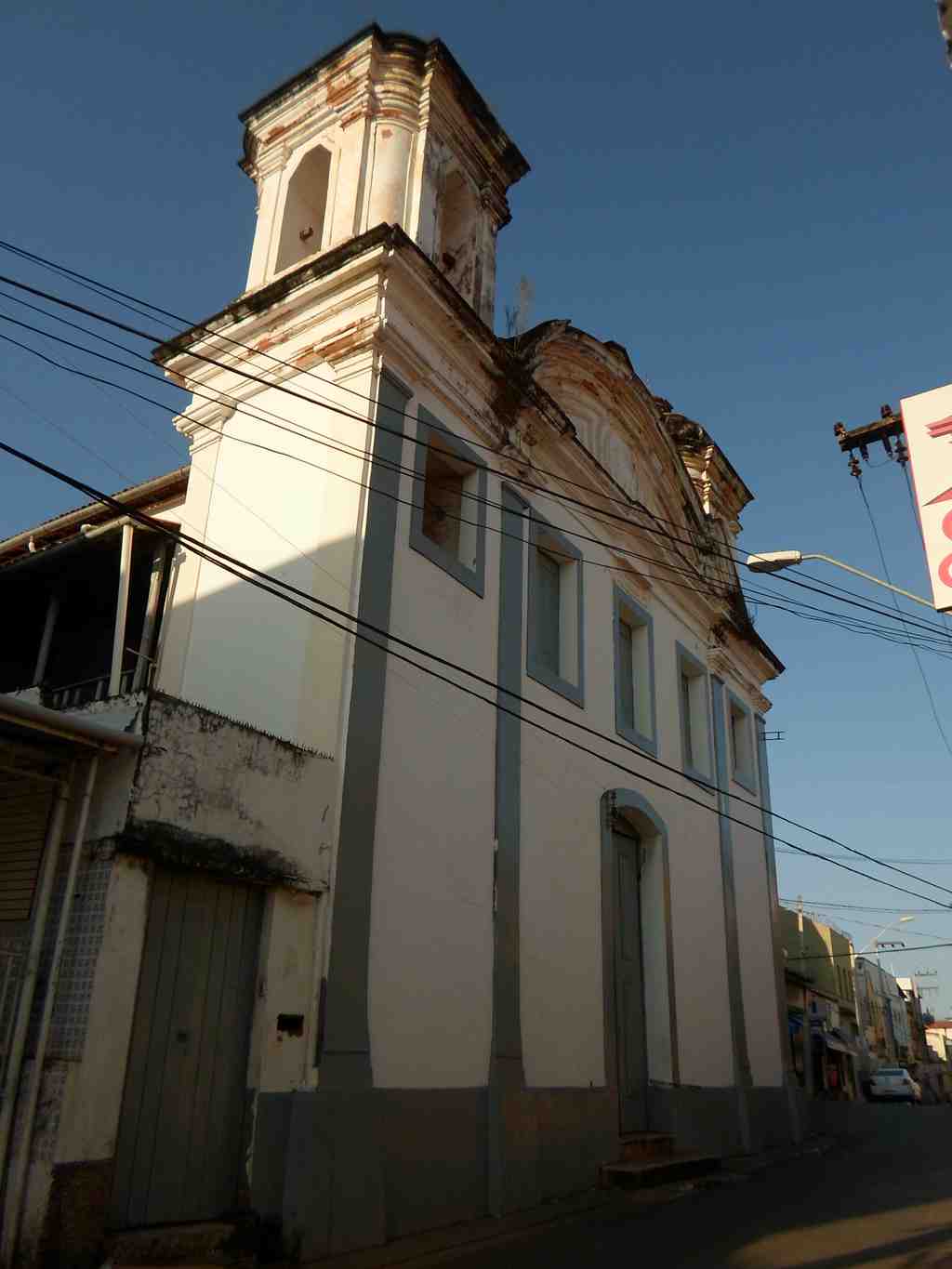
Directly in front of you, the Church of Santana rises along the street with its simple, pale façade marked by a single tall tower and a large arched doorway, so look for the church’s distinct, classical lines and traces of weathered paint above the shops on this narrow road.
Now, as you stand before the Church of Santana, imagine the heat of a São Luís afternoon in 1790, with dust swirling through the historic streets and the distant echoes of hammering and voices as a new vision was built. This church, ordered into existence by Canon João Maria da Leu Costa, was meant to be more than stone and wood. For centuries, it has stood just like this-stubborn, dignified, a mixture of neoclassical grace and the exuberance of Baroque detail. If you stepped closer to its weathered walls, you would see blue-and-white Portuguese tiles on the sides, cooled by the breeze and sunlight, each telling stories from centuries gone by.
Inside, the air would grow stiller, a faint scent of incense haunting the wooden pews. Picture the treasures of the Brotherhood of Senhor Bom Jesus dos Martírios once on display, though now only memories and surviving artifacts linger, reminders of a brotherhood that quietly vanished in the 1960s. From this very door, once a year, a solemn procession emerges on the third Friday of Lent-the faithful, shrouded in tradition and hope, winding their way through twilight as curious onlookers press in.
People often mistake this place for the lost Chapel of Santana da Sagrada Família-there’s a certain mystery, a fading boundary between history and legend. Yet, this is the living heart. It survived storms and centuries, witnessed the pulse of a city’s growth. Recognized by UNESCO, the church is part of the historical center, adapted ingeniously for the tropical heat with tiled panels defending against the sun. Decades ago, restoration brought a new breath to its golden altar and rooftops.
So as you stand here, feel the weight of stories and rituals layered deep in the stone and tile-a place tied inseparably to the soul of São Luís.


