
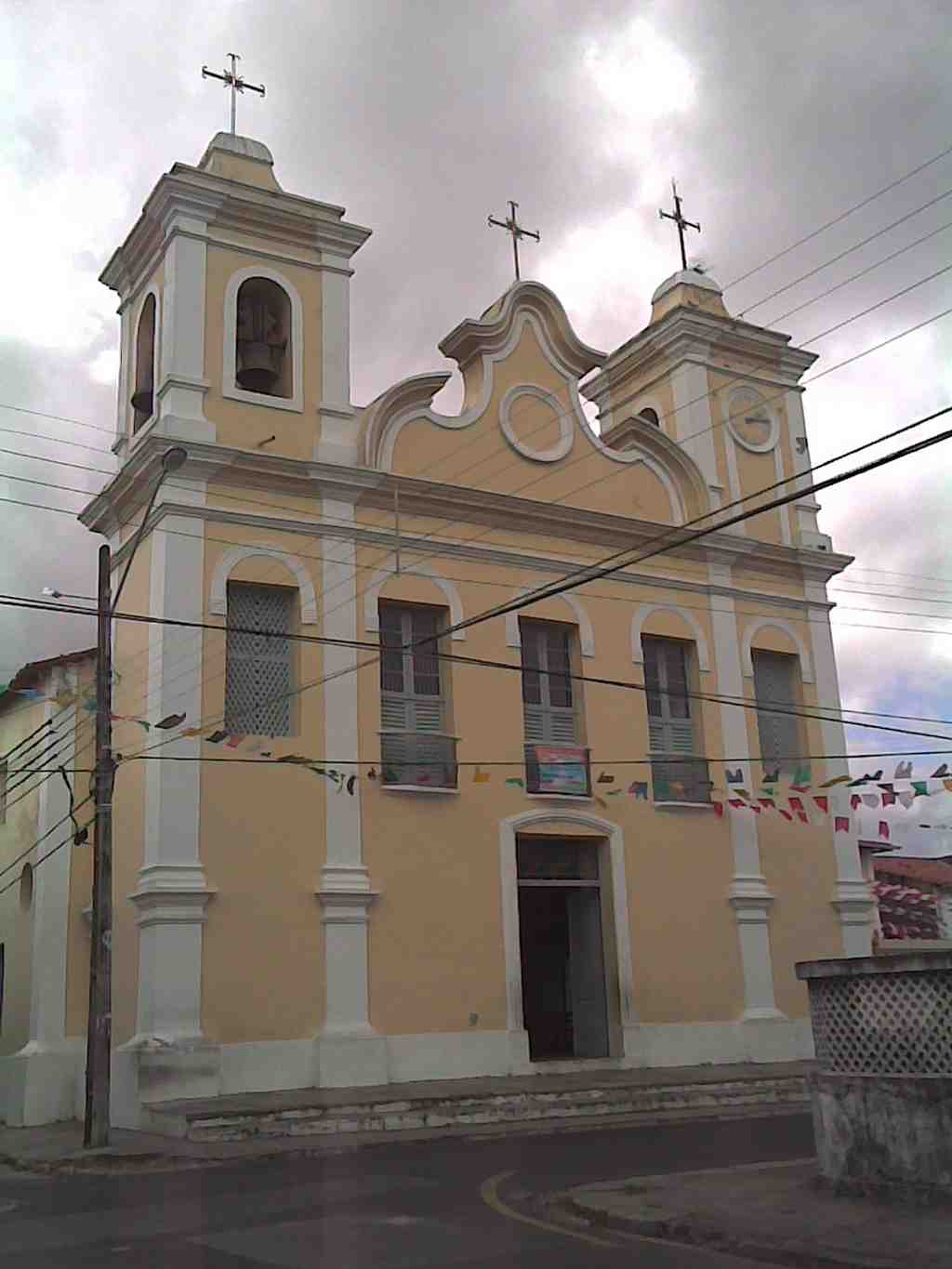
To spot the Church of Pantaleão, look for a soft yellow building squeezed between two narrow streets, its simple Baroque façade flanked by tall twin towers, each crowned with an iron cross, all rising abruptly from the edge of the road with no front courtyard.
As you stand on this corner, pause a moment and listen to São Luís breathe around you. The Church of Pantaleão has watched these streets for more than two centuries. Imagine, if you will, the year is 1780. The colony is poised between centuries of European dreams and fierce local realities. Two men - Pantaleão Rodrigues de Castro and Pedro da Cunha - both wealthy, respected, and ambitious, gathered the city’s faithful, marked ground where we stand now, and began construction of a church for Saint Joseph. The sound of picks and hammers must have rung out every day, mingling with prayers as the walls rose slowly under the relentless São Luís sun. Yet, like so many dreams in this city, their work met delays. Both founders died before seeing their vision completed, and the work fell to their sons-a legacy of devotion passed on, even as the world changed.
Look around and picture these streets two hundred years ago, far less crowded, the air heavy with the promise of coming independence. When the doors finally opened in 1817, crowds packed these narrow lanes. There was music, celebration, and a great gathering to welcome Saint Joseph’s image, the same one that still rests inside the church today. But there’s more to this church than grand ceremonies. There are layers of community, tragedy, and even a touch of superstition written into its stones.
In the early 1800s, disaster loomed as the church fell into ruin, its cemetery forced into existence behind the building when plague and epidemic swept the city. Imagine the sadness of those days, the bells echoing, the ground behind the church growing crowded with hurried burials. Yet, it endured, rebuilt time and again as São Luís grew, and as each era left its mark-such as the splendid wrought iron balconies and transom added in 1894, a small but proud touch of elegance you can admire if you step closer.
The church carries stories within its plain exterior-look for those details, like the iron balcony work and the twin towers, one hosting a bell that once pealed over the city to mark both celebration and warning. The interior is modest and simple, humble compared to many in Brazil, but no less sacred to the countless people who have found hope here over centuries. And deep within the church is something extraordinary: relics of Saint Severa, a Roman child-martyr. In 1847, bone fragments from this ancient saint were brought all the way from Italy. Local legend runs deeper still. They say if you pierce her wax image with a pin, it will bleed-a chilling thought that held both fright and fascination for generations.
This place is steeped in both fact and fable. Perhaps you’ve heard the legend of the enchanted serpent that slumbers below your feet. Intertwined with the old canals that run under São Luís, it is said the city rests on the serpent’s twisting form. Its head lies beneath a distant fountain, its belly deep under a convent, and its coiled tail-right here, beneath this very church. Should the serpent ever awaken, the story goes, São Luís will be no more. For centuries, children have whispered and parents have shivered at the thought.
Today, the church bears the name of both Saint Pantaleão and Saint Joseph, but its popular name-born from its benefactor-is a reminder that here, the past is never truly gone. Saints, founders, orphans who once turned the foundling’s wheel for a second chance, generations of faithful-all their stories echo here. This building is protected as part of the UNESCO World Heritage Site, honored and watched over by the city and all who pass by. So, as you peer at its weathered stone and listen to the faint hum of São Luís around you, remember: every plain wall, every echo of the bell, is centuries of hope, heartache, legends, and lives all layered right here where you now stand.
Curious about the name, location or the timeline? Don't hesitate to reach out in the chat section for additional details.


