
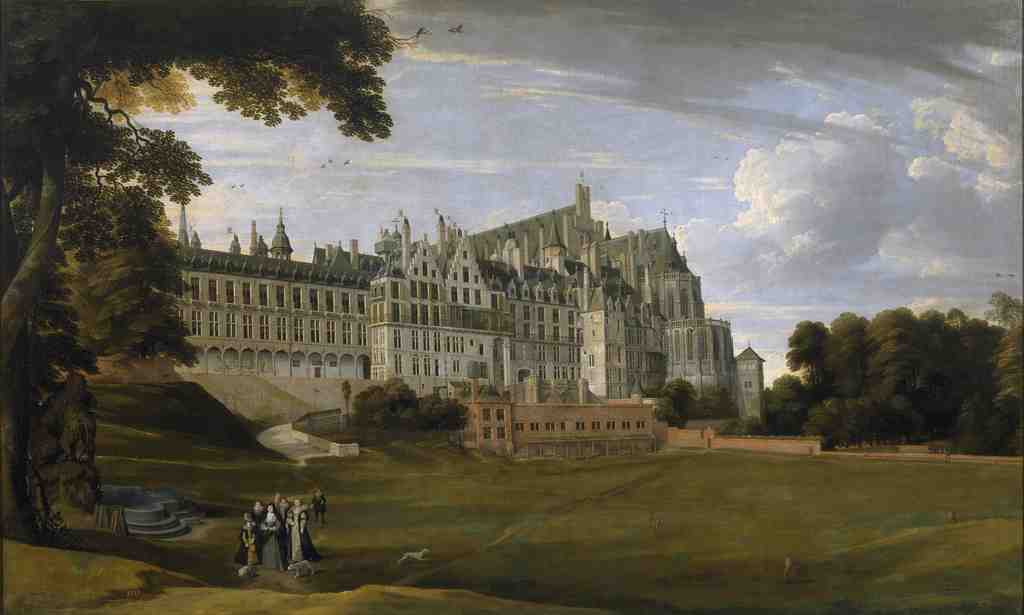
To spot the Palace on the Coudenberg, look for the vast, fortress-like structure rising grandly above the slope with a maze of pointed roofs, elegant gables, and tall rows of windows overlooking a green courtyard-imagine the palace straight ahead, dominating the scene with its sprawling, almost fairy tale silhouette.
Now, let’s step into the shoes (or maybe the royal slippers) of centuries past. Imagine yourself standing on this same hill in Brussels, but now it’s the 1400s and the melody of horse hooves and the murmur of courtly gossip are drifting on the breeze. Welcome to the Palace on the Coudenberg-back then, the beating heart of Brussels’ power, drama, and sometimes hilarity.
The story starts in the 11th century, with little more than a sturdy stone fort perched up here-a perfect spot for keeping watch and, perhaps, for a duke to enjoy the view. Enter the likes of Jan I, Jan II, and Jan III, who decided that fortress life needed a touch of royal flair. They transformed this holdfast into a palace fit for a duke’s dreams and, as it turns out, even bigger ambitions.
By the time Philip the Good strutted onto the scene in the 15th century, Brussels was ready for its glow up. Philip wanted a showpiece-a seat of power that would dazzle visitors and possibly make rival cities a little jealous. Shortly after his grand arrival, he inspired the locals to buy up extra land and kickstart construction of the Aula Magna, a massive hall so wondrous that it sparkled like a jewel in the crown of Brussels. From then on, the Coudenberg Palace wasn’t just a residence-it was the center of a kingdom, a place where rulers planned, artists inspired, and more than a few secrets were kept behind stone walls.
Rulers came and went: Charles the Bold preferred Mechelen; the mighty Charles V presided here, and even abdicated his vast empire in these halls, passing the crown (and responsibility!) to his son, Philip II. Imagine the tense excitement in 1530 as Maria of Hungary was declared regent right here, her voice echoing over the marble floors. Builders hurried to add grand staircases adorned with statues by Jean Guilgot. Far from being just another palace, this was a wonder of Europe-a place where the air hummed with the energy of diplomacy, intrigue, and the occasional royal quarrel. Even Albrecht Dürer, the famous artist, admitted that he’d never seen such splendor anywhere else.
The palace was not just walls and windows-the grounds were filled with dazzling gardens, a menagerie of animals, even a labyrinth where courtiers might get genuinely lost or “accidentally” run into their crushes. There was a summerhouse painted golden ochre and crowned by four sharp gables-a whimsical retreat for whispering secrets or escaping a stuffy banquet (and perhaps the in-laws).
But history always finds a twist, doesn’t it? In 1731, while a banquet was being planned (and someone, ironically, was making jam), fire broke out. Within hours, the mighty palace was engulfed in flames. Officially, the story was “kitchen mishap,” but whispers in the shadows blamed a certain lady’s candle or a heating device left too close to bed sheets. As panic tore through the halls, servants scrambled to save priceless treasures-books, art, even a few church relics-while the city’s citizens were held at bay, maybe out of fear of looting, or maybe because they’d had a bit too much to drink.
Brussels’ iconic palace smoldered, its walls blackened, rooms gutted, and dreams of grandeur left in ruins. For a time, royal business moved to new neighborhoods, and the shell of Coudenberg sat forgotten-until the district was rebuilt and the present-day square, Koningsplein, rose up over the ashes. Today, only the palace’s foundations and cellars remain, hiding secrets beneath your feet-an underground labyrinth you can explore via the BELvue Museum, where stories of past splendor and royal mischief echo in the dark. Quite the place to lose your head-or, at the very least, your sense of time!
Ready to delve deeper into the fire, demolition and reconstruction, current situation or the gallery? Join me in the chat section for an enriching discussion.


