AudaTours logoAudaTours

Stop 3 of 16

The Greenplace Apartments in the Heart of Antwerp - Apartment with Terrace

The Greenplace Apartments in the Heart of Antwerp - Apartment with Terrace
Green place
Green placePhoto: Rolf Kranz, Wikimedia Commons, CC BY-SA 4.0. Cropped & resized.

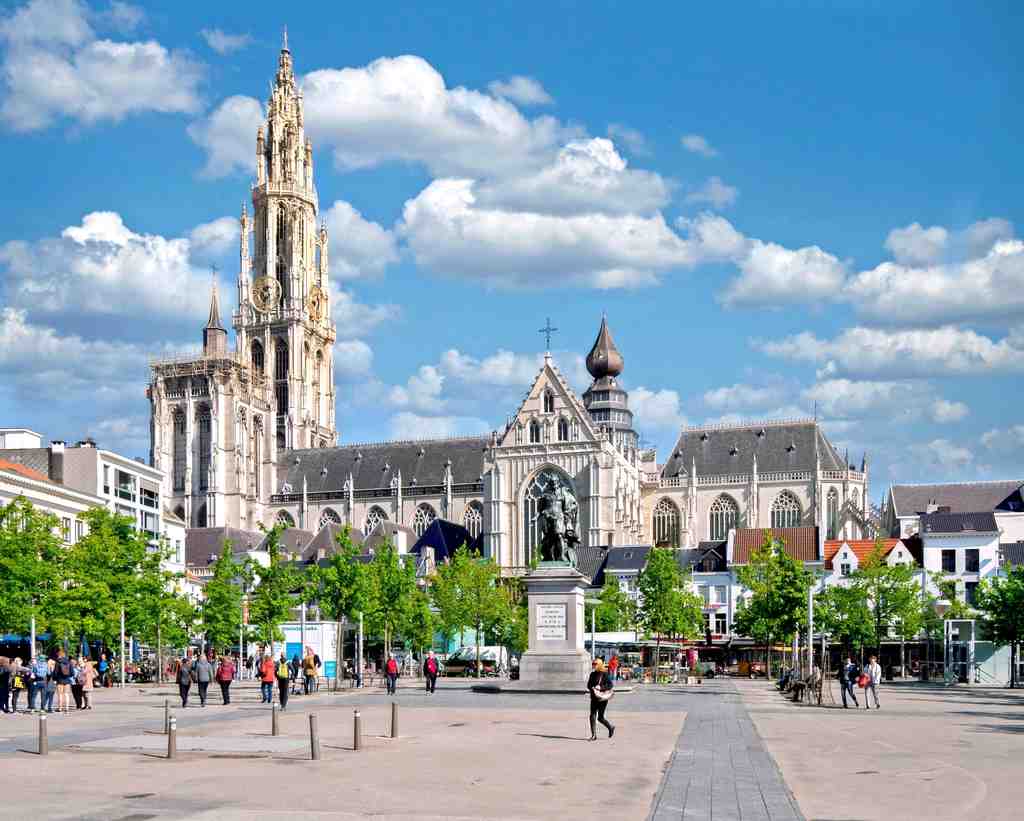
Look for a broad stone-paved square with a dark bronze statue on a tall pedestal at its centre, edged by orderly trees and enclosed by grand historic facades.

For all its openness, this square began as something much more intimate. From at least the thirteenth century, this ground beside the Cathedral of Our Lady served as Antwerp’s cemetery, especially for people too poor to afford burial inside the church itself. It was known as the Groenkerkhof, the Green Churchyard, and for centuries the dead lay here at the very heart of city life, with trade, prayer, gossip and grief all pressing in around them.

Then the rules changed. In seventeen eighty-four, Emperor Joseph the Second forbade burials inside city walls. Antwerp shifted its cemeteries elsewhere, and a few years later the French state seized this churchyard. In seventeen ninety-nine, workers pulled down the walls around it. By eighteen oh three, they had begun turning sacred ground into a public square called Place de l’Egalité, the Square of Equality. They even demolished houses along the Schoenmarkt side and planted three rows of linden trees, giving the place a deliberately modern, revolutionary order. In eighteen oh five, the prefect Charles d’Herbouville formally opened it again under a new name: Place Bonaparte, in honour of Napoleon. Revolutionary ideals, as ever, proved rather flexible.

The French had imagined a monument to Liberty here. Later, after a municipal official named François Roché was killed inside the cathedral in seventeen ninety-seven during fierce arguments over the churchyard’s seizure, people proposed a memorial to him instead. That never happened either. In the end, Antwerp chose a different figure to command the square: Peter Paul Rubens.

The sculptor Willem Geefs designed the Rubens monument in eighteen forty, and the city unveiled it in eighteen forty-three. It stands close to the former tomb of Bishop Karel d’Espinoza, and it replaced an older cross that had marked the churchyard’s centre since the first of November, seventeen thirty-nine. So even this proud statue of the city’s great painter stands on ground layered with older meanings.

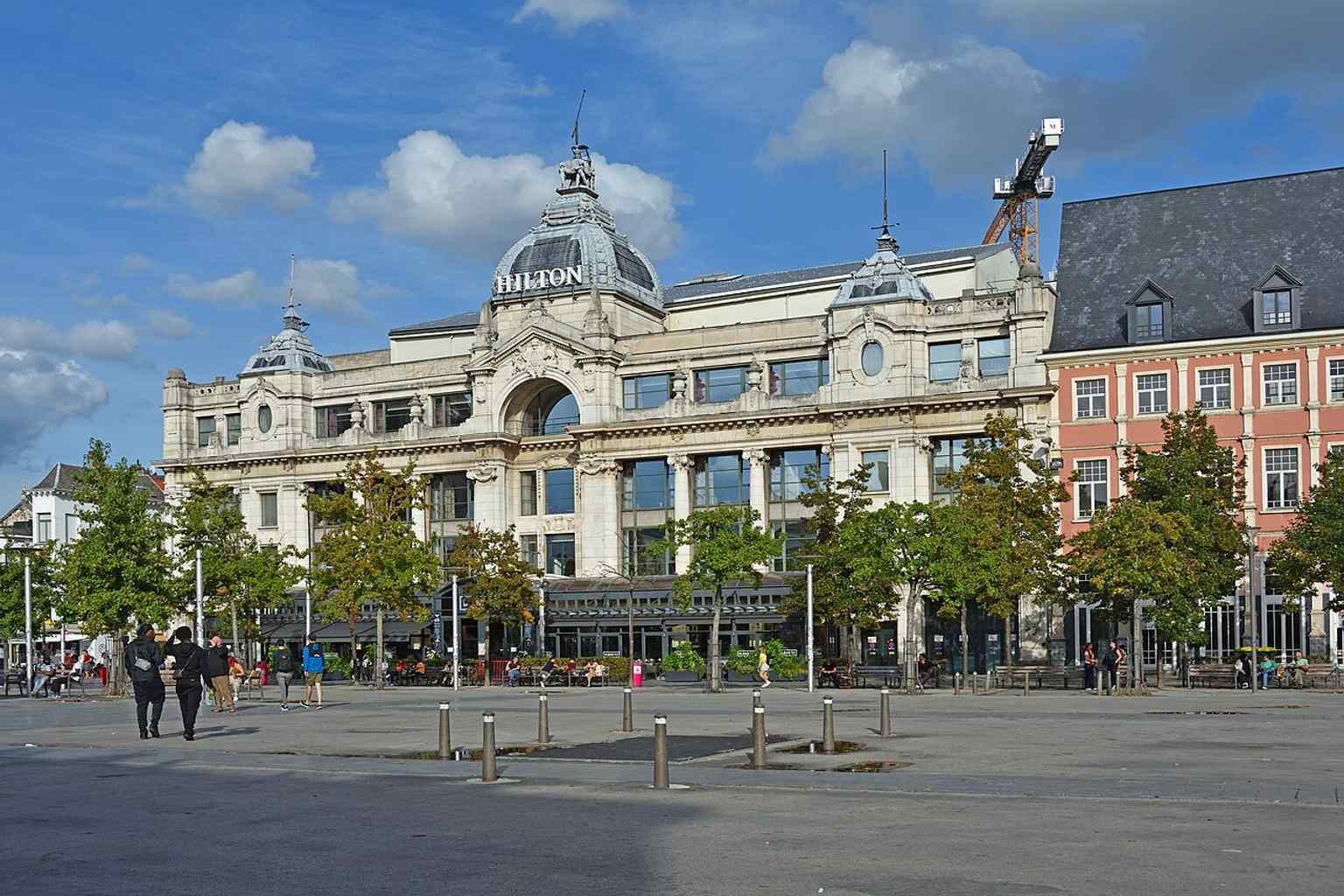
If you fancy it, have a quick look at the before-and-after image; it shows how the square shifted from the greener openness of the eighteen nineties into a busier paved plaza, while Rubens still keeps his place almost unchanged. Around the edges, the buildings continue the story. The cathedral is the grandest presence, of course, but several surrounding facades are protected as monuments too. The former Grand Bazar building, now a hotel, recalls the square’s commercial life; in eighteen eighty-five the French entrepreneur Adolphe Kileman opened his department store there, and by nineteen fifty-nine it even gained one of Belgium’s earliest supermarkets. Nearby, the Karbonkelhuis, also called the Diamond House, dates from around fifteen twenty and counts among Antwerp’s earliest homes in Renaissance style.

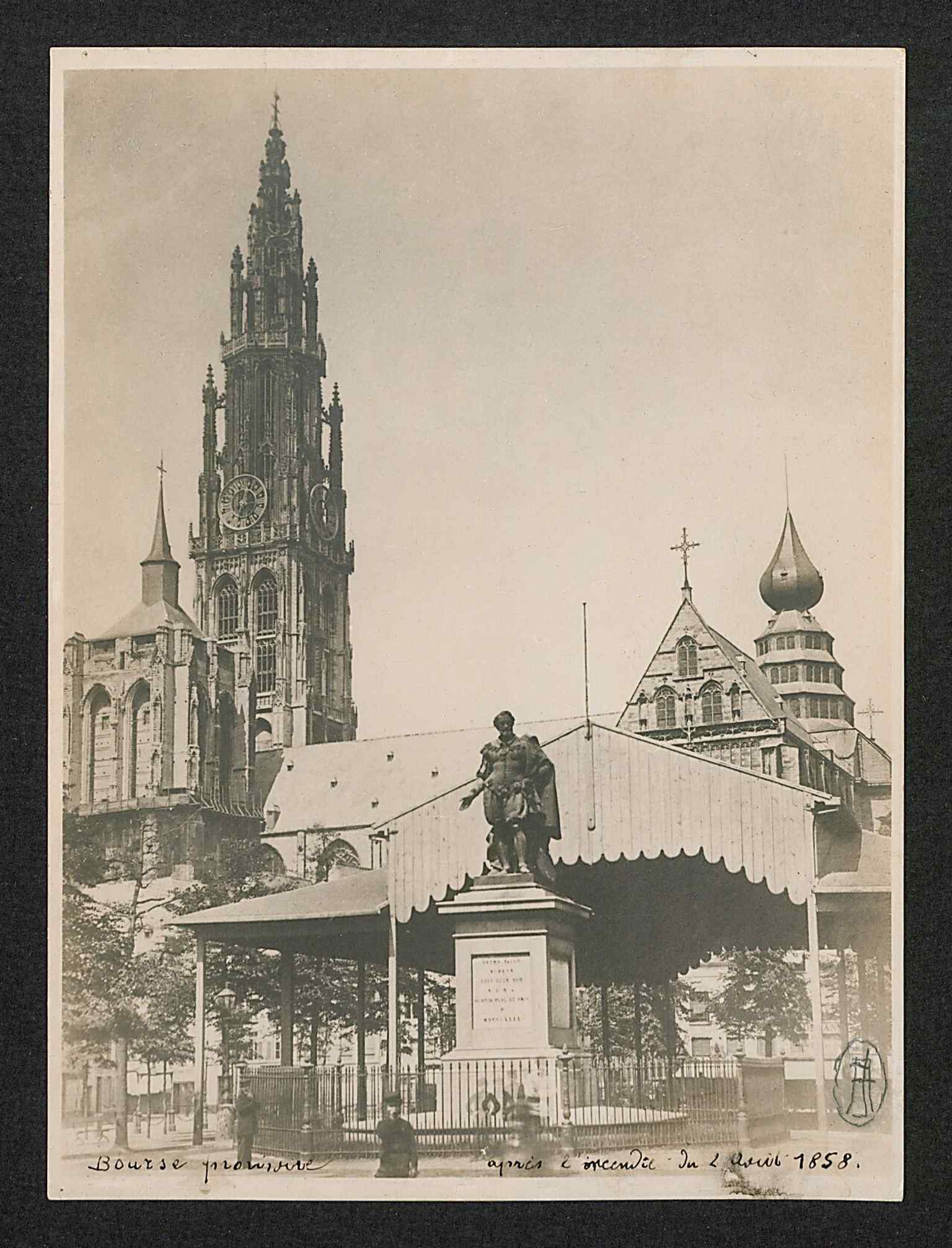
Groenplaats also became a transport stage. Hire carriages gathered here from eighteen thirty-nine to meet rail travellers. In eighteen seventy-three, the horse tram, splendidly nicknamed the American Iron Road, began carrying passengers from here to the Wilrijk Gate. After the nearby stock exchange burned in eighteen fifty-eight, the city even installed a temporary wooden exchange building on this square for about a decade: not elegant, perhaps, but undeniably useful.

Groenplaats is a fine Antwerp habit: it keeps changing, yet never quite forgets what stood here before. When you’re ready, carry on to the next stop and let the city reveal another of its old disguises.
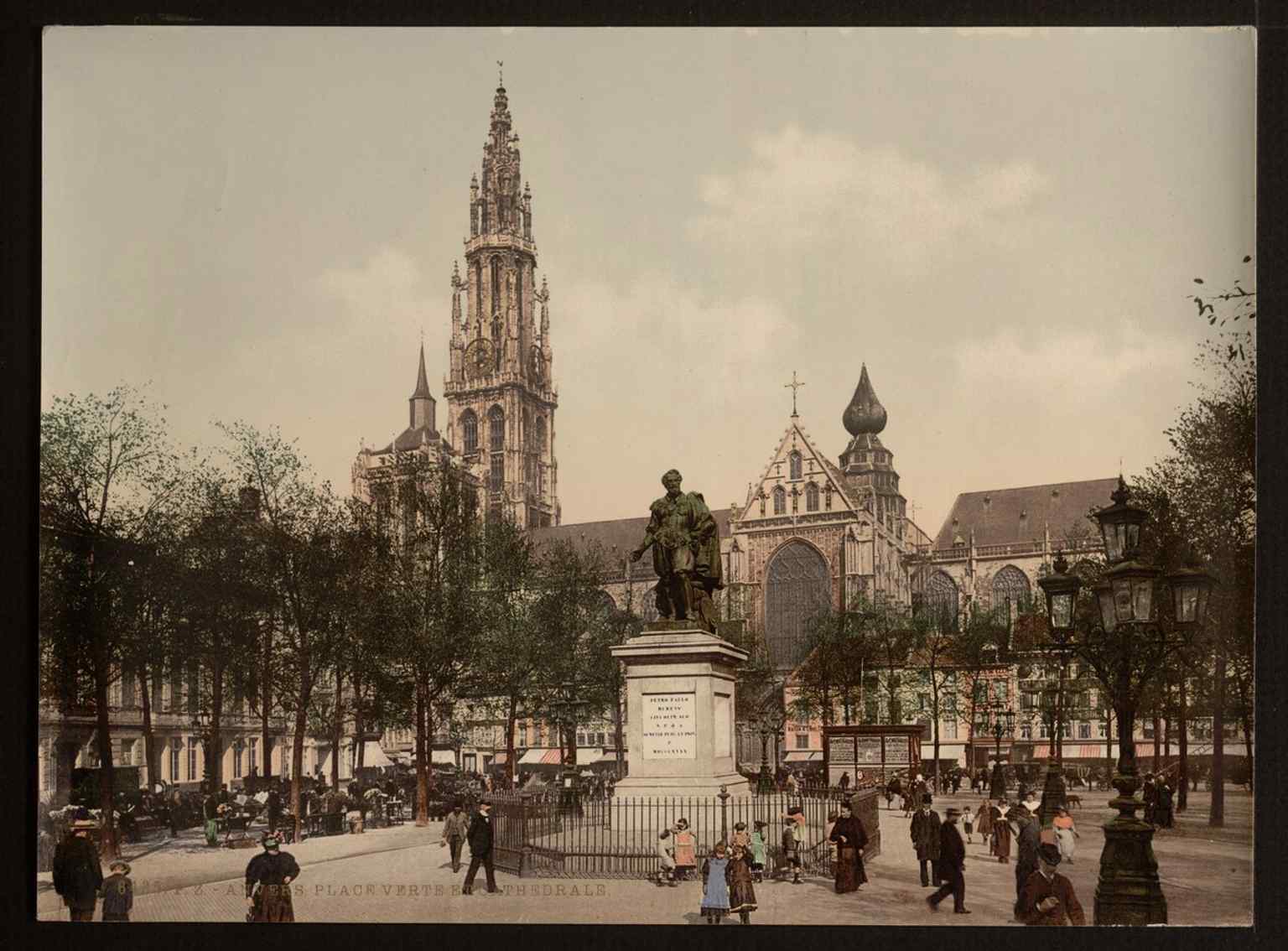
Groenplaats around 1890, with Rubens’ statue in the foreground and the Cathedral of Our Lady behind it — a classic view of the square’s historic heart.
Groenplaats around 1890, with Rubens’ statue in the foreground and the Cathedral of Our Lady behind it — a classic view of the square’s historic heart.Photo: Detroit Publishing Co., Wikimedia Commons, Public domain. Cropped & resized.
A 1857 print of the temporary Antwerp stock exchange on the Groenplaats, a reminder of how the square was used for emergency civic functions after the 1858 fire.
A 1857 print of the temporary Antwerp stock exchange on the Groenplaats, a reminder of how the square was used for emergency civic functions after the 1858 fire.Photo: Unknown, Wikimedia Commons, CC0. Cropped & resized.
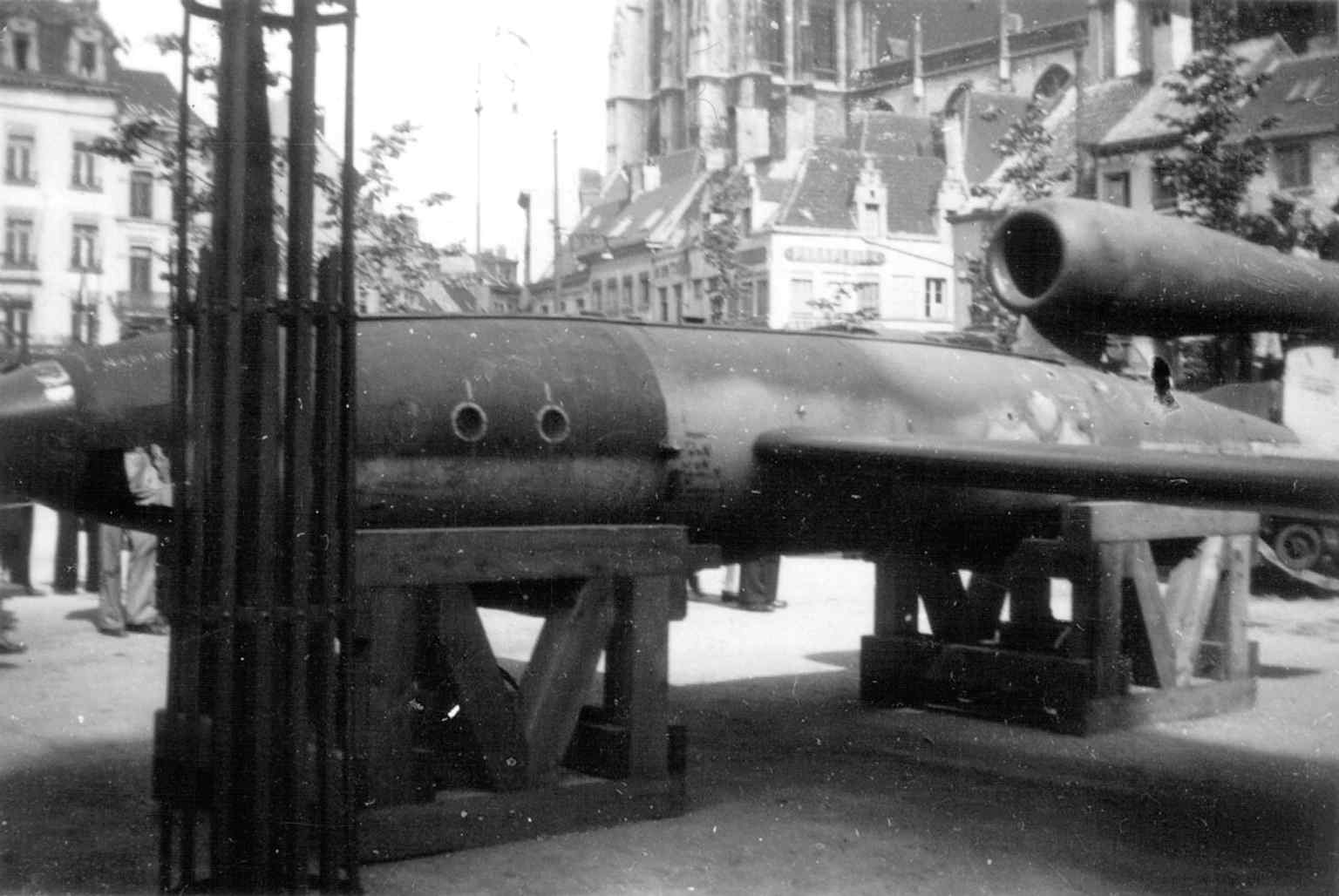
A rare wartime scene on the Groenplaats, with a V-1 on display and the cathedral in the background — showing how the square has long been a stage for major public events.
A rare wartime scene on the Groenplaats, with a V-1 on display and the cathedral in the background — showing how the square has long been a stage for major public events.Photo: Jan B.H.A. Vervloedt (photo) Ad Meskens (scan), Wikimedia Commons, CC BY-SA 3.0. Cropped & resized.
The open square with Rubens’ statue and the cathedral — the key landmark pairing that defines the Groenplaats today.
The open square with Rubens’ statue and the cathedral — the key landmark pairing that defines the Groenplaats today.Photo: Wouter Hagens, Wikimedia Commons, CC BY-SA 3.0. Cropped & resized.
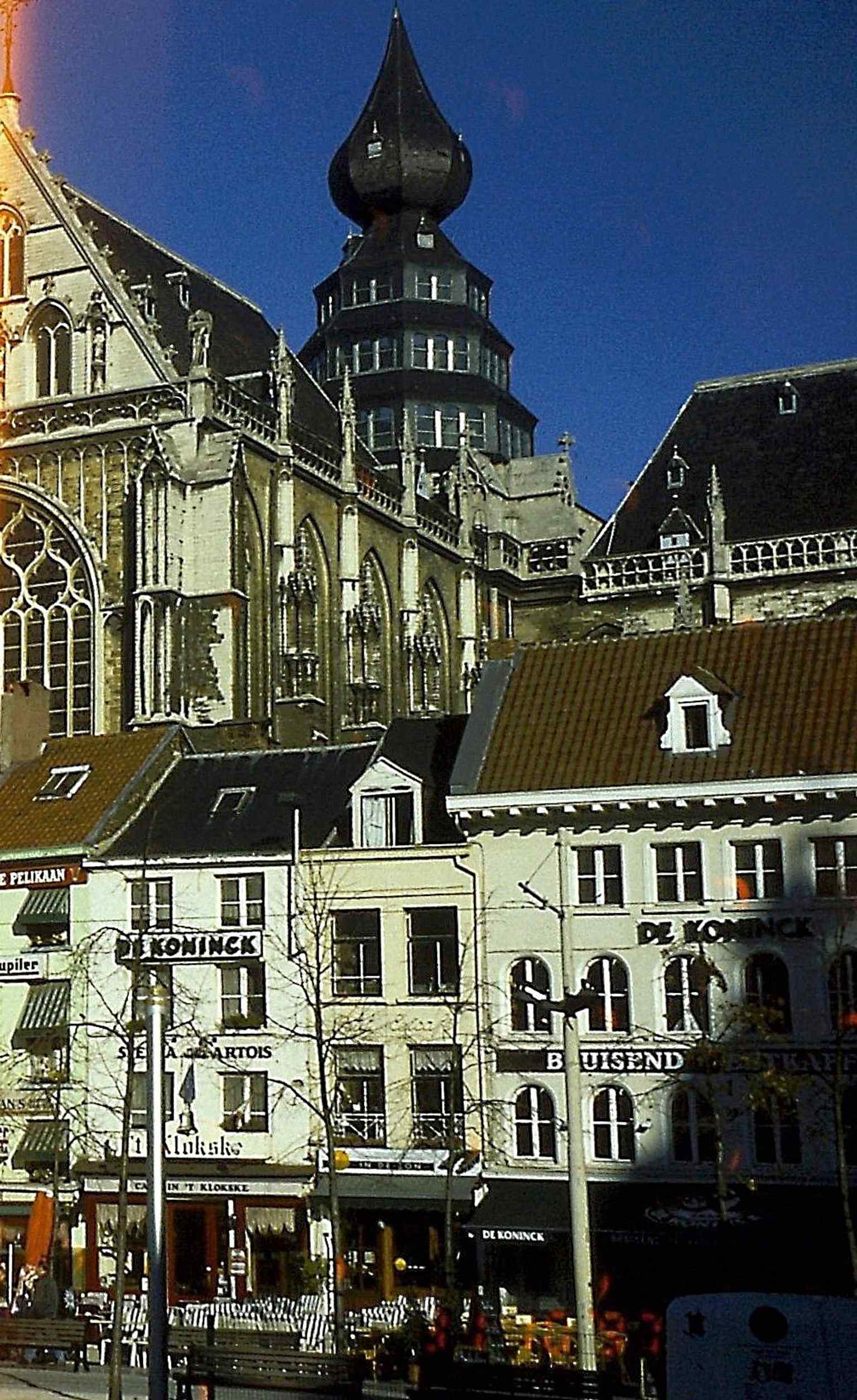
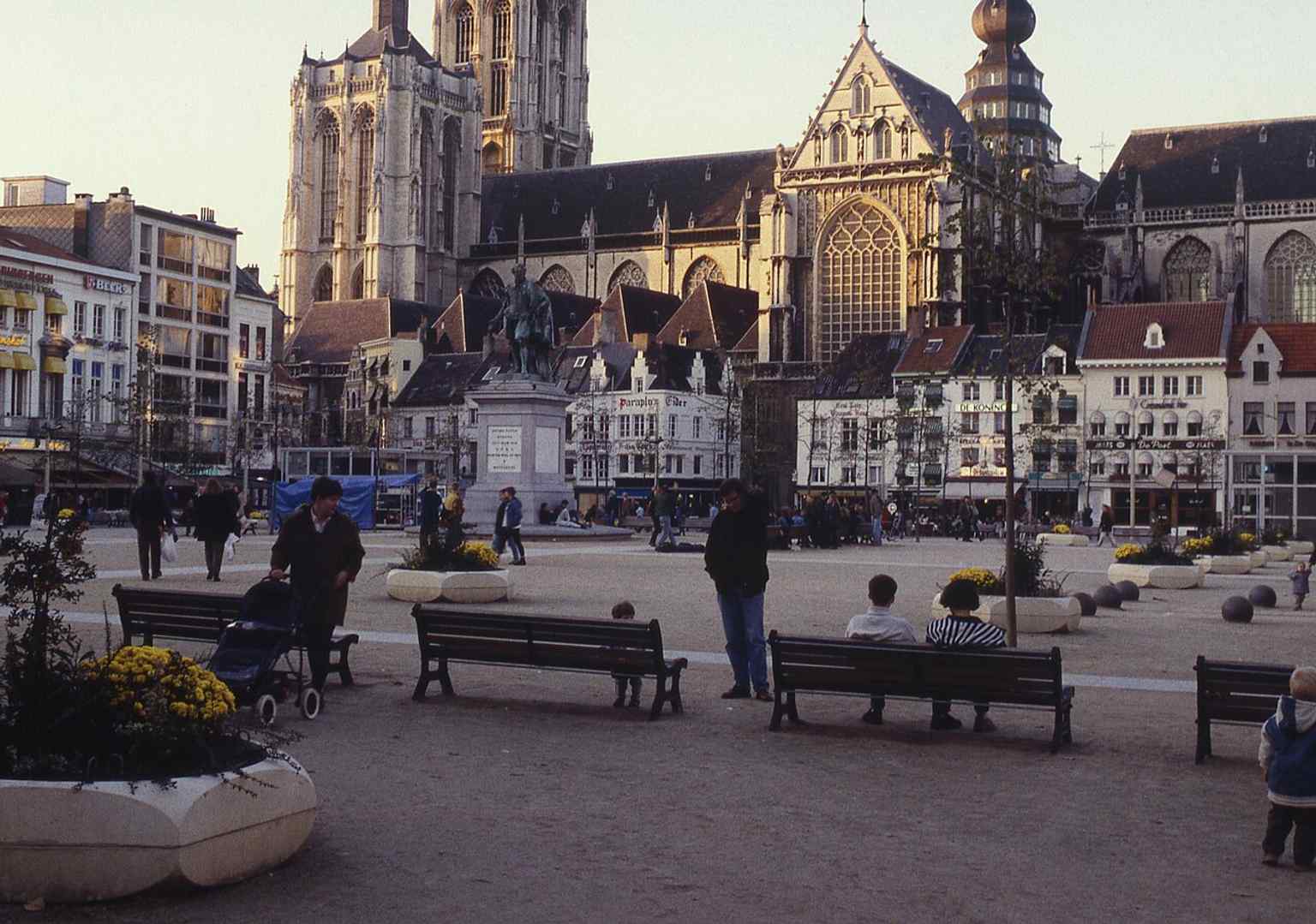
A north-side detail of the Groenplaats near the cathedral, showing the built edge of the square where historic facades line the open space.
A north-side detail of the Groenplaats near the cathedral, showing the built edge of the square where historic facades line the open space.Photo: Karlunun, Wikimedia Commons, CC BY-SA 4.0. Cropped & resized.
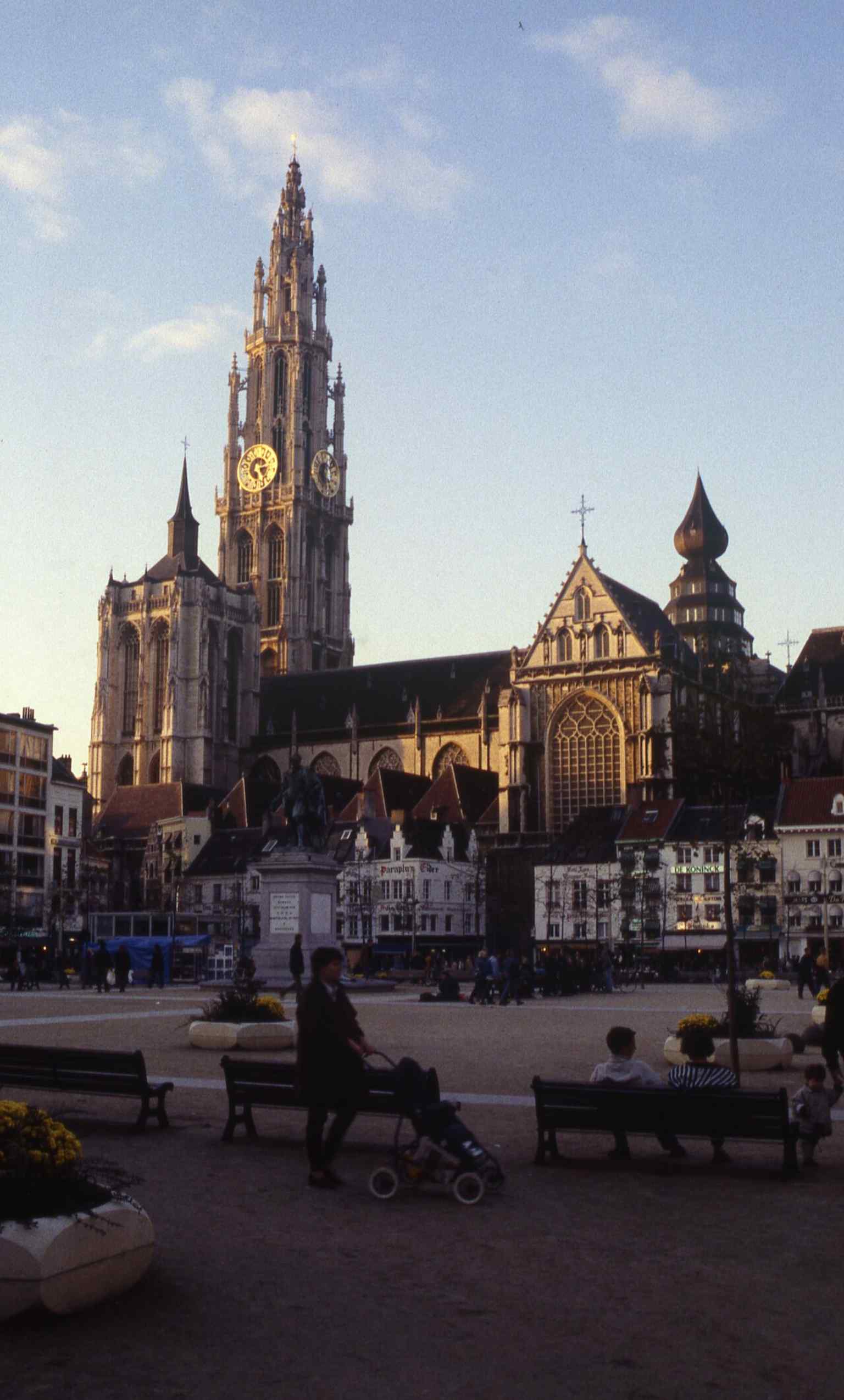
Autumn on the Groenplaats, with the cathedral nearby and the square’s tree-lined character still clearly visible.
Autumn on the Groenplaats, with the cathedral nearby and the square’s tree-lined character still clearly visible.Photo: Smiley.toerist, Wikimedia Commons, CC BY-SA 4.0. Cropped & resized.
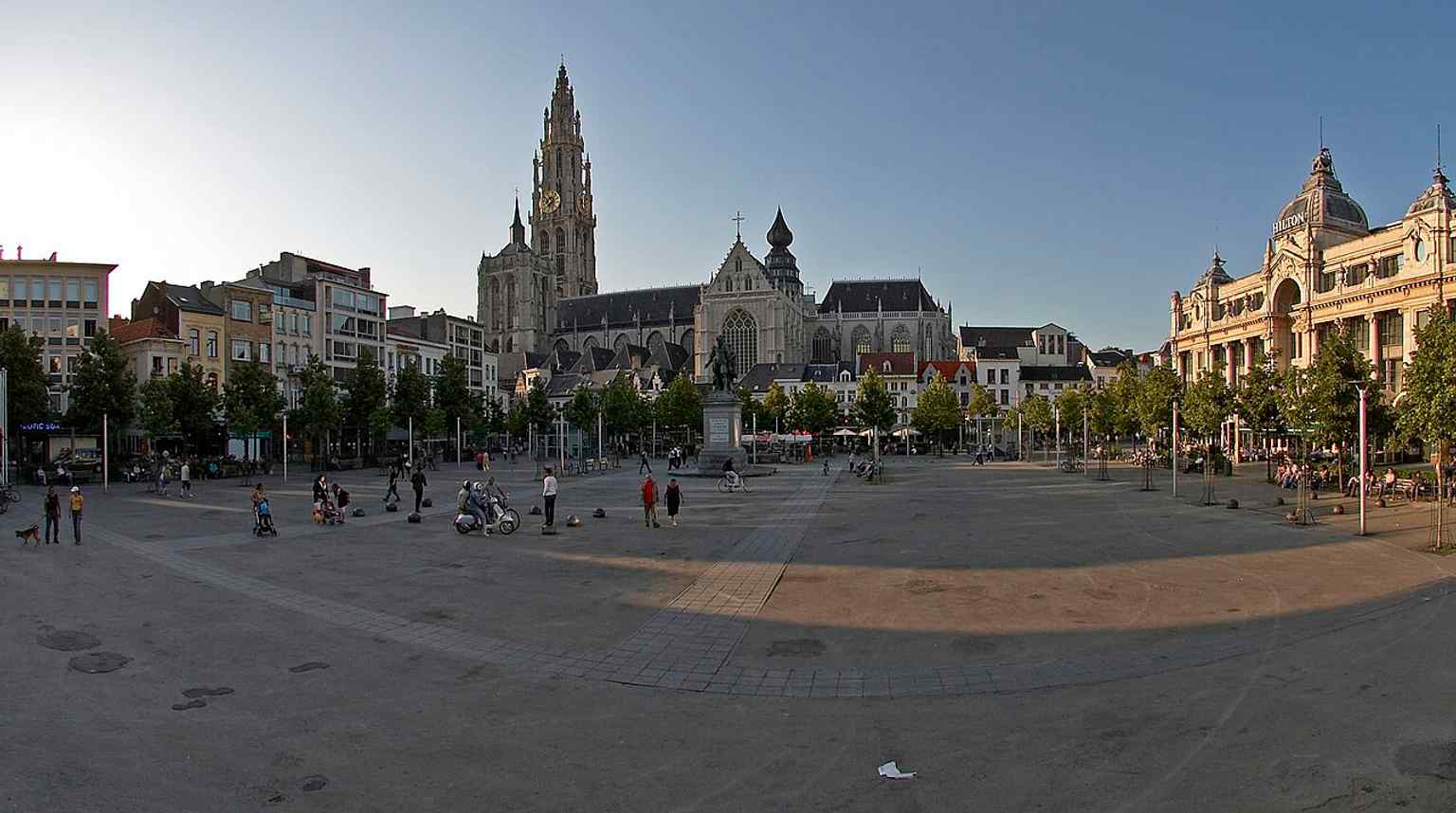
Another broad view of the Groenplaats, useful for showing the open pedestrian space in the center of Antwerp.
Another broad view of the Groenplaats, useful for showing the open pedestrian space in the center of Antwerp.Photo: Smiley.toerist, Wikimedia Commons, CC BY-SA 4.0. Cropped & resized.
The former Grand Bazar building, now the Hilton on Groenplaats 31, representing the square’s historic commercial architecture.
The former Grand Bazar building, now the Hilton on Groenplaats 31, representing the square’s historic commercial architecture.Photo: Ludvig14, Wikimedia Commons, CC BY-SA 4.0. Cropped & resized.
arrow_back Back to Antwerp Audio Tour: Cathedrals, Legends & Timeless Treasures Unveiled
Loved by travellers

Thousands of tours started.
Plenty of opinions.

4.8 across the App Store and Google Play. Here's a few we keep coming back to.

starstarstarstarstar
This was a solid way to get to know Brighton without feeling like a tourist. The narration had depth and context, but didn't overdo it.
Christoph
Christoph
Brighton Tour
starstarstarstarstar
Started this tour with a croissant in one hand and zero expectations. The app just vibes with you, no pressure, just you, your headphones, and some cool stories.
download Get the app

Pop your headphones in.
Step outside.

Free to download. Tours in every city. Start in 60 seconds — no account, no card.

Download on the App StoreGet it on Google Play
starstarstarstarstar_half
4.8
AudaTours app icon
headphones
~ 4 min until your first tour starts
public
1,000+ cities worldwide
all_inclusive
AudaTours
Unlimited

Every tour. Every city. One subscription.

3101 tours2271 cities138 countries50+ languages