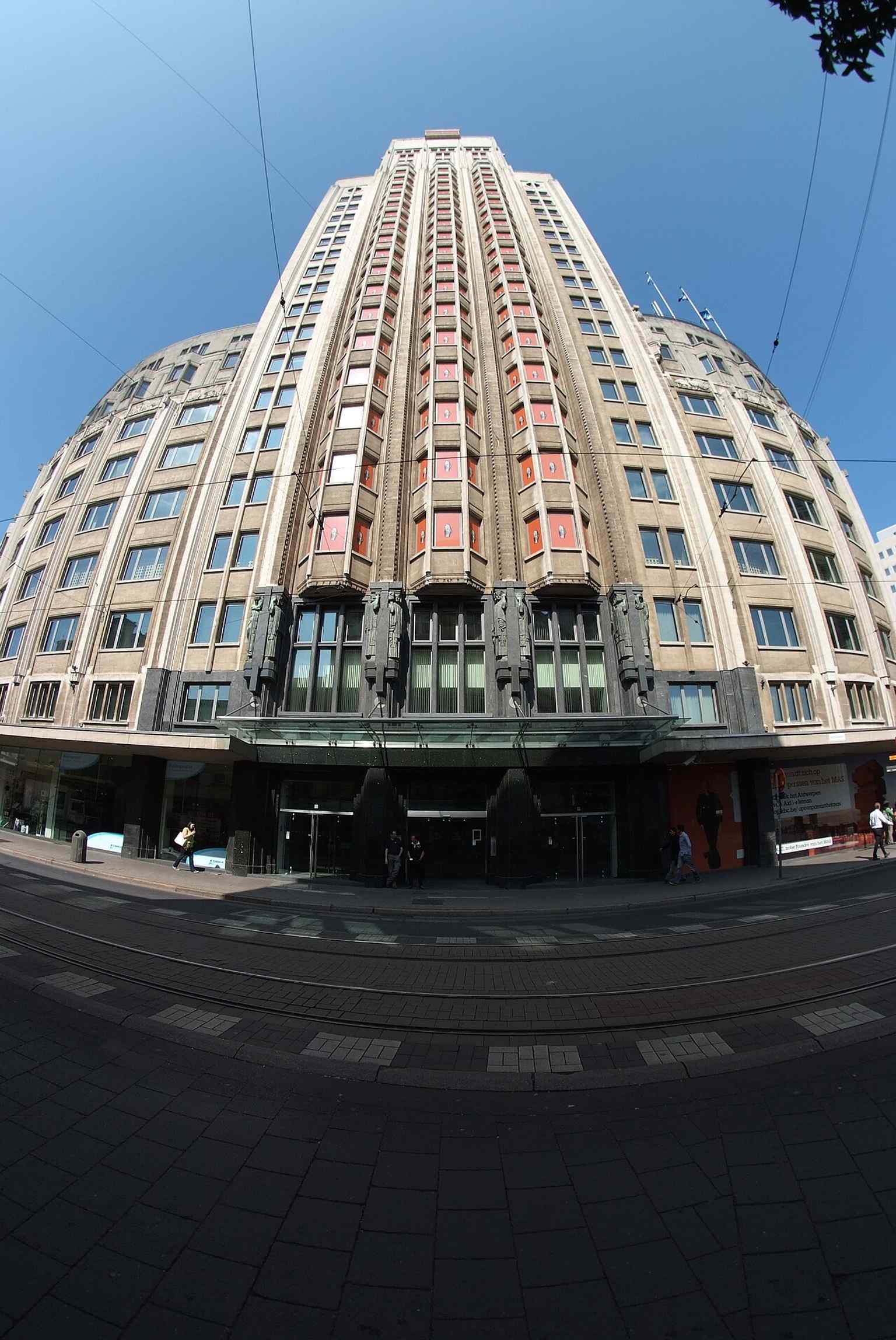
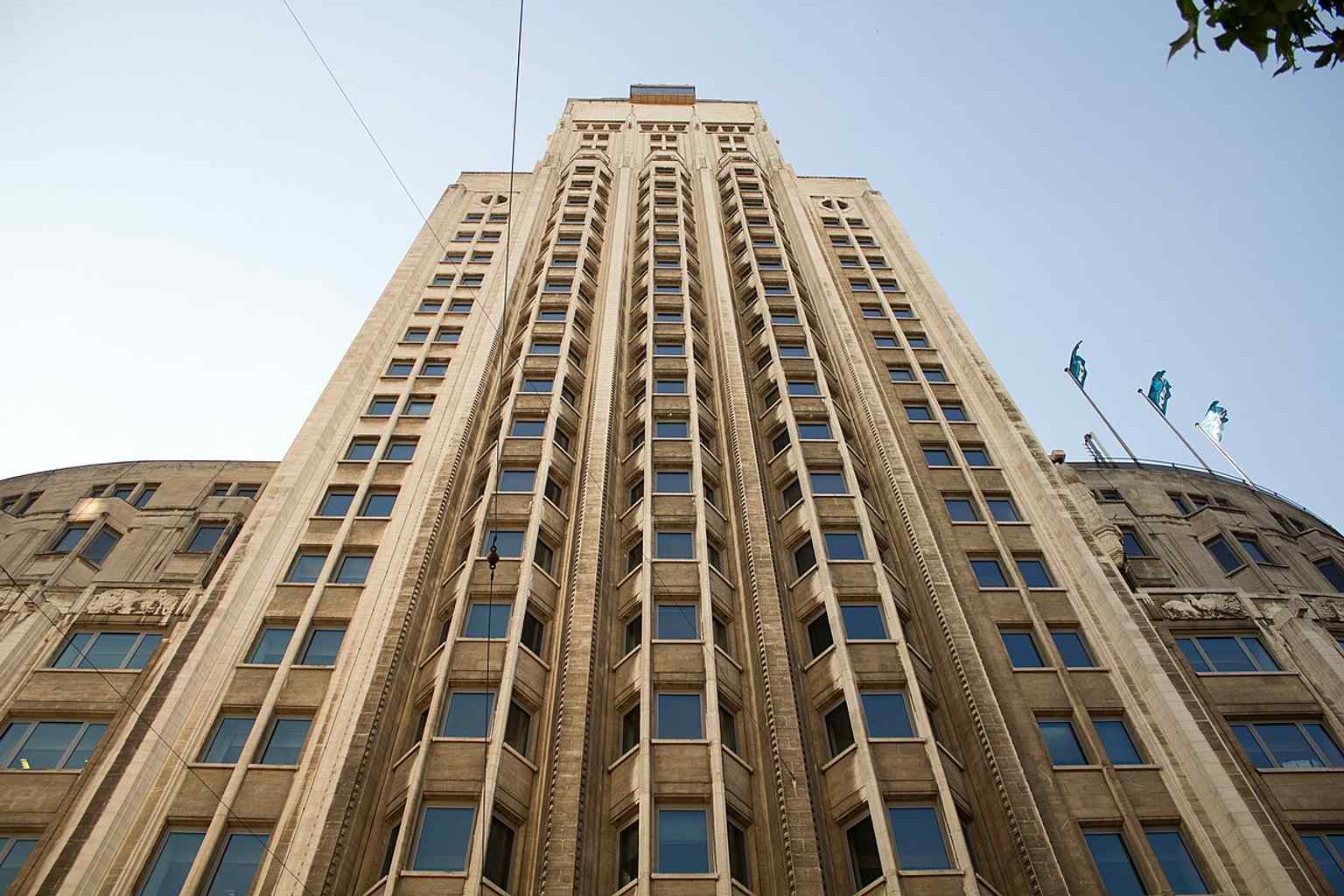
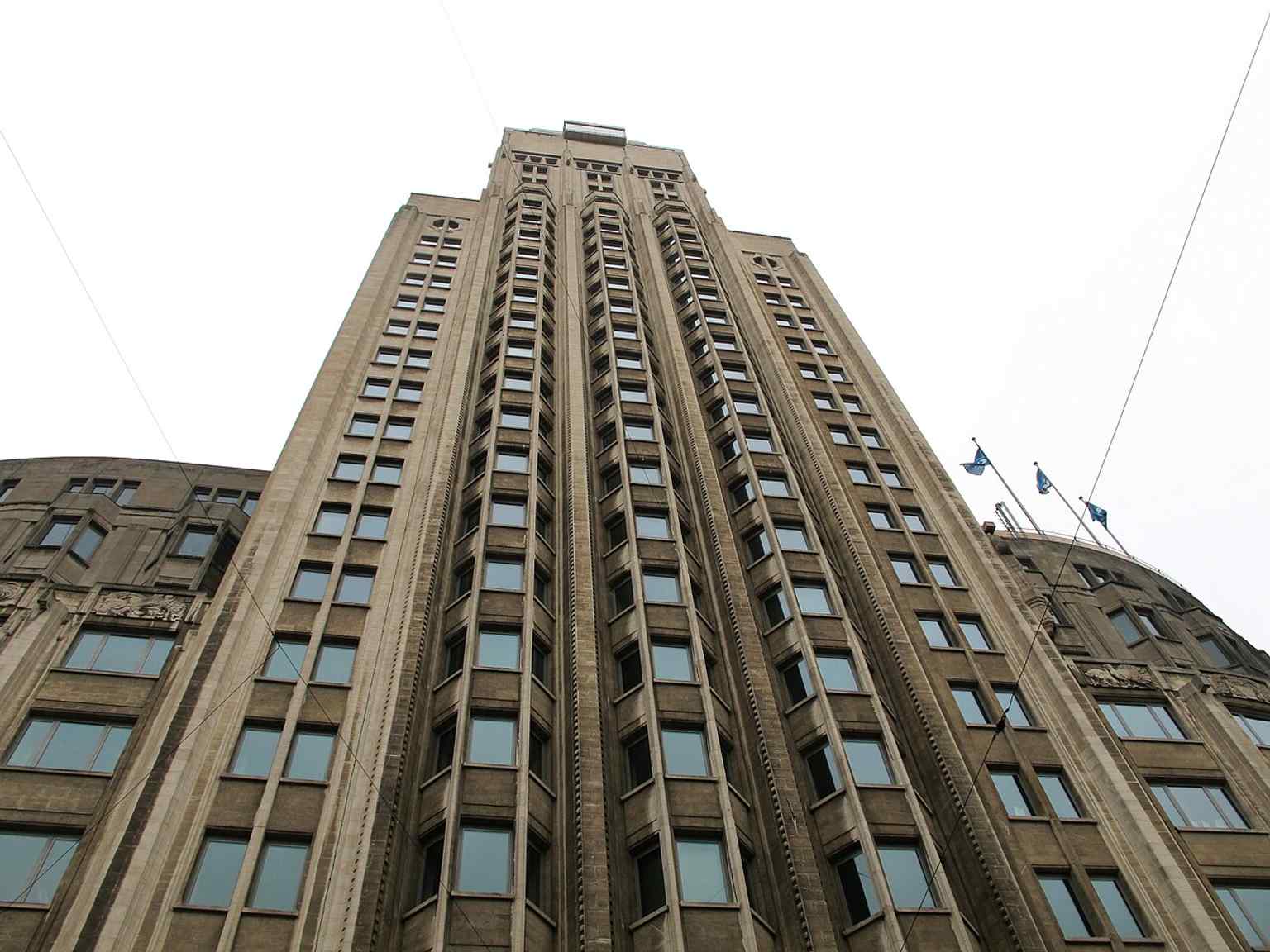
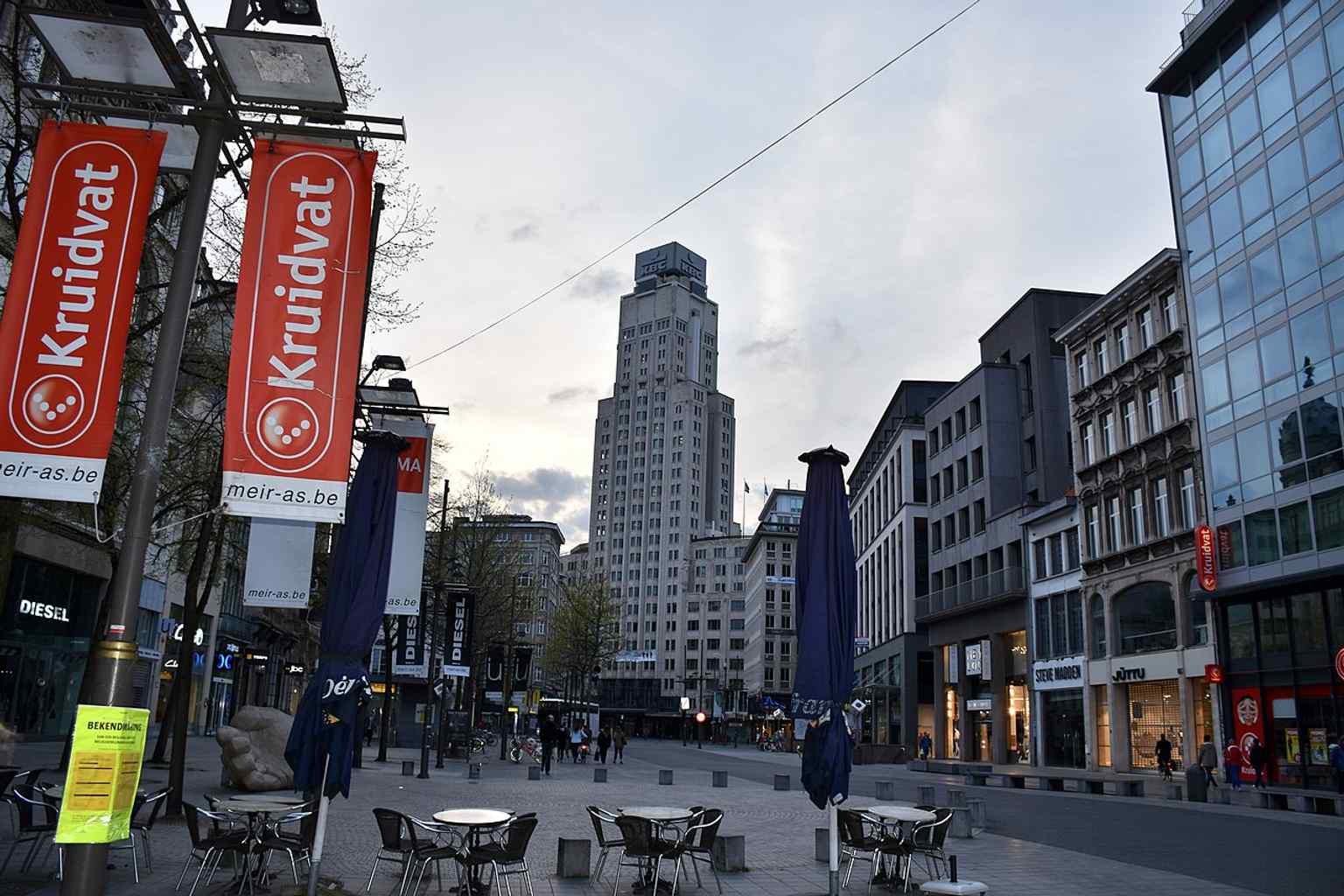
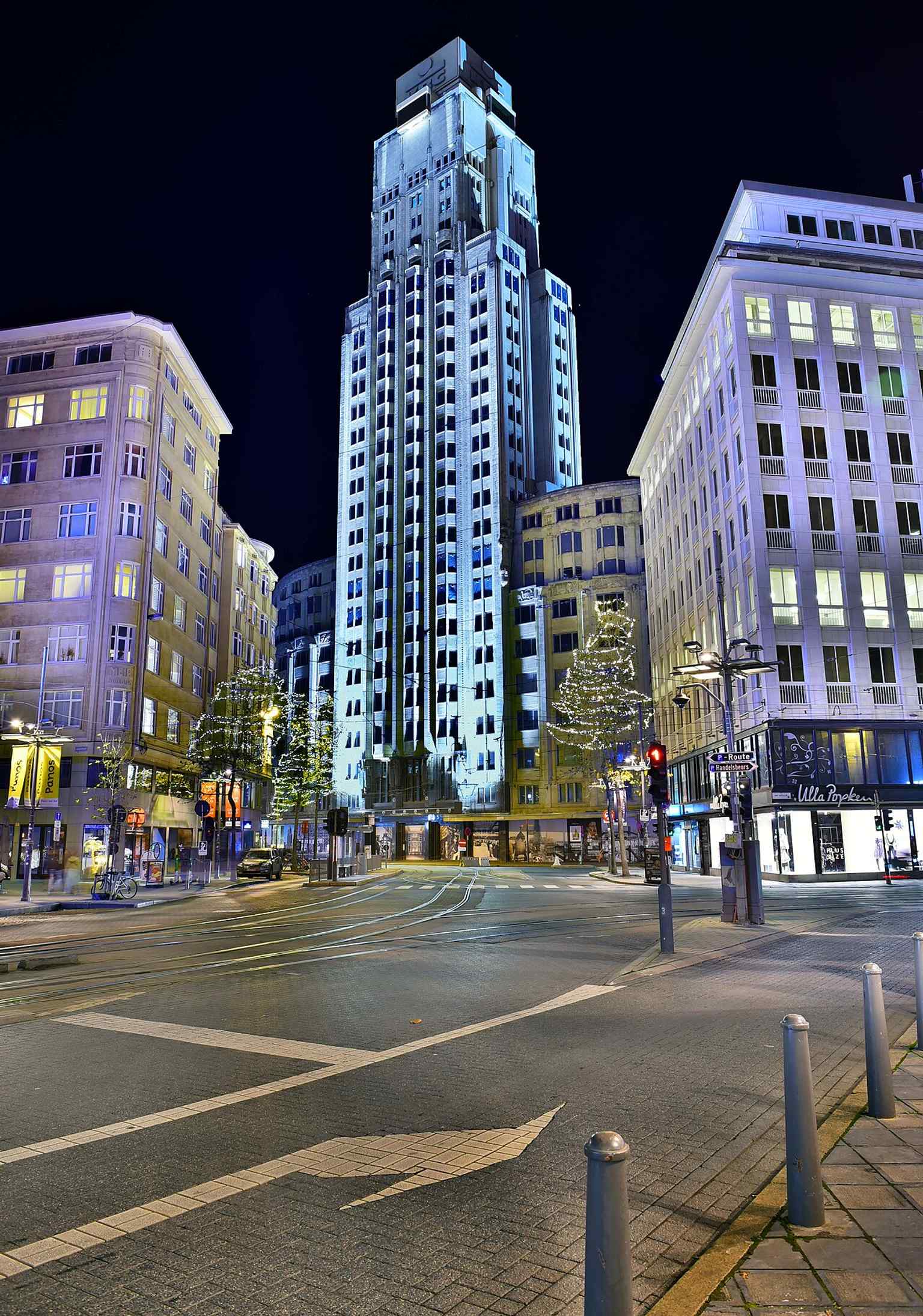
Look for the pale stone tower rising in stepped Art Deco layers, with strong vertical ribs and a dark marble-framed entrance at its base.
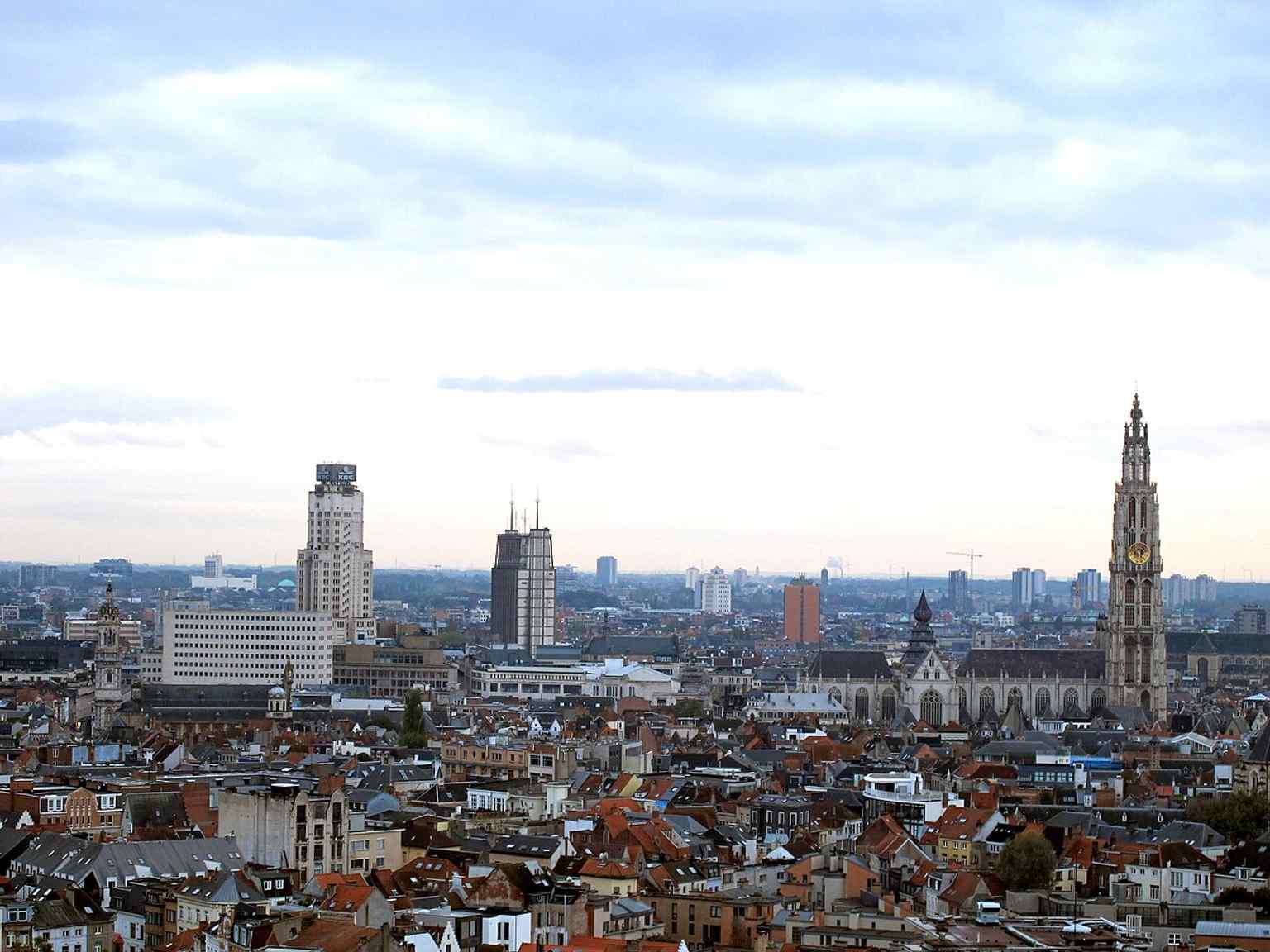
This is the Boerentoren, completed in nineteen thirty-one: often described as one of Europe’s first skyscrapers, and for a time the tallest tower building on the continent. Only Antwerp’s Cathedral stood higher. That alone tells you something about the city’s confidence. Antwerp did not merely want another office block here. It wanted a statement at the end of the Meir, a kind of urban full stop.
The story begins with destruction. In nineteen fourteen, during the German siege of Antwerp, the houses on this block were blasted into ruins. What stood here afterwards was a wound in the middle of the city. In nineteen nineteen, the city launched a competition to remake the area, and in the nineteen twenties Mayor Frans Van Cauwelaert pushed for something bold, especially with a world exhibition on the horizon. The city sold this plot in nineteen twenty-eight for seven point two million Belgian francs, roughly about three million euros in today’s money, to the Algemeene Bankvereeniging, a bank tied to the Belgian farmers’ movement.
That connection gave the tower its nickname. People called it the Boerentoren, the Farmers’ Tower, first with a wink and later with a sharper edge. In nineteen thirty-four, the Middenkredietkas, linked to that same network, collapsed after pouring money into rescuing the bank behind this project. The shortfall reached nine hundred and thirty million Belgian francs, an immense sum, and many savers waited in stages for twenty-eight years to recover what they could. Antwerp has always been very good at turning financial scandal into memorable architecture.
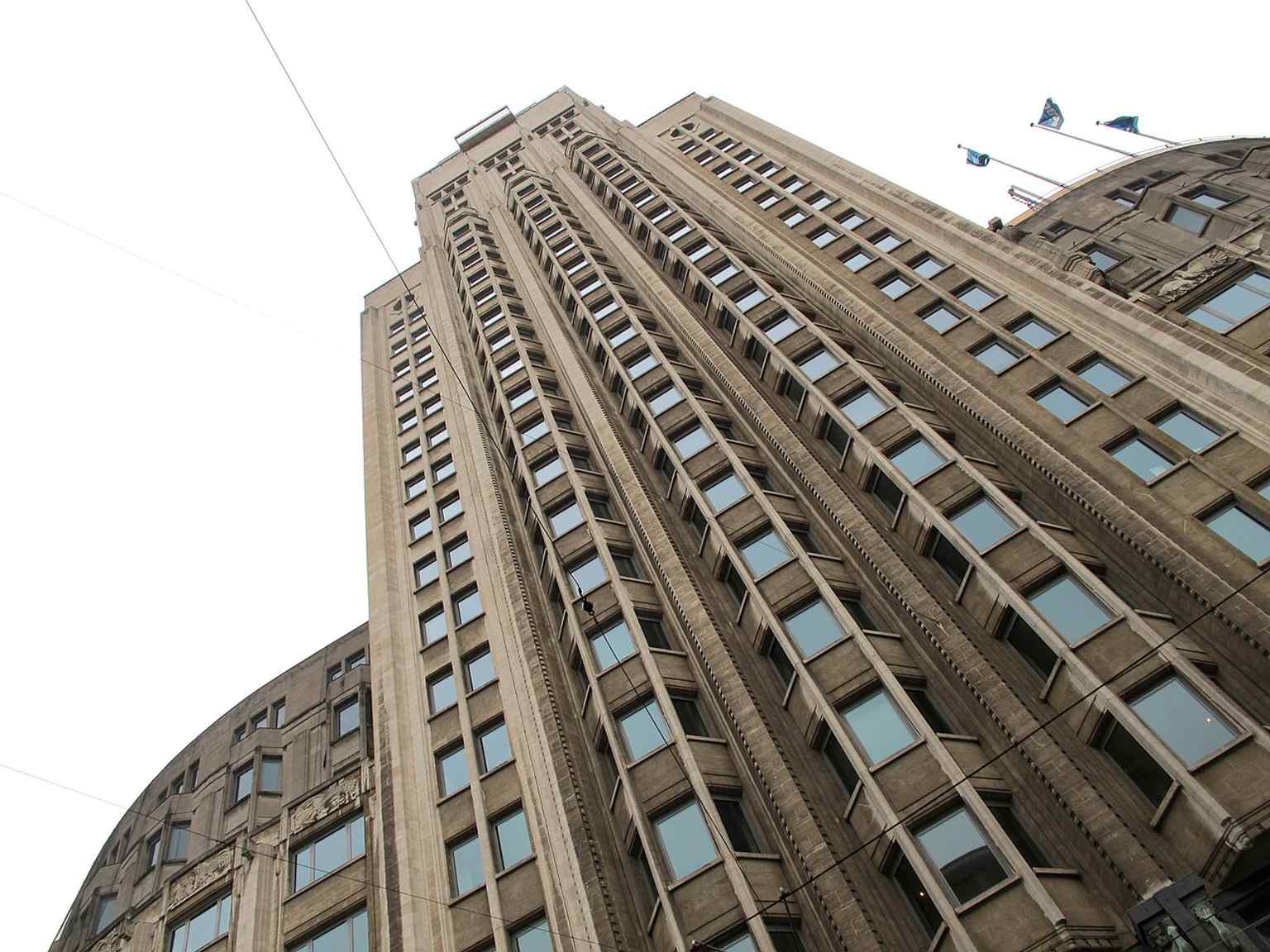
Still, the building itself was astonishing. Three architects shaped it: Emiel Van Averbeke advised the city, Jan Vanhoenacker led the work, and Jos Smolderen helped define the interiors and façade, and may well have drawn the original concept. Builders began in February of nineteen twenty-nine with a huge excavation and a thick concrete foundation slab, two metres deep under the tower. Then the German firm Demag raised a steel skeleton with hundreds of thousands of rivets and bolts. Around that frame came millions of Boomse bricks and a skin of pale stone. If you want a better sense of that upward thrust, the close view in the app captures it nicely. And this was never meant to be just a bank. Inside, there were shops, a brasserie called the Torenkelder, a fashionable tearoom designed as a Chinese salon, offices, and above all apartments. A real vertical city. On the twenty-fourth floor, the public could ride up to a panorama room and look over Antwerp for a small fee of three francs. Above that sat a giant copper water tank holding two hundred and thirty cubic metres, ready to supply the building and help fight fire if needed.
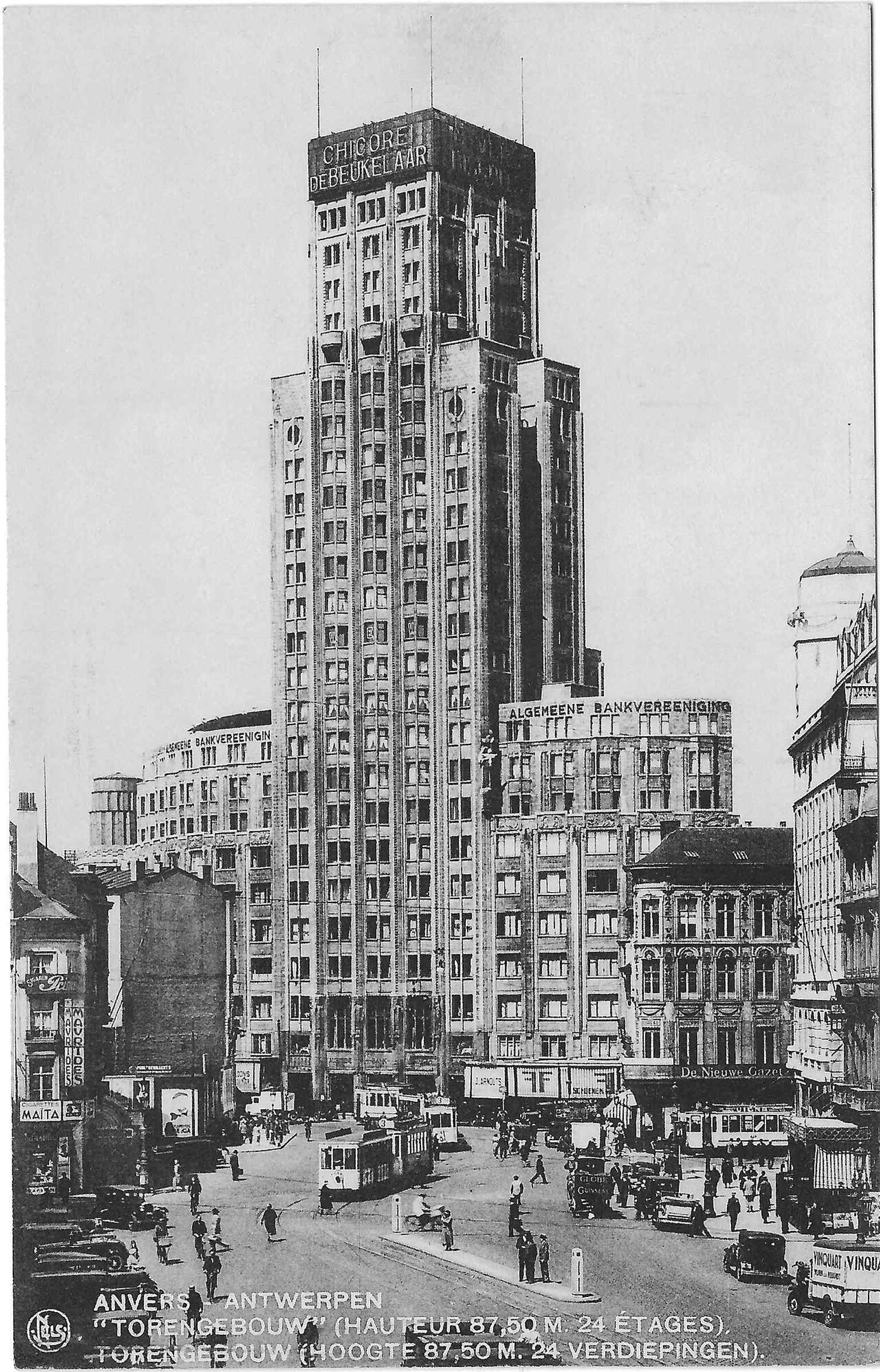
If you like, take a glance at the before-and-after image in the app; it shows how the street below changed across decades while the tower kept its commanding pose. The tower changed too. It became more fully a bank building in the nineteen seventies, gained a reworked top, and earned protected monument status in nineteen eighty-one. More recently, new owners began a vast renovation, with asbestos removal, cultural plans, and even talk of displaying a Tyrannosaurus rex skeleton inside once the work is done. Rather wonderfully Antwerp thinks on that scale.
So here, at the very first stop, you are standing before a building that turned rubble into ambition. When you are ready, continue on and let the old city gather around this modern giant.