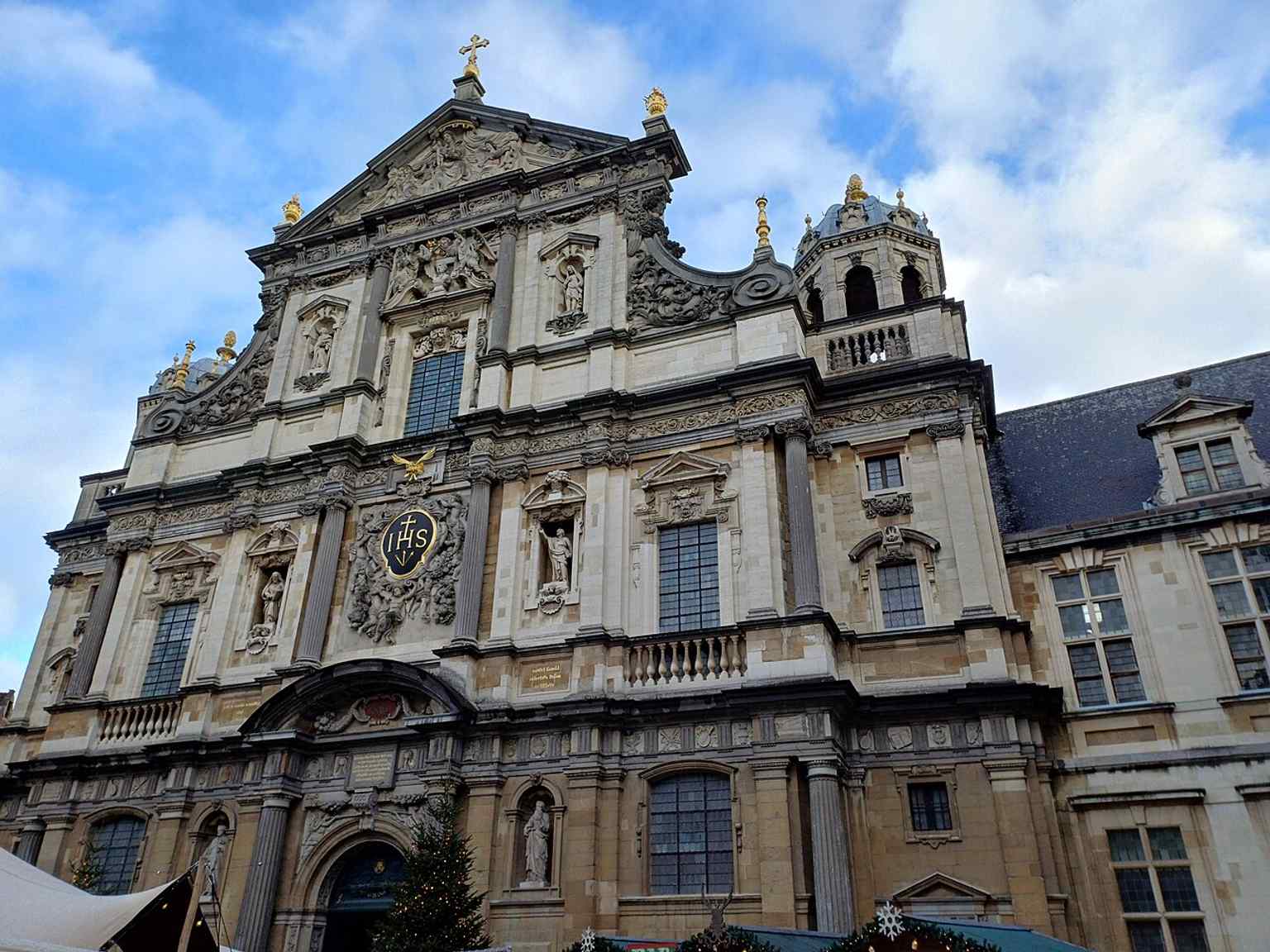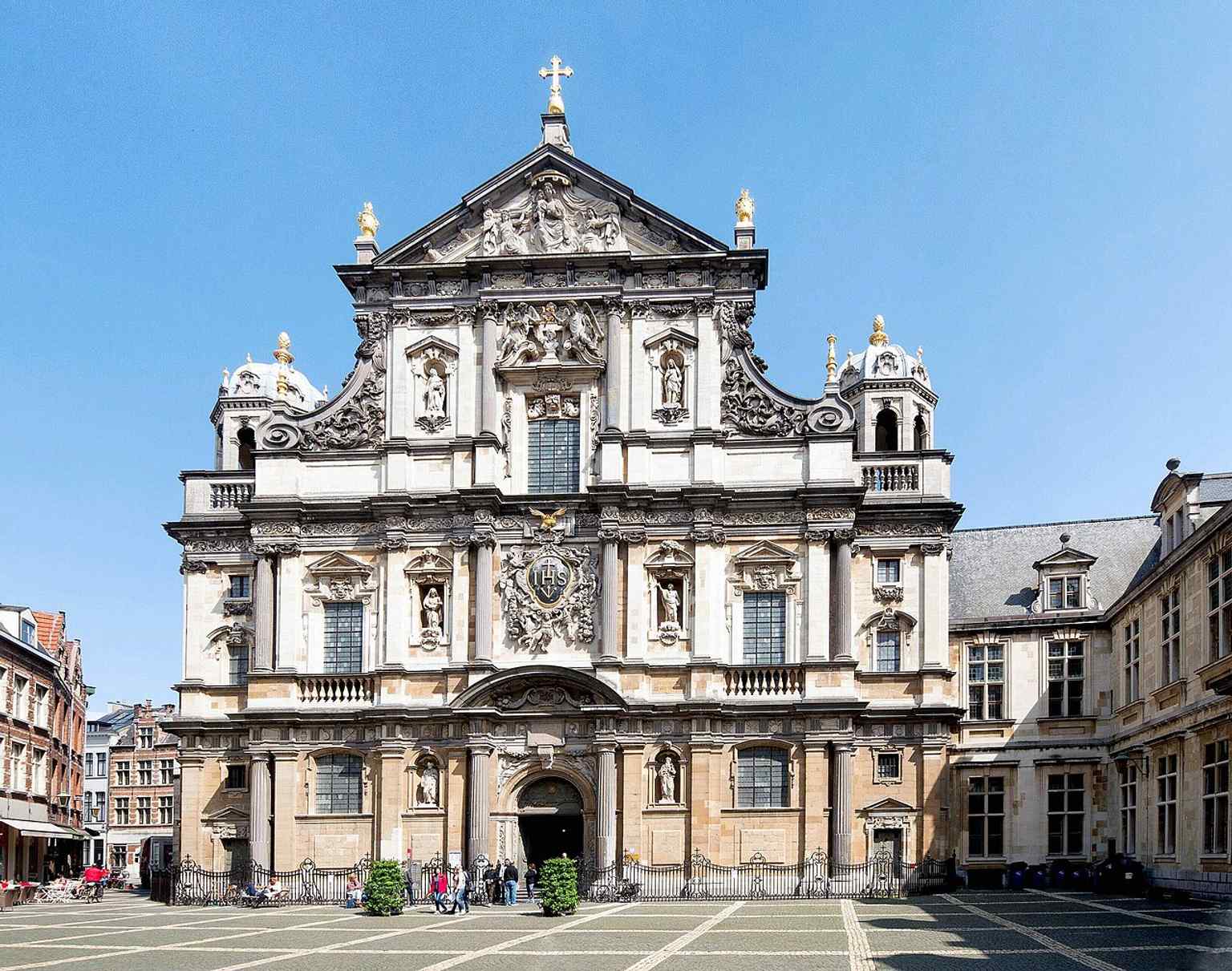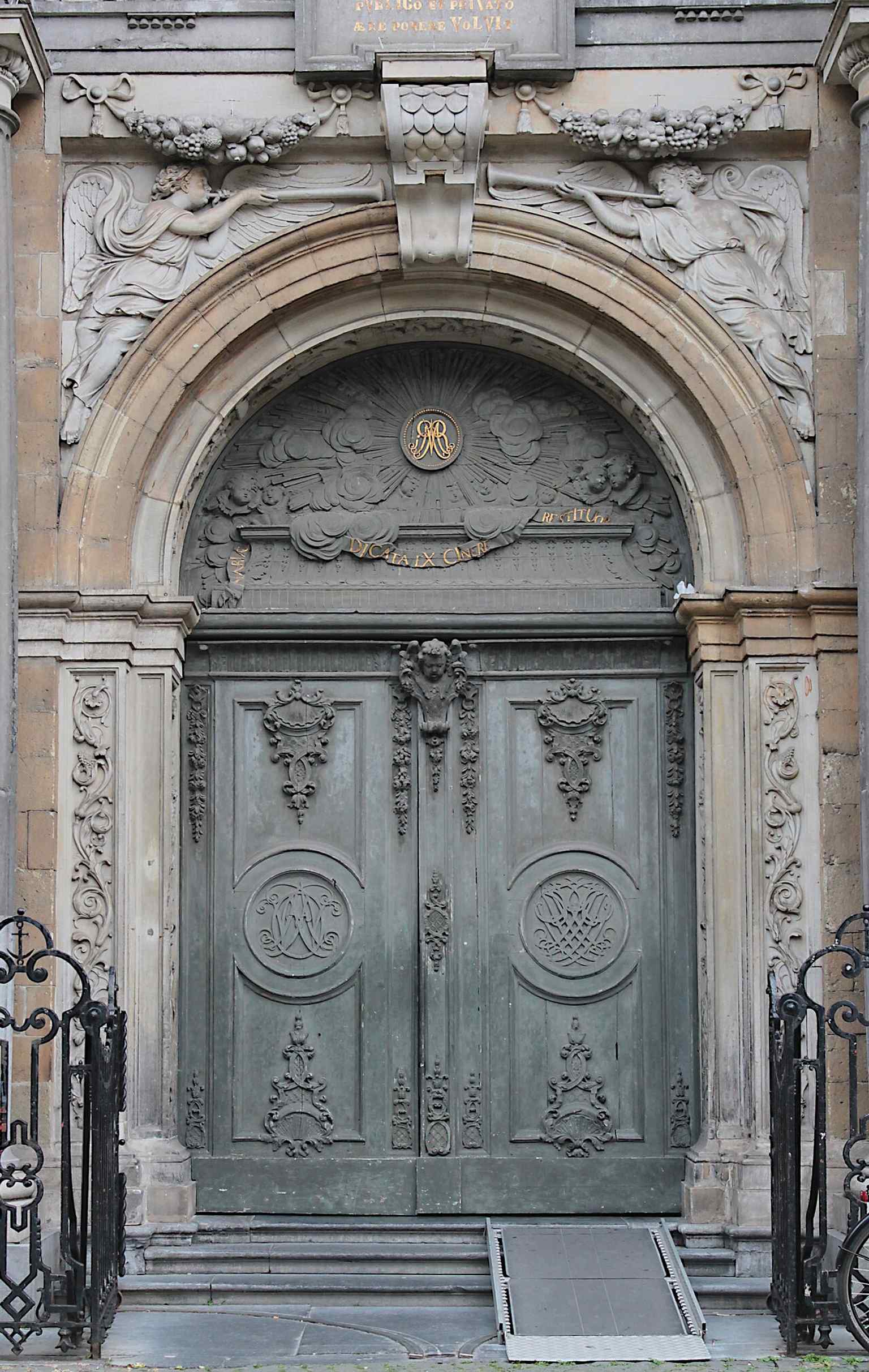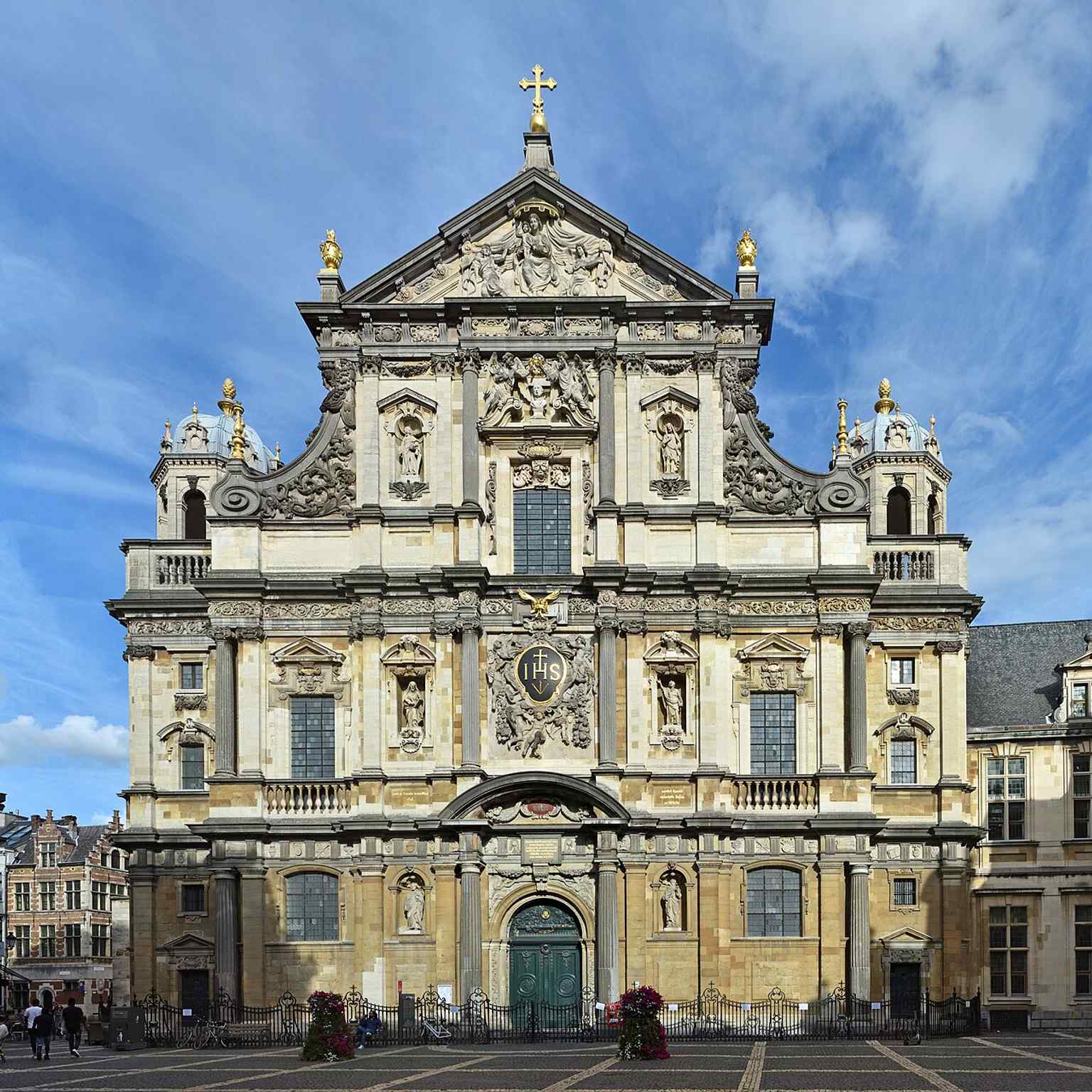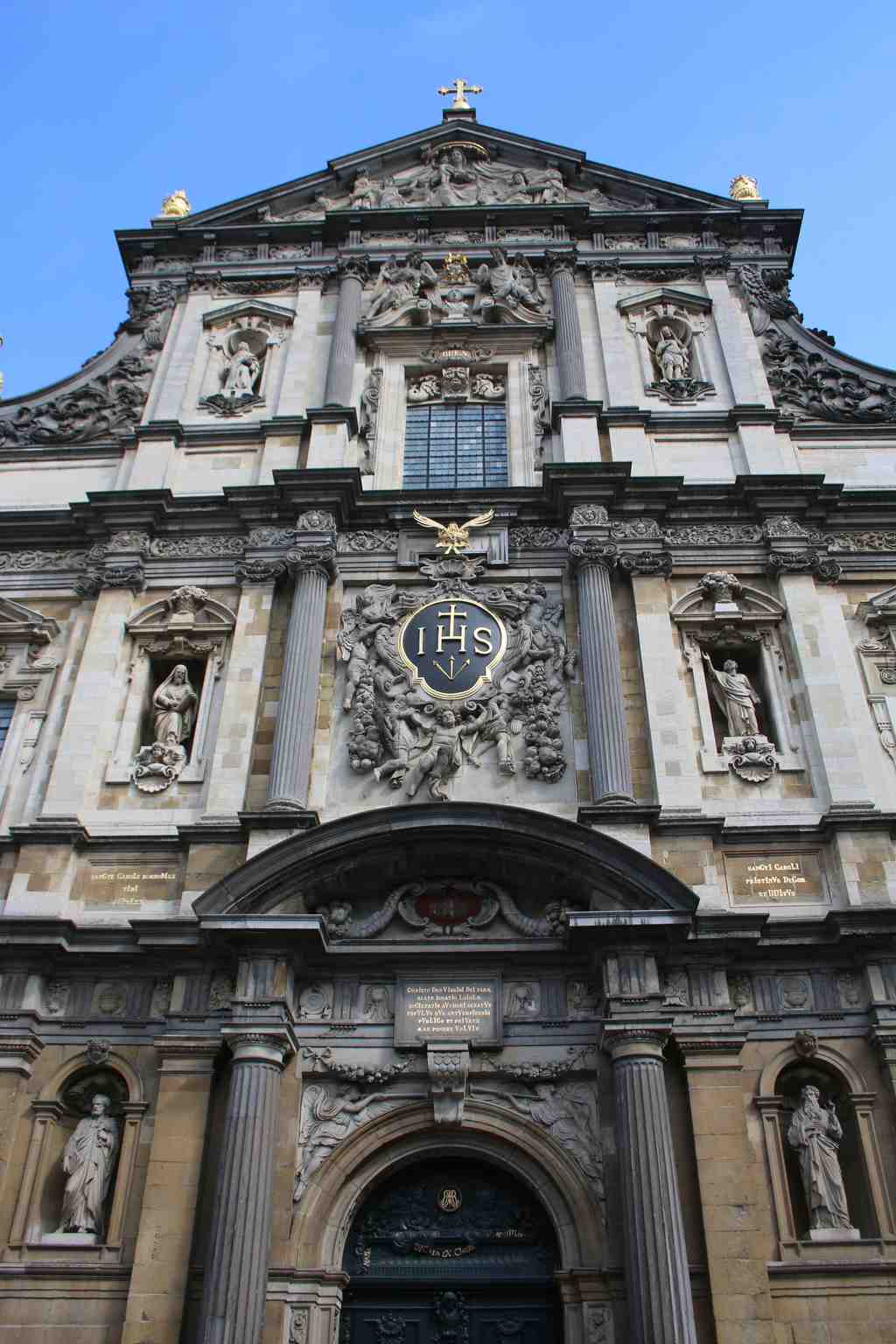
On your right stands a pale stone Baroque facade in tall stacked tiers, shaped with curling scrolls and a central pediment, and lifted by statues high above the lower roof behind it.
This is Saint Charles Borromeo's Church, once the Jesuits' great statement piece in Antwerp. Two men from that order shaped it: François d'Aguilon, a mathematician and rector, drew the first plans, and Pieter Huyssens, trained in Italy, carried them through between sixteen fifteen and sixteen twenty-one. Their partnership was not entirely peaceful. Rome disliked d'Aguilon's early designs, and after his death Huyssens took command and gave the church its confident, theatrical Baroque character.
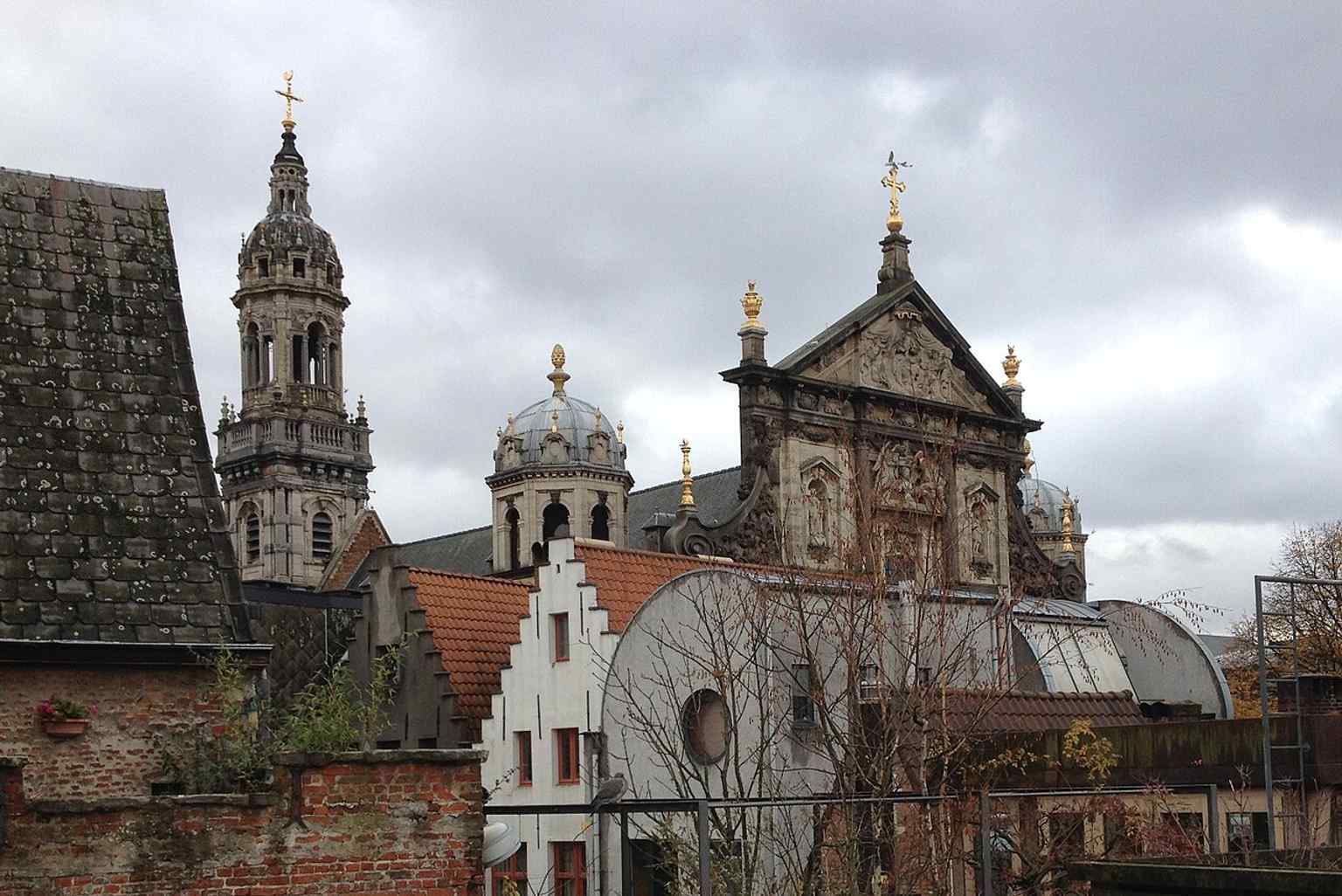
That style mattered. This church belongs to the Counter-Reformation, the Catholic Church's answer to Protestant reform, when beauty, drama and grandeur were meant to move the heart as much as the mind. The front takes its cue from the Gesù in Rome, the Jesuits' mother church, and it plays a clever trick: the facade rises about eight metres higher than the church behind it, so the building appears even more commanding from the square.
Its identity changed with history. First it honoured Mary, then Ignatius of Loyola, founder of the Jesuits. After rulers suppressed the Jesuit order in seventeen seventy-three, the church took the name of Charles Borromeo, the archbishop of Milan. Since eighteen oh three, it has served as a parish church.
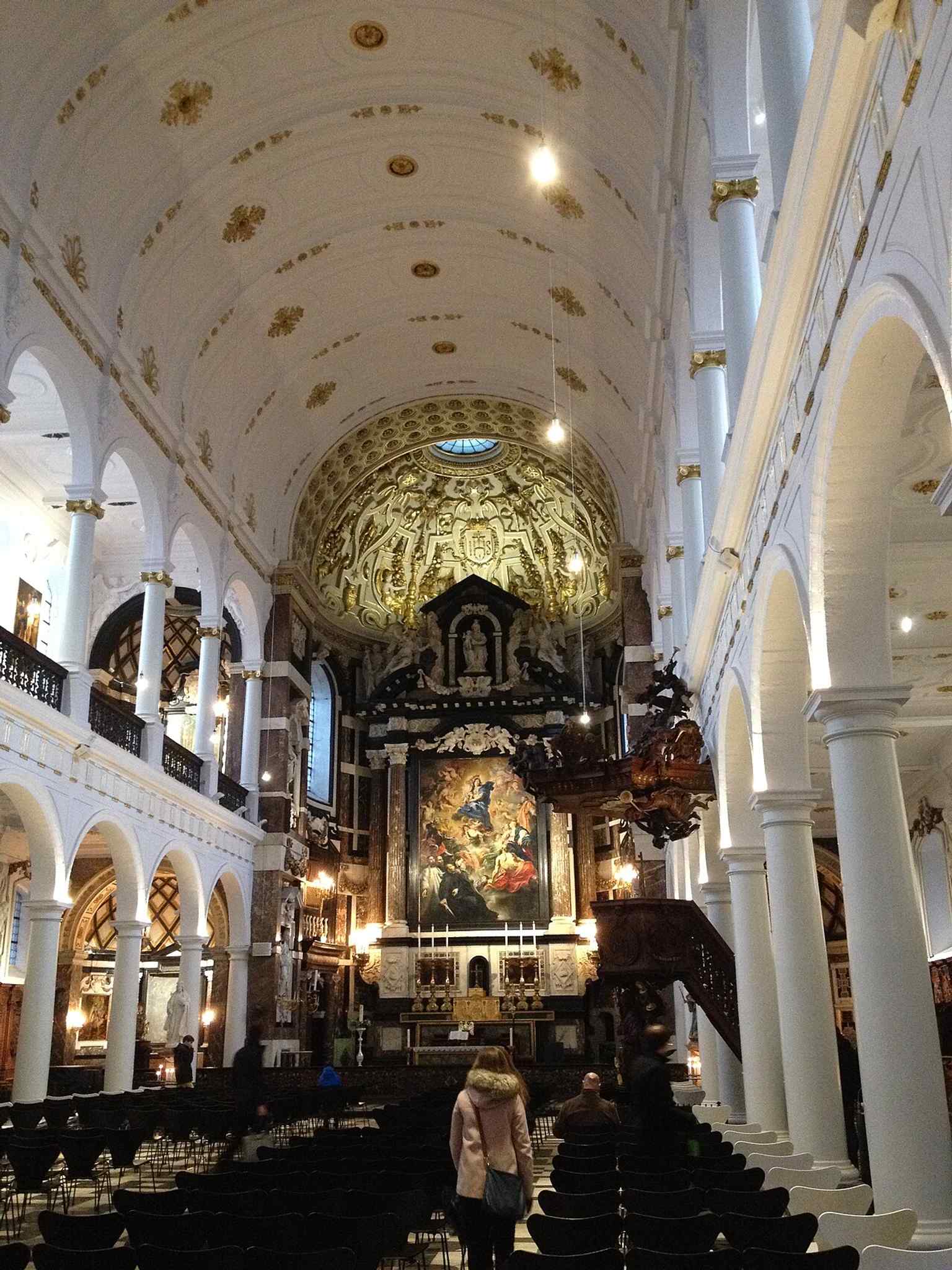
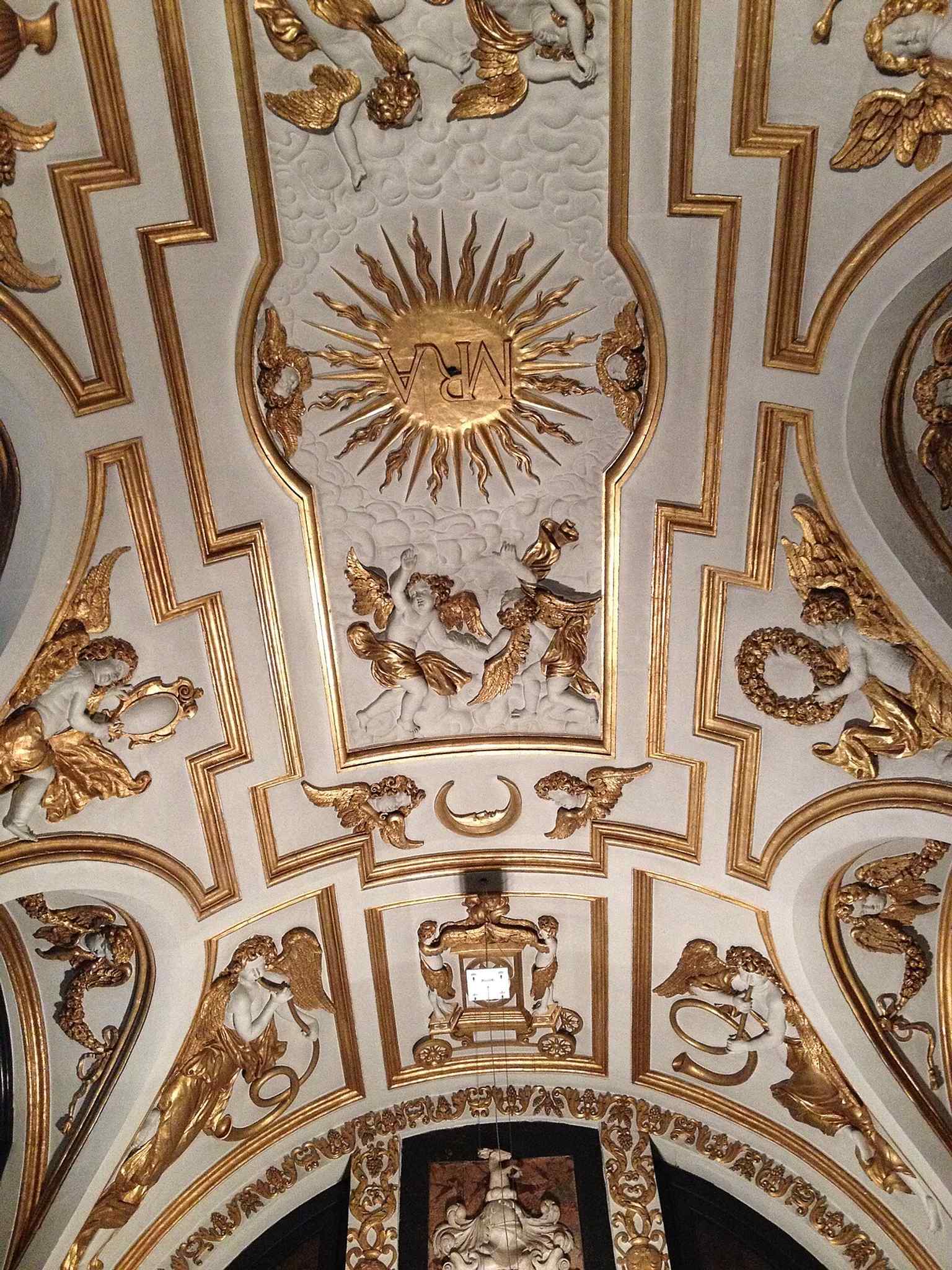
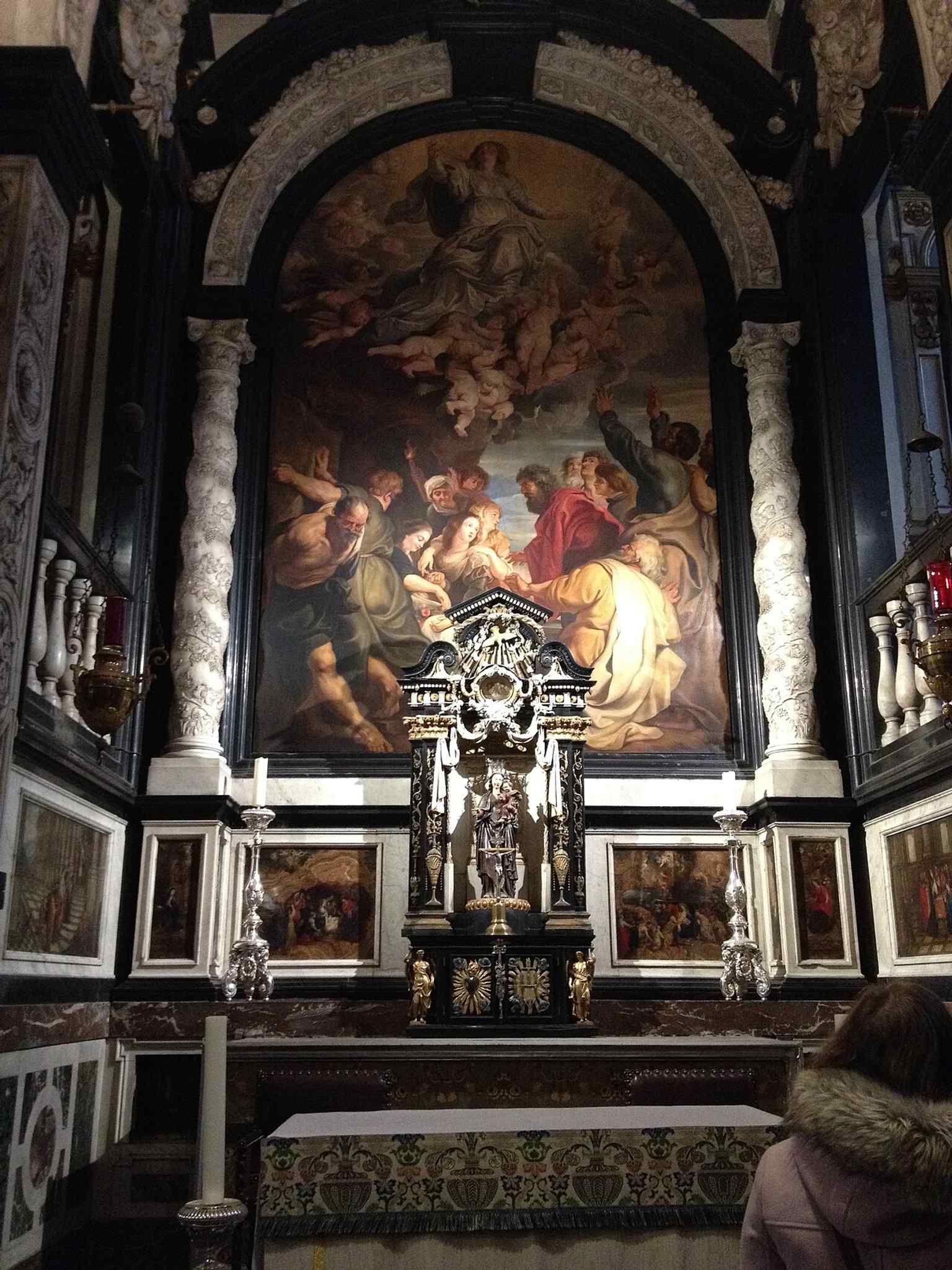
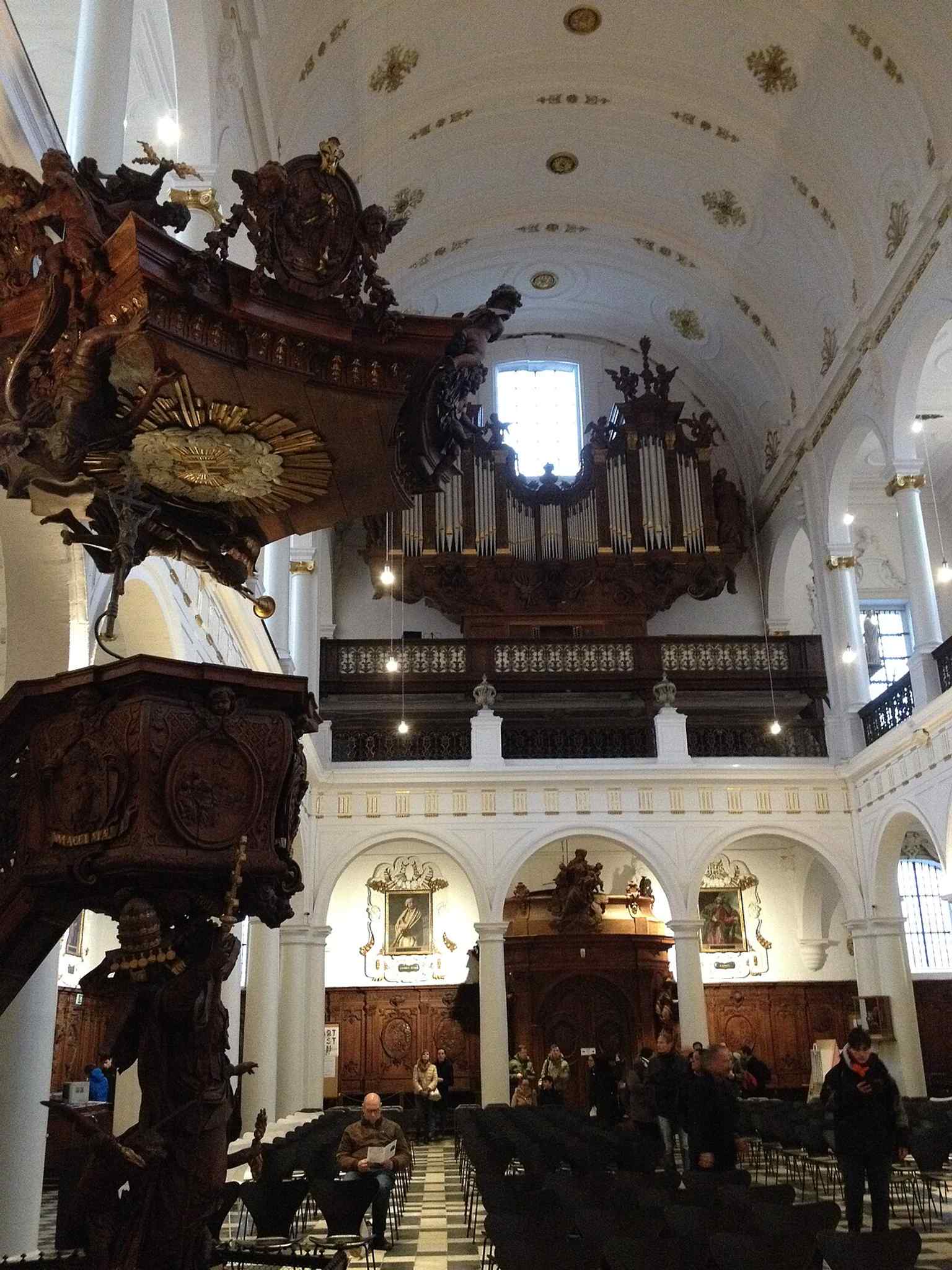
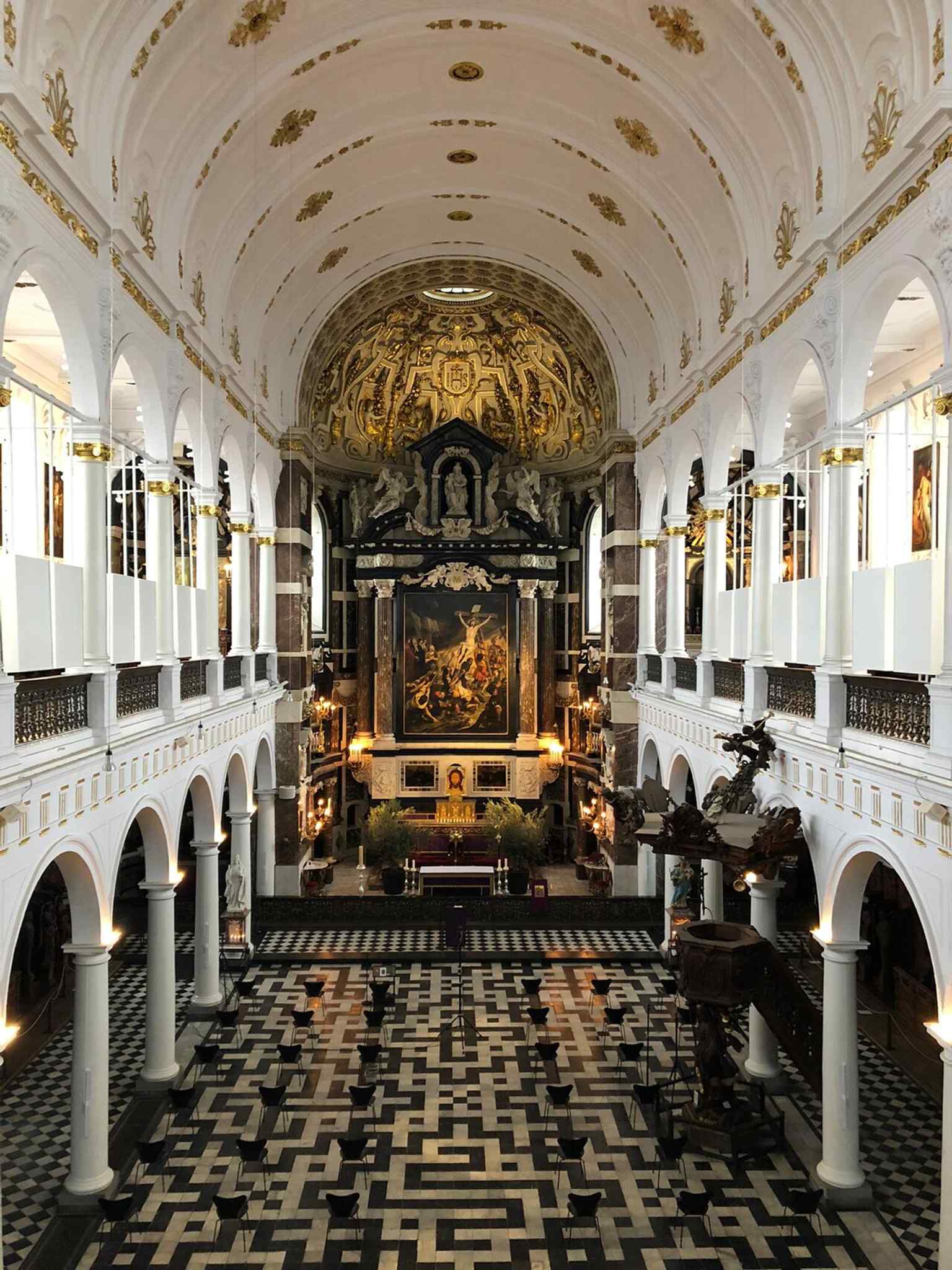
Inside, it once dazzled people so completely that they called it the marble temple, even the eighth wonder of the world. Rubens contributed paintings and sculpture here, and his workshop filled the side aisles with thirty-nine ceiling paintings. Then, on the eighteenth of July, seventeen eighteen, lightning struck. Fire tore through the interior and destroyed almost all of that splendour. Jan Pieter van Baurscheit the Elder rebuilt the church more soberly, though the apse and Lady Chapel still hint at the old extravagance.
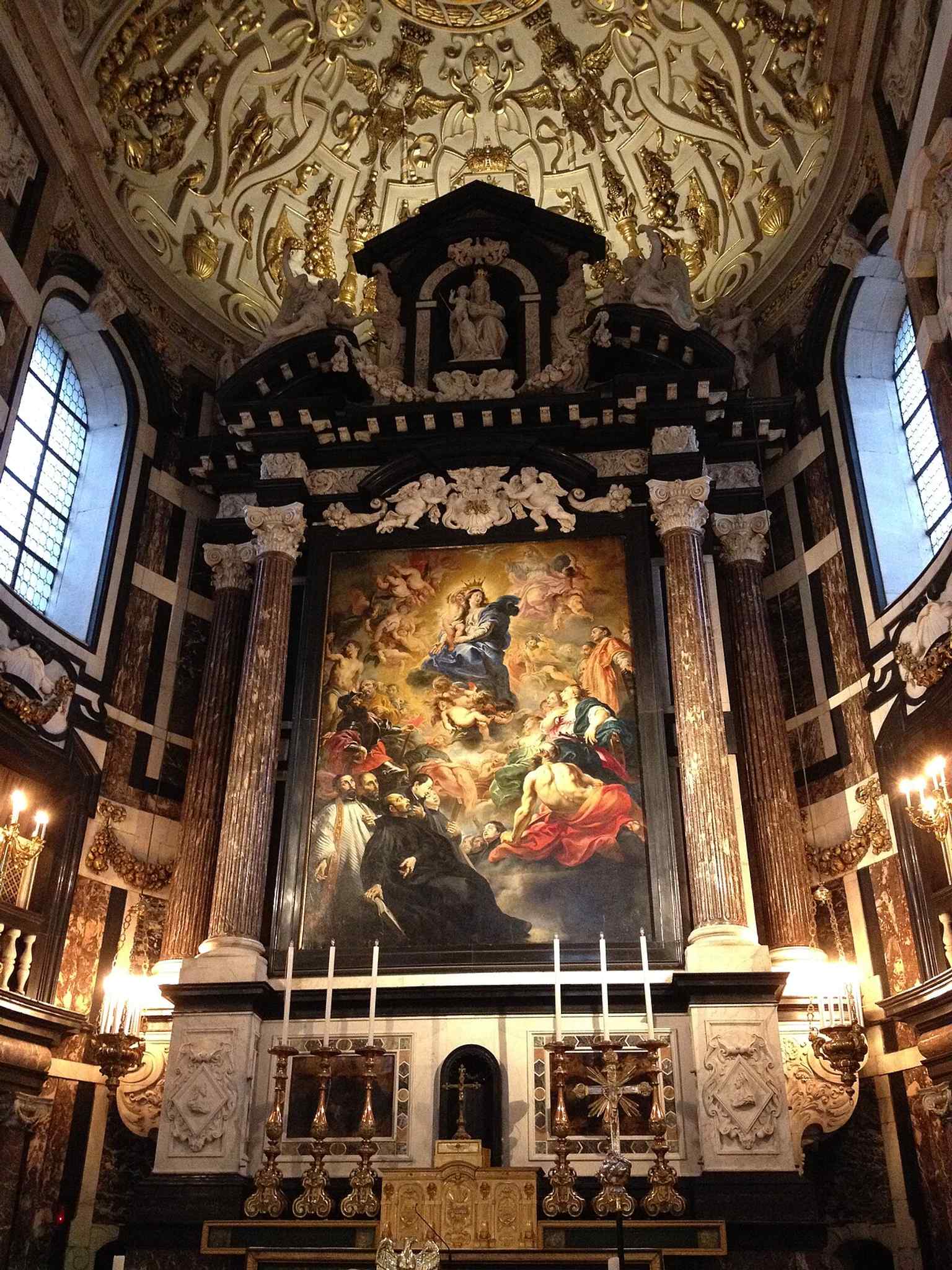
For a quick comparison, the image shows the square changing enormously from nineteen seventy to now, while this facade remains the unquestioned star. One marvel still survives inside: a seventeenth-century pulley system behind the high altar that still swaps the giant altar painting by hand three times a year. If you glance at your screen, the altar image shows the sort of stagecraft they built into the church itself. Three paintings still rotate there: The Raising of the Cross by Gerard Seghers, The Coronation of Mary by Cornelis Schut, and Our Lady of Mount Carmel by Gustaaf Wappers.
And there is one final Jesuit twist: the church connects to the Antwerp Ruien, the old covered waterways below, probably as a practical maintenance passage, though people naturally prefer to imagine an escape route.
If you'd like to visit later, it usually opens daily from about ten to half past twelve and again from two to five, with shorter hours on Sundays.
For all its losses, this church still knows exactly how to command a square.
When you're ready, continue on for the next stop.