AudaTours logoAudaTours

Stop 14 of 16

St Paul's Church | Antwerp

St Paul's Church | Antwerp
St. Paul's Church, Antwerp
St. Paul's Church, AntwerpPhoto: bert76, Wikimedia Commons, CC BY-SA 3.0. Cropped & resized.

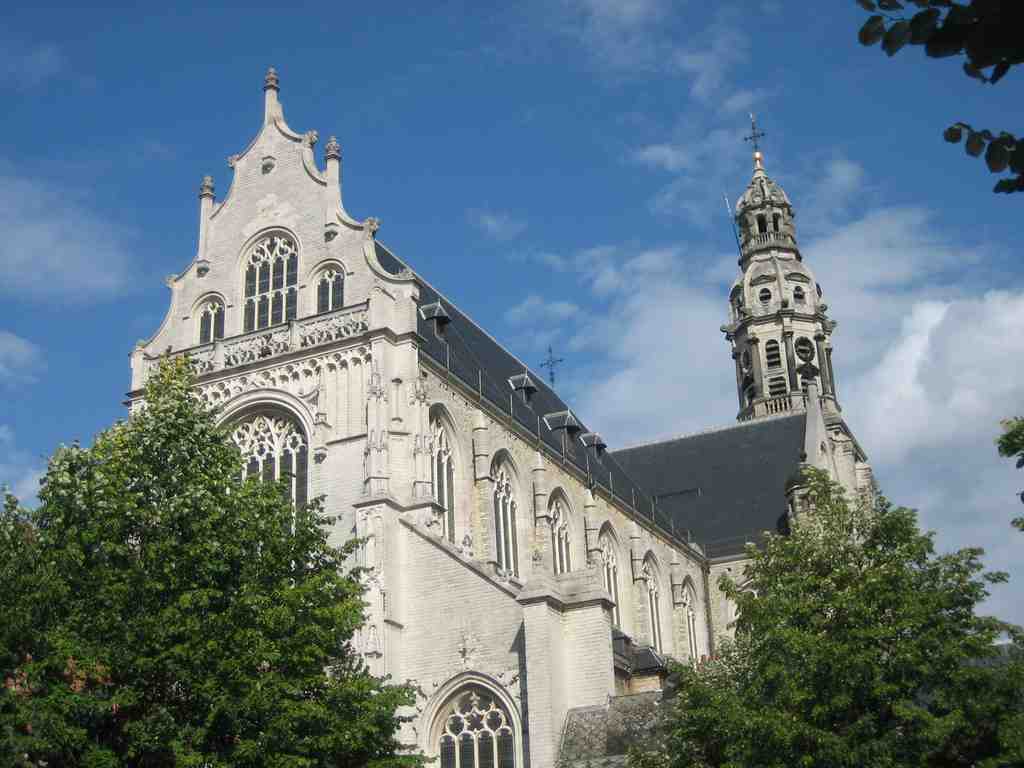
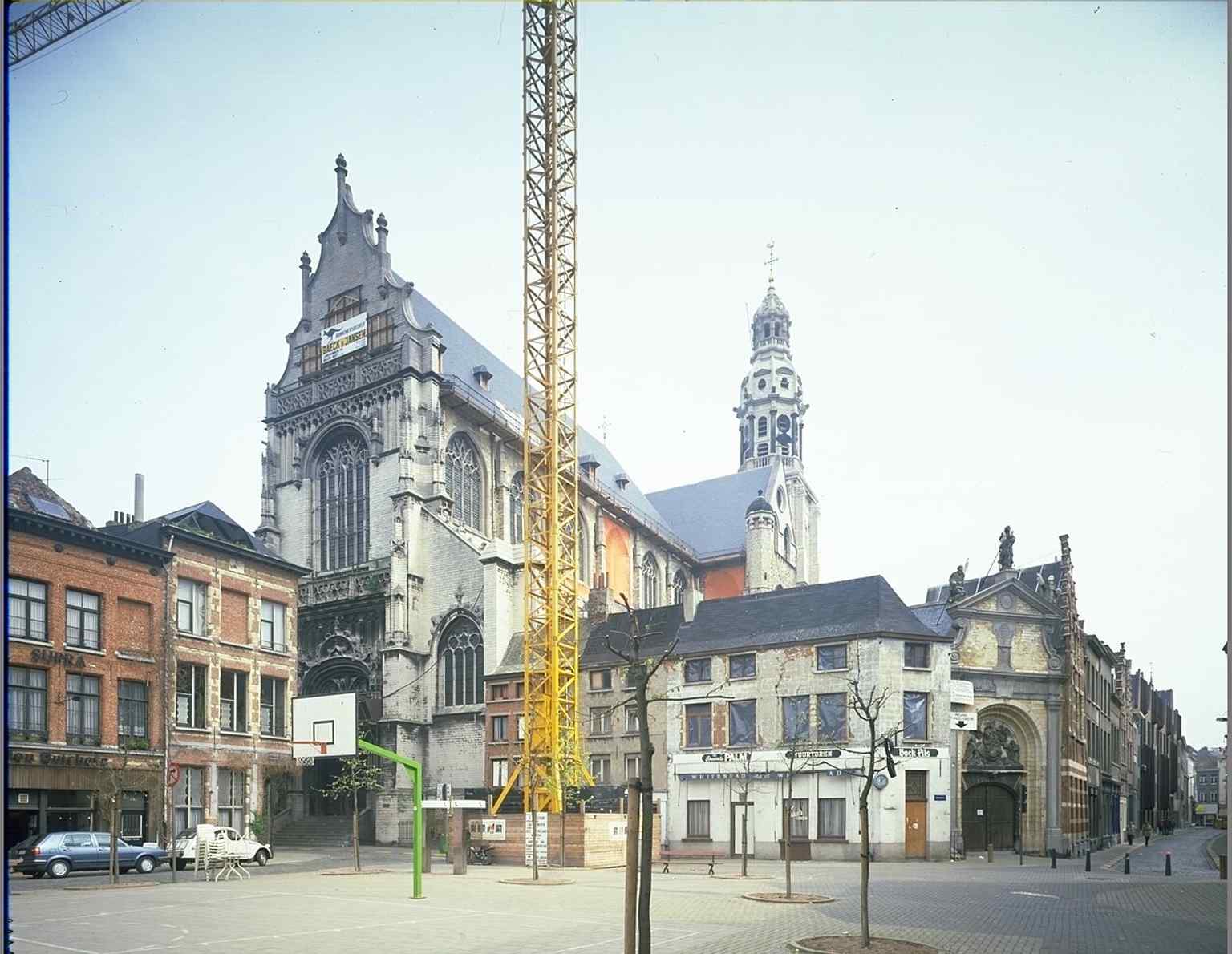
In front of you stands a long church of pale sandstone and brick, its stern Gothic body ending in a more dramatic Baroque tower top, with an angled portal that marks the corner like a carefully staged entrance.

St. Paul’s belongs to Antwerp’s old river quarter, a district once filled with sailors, traders, and the practical noise of a working port. The Dominicans settled here early, and in twelve seventy-six Albertus Magnus himself consecrated their first small church. It did not stay comfortable for long. When the Scheldt changed course, flooding threatened the site, so the Dominican prior, A. van Leent, chose higher ground beside it and began again. The new church likely followed designs by Domien de Waghemakere, who also helped shape the Cathedral of Our Lady. By fifteen seventy-one, the Dominicans had their new church complete and dedicated.

Then Antwerp’s faith and politics turned violent. In fifteen seventy-eight, when Calvinists took power in the city, they expelled the Dominicans and stripped this church and monastery. They turned the main hall into a Calvinist prayer space, demolished parts of the crossing arms and choir, and even used part of the monastery as a cannon foundry. During Farnese’s siege in fifteen eighty-four, defenders of Antwerp took rubble from St. Paul’s damaged church and packed it into fire ships meant to destroy the bridge he had thrown across the Scheldt. It is a rather brutal image, really: sacred stone reused as the ballast of war.

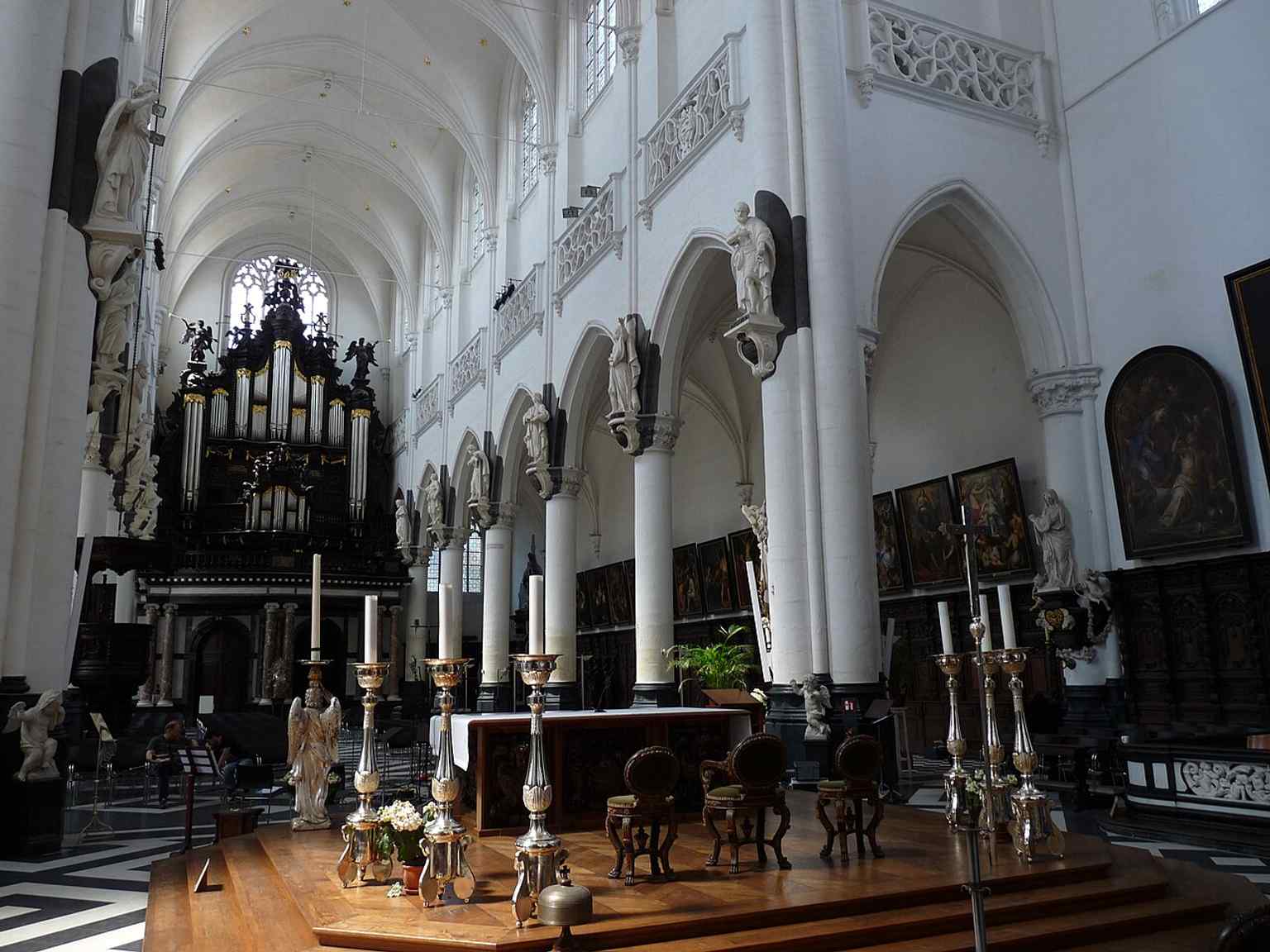
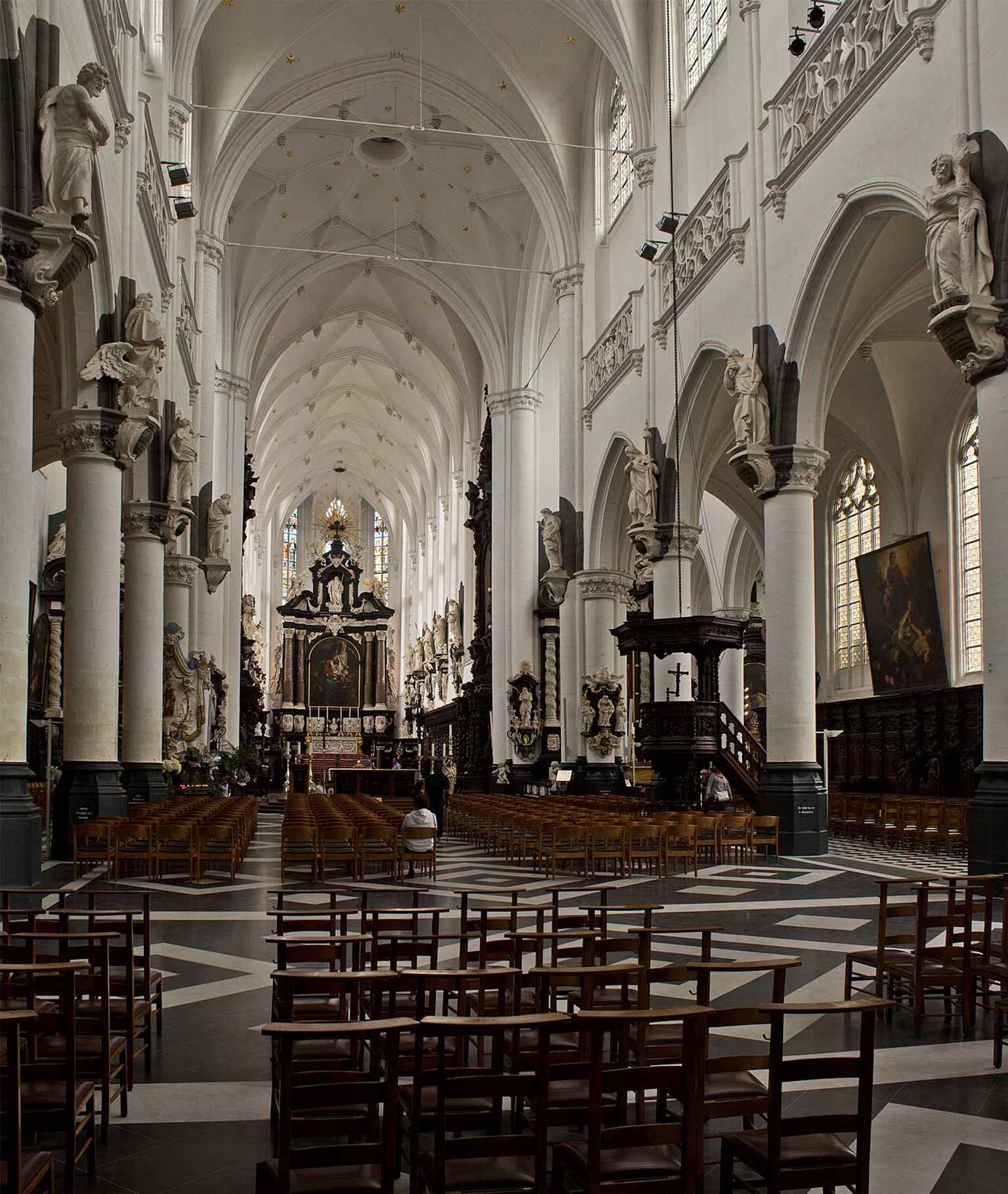
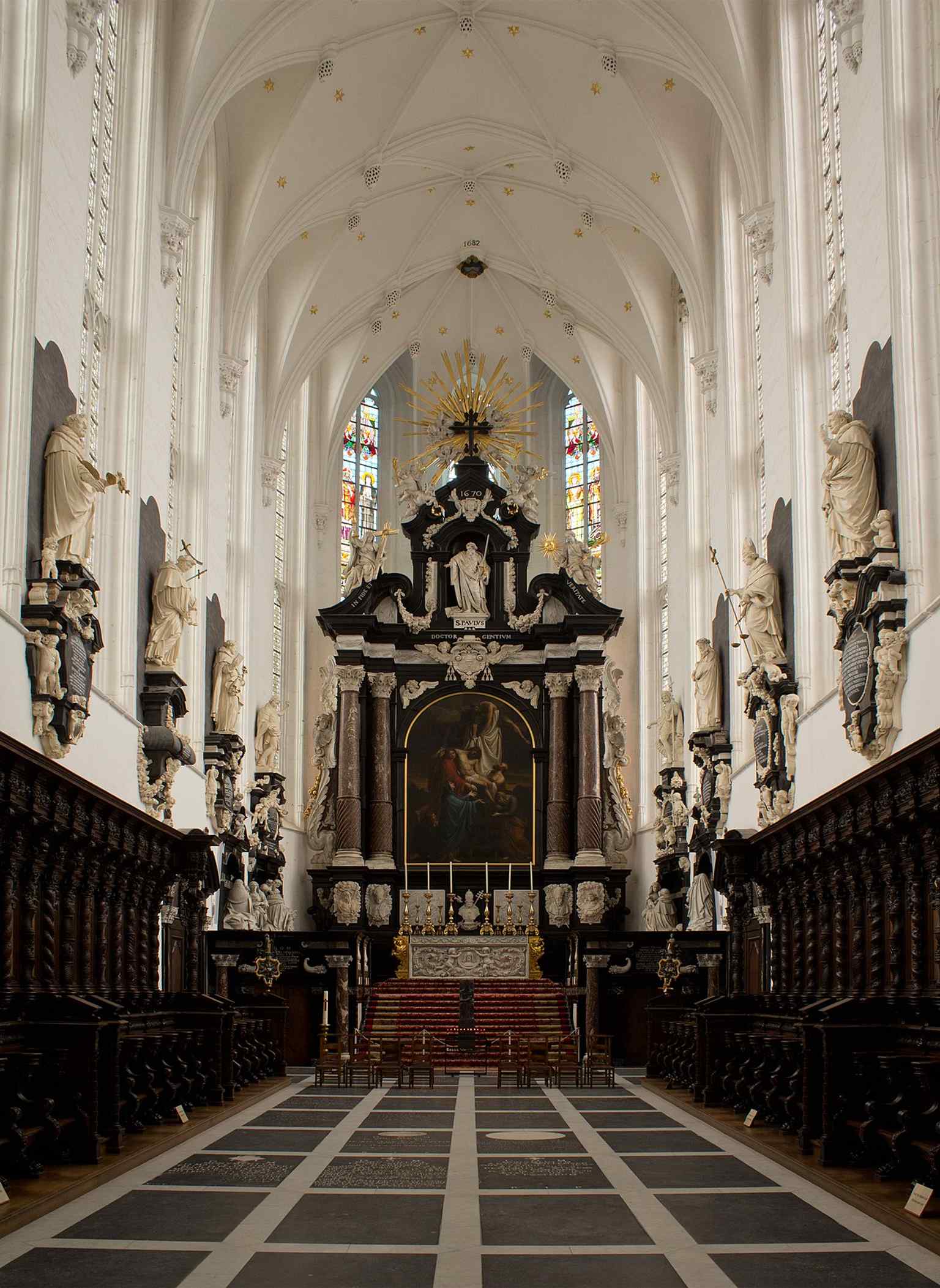
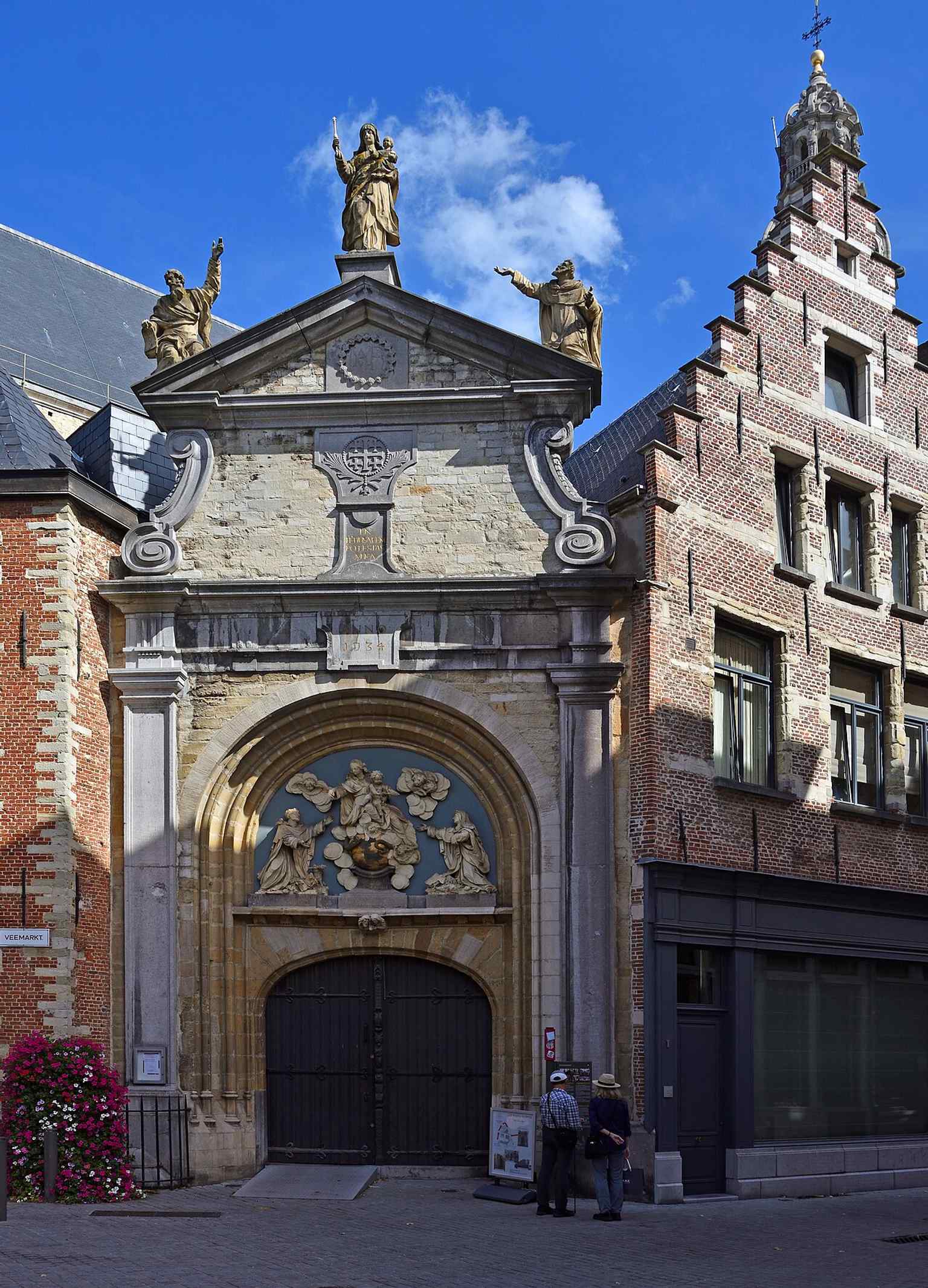
After Antwerp fell in fifteen eighty-five, the Dominicans returned and rebuilt with uncommon determination. Much of what made St. Paul’s famous came after that recovery. Inside, the church became a feast of Flemish Baroque art and sculpture, with works by Rubens, Van Dyck, and Jordaens, and splendid furniture by Antwerp masters. If you glance at the interior image on your screen, you can see how the calm Gothic shell gives way to a richly theatrical interior. Even from out here, you can read that layered history in the architecture. The exterior remains largely Gothic, plain and restrained, as churches for preaching friars often were, while the tower received its Baroque crown after a fire in sixteen seventy-nine. The portal on the corner dates from seventeen thirty-four, and above it Jan Claudius de Cock carved Our Lady of the Rosary handing the rosary to Saint Dominic and Catherine of Siena.
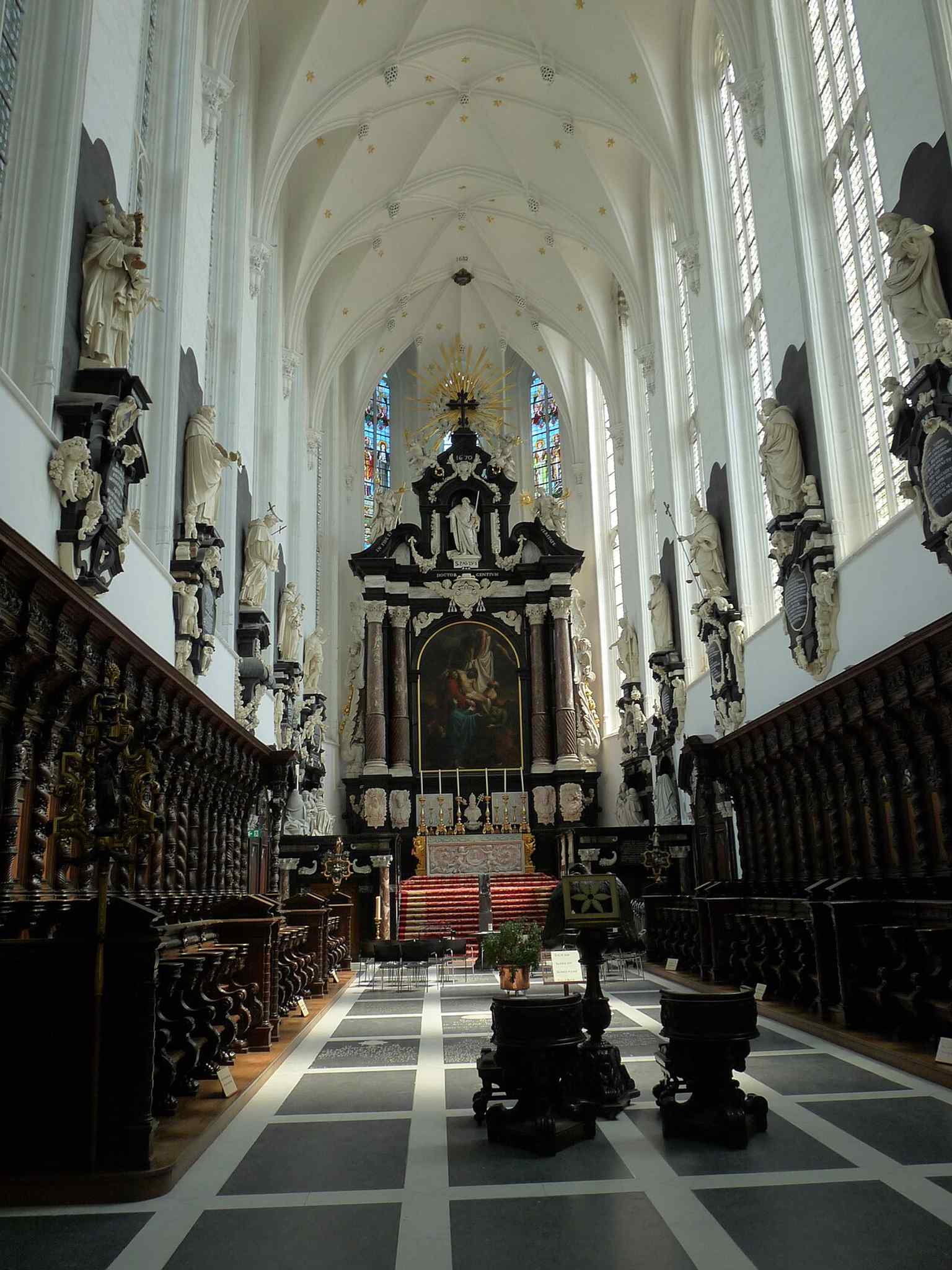
A broad interior view that captures the church’s richly decorated Baroque nave, one of the best examples of Flemish Baroque church design in Antwerp.
A broad interior view that captures the church’s richly decorated Baroque nave, one of the best examples of Flemish Baroque church design in Antwerp.Photo: Smiley.toerist, Wikimedia Commons, CC BY-SA 4.0. Cropped & resized.

And there is one more marvel here, though you must imagine it from the side: the Calvary beside the church, an outdoor sculptural court with sixty-three life-size statues and nine reliefs, arranged in a theatrical ascent toward Christ on the cross. It turns devotion into a kind of sacred stage set.

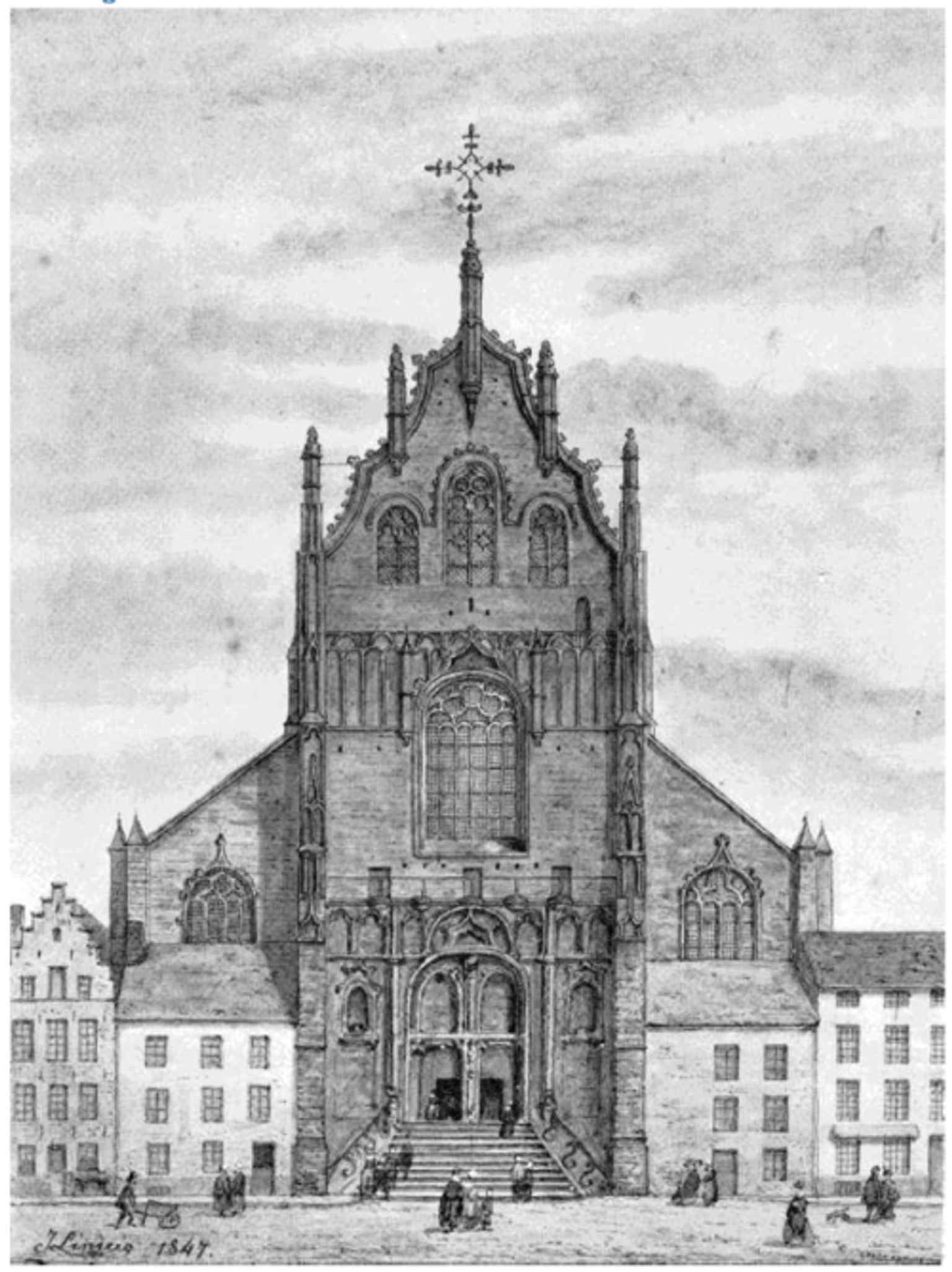
This church has survived occupation, looting, bombardment, and another devastating fire in nineteen sixty-eight, which destroyed the roof and the top of the tower and left much of the monastery in ruins. If you fancy it, have a look at the before-and-after image in the app; it shows how completely the area around the church has changed while the restored building still commands the scene. If you want to go inside, the church usually opens daily from two until five in the afternoon.

St. Paul’s feels less like a single monument than a hard-won memory, patiently rebuilt again and again. When you are ready, continue on to the Preachers’ monastery, where the Dominican story takes its next quiet turn.
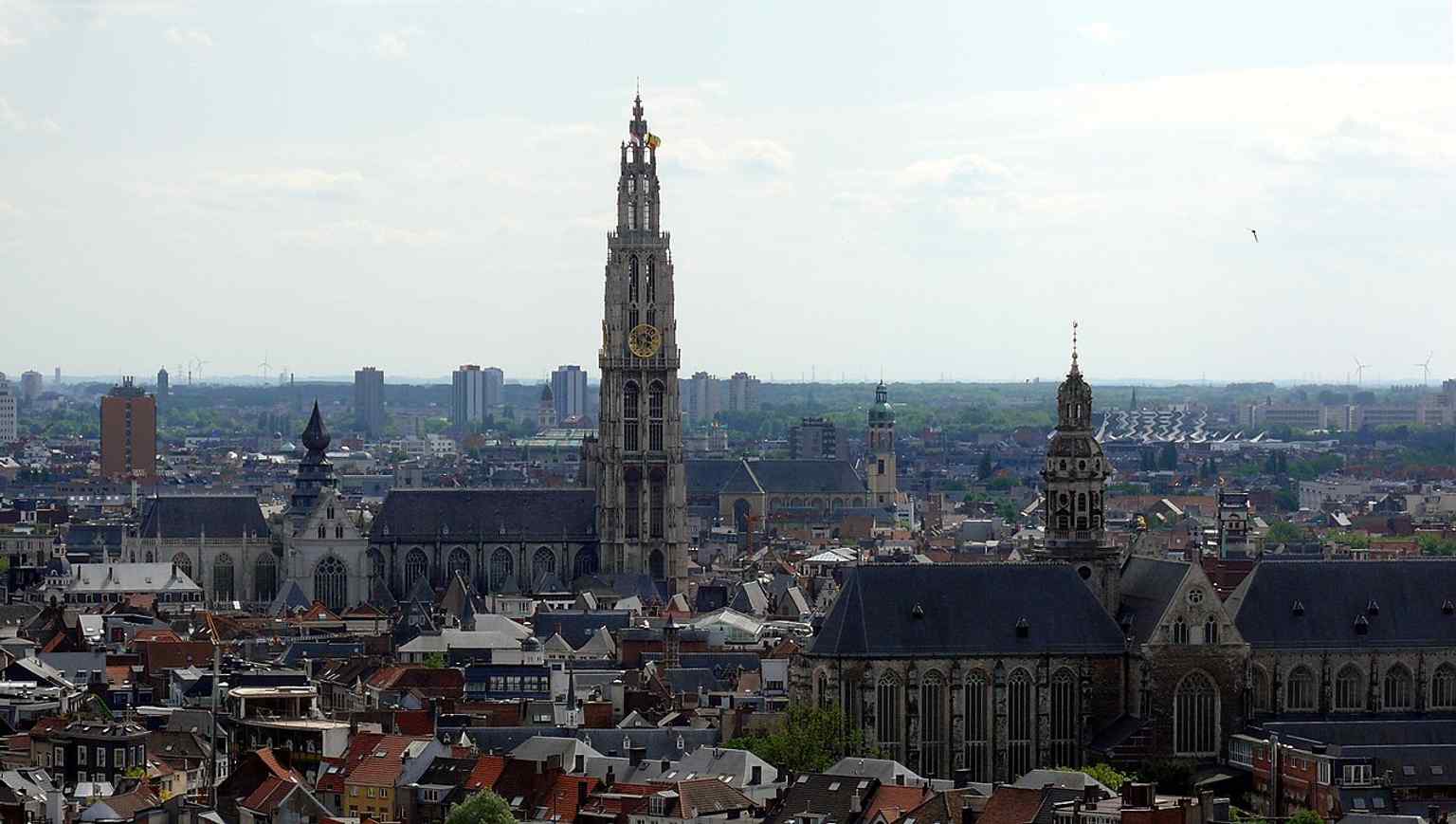
A high, wide view of St. Paul’s Church in Antwerp with the Scheldt in the background — a reminder of the church’s riverside setting near the old port and sailors’ district.
A high, wide view of St. Paul’s Church in Antwerp with the Scheldt in the background — a reminder of the church’s riverside setting near the old port and sailors’ district.Photo: Ad Meskens, Wikimedia Commons, CC BY-SA 3.0. Cropped & resized.
A strong full exterior view of the church on Veemarkt, showing the Gothic body and the later Baroque tower top that was finished after the 1679 fire.
A strong full exterior view of the church on Veemarkt, showing the Gothic body and the later Baroque tower top that was finished after the 1679 fire.Photo: Stemgée, Daan, Wikimedia Commons, CC BY 4.0. Cropped & resized.
An 1847 reconstruction drawing of the façade, based on its appearance before the 1679 fire — useful for showing how the exterior changed over time.
An 1847 reconstruction drawing of the façade, based on its appearance before the 1679 fire — useful for showing how the exterior changed over time.Photo: Jozef Linnig, Wikimedia Commons, Public domain. Cropped & resized.
Another interior perspective, helping show the scale of the nave and the ornate Baroque setting that followed the church’s post-Reformation rebuilding.
Another interior perspective, helping show the scale of the nave and the ornate Baroque setting that followed the church’s post-Reformation rebuilding.Photo: Smiley.toerist, Wikimedia Commons, CC BY-SA 4.0. Cropped & resized.
An interior photo showing the church’s dense Baroque decoration, where sculpture, altars and church furniture create a highly unified visual effect.
An interior photo showing the church’s dense Baroque decoration, where sculpture, altars and church furniture create a highly unified visual effect.Photo: Johan Bakker, Wikimedia Commons, CC BY-SA 4.0. Cropped & resized.
Another interior detail from St. Paul’s Church, useful for the chapels and sculpted furnishings that make the church famous.
Another interior detail from St. Paul’s Church, useful for the chapels and sculpted furnishings that make the church famous.Photo: Johan Bakker, Wikimedia Commons, CC BY-SA 4.0. Cropped & resized.
A side portal view of St. Paul’s Church, highlighting one of the less grand but historically important entrances to the Dominican church complex.
A side portal view of St. Paul’s Church, highlighting one of the less grand but historically important entrances to the Dominican church complex.Photo: Ludvig14, Wikimedia Commons, CC BY-SA 4.0. Cropped & resized.
arrow_back Back to Antwerp Audio Tour: Cathedrals, Legends & Timeless Treasures Unveiled
Loved by travellers

Thousands of tours started.
Plenty of opinions.

4.8 across the App Store and Google Play. Here's a few we keep coming back to.

starstarstarstarstar
This was a solid way to get to know Brighton without feeling like a tourist. The narration had depth and context, but didn't overdo it.
Christoph
Christoph
Brighton Tour
starstarstarstarstar
Started this tour with a croissant in one hand and zero expectations. The app just vibes with you, no pressure, just you, your headphones, and some cool stories.
download Get the app

Pop your headphones in.
Step outside.

Free to download. Tours in every city. Start in 60 seconds — no account, no card.

Download on the App StoreGet it on Google Play
starstarstarstarstar_half
4.8
AudaTours app icon
headphones
~ 4 min until your first tour starts
public
1,000+ cities worldwide
all_inclusive
AudaTours
Unlimited

Every tour. Every city. One subscription.

3101 tours2271 cities138 countries50+ languages