
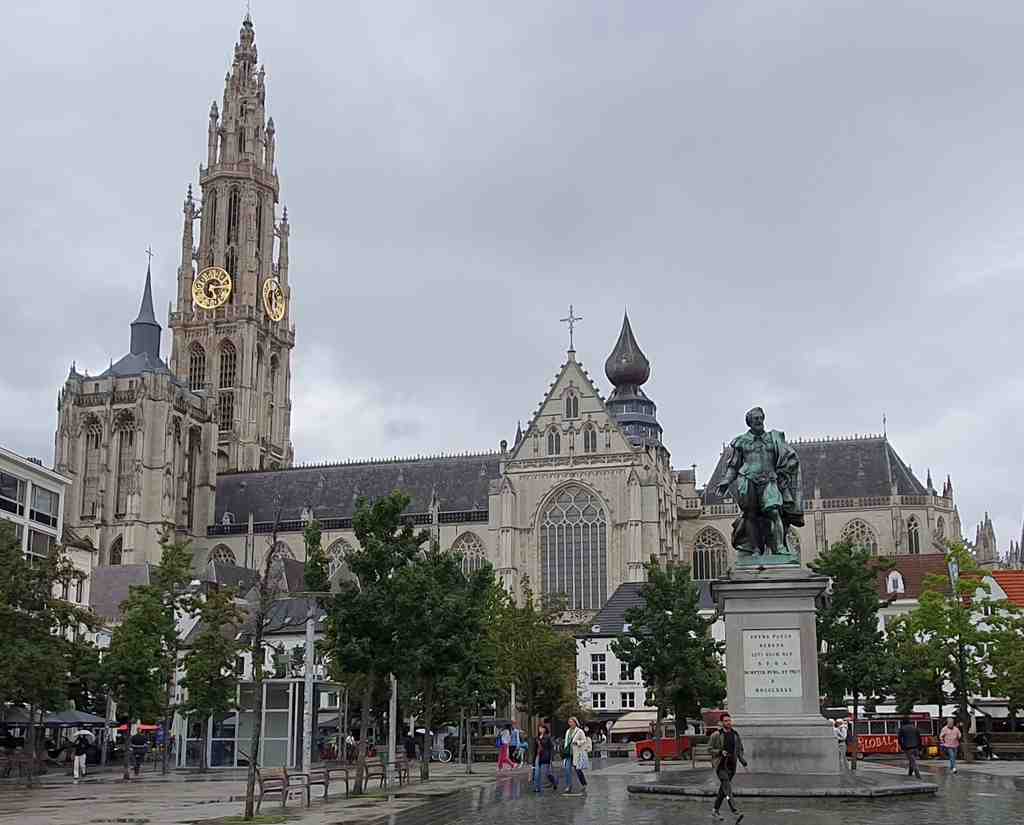
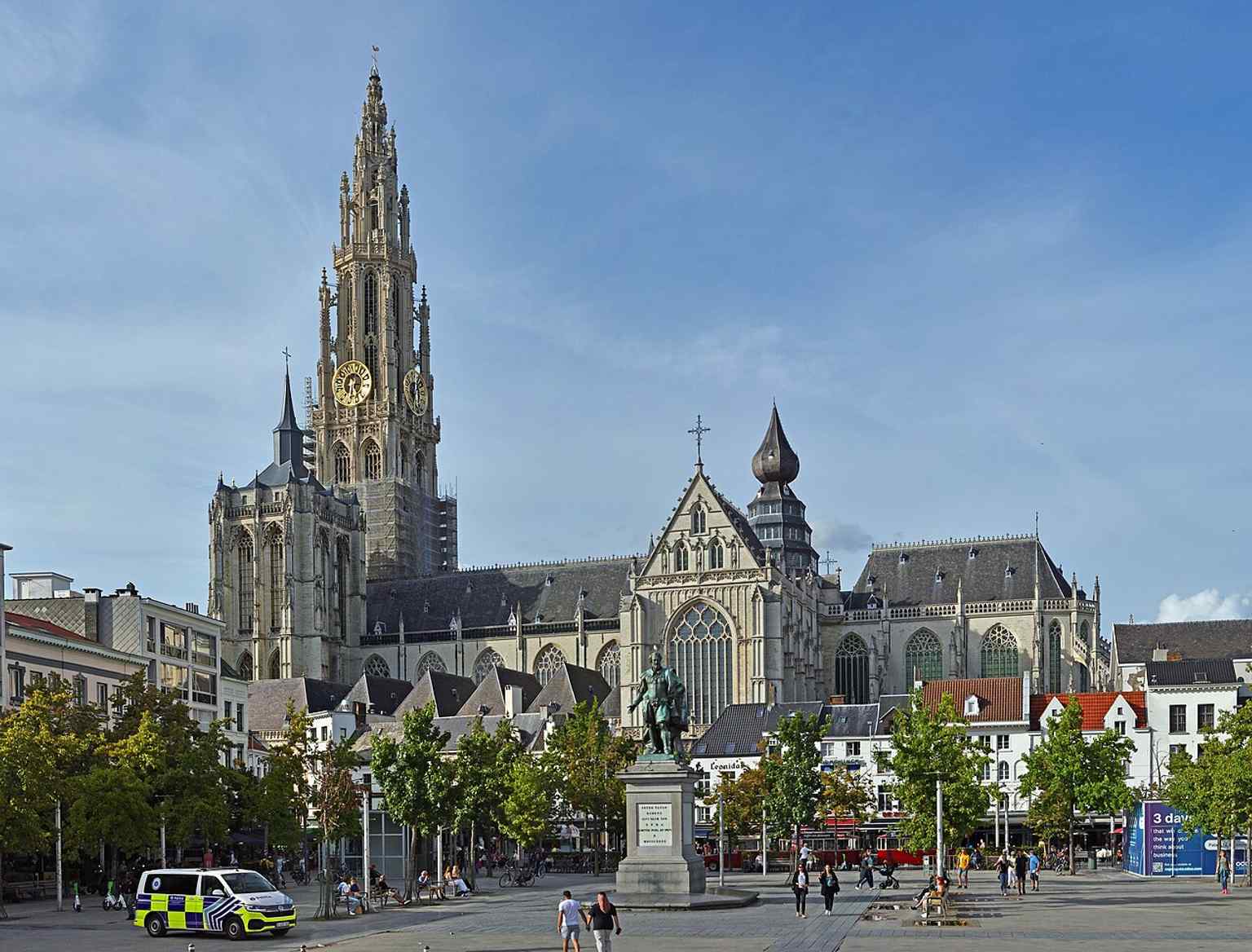
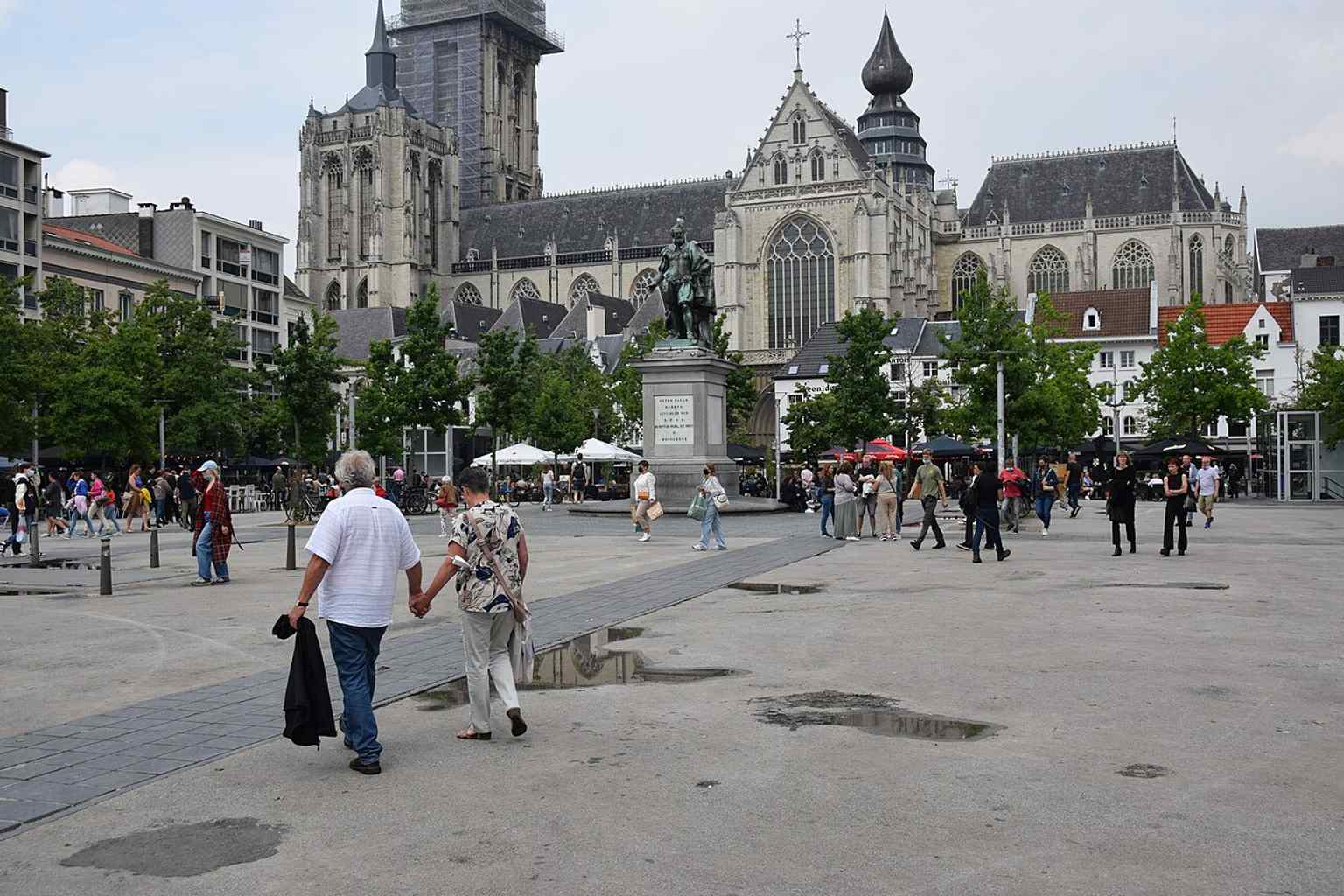
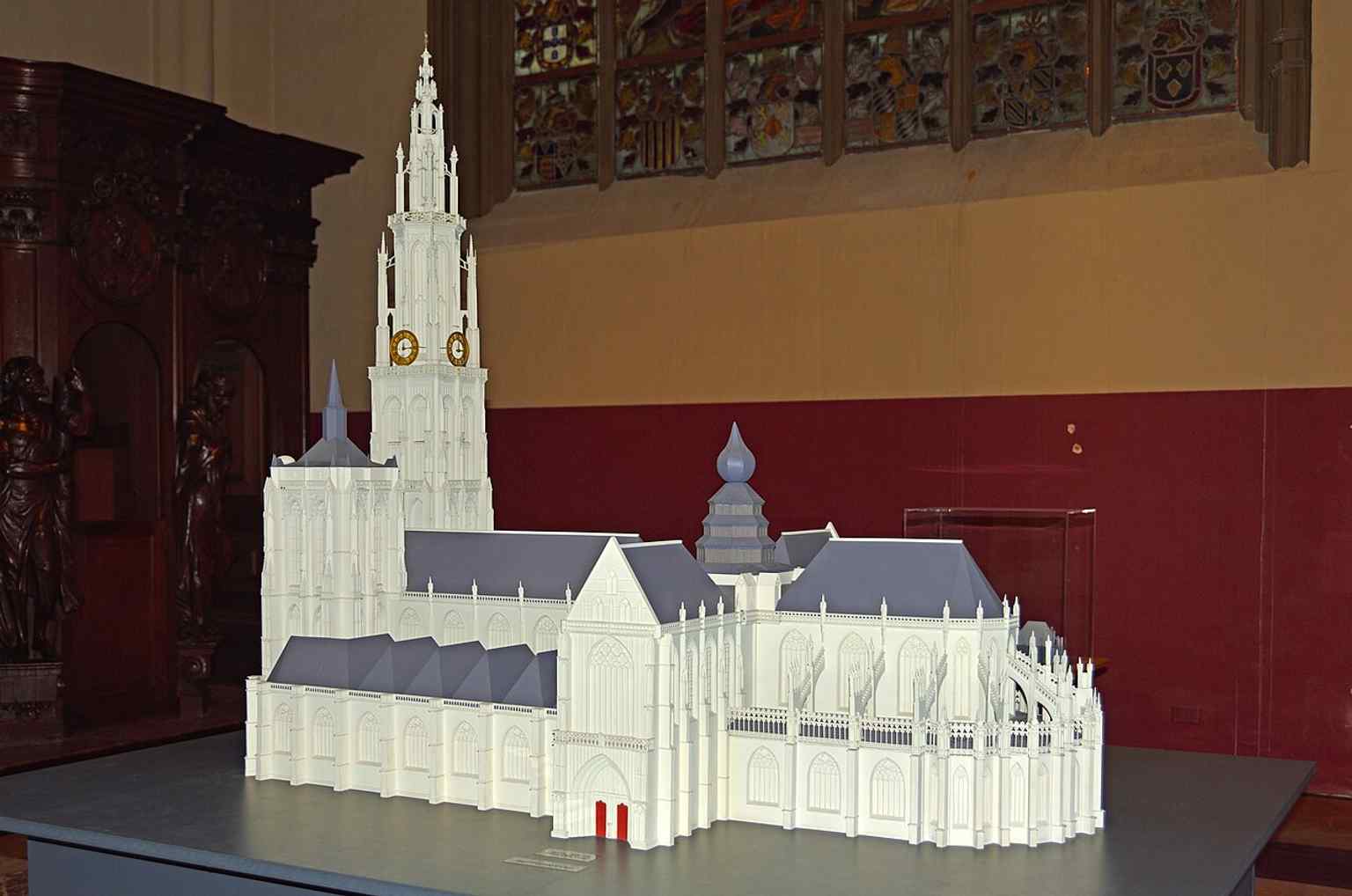
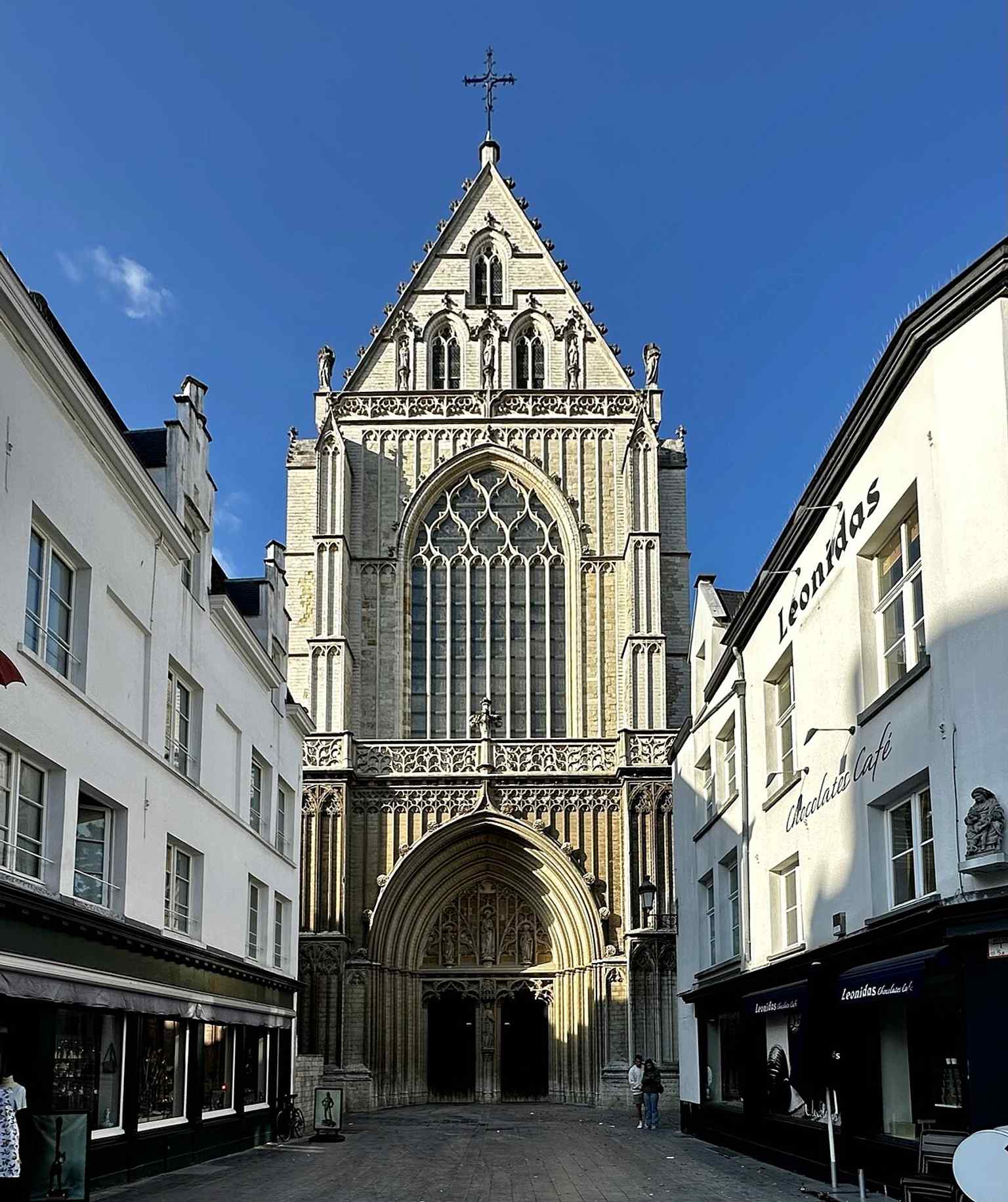
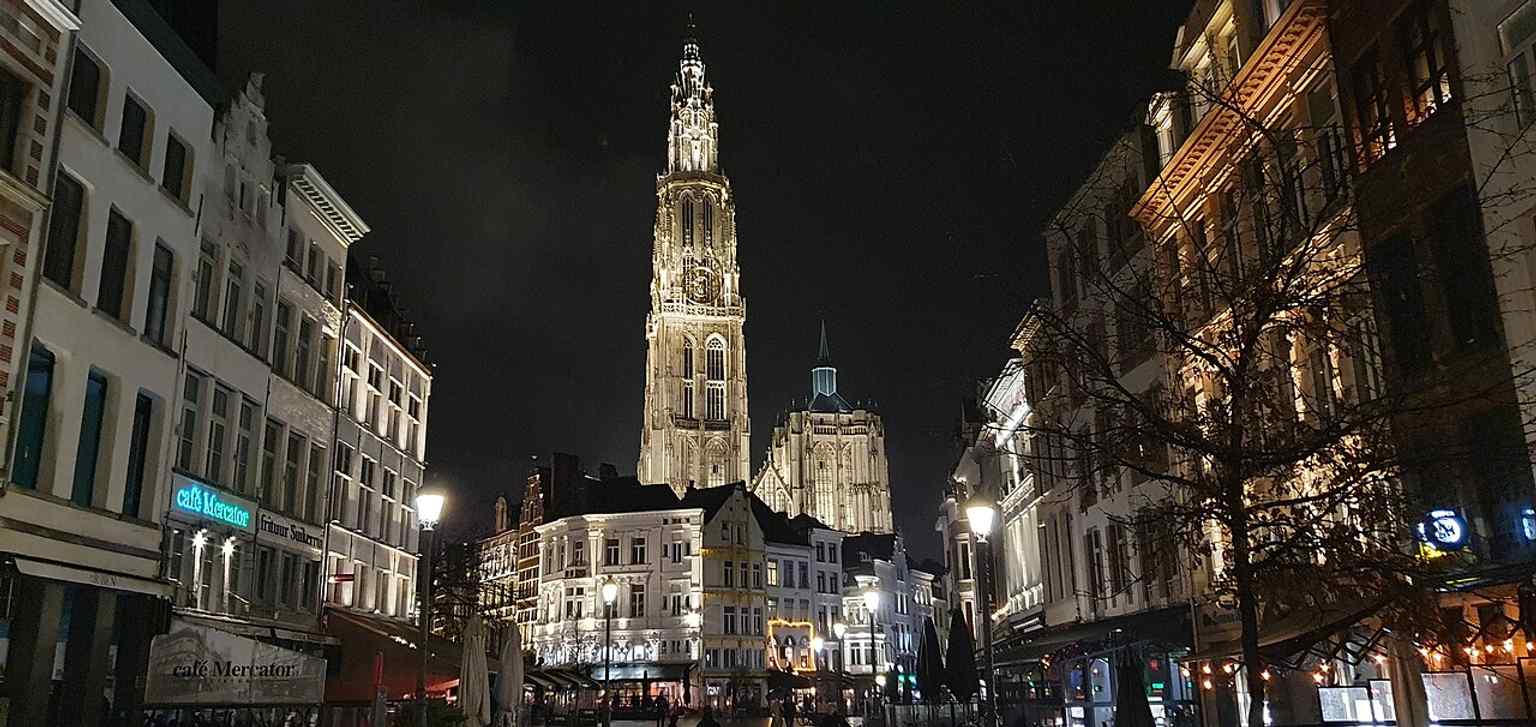
Ahead of you stands a vast pale-stone Gothic church with a pointed, arcaded façade, one lace-like spire soaring high above it, and a second tower that ends abruptly in an unfinished stump.
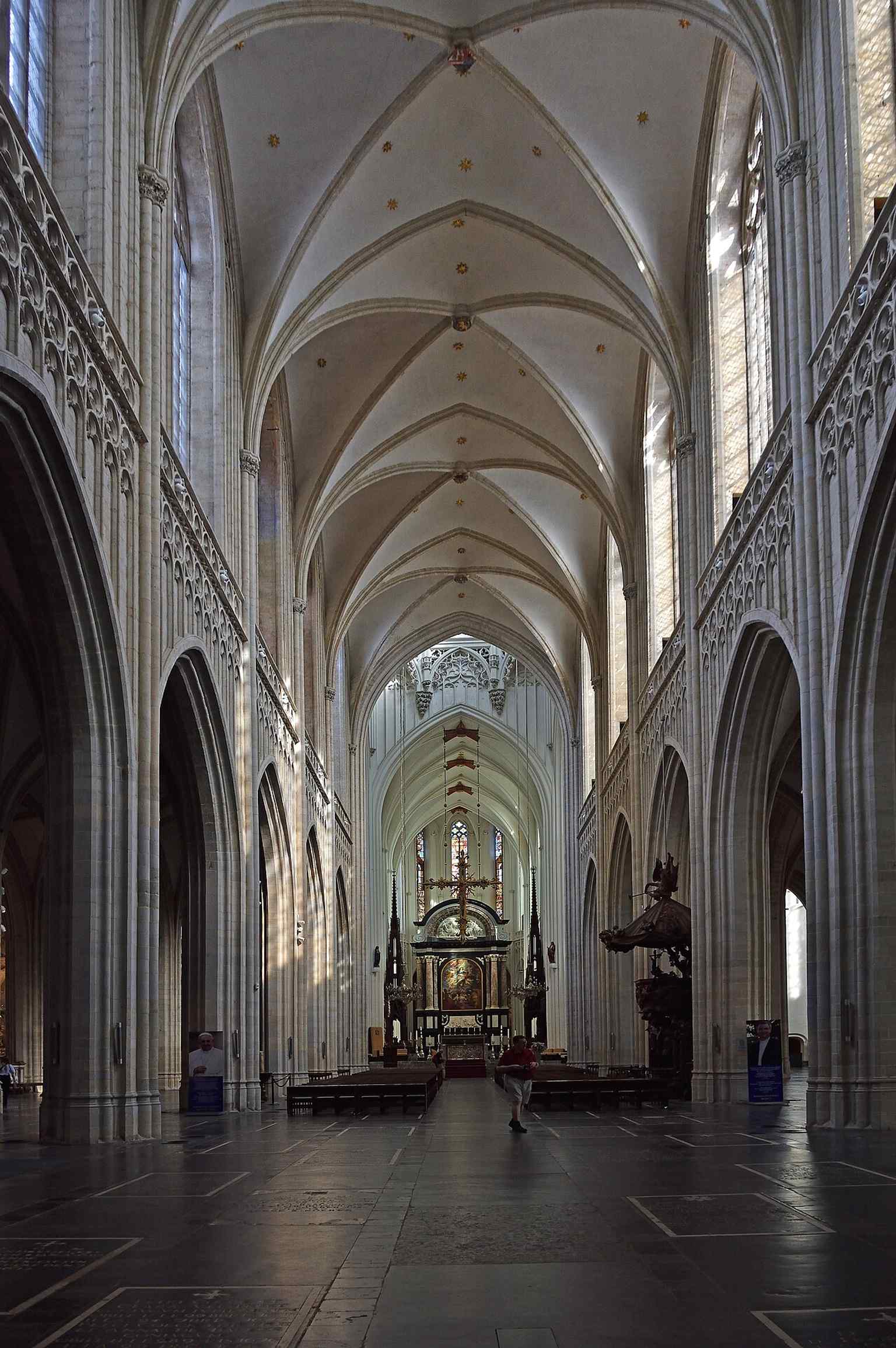
This is the Cathedral of Our Lady, the grandest Gothic church in Belgium, and it carries its history right on its face. Builders began work in thirteen fifty-two, under Jan and Pieter Appelmans, and by fifteen twenty-one they had created something astonishingly large: seven aisles, a central hall rising like a stone forest, and a north tower that climbs to one hundred and twenty-three metres above Antwerp. Its belfry is now protected by U-N-E-S-C-O, the United Nations Educational, Scientific and Cultural Organization. Even emperors fell for it. Charles the Fifth said the spire ought to be kept under glass, and Napoleon compared it to Mechlin lace.
But the odd beauty here lies in what never happened. The cathedral was meant to have two equal towers. Then, in the early sixteenth century, city leaders grew ambitious and planned an even larger choir, the eastern part of the church where the clergy sing the liturgy. They held back the south tower to make room. Then disaster intervened. Fire tore through the church in fifteen thirty-three, destroying fifty-seven altars. The mayor, Lancelot the Second of Ursel, helped save the building itself, and suffered serious injuries doing it. After that came religious upheaval, the rise of Protestant rule, and economic decline. Construction paused, and that “pause” never ended. So the south tower still stops short, frozen in mid-intention.
This church survived more than incompletion. In fifteen sixty-six, during the Iconoclasm, the wave of religious image-breaking, attackers smashed images and furnishings so violently that one witness said the cathedral looked like hell, lit by more than ten thousand torches. French revolutionaries later plundered it and even considered demolishing it. German soldiers looted it again in nineteen fourteen. Yet each time, Antwerp pulled it back from the brink. During the Second World War, volunteers even used the tower as a lookout for incoming V-one and V-two rockets.
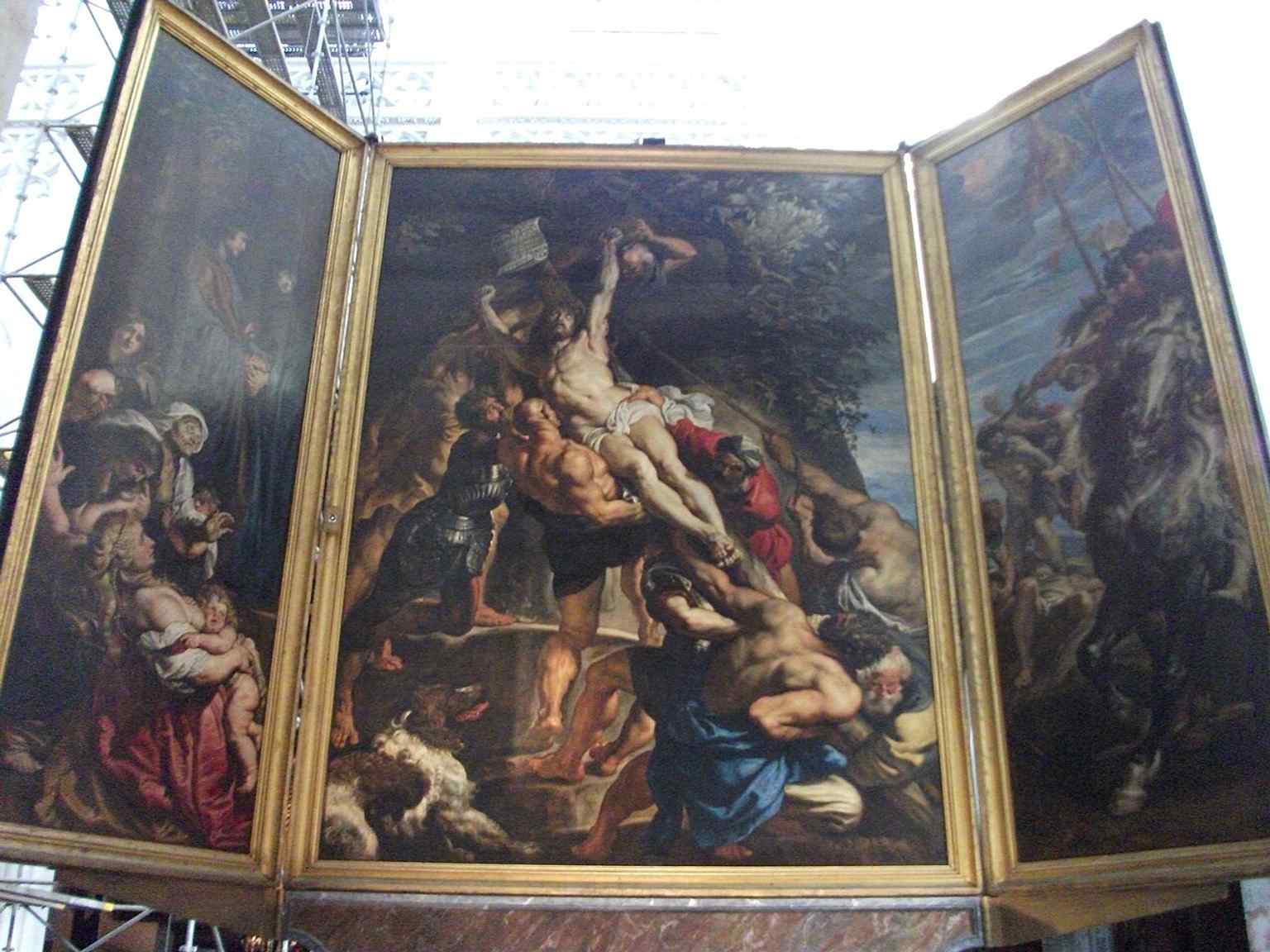
Inside, the cathedral shelters Rubens at full power: The Raising of the Cross, The Descent from the Cross, The Assumption of the Virgin, and more. If you glance at the app, you can see The Raising of the Cross, all strain, muscle, and movement, exactly the sort of drama this building seems to contain in its bones. Just outside the entrance, there is also a wrought-iron wellhead tied to one of Antwerp’s favourite legends. It says, in effect, “Love made the blacksmith a painter.” The story claims Quinten Matsys gave up the forge, mastered painting, and won the woman he loved. A tidy moral, and rather convenient for a city that admires both craft and ambition.
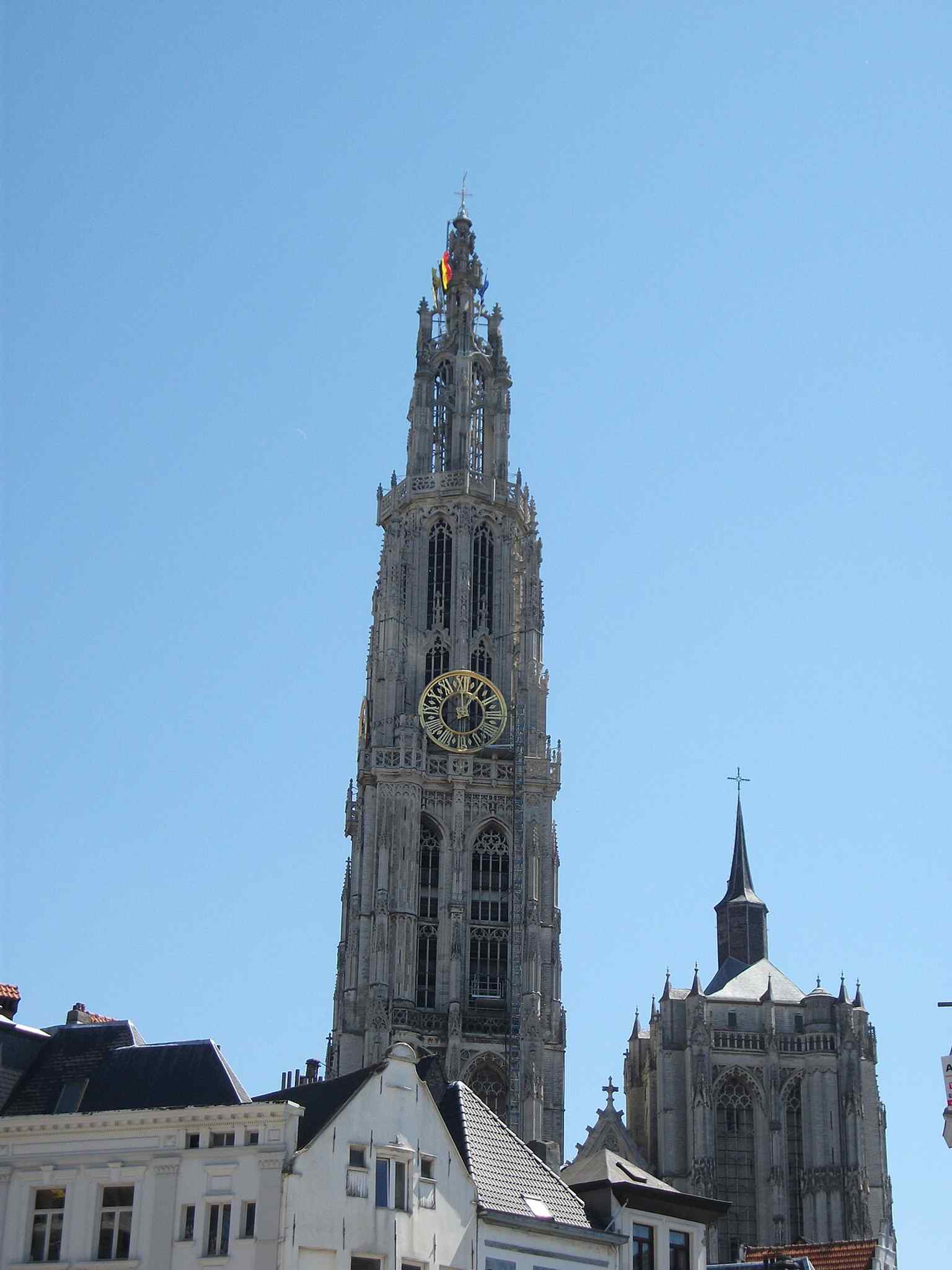
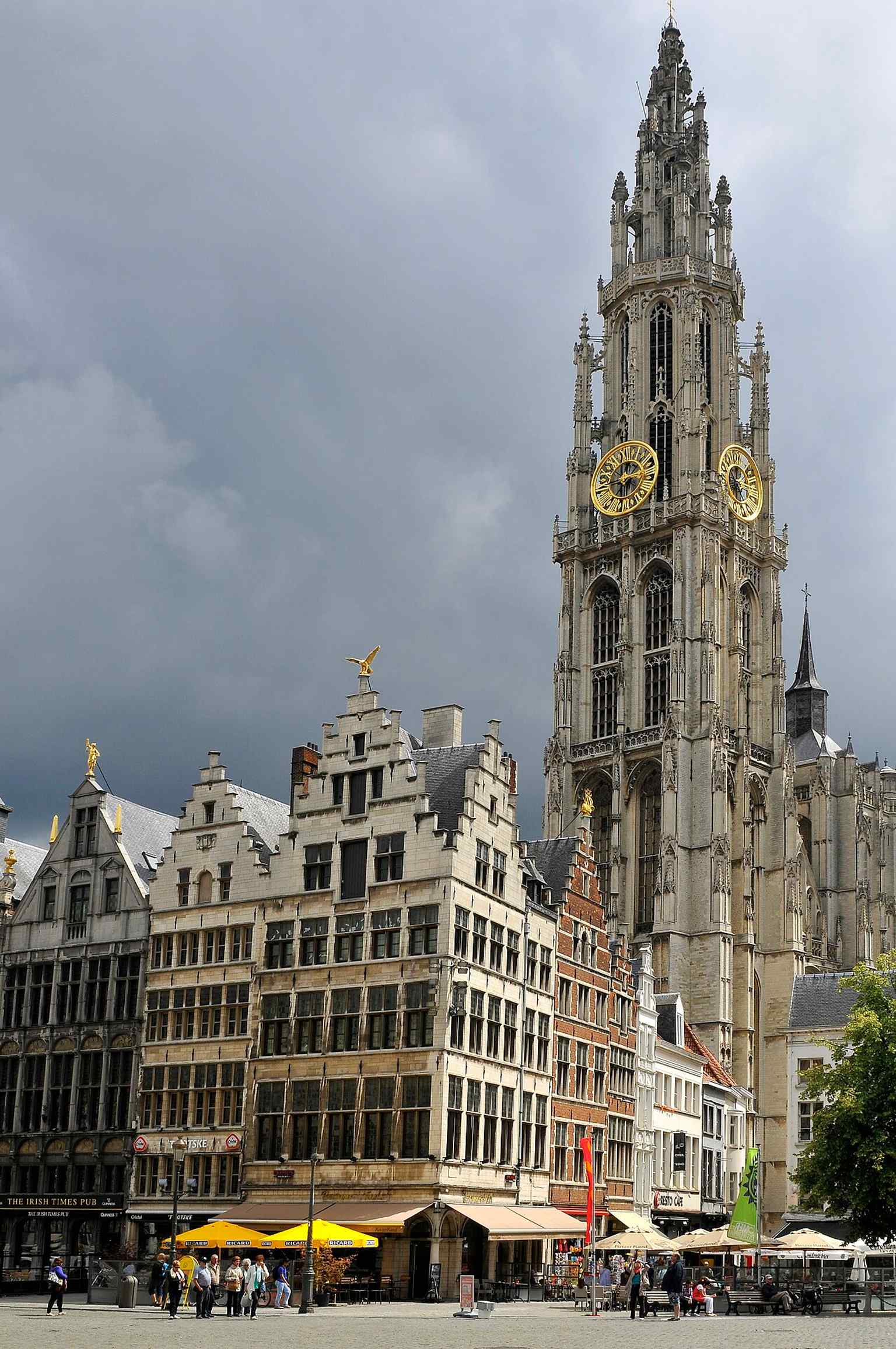
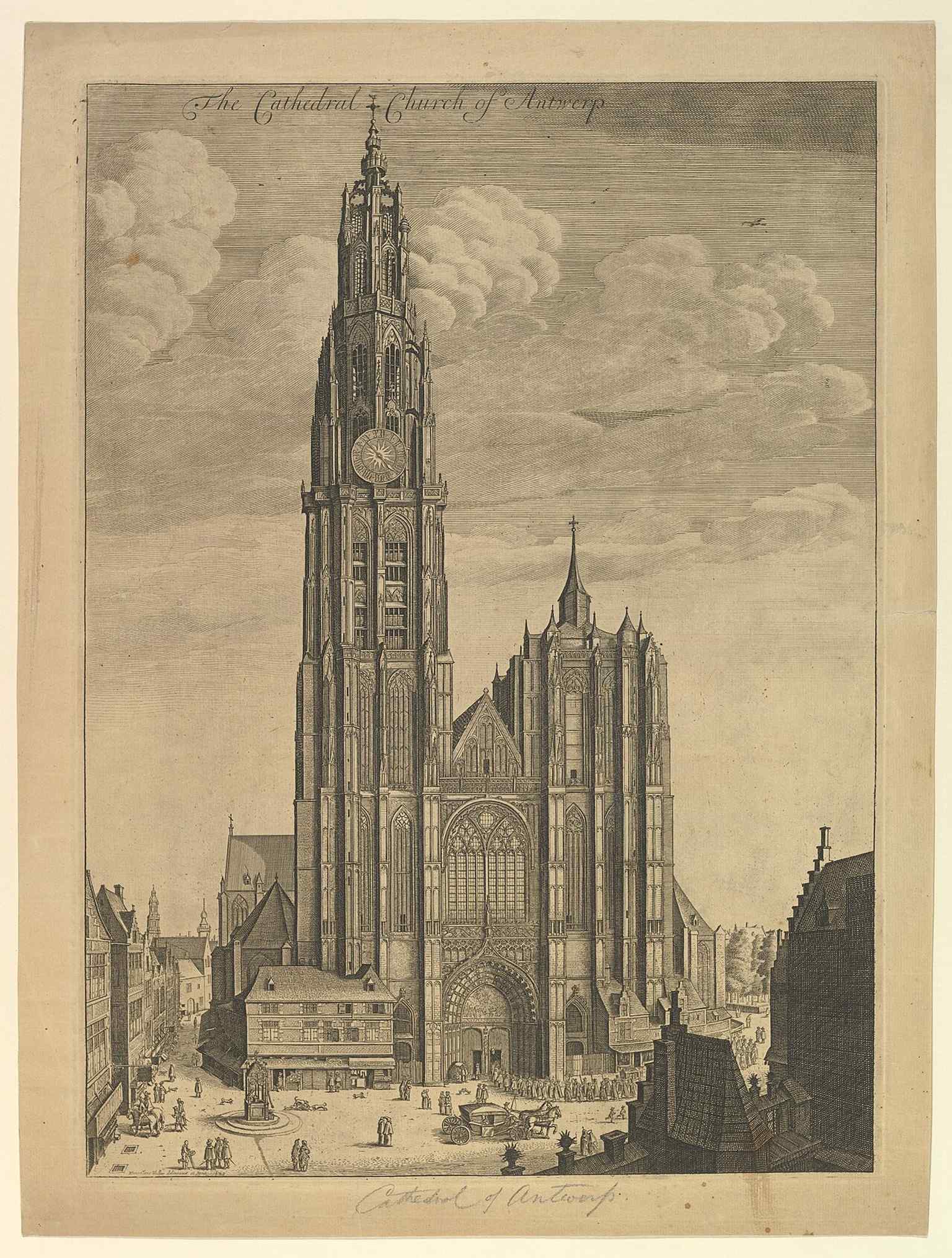
If you like, have a peek at the image in the app; it neatly shows how this tower shifted from part of an ordinary skyline to Antwerp’s unmistakable vertical signature. If you plan to step inside later, the cathedral generally opens from ten to five on weekdays, from ten to three on Saturday, and from one to five on Sunday.
So this cathedral stands not as a perfect monument, but as a magnificent survivor. When you are ready, continue on and let Antwerp show you what learning and memory look like in stone.






%20MET%20DP827153.jpg)


%20at%20night.jpg)