
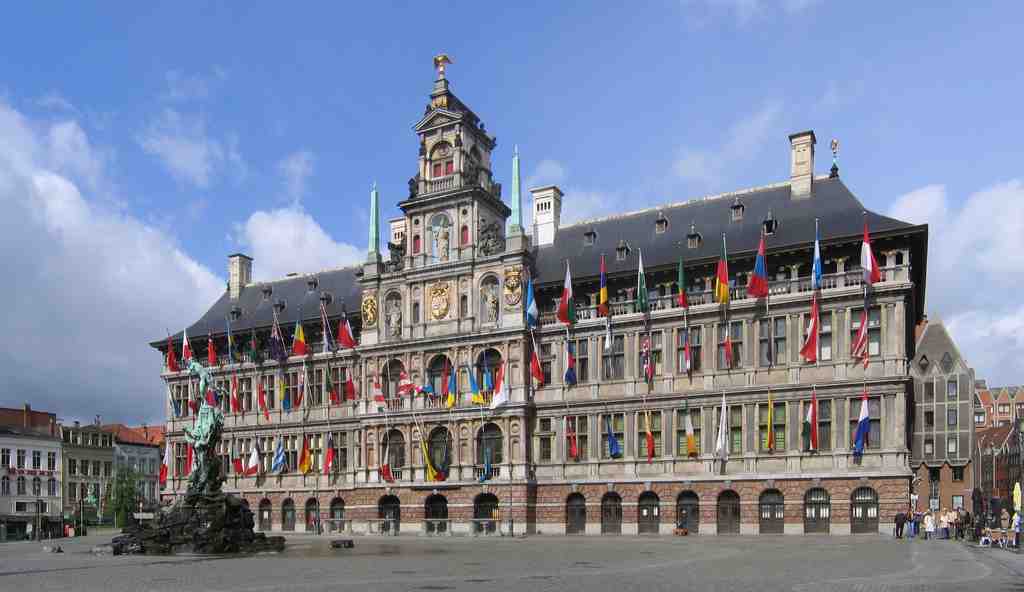
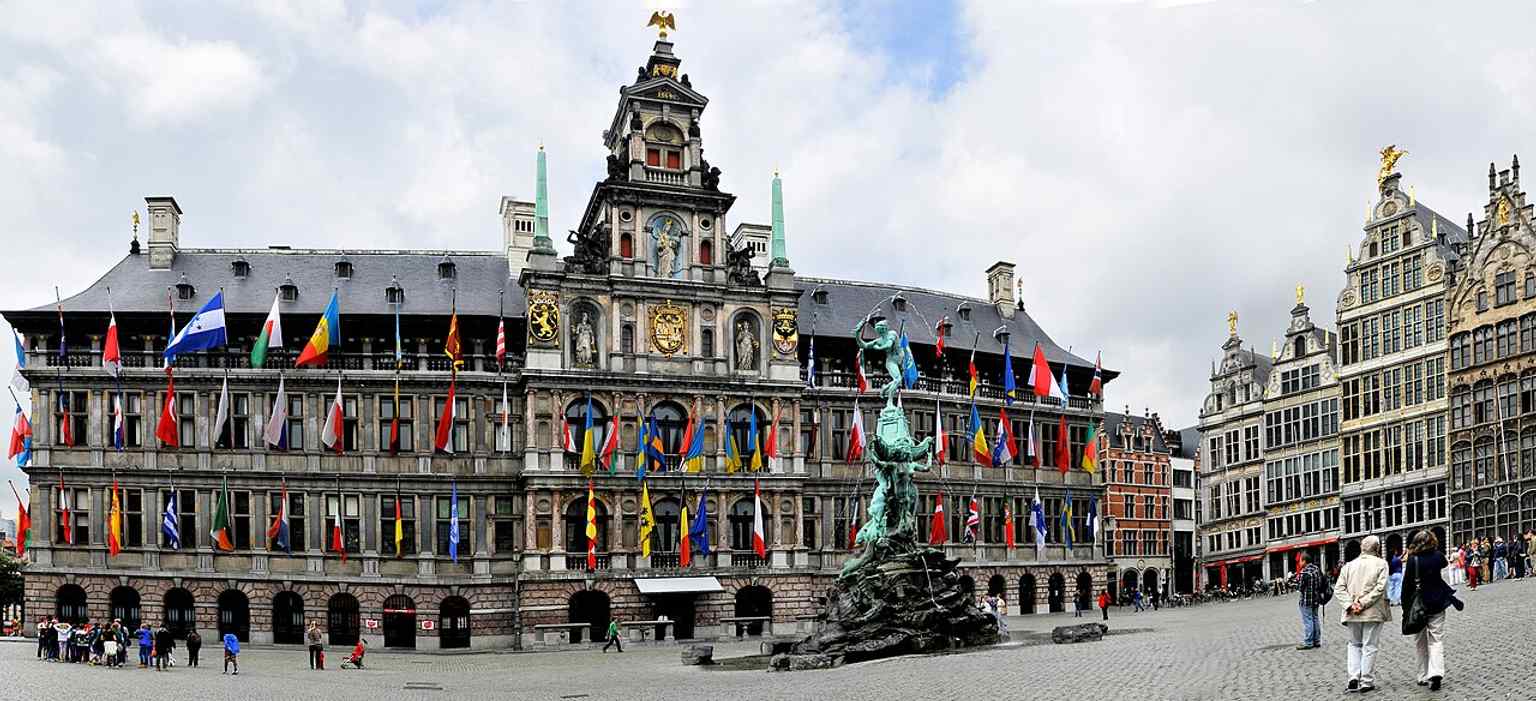
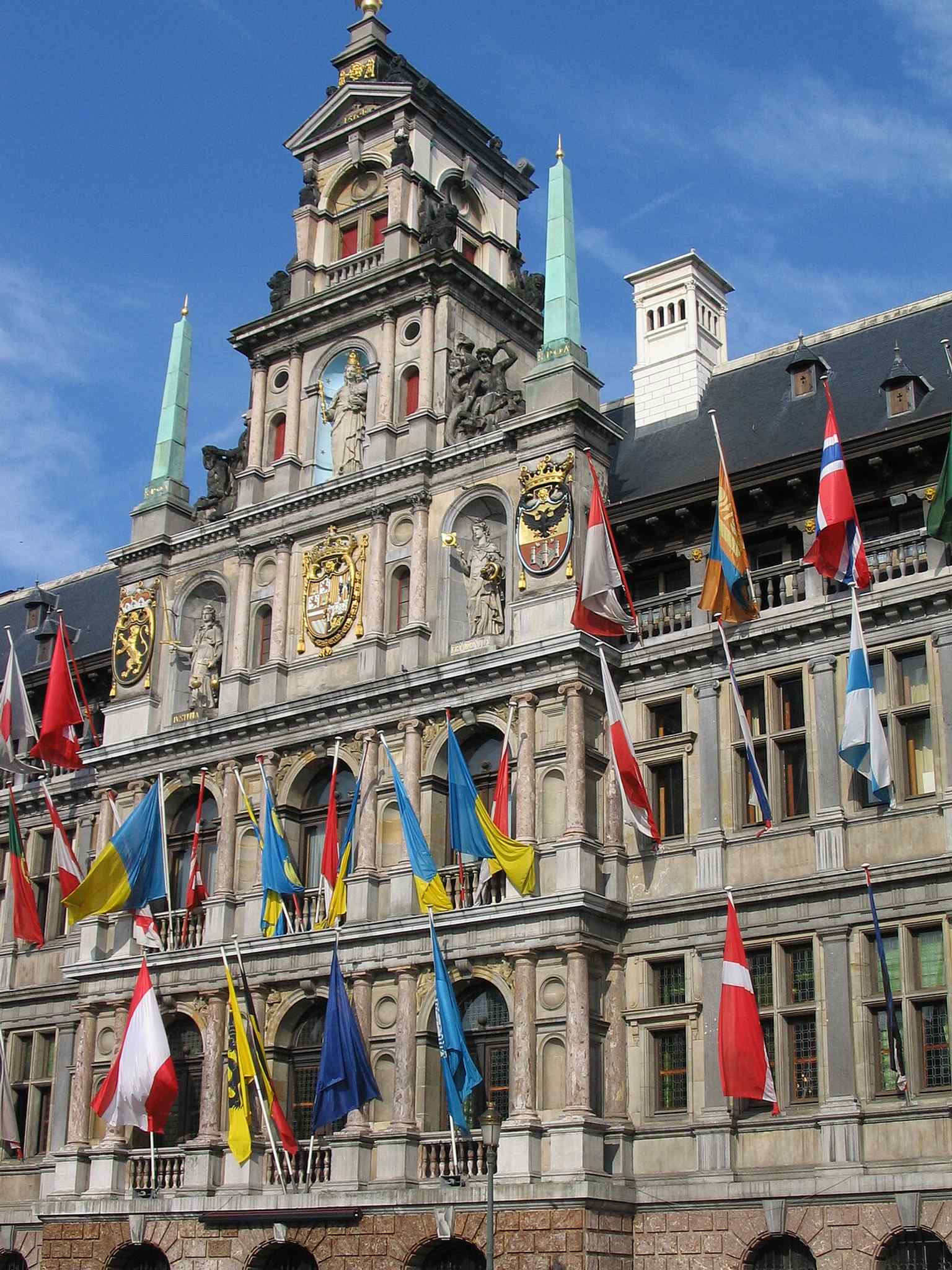
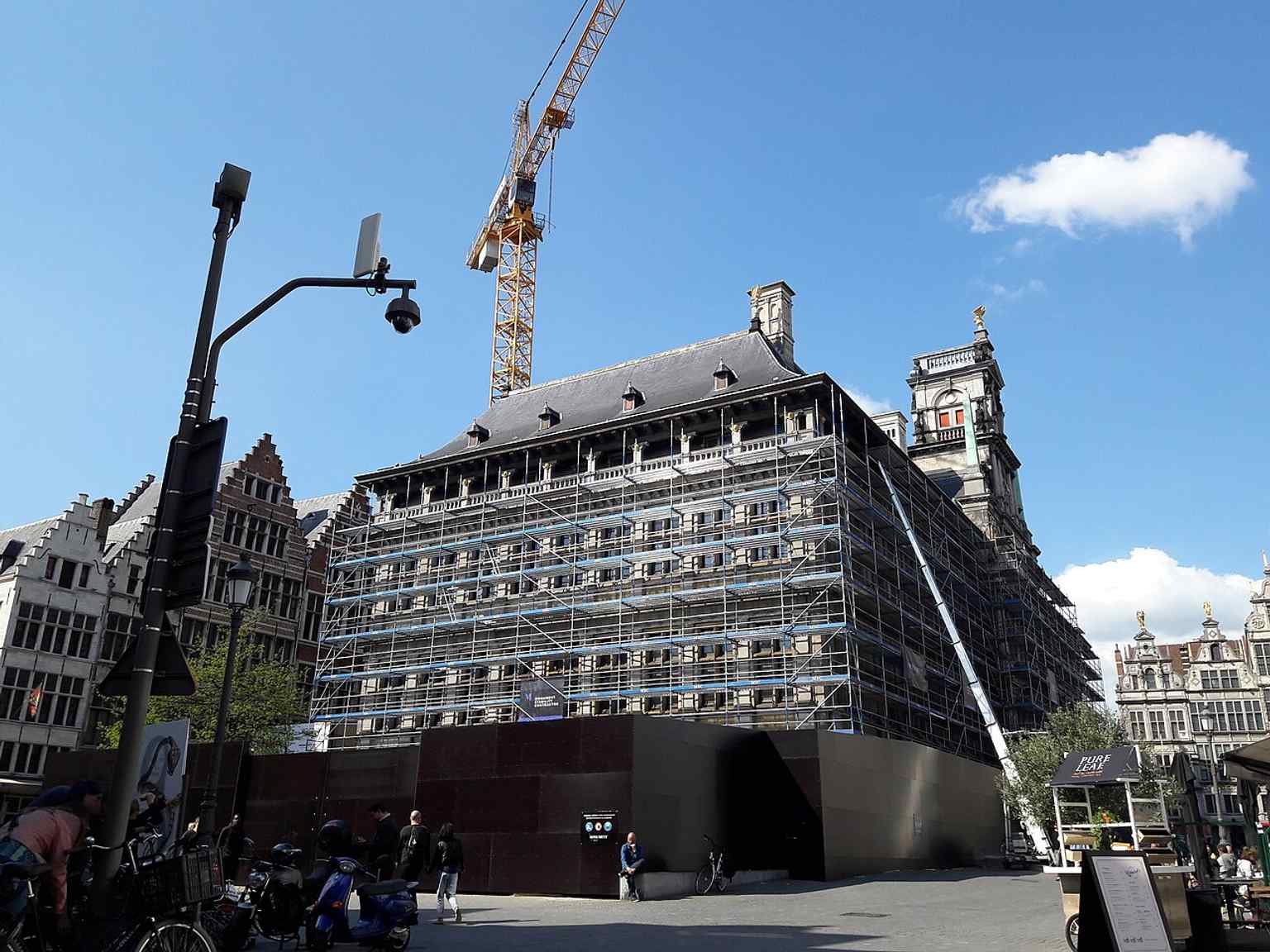
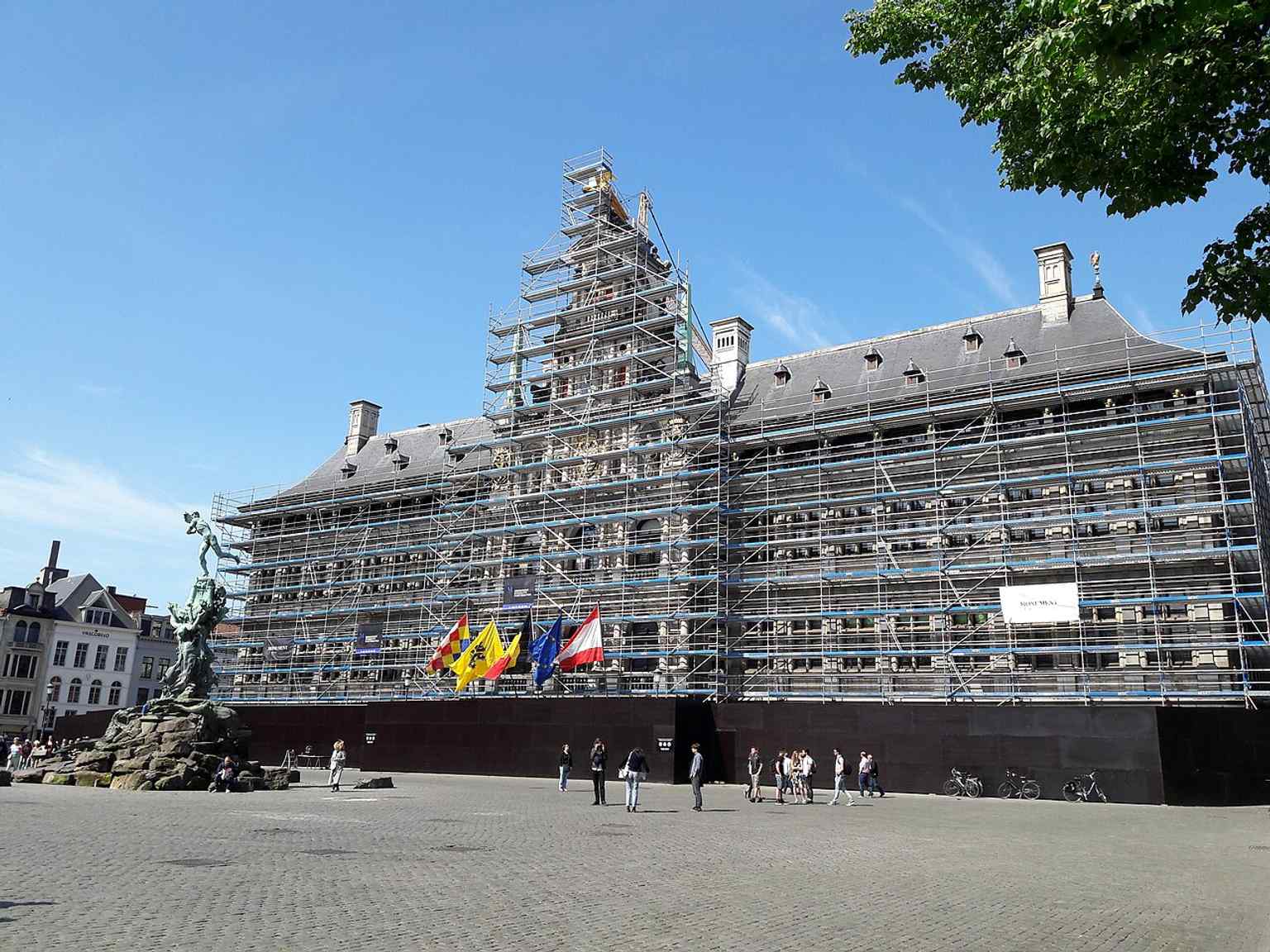
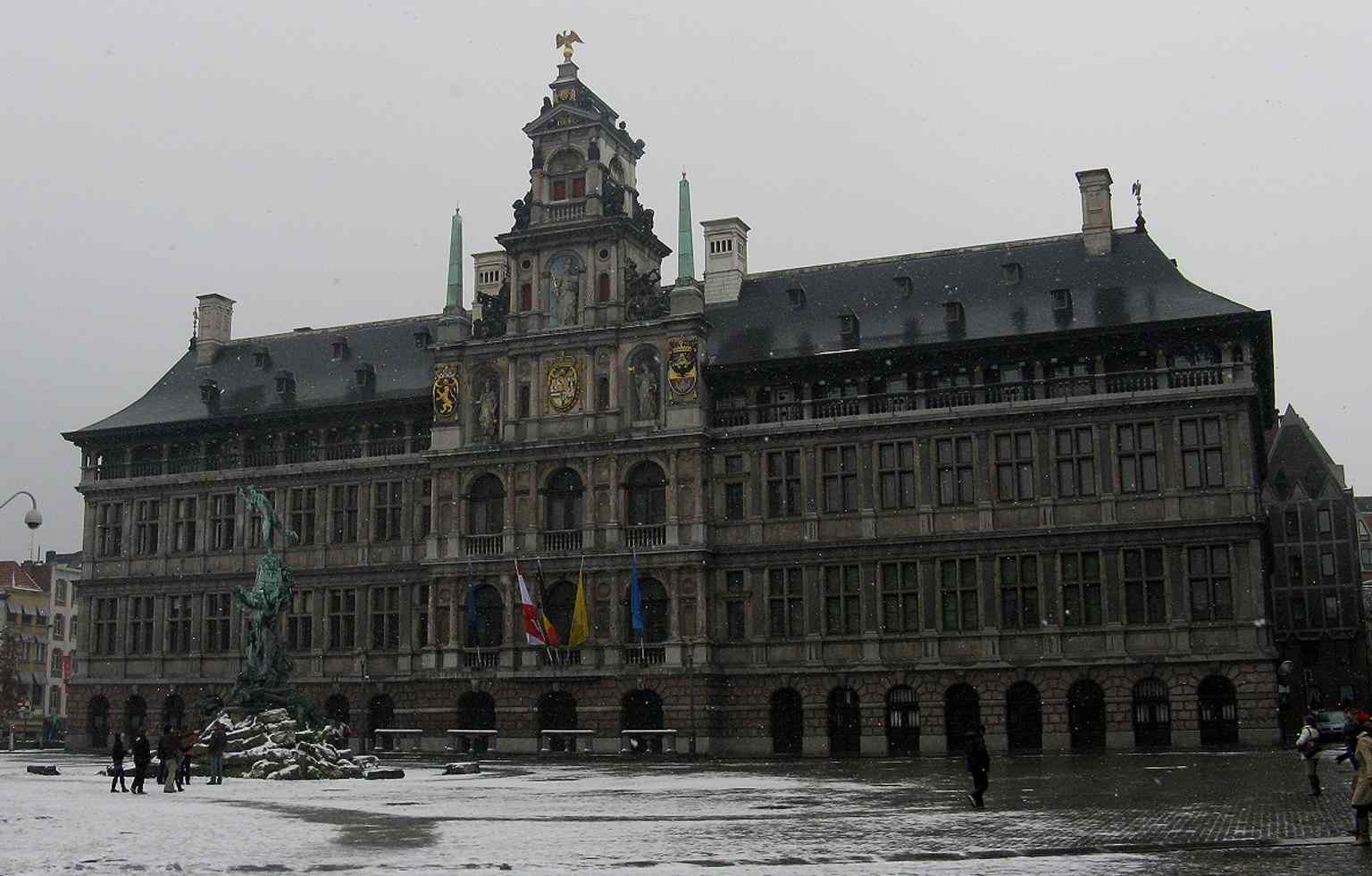
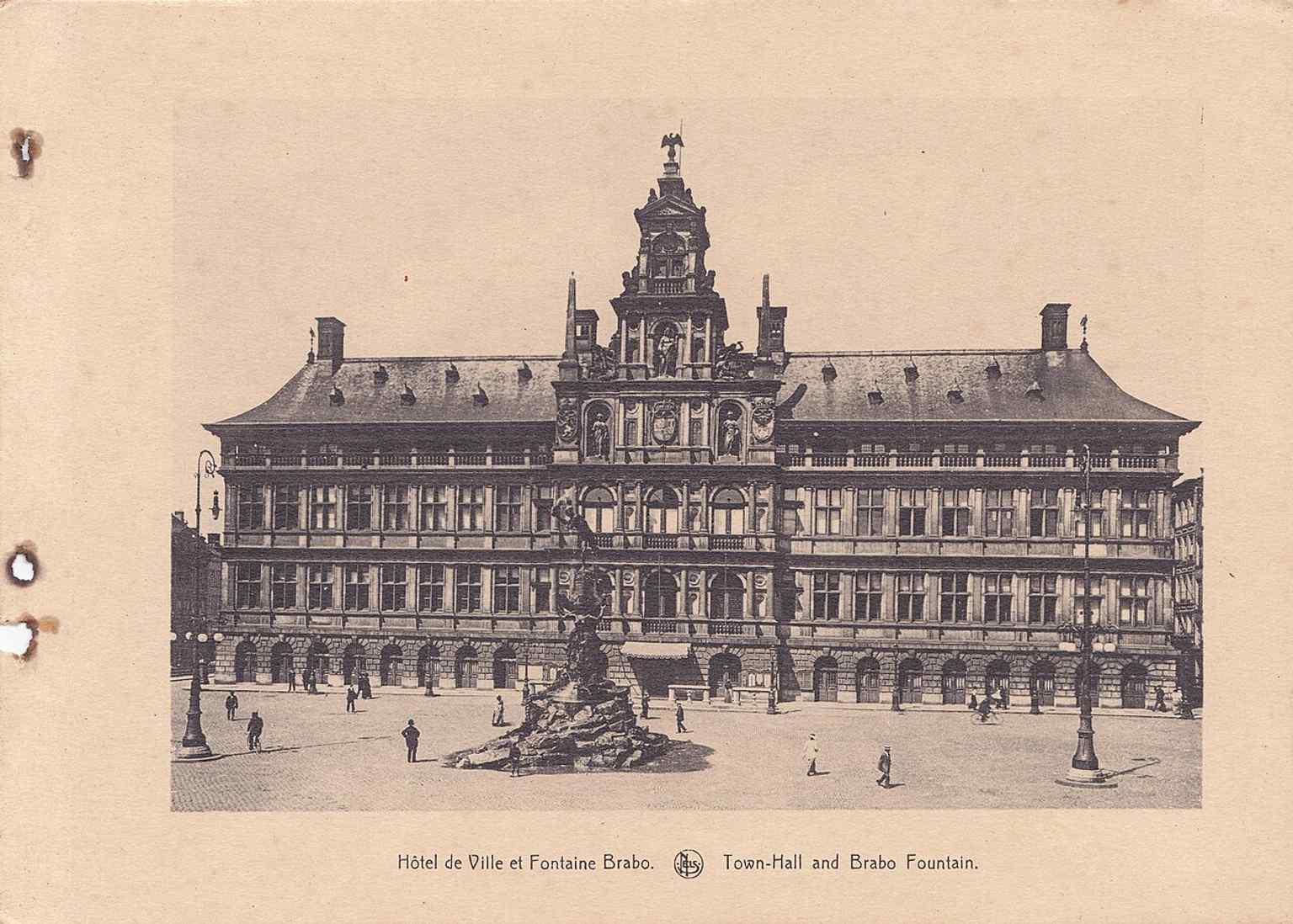
Look for the long pale stone façade with its low row of arches, tall window bays framed by columns, and the ornate central tower-like section stepping upward above the roof.
This is Antwerp City Hall, standing on the west side of the Grote Markt like a declaration in stone. The city magistrates commissioned it in the mid-sixteenth century: they raised it between fifteen sixty-one and fifteen sixty-five, when Antwerp had become one of the busiest trading ports in northern Europe and wanted a town hall grand enough to match its wealth. At first, the city expected a vast Gothic hall, the older northern style with pointed forms and medieval drama. Then history intervened. In fifteen forty-two, the warlord Maarten van Rossum threatened Antwerp, and the city grabbed the stone and timber meant for the new hall and sent them to strengthen the walls instead. By the time peace and money returned, Gothic fashion had faded. So Cornelis Floris de Vriendt and his collaborators gave Antwerp something daringly new: a Renaissance front that mixed Flemish solidity with Italian balance.
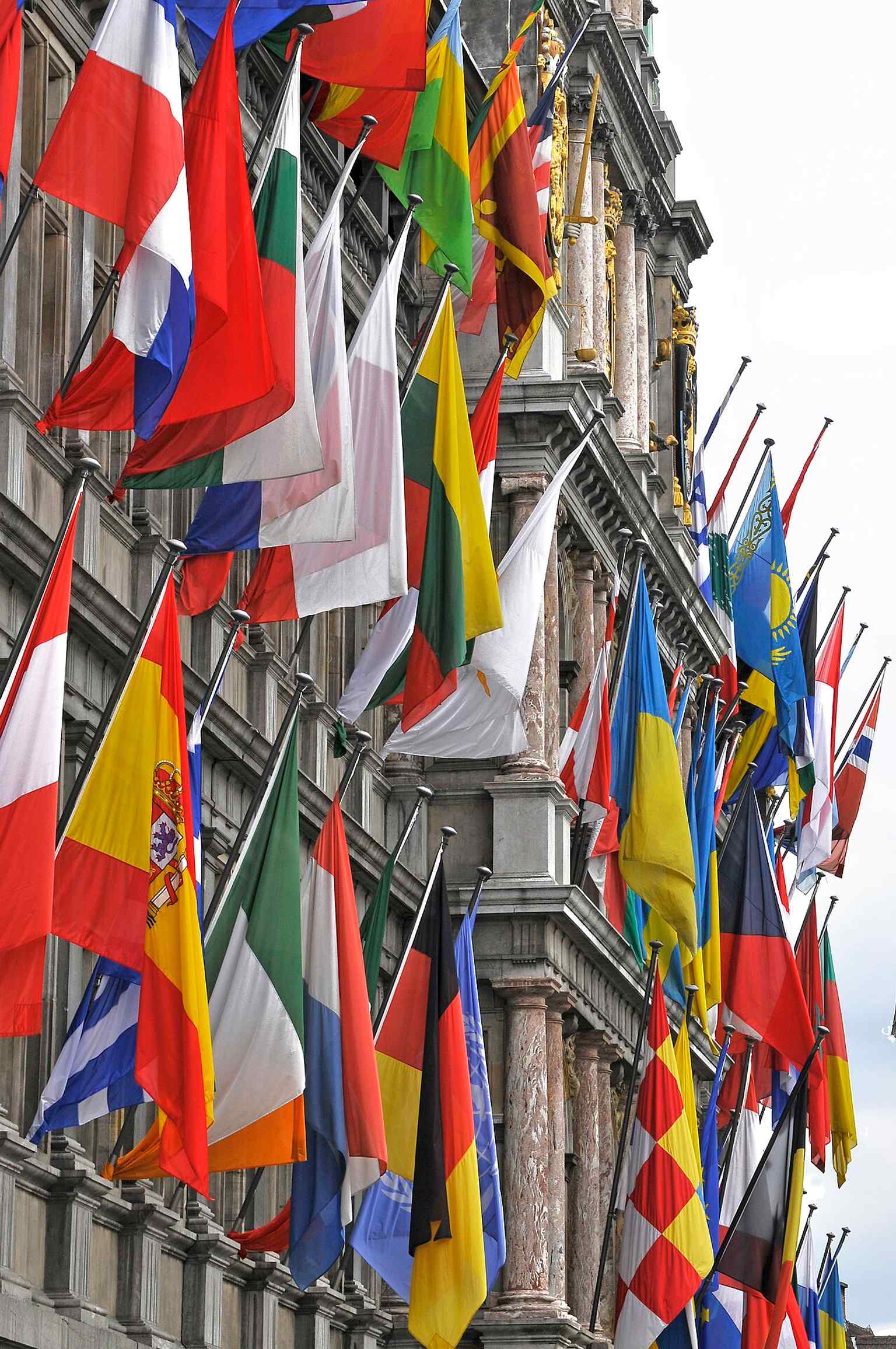
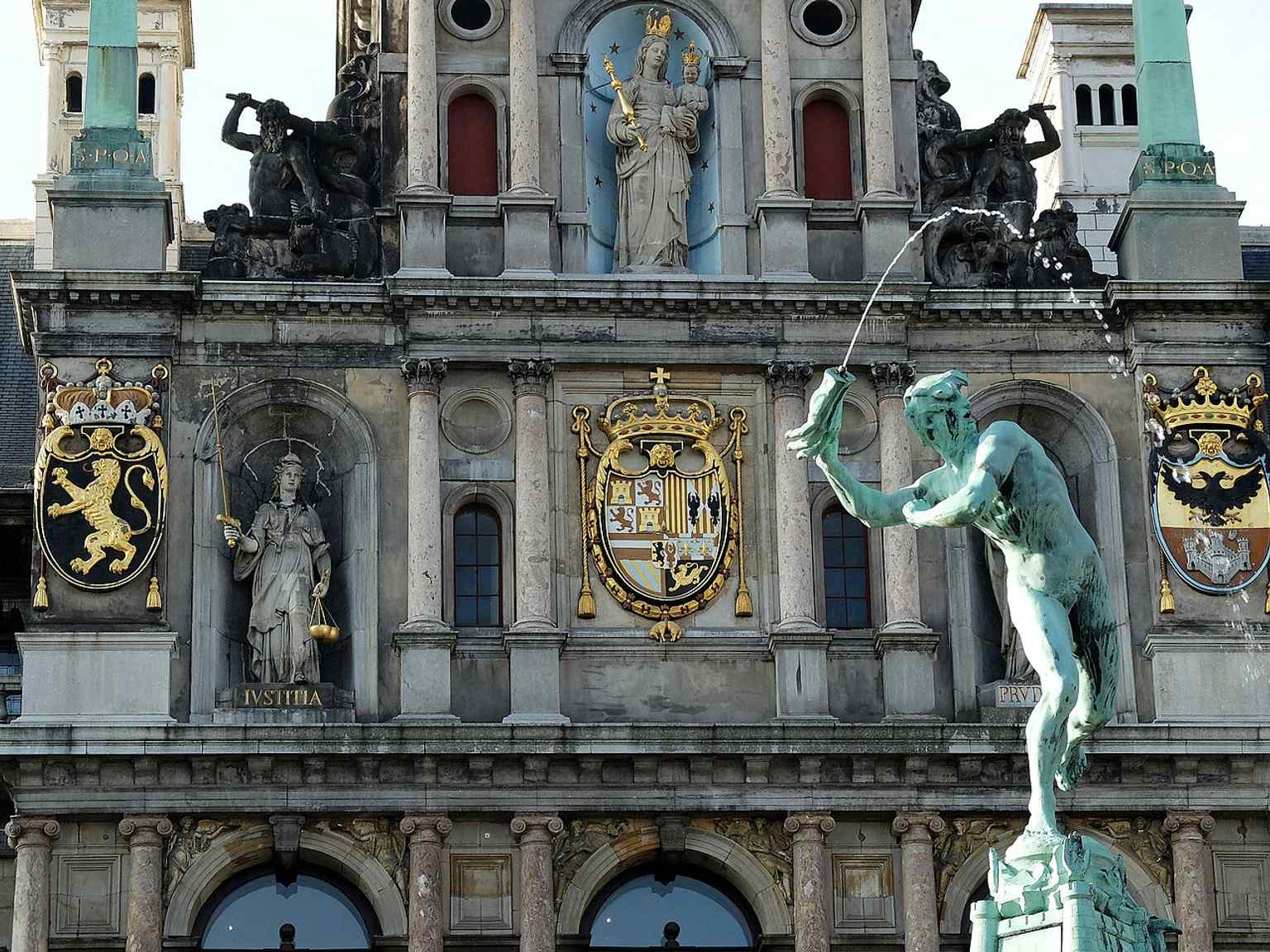
You can read that mixture directly on the façade. The ground floor is rusticated stone, meaning the blocks are cut to look rough and powerful, and those arches once sheltered little shops. Above, Doric and then Ionic columns - two classical Greek-inspired orders, one sturdy, one more elegant - divide the large mullioned windows, the windows split by slender vertical bars. If you glance at the details on your screen, you can see how richly carved the coats of arms and ornament are. Those heraldic shields proclaim the powers shaping the city: Brabant, the Spanish Habsburg rulers, and Antwerp itself.
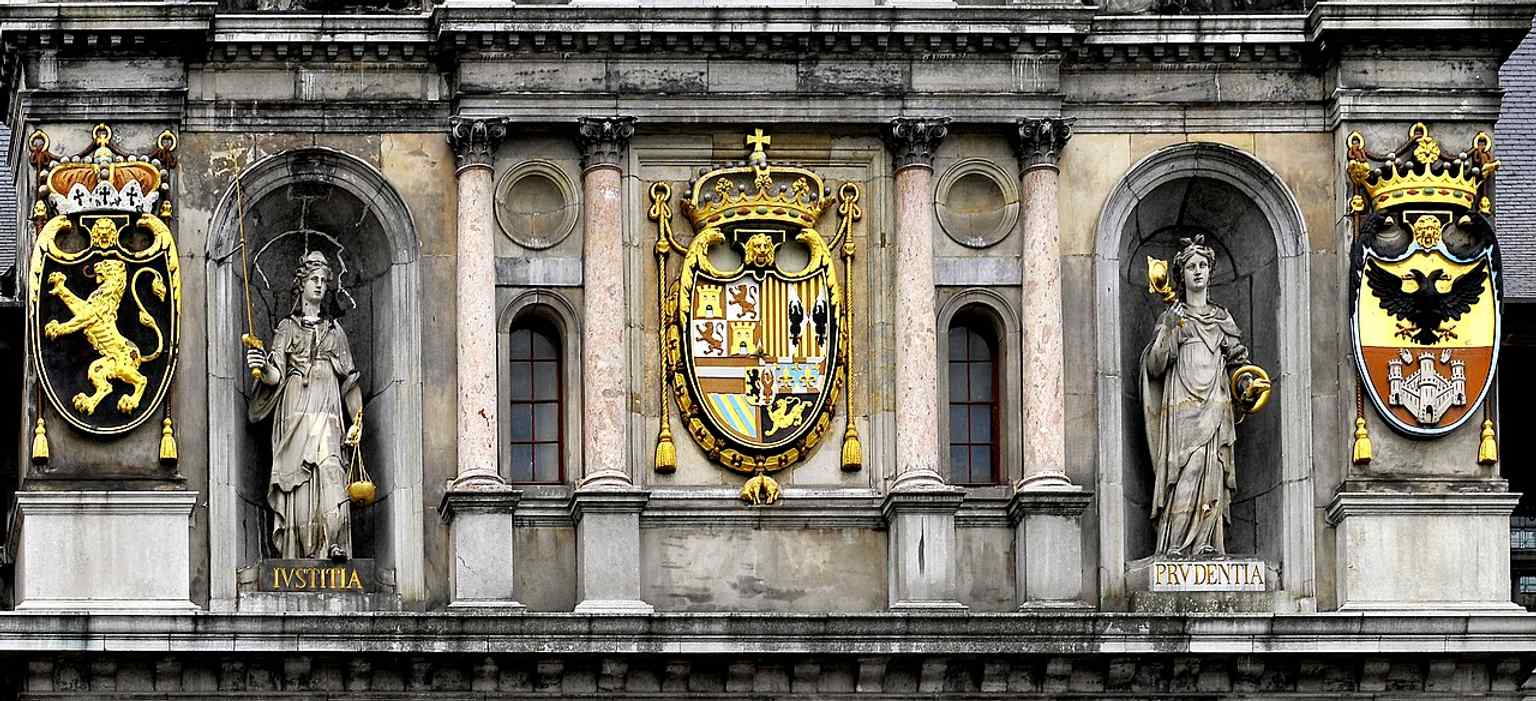
At the centre, above the roofline, stand Justice, Prudence, and the Virgin Mary. Mary has a story of her own. The original figure there was not Mary at all, but Silvius Brabo, Antwerp’s legendary giant-slayer. After the Spanish reconquest in fifteen eighty-five, the Jesuits pushed to remove secular symbols from the square, and in fifteen eighty-seven Brabo came down. Mary took his place. Brabo only returned much later, not to the façade, but to the fountain just ahead of you.
For all its grandeur, this building also reflects the hard edge of civic power. While the new hall was being planned and built, the council ordered secret executions of Anabaptists - a Protestant group treated as heretics - drowning them in the cellars of the nearby Steen prison so they would not become public martyrs at the stake. It is a grim reminder that fine architecture and moral confidence do not always keep good company.
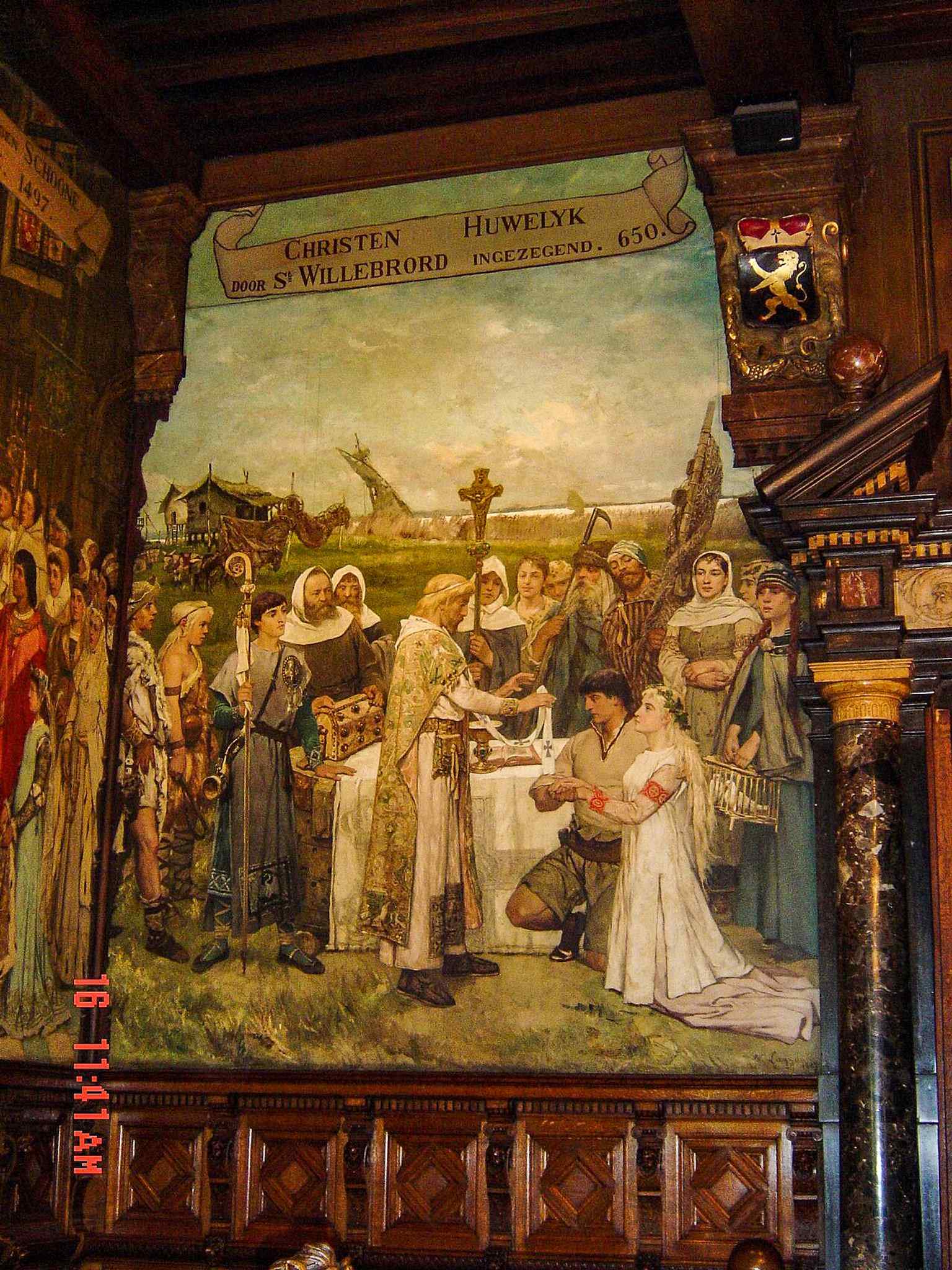
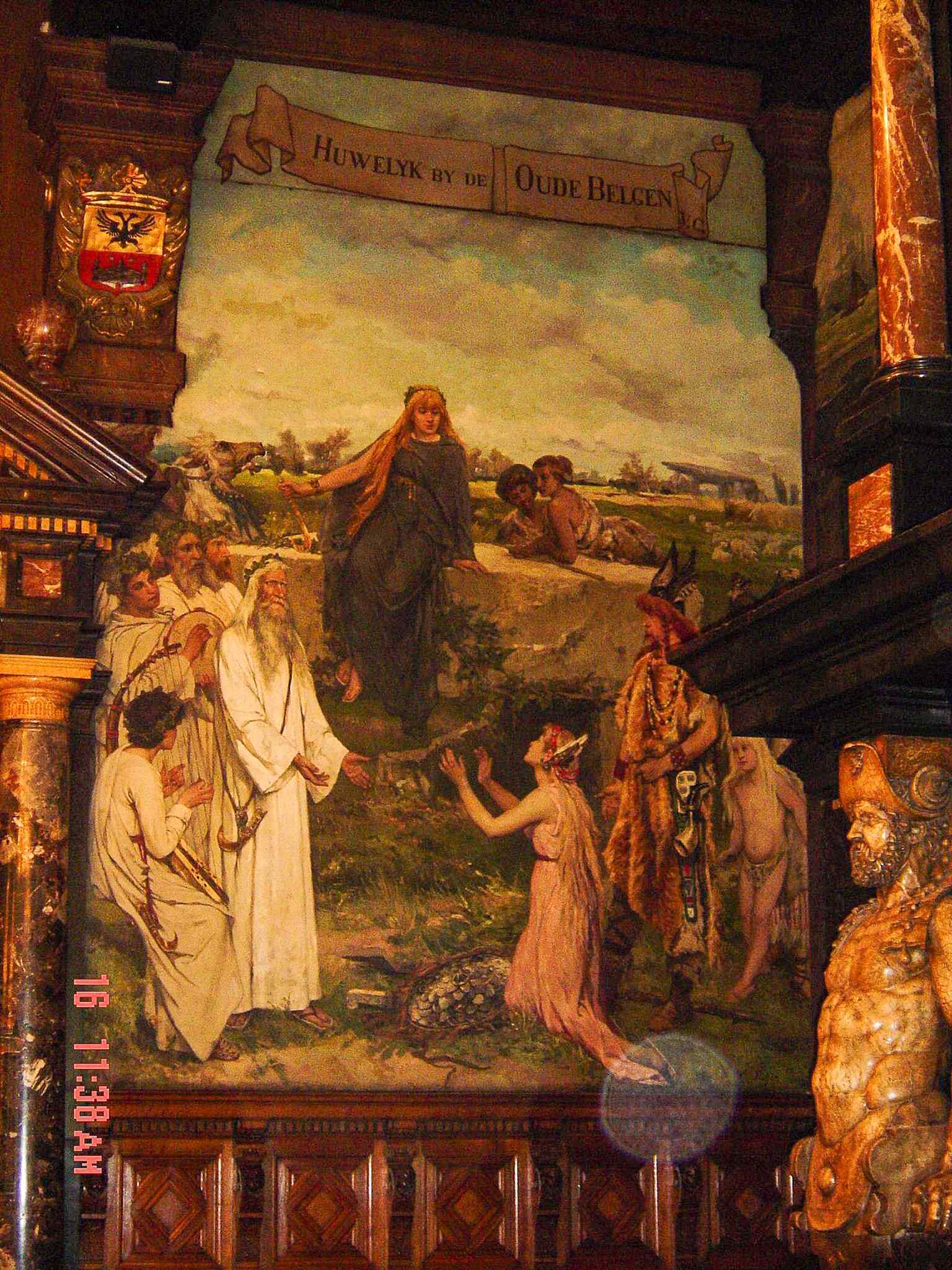
And then came catastrophe. In fifteen seventy-six, mutinous Spanish troops stormed Antwerp in the Spanish Fury. A merchant named Jan van der Meulen wrote anxious letters to his brother in Cologne as danger closed in; his brother later marked the final one: received on the seventh of November, when the Spanish Fury took place. Jan did not survive. Count Otto the Fourth van Eberstein tried to defend the city, fled, and drowned in the Scheldt. The troops torched this hall, destroyed the archives, and left only the blackened outer walls. Antwerp restored it three years later. If you look at one of the interior photographs in the app, you can see how nineteenth-century restorers later gave the rooms their grand official decoration.
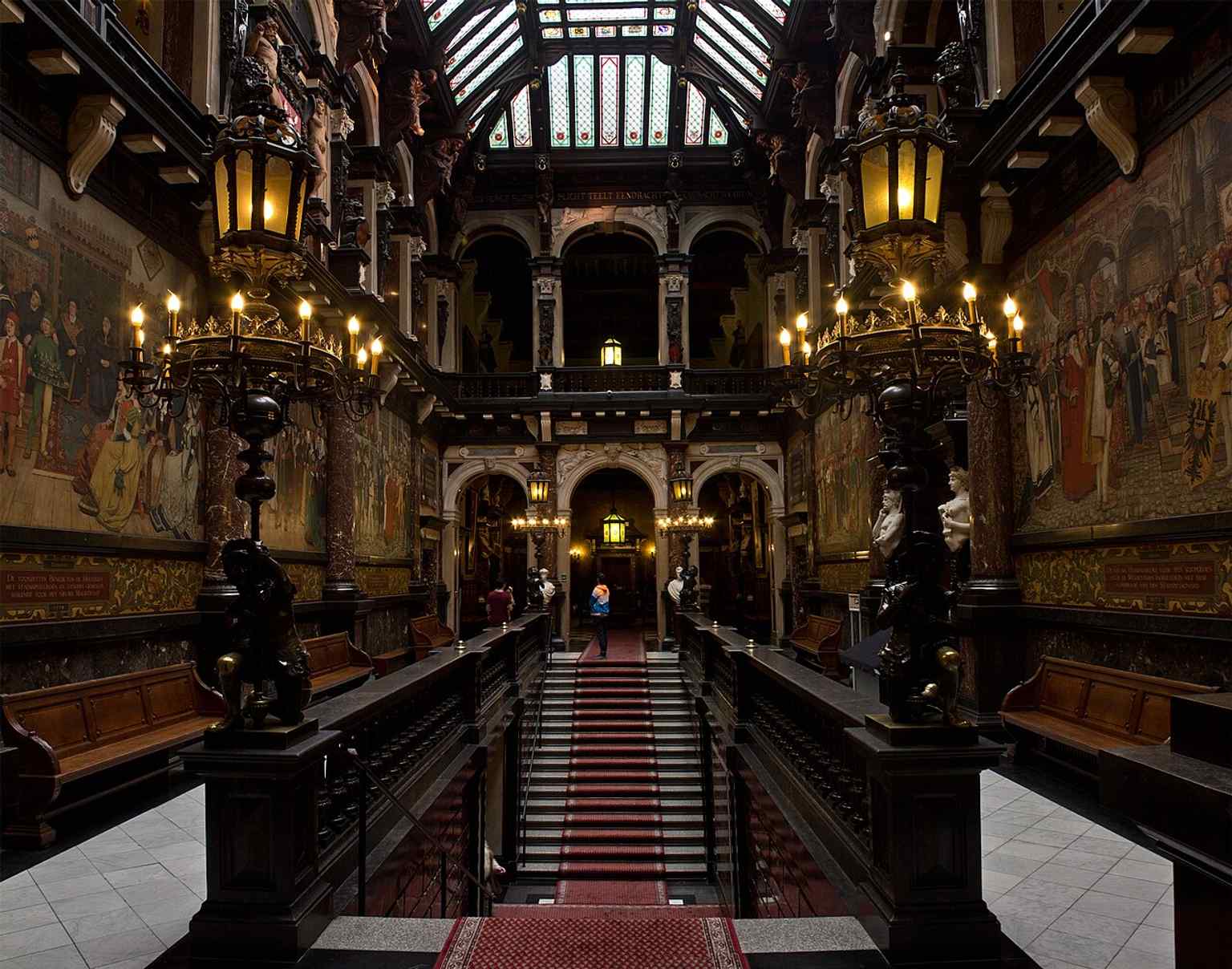
If you want to go inside another time, City Hall usually opens on weekdays from half past eight to half past five and closes on Saturdays and Sundays.
This façade is both a civic trophy and a witness to Antwerp’s fiercest moments.
When you are ready, continue on to the Brabo Fountain, where legend takes the square for itself.






.jpeg)