
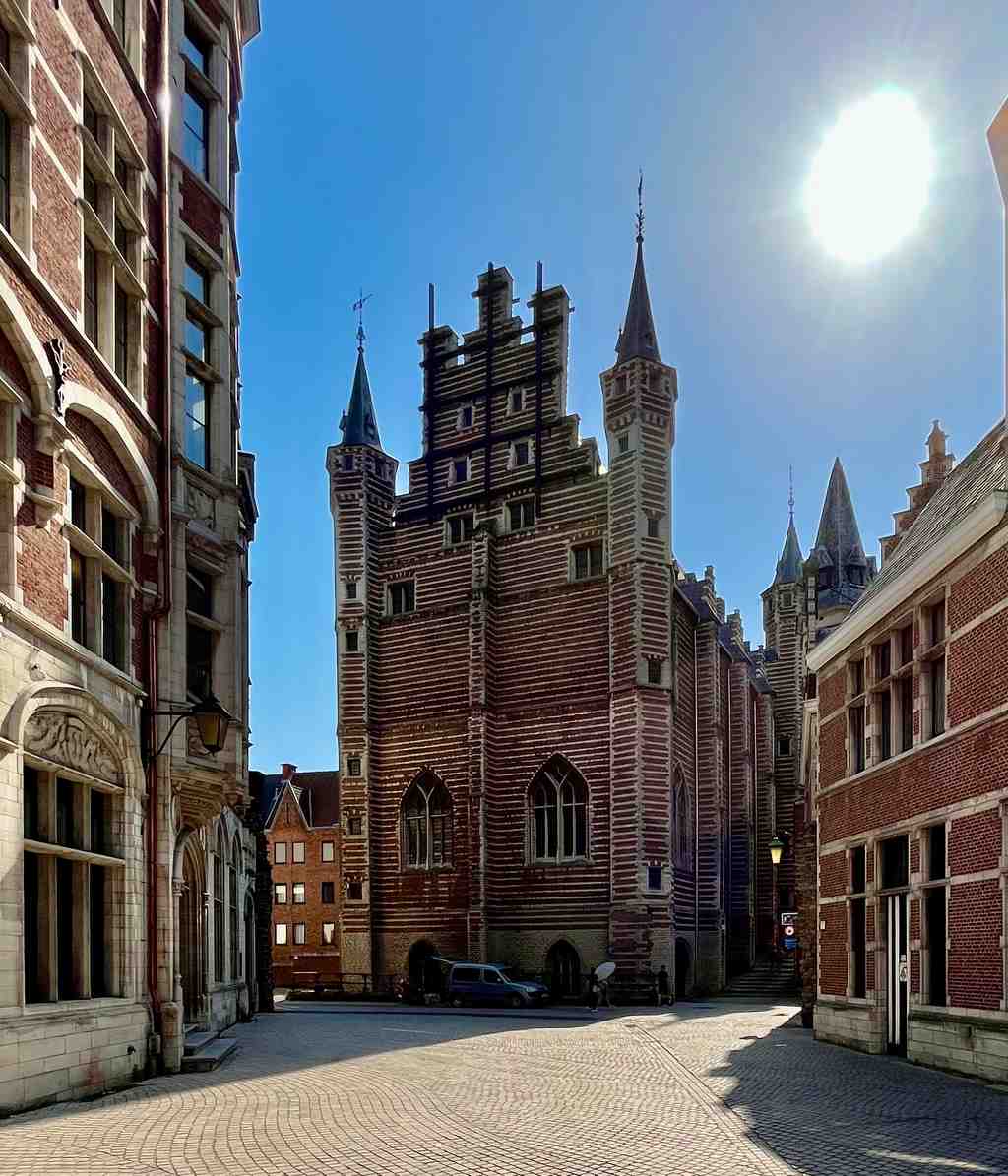
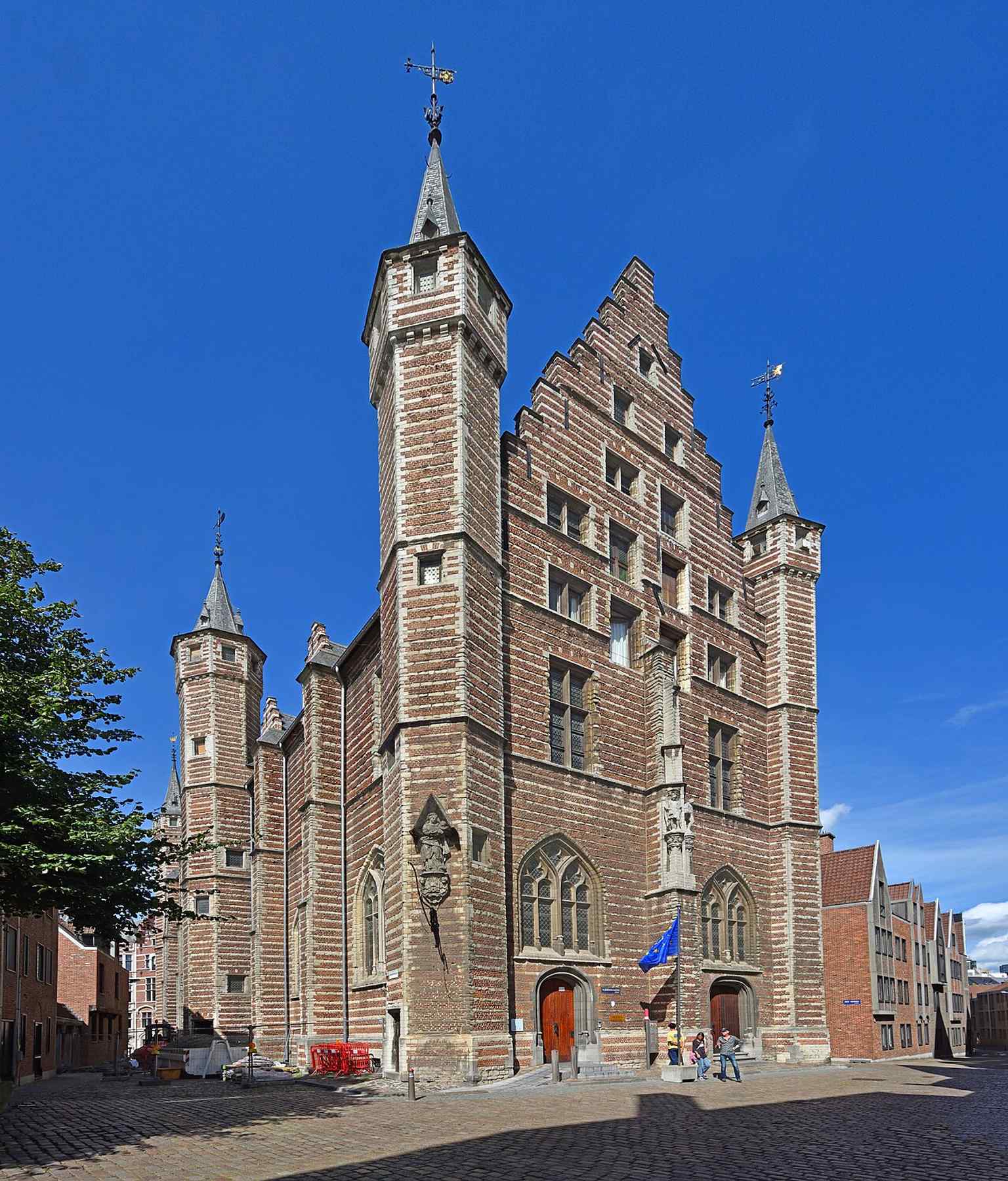
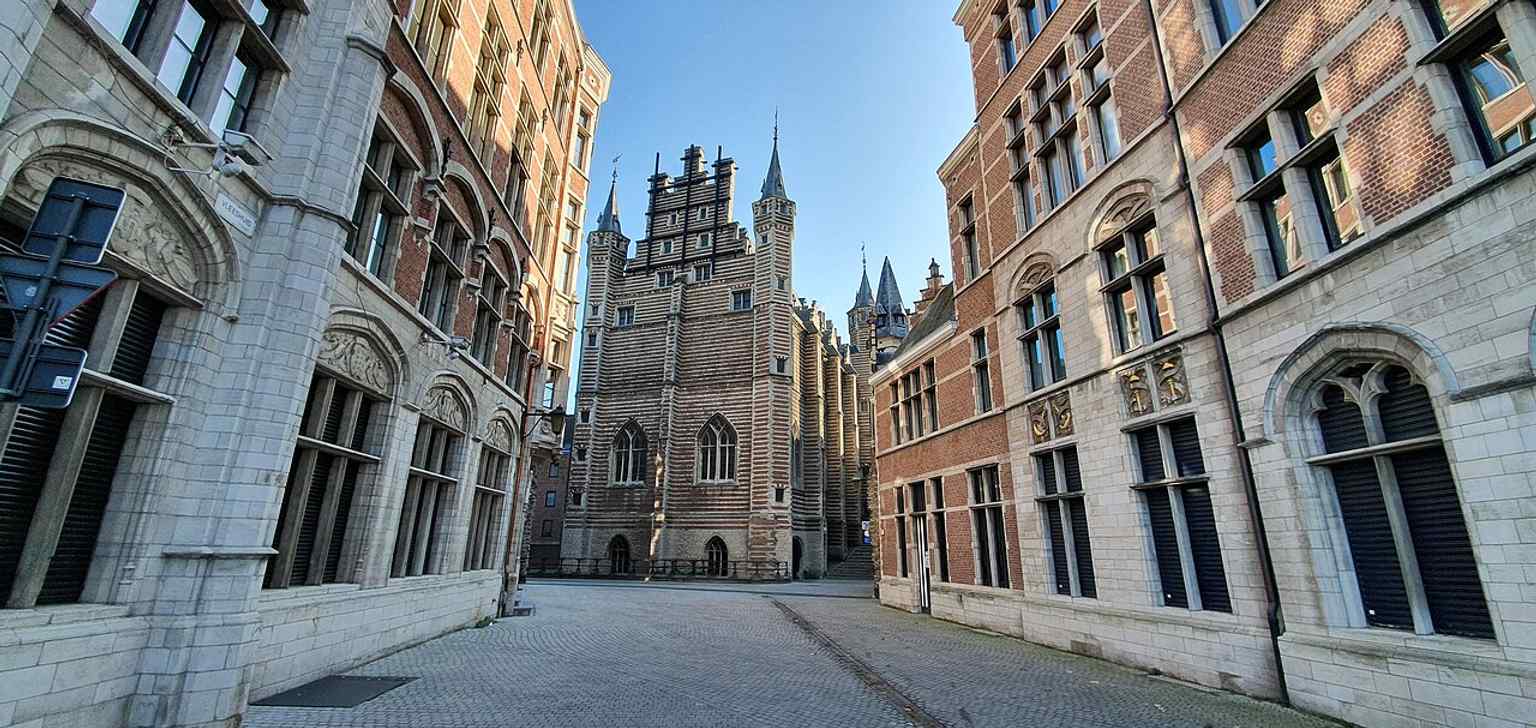
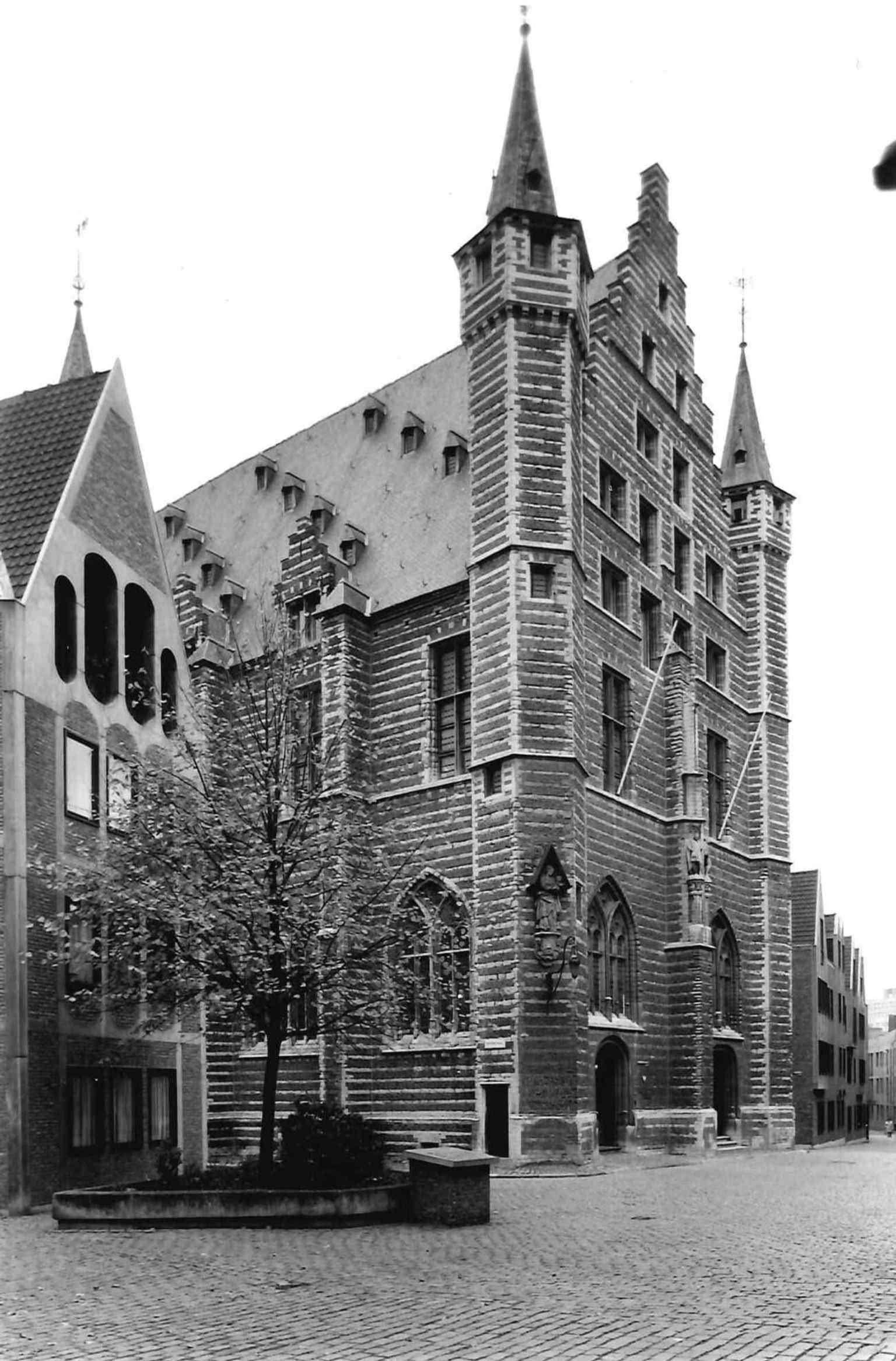
On your left, look for a long late-Gothic hall of red brick striped with white sandstone, rising beneath a steep roof, with a façade so boldly banded it is almost impossible to mistake.
This is the Vleeshuis, one of Antwerp’s most distinctive old working buildings, and it began with something far less refined than music: meat. In the Middle Ages, the city created covered market halls so traders could work under one roof, and the first Vleeshuis appeared near Het Steen around the year twelve fifty, built for the sale of slaughtered animals. By the turn of the seventeenth century, Antwerp had outgrown it, and neglect had left the old hall shabby besides.
So the butchers’ guild made an ambitious decision. They moved slightly north, closer to the cattle market, where animals were slaughtered and cut up, and they commissioned Herman de Waghemakere to design a new hall. He gave them this formidable building between fifteen oh one and fifteen oh four. It could serve sixty-two butchers. Meat stayed cool in the cellar. The great ground floor held the shops. At the back stood a chapel, because even a trade of knives and carcasses made room for devotion. Upstairs came meeting rooms and a kitchen, and higher still, under the roof, whole levels of storage.
That mixture of practicality and ceremony still clings to the walls. This was a workplace, certainly, but it was also a statement. The butchers did not build a shed. They built a palace for their profession.
After the French occupation in seventeen ninety-five abolished the guilds, the building lost its original purpose and drifted into use as a storehouse. Then, after eighteen thirty, it acquired a second life. Artists moved in. Nicaise de Keyser, Gustave Wappers, Willem Geefs, Théodore Schaepkens: painters and sculptors worked here where butchers once sold meat. Around eighteen forty, a theatre society even staged operas and plays inside. It is one of those marvellous Antwerp stories in which a commercial hall quietly turns into a cultural engine.
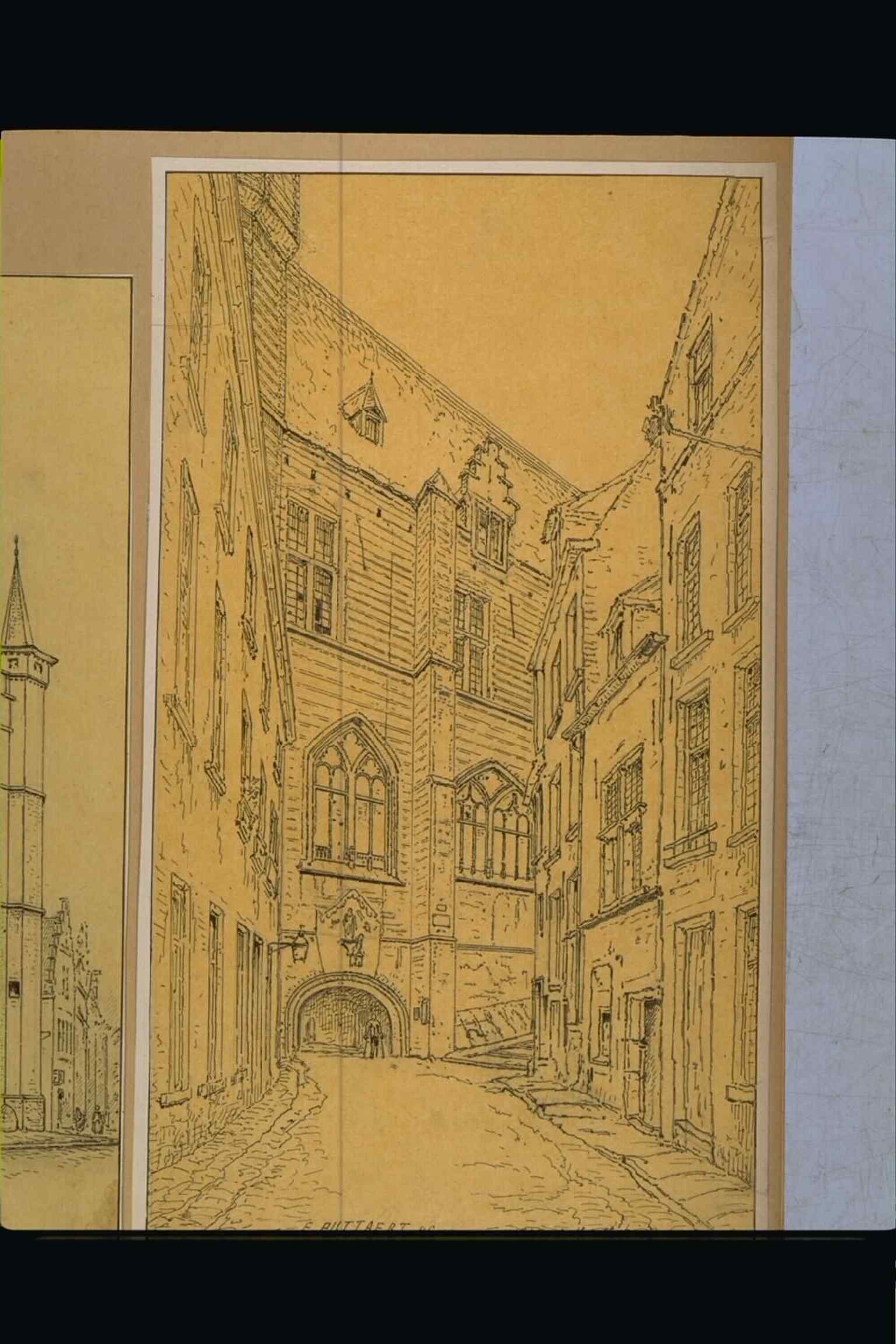
If you like, take a quick look at the comparison image in the app; the striped Gothic façade stays stubbornly itself, even as the street around it changes completely. In the early nineteen hundreds, architect Alexis van Mechelen led a major restoration, and in nineteen thirteen the building opened as a museum. At first it held a broad collection: metalwork, ceramics, glass, weapons, wood carving, architectural fragments, even Egyptian and prehistoric finds. Then, from nineteen sixty-seven onward, curator Jeannine Lambrechts-Douillez pushed the musical instruments into the foreground, helped by a major long-term loan from Antwerp’s Royal Conservatory.
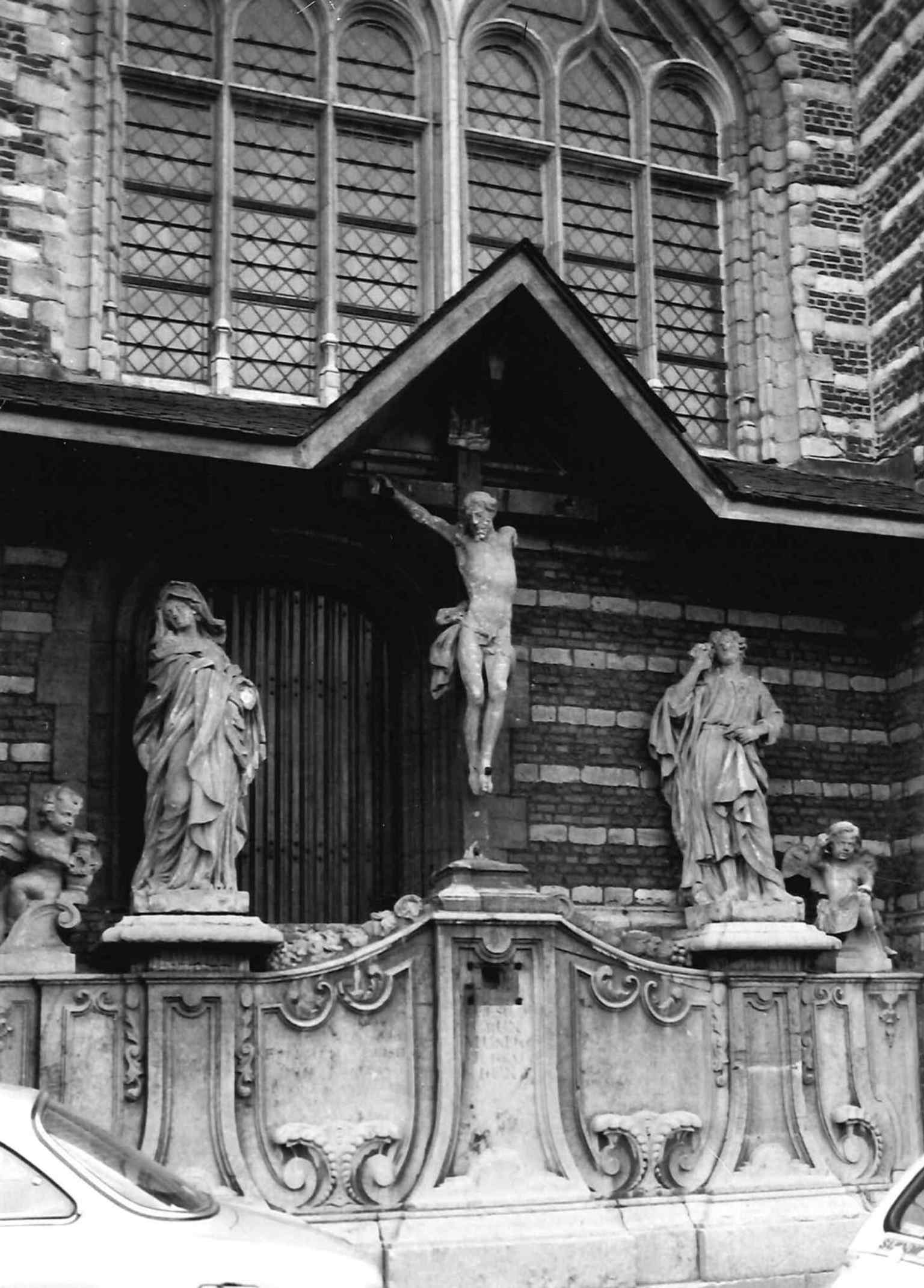
That changed everything. Since two thousand and six, the museum has focused on eight hundred years of musical life in Antwerp and the Low Countries. It cared for harpsichords by the great Ruckers family, a Joannes Couchet virginal, a Dulcken harpsichord, old bells, organs, and even a giant bass recorder. Some instruments were not merely displayed but played. On your phone, you can see the Calvary group connected to the building’s old Bloedberg setting, a sculpted scene of Christ, Mary, and John that adds a surprising note of devotion to this former butchers’ hall. Few buildings in Antwerp carry the city’s trade, art, faith, and music so gracefully in one body.
When you are ready, carry on and let the old market streets lead you outward again.






%20Vleeshuis%20(Antwerpen).jpg)

