
Lier Audio Tour: Clock Towers, Legends, and Sacred Stones
In Lier, time quite literally ticks at its own pace—where a single clock can measure the universe and saints are rumored to walk after sundown. This self-guided audio tour winds through cobbled lanes and lantern-lit corners, revealing the hidden stories that most eyes—and guidebooks—gloss right over. Why did rival factions clash under the ancient arches of St. Gummarus Church? What secret once united the women of Beguinage Lier against the world outside their gate? And how did the ingenious Zimmer Tower once spark both awe and conspiracy in a single hour? Move through centuries as you trace whispered rebellions and half-remembered scandals, your footsteps echoing with old secrets and moments of silent revolution. Feel Lier come alive in shadows and spires, every corner a fresh discovery. Dare to step beneath the hands of time. Let Lier reveal all that it keeps for those who truly look.
Tour preview
About this tour
- scheduleDuration 40–60 minsGo at your own pace
- straighten3.0 km walking routeFollow the guided path
- location_on
- wifi_offWorks offlineDownload once, use anywhere
- all_inclusiveLifetime accessReplay anytime, forever
- location_onStarts at Mechelsepoort Bridge
Stops on this tour
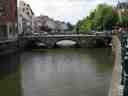
The Mechelsepoort Bridge is an elegant arched bridge with white railings, stretching quietly over the peaceful water and framed by leafy trees; just look for the historic…Read moreShow less
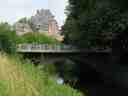
The Mechelsepoort Bridge is an elegant arched bridge with white railings, stretching quietly over the peaceful water and framed by leafy trees; just look for the historic red-brick building nearby and the gentle curve above the canal to spot it. Now, as you stand on this bridge, imagine the clatter of horses’ hooves on cobblestones, merchants hurrying their carts, and the distant sound of laughter from travelers heading to Mechelen or returning to lively Lier. This isn’t just any bridge-it’s the Mechelsepoort Bridge, standing proudly over the Afleidingsvaart of the Nete. Long ago, this spot marked the old Mechelsepoort, one of Lier’s main gates where the town’s pulse beat with travelers’ stories and the noise of trading. Picture the old days here: tense moments when guards squinted at strangers, bags filled with local cheeses and pastries, a suspicious goose or two waddling along the banks. The bridge today is part of the N14, a road that has connected Mechelen and Hoogstraten for years-think of it as Lier’s ancient highway! So, next time you cross, remember you’re walking above echoes of history, where every footstep is part of a much bigger story. And careful of that goose-he’s got his eye on your sandwich!
Open dedicated page →In front of you, you’ll notice a classic football stadium with wide, concrete terraces and a neatly trimmed green pitch, surrounded by low stands-just look for the open space with…Read moreShow less
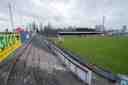
In front of you, you’ll notice a classic football stadium with wide, concrete terraces and a neatly trimmed green pitch, surrounded by low stands-just look for the open space with rows of well-worn steps overlooking the field. Welcome to what was once the heart and soul of football in Lier-the Lyra Stadium! Imagine the year is 1912, and you’re standing among a crowd of 5,000 fans crammed onto a 40-meter-long, five-meter-high wooden terrace. The roar of excitement shakes the ground as K. Lyra TSV scores a goal. Over the years, this place grew with its city, swapping its first wooden stand for a modern concrete skeleton and a fancy wooden roof in 1921, then stretching even wider in 1932 as football fever gripped Lier. By the time it hit its prime, Lyra Stadium could squeeze in 6,000 spectators-though 1,628 of them got to rest their legs, and just 72 lucky ones sat in the business seats, probably with fancy snacks! The stadium witnessed sweeping changes-big renovations in 1977 and 1992, tense matches, wild celebrations, and even a bit of heartbreak when, in the early 2000s, plans for new homes edged out the mighty old pitch. Lyra’s faithful played here right up until May 4th, after 102 action-packed years. Today, swings and living rooms take the place of sliding tackles, but the memory of roaring crowds and muddy boots is never far away.
Open dedicated page →You’ll spot the Beguinage Lier ahead by its striking double baroque gateway, complete with a statue of Saint Begga perched at the top and bold blue gates set into red brick…Read moreShow less
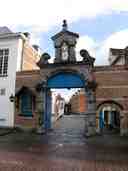
You’ll spot the Beguinage Lier ahead by its striking double baroque gateway, complete with a statue of Saint Begga perched at the top and bold blue gates set into red brick walls-just follow the old cobbled street through the arch. Now, take a moment to breathe in the silence at this gateway, because you’re about to step into a secret world almost frozen in time. Imagine it’s the 13th century: the air is thick with wood smoke, and a faint chill carries the sounds of distant bells. The Beguinage was born around this era, when after the Crusades, many women found themselves alone and decided to build a new kind of community-not quite nuns, not quite part of everyday city life. They were called beguines, and they moved into this neighborhood, outside the original city walls, banding together in humble houses, devoting their days to prayer and meditation. Through the centuries, this little village grew-with Duke Jan I, his successors, and generous ladies like Aleidis of Burgundy giving their support. By 1258, it was its own parish-complete with its own church and priest, which was a pretty big deal in those days! But don’t let the peaceful calm fool you. The beguinage had its fair share of drama: fires, plundering armies, and at one point, they had to move behind the protective city walls. And yet these clever ladies bounced back every time. If you look around, you’ll spot 162 beguine houses spread over 11 narrow, winding streets. A little advice: if you see a street sign for “Hemdsmouwken,” try to squeeze through-it’s just 98 centimeters wide, making it Lier’s skinniest street! The beguines didn’t use house numbers, so you’d have to look for homes named after saints or Biblical scenes-imagine “Vineyard of the Lord” or “Sweet Name”-they were creative, and who wouldn’t want to tell their friends they lived at “Calvary Hill”? Don’t miss the triple-aisled Saint Margaret’s Church here, with its dramatic Baroque facade-if churches had personalities, this one would surely be the grandest in the neighborhood! The statue of Saint Begga above you, on the main gate, has watched thousands of women come and go, including the last beguine, Sister Agnes, who left in 1984 at the age of 85. At sunset, both big gates would be locked. If you were late, you had to ring a little night bell and hope the gatekeepers-yes, two beguines lived in the gatekeeper’s house-would let you in. Just imagine them peeking suspiciously through the shutter, deciding if you looked wholesome enough for the night! If you peer at the doors, you might glimpse a “drunkard’s lock”-they’re not for tipsy beguines, but to help anyone find the keyhole in the dark, thanks to clever Gothic ornamentation. There’s even a unique open-air Stations of the Cross-painted in the 18th century, restored in the mid-1900s, and updated as recently as 2019. Behind these peaceful facades, history lives on. A convent from 1595, old infirmaries turned into apartments, and mansions once owned by well-to-do ladies-all have seen centuries of quiet devotion and community. And even today, the scent of fresh renovation is in the air, with many houses lovingly restored so this little city-within-a-city can touch new generations. If it all feels a bit like a movie set, well, you’re not wrong-this beguinage has starred in plenty of films and series! And the famous local author Felix Timmermans called it the almond-shaped heart of Lier. Imagine, right where you’re standing, daily life spinning on: spinning wool, embroidering, tinkling laughter, and a soft buzz of prayers, as if the walls were keeping all the old secrets alive. All right, onward with our journey-let’s keep walking where centuries of remarkable women once wandered, and see what’s around the next corner!
Open dedicated page →
Show 11 more stopsShow fewer stopsexpand_moreexpand_less
 4
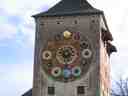
4Zimmer tower
Buy tour to unlock all 18 tracksLook up ahead to spot the Zimmer tower-an old stone building with a pointed roof, but what really catches your eye is the gigantic clock face on the front, filled with smaller…Read moreShow less
Look up ahead to spot the Zimmer tower-an old stone building with a pointed roof, but what really catches your eye is the gigantic clock face on the front, filled with smaller clocks all circling a big central one. Now, take a moment to stand outside this remarkable tower and let your mind travel back through the centuries-because the Zimmer tower is no ordinary relic. Originally built before 1425 as part of Lier’s medieval defenses, the old Cornelius tower saw knights, merchants, and townsfolk pass by its sturdy walls. Imagine horses clopping by on cobblestone, with the tower looming as a silent guardian of the city. But here’s where the story gets a little quirky-and a lot more cosmic. Nearly 500 years after its construction, the tower had fallen on hard times; in 1812, it was even sold off by the city! Fast forward to after World War I: the townspeople considered tearing the old thing down, but fate (and a little starry inspiration) stepped in. Enter Louis Zimmer-an astronomer, inventor, and the kind of guy who probably looked at his wristwatch and thought, “I can do better!” In 1930, Louis Zimmer created his masterpiece: the Jubilee, or Centenary Clock, which you’re staring at right now. This is no simple timekeeper; it’s a wild festival of time! The huge main dial in the center tells the local time-as you’d expect from any clock. But then things get intergalactic: twelve smaller dials spin around it showing everything from the phases of the Moon, the tides at Lier, the days of the week (each linked to an ancient god), the zodiac signs, the months, the seasons, and even the time in faraway lands. One hand makes a full revolution every 25,800 years-talk about a clock that never needs winding! But Zimmer wasn’t done. In 1960, a special pavilion was built next door to house his “Wonder-Clock,” a mechanical planetarium so advanced, even Albert Einstein sent his congratulations. And if you listen closely, you can almost hear the gentle ticking inside, as dozens of gears and secrets whirl behind the face. Of course, the Zimmer tower became a protected monument in 1980, officially recognized as one of Belgium’s treasures. Down at your feet by the tower, look for a set of metallic circles and rings laid into the ground. These represent the planets, their orbits, and even commemorate asteroids named Felix and Zimmer-now that’s reaching for the stars! Just take a closer peek at those dials. There’s one for the Equation of Time, reminding us that the Sun doesn’t always match up with our clocks-a cosmic joke from the universe if there ever was one. The zodiac dial spins through all twelve signs, so you can see whether it’s time for lions, water-bearers, or a stubborn bull. Another quirky one marks the solar cycle and dominical letter, which tells you when the first Sunday of the year lands (yes, keeping track of Sundays was serious business before Google Calendars). If you’re a fan of lunar mysteries, check the dials showing the Moon’s age and phase-handy in case you suddenly need to avoid werewolves. And the “week” dial replaces boring numbers with a parade of ancient gods and their symbols, making each Monday an adventure, or at least a show of celestial drama. So as you stand here, don’t just see a clock-feel the centuries whirring past, the sky wheeling overhead, and the ingenuity of one clockmaker who decided time shouldn’t just tick, it should absolutely dazzle!
Open dedicated page →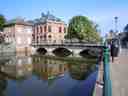 5
5St. John's Bridge
Buy tour to unlock all 18 tracksIn front of you, stretching across the water, you'll see an elegant stone bridge with three large arches, decorated with flower boxes along the green railing-a true eye-catcher…Read moreShow less
In front of you, stretching across the water, you'll see an elegant stone bridge with three large arches, decorated with flower boxes along the green railing-a true eye-catcher connecting the old-world streets. St. John’s Bridge has been the city’s handy overwater shortcut since 1393, but back then, it was just a humble wooden construction. Picture medieval townsfolk crossing with baskets of bread or maybe even a goat or two-careful not to lose a clog between the planks! In 1420, the townspeople upgraded it to sturdy stone to handle heavier traffic and, let’s be honest, probably fewer soggy shoes. Fast forward to 1775, and the bridge got a fancy new feature: it could spin! The turning mechanism let boats chug through the Binnennete without grumbling about the bridge being in their way. But during the chaos of 1940, with war threatening, the bridge was blown up-no dramatic movie music, just a bang that changed the cityscape. If you glance beside the bridge, you’ll spot the tall St. John’s Tower. In the 1600s, it wasn’t just a tower; it was the less-than-glamorous home of the city’s surgeon, who doubled as the "plague master." Not exactly a dream job, unless you liked alone time and very thick walls! Eventually, it turned into a cozy pub. From a medieval transit point to a swirling drawbridge, to a quiet neighbor to a pandemic doctor’s pad, this site has seen it all-except maybe a bridge-building goat.
Open dedicated page →Right in front of you is the Hoogbrug: a charming stone arch bridge with three spans, decorated in summer by rows of cheerful flowers, stretching gracefully over the calm waters…Read moreShow less
Right in front of you is the Hoogbrug: a charming stone arch bridge with three spans, decorated in summer by rows of cheerful flowers, stretching gracefully over the calm waters of the Binnennete-just look for the old stones and the little iron railings. Now, as you stand next to this sturdy bridge, let’s imagine what it’s seen over the years. Built from solid masonry, the Hoogbrug connects not just two sides of the river, but also the busy heartbeat of the N10, the road linking Mortsel and Diest. You have two smaller side arches, each just under six meters wide, almost like outstretched hands, and then that proud middle arch-over eight meters wide-bravely carrying carriages, bicycles, and, today, the occasional confused GPS user. Imagine a foggy morning years ago; merchants rushing, horses clopping, the bridge echoing with voices in every direction. Maybe a poet leaning over the side, pen in hand, hoping a fish might inspire a new line. There’s always just a hint of suspense here: will you meet a friendly neighbor, see a parade of ducks, or just get stuck behind a slow cyclist? That’s the magic of Hoogbrug-it’s a place where everyday stories cross paths, again and again.
Open dedicated page →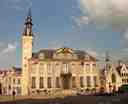 8
8Grote Markt
Buy tour to unlock all 18 tracksIn front of you is the wide, triangular square surrounded by elegant buildings, but if you look left-center, you’ll spot the impressive stone City Hall with its tall clock tower…Read moreShow less
In front of you is the wide, triangular square surrounded by elegant buildings, but if you look left-center, you’ll spot the impressive stone City Hall with its tall clock tower and colorful flags. Now, imagine you’re standing where so many feet have shuffled and stories unfolded for nearly a thousand years! The Grote Markt is Lier’s heart, shaped like a giant triangle-a clue that those Frankish folks started things off here long ago. Picture the Middle Ages: farmers unloading cheese, merchants haggling over cloth, and townsfolk coming together in a flurry of voices. In 1212, Lier was officially crowned a city, and ever since, this plaza has been the city’s meeting place. All the main roads converged right where you stand, channeling the buzz of life through the square. Look up at the grand City Hall-originally a cloth hall built in 1367 when wool and fabric were king. The area in front was paved in 1383-probably to save citizens from muddy disasters after a good Belgian rain! In 1557, the whole square got an upgrade with a thick layer of stone, fit for centuries of processions, public dramas, and the odd festival. Back before World War I, the entire square was ringed with cozy 17th and 18th-century guild houses-homes of powerful tradesmen. But in 1914, disaster struck. Three-quarters of those old beauties were destroyed, save for the lucky west side. Over the years, some buildings were painstakingly rebuilt, while others returned with a modern twist, always trying to balance old and new. The debate over a fresh renovation rumbled on for years, until finally, in 2012, the “new” Grote Markt opened with a sparkling set of five fountains, perfect for the city’s big 800th birthday bash. Lier’s square even has a tile to remember its darkest moments-the “witch stone.” That’s where Cathelyne van den Bulcke was burned in 1590, and where public executions continued right up to 1842. It’s a dramatic past for such a cheerful place today. Scattered all around are gems: the ornate belfry, the grand Vleeshuis, and age-old houses like d’Eycken Boom with its little tree on top-a wink to miracles and poets-or the “Brouwershuis,” rebuilt after war and full of brewing history. Every corner tells a tale-of bakers, painters, printers, and even barons. So as you stroll, let your imagination loose-who knows what stories you’ll uncover next in Lier’s living, breathing market square.
Open dedicated page →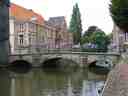 10
10Aragon Bridge
Buy tour to unlock all 18 tracksTo spot the Aragon Bridge, just look for a charming old stone bridge with three graceful arches and beautiful purple flowers lining its railings, stretching across the peaceful…Read moreShow less
To spot the Aragon Bridge, just look for a charming old stone bridge with three graceful arches and beautiful purple flowers lining its railings, stretching across the peaceful canal right in front of you. Now, as you stand here, take a deep breath and picture yourself in the year 1514-imagine the sound of horses’ hooves echoing on the cobblestone as townsfolk bustle around, and this very bridge is brand new, its arches gleaming with fresh masonry. The Aragon Bridge connected two vibrant streets: Aragonstraat and Kerkstraat, and quickly became a lifeline for the city. But don’t get too comfortable; fast forward to 1914, and the air is filled not with laughter, but with tension. Shadows of war creep in, and the bridge is destroyed, its sturdy arches collapsing into the water below. But just when you think the tale ends in ruins, the people of Lier rally together to rebuild it, brick by brick, bringing it back to life. And why “Aragon”? Right nearby stood the grand Hof van Aragon-a fancy guesthouse where none other than Philip the Handsome and Joanna of Castile spent the night ages ago. Just imagine the whispers and excitement each time royalty passed over these stones. If you listen closely, you might just hear their stories in the rustle of the flowers as you cross!
Open dedicated page →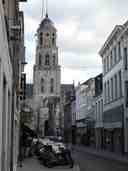 11
11St. Gummarus Church
Buy tour to unlock all 18 tracksTo spot St. Gummarus Church, just look straight ahead at the end of the street-its tall, stone Gothic tower with a unique rounded top stands proudly above the rooftops, making it…Read moreShow less
To spot St. Gummarus Church, just look straight ahead at the end of the street-its tall, stone Gothic tower with a unique rounded top stands proudly above the rooftops, making it impossible to miss! Ah, you’ve made it to the mighty St. Gummarus Church, the pride and pepperpot of Lier! Take a deep breath-let’s set the scene. Imagine it’s the late 1300s. This spot is bustling with townsfolk chattering, the sharp sound of hammers on stone, and a tower slowly rising above all. They called the tower “de peperbus”-the pepper shaker-because, well, it kind of looks like one. The first shimmer of this Brabantine Gothic beauty began in 1378 under the Mechelen architect Hendrik Meys. The locals didn’t have crowdfunding sites back then, so they relied on bishops to offer indulgences-blessings for anyone willing to pitch in for construction! Money trickled in bit by bit, so the building process went in fits and starts. This church took over 150 years to finish, with each new phase adding layers of style and history. Picture architects from the famous Keldermans and de Waghemakere families passing on their blueprints across generations. Before it stood here, there was a Romanesque church dedicated to John the Baptist-the old bones of Lier. But the soaring columns and pointed arches of this one took inspiration from the mighty St. Rumbold’s Cathedral of Mechelen, so you could say it’s got some architectural royalty in its DNA. Step inside-figuratively, for now-and you’d find treasures everywhere. The high altar from the 1800s stuns visitors with scenes from the life of St. Gummarus, carved by Jan Anthony. Closer to the heart of the church is an even older Gummarus altar by Johannes van Mildert, dating back to the 1600s. The choir and nave are separated by a glorious 16th-century rood screen, and the pulpit is a masterpiece from the hands of Erasmus Quellinus I and his son Artus, with figures of angels-called caryatids-holding it aloft. Now, see those windows? This church is a rainbow collector! The glasswork runs the gamut: jewel-toned Gothic windows from the 1400s, royal Renaissance windows by Nicolaas Rombouts from 1519-some of the oldest in the Low Countries-and even modernist panels up to 1968. One shows St. Gummarus as a church builder, landlord, and knight, just in case anyone wondered about his CV. During World War I, shooting shattered some of these precious panes, but patient hands brought them back to life. And there are paintings, too-a “Martyrdom of St. Sebastian,” a triptych by Adriaen de Bie, and the star of the show: the Colibrant triptych by Goswin van der Weyden, whose grandfather was the legendary Rogier van der Weyden. The center panel shows the wedding of Mary and Joseph-no doves or confetti, but plenty of symbolism peeking through. High above, the sound of bells has echoed for centuries. In the late 1500s, they already had 12 bells each with its own name and job. After fires and wars knocked them out, the bells came back strong: in 2004, a beautifully restored carillon filled with 52 bells and one whopping eight-ton Gummarus bell was unveiled, making it the heaviest 18th-century carillon in Western Europe. Imagine that deep, rich “bong” rolling out over Lier! And history? Oh, this place has tales. Here, in 1496, the royal wedding of Philip the Handsome and Joanna of Castile took place. The young Charles V, future emperor, visited too. For those events, a special set of royal stained-glass windows was created-and some can still be seen today. Once a year, sixteen men carry the shrine of St. Gummarus through the streets in a sparkling procession. And like any old star, St. Gummarus Church gets regular makeovers. Roof repairs in the 1600s, glasswork after World War I, and-as we speak-a grand renovation project carrying into the late 2020s. So when you look up at that “pepperpot” tower, remember: it’s been the beating heart of Lier life for over six hundred years. Not bad for something named after a kitchen utensil, eh? If you're curious about the church treasures, historical events in the church or the saint gummarus procession, the chat section below is the perfect place to seek clarification.
Open dedicated page →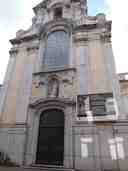 12
12Jesuit church
Buy tour to unlock all 18 tracksLook for a tall, pale-yellow brick façade with grey stone detailing, a grand arched window above a large dark wooden door, and a statue in a small niche just above the…Read moreShow less
Look for a tall, pale-yellow brick façade with grey stone detailing, a grand arched window above a large dark wooden door, and a statue in a small niche just above the entrance. Standing here, take in the Jesuit Church, the last one of its kind ever built in Belgium-straight from the 18th century! Built swiftly from 1749 to 1752 by the talented Jesuit brother Albert del Plancken of Ename, this church wears its late Baroque style like a fancy hat, showing off brick and natural stone with a dramatic flair. Picture this spot buzzing with faithful Jesuits, fancy choir music, and maybe a few stern but friendly monks keeping order. But here’s the twist-imagine 1914, when a World War I shell crashed into the nearby garden, shattering every window in the building and setting the grand white marble altar ablaze! The church had a rough patch, even turning into a storage space at one point-talk about a career change. But don’t let that fool you; by 2008, after decades of standing empty, dedicated locals rallied together, restoring the grand windows, the façade, and the roof. Today, music and laughter sometimes echo through its halls again, with concerts and lively events bringing this one-of-a-kind church back to life-proof that some buildings really do deserve a second act!
Open dedicated page →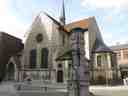 13
13Sint-Pieterskapel
Buy tour to unlock all 18 tracksAhead of you is a simple, sturdy stone chapel with round-arched windows and a pointed little tower; look for the rough yellowish bricks and the small arched entrance just opposite…Read moreShow less
Ahead of you is a simple, sturdy stone chapel with round-arched windows and a pointed little tower; look for the rough yellowish bricks and the small arched entrance just opposite the larger St. Gummarus Church. Standing here, you’re face-to-face with the oldest building in Lier-the St. Peter’s Chapel, a survivor from around the year 1225. Its thick, Romanesque stone walls replaced an even older wooden chapel built by Saint Gummarus himself in the 8th century. Imagine the air heavy with the scent of damp stone and the whisper of footsteps as worshippers entered for centuries. After the mighty St. Gummarus Church was finished, part of this chapel was actually torn down, and during the French occupation, it was stripped bare-talk about a tough life for a church! Fast forward to World War I: fire roared through the place, leaving it in ashes. Luckily, Lemaire rebuilt it in the 1920s, but he had his own design ideas, so only the main hall (not the tower) was protected… until 1994 when the whole thing finally got its monument status. Inside, it’s modest-wooden beams, painted saint medallions, and the empty tomb of Saint Gummarus hiding behind the altar. And don’t miss the painting about the day invading Vikings stormed in, killed the priest, and were struck blind as the church bells tolled all over Lier. Even today, every year on the Thursday before St. Andrew’s, all the city’s bells ring at 7pm as a reminder of those wild medieval days.
Open dedicated page →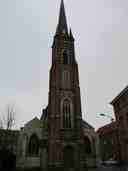 14
14Hermitage Church
Buy tour to unlock all 18 tracksTo spot the Hermitage Church, look straight ahead for a tall, narrow brick tower with a sharply pointed spire rising above the rooftops-its dramatic Gothic windows and arched…Read moreShow less
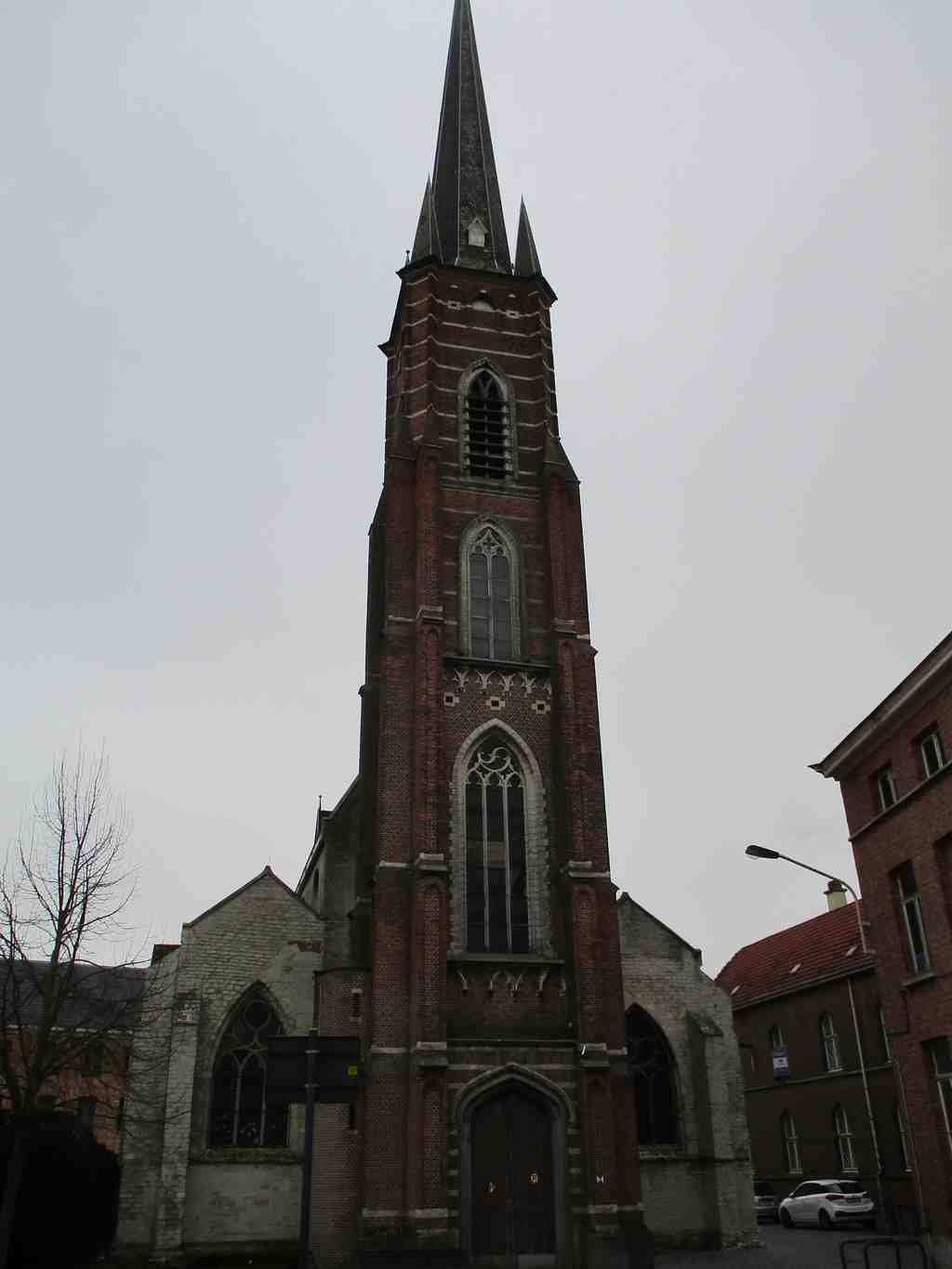
To spot the Hermitage Church, look straight ahead for a tall, narrow brick tower with a sharply pointed spire rising above the rooftops-its dramatic Gothic windows and arched doorway make it hard to miss! Now, as you stand before the Hermitage Church, take a deep breath and let your imagination travel back in time. It all began here around 1262, when people built a humble chapel to honor Saint Gummarus-a local hero who, legend says, performed a miracle by healing a sawed-off tree with nothing but his belt! Picture the quiet rustle of leaves and the soft hush of hopeful whispers as villagers gathered at the spot, watching in awe as the tree creaked and grew whole again. But the story doesn’t stop at miracles and old timber. Soon after the chapel went up, a humble hermit named Jan the Hermit built his own little retreat right next door-some people say it was to escape the town’s noise, but maybe he just liked a good, sturdy fence. As more pilgrims visited, the site evolved, and by 1410, workers began constructing the substantial church you see now. The builders must have worked hard-and probably complained about backaches-because they kept adding new sections: a nave in 1413, a choir in 1419, and a sparkling new hermitage in 1469. And how about a bit of drama? In 1479, a blacksmith forged a sturdy iron tree, placing a statue of Saint Gummarus at the very heart of the church, right where the miracle had happened. This iron tree became both a symbol and a treasure-but during the chaos of religious wars, it had to be hidden away by local Catholics. Just imagine the sound of secret footsteps as brave townsfolk sneaked the tree to safety in the Holy Ghost House, returning it in triumph years later, in 1583! Time wore on and the church saw it all: new owners, roof repairs, rivalries between monks and local families, and even a sky-piercing new tower added in 1685. By the 1800s, this place had been bought, sold, and fought over so many times, it’s hard not to picture it as Lier’s most valuable hand-me-down. The Dominican monks returned, patched up the walls, and tried to bring peace, even as wars and bombs rattled the stones-the Second World War brought a flying bomb nearby, leaving cracks and bruises that still show. Now, the Hermitage Church stands silent, its doors closed, waiting for a new chapter. Imagine those centuries of prayers, footsteps, laughter, and the endless echo of miracles-if only those ancient walls could talk!
Open dedicated page →
Frequently asked questions
How do I start the tour?
After purchase, download the AudaTours app and enter your redemption code. The tour will be ready to start immediately - just tap play and follow the GPS-guided route.
Do I need internet during the tour?
No! Download the tour before you start and enjoy it fully offline. Only the chat feature requires internet. We recommend downloading on WiFi to save mobile data.
Is this a guided group tour?
No - this is a self-guided audio tour. You explore independently at your own pace, with audio narration playing through your phone. No tour guide, no group, no schedule.
How long does the tour take?
Most tours take 60–90 minutes to complete, but you control the pace entirely. Pause, skip stops, or take breaks whenever you want.
What if I can't finish the tour today?
No problem! Tours have lifetime access. Pause and resume whenever you like - tomorrow, next week, or next year. Your progress is saved.
What languages are available?
All tours are available in 50+ languages. Select your preferred language when redeeming your code. Note: language cannot be changed after tour generation.
Where do I access the tour after purchase?
Download the free AudaTours app from the App Store or Google Play. Enter your redemption code (sent via email) and the tour will appear in your library, ready to download and start.
If you don't enjoy the tour, we'll refund your purchase. Contact us at [email protected]
Checkout securely with 


