
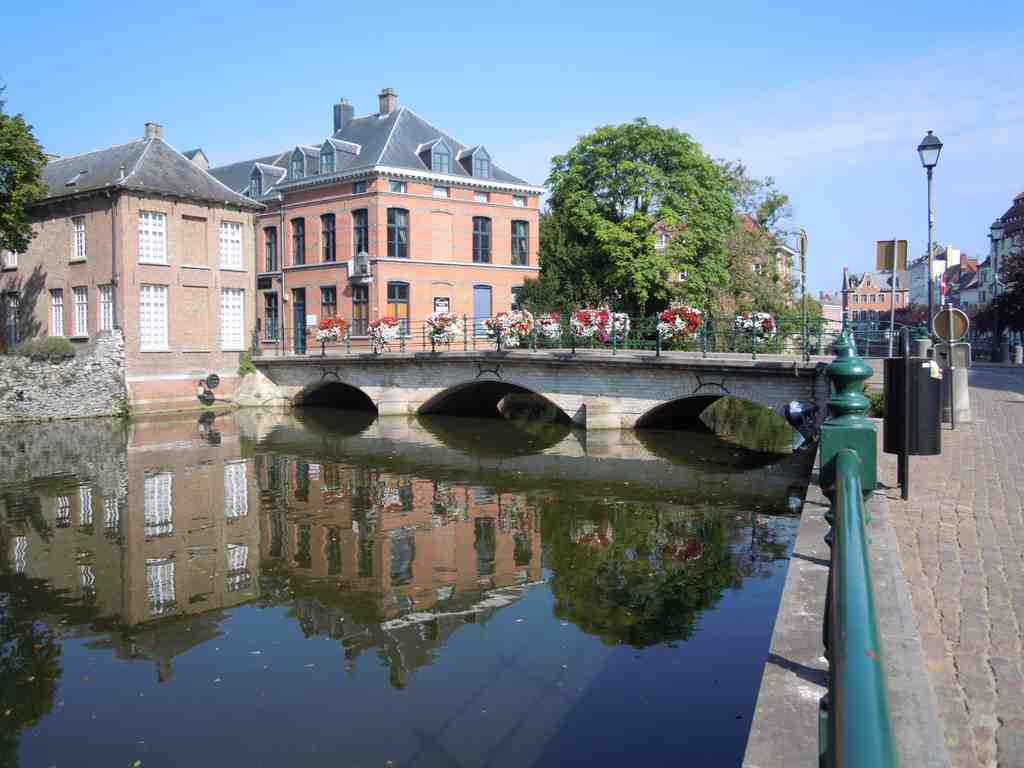
In front of you, stretching across the water, you'll see an elegant stone bridge with three large arches, decorated with flower boxes along the green railing-a true eye-catcher connecting the old-world streets.
St. John’s Bridge has been the city’s handy overwater shortcut since 1393, but back then, it was just a humble wooden construction. Picture medieval townsfolk crossing with baskets of bread or maybe even a goat or two-careful not to lose a clog between the planks! In 1420, the townspeople upgraded it to sturdy stone to handle heavier traffic and, let’s be honest, probably fewer soggy shoes. Fast forward to 1775, and the bridge got a fancy new feature: it could spin! The turning mechanism let boats chug through the Binnennete without grumbling about the bridge being in their way. But during the chaos of 1940, with war threatening, the bridge was blown up-no dramatic movie music, just a bang that changed the cityscape.
If you glance beside the bridge, you’ll spot the tall St. John’s Tower. In the 1600s, it wasn’t just a tower; it was the less-than-glamorous home of the city’s surgeon, who doubled as the "plague master." Not exactly a dream job, unless you liked alone time and very thick walls! Eventually, it turned into a cozy pub. From a medieval transit point to a swirling drawbridge, to a quiet neighbor to a pandemic doctor’s pad, this site has seen it all-except maybe a bridge-building goat.


