
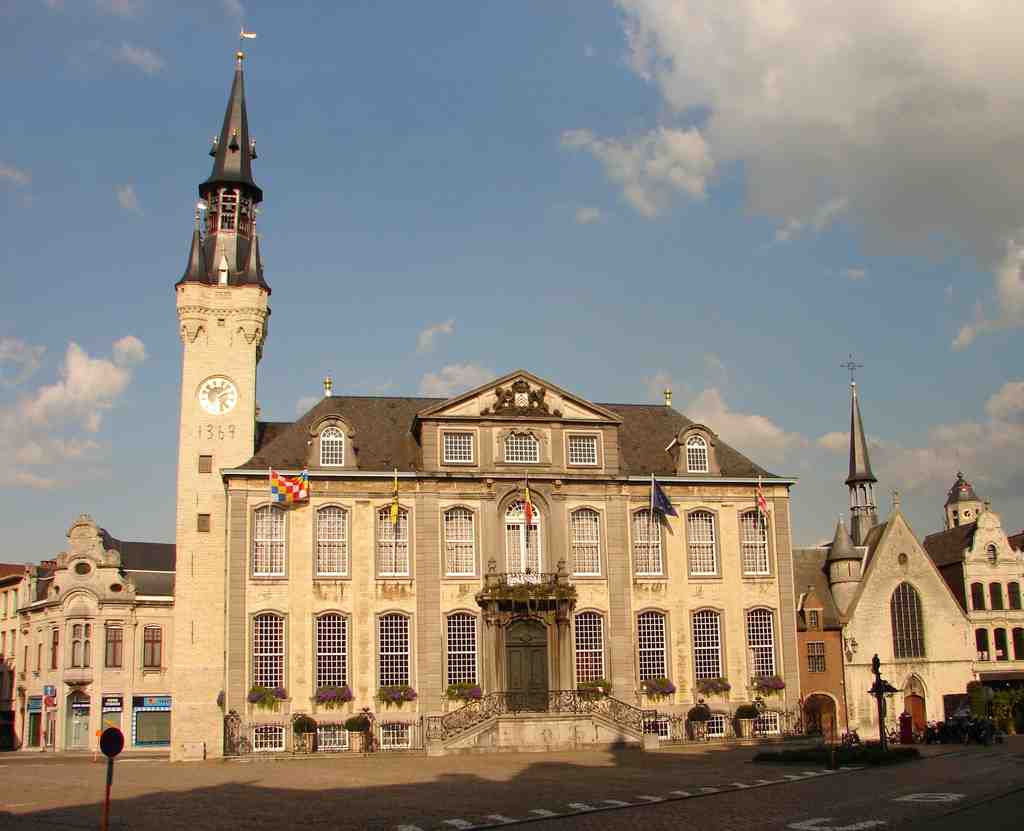
In front of you is the wide, triangular square surrounded by elegant buildings, but if you look left-center, you’ll spot the impressive stone City Hall with its tall clock tower and colorful flags.
Now, imagine you’re standing where so many feet have shuffled and stories unfolded for nearly a thousand years! The Grote Markt is Lier’s heart, shaped like a giant triangle-a clue that those Frankish folks started things off here long ago. Picture the Middle Ages: farmers unloading cheese, merchants haggling over cloth, and townsfolk coming together in a flurry of voices. In 1212, Lier was officially crowned a city, and ever since, this plaza has been the city’s meeting place. All the main roads converged right where you stand, channeling the buzz of life through the square.
Look up at the grand City Hall-originally a cloth hall built in 1367 when wool and fabric were king. The area in front was paved in 1383-probably to save citizens from muddy disasters after a good Belgian rain! In 1557, the whole square got an upgrade with a thick layer of stone, fit for centuries of processions, public dramas, and the odd festival.
Back before World War I, the entire square was ringed with cozy 17th and 18th-century guild houses-homes of powerful tradesmen. But in 1914, disaster struck. Three-quarters of those old beauties were destroyed, save for the lucky west side. Over the years, some buildings were painstakingly rebuilt, while others returned with a modern twist, always trying to balance old and new. The debate over a fresh renovation rumbled on for years, until finally, in 2012, the “new” Grote Markt opened with a sparkling set of five fountains, perfect for the city’s big 800th birthday bash.
Lier’s square even has a tile to remember its darkest moments-the “witch stone.” That’s where Cathelyne van den Bulcke was burned in 1590, and where public executions continued right up to 1842. It’s a dramatic past for such a cheerful place today.
Scattered all around are gems: the ornate belfry, the grand Vleeshuis, and age-old houses like d’Eycken Boom with its little tree on top-a wink to miracles and poets-or the “Brouwershuis,” rebuilt after war and full of brewing history. Every corner tells a tale-of bakers, painters, printers, and even barons. So as you stroll, let your imagination loose-who knows what stories you’ll uncover next in Lier’s living, breathing market square.


