AudaTours logoAudaTours

Stop 8 of 16

Urn Cemetery Steyr Tabor

Urn Cemetery Steyr Tabor
Tabor Cemetery
Tabor CemeteryPhoto: Fotosː BEV - Bundesamt für Eich- und Vermessungswesen / Bearbeitung (Stitch, Tonwertkorrektur)ː Christoph Waghubinger, Wikimedia Commons, CC BY 4.0. Cropped & resized.

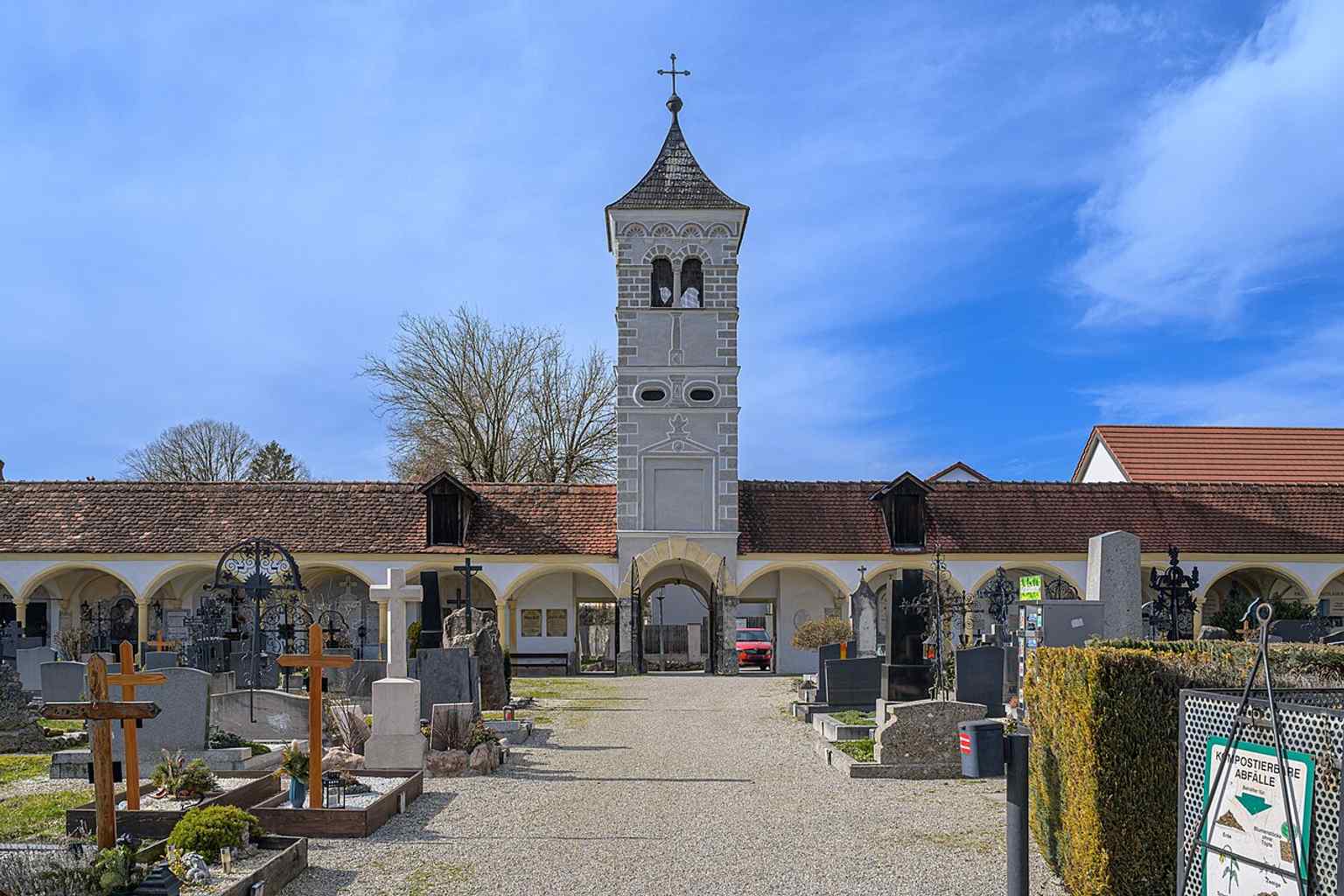
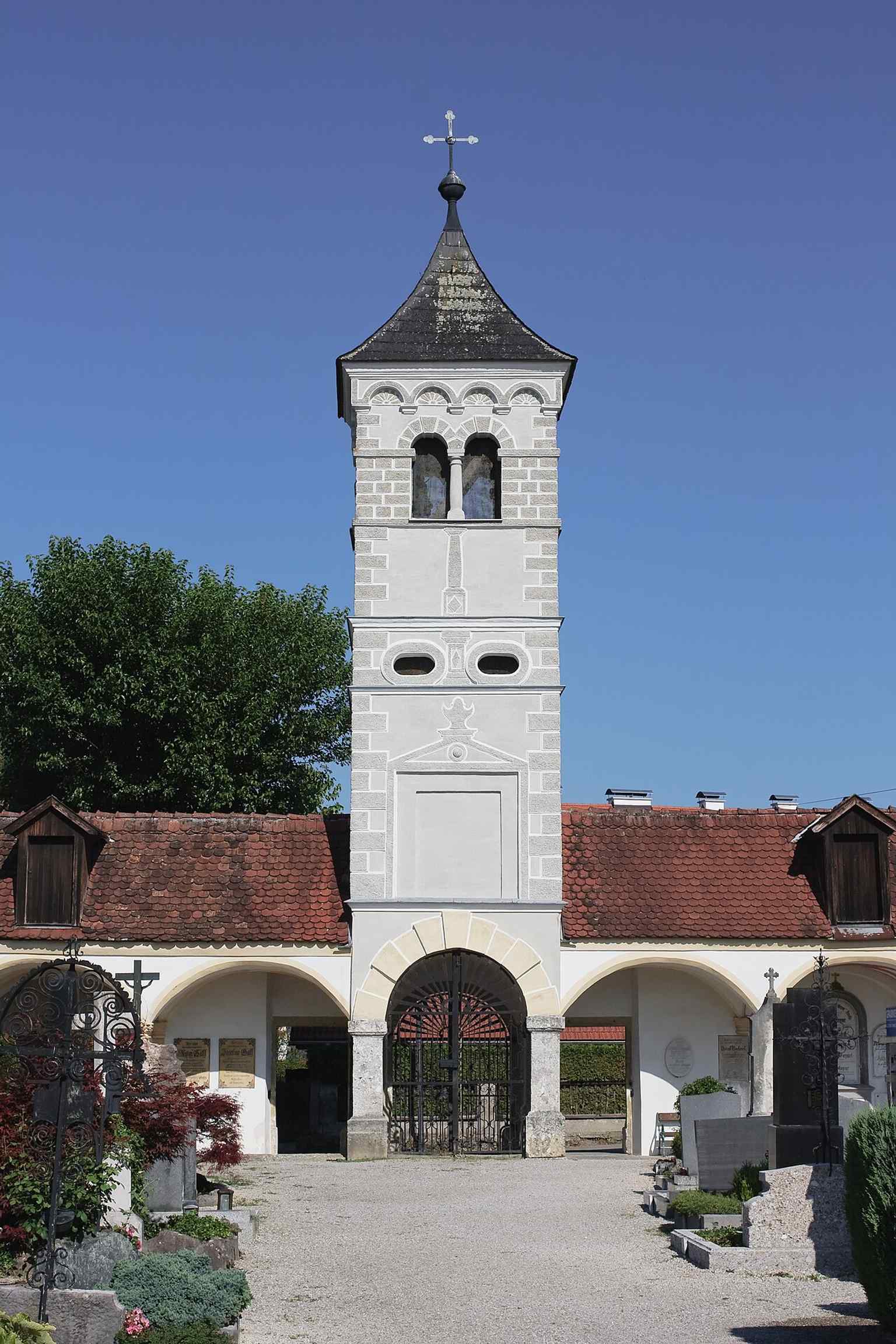
In front of you stands a pale stone entrance with a square gate tower, a rounded Renaissance arch, and an inscription band above the portal that quietly announces its age.

This is Tabor Cemetery, the city’s great burial ground: about four hectares, around eight thousand five hundred graves, and several centuries of Steyr deciding where memory ought to live. The oldest part dates to fifteen eighty-four. That includes the Renaissance gate in front of you and an arcaded walk with eighty-four burial vaults. Together they form a Campo Santo... literally a “holy field,” laid out as a square cloistered cemetery. Efficient, solemn, and very Italian in concept. Death, apparently, also appreciates good geometry.

Steyr had tried other solutions first. The burial ground by the parish church overflowed during the plague of fifteen forty-one and fifteen forty-two. Then the city chose another site on Sierninger Street, and in fifteen sixty-nine that ground started sliding toward the defensive ditch. Not ideal for long-term residents. The city bought this site by fifteen seventy-two, but a destructive flood on the Enns and Steyr rivers swallowed the funds, so construction only began in fifteen eighty-three.

Even after the walls and gate stood finished, the cemetery remained unconsecrated during the Reformation and only received formal blessing in sixteen twenty-eight from Abbot Anton the Second of Garsten. Later centuries kept adding layers: a Jewish cemetery from eighteen seventy-four with one hundred forty-one graves, including a mass grave of more than one hundred Hungarian Jews murdered on a death march; a Protestant section separated by a wall from eighteen ninety-two; and military burial areas from the First World War onward.

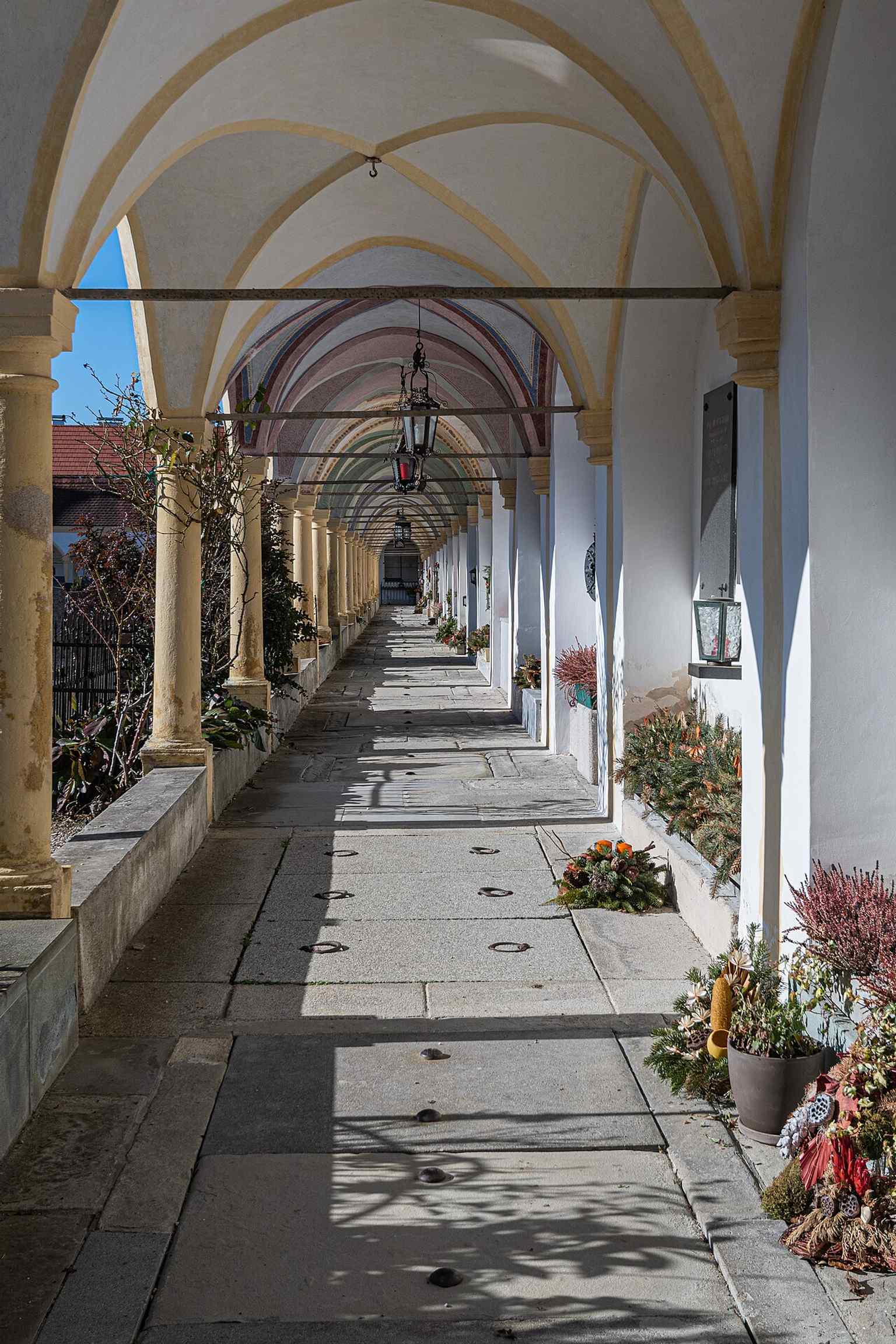
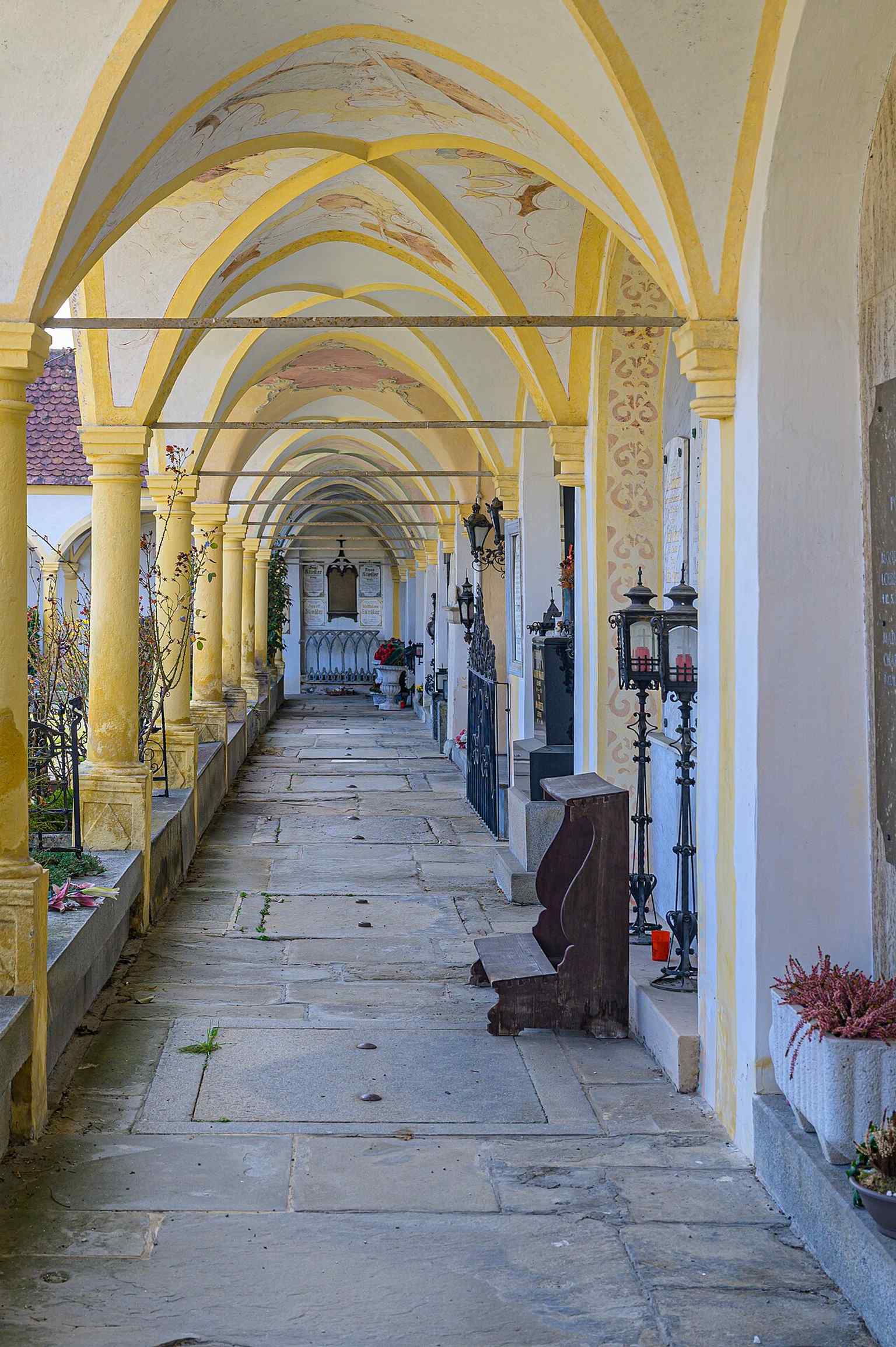
If you check the app image of the arcades, you can see how richly decorated that Renaissance cloister really is. And if you glance at the before-and-after view, the gate tower looks reassuringly unchanged; the presentation around it is what has sharpened over time.

Inside the arcades, where the cemetery preserves 84 burial vaults and the richly decorated Renaissance-era cloistered walk.
Inside the arcades, where the cemetery preserves 84 burial vaults and the richly decorated Renaissance-era cloistered walk.Photo: Isiwal, Wikimedia Commons, CC BY-SA 4.0. Cropped & resized.

This cemetery holds plague, reform, industry, war, and private grief inside one remarkably disciplined enclosure, and it is open daily from seven in the morning to eight in the evening.

Take a moment here, and when you’re ready, we can continue on to St. Michael.

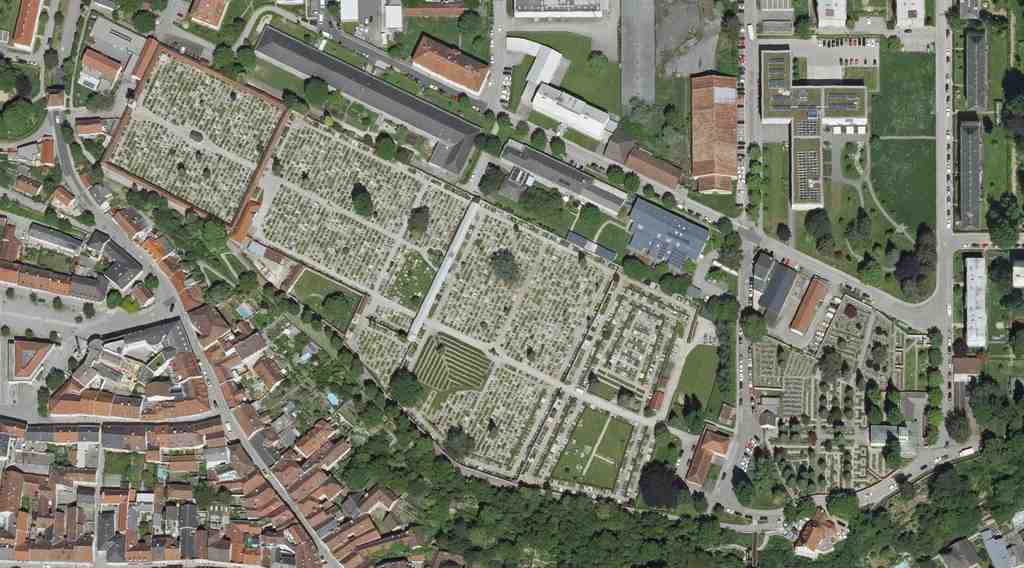
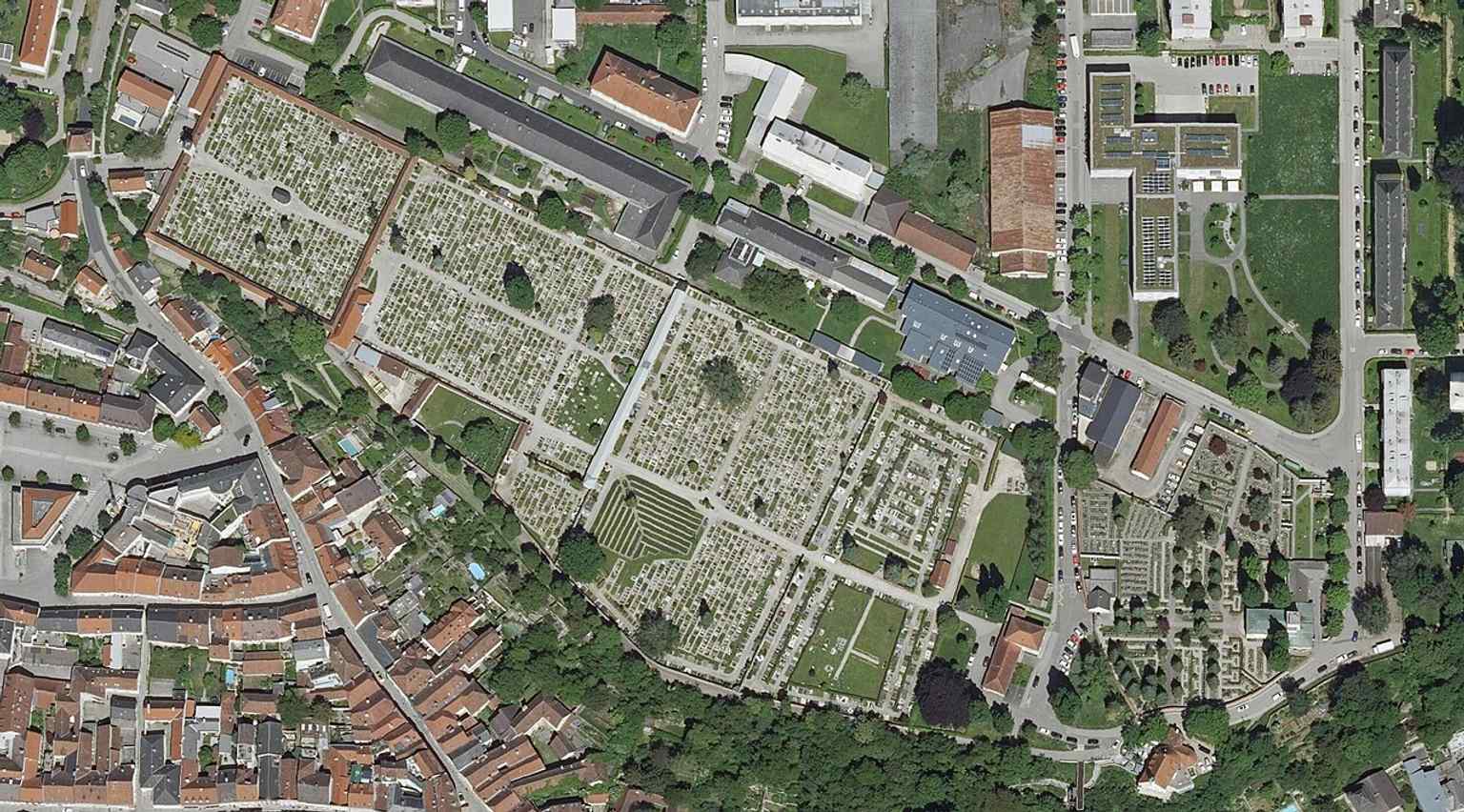
Aerial view of the Tabor Cemetery complex, showing the main burial ground beside the later urn cemetery that opened in 1927.
Aerial view of the Tabor Cemetery complex, showing the main burial ground beside the later urn cemetery that opened in 1927.Photo: Fotosː BEV - Bundesamt für Eich- und Vermessungswesen / Bearbeitung (Stitch, Tonwertkorrektur)ː Christoph Waghubinger, Wikimedia Commons, CC BY 4.0. Cropped & resized.
The main portal and tower at Tabor Cemetery, the historic entrance linked to the 1584 completion of the oldest section.
The main portal and tower at Tabor Cemetery, the historic entrance linked to the 1584 completion of the oldest section.Photo: Isiwal, Wikimedia Commons, CC BY-SA 4.0. Cropped & resized.
View from the arcades toward the entrance tower, highlighting the Campo Santo layout of the cemetery’s oldest section.
View from the arcades toward the entrance tower, highlighting the Campo Santo layout of the cemetery’s oldest section.Photo: Christoph Waghubinger (Lewenstein), Wikimedia Commons, CC BY-SA 3.0. Cropped & resized.
The renovated cemetery chapel, a reminder that a chapel was added to the site in the 17th century.
The renovated cemetery chapel, a reminder that a chapel was added to the site in the 17th century.Photo: Isiwal, Wikimedia Commons, CC BY-SA 4.0. Cropped & resized.
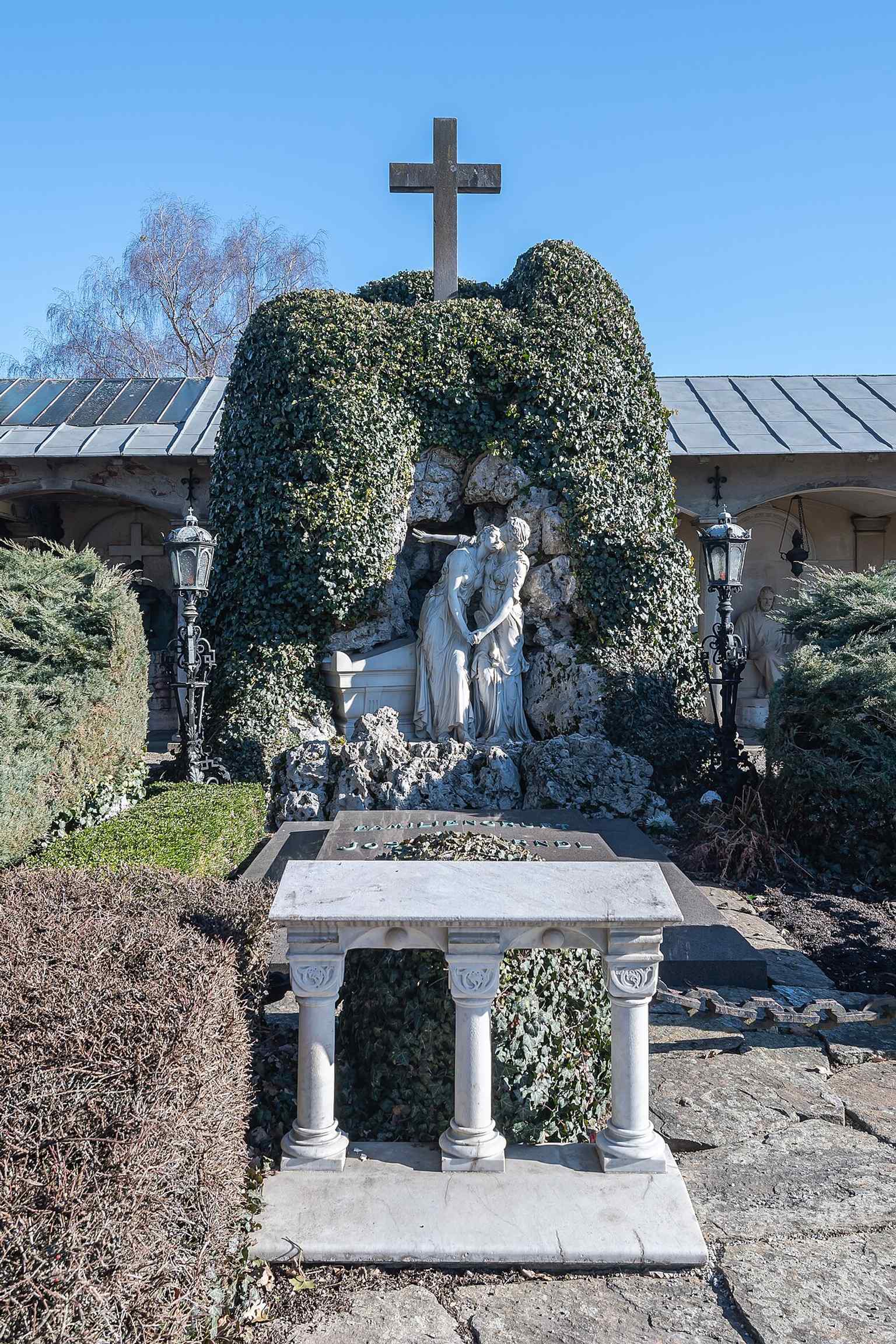
The burial vault of Josef Werndl, the arms manufacturer whose family is one of the cemetery’s best-known burials.
The burial vault of Josef Werndl, the arms manufacturer whose family is one of the cemetery’s best-known burials.Photo: Isiwal, Wikimedia Commons, CC BY-SA 4.0. Cropped & resized.
Soldiers’ graves from the end of World War I, later maintained as part of the city’s military memorial areas.
Soldiers’ graves from the end of World War I, later maintained as part of the city’s military memorial areas.Photo: Christoph Waghubinger (Lewenstein), Wikimedia Commons, CC BY-SA 4.0. Cropped & resized.
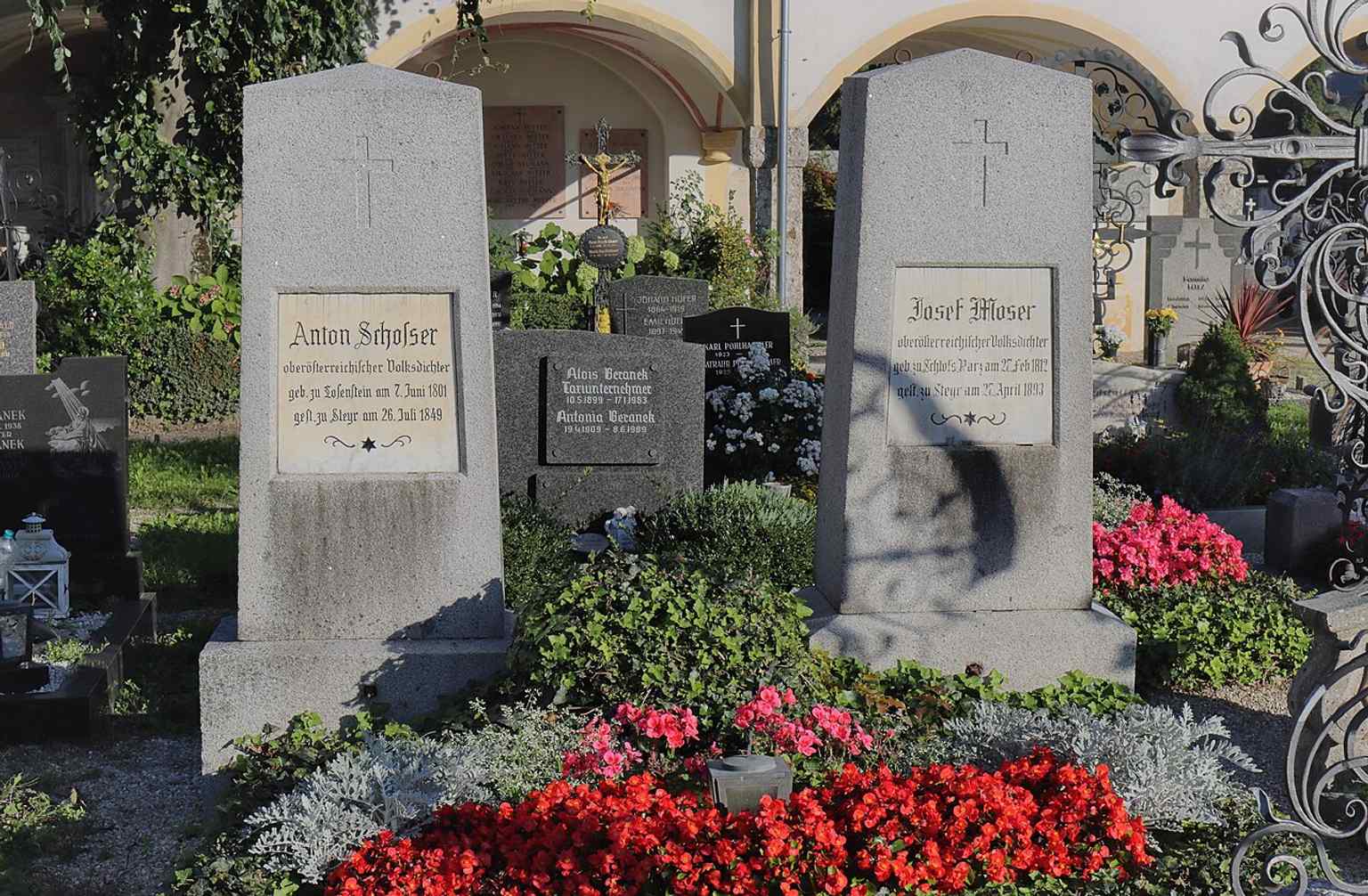
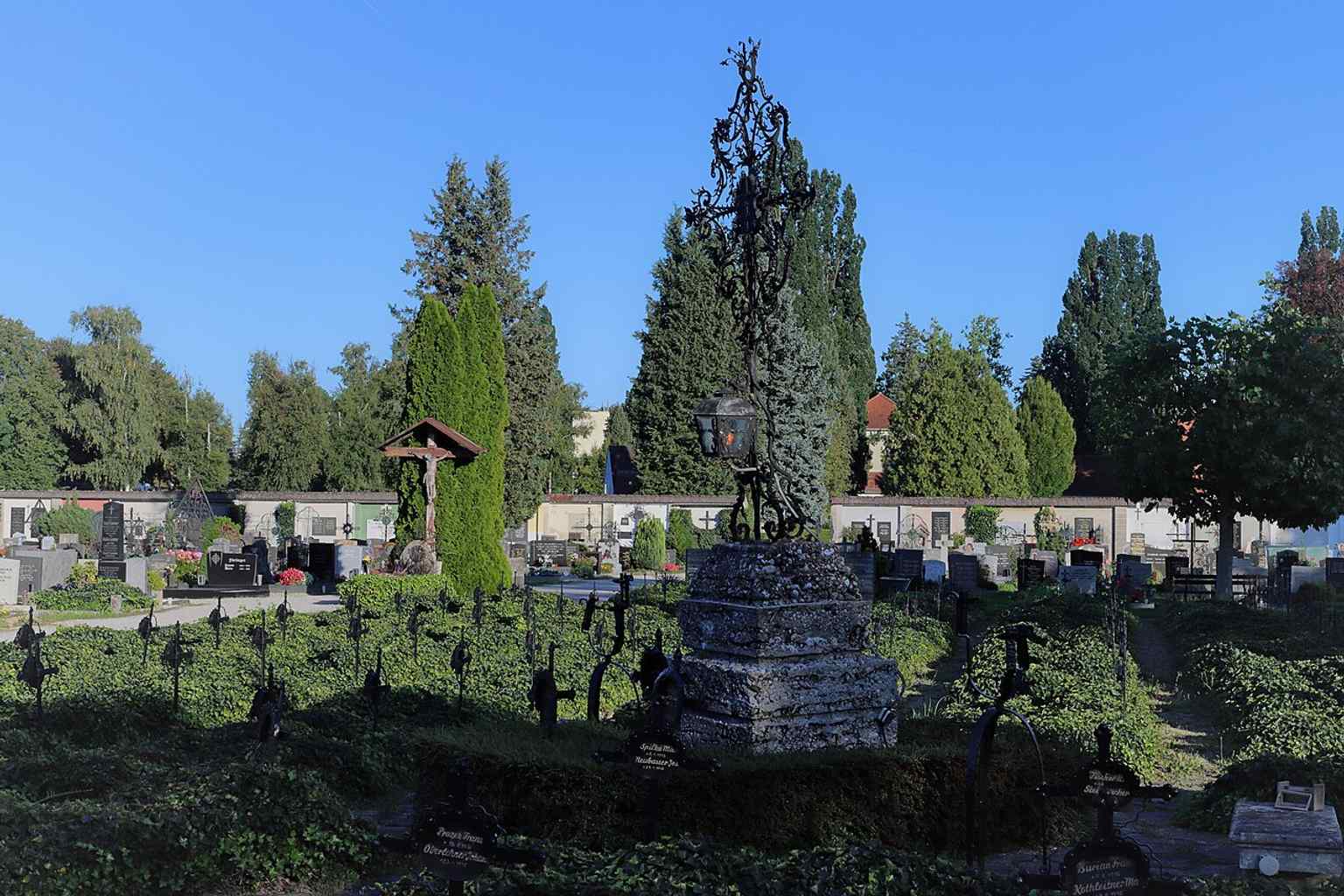
A surviving memorial in the Protestant section, separated from the Catholic cemetery by a wall since 1892.
A surviving memorial in the Protestant section, separated from the Catholic cemetery by a wall since 1892.Photo: Christoph Waghubinger (Lewenstein), Wikimedia Commons, CC BY-SA 4.0. Cropped & resized.
A grave in the Protestant section, illustrating the cemetery’s later denominational divisions and expansions.
A grave in the Protestant section, illustrating the cemetery’s later denominational divisions and expansions.Photo: Christoph Waghubinger (Lewenstein), Wikimedia Commons, CC BY-SA 4.0. Cropped & resized.
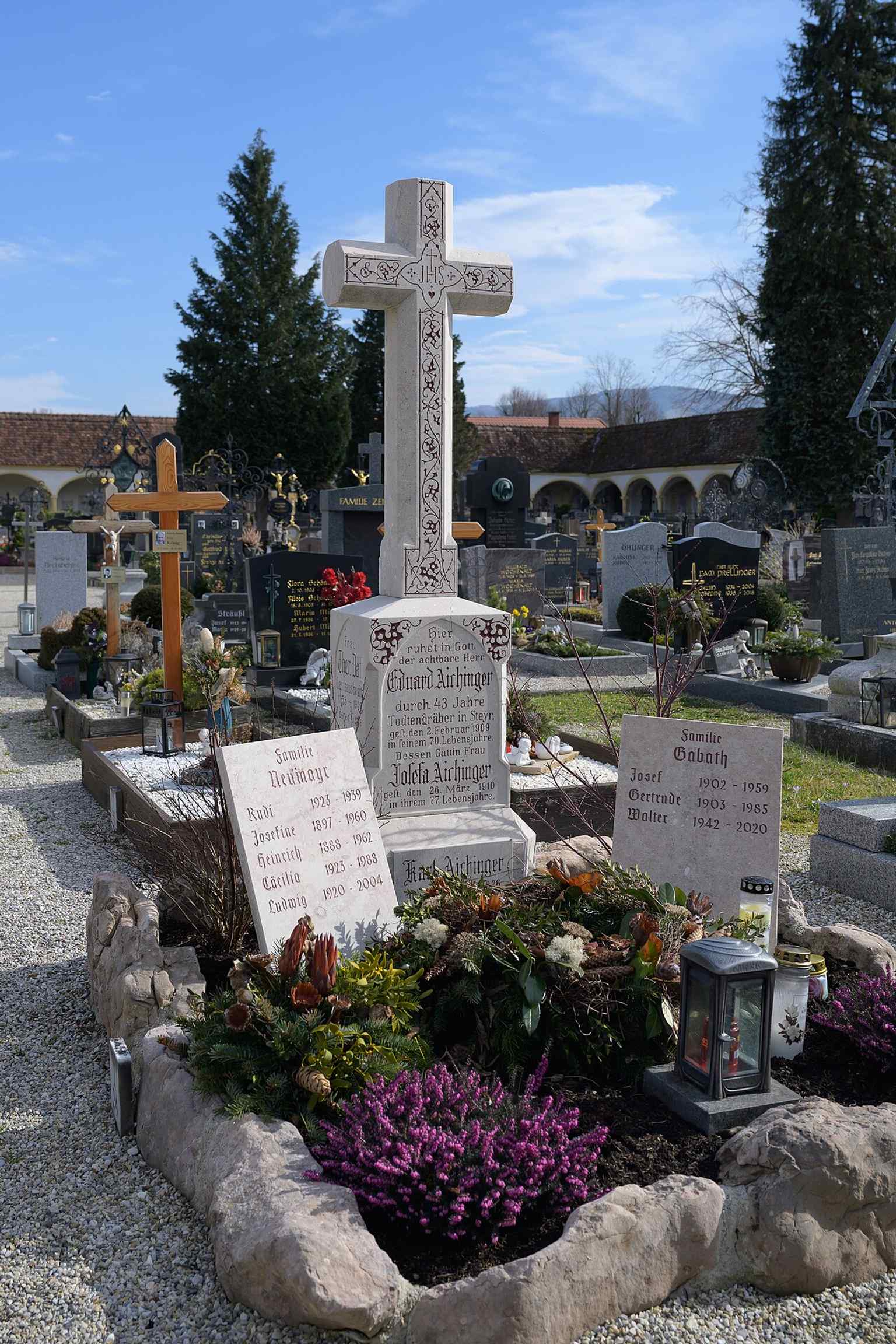
A gravedigger’s grave in the older section, one of the more unusual individual burials in the arcaded cemetery.
A gravedigger’s grave in the older section, one of the more unusual individual burials in the arcaded cemetery.Photo: Isiwal, Wikimedia Commons, CC BY-SA 4.0. Cropped & resized.
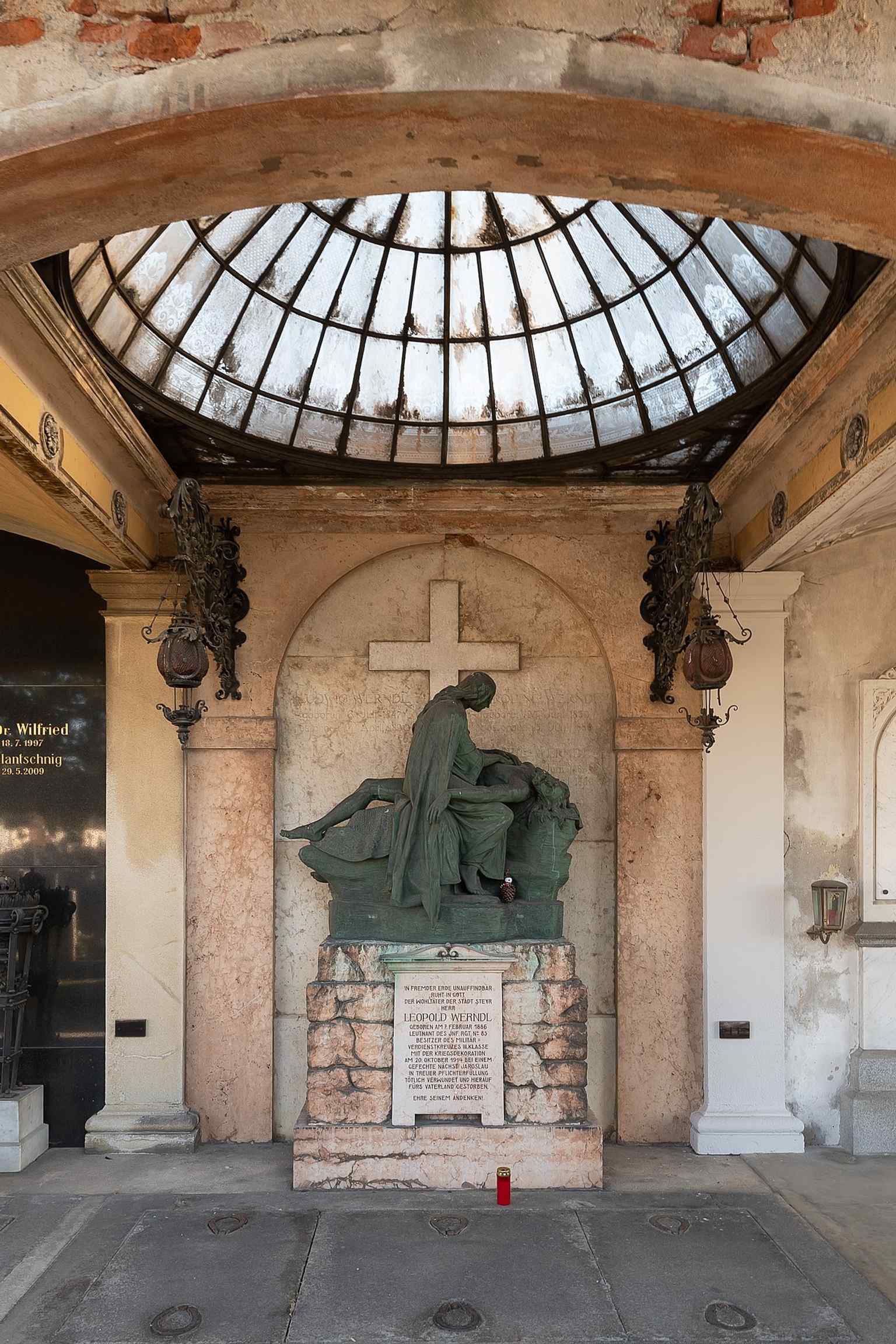
Leopold Werndl’s vault with a commemorative plaque, reflecting how family graves were later adapted and remembered.
Leopold Werndl’s vault with a commemorative plaque, reflecting how family graves were later adapted and remembered.Photo: Isiwal, Wikimedia Commons, CC BY-SA 4.0. Cropped & resized.
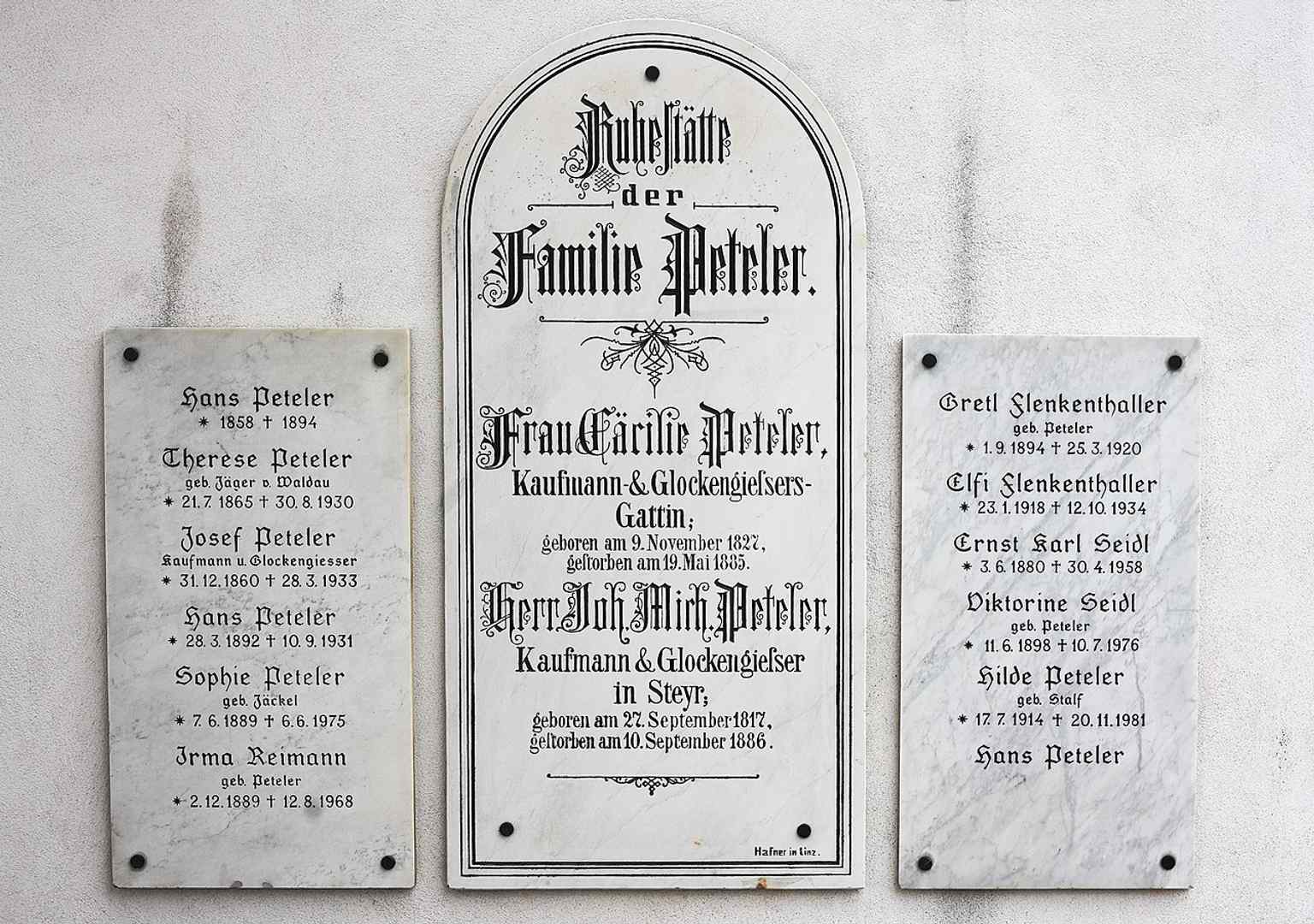
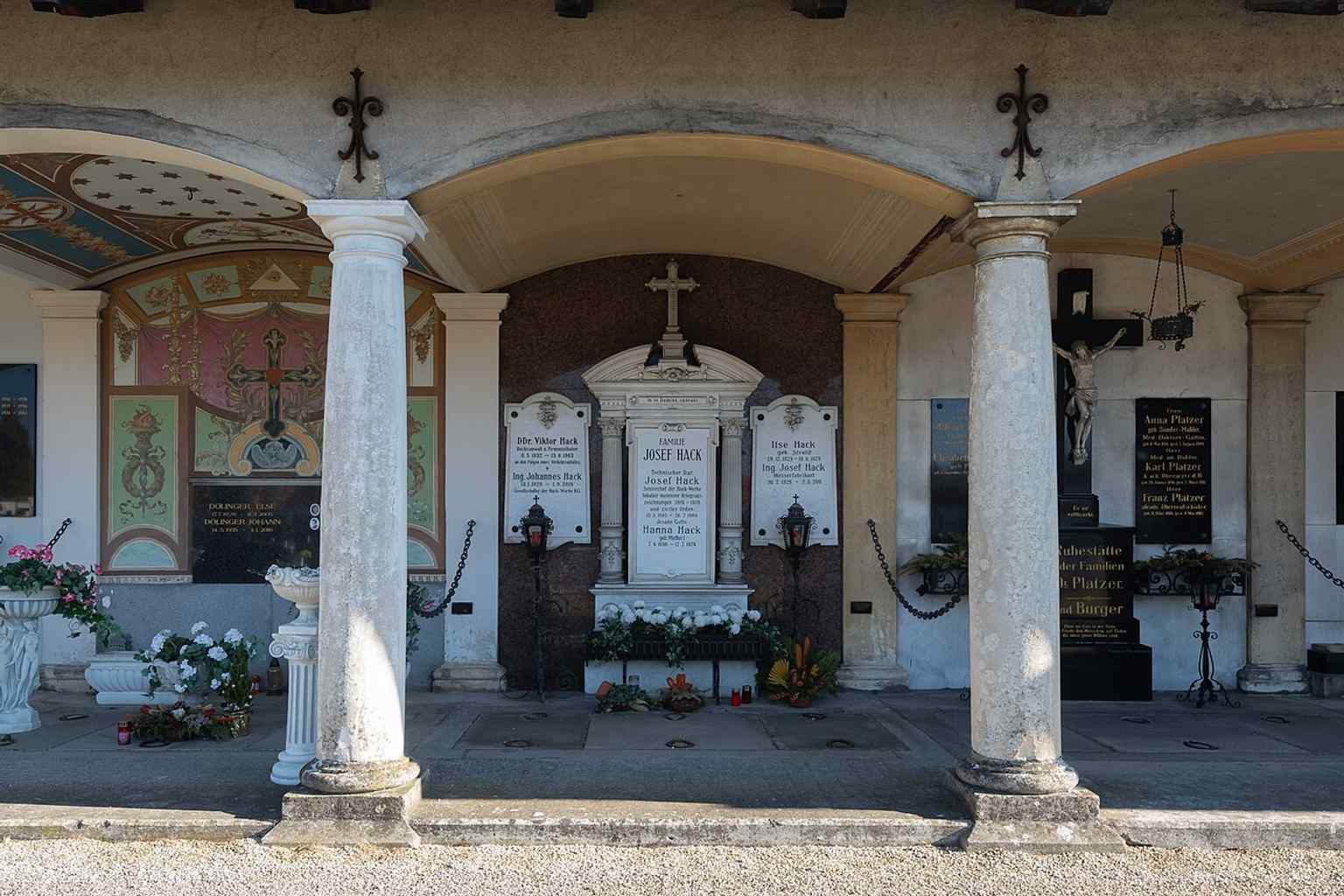
The Hack family vault, another example of the cemetery’s industrial-era burial monuments in Steyr.
The Hack family vault, another example of the cemetery’s industrial-era burial monuments in Steyr.Photo: Isiwal, Wikimedia Commons, CC BY-SA 4.0. Cropped & resized.
arrow_back Back to Steyr Audio Tour: Castles, Churches & Secrets Along the Enns
Loved by travellers

Thousands of tours started.
Plenty of opinions.

4.8 across the App Store and Google Play. Here's a few we keep coming back to.

starstarstarstarstar
This was a solid way to get to know Brighton without feeling like a tourist. The narration had depth and context, but didn't overdo it.
Christoph
Christoph
Brighton Tour
starstarstarstarstar
Started this tour with a croissant in one hand and zero expectations. The app just vibes with you, no pressure, just you, your headphones, and some cool stories.
download Get the app

Pop your headphones in.
Step outside.

Free to download. Tours in every city. Start in 60 seconds — no account, no card.

Download on the App StoreGet it on Google Play
starstarstarstarstar_half
4.8
AudaTours app icon
headphones
~ 4 min until your first tour starts
public
1,000+ cities worldwide
all_inclusive
AudaTours
Unlimited

Every tour. Every city. One subscription.

3101 tours2271 cities138 countries50+ languages