
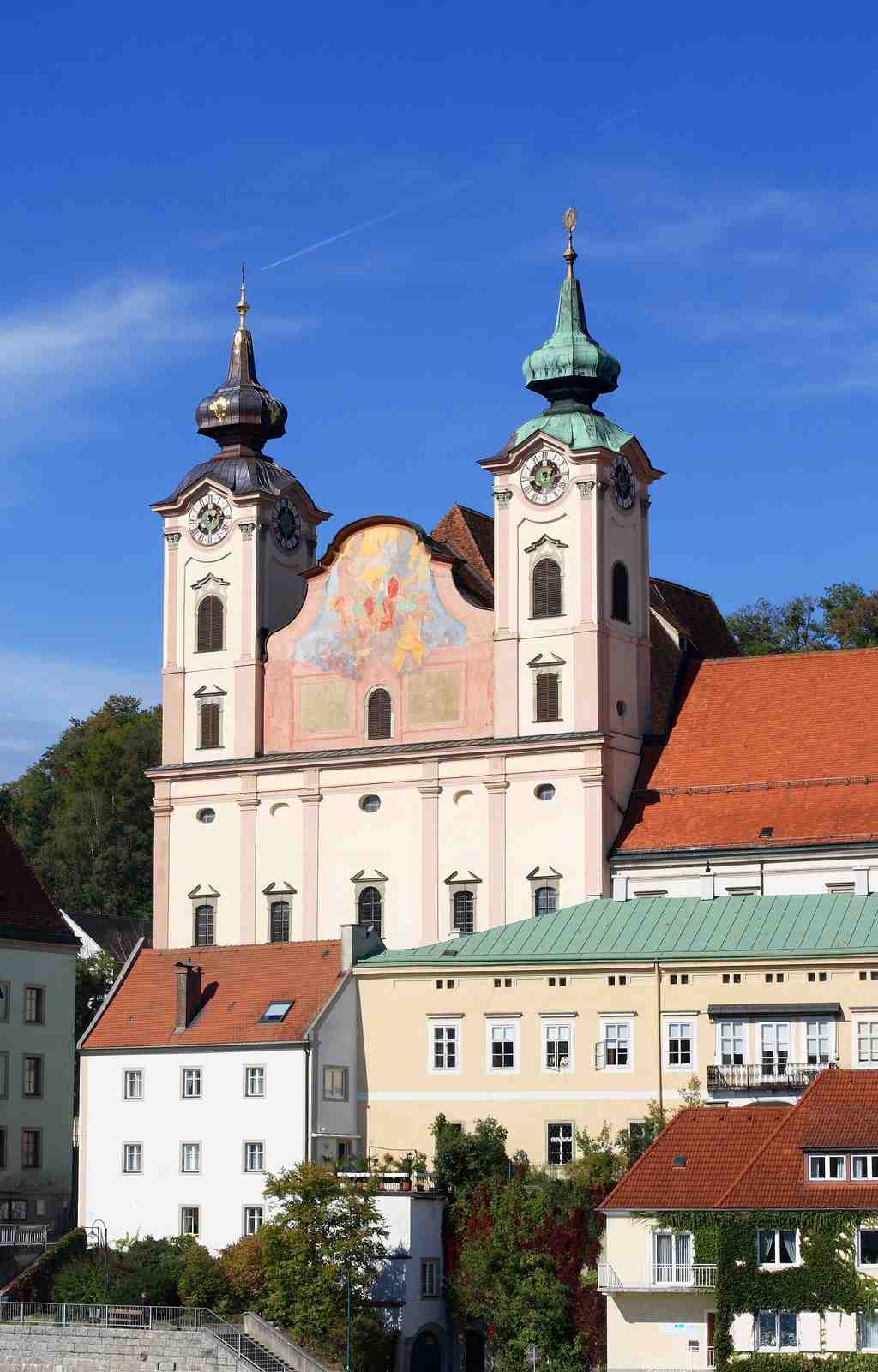
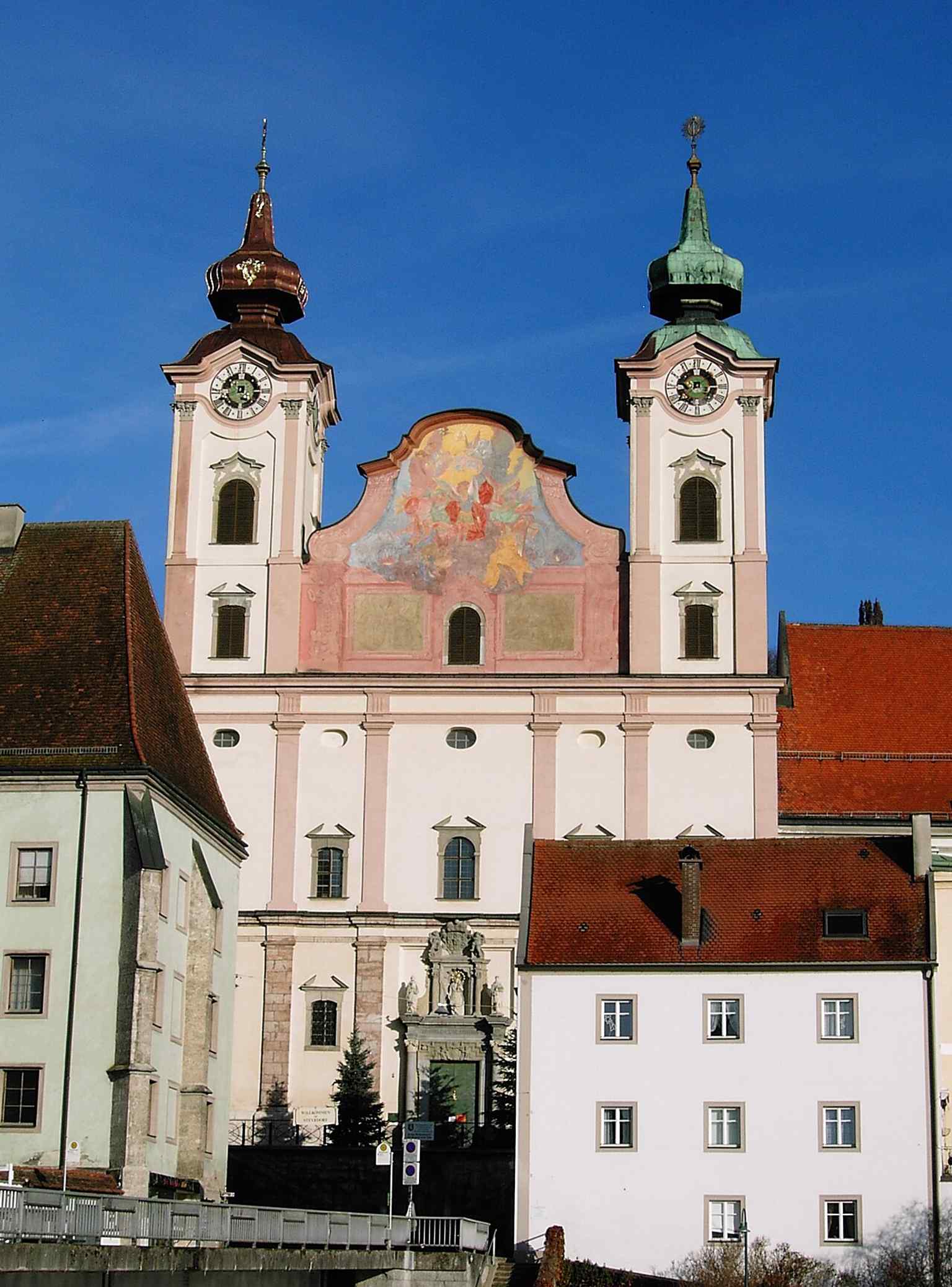
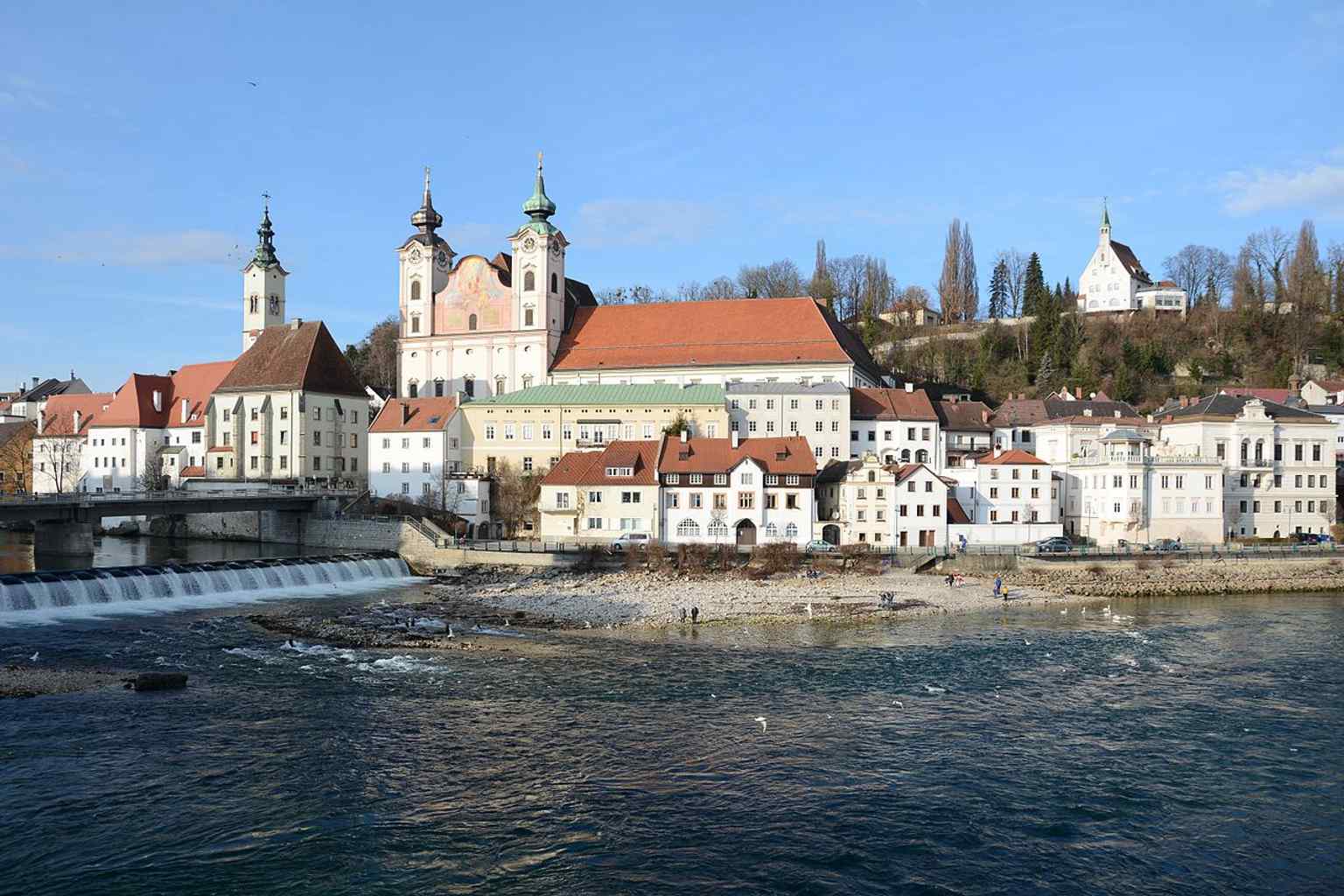
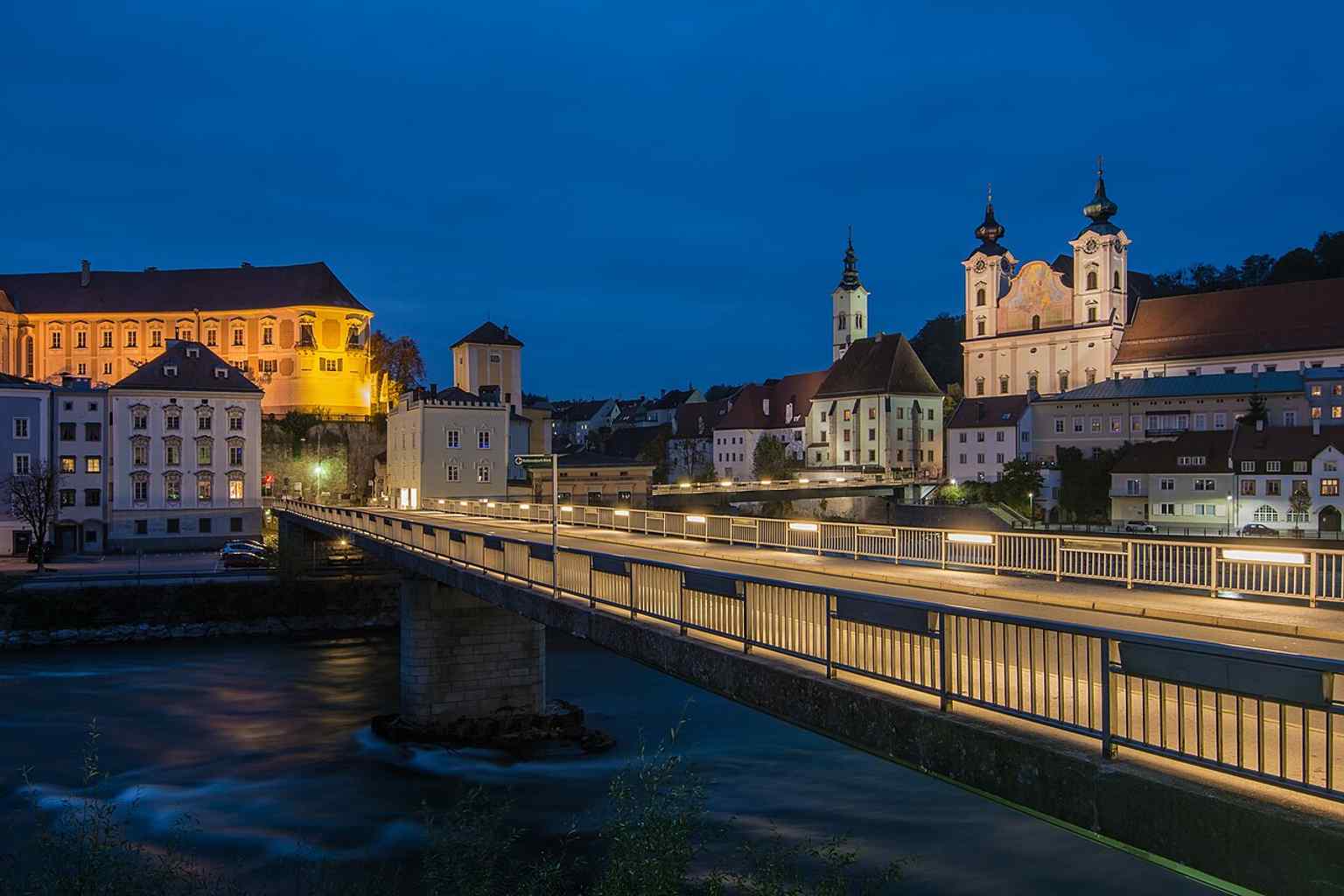
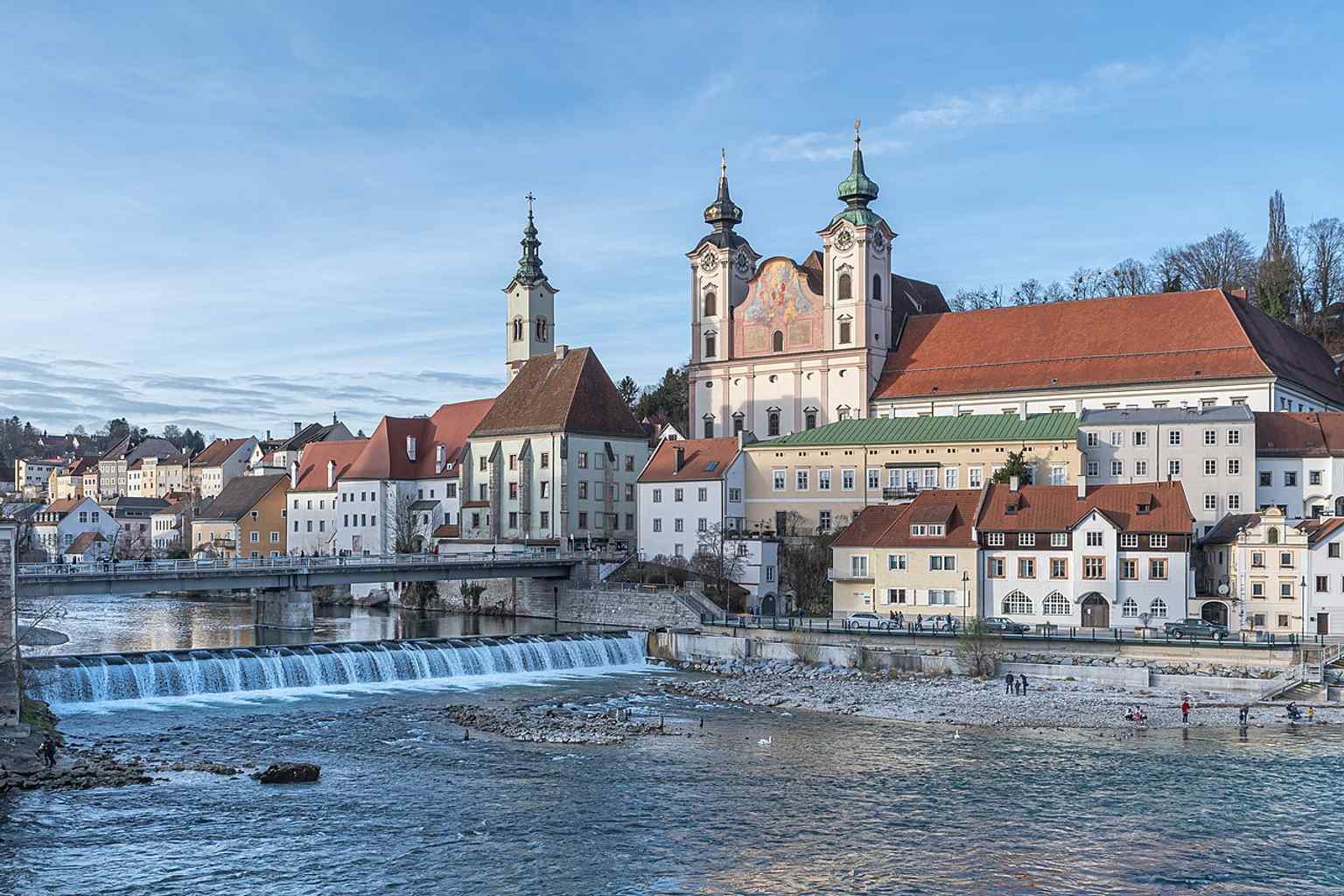
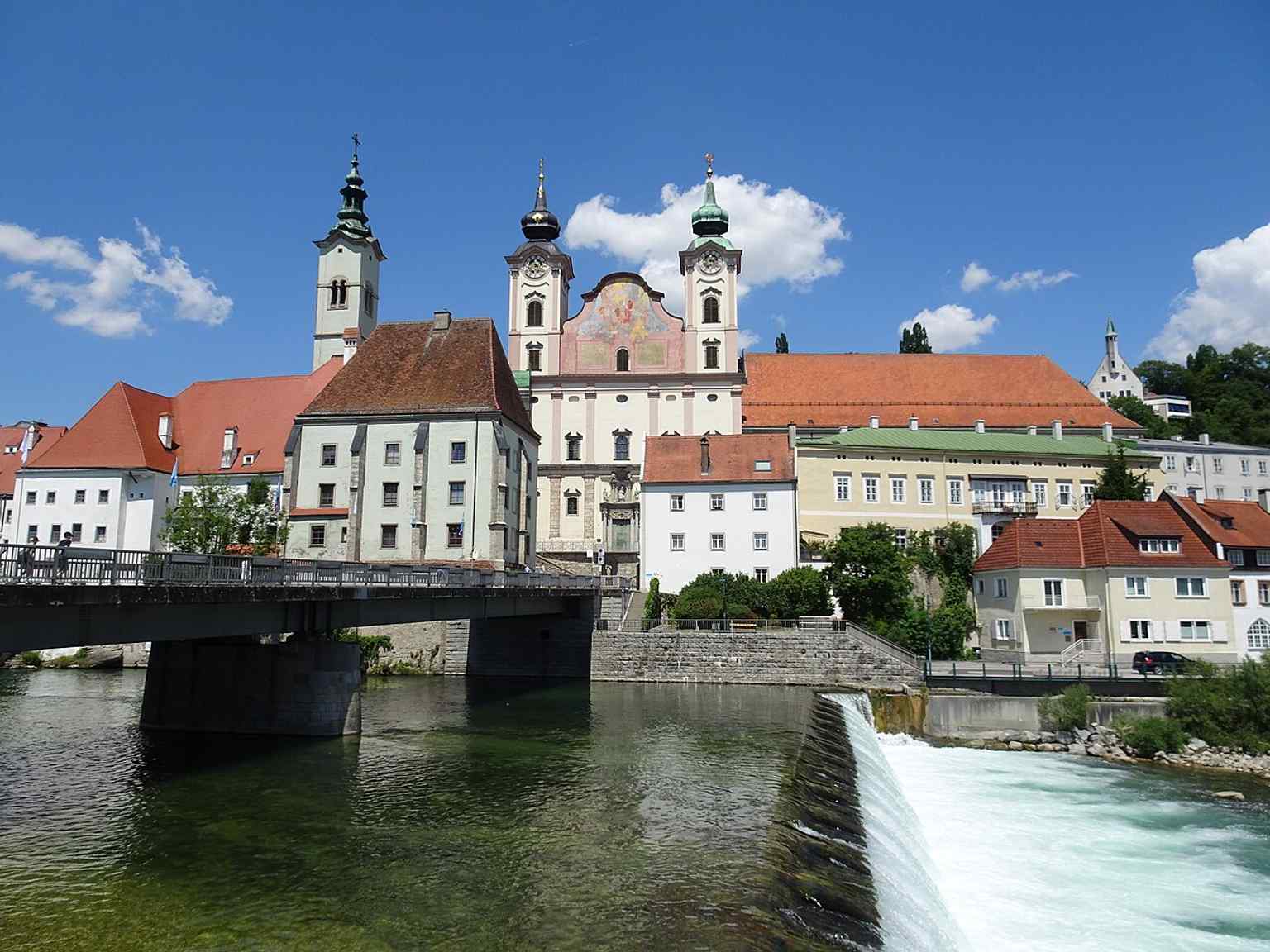
On your right, look for the pale stone church set high on a platform, with a broad three-story façade, twin towers, and a monumental portal pressed into the center like a command.
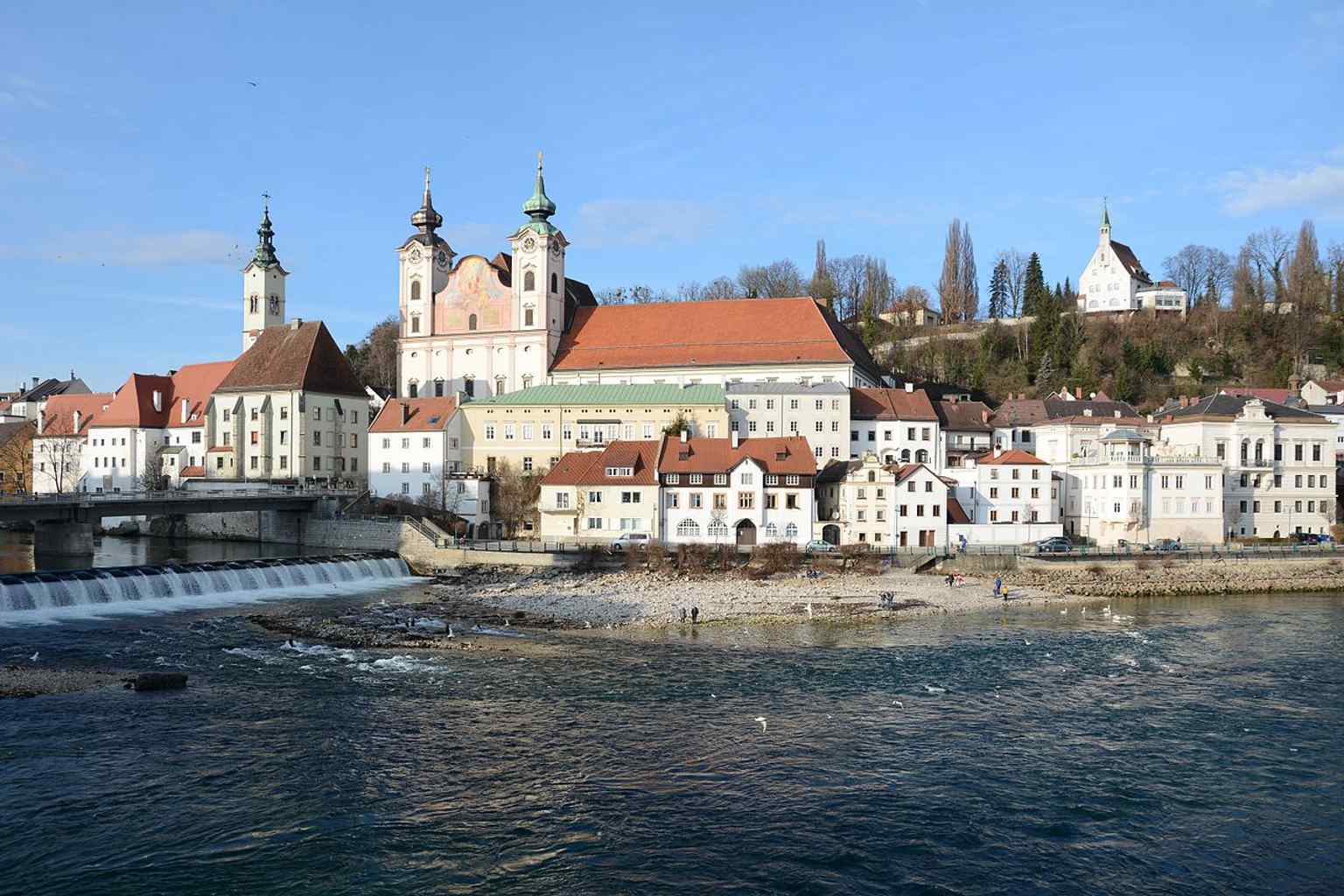
From here, one fact is impossible to miss: St. Michael was built to dominate. This is the former Jesuit church of Steyrdorf, planted above the bridgehead near the meeting of the Steyr and Enns rivers so it could rule the skyline and, ideally, improve behavior. A very efficient use of masonry.
The bigger story begins in the seventeenth century. After Habsburg victories pushed back Ottoman attacks, Baroque architecture became the preferred language of Catholic renewal. Steyr had long been a center of Protestant life, so the Catholic comeback did not arrive quietly. Between sixteen thirty-five and sixteen eighty-one, three Baroque religious complexes rose here. St. Michael became the most strategic of them.
The Jesuits had entered Austria in fifteen fifty-one, invited by Ferdinand the First. They cared deeply about education, so they opened schools as eagerly as churches. In Steyr, powerful supporters like Sigismund von Lamberg and Abbot Anton Spindler of Garsten helped establish a Jesuit residence. Then, in sixteen thirty, Emperor Ferdinand the Second ordered the city to hand over eleven houses near the citizens' hospital so the Jesuits could build a church and a college. The order took over the site in sixteen thirty-two and started teaching right away. In sixteen thirty-four they cleared the houses. In sixteen forty-eight the auxiliary bishop of Passau, Ulrich Grappler von Trappenburg, consecrated the church. The twin towers were finished in sixteen seventy-seven, and the school building followed in sixteen seventy-eight. The Jesuits understood visibility, long before anyone called it branding.
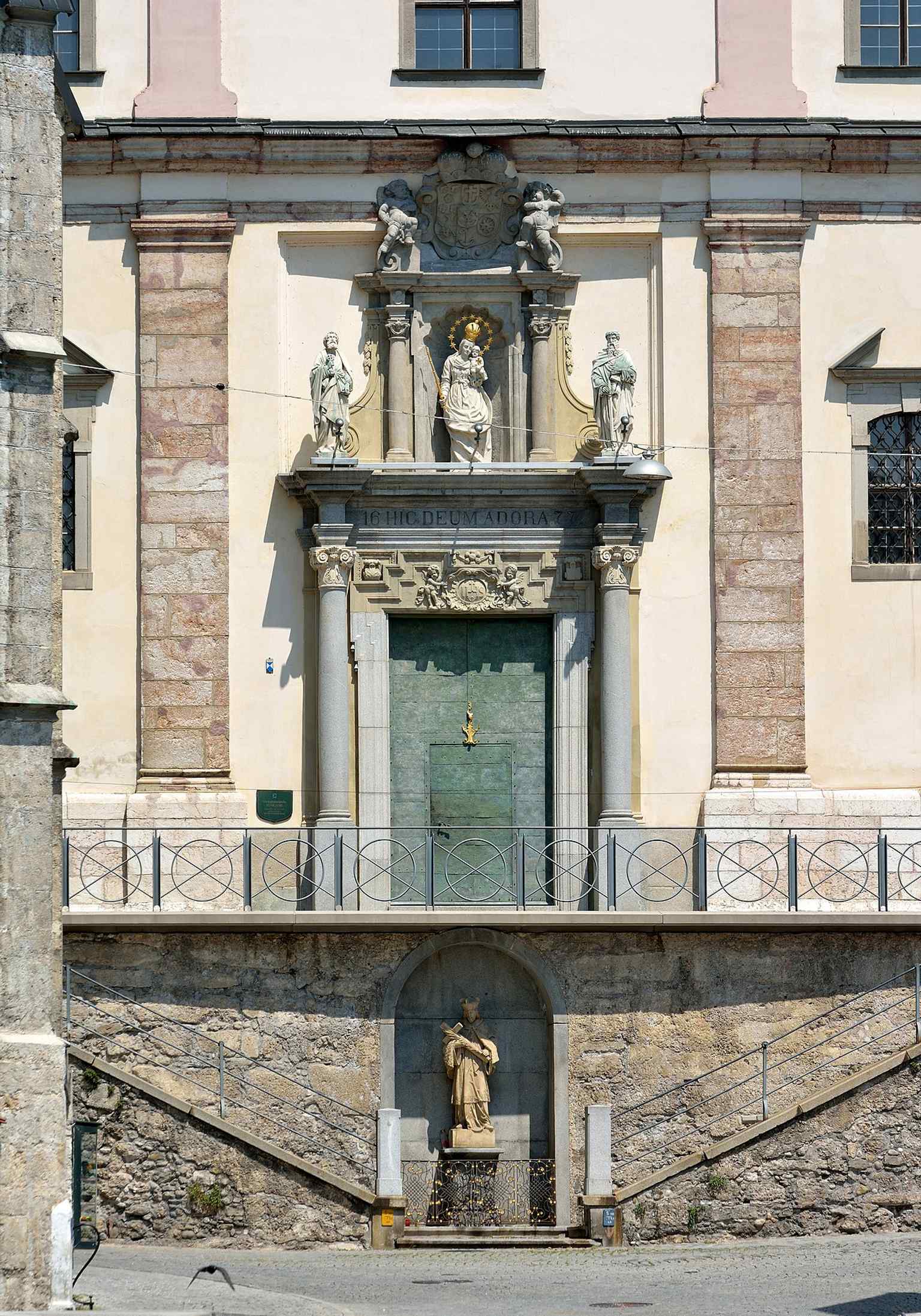
If you glance at the portal photo in the app, you can catch the inscription over the entrance: Hic Deum Adora, Latin for “here adore God.” Above it stands Mary with the child Jesus, flanked by Peter and Paul, and at the very top sits the Eggenberg coat of arms. The doorway gives instructions, names the sponsors, and stages a theological cast list... all before you even get inside.
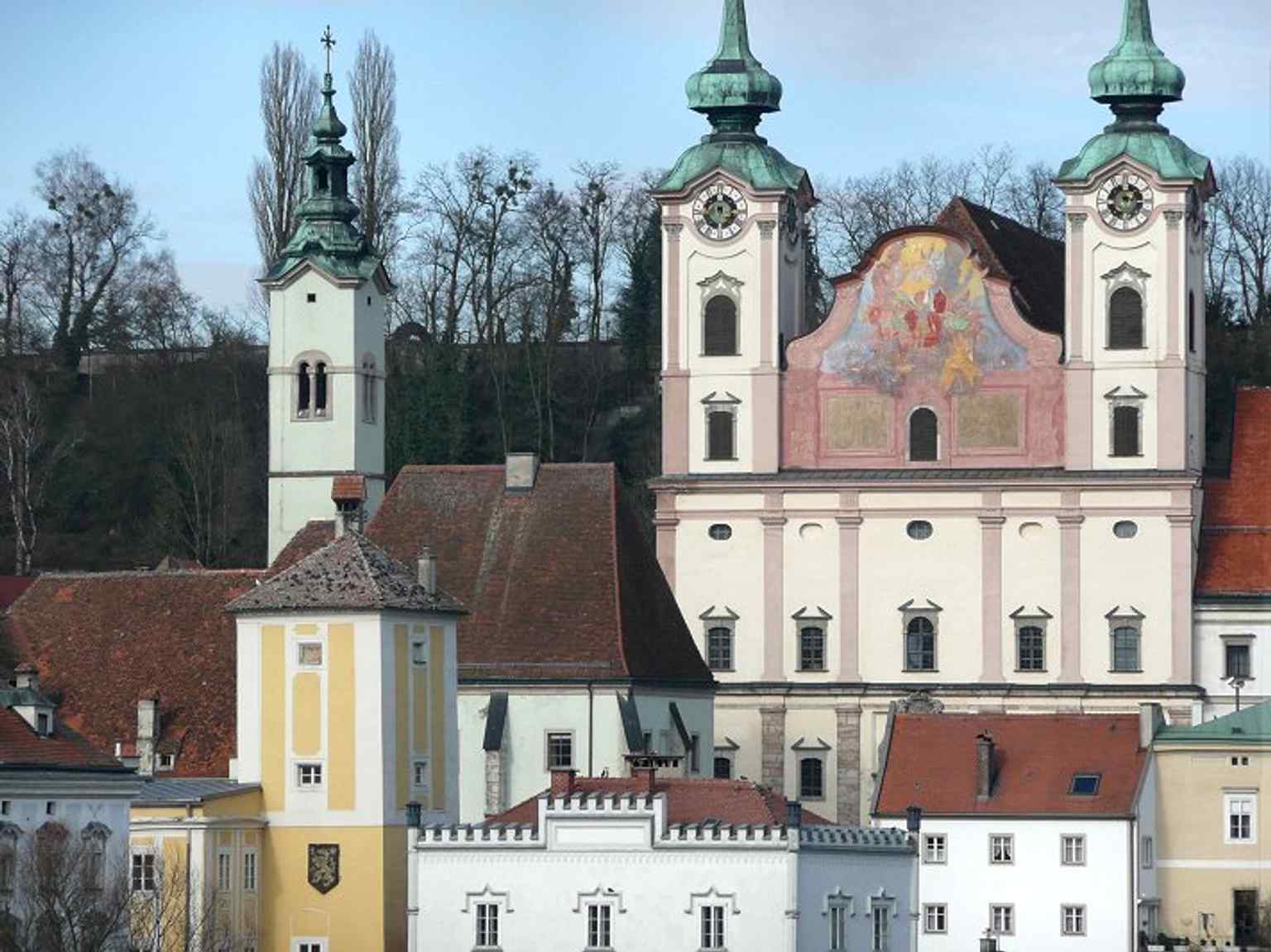
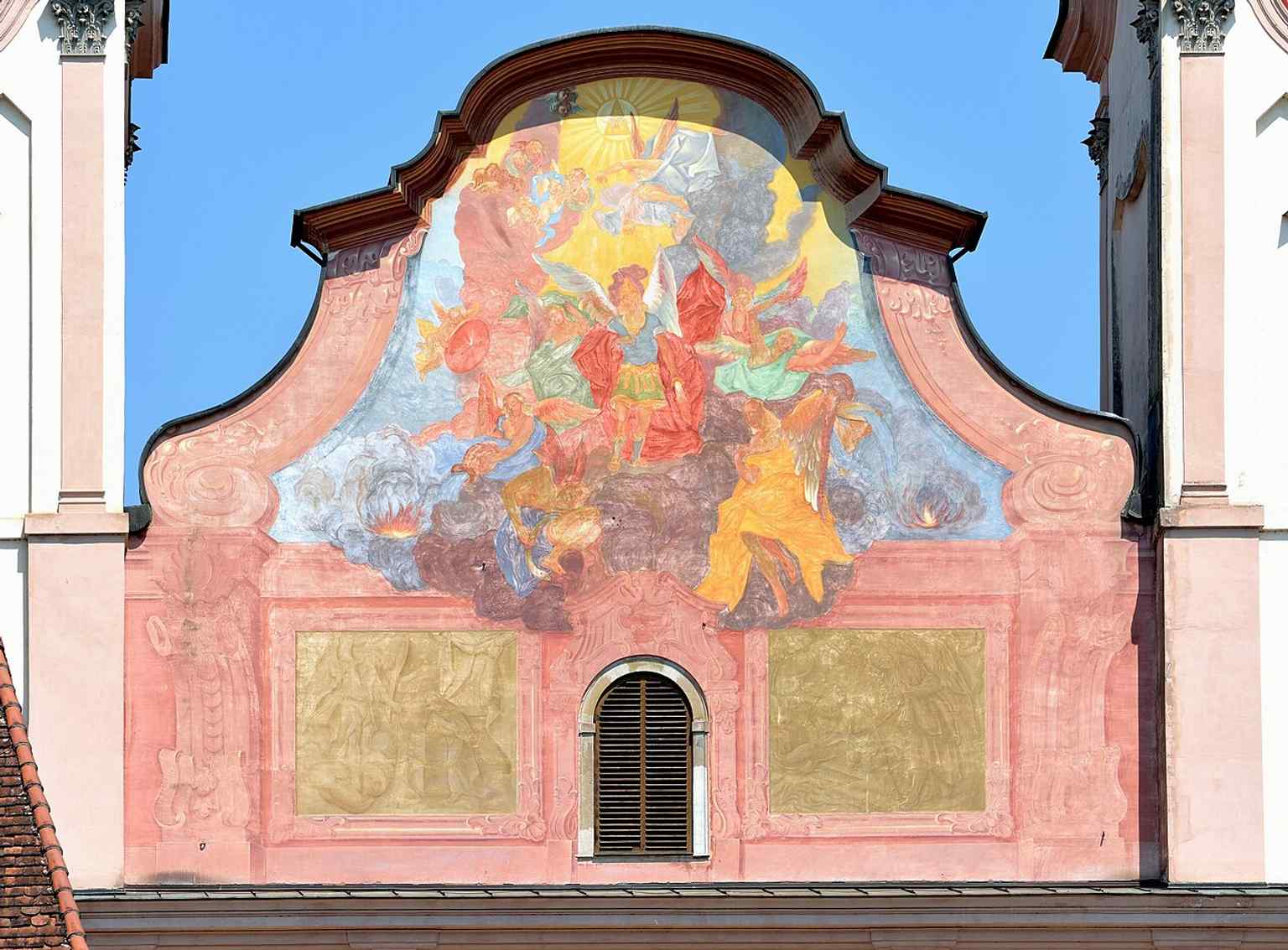
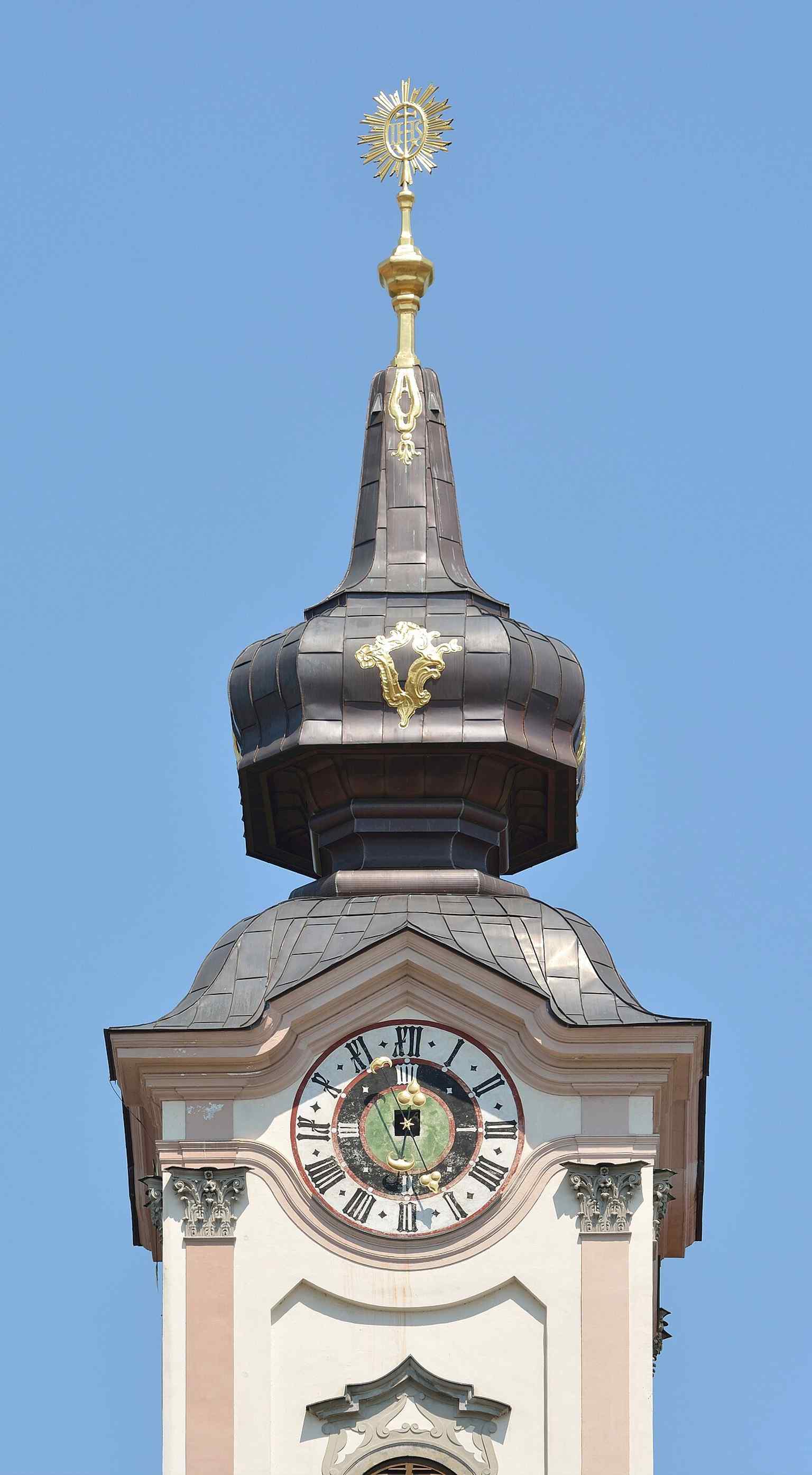
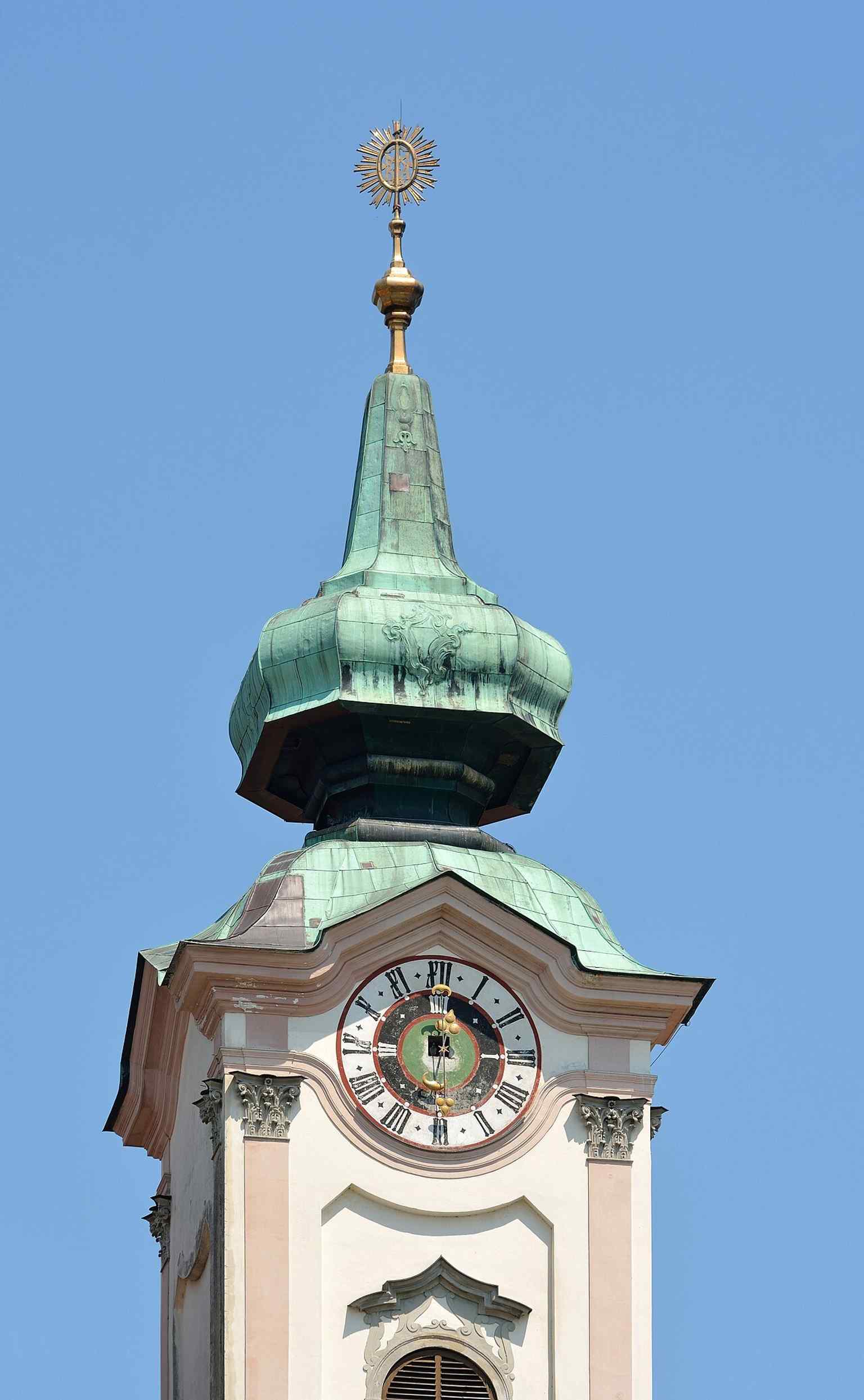
The towers did not stay put, either. Builders raised them higher between seventeen sixty-six and seventeen seventy, and Franz Xaver Gürtler painted the gable with the fall of the rebellious angels. On the church’s left side, a larger chapel honors Saint Francis Xavier, one of the Jesuits’ great missionary heroes.
Inside, the church follows a Jesuit model also seen in Munich: one long main hall, called the nave, with side chapels tucked between heavy wall supports. On your screen, the interior image shows that layout clearly. During the major restoration in nineteen eighty-nine, conservators removed layers of later paint and uncovered frescoes from the church’s early years showing the four archangels: Michael, Gabriel, Raphael, and Uriel. For once, “restoration” did not mean someone got creative.
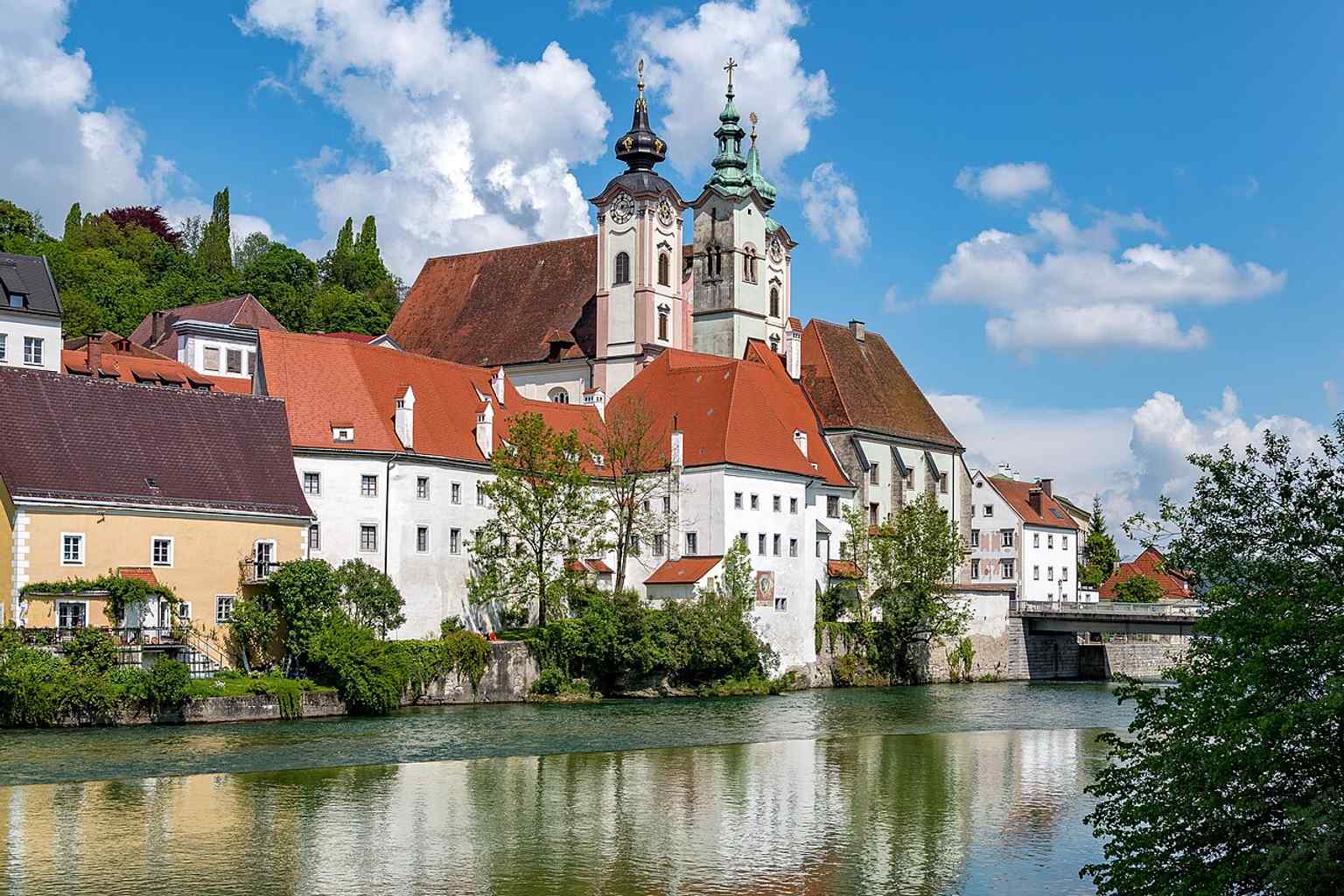
After the Jesuit order was suppressed in seventeen seventy-three, the building found a new job. In seventeen eighty-five, under Joseph the Second’s church reforms, it became Steyr’s second parish church. Its position mattered just as much as its design: this platform sat where major roads toward Wels, Linz, and Enns converged, so the church served as a permanent announcement that the Counter-Reformation had arrived and intended to be noticed.
St. Michael turns faith, education, and urban strategy into one remarkably self-assured façade.
That portal has done its part. When you’re ready, we can continue on to Dunklhof.






.JPG)


