
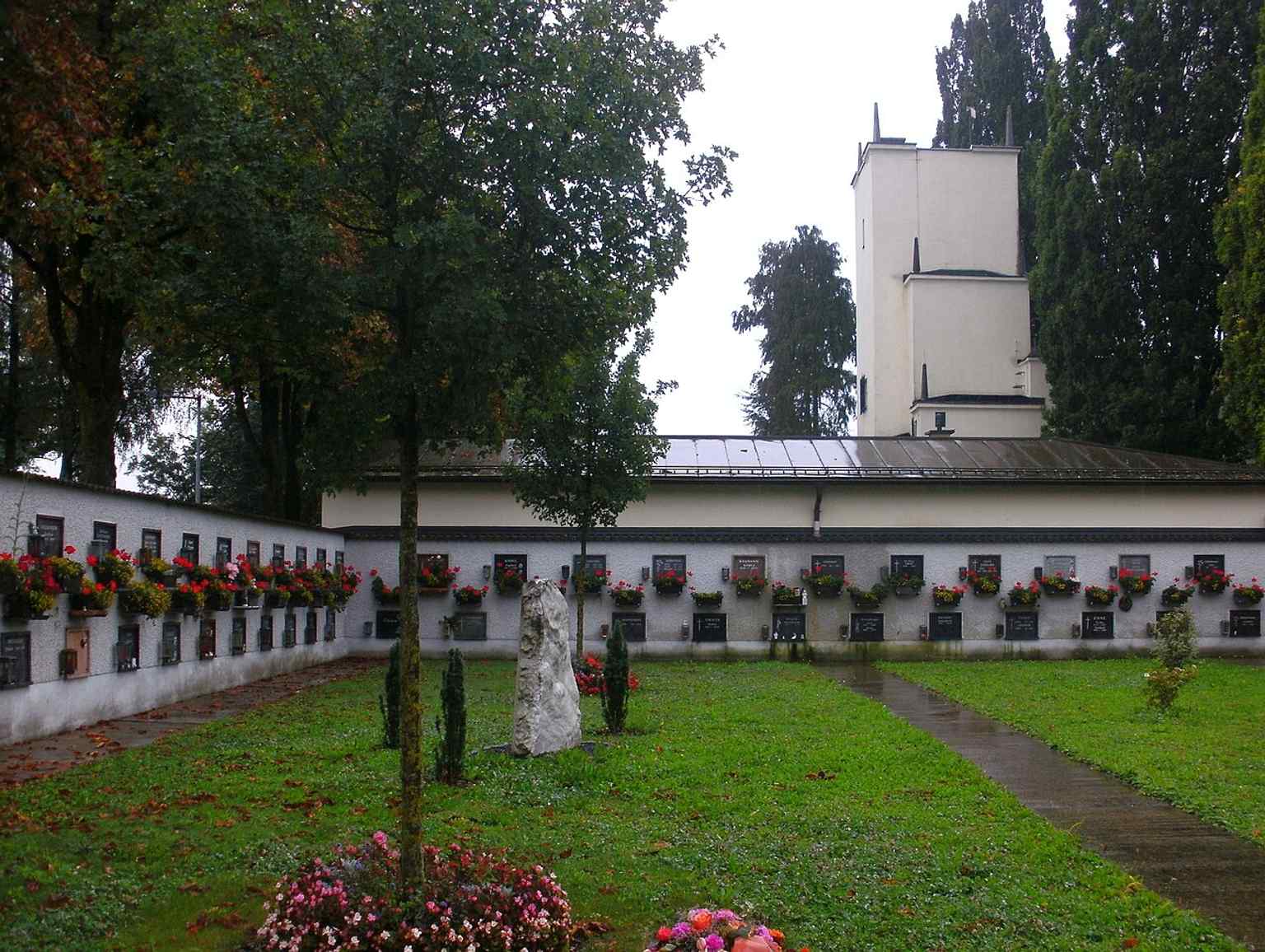
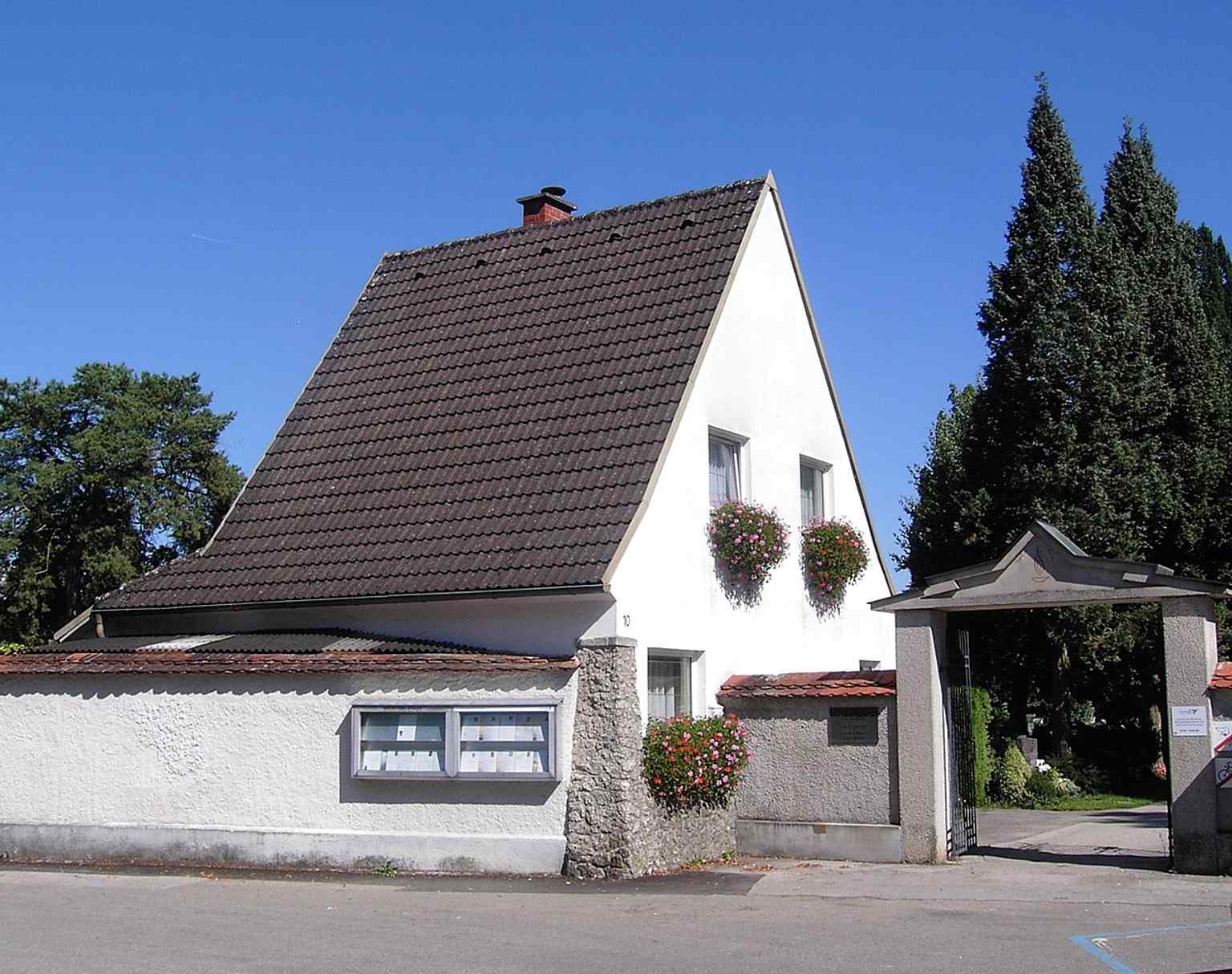
On your left, look for a pale rendered crematorium with a compact chapel-like form, clean rectangular walls, and a stepped gable that stands out above the urn cemetery.
This place began as an argument... and then became a landmark. In the nineteen twenties, people in Steyr started pushing for cremation, which the Roman Catholic Church opposed with impressive determination. Josef Wokral, the city’s mayor, founded an association called Flamme, or Flame, to get a crematorium built anyway. So in July nineteen twenty-six, the city council gave the group this plot beside the older Tabor cemetery, and architect Franz Koppelhuber designed the complex you see here.
Austria’s second crematorium opened here on the twenty-sixth of June, nineteen twenty-seven, right after Vienna’s Feuerhalle Simmering. Steyr was not trying to be rebellious... merely modern, which was rebellious enough. Less than two months later, the parish death register recorded its first person cremated here: Hedwig Mitterberger, the wife of the city school inspector.
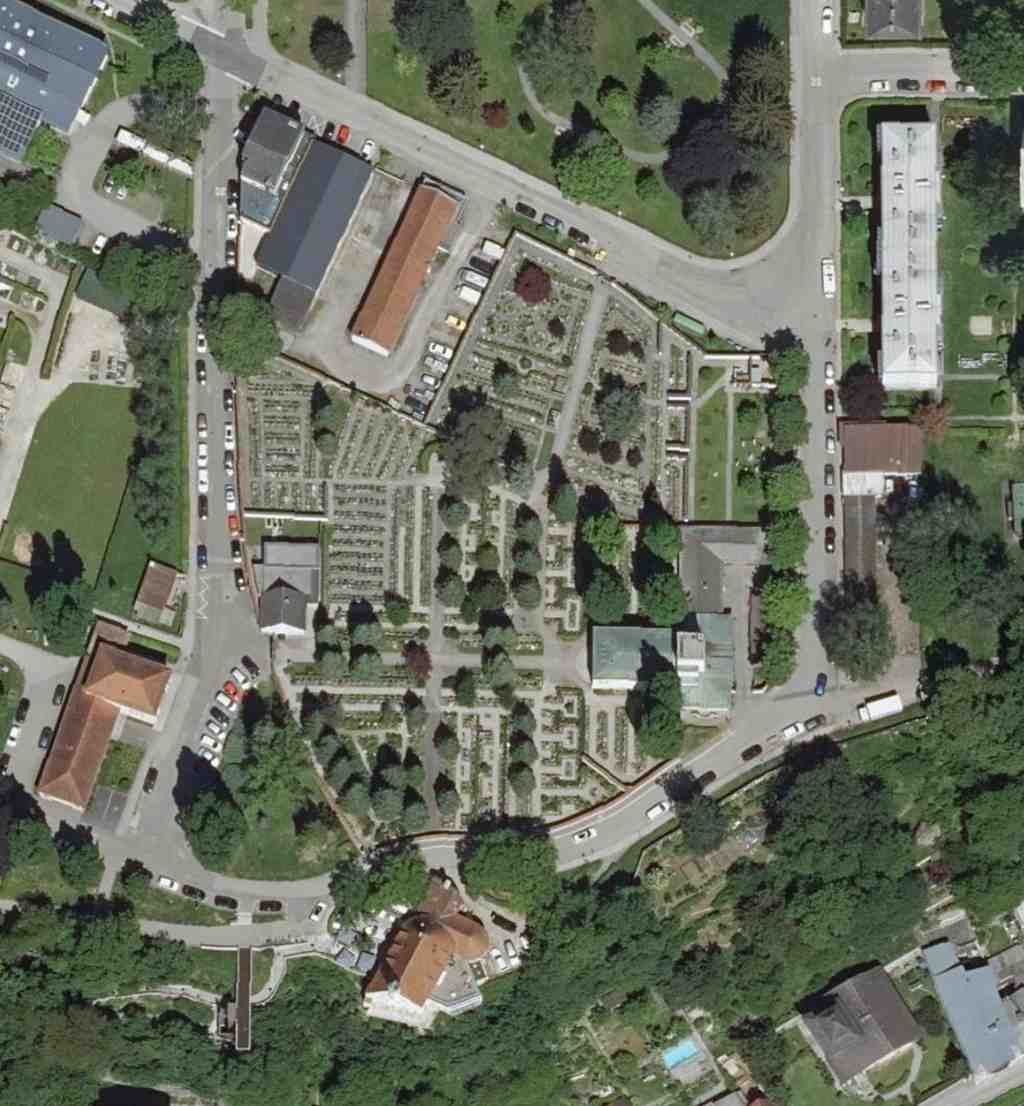
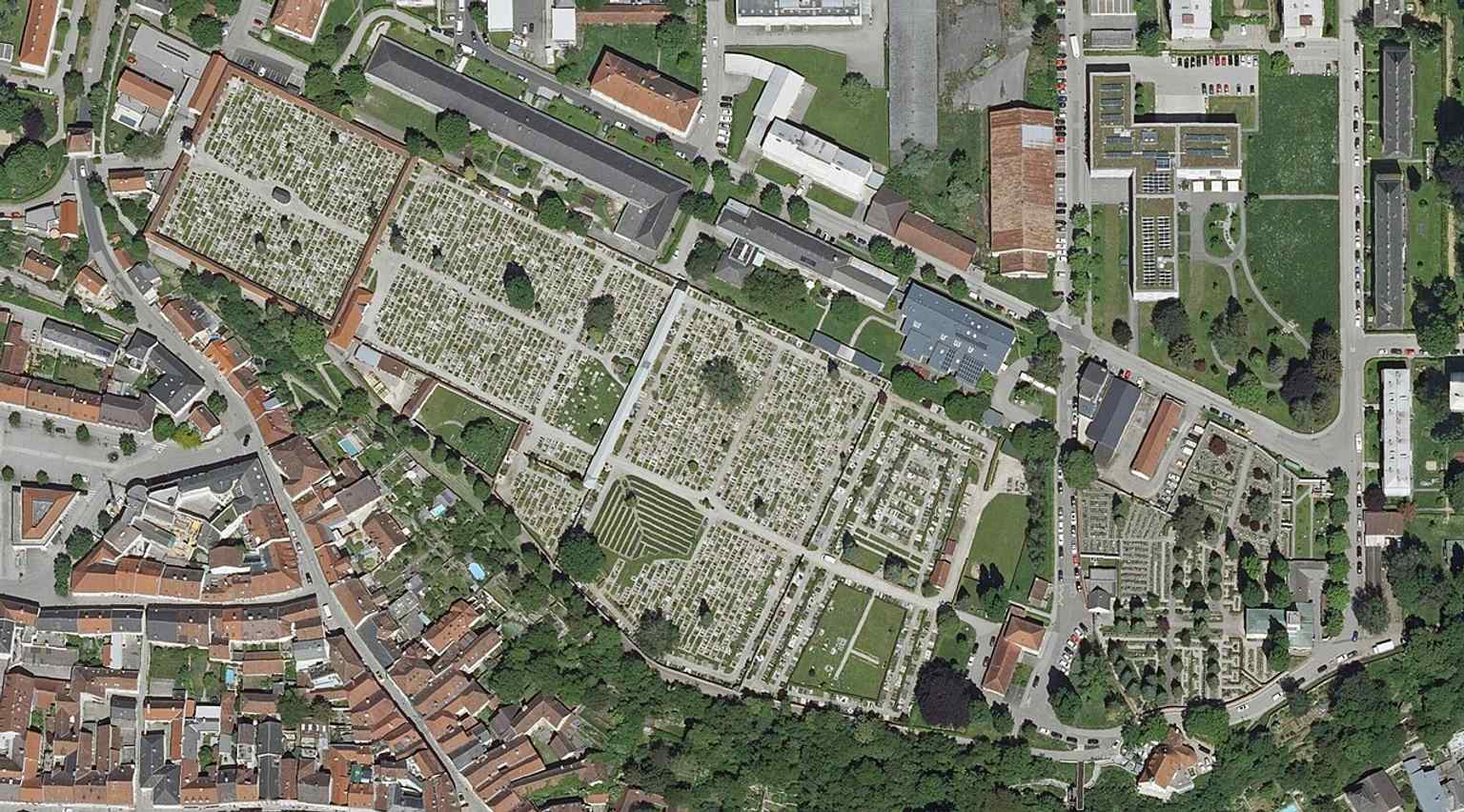
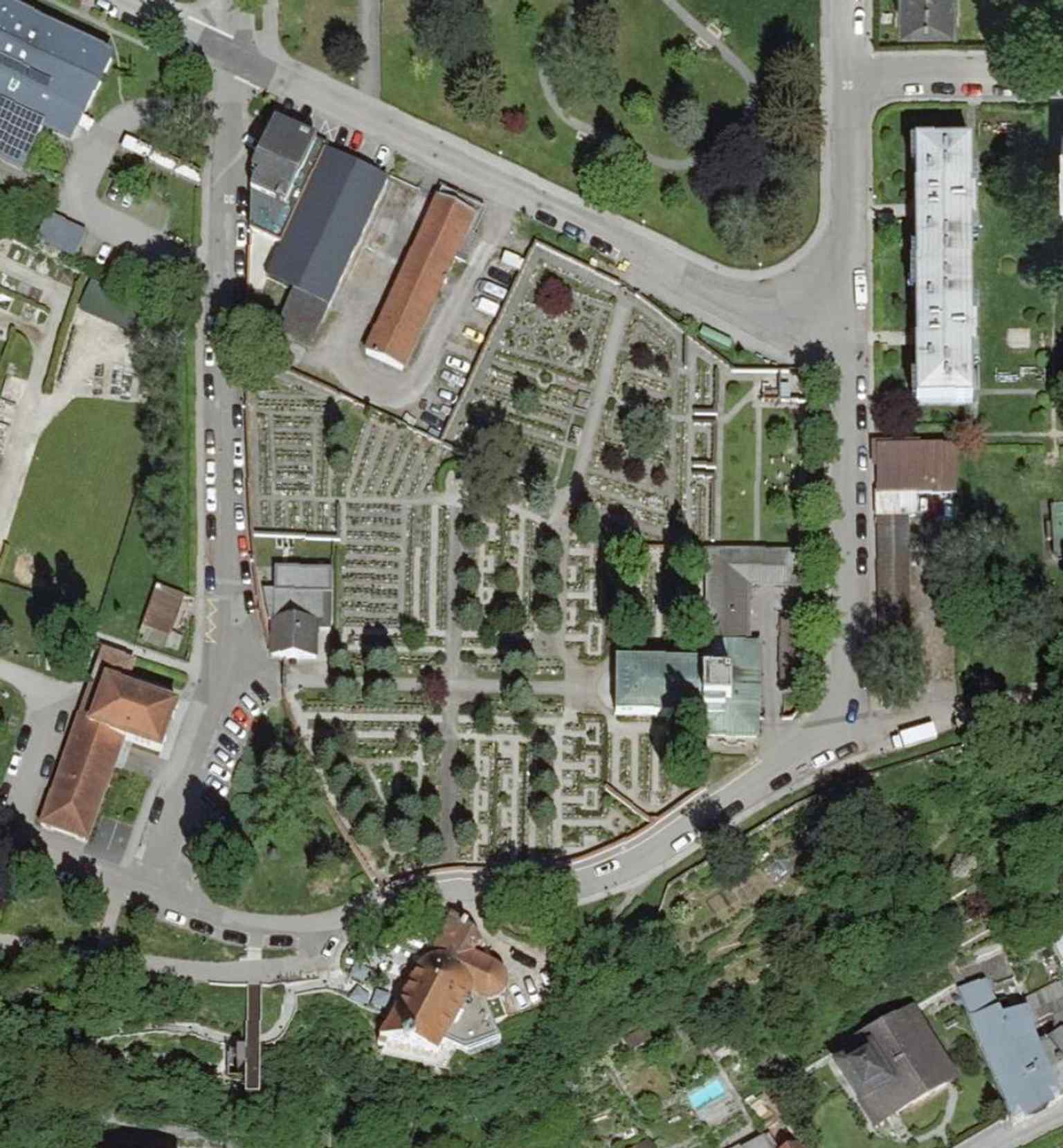
If you check the aerial view in the app, you can see how this newer cemetery sits right beside the older Tabor grounds, almost like two ideas about remembrance placed shoulder to shoulder.
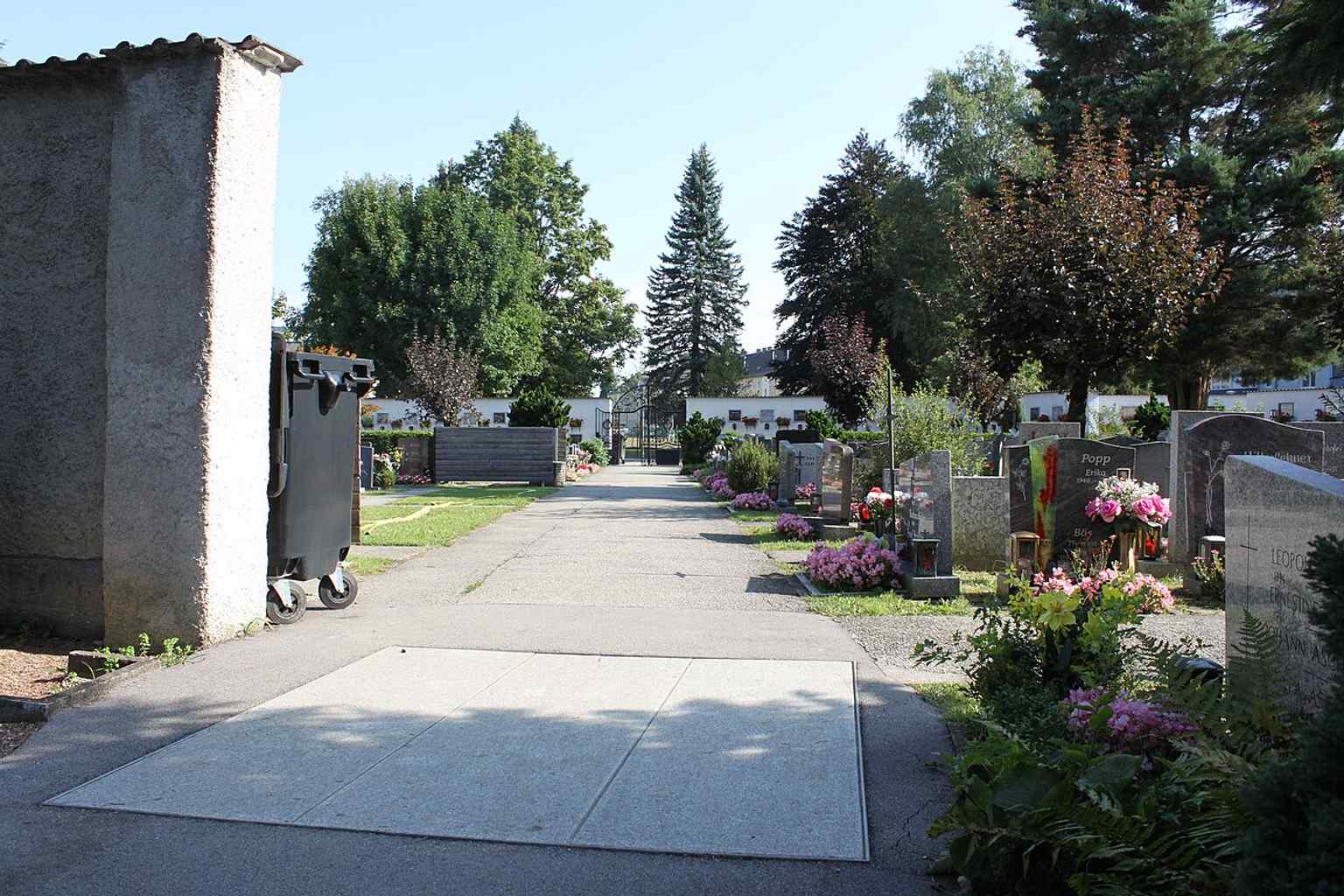
Then the story turns dark. During the Nazi period, this crematorium also handled the bodies of prisoners from K-Z Mauthausen and its satellite camps, at least until nineteen forty-one. In nineteen forty-eight, workers buried more than one thousand urns near the end of a connecting path. Later expansion covered that burial place with asphalt. Only in two thousand eleven, after a search prompted by the grandson of Wiktor Ormicki, did the city find the site again. It is now marked by a three-part granite cover; the image on your screen shows that stark memorial.
The city bought the cemetery in late nineteen thirty-nine for one hundred fifteen thousand reichsmarks, roughly a few million euros today, and it has remained a municipal responsibility ever since. The grounds are open daily from seven in the morning until eight in the evening.
This is a place where civic progress and civic failure stand uncomfortably close together.
Stay a moment if you like, and when you’re ready, continue on to the next stop.





.jpg)


